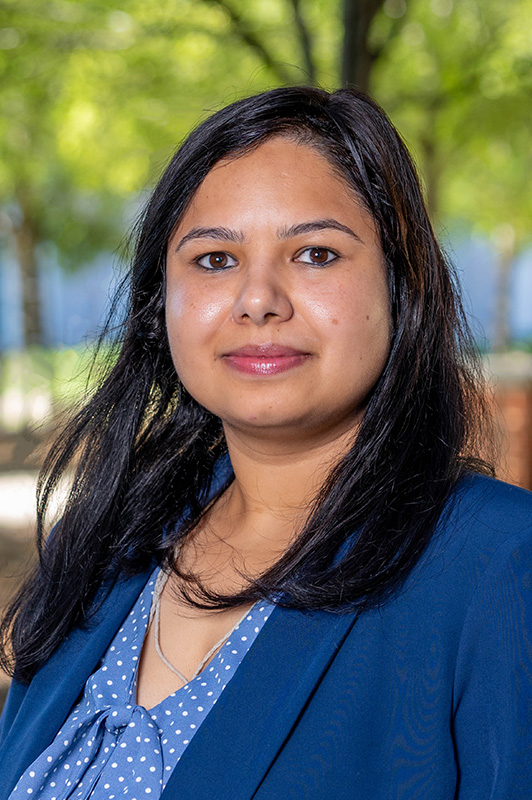
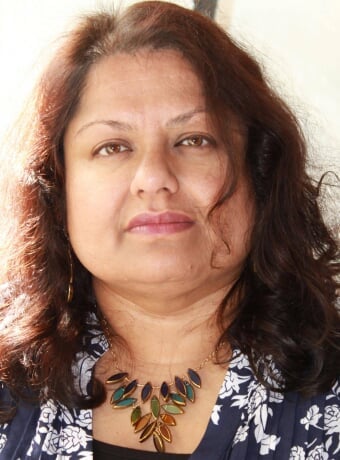
Neha Sharma is an Assistant Professor in the Department of Civil and Environmental Engineering at Auburn University. Her research focuses on nutrient recovery, electrochemical resource recovery, water reuse, trace metal cycling, and pollutant fate and removal.
James King is an Associate Professor in the Department of Geography at the University of Montreal, specializing in geomorphology and aeolian processes. His research focuses on wind erosion, mineral dust dynamics, and their impacts on climate and ecosystems, particularly in high-latitude regions like the Yukon and Namibia. He holds a BSc in Earth surface sciences from the University of Guelph and a PhD in Physical Geography from an unmentioned institution, with postdoctoral training in climatology. Key research areas include dust emission climatology, glacial retreat impacts, and aerosol-climate interactions. Over 20 ongoing and completed projects, including dust dynamics in proglacial valleys and high-latitude dust sources, are funded by CRSNG, FCI, and international collaborations. King supervises graduate students on topics like dust deposition effects on ecosystems and remote sensing applications. His work integrates field measurements, remote sensing, and climate modeling to advance understanding of dust processes in arid and semi-arid environments. He collaborates with global teams, such as the Hominin Dispersals Research Group, and contributes to initiatives like the Changing Atmospheric Chemistry, Transport, and Emissions (ACTE) project.
Professor John Parnell is the Chair in Geology & Petroleum Geology at the University of Aberdeen , affiliated with the School of Geosciences and Department of Geology and Petroleum Geology . His research focuses on geochemistry, paleoenvironmental reconstruction, trace element cycling, and sedimentary systems , with significant contributions to studies of the Rhynie Chert, Bowland Shale, and Lewisian Complex. Research Interests Professor Parnell's work spans: Geochemical analysis of Paleoproterozoic and Neoproterozoic systems Trace metal mobility in sedimentary and metamorphic environments Organic carbon burial and its tectonic implications Planetary analog studies for Mars exploration Shale resource characterization and environmental impact assessment Recent Publications His recent articles highlight investigations into: Graphitization processes in Scottish Highlands marbles Sulphur isotope records in Precambrian successions Trace element dynamics in the Bowland Shale Biogeochemical cycling at the Precambrian-Cambrian boundary Labs & Collaborations He leads research in the Geofluids Group and collaborates with the Planetary Sciences Department on Mars analog studies.
Dr. Nicola Allison is a Reader at the University of St Andrews, School of Earth & Environmental Sciences, where she leads research on biomineralisation. Her work focuses on how marine organisms form calcium carbonate structures, the impact of environmental changes on these processes, and the role of these biominerals in reconstructing past climates. Her research integrates experimental studies using controlled aquaria systems to culture corals and other organisms, alongside geochemical analyses of fossil carbonates. Key areas include the effects of ocean acidification, rising temperatures, and organic matrices on biomineral formation. She collaborates internationally, including through the International Ocean Discovery Program (IODP). Publications highlight advancements in understanding coral skeletal chemistry, aragonite precipitation mechanisms, and the development of climate proxies. She holds grants from NERC, MASTS, and the Leverhulme Trust, supporting projects on coral calcification, biomolecule influences, and climate change impacts. Dr. Allison actively engages in public outreach through workshops and conferences, contributing to climate science communication and policy-relevant research on marine ecosystems.
Antonio Simonetti is an Associate Professor at the University of Notre Dame in the Civil & Environmental Engineering & Earth Sciences department, affiliated with the College of Engineering. He leads the Isotope Geochemistry Laboratory and MITERAC facility, focusing on nuclear forensics, geochronology, and isotope geochemistry. His research spans high spatial resolution analysis of Earth materials, lunar studies, and bioarchaeological mobility tracing. Ph.D., Carleton University (1994) M.S., McGill University (1989) B.S., McGill University (1986) Research interests include: Nuclear Forensics: Developing microanalytical techniques for post-detonation materials and source attribution. Geochronology: Dating igneous and biogenic materials using U-Pb and other isotopic systems. Isotope Geochemistry: Investigating mantle-derived carbonatites and environmental pollution tracing. Bioarchaeology: Using Sr, Nd, Pb isotopes to study ancient human migration in Nubia and the Nile Valley. Recent trends in his publications highlight interdisciplinary applications of isotopic analysis across nuclear materials, lunar science, and archaeological studies. His group employs LA-MC-ICP-MS for high-resolution chemical and isotopic mapping. Students and collaborators span graduate, undergraduate, and international PhD candidates, with projects on uranium isotope signatures, carbonatite petrogenesis, and isotopic tracing of ancient civilizations. Current students include Julia Rufener (lunar KREEP analysis), Jiahua Wu (nuclear fuel cycle signatures), and Bennett Schmitt (REE mineralization in carbonatites). Labs and teams: Directs the Isotope Geochemistry Laboratory and MITERAC facility, supporting advanced ICP-MS and laser ablation analyses. Collaborates with institutions in Brazil, Turkey, China, and Ireland on geological and archaeological projects.
Dr. Huazhong Shi is a Professor in the Department of Chemistry and Biochemistry at Texas Tech University. His research focuses on molecular biology, biochemistry, and plant stress response mechanisms, with a particular emphasis on gene editing for crop improvement, herbicide resistance development, and computational simulations of protein-small molecule interactions. Ph.D., Wuhan University, China, 1995 Research Associate, University of Arizona, 1999-2001 Research Associate, University of California, 2001-2003 Research Associate, Purdue University, 2003-2004 Dr. Shi’s research explores gene editing strategies to enhance crop traits such as clonal seed production, haploid induction, and herbicide resistance. His lab also investigates molecular dynamics simulations to understand enzyme-herbicide interactions and stress-inducible gene regulation. Key projects include engineering salt-tolerant crops via Na+/H+ antiporter optimization and elucidating the roles of SHI genes in stress response pathways. The 15 most recent publications highlight advancements in gene editing for hybrid vigor preservation, directed evolution of herbicide-resistant enzymes, and computational modeling of stress tolerance mechanisms. These works span disciplines including plant biotechnology, environmental toxicology, and agricultural sustainability, with subfields such as RNA splicing, redox biology, and nutrient-stress interactions. Dr. Shi’s lab includes graduate students Yihui Yuan, Hongjia Qian, Amna Aqdas, Karthik Kalvakuntla, and Shoumik Kundu, alongside research associate Dr. Jianfei Guo. His work contributes to global food security through biotechnological innovations in crop resilience to environmental stresses.
Dr. Diego Fernandez is a Research Professor in the Department of Geology & Geophysics at the University of Utah, specializing in isotope geochemistry, mineral resource characterization, and environmental dust dynamics. His work spans four decades of academic appointments (2006–present) with expertise in strontium isotope applications for migration tracking, critical mineral assessments, and dust pollution health impacts. PhD in Thermodynamics, University of Buenos Aires (1992) Research Professor (2021–present) Research Associate Professor (2014–2021) Research Assistant Professor (2006–2014) Research focuses include: strontium isotope geochemistry for reconstructing animal migration and geological processes; critical mineral characterization of coal-bearing strata for rare earth element extraction; environmental health impacts of dust from the Great Salt Lake playa; dust source apportionment in urban settings; and magmatic system petrochronology of the Alta Stock region. Recent publications (2024–2025) demonstrate methodological innovations in LA-ICP-MS analysis, Bayesian isotope turnover modeling, and dust-metal contamination frameworks. His studies document elevated health risks from thallium, arsenic, and lead in urban dust, while proposing solutions through dust suppression and international emission reductions. 2024 Distinguished Educator Award, University of Utah College of Science Current grants include USGS-funded terminal lake geochemistry, NSF projects on critical zone dust dynamics, and Bering Sea fisheries baseline studies Teaching activities include directing SRI Research courses (2024) and mentoring interdisciplinary projects on environmental isotopes. Collaborators include institutions across North America and Europe, with fieldwork in Utah, Alaska, Wyoming, and Kenya.
Bethany Jenkins is Professor of Cell and Molecular Biology and Oceanography at the University of Rhode Island's College of the Environment and Life Sciences, and serves as Interim Vice President for Research and Economic Development. She holds a PhD in Chemistry from the University of Oregon and a BS in Biochemistry from Mount Holyoke College. Her research examines coastal ecosystem responses to climate change, marine plastic pollution, and ocean biogeochemistry. She leads NSF EPSCoR projects on coastal ecology and marine plastics, employing genomic methods to study nutrient metabolism. Her work spans the North Atlantic and Southern Ocean, with emphasis on diatom physiology and harmful algal blooms. Awards: URI Research and Scholarship Excellence Award (2018) Brown University Inspiring Women in Science Award (2016) Jenkins has held leadership roles in the Ocean Carbon Biogeochemistry Program and NSF GEOTRACES. She previously directed graduate programs in Biological and Environmental Sciences.
Christoph J. Fahrni is a Professor at the School of Chemistry and Biochemistry, Georgia Institute of Technology. He earned his M.S. from the Federal Institute of Technology (ETH) in Zurich and a Ph.D. in Chemistry from the University of Basel in 1995. After postdoctoral work at Northwestern University, he joined Georgia Tech in 1999, where his research focuses on metal ion biochemistry, particularly copper and zinc, using fluorescent probes and X-ray fluorescence imaging. Education: M.S., Federal Institute of Technology (ETH), Zurich Ph.D., University of Basel, 1995 His research integrates synthetic fluorescent probes and X-ray fluorescence microscopy to study intracellular metal ion dynamics, including copper trafficking, zinc homeostasis, and their roles in diseases like Menkes syndrome. The lab develops high-affinity ligands for copper buffering, investigates P-type ATPase transporters, and uses 3D X-ray tomography to map metals in zebrafish embryos. Key methodologies include ratiometric two-photon microscopy and bioorganometallic catalyst design. Recent publications highlight advancements in subzeptomolar copper probes, dynamic zinc imaging during development, and metal chelation therapy applications. Collaborative projects with Prof. Robert Dickson explore low-background fluorescent protein imaging. The Fahrni group trains graduate students like Daisy Bourassa and Adam McCallum, focusing on biochemical copper/zinc interactions and probe development.
Alfred Wegener Institute for Polar and Marine ResearchGermany
Dr. Scarlett Trimborn is a Senior Scientist and Head of the EcoTrace Group at the Alfred Wegener Institute's Ecological Chemistry section. Her work focuses on Southern Ocean phytoplankton ecology, trace metal ecophysiology, and the biological carbon pump. She leads initiatives such as the Subtopic 6.3 Future Biological Carbon Pump and collaborates on projects like MOSAiC and FRAM. Her research combines field experiments, lab-based physiological studies, and biogeochemical modeling to understand climate impacts on marine systems. Education and affiliations include roles at the AWI Marine Station Helgoland and contributions to international polar research networks. She has published extensively on Southern Ocean biogeochemistry, trace metal dynamics, and climate change effects, with over 128 peer-reviewed articles. Key focuses include iron limitation mechanisms, phytoplankton community responses to acidification, and carbon sequestration pathways. Her work integrates interdisciplinary approaches, such as transcriptomics and exopolymer analysis, to uncover stress adaptation strategies in Antarctic species. She also explores trophic interactions, like fecal pellet nutrient recycling by salps vs. krill, influencing Southern Ocean biogeochemical cycles.
Annika Björn is an Associate Professor at the Theme Environmental Change (TEMAM) within Linköping University . Her research focuses on Biogas Production , Anaerobic Digestion , and Environmental Chemistry to enhance sustainable energy systems through optimized microbial processes. PhD in Environmental Chemistry (2007), Linköping University MSc in Chemistry (1997), Linköping University Major research initiatives include: Coordinating process and technology development at the Biogas Solutions Research Center Leading KNUT project for science education integration Investigating Trace Element Dynamics in biogas reactors Optimizing Hydrolysis Efficiency for complex substrates Key findings from her 15 recent publications (2010-2025) demonstrate: Strategies to enhance biogas yield from lignocellulosic and industrial waste Techniques for rheological control through microbial metabolites Meta-analyses on pretreatment efficacy across diverse substrates Development of educational frameworks for energy sustainability Process improvements in UASB and CSTR reactor systems Characterization of underutilized organic fractions in digestate
Dr. Shaun Watmough is a Professor and Director of the School of the Environment at Trent University, where he has worked since 2004. He is affiliated with the Water Quality Centre, contributing to its research since his postdoctoral studies under Dr. Peter Dillon. His expertise lies in biogeochemical cycling, particularly in forested catchments affected by acidification, nitrogen saturation, and trace metal dynamics. His work integrates novel methodologies like stable isotope tracing to elucidate metal cycling mechanisms and has produced critical load maps for acidification in Ontario. Current research emphasizes trace metal behavior in Alberta's Oil Sands and Sudbury's regreened landscapes. Dr. Watmough’s research spans soil and water chemistry, ecosystem recovery post-industrial pollution, and the impacts of climate change on forest ecosystems. Notable contributions include studies on wood ash fertilization, peatland metal enrichment, and nitrogen deposition trends. He leads a multidisciplinary team addressing environmental challenges through biogeochemical analysis and restoration strategies. His publications highlight themes of ecological recovery in degraded landscapes, nutrient cycling under pollution, and the application of isotope techniques. While no formal awards are listed, his contributions to critical load frameworks and restoration science reflect significant academic impact. Advising includes seven graduate and undergraduate students focusing on topics like forest regreening, metal biogeochemistry, and liming effects. His work bridges academic research with practical applications in environmental policy and land management.
Carolyn Buchwald is an Associate Professor in the Department of Oceanography at Dalhousie University, Faculty of Science. Her research focuses on marine biogeochemistry, particularly nitrogen cycling and stable isotope analysis. She leads the Buchwald Lab, exploring microbial processes and anthropogenic impacts on coastal and open ocean ecosystems. Education: SB in Earth, Atmospheric, and Planetary Sciences (MIT) and PhD in Chemical Oceanography (MIT/Woods Hole Oceanographic Institution Joint Program). She teaches courses including Chemical Oceanography (OCEA3002, OCEA5290) and Honours Research (OCEA4201/4202). Research interests include nitrogen transformation pathways, nitrate/nitrite isotope dynamics, and the role of microbes in nutrient cycling. Her work spans coastal systems to the Arctic and tropical oceans, addressing climate impacts and pollution effects. Publications highlight innovations in isotopic tracing, nitrification processes, and nitrogen loss mechanisms. Collaborations emphasize interdisciplinary approaches, integrating fieldwork, lab experiments, and modeling.
Dr. Ian Spooner is a Professor in the Department of Earth and Environmental Science at Acadia University, where he has worked for 31 years. His research focuses on environmental change, surface water-groundwater interactions, and contamination assessment across eastern Canada. Ph.D. in Geoscience (University of Calgary, 1994) M.Sc. in Geology (Queen's University, 1988) B.Sc. (Honours) in Geology (Queen's University, 1984) His scholarly work spans three decades, with recent publications highlighting mercury contamination in seabird soils, sediment dewatering techniques, and paleolimnological tools for pollution assessment. He has developed tidypaleo , an R package for visualizing environmental archives. Key research trends include industrial pollution impacts on coastal ecosystems, long-term contamination records in lake sediments, and geological responses to climate change. His work bridges field studies with computational methods for environmental data analysis. Distinguished Service Award (Atlantic Geoscience Society) 2020 Acadia Faculty Award for Excellence in Teaching 2022 Donald Stanley Award (Canadian Society for Civil Engineering) As Manager of the Morton Centre and coordinator of the M.Sc. Applied Geomatics program, he leads collaborative projects in Nova Scotia, Newfoundland, and British Columbia. Funding sources include NSERC grants and industry partnerships.
Rupali Datta is a Professor of Biological Sciences at Michigan Technological University (MTU), affiliated with the Great Lakes Research Center (GLRC). Her research focuses on applying plant biochemistry, genetics, and microbiology to address environmental contamination through phytoremediation and plant-microbe interactions. She holds a PhD from the University of Hyderabad, India. Dr. Datta collaborates with experts in environmental geochemistry, soil science, and analytical chemistry to study contaminant bioavailability in aquatic and terrestrial systems. Her work emphasizes remediation of heavy metals (arsenic, lead), explosives (TNT/RDX), antibiotics, and petroleum hydrocarbons using green technologies. She leads projects funded by agencies like the Department of Defense, EPA, and HUD. Key research areas include: Phytoremediation of contaminated soils and water using vetiver grass and hyperaccumulator plants Bioavailability of contaminants in human and environmental systems Development of sustainable remediation technologies like biochar and water treatment residuals Health effects of metal exposure in cell and animal models Recent grants include a $2.5M DoD project on PFAS remediation (2023–2025) and a HUD initiative to reduce lead bioavailability in residential soils (2021–2024). Dr. Datta’s lab also partners with SIROM Scientific Solutions, LLC, advancing environmental R&D. Her work bridges fundamental science and applied solutions, addressing global challenges in pollution and sustainability.