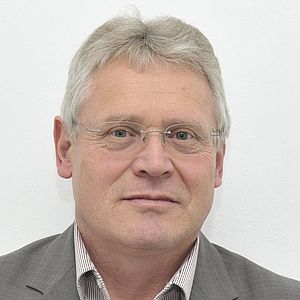
Dr. Frank Dittmann is a Curator at the Deutsches Museum in Munich since 2005, specializing in the history of technology. He holds a Dr. phil. in the history of technology from TU Dresden (1993) and a Dipl.-Ing. in electrical engineering (1987). Prior roles include curator positions at the Heinz Nixdorf MuseumsForum in Paderborn (1999–2005) and the Berlin City Museum (1996–1999). His research focuses on the history of electrical engineering, the genesis of cybernetics and systems theory in the Eastern Bloc, and the technological evolution of artificial intelligence and robotics. He has curated major exhibitions, including the 2022 permanent robotics exhibition at the Deutsches Museum and the 2013 energy technology update. Key projects include analyzing technology transfer during the Cold War and exploring early solar energy use. Publications span books like Technik - Innovation - Sicherheit (2021) and essays on topics such as semiconductor technology in East Germany and the history of electrical measurement systems. His work bridges historical analysis with public engagement through museum curation.
Andries "Andy" van Dam is a distinguished Dutch-American professor of computer science at Brown University, where he also served as vice-president for research. Born in Groningen, the Netherlands on December 8, 1938, van Dam has been instrumental in shaping computer science education and research for over five decades. He helped establish Brown's computer science program, serving as its first department chair from 1979 to 1985, and was appointed Thomas J. Watson, Jr. University Professor of Technology and Education in 1995. His educational background includes a B.S. with Honors in Engineering Sciences from Swarthmore College (1960) and M.S. and Ph.D. degrees from the University of Pennsylvania (1963, 1966), where he was the second person to receive a PhD in Computer Science. Van Dam's research interests span computer graphics, hypertext systems, virtual reality, and educational technology. He is particularly known for his pioneering work in hypertext systems, having co-developed the first hypertext system with Ted Nelson in the late 1960s. His influential textbook "Computer Graphics: Principles and Practice" is often referred to as the "Bible" of computer graphics. His work has consistently focused on making complex computing concepts accessible through innovative interfaces and educational approaches. His research publications demonstrate a consistent trajectory from foundational work in computer graphics and hypertext to more recent explorations in immersive virtual reality, digital visual literacy, and next-generation educational software. His work bridges theoretical computer science with practical applications in education, medicine, and scientific visualization. Among his notable honors are: IEEE Centennial Medal (1984) Fellow of the Association for Computing Machinery (1994) ACM SIGGRAPH Distinguished Educator Award (2019) Van Dam has mentored numerous students who have gone on to make significant contributions in computer science, including Randy Pausch, Danah boyd, Scott Draves, and Steven K. Feiner. His teaching extends beyond traditional academic settings, as evidenced by his influence on the character of Andy in the film Toy Story, which pays tribute to his pioneering work in computer graphics. He continues to serve on the technical board of Microsoft Research and as chairman of the Rhode Island Governor's Science and Technology Advisory Council. His research lab has been instrumental in developing innovative approaches to human-computer interaction, with particular focus on post-WIMP (Windows, Icons, Menus, Pointer) interfaces, immersive environments, and educational technologies that transform how we learn and interact with digital information.
Diana Valencia is an Associate Professor in the Department of Physical and Environmental Sciences at the University of Toronto, with cross-appointments in the Department of Astronomy. She holds positions at both the University of Toronto Scarborough (UTSC) and the St. George campus, focusing her research on the characterization of low-mass exoplanets, particularly super-Earths and mini-Neptunes. Her work aims to determine whether planets with masses between 1-15 Earth masses are scaled-up versions of Earth or scaled-down versions of Neptune in terms of composition, evolution, and physical properties. Ph.D. from Harvard University, Department of Earth and Planetary Sciences (2008) M.Sc. from University of Toronto, Physics Department (2002) B.Sc. (Honours) from University of Toronto, Physics Department (2001) Dr. Valencia's research interests center on the chemical composition and interior structure of super-Earths and mini-Neptunes, formation processes and chemistry of rocky planets, thermal evolution and interior dynamics of rocky and icy planets, and planetary habitability. Her work combines theoretical modeling with observational constraints to understand how planets form, evolve, and develop the properties we observe. She particularly focuses on connecting stellar composition to planetary characteristics and using statistical approaches to infer interior structures from mass-radius relationships. Analysis of her recent publications shows a strong focus on connecting stellar composition to planetary characteristics, with increasing use of advanced statistical methods and machine learning techniques to infer interior structures. Her research spans theoretical modeling of planetary interiors, observational constraints from missions like JWST, and development of instrumentation for exoplanet characterization. The trend shows growing emphasis on understanding the diversity of rocky exoplanets and their formation pathways. Paolo Farinella 2021 Prize awarded by the European Planetary Society (shared with Lena Noack) Dr. Valencia actively mentors PhD students, currently supervising Nathan Winsor (Habitability of M-Dwarf Stars), Jen Scora (Compositional Outcome of Rocky Planet Formation), Bo Peng (Volatile Acquisition of Rocky Planetary Bodies), and Mykhaylo Plotnykov (Statistical Inferences of the Interior Structure and Composition of Exoplanets). Her research group spans a wide variety of topics related to planetary formation and evolution, with particular emphasis on understanding how planets develop their observed properties. She has secured significant research funding, including NASA Sagan Postdoctoral Fellowship and Henri Poincare Postdoctoral Fellowship. Dr. Valencia leads a research group focused on understanding planetary formation and evolution, with projects ranging from statistical inferences of interior structure to thermo-chemical evolution of planetesimals. She has also created the Astro4Kids initiative, providing free astronomy education to children worldwide, demonstrating her commitment to public outreach and science communication.
Professor Satyaki Roy is a faculty member at the Indian Institute of Technology Kanpur , serving in the Department of Design and the Media Technology Centre . Since October 2001 he has been instrumental in establishing the Media Technology Centre and the 90.4 FM Community Radio Station on campus, and has founded the start-up Gestures Design and Media Solutions Pvt. Ltd. Education PhD, Kala Bhavana, Visva-Bharati University, Santiniketan (2003–07) MFA, Kala Bhavana, Visva-Bharati University, Santiniketan (1997–99) BFA, Kala Bhavana, Visva-Bharati University, Santiniketan (1992–97) Research & Creative Focus Professor Roy’s research integrates visual communication, folk art & crafts, creativity, film-making, design thinking, and user-experience design . His work explores the intersection of traditional Indian aesthetics with contemporary design practice, employing visual ethnography, augmented-reality applications, and emotion-driven design methodologies to address challenges in education, urbanism, and sustainable craft livelihoods. Publications Trajectory Across 2021 alone, Roy co-authored four major journal and conference papers on themes ranging from commoditization of Gond art to emotion dynamics in design processes and visual literacy for children. Earlier works (2017–2015) concentrated on augmented-reality toolkits, urban visual perception methodologies, and empowerment of craft clusters, demonstrating a steady evolution from ethnographic documentation to actionable design interventions. Honours & Patents National recognition for contributions to the NPTEL Phase I-II (2004–2014) Indian Patent 234987 – “The Drift-Battery Operated Campus Vehicle” Indian Patent 238758 – “Stair Climbing Wheel Chair” Best-paper recognition at the Design History Society Annual Conference, Barcelona Advising & Grants He has supervised 60+ M.Des theses and currently guides eight active PhD scholars in areas such as folk-painting aesthetics, emotion in design, sustainable pottery, assistive yoga tools, signage, and medical-device design. His projects have been funded by MHRD, MOE, DST, MIB, DMSRDE, UPPCL, NOKIA, JCBL and others, totalling more than 30 completed and ongoing initiatives in e-content creation, community radio, digital agriculture, and rural craft revitalisation. Labs & Teams Roy spearheads activities at the Media Technology Centre , the 90.4 FM Community Radio Station , and collaborates with the Design Programme at IIT Kanpur. These interdisciplinary hubs integrate design research, media production, and outreach to foster innovation in education, culture, and social development.
Prof. Dr. Marc Godau serves as Professor and Head of the Institute for Talent Research in Music (IBFM) at the University of Paderborn, while also acting as Speaker for Empirical music education with special consideration of school and pop cultural contexts. His academic work bridges music pedagogy with digital cultural studies, focusing on how contemporary technologies reshape musical practices and education. Godau's research centers on post-digital music education , critically examining algorithmic influences on creative processes, platform-mediated music practices (particularly TikTok and Instagram), and the sociomaterial dimensions of informal learning. He challenges traditional 'liveness norms' in music education that marginalize digital and popular cultural forms, advocating for pedagogical approaches that embrace cultural diversity and technological innovation in both school and informal settings. Analysis of his publication trajectory reveals consistent focus on digital transformation in music education, with recent work exploring YouTube tutorials, app-based music creation, and platform musicianship. His scholarship demonstrates how social media algorithms reshape songwriting subjectivity while highlighting tensions between institutional music education frameworks and emerging digital practices. As Principal Investigator for the KuMuS-ProNeD project (Professional networks for digital innovations in teacher training for art, music and sports), Godau drives systemic change in educator development. His teaching portfolio includes forward-looking courses such as 'Making and learning music in (post)digital culture' and 'Musical & Educational Influencers – Music Education of the Future?', positioning him at the vanguard of reimagining music pedagogy for digital generations.
Professor Liam Viney is Head of the School of Music at the University of Queensland. A distinguished performer and scholar, he specializes in piano performance, duo pianism, and contemporary music. He leads the UQ Chamber Players and Viney-Grinberg Duo, commissioning new works and exploring Australian piano literature. His research bridges artistic practice and scholarly analysis, supported by grants from the Australia Council and Harvard’s Fromm Foundation. Recognized for his innovative performances, he has been featured on eight commercial albums (ABC Classics, Naxos). Current roles: Professor & Head of School, School of Music, UQ Ensembles: UQ Chamber Players, Viney-Grinberg Duo Research focus: New music creation, collaborative performance, Australian piano repertoire Research interests include the intersection of performance and scholarship, with a focus on duo piano’s role in fostering new musical thought. His work emphasizes interdisciplinary collaboration and the translation of artistic innovation into academic discourse. Key themes: Commissioning processes, interpretive challenges in modern repertoire, artistic collaboration Recent articles explore Kanye West’s production techniques, protest songs, and the role of music in political oratory. His work has been nominated for APRA Awards and highlights cross-cultural compositions. Awards: Nominated for Australian Music Centre/APRA Awards for Excellence Grants include funding from the Australia Council and Harvard’s Fromm Foundation, supporting performances and commissions. Advising includes mentoring students in piano performance and contemporary ensemble work. Key grants: Australia Council for the Arts, Fromm Foundation Labs/teams: Core member of UQ’s music ensembles, including the White Halo Ensemble and Queensland Symphony collaborations. Performance venues: Queensland Performing Arts Centre, Campbelltown Arts Centre, Sydney Conservatorium
Univ.-Prof. Dr. Ursula Kessels (Freie Universität Berlin) is a leading professor in education research focusing on heterogeneity and education. Her work bridges basic and applied research in school and classroom contexts, drawing on educational psychology, social psychology, and developmental psychology. Research methodology emphasizes experimental designs, complemented by correlational and evaluation studies. She investigates motivational, identity-related, and attitudinal predictors of school learning , equity in education systems (especially gender, ethnicity, and socioeconomic disparities), and developed the Interests as Identity Regulation Model (IIRM) to map interactions between academic interest/achievement and identity development. Key research areas: Gender stereotypes in education, STEM engagement, feedback bias, school burnout, and shifting standards in evaluating stereotyped groups Recent projects: DFG-funded studies on performance feedback to learners with migration backgrounds and boys' educational disparities Collaborations span planetary sciences, health sciences, and international networks Her 15 most recent publications (2021–2024) focus on gendered/ethnic biases in education , shifting standards theory, and identity dynamics in STEM. Topics include prosocial behavior backlash in classrooms, math career aspirations, and feedback inflation for minority students. Methodologically, she combines experimental designs , implicit association measures, and cross-national comparisons. Key grants include DFG projects (2013–2022) and Jacobs Foundation funding (2008). She contributes to policy discussions through invited lectures at institutions like Ghent University and University of Wuppertal.
Julie Runde Krogstad is a PhD candidate at the Faculty of Social Sciences , University of Agder. Her research focuses on urban transport governance in medium-sized Norwegian cities , examining how local governments address climate-related challenges through policy networks and organizational factors . She is funded by the Research Council of Norway as part of the SUSTAIN project, collaborating with institutions like CICERO , NORCE , and Transportøkonomisk institutt (TØI). Research Interests : Julie's work spans climate policy integration , public administration , transport governance , and universal design in urban mobility. She investigates state-local government dynamics , political leadership , and policy coordination in sustainability transitions. Recent Publications : Her articles address topics such as hierarchical policy networks , universal travel chain design , public participation in transport, and zero-growth mobility . These works often involve Norwegian cities like Bergen, Trondheim, and Nord-Jæren, analyzing parking strategies , smart city technologies , and intergovernmental negotiations . Collaborations : Julie works with researchers from University of Oslo , NORCE , and Transportøkonomisk institutt . Her projects include partnerships with five Norwegian cities and four county municipalities , focusing on sustainable transport and climate justice .
Dr Brian Inglis is an Associate Professor & Director of Music Programmes at Middlesex University's School of Arts (Faculty of Arts and Creative Industries). He holds a PhD from City University, London and previously taught at Trinity Laban Conservatoire. His dual role combines academic leadership with active research in musicology, composition, and performance. Education: PhD in Music, City University London MA in Music, City University London Bachelor's degree from Durham University Research Interests: Inglis' work bridges classical music structures with spiritual and identity themes. Key areas include: 20th-21st Century British Music (Warlock, Tavener) Music and Spirituality (liturgical compositions, mystical aesthetics) Experimental Notation (graphic scores, text-based instructions) Queer Musical Identities Music Publishing Histories Professional Activities: Inglis is a board member of the Journal of the Royal Musical Association, director of the Stoke Newington Contemporary Music Festival, and steering committee member of the Music, Spirituality and Wellbeing network. His compositions have been performed internationally and released on labels like Nonclassical and Sargasso. Recent Work Trends: Publications focus on semiotic analysis (popular/classical music intersections), Warlock's compositional legacy, and spiritual dimensions in music. His 2020 co-edited Sorabji-Warlock letters earned critical acclaim. Awards & Recognition: 2020: BBC Music Magazine's Best Classical Book for Sorabji correspondence edition 2011: Fellowship with the Higher Education Academy Supervision & Grants: Currently supervising PhD students David Etheridge (Thunderbirds composer Barry Gray) and Joel Sharbaugh (Schola Fiorentina dodecaphony). Recent grant supported Kexin Fan's research. Performance & Composition: Inglis' works span liturgical pieces (Ave Generosa), experimental piano music (Homage to Alkan), and toy piano experiments. His music blends historical traditions with avant-garde approaches.
Kimberly Saks is an Assistant Professor of Political Science and Pre-Law Advisor at the University of Michigan-Flint's College of Arts and Sciences. Her academic journey spans from private legal practice to academia, where she focuses on the intersection of law, public policy, and social justice. Known for her community-building approach, she uses unconventional methods like incorporating toys in her office to create an approachable environment for students. Education: Bachelor's degrees in Political Science and French from Eastern Michigan University; Juris Doctor from University of Detroit Mercy School of Law Current roles: Assistant Professor (since 2022), graduate program manager in public administration, advisor to pre-law program and Moot Court team Notable achievements: Instrumental in establishing UM-Flint's first faculty union in April 2024 Her research explores how legal decisions like Dobbs v. Jackson Women’s Health Organization affect reproductive rights access through a reproductive justice lens. She emphasizes the dynamic nature of law and its everyday societal impact to her students. Kimberly actively engages with Flint's arts community and advocates for its revitalization. Personal interests include playing Tetris, reading dystopian literature like Aldous Huxley's Brave New World, and visiting National Parks.
Jeppe Just Christensen is an Associate Professor at Royal Danish Academy of Music (DKDM) since 2011, serving as a Study Lecturer since 2019. He teaches composition and leads artistic initiatives like the Pulsar Festival. His practice integrates DIY instrument design with contemporary composition, often involving personal performance with ensembles like Jeppe Just Instituttet. Royal Danish Academy of Music (DKDM): Study Lecturer (2019-present) Royal Music Conservatory (RMC): Part-time teacher His research focuses on amateurism , folk music reinterpretation , and street music , using self-built or repurposed instruments. Works like Geteilten Saiten (2022) demonstrate advanced motorized string instrument integration, while Neko (2009) explores translational semiotics through flexatone inversion techniques. Notable awards include the Wilhelm Hansen Award and grants from the Danish Arts Foundation . His pedagogical work spans formal institutions (DKDM, RMC) and community workshops with children aged 3-6, emphasizing instrument-building and sound exploration. Collaborations with SCENATET and Klang Festival highlight his interdisciplinary approach.
Tara Woodyer is a Senior Lecturer at the University of Portsmouth’s Department of Environmental Geography and Geosciences. Her research bridges human geography and childhood studies, focusing on toys’ cultural, material, and spatial dimensions across historical and contemporary contexts. She employs ethnographic and video-based methods to analyze children’s engagements with toys, emphasizing materialities, bodily interactions, and play’s role in human experience across lifecourses. Her work extends into geopolitical and sociopolitical issues affecting children and families, often collaborating across disciplines like geopolitics, social care, and education. Woodyer’s research has been funded by ESRC awards and has influenced debates on childhood cultures, commodity forms, and geopolitical climates. She co-leads initiatives on ludic and enchanting geographies, rethinking academic critique and neoliberal academia’s role in mental wellbeing. Internationally, she has held visiting scholar positions in the USA and Finland, presented at conferences in multiple countries, and published works cited across disciplines including sociology and childhood studies. She actively contributes to academic communities, serving as Chair of the Royal Geographical Society’s Social and Cultural Geography Research Group and advising on the Hampshire Geographical Association. Pedagogically, she has examined undergraduate and postgraduate programs in Geography and Global Development. Currently, she supervises five postgraduate students researching topics like intergenerational care, gender in sport, and outdoor risk. Her interdisciplinary networks include collaborations with institutions like the V&A Museum of Childhood and Exeter University. She advocates for ludic methodologies in geographical research, emphasizing play’s transformative potential in addressing societal issues.
Anthony Paul De Ritis is a Professor and former Chair (2003-2015) of the Music Department at Northeastern University's College of Arts, Media and Design. He holds courtesy appointments in the Entrepreneurship and Innovation Group (D’Amore-McKim School of Business) and Asian Studies (College of Social Sciences and Humanities). As a composer, he blends Western classical traditions with Chinese instruments and electronic elements, creating works like Devolution: A Concerto for DJ and Symphony Orchestra and Pop Concerto . Education B.A. in Music, Bucknell University M.M. in Electronic Music Composition, Ohio University Ph.D. in Music Composition, University of California, Berkeley MBA in High-Tech, Northeastern University De Ritis’ research focuses on music composition , symphonic literature , design thinking , and cultural diplomacy . His works often integrate technology and global traditions, exemplified by collaborations with DJ Spooky and Chinese musicians. His 2018 Albany Records collection spans 25 years of electroacoustic innovation. His compositions have been performed at prestigious venues including Carnegie Hall, UNESCO headquarters, and the University of Hong Kong. Notable awards include the Distinguished Alumni Award from Ohio University (2006) and a Fulbright Senior Research Scholar grant (2011). He co-edits the Journal of Global Media and China and collaborates with luminaries like Tan Dun as a "Special Professor" at China Conservatory of Music.
Brygg Ullmer is a Professor at Clemson University's School of Computing and Chair of the Human-Centered Computing Division. He leads the Tangible Visualization group, focusing on Tangible User Interfaces (TUIs) Computational Genomics Interactive Computational STEAM Rapid Physical/Electronic Prototyping Computationally-Mediated Art and Design His work bridges physical and digital domains, with applications in K-12 education, high-performance computing, and culturally-rooted design. Research trends from his 15 most recent articles show a focus on Generative AI for cyberphysical systems Shape-changing interfaces Token+Constraint interaction models Genomics data visualization Hybrid tangible-gestural interfaces Multi-display collaboration These span both theoretical and applied work in computer science, biology, and design. Ullmer has held significant roles including Postdoctoral work at Zuse Institute Berlin Associate Professor at Louisiana State University (CCT & Computer Science) Visiting Lecturer at Hong Kong Polytechnic University Contributions to IBM Systems Journal and special editions of Springer's Personal and Ubiquitous Computing He has also co-edited journal special issues and served on conference committees. His scientific contributions include co-invented U.S. patents (6164541, 6263507, 6259441) related to Invisible hyperlinking Audiovisual data browsing Digital video time-shifting These patents reflect early innovations in tangible interface technology that have influenced modern interactive systems.
Lina Hakim is a Senior Lecturer in Visual and Material Culture at Kingston University's School of Creative and Cultural Industries, Department of Critical and Historical Studies. She joined Kingston University in October 2015, teaching Critical and Historical Studies primarily to Graphic Design students. She also serves as a Sessional Lecturer at Imperial College London, where she teaches 'Science, Art & Design' to undergraduate STEM students and supervises an independent study module on 'Science Culture and Society'. Previously, she was an Andrew Mellon Post-Doctoral Research Fellow at the Victoria and Albert Museum, where she coordinated the V&A Research Institute Pilot Project exploring models of object-led inquiry and developing opportunities for cross-disciplinary collaborative research. Her educational background includes: PhD in Humanities & Cultural Studies from the London Consortium, Birkbeck, University of London (2013) MRes in Humanities & Cultural Studies from the London Consortium, Birkbeck, University of London MA in Book Arts from Camberwell College of Arts, University of the Arts London BA in Graphic Design from the American University of Beirut Lina Hakim's research focuses on the intersections between visual and material cultures of science, technology, craft, and play. Her work examines how objects facilitate thinking and understanding at multiple levels including encounter, production, use, and re-appropriation. Her doctoral project, 'Scientific Playthings: Artefacts, Affordance, History', investigated how 19th-century scientific instruments like the string surface model, Crookes radiometer, and gyroscope transitioned into toys. Her research is deeply informed by her artistic and design practice, emphasizing attentiveness to skill and craftsmanship, phenomenological experiences of objects, and the political dimensions of material assemblages. Her scholarly publications reveal a consistent methodology centered on object-oriented inquiry, with particular attention to how material encounters mediate knowledge production across historical and contemporary contexts. Her work spans historical analysis of scientific instruments, critical examinations of design activism, and theoretical explorations of material phenomenology, demonstrating a distinctive approach that bridges academic research with creative practice. Among her notable recognitions is the Andrew Mellon Post-Doctoral Research Fellowship at the Victoria and Albert Museum, where she coordinated the V&A Research Institute Pilot Project exploring models of object-led inquiry and developing opportunities for cross-disciplinary collaborative research. Hakim has taught across multiple programs including Graphic Design BA (Hons) and Illustration Animation BA (Hons) at Kingston University. At the V&A, she taught 'Key Concepts' on the V&A/RCA History of Design MA programme, examining the latest theories and methodologies in the field, and ran a 'Thinking Things' reading group for V&A staff. Her teaching philosophy emphasizes experiential learning through material engagement, connecting theoretical frameworks with hands-on object analysis. Her work bridges academic research with creative practice, reflecting her background as both a scholar and an artist. Through her various roles at Kingston University, Imperial College London, and the Victoria and Albert Museum, she has developed a distinctive approach to material culture studies that connects historical analysis with contemporary concerns about the political and epistemological dimensions of objects.