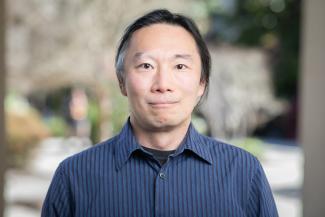
Takemichi Okui is a Professor of Physics at Florida State University (FSU), part of the Department of Physics within the College of Arts and Sciences. He holds a Ph.D. from the University of California, Berkeley (2003), and a B.Sc. from Hokkaido University, Japan (1998). His research focuses on High Energy Theory, with expertise in particle physics, cosmology, and quantum field theory. Okui has been recognized with awards such as the FSU Developing Scholar Award (2017) and University Teaching Award (2016). He has mentored multiple graduate students and postdoctoral researchers. Okui's academic roles include serving on FSU's Graduate Affairs Committee and organizing events like the Dirac Lectures. He has taught advanced courses in high energy physics, quantum field theory, and relativity. His research has been supported by grants from the U.S. Department of Energy (DOE) and Japan's JSPS, totaling over $10 million in funding. Key research interests include neutrino physics, dark matter, and axion models. Recent work explores primordial black holes and B-meson decays at the Belle II experiment. Okui actively contributes to professional services, reviewing grants for NSF/DOE and refereeing top journals like Physical Review Letters.
Cathryn Mitchell is a Professor of Radio Science and Royal Society Industry Fellow at the University of Bath, specializing in ionospheric physics, position, navigation, and timing (PNT). She leads research in the Space & Telecoms Research Group (STAR), focusing on radio propagation, data assimilation, and space weather impacts on communication systems. Her work bridges theoretical, computational, and experimental approaches, with applications in satellite navigation, climate monitoring, and defense sectors. Her research interests include ionospheric tomography, HF communications, and the development of robust PNT systems. Mitchell collaborates extensively with industry partners like Spirent Communications on future navigation technologies and space weather resilience. She has held roles such as Academic Director of the Doctoral College and contributes to interdisciplinary projects like the DRIIVE initiative exploring ionospheric variability with EISCAT-3D radar. Recent work emphasizes ionospheric effects during geomagnetic storms (e.g., the 2024 Gannon Storm) and cooperative autonomous systems under communication constraints. Her projects are funded by the Royal Society, Natural Environment Research Council (NERC), and ESA, addressing challenges in space weather forecasting and PNT system reliability. Awards: Royal Society Industry Fellow (2022–present) Key Projects: Royal Society Industry Fellowship on Future PNT Technologies DRIVERS (DRIIVE): Ionospheric Variability Studies EISCAT-3D FINESSE: Ionospheric Structuring Analysis Mitchell’s lab, STAR, integrates academic and industrial partnerships to advance space weather applications and sustainable navigation systems, contributing to UN Sustainable Development Goals related to climate action and innovation.
Mohd Fikree Hassan is a Lecturer at the School of Information Technology, Monash University Malaysia, joining in June 2023. He holds a Ph.D. and Master's from the University of Malaya, and a B.Eng. in Electronics Engineering from Multimedia University. With over 14 years of academic experience, he is actively engaged in research, teaching, and supervision. B.Eng. in Electronics Engineering (Telecommunications), Multimedia University, 2004 M.Eng. in Engineering (Telecommunications), University of Malaya, 2015 Ph.D. in Signal and Systems, University of Malaya, 2018 His research focuses on image and signal processing , particularly in image enhancement, restoration, computer vision, and human color vision . His work contributes to improving image visibility, removing color casts, and developing algorithms for noisy or degraded images. He applies mathematical and computational techniques to solve real-world imaging challenges. The recent publication trends (2021–2025) show a strong focus on image restoration using variational methods (e.g., total variation, ℓ0 regularization), color enhancement in HSI space, and video analysis for sports applications. His work bridges theoretical optimization and practical computer vision systems. He actively contributes to the academic community through peer review for journals such as Neurocomputing , Journal of Imaging , and International Journal of Computational Intelligence Systems , as well as for IEEE conferences. Mohd Fikree is currently accepting PhD students and serves as an external examiner for academic programs. His consistent research output and editorial service reflect a growing impact in the field of image processing and computer vision. While no formal lab or team is mentioned in the text, his collaborations with researchers like R. Paramesran, T. Adam, and G. Krishnasamy suggest active research partnerships in signal and image processing.
Daniele Venturi is a Professor of Applied Mathematics at the University of California, Santa Cruz, where he has been faculty since 2015, rising from Assistant Professor to full Professor by 2021. Previously, he was a Research Assistant Professor at Brown University from 2010-2015. His academic journey began at the University of Bologna, where he earned both his combined B.S./Sc.M. in Mechanical Engineering (2002) and Ph.D. in Applied Physics with a focus on thermo-fluid dynamics (2006). University of Bologna: B.S./Sc.M. Mechanical Engineering (2002), Ph.D. Applied Physics (2006) Brown University: Research Assistant Professor (2010-2015) UC Santa Cruz: Assistant to Associate to Full Professor (2015-present) Professor Venturi's research spans multiple cutting-edge areas in computational mathematics. His primary interests include stochastic modeling and uncertainty quantification, numerical tensor methods for high-dimensional PDEs, data-driven modeling approaches, approximation of functional-differential equations, and theoretical/computational fluid dynamics. His work bridges theoretical mathematical frameworks with practical computational implementations, particularly focusing on overcoming the curse of dimensionality in complex systems. His recent research has been heavily focused on hierarchical tensor methods for solving high-dimensional partial differential equations. The analysis of his publication record reveals a strong emphasis on developing computational frameworks that address high-dimensional challenges in uncertainty quantification and model reduction. His work frequently intersects machine learning techniques with traditional numerical methods, particularly in developing physics-informed neural networks and multifidelity modeling approaches. A consistent theme across his publications is the development of mathematical frameworks that maintain computational tractability while preserving physical fidelity in complex systems. Professor Venturi has secured substantial research funding from major agencies including the Air Force Office of Scientific Research (AFOSR), Department of Energy (DoE), National Science Foundation (NSF), Army Research Office (ARO), and Defense Advanced Research Projects Agency (DARPA). His most significant current grant is a 2024-2029 AFOSR MURI award totaling $7.5M as co-PI for 'Tensor Network for simulating kinetic systems.' 2024-2029: AFOSR MURI, $7.5M (co-PI) 2023-2027: DoE, $3.8M (co-PI) 2023-2026: AFOSR, $2.5M (co-PI) 2020-2025: NSF TRIPODS, $2.3M (co-PI) At UC Santa Cruz, Venturi teaches a range of courses including Fundamentals of Uncertainty Quantification, Applied Dynamical Systems, Nonlinear Dynamical Systems, and Numerical Methods for Differential Equations. His teaching spans both undergraduate and graduate levels, reflecting his expertise across theoretical and computational mathematics. His lecture notes for these courses are publicly available and demonstrate his commitment to pedagogical excellence in complex mathematical subjects.
Guido Pintacuda is a CNRS Research Director and Head of the Lyon High-Field NMR Center (CRMN) at École Normale Supérieure de Lyon since 2019. His work centers on advancing solid-state NMR methodologies with ultra-fast magic-angle spinning (MAS) to achieve atomic-level resolution in complex biomolecular and materials systems that are intractable to conventional techniques. Educational background: Undergraduate studies (1992-1997) and PhD in Sciences (1998-2002) at Scuola Normale Superiore in Pisa, Italy; postdoctoral research at Karolinska Institutet (2001-2004) and Australian National University (2004). Research interests focus on pushing NMR frontiers through high-field instrumentation and fast MAS (up to 160 kHz), with dual objectives: (i) biomolecular structure determination for membrane proteins, amyloid fibrils, and viral assemblies; (ii) solid-state NMR of paramagnetic materials like battery cathodes and catalysts. His innovations include proton detection in fully protonated proteins and DNP-enhanced sensitivity. Recent publications (2021-2024) show heavy emphasis on proton-detected NMR under fast MAS for structural biology, alongside growing work in paramagnetic materials. Key trends include method development for μs–ms dynamics, miniature rotor protocols for membrane proteins, and collaborations with Bruker for 150+ kHz probe technology. Scientific awards: ERC Consolidator Grant (P-MEM-MAS, 2015-2021) Sackler Prize (2017) ISMAR Fellow (2020) Mentoring and grants: Principal investigator for major projects including ERC (2.5 M€), ANR CTRbyNMR (384 k€), and EU PANACEA (5 M€, co-coordinator). Actively mentors PhD student Clément Ollier and postdocs (Z. Sun, S. Medina-Gomez) at ENS Lyon and international schools. Labs and teams: Directs CRMN (UMR 5082 CNRS/ENS Lyon/UCBL), a world-class NMR facility with unique high-field equipment. Leads a research group developing 150+ kHz MAS probes in partnership with Bruker Biospin and maintains strong ties to the University of Delaware (T. Polenova) and European networks.
Guang Lin is the Associate Dean for Research and Innovation in the College of Science and a Full Professor in the School of Mechanical Engineering and Department of Mathematics at Purdue University. He leads the Data Science Consulting Services and has dual appointments in Statistics and Earth, Atmospheric, and Planetary Sciences. His research focuses on AI, machine learning, uncertainty quantification, and computational science, with applications in fluid mechanics, materials science, and healthcare. Lin holds a Ph.D. from Brown University (2007) and has received numerous awards, including the NSF CAREER Award and Purdue’s University Faculty Scholar distinction. He has authored over 250 publications and secured grants totaling millions, including DOE and NIH funding. His interdisciplinary work bridges academia and industry, emphasizing AI-driven solutions for complex systems. Education: Ph.D. Applied Mathematics (Brown, 2007), M.S. Applied Mathematics (Brown, 2004), M.S. Mechanics (Peking University, 2000), B.S. Mechanics (Zhejiang University, 1997). Research Grants: Includes DOE-funded projects on machine learning for plasma-wall interactions and NSF grants for multiscale modeling. Service: Editorships in SIAM MMS, ASME Journal, and leadership in Purdue’s AI initiatives. Teaching: Courses on Uncertainty Quantification, Fluid Mechanics, and Data Science.
Dr. Ruth E Gornet is an Associate Professor in the Department of Mathematics at the University of Texas at Arlington. She holds a PhD from Washington University and specializes in spectral geometry, differential geometry, and topology. Her research focuses on isospectral manifolds, nilmanifolds, and the application of spectral theory to geometric problems. She has received multiple teaching awards, including the Outstanding Honors College Faculty Award and Professor of the Year honors from the MAA undergraduate program. Her research interests include: Spectral geometry and isospectrality Differential geometry of nilmanifolds Length spectrum analysis Mathematical education and curriculum development Dr. Gornet's publications predominantly explore spectral invariants in Riemannian geometry, with recent work focusing on magnetic geodesics and eta invariants. Her articles demonstrate consistent engagement with high-dimensional topology and computational spectral methods. She has received significant recognition for her work: Alumni Hall of Honor (2023, 2019) Teaching Recognition by FLOC (2019, 2012) Outstanding Honors College Faculty Award (2017) Professor of the Year (2015, 2013) Dr. Gornet actively mentors graduate students, chairing dissertation committees and supervising PhD candidates in spectral geometry. She has secured multiple NSF grants for undergraduate education enhancement, including SURGE and GAANN fellowships, totaling over $4M in funding.
J. T. Delitz is a researcher at DESY (Deutsches Elektronen-Synchrotron) in Hamburg, Germany, specializing in synchrotron radiation techniques and beamline instrumentation. They are affiliated with the Photon Science Department at DESY, which operates the PETRA III synchrotron facility. Dr. Delitz's research focuses on X-ray diffraction techniques, particularly powder diffraction at beamline P02.1 at PETRA III. Their work involves developing and optimizing instrumentation for high-resolution and high-energy diffraction experiments, which are essential for materials characterization and structural analysis. They have contributed significantly to advancing synchrotron-based powder diffraction techniques, including applications for electron density distributions and in situ total scattering measurements. Dr. Delitz has published in leading journals such as the Journal of Synchrotron Radiation and Zeitschrift für anorganische und allgemeine Chemie, with research spanning physics, chemistry, and materials science applications of synchrotron radiation. Their work supports a wide range of scientific investigations by providing advanced experimental capabilities at one of the world's premier synchrotron facilities.
Randy Bartels is a Professor in the Department of Biomedical Engineering at the University of Wisconsin-Madison. His laboratory specializes in developing advanced biomedical imaging techniques to study complex biological phenomena and translate these methods into applications that enhance fundamental understanding of biology and disease treatments. Education: PhD, University of Michigan (2002) MS, University of Michigan (1999) BS, Oklahoma State University (1997) Research Interests: Bartels focuses on creating novel coherent nonlinear optical imaging modalities, such as spatial frequency modulation imaging (SPIFI), impulsive stimulated Raman scattering (ISRS), and synthetic aperture holography. His work emphasizes label-free imaging, optical scattering robustness, and computational enhancements for resolution and sensitivity. Scientific Awards: 2021 Institut Fresnel Visiting Professor 2013 American Physical Society Fellow 2011 Optical Society of America Fellow 2006 Presidential Early Career Award in Science and Engineering (PECASE) 2005 Sloan Research Fellow (Physics) 2004 NSF CAREER Award Recent Article Trends: Bartels' publications highlight innovations in label-free imaging, nonlinear microscopy, and computational techniques. Key themes include hyperspectral coherent Raman imaging, quantum-classical fusion for super-resolution, and robustness to optical scattering in biological and industrial applications. His work spans fundamental physics, engineering, and biomedical translation. Laboratory: Bartels leads a research group dedicated to advancing imaging technologies, with a focus on overcoming limitations in resolution, depth, and sensitivity through optical and computational methods.
Jian Lu is a Professor in the Department of Biological Physics at The University of Manchester, affiliated with the Christabel Pankhurst Institute. He holds a Doctor of Philosophy from The University of Hull (1991), specializing in Emulsion stability and breakdown. His research focuses on biological physics, biomaterials, biointerfaces, and peptide self-assembly, with a strong emphasis on antimicrobial peptides, nanostructure fabrication, and neutron scattering techniques. Key projects include investigations into structural changes of antibody molecules at interfaces, development of novel biocides against antimicrobial resistance, and contributions to the Manchester Bioelectronics Network. Lu has supervised 33 research students and led/co-led projects totaling £2.5M in funding. His work spans UN Sustainable Development Goals related to health and environmental sustainability. Research highlights include enzyme-triggered drug delivery systems, surfactant-pesticide interactions, and pH-responsive peptide gels. His lab employs advanced techniques like neutron reflectivity and molecular dynamics simulations to study protein-surface interactions and antimicrobial mechanisms. Lu's recent work explores biocompatible nanomaterials for medical applications and sustainable water purification using bioinspired materials.
Miroslaw Bober is Professor of Video Processing at the University of Surrey, where he joined in 2011. He leads the Visual Media Analysis team within the Centre for Vision, Speech and Signal Processing (CVSSP) in the School of Computer Science and Electronic Engineering. His extensive industry experience includes 15 years as General Manager of the Mitsubishi Electric R&D Centre Europe and Head of Research for its Visual & Sensing Division. BSc and MSc in Electrical Engineering from AGH University of Science and Technology, Krakow, Poland (1990) MSc in Machine Intelligence with distinction from Surrey University (1991) PhD in Computer Vision from Surrey University (1995) Professor Bober's research focuses on novel techniques in signal processing, computer vision and machine learning with applications in industry, healthcare, big-data and security. His expertise particularly lies in image and video analysis and retrieval, including visual search, object recognition, and analysis of motion, shape and texture. His algorithms for shape analysis, image/video fingerprinting, and visual search are considered world-leading and have been selected for ISO International standards within MPEG, with applications used by organizations like the Metropolitan Police. His recent publication trends show a strong focus on hybrid network architectures, scene graph generation, medical imaging applications, and augmented reality publishing systems. His work spans both theoretical advancements in computer vision and practical implementations addressing real-world challenges in media, healthcare, and security domains. The research demonstrates a consistent pattern of bridging academic innovation with industrial applications, particularly in visual search technology and media analysis. Presidential Award for strengthening the TV business in Japan via innovative 'Visual Navigation' content access technology (2010) Mitsubishi Best Invention Award for Image Signature Technology (2008) Professor Bober serves as Programme Director for the MSc in Multimedia Signal Processing and Communications and holds various teaching and mentoring roles. He has secured over 30 research and industrial grants totaling more than £16M, including the BRIDGET FP-7 project (5.28 M€) as coordinator and PI, and the CODAM project (£1.05 M) as PI. His work with the BBC, Huawei, and other industry partners demonstrates strong industry-academia collaboration. As chair of MPEG technical work on Compact Descriptors for Visual Search (CDVS) and Compact Descriptors for Video Analysis (CDVA), Professor Bober leads international standardization efforts. His Visual Media Analysis team develops cutting-edge visual search and media analysis algorithms with applications across broadcast, security, and healthcare domains.
Lisa Randolph is a researcher at Forschungszentrum Jülich GmbH, affiliated with the Institute for Sustainable Hydrogen Economy (INW). Her work focuses on advanced diagnostics in high-energy-density physics and ultrafast material dynamics using X-ray techniques. Institute: Institute for Sustainable Hydrogen Economy (INW) Location: Brainergy Park Jülich Building / Room 0 Her research spans X-ray spectroscopy , plasma physics , and nanoscale dynamics , with emphasis on probing laser-induced phenomena in solids and plasmas. Recent publications highlight applications of X-ray free-electron lasers and Thomson scattering for structural and thermal analysis. Scientific trends in her work include ultrafast heating processes , shock compression diagnostics , and vacuum birefringence experiments . Key subfields involve solid-density plasma evolution , picosecond surface correlations , and nanometric dynamics .
Claire Prada is a CNRS Research Director at the Institut Langevin , specializing in laser ultrasound , guided wave propagation , and time-reversal acoustics . Her work bridges fundamental wave physics and applied nondestructive testing. Research Pillars : Zero-group-velocity (ZGV) Lamb modes for material characterization Anisotropic wave propagation and negative refraction phenomena Time-reversal operator decomposition for structural monitoring Passive acoustic defect localization with ambient noise Technological Innovations : Fourier-domain reconstruction algorithms for 3D imaging Single-pixel photoacoustic microscopy Adaptive projection methods for rib-cage ultrasound focusing Wave Physics Discoveries : Documentation of power flux skewing in anisotropic plates Identification of beating resonance patterns in elastic media Experimental validation of negative reflection in chaotic waveguides Medical & Industrial Applications : Quantitative elastography for tissue stiffness measurement Jet engine blade damage detection Cortical bone femoral neck assessment Thin layer thickness measurement via ZGV resonance shifts
Liu Jing is an Associate Professor at the School of New Materials and New Energy, Shenzhen University of Technology, recognized as a Shenzhen Overseas High-Level 'Peacock Plan' Talent (Category C). His research focuses on thermal management solutions for next-generation electronics and energy storage systems. His academic credentials include: PhD in Engineering Thermophysics from Iowa State University (2013-2017), supervised by Professor Xinwei Wang Bachelor's degree in Thermal Energy and Power Engineering from Southeast University (2008-2012) Dr. Liu's research program centers on Raman spectroscopy-based chip thermal management , thermal management material design for high-power semiconductor devices , and lithium-ion battery thermal management technology . His work bridges fundamental heat transfer phenomena with practical applications in third-generation semiconductor HEMTs and energy storage systems, emphasizing nanoscale thermal characterization and material engineering. Analysis of his 15 most recent publications reveals dominant themes in graphene thermal transport, Raman-based thermometry, and sustainable carbon materials. Key journals include Nanomaterials, ACS Applied Materials & Interfaces, and Carbon, with consistent focus on defect engineering, temperature-dependent properties, and advanced characterization techniques for nanomaterials. Major recognitions include: Shenzhen Overseas High-Level 'Peacock Plan' Talent (Category C), 2019 Iowa State University Research Excellence Award (top 10%), 2016 As Principal Investigator, Dr. Liu leads multiple funded projects including a Guangdong Provincial Basic Research Fund project (100,000 RMB) and a Shenzhen University High-Level Talent project (2.7 million RMB). His portfolio spans semiconductor thermal management, battery safety, and sustainable materials, with total secured funding exceeding 3 million RMB through national, provincial, and municipal grants.
Claudia Weidenthaler , now an Associate Professor at the University of Duisburg-Essen and group leader at the Max Planck Institut für Kohlenforschung , is renowned for her work in heterogeneous catalysis and materials science . Her research focuses on structure-property relationships of functional materials using in situ diffraction and X-ray spectroscopy . Studied geology, mineralogy, and crystallography at the University of Würzburg Completed her doctorate under Reinhard X. Fischer at the University of Mainz Postdoctoral work at the Universities of Bremen and Frankfurt Moved to Max Planck Institute in 1999, establishing solid-state analytics Her research spans mechanochemical synthesis , energy storage materials (e.g., aluminum hydrides), and solid-state transformations . Recent work includes CO2 hydrogenation , nanoparticle characterization , and metal phosphide synthesis . In 2023, she was honored with the Agricola Medal for her contributions to applied mineralogy. She actively promotes equal opportunities and science outreach as an Equal Opportunities Officer and coordinator of the institute's "Girls' Day" initiative. Advisees include PhD candidates Christos Sidiropoulos and Teja Yanamandram Recipient of the Agricola Medal (2023) Developed unconventional methods combining mechanosynthesis with synchrotron X-ray diffraction Her publications highlight in situ/operando methods for studying catalysts under real conditions, with applications in hydrogen storage , electrocatalysis , and nanomaterials .