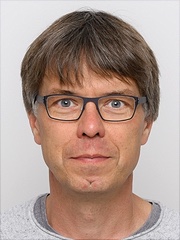
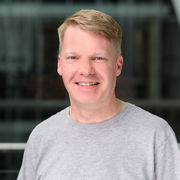
Øyvind Stavdahl is a Professor at the Department of Technical Cybernetics , Norwegian University of Science and Technology (NTNU). His research focuses on Biomedical instrumentation , Robotics , and Control technology for medical applications. Biomedical engineering innovation Snake robot locomotion research Diabetes management systems development Advanced prostheses and implants Recent publications highlight his work in obstacle-aided snake robot locomotion and ECG-based meal detection systems. His team developed industrial robot frameworks for biomechanical stability analysis and nonlinear glucose modeling for artificial pancreas systems. Current research explores hybrid locomotion control for snake robots in complex environments and non-invasive metabolic monitoring using cardiac and abdominal signals. Collaborations with Anders Lyngvi Fougner and Kristin Ytterstad Pettersen demonstrate interdisciplinary expertise in robot-assisted rehabilitation and medical device engineering .
Professor Jason Joseph William Alexander Robinson is a leading academic in Materials Physics at the University of Cambridge, where he holds the title of Professor of Materials Physics. He is also a Fellow of St John's College, Cambridge, and a Distinguished Visiting Professor at City University of Hong Kong. His career spans roles such as Royal Society University Research Fellow (2011–2018) and Director of Studies in Materials Science at St John's College since 2011. Alma Mater: St John's College, Cambridge (PhD in Superconductor-Ferromagnet Junctions, 2007) Academic Leadership: Head of the Department of Materials Science (2020–present) and Editor-in-Chief of the Journal of Superconductivity and Novel Magnetism (2023–present) Robinson's research focuses on the intersection of superconductivity and spintronics, particularly in creating dissipationless spin currents and exploring unconventional superconductivity. His work has implications for low-energy computing and quantum technologies, with specific interests in superconductor proximity effects, triplet Cooper pairs, and topological transport phenomena. The 15 most recent publications highlight advancements in spin-orbit coupling, superconducting diodes, quantum point contacts, and oxide interfaces. These works span disciplines like Materials Science, Condensed Matter Physics, and Quantum Technologies, with subfields including magnetic heterostructures, vortex dynamics, and spintronic device engineering. Scientific Awards Fellow of the Institute of Materials, Minerals and Mining (FIMMM) (2011) Royal Society University Research Fellowship (2011) Brian Pippard Prize for Superconductivity (2010) Junior Research Fellowship at St John's College (2008) Bessemer Medal (2004) Worshipful Company of Armourers and Brasiers Scholarship (2003) As head of the Quantum Materials and Devices group, Robinson mentors PhD and Master's students, oversees grants, and contributes to editorial and advisory roles globally. His lab focuses on experimental investigations into hybrid superconducting/magnetic systems, with an emphasis on scalable quantum devices and novel magnetic interfaces.
Gongbing Shan is a Professor in the Department of Kinesiology and Physical Education at the University of Lethbridge , Faculty of Arts & Science. His research spans Biomechanical Modeling , Motor Control , Occupational Injury Prevention , and Interdisciplinary Applications in music, sports, and visual arts. Education: Post-Doctoral from National Institute of Health, Motion Analysis Laboratory, University of Vermont; Doctoral in Biomechanics (University of Muenster, Germany). Key Research Areas: Mechanism of posture control via biomechanical modeling Artificial Neural Network (ANN) applications in motor learning Biomechanical analysis of musicians and athletes Equipment design for injury prevention Article Trends: Recent publications focus on 3D motion capture for analyzing martial arts, golf, and soccer techniques; EMG integration in music performance studies; and interdisciplinary projects linking biomechanics with visual arts. Key subfields include sensorimotor degradation in aging , ergonomic equipment design , and multidisciplinary teaching methods . Awards: 1st Prize, Sports Engineering Student Project Competition (2008) Young Investigator Award, Asia-Pacific Congress on Sports Technology (2007) Featured on Discovery Channel/Canada (2008) Labs: Founder of the Biomechanics Lab at University of Lethbridge (2000) Equipped with 3D motion capture, wireless EMG, force platforms Collaborated across nine fields : medicine, sports, engineering, music, art, ergonomics, education, psychology, and health
György Eigner is a Professor at Obuda University, specifically at the John von Neumann Faculty of Informatics, where he serves as dean. He is affiliated with the Physiological Controls Research Center in Budapest, Hungary. His academic career includes leadership roles as president of the AI Transition Committee and as a senator on the University Council broad. Dr. Eigner's work bridges engineering and medical applications, focusing on control systems for physiological processes. Dr. Eigner earned his PhD in Applied Informatics from Obuda University in 2017, following his Biomedical Engineer MSc from Budapest University of Technology and Economics (2011-2013) and Mechatronics BSc from Obuda University (2006-2011). His educational background reflects his interdisciplinary approach that combines engineering principles with medical applications. Dr. Eigner's research focuses on applying control theory and engineering principles to physiological systems. His work spans several key areas: Development of control systems for diabetes management, including artificial pancreas algorithms Tumor growth modeling and control through anti-angiogenic therapy Medical device development, particularly for respiratory support systems Application of machine learning in healthcare monitoring and prediction Robotics for educational and medical applications Industry 4.0 implementations in manufacturing and healthcare settings His recent publications demonstrate a clear trend toward practical implementations of theoretical control systems. The research shows increasing focus on real-world applications of control theory in medical contexts, particularly in personalized patient care systems. His work on the Mass Ventilation System during the COVID-19 pandemic exemplifies this practical orientation. Additionally, there's a growing emphasis on integrating Industry 4.0 technologies with traditional medical systems, as seen in his work on digital twins and real-time locating systems for healthcare applications. Dr. Eigner has received several notable awards for his contributions to the field: Young Researcher of the Year Award (2019) Dean's commendation (2018) IEEE SMCS - Outstanding Contribution Award (2016) IEEE SMC 2016 - Best Conference Paper Finalist As a professor and dean, Dr. Eigner has advised numerous students on research projects related to control systems and medical applications. His research has been supported by various grants focused on developing innovative medical technologies and control systems. He has collaborated extensively with researchers across multiple disciplines, including medical professionals, engineers, and computer scientists, to develop practical solutions for healthcare challenges. Dr. Eigner leads research activities at the Physiological Controls Research Center at Obuda University. This center focuses on developing control systems for physiological processes, with particular emphasis on diabetes management, tumor growth control, and respiratory support systems. The center works closely with medical institutions to ensure that theoretical developments translate into practical clinical applications. Recent projects include the development of the Mass Ventilation System for pandemic response and the PlatypOUs mobile robot platform for STEM education.
Марина Володимирівна Антонова serves as Senior Lecturer at Zaporizhzhia Polytechnic National University's Faculty of Electrotechnics, Department of Electrical Machines since 2016. Holding a Master's degree with honors in Electromechanical Automation Systems and Electric Drives from Dniprodzerzhyn State Technical University (2008), she specializes in power electronics and industrial drive systems. Her research focuses on power electronics applications in industrial electromechanical systems, particularly centrifugal compressor control and drive optimization. Key interests include dynamic modeling of electromechanical systems, mathematical simulation of compression processes, and energy-efficient control algorithms for industrial drives. Her work bridges theoretical electrical engineering with practical industrial implementation. Analysis of her publications reveals consistent focus on compressor-drive system integration (2009-2014), demonstrating expertise in both theoretical modeling and hardware implementation. The research trajectory shows progression from basic control systems to sophisticated dynamic modeling and thermodynamic analysis, reflecting deepening technical specialization in industrial electromechanics. Proficient in Ukrainian, English, and Russian, she teaches core courses including Fundamentals of Power Electronics , Electrical Appliances , and Elements of Power Electronics Devices and Systems . Her scholarly work is indexed through ORCID (0000-0002-8480-4414), Scopus (57202603690), Web of Science, and Google Scholar.
Sanja Antic is an Associate Professor at the Department of General Electrical Engineering and Electronics within the Faculty of Technical Sciences at the University of Kragujevac, Serbia. She teaches courses including Automatic Control (since 2009), Digital Control Systems (since 2014), and Control of Electromotor Drives (since 2009), having previously taught Fundamentals of Electrical Engineering, Electrical Measurements 1, and Electric Drives. Dr. Antic completed her primary and secondary education in Čačak with the prestigious Vuk Karadžić diploma for academic excellence. She earned her undergraduate degree in Electrical Engineering with Industrial Power Engineering specialization from the Faculty of Technical Sciences in Čačak in 2000 with an outstanding grade average of 9.60, receiving recognition as the top graduate of her academic year. She continued to excel in her postgraduate studies, earning a Master of Technical Sciences degree in 2009 with a perfect 10.00 grade average. Her doctoral dissertation, defended in 2016 at the University of Belgrade, focused on application of model-based fault detection methods in electromechanical systems. Her research expertise spans control systems engineering with particular focus on fault detection and isolation in DC motor systems, electromotor drive control, and educational applications of control theory. Dr. Antic has made significant contributions to the field of fault detection methodologies for electromechanical systems, developing expert systems using structured residuals design techniques and FPGA implementations. Her work extends to practical applications in tank-level control systems, aquifer modeling, and energy efficiency of electric motors. She has been instrumental in developing remote laboratory experiments for engineering education, creating educational tools that bridge theoretical concepts with practical implementation. Analysis of her recent publications reveals a strong research trajectory focused on fault detection and isolation techniques for DC motor systems, with increasing sophistication in diagnostic approaches. Her work has evolved from basic fault detection methods to comprehensive identification and isolation systems, incorporating advanced techniques like parameter estimation, structured residuals, and FPGA implementations. She has also expanded her research into educational applications of control theory, developing laboratory setups and remote experiments that enhance engineering education. Dr. Antic has led and participated in several research projects, including the modernization of teaching for three mandatory subjects in Electrical and Computer Engineering (EMPA) from 2020-2021, and has contributed to building a network of remote labs to strengthen university-secondary vocational school collaboration through a TEMPUS project. Her work on energy efficiency of electromotor drives has been supported by the Ministry of Education, Science and Technological Development of Serbia. She has been actively involved in developing educational resources including textbooks, workbooks, and laboratory catalogs. Notably, she co-authored 'Regulation of Electromotor Drives' (2010) and 'Introduction to Automatic Control Systems - Theory and Examples' (2021), along with practical resources like 'Collection of Solved Problems in Electromotor Drives' and catalogs of remote laboratory experiments. Her commitment to innovative teaching approaches is evident in her development of remote experiments for demonstrating current and voltage control of DC motors.
Marko Šućurović is an Assistant Professor at the Department of Electrical Power Engineering, Faculty of Technical Sciences in Čačak, University of Kragujevac, Serbia. His expertise spans electrical power engineering with a focus on electrical machines, motor drives, and energy efficiency. He teaches multiple courses including Electrical Installations and Lighting, Electric Motor Drives, and Distribution Networks, while actively contributing to research and development projects in his field. Education: Undergraduate studies in Electrical Power Engineering at Faculty of Technical Sciences in Čačak (2007-2011), average grade 8.82 Master's degree in Electrical and Computer Engineering, module Electrical Power Engineering (2011-2012), thesis: "Measurement and visualization of the rotating magnetic field of the stator of a three-phase and two-phase asynchronous motor" Currently pursuing PhD at Faculty of Electronics in Niš, Department of Electrical Engineering and Computer Science Šućurović's research focuses on Electrical Power Engineering , with particular emphasis on electrical machines and drives , energy efficiency , and electrical installations . His work bridges theoretical concepts with practical applications through educational laboratory setups. He has developed specialized tools for visualizing electromagnetic phenomena and has contributed significantly to understanding thermal effects in electrical systems, cable engineering, and renewable energy integration. His research often combines experimental work with analytical modeling to address real-world engineering challenges. His recent publications (2020-2025) demonstrate a strong focus on energy efficiency , educational methodologies in electrical engineering, and advanced analysis of electrical systems . A significant portion of his work addresses practical implementation challenges in power systems, with increasing attention to renewable energy integration. His research shows a clear progression from fundamental electrical machine analysis toward more complex system-level energy efficiency solutions and innovative educational approaches. Projects: Researcher on project TR33016 "Research, development and implementation of programs and measures for energy efficiency of electric drives" Participant in Erasmus+ Proof-of-Concept project "Torque sensor based on magnetomechanical effect in commercial steel" (TorqSens) Implementation of project "Introduction of laboratory exercises and information technologies in teaching electrical installations and lighting" Šućurović has developed several educational laboratory setups, including systems for measuring photovoltaic-thermal panel characteristics, educational pump systems with pressure and flow regulation capabilities, and equipment for testing low-voltage electrical installations. His work emphasizes practical, hands-on learning approaches in electrical engineering education.
Claudıa Fernanda YAŞAR serves as an Assistant Professor in the Department of Control and Automation Engineering at Yildiz Technical University's Faculty of Electrical and Electronics Engineering, Istanbul. Her expertise drives innovation in flexible robotics and advanced control systems within Turkey's academic landscape. Education: Electrical Engineering degree from Universidad Tecnológica de Pereira (Colombia) DEA Diploma of Advanced Studies (Master's equivalent) from Castilla-La Mancha University (Spain), 2010 International Doctorate in Mechatronics with Cum Laude distinction from Castilla-La Mancha University (Spain) Research Interests: Dr. YAŞAR pioneers work in non-linear control systems and flexible robotics , with emphasis on vibration control, haptics, and active touch sensing. Her methodologies bridge kinematics/dynamics with practical applications in servo motion systems and torque sensing, advancing industrial automation. Scientific Awards: Recipient of Spain's 'Best PhD Thesis 2017' award by Robotnik and the Spanish Committee of Automation Honored as Distinguished Student at Castilla-La Mancha University Advising and Grants: She has supervised 7 theses across Master's/PhD levels and contributed to 5 Spanish academic research projects at Castilla-La Mancha University, focusing on mechatronic systems development and control theory validation.
Prof. Dr. Michael Potthoff is a research group leader at the I. Institute of Theoretical Physics within the University of Hamburg 's Faculty of Mathematics, Informatics and Natural Sciences. His work focuses on many-body systems and quantum-statistical methods in condensed-matter theory, particularly collective magnetism, correlation-driven metal-insulator transitions, high-temperature superconductivity, and unconventional matter states. He employs advanced techniques such as dynamical mean-field theory, density-matrix renormalization group, and quantum Monte-Carlo methods. Research interests include: Strongly correlated electron systems Topological phases and edge states Real-time quantum dynamics Non-Abelian gauge theories Spin-Berry curvature effects Mott insulators and Chern insulators His recent publications highlight trends in quantum impurity models, topological phase transitions, and non-Hamiltonian spin dynamics. Key keywords include Quantum Physics , Condensed Matter , and Statistical Mechanics , with subfields like Spin Relaxation , Kondo Screening , and Chern Density . Awards and honors are not explicitly mentioned in the provided text. Students in his group include PhD candidates Sarah Damerow, David Krüger, and Robin Quade, alongside Master’s and Bachelor’s students. His teaching portfolio includes courses like Quantum Mechanics II and Symmetry Groups in Physics .
Akifumi Okubo is a researcher at the Institute of Science Tokyo specializing in robotics and mechanical engineering. His work primarily focuses on the development of innovative robotic systems, particularly the Roller-Walker platform, which combines walking and roller-based locomotion. His research interests span multiple areas of robotics including Robotic Locomotion , 3D Printing Applications , Gear Mechanism Design , Actuator Development , and Material Durability Testing . Okubo's work demonstrates a strong emphasis on practical mechanical design solutions using additive manufacturing techniques for robotic applications. Analysis of Okubo's recent publications reveals a consistent research trajectory focused on improving robotic mobility systems. His work on the Roller-Walker platform demonstrates particular expertise in hybrid locomotion systems that can transition between walking and roller-based movement. The integration of 3D printed components, especially for gear mechanisms and structural elements, represents a significant theme across his publications from 2023-2025. Okubo consistently collaborates with researchers including Gen Endo, Hiroyuki Nabae, Hana Ito, and Kurumi Osawa. While specific grant information isn't provided in the publication records, his active publication rate suggests ongoing research funding. His work appears primarily focused on mechanical design and implementation rather than theoretical robotics. The Roller-Walker research group at Institute of Science Tokyo, which Okubo is part of, demonstrates strong expertise in practical robotics implementation with emphasis on mechanical solutions for mobility challenges. Their work bridges traditional mechanical engineering with modern robotic applications, particularly through the innovative use of 3D printing technology for functional mechanical components.
Dr. Ing. Ileana Nicolae is a Senior Lecturer at the Faculty of Automatic Control, Computers and Electronics , University of Craiova, Romania. Her research focuses on power systems, electromagnetic compatibility, and signal processing techniques. Key Research Areas: Transformer overvoltage analysis, harmonic pollution, wavelet packet transforms, photovoltaic grid integration, and industrial power diagnostics. Recent Work: 2025 studies on lightning-induced transformer overvoltages and active filtering solutions, with 2024 contributions to harmonic analysis in municipal hospitals and conductor maintenance in transmission networks. Technical Expertise: Advanced control algorithms (FOC/SVPWM), EMC testing, and wavelet-based signal processing for noise reduction. Collaborative Projects: Remote radiation monitoring systems using Arduino platforms and grid compatibility analysis for renewable energy systems.
Professor Stuart Alan Cavill is affiliated with the University of York as a Professor of Condensed Matter Physics . He leads the Hybrid Spintronics research group within the School of Physics, Engineering and Technology , focusing on magnetic materials, multiferroics, and spin dynamics. His work leverages soft X-ray spectroscopy and imaging for advanced materials characterization. Education: BSc (Nottingham, 1996), PhD Physics (Nottingham, 2000) His research explores multiferroic materials for energy-efficient data storage, spintronic devices, and magnetic microwave technologies. Recent studies include strain-controlled magnetization dynamics, altermagnetism, and quantum transport phenomena. His projects often bridge fundamental physics and device applications. The 15 most recent publications highlight advancements in magnetoelastic coupling , spin dynamics , spintronic heterostructures , and X-ray techniques . Topics span from strained interfaces to half-metallic superlattices, reflecting his interdisciplinary focus on nanoscale magnetism and functional materials. Professor Cavill supervises PhD students including James Beevers, Christopher Love, Ohoud Alsaqer, and Irene Azaceta. He collaborates with institutions like the Diamond Light Source and participates in international conferences such as the European School on Magnetism.
Dr Xu Xu serves as Senior Lecturer in Complex Systems Modelling at the University of Sheffield's Department of Computer Science and is affiliated with the INSIGNEO Institute for in silico Medicine. She holds the role of Admissions Tutor and leads research in computational haemodynamics and multi-scale modeling for personalised cardiovascular healthcare, bridging computer science with biomedical applications. Her academic foundation includes advanced engineering degrees from prestigious institutions: BEng in Automation, Xidian University, China MSc in Control Systems Engineering (with Distinction), University of Sheffield PhD in Nonlinear Systems and Cellular Maps, University of Sheffield Dr Xu's research program centers on multi-scale lattice Boltzmann simulations of blood flow, compartmental cardiovascular modeling for personalised medicine, uncertainty quantification, and nonlinear control systems. Her work extends to cellular automata applications in swarm robotics and collective behavior, demonstrating interdisciplinary innovation across computational science, biomedical engineering, and control theory to advance in silico healthcare solutions. Analysis of her recent publications reveals a cohesive trajectory toward integrating sensitivity analysis, data assimilation, and parameter identification for cardiovascular personalisation. Her scholarship spans computational fluid dynamics (particularly lattice Boltzmann methods), automotive control systems, and swarm robotics, with increasing emphasis on clinical translation through the INSIGNEO Institute's in silico medicine framework. She has earned eight institutional awards recognizing excellence across multiple dimensions of academic practice: Inspirational teaching Research supervision Academic advising Dr Xu has successfully supervised six PhD candidates to completion and secured significant research funding as Principal Investigator. Her grant portfolio demonstrates versatility across biomedical and engineering domains: EPSRC-funded cardiovascular assessment project (£451k) Electric discharge machining optimization Multi-robot path planning systems As an active member of the Complex Systems Modelling Research Group and INSIGNEO Institute, she collaborates on cutting-edge in silico healthcare initiatives. Her leadership extends to academic governance through roles including Interim Deputy Head of Department and MSc Course Leader, where she achieved top-tier student satisfaction rankings in engineering education.
Luca Boscaglia is a researcher at Chalmers University of Technology, Sweden, specializing in Electrically Excited Synchronous Machines (EESMs) for sustainable transportation. He is affiliated with the Department of Electric Power Engineering, focusing on electromagnetic, mechanical, and thermal design challenges of high-power density motors. PhD in Electrical Engineering (2024, Chalmers) Expertise in rare-earth-free electric motor alternatives Key contributor to EU-funded projects like LONG and DORNA His research addresses critical issues in the transportation sector's decarbonization, including: Advanced rotor and stator oil cooling systems High-speed mechanical integrity under centrifugal forces Dynamic current control with mutual coupling considerations Driving cycle thermal modeling for reliability Publication trends highlight innovations in: Direct oil cooling for 200 kW truck motors Brushless excitation systems Hairpin winding loss reduction Comparative analysis with permanent magnet motors Collaborations span automotive giants (Volvo, ABB), EU institutions, and global universities (Zhejiang, Polytechnic University of Turin). Current projects include FlexCharge, E-drill, and HipeDrive, funded by Swedish Energy Agency and European Commission.
Dr. Stephen Forrest serves as a Research Fellow at the University of Sheffield's School of Electrical and Electronic Engineering, specializing within the Electrical Machines and Drives Research Group. His work bridges theoretical power electronics with practical aerospace and grid applications, evidenced by 20 years of continuous publication output. Education BSc MSc PhD Research Focus: Dr. Forrest pioneers advancements in high-speed permanent magnet machines and aerospace-integrated power systems , with recent work emphasizing manufacturing-driven lightweighting and hollow-coil generator technology. His expertise spans control systems for low-inductance machines, grid-facing active filters, and switched reluctance machine optimization—consistently targeting efficiency and reliability in extreme environments. Publication Evolution: From early electromagnetic valve systems (2005) to current aerospace generator innovations (2024), his research trajectory demonstrates deepening specialization in aviation power systems. Key themes include structural lightweighting, thermal management for high-current-density systems, and direct power conversion topologies minimizing switching losses in safety-critical applications. Research Environment: As a core member of the Electrical Machines and Drives Research Group, Dr. Forrest collaborates on cutting-edge projects addressing electrification challenges in aviation and renewable energy integration, leveraging the University of Sheffield's advanced testing facilities for aerospace-grade machine validation.