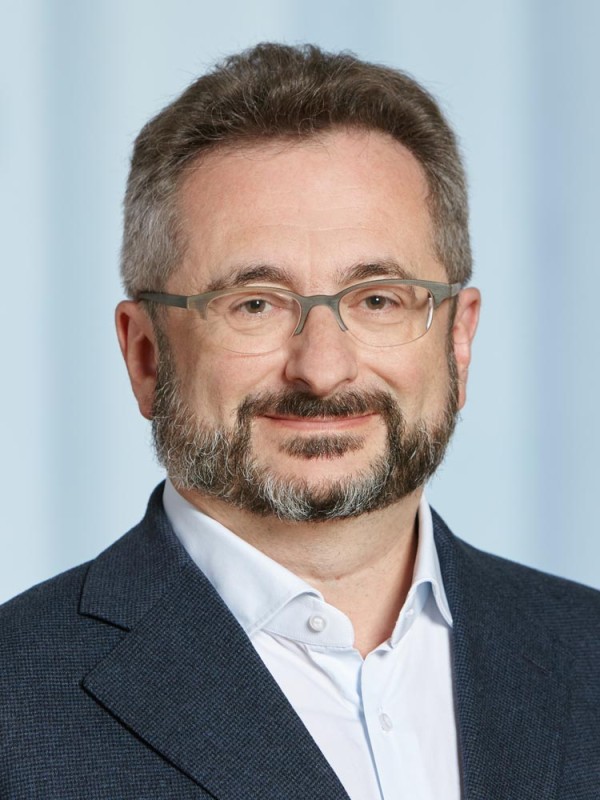
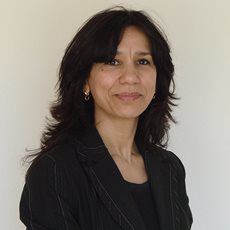
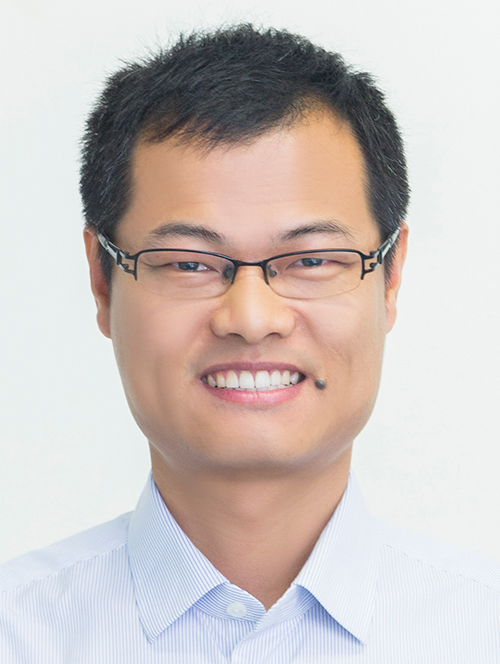
Alexander Puzrin is a Full Professor of Geotechnical Engineering at ETH Zürich's Institute for Geotechnical Engineering, where he has been employed since 2004. His research focuses on constitutive modeling of geomaterials, analysis of landslides (including subaerial and submarine types), development of geotechnical monitoring sensors, and chemical/biological soil improvement. He holds a PhD from Technion and has held positions at Imperial College, Oxford, and Georgia Tech. Research Interests: Puzrin's interdisciplinary work integrates geotechnics, experimental mechanics, applied mathematics, and sensor technologies. Key areas include: Progressive failure mechanisms in soils Tsunamigenic landslide modeling Fiber-optics monitoring systems Microbiological soil enhancement Publications: Recent articles (2018-2025) predominantly explore computational mechanics, materials science, and fracture dynamics. Trends include physics-consistent ML models, corrosion mechanisms in infrastructure, and Eulerian phase-field methods for contact problems. Awards & Honors: Geotechnical Research Medal (2004, 2013) George Stephenson Medal (2013) ETH Excellence in Teaching Award (2009, 2013) Editor of Géotechnique (2012-2015) Professional Activities: Puzrin co-founded Marmota Engineering AG (ETH spin-off) and consults internationally on geotechnical projects. He leads research teams focused on sensor technologies and biological soil stabilization.
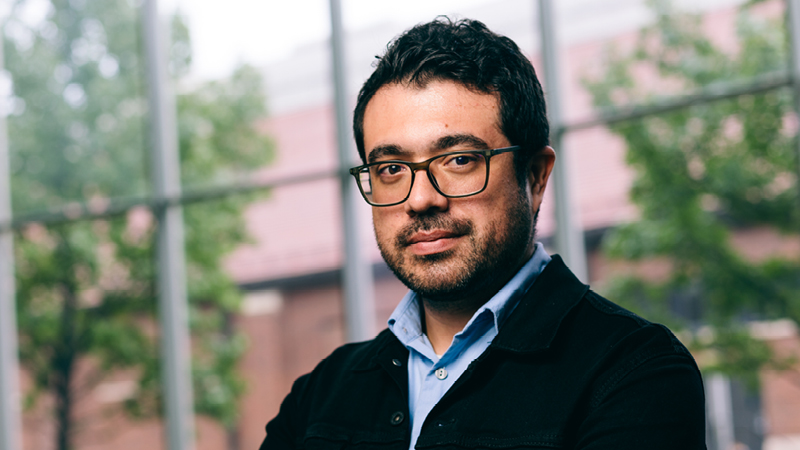
Andres M. Bejarano Posada is an Assistant Teaching Professor of Computer Science at Purdue University's Department of Computer Science (College of Science), where he has been since Fall 2014. He holds a Ph.D. in Computer Science from Purdue (2020) and prior degrees from Universidad del Norte, Colombia. His research focuses on theoretical computer science, artificial intelligence, and geometry processing, with applications in algorithmic solutions for computational geometry, education technology, and scientific computing. He is actively involved in AI-driven pedagogy, developing frameworks like AI-Lab and BoilerTAI to enhance programming education and course content development. His work also includes generative AI tools for plagiarism detection and interactive computer graphics. Education Background: Bachelor in Systems Engineering, Universidad del Norte, Colombia (2009) Master in Systems Engineering and Computation, Universidad del Norte, Colombia (2012) M.Sc. in Computer Science, Purdue University (2017) Ph.D. in Computer Science, Purdue University (2020) Research Interests: Dr. Bejarano's work bridges computational theory and practical education, with emphasis on: Generative AI in CS education Algorithmic solutions for geometry processing AI tools for programming course instruction Automatic plagiarism detection systems Interactive computer graphics applications Teaching & Grants: He leads core CS, Data Science, and AI courses, supervises teaching assistants, and contributes to curriculum development. His research on AI pedagogy is supported by grants from Purdue’s Innovation Hub, focusing on student engagement and educational technology advancements.
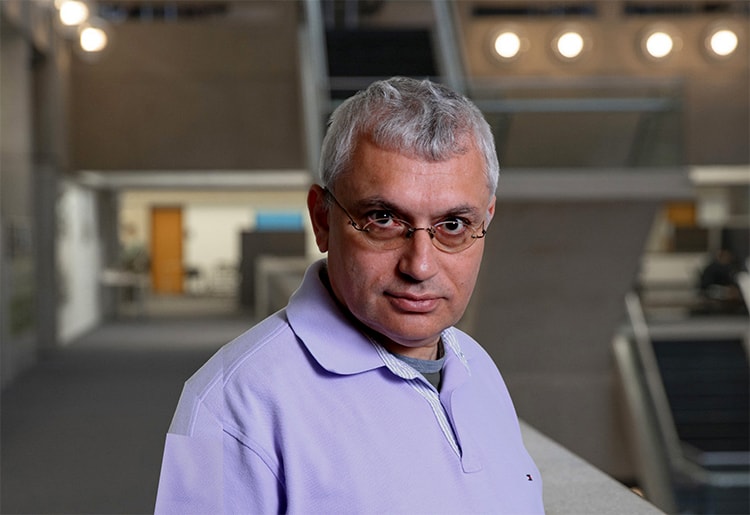
Ergun Akleman is a Professor at Texas A&M University, affiliated with the College of Performance, Visualization & Fine Arts, Department of Visualization. He holds degrees from Istanbul Technical University (B.S. Electrical Engineering, 1981) and Georgia Institute of Technology (M.S. and Ph.D. in Electrical Engineering, 1986 and 1992). His research focuses on shape modeling, geometric data structures, non-photorealistic rendering, volume modeling, and 3D printing innovations. His work explores cutting-edge topics such as topologically interlocked structures, space-filling geometries, and cooperative robotics in additive manufacturing. Recent studies include frameworks for collision-free 3D printing and theoretical advancements in computational design. His articles often bridge computational geometry with real-world applications in materials science and manufacturing. No scientific awards are explicitly mentioned in the provided texts. His research has implications for architecture, material science, and digital fabrication. He has contributed to projects like SafeZone and VoroNoodles , emphasizing interdisciplinary approaches to geometric challenges.
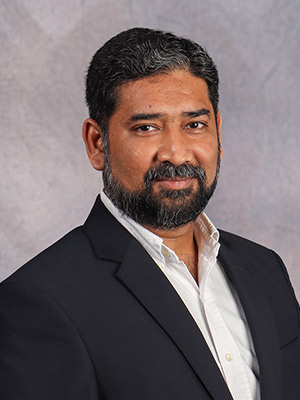
Vinayak Krishnamurthy is an Associate Professor and J. Mike Walker '66 Career Development Professor in Mechanical Engineering at Texas A&M University, with affiliate appointments in Computer Science & Engineering. He directs the Mixed Initiative Design Lab (MIDL), working at the intersection of computer-aided design, human-computer interaction, and artificial intelligence. Research develops computational frameworks for generative design, human-AI collaboration, geometric/topological modeling, and mixed reality interfaces. Innovations include topological interlocking systems for multi-robot additive manufacturing, statistically self-similar structures via chaos algorithms, and speech-based design tools for young learners. Recent honors include multiple ASME best paper awards and an NSF CAREER award. Teaching spans mechanical engineering and data science courses, with recognition through college-level teaching awards. Publications demonstrate strong interdisciplinary integration of computational geometry, human-centered AI, and advanced manufacturing.
Dr. Malika Hamadi is an Associate Professor in Finance at the Department of Finance, Birmingham Business School, University of Birmingham. She serves as the Postgraduate Programme Director and is a founding member of the Sustainable Financial Innovation Centre (SFiC). Her academic journey includes previous positions at Surrey Business School, Leicester School of Business, the University of Sassari (Italy), and the Luxembourg School of Finance. She holds a Ph.D. in Economics from the Catholic University of Louvain, Belgium. Her research spans key areas in finance including corporate finance, financial intermediation, microfinance, ESG, climate finance, and financial technology. Her work is published in leading journals such as the Journal of Corporate Finance , Journal of Banking and Finance , and Journal of Money, Credit, and Banking . Her recent publications reflect a strong focus on corporate governance, financial market dynamics, housing economics, and the social impact of microfinance. These works employ advanced econometric methods and contribute to both theoretical and empirical understanding in finance. She has also secured competitive research grants from the National Research Fund of Luxembourg, underscoring her active research profile. Dr. Hamadi teaches advanced corporate finance, managerial finance, and related topics across undergraduate, MBA, and Executive MBA programmes, including at the Singapore campus. She has taught both in the UK and internationally, demonstrating a global academic footprint. She has won competitive grants from the National Research Fund - Luxembourg, one as a Principal Investigator (82,000 euros), and a second as a co-investigator (252,000 euros). Dr. Hamadi is actively involved in academic leadership and research innovation. As a founding member of SFiC, she contributes to advancing sustainable financial practices. Her interdisciplinary research connects finance with social outcomes, particularly in microfinance and ESG, positioning her at the forefront of responsible finance scholarship.
Alice C. Niemeyer is a University Professor at RWTH Aachen University, holding the Chair B for Mathematics and specializing in Algebra. She is also affiliated with the Centre for the Mathematics of Symmetry and Computation at the University of Western Australia. Her research spans Group Theory, Finite Classical Groups, and Combinatorics, with interdisciplinary applications in 3D concrete printing and topological interlocking assemblies.
Marjan Colletti is a Professor of Architecture and Post Digital Practice at The Bartlett School of Architecture, University College London . She is renowned for her work at the intersection of digital technologies and sustainable architectural design, with a focus on robotic fabrication, material innovation, and computational aesthetics. Doctor of Philosophy, University College London (2008) Master of Architecture, University College London (1999) Staatsexamen, Università Iuav di Venezia (1999) Dottore, Università Iuav di Venezia (1998) Diplom-Ingenieur, Universität Innsbruck (1997) Diploma di Maturità Classica, Liceo Classico (1991) Her research explores postdigital architecture , blending computational design with physical materiality to create innovative, adaptive structures. Projects like Robotic FOAMing and Terrestrial Reef demonstrate her interest in merging digital fabrication with ecological principles. Colletti’s publications span topics like neobaroque aesthetics , 3D printing , and topological interlocking assemblies . A recurring theme is the investigation of complexity and robustness in robotic fabrication processes. Mayor of London Greater London Authority ‘Look and Celebrations’ Programme (2012) She has held leadership roles such as Director of Computing at The Bartlett School and Head of Institute at the University of Innsbruck’s Institute for Experimental Architecture. As co-founder of the design practice marcosandmarjan , she bridges academic research with real-world applications.
Fabien Cougnon is an Associate Professor in Synthetic Nanochemistry at the University of Jyväskylä, Finland, affiliated with the NanoScience Centre and the Department of Chemistry. His academic journey includes a PhD from the University of Cambridge, postdoctoral research at the University of Edinburgh and MIT, and an independent career supported by a Swiss National Science Foundation Ambizione fellowship. His research focuses on Molecular Nanotopology, exploring how molecular knotting influences material properties and behaviors. Education: PhD in Organic Chemistry (University of Cambridge, 2006), postdoctoral training under Prof. David Leigh and Prof. Elizabeth Nolan. Career milestones: Ambizione fellowship (2015), move to Jyväskylä in 2021. Research Interests: Synthesizing knotted molecules, dynamic covalent chemistry, and topology-driven material design. Key projects include investigating chiral effects in peptides and knotting ligands for metal coordination control. Awards: EPSRC Doctoral Prize, Swiss National Science Foundation Ambizione Fellowship Lab Members: Includes postdocs (Nadège You, Louise Miton) and doctoral researchers (Alice Gable, Dimitri Delcourt). Group Focus: Cougnon Group studies functional molecules for healthcare and sustainable applications, leveraging topology to mimic protein structures.
Benjamin Rawe is a Postdoctoral Scholar in the Rowan Group at the University of Chicago's Department of Chemistry. His research focuses on polymer synthesis, supramolecular chemistry, and photophysical properties of phosphorus-containing macromolecules. He completed his undergraduate studies in Chemistry at the University of Bristol (UK), followed by a PhD under Prof. Derek Gates at the University of British Columbia (Canada), where he investigated main-group-containing polymers and novel phosphorus-based materials. His current work emphasizes mechanically interlocked polymers (e.g., polycatenanes), structure-property relationships in synthetic polymers, and the development of chemically recyclable materials. Key research themes include the design of topological polymers, molecular-scale mechanistic studies of polymerization processes, and applications of phosphorus-based smart materials in sensing and biomedical contexts. Recent publications highlight advancements in recyclable polyolefins, rotaxane stability mechanisms, and the creation of phosphorus-containing polymers with selective fluorescence properties. His studies integrate synthetic chemistry, analytical characterization (e.g., thermal/physical analysis), and computational modeling to address challenges in sustainable materials and supramolecular assembly.
Chiara Daraio is the G. Bradford Jones Professor of Mechanical Engineering and Applied Physics at the California Institute of Technology (Caltech), and an Investigator at the Heritage Medical Research Institute. She holds a Ph.D. from the University of California, San Diego, and degrees from the University of Ancona (Italy). Her research focuses on designing advanced materials with unique mechanical and sensing properties for applications in robotics, medical devices, and energy absorption. She has pioneered work on mechanical metamaterials, sustainable biomaterials, and wearable health-monitoring systems. Education: B.S./M.S., University of Ancona, Italy (2001); M.S., UC San Diego (2003); Ph.D., UC San Diego (2006). Research interests include materials science, condensed matter physics, and solid mechanics. Her group develops materials for acoustic imaging, thermal sensing, and bio-inspired systems. Recent work includes 3D polycatenated architected materials and biocomposite materials from microalgae. Awards: PECASE, Sloan Fellowship, Brilliant 10, ONR Young Investigator Award, and others. Over 150 scientific publications and numerous patents highlight her contributions to metamaterials, nonlinear dynamics, and bio-inspired design. Advising: Supervises a dynamic group of graduate students and postdocs, with alumni in academia and industry worldwide. Active in outreach, including STEM education and public lectures. Labs: Facilities include 3D printing, high-speed imaging, and advanced mechanical testing equipment at Caltech's Gates-Thomas building.
Peng Song is an Assistant Professor of Computer Science at Singapore University of Technology and Design (SUTD), affiliated with the Pillar of Information Systems Technology and Design (ISTD). His research focuses on computer graphics, geometric modeling, computational design, and fabrication, emphasizing the development of algorithms for designing functional real-world objects. He holds a PhD from Nanyang Technological University (2013) and prior research roles at EPFL, University of Science and Technology of China, and Nanyang Technological University. Education: PhD in Computer Science, Nanyang Technological University (2013) Master’s Degree, Harbin Institute of Technology (2010) Bachelor’s Degree, Harbin Institute of Technology (2007) His research interests span computational design of assemblies, 3D printing, robotics, and urban modeling. Notable projects include generative urban design, wireframe mesh modeling, and mechanisms for custom-fit medical devices. He has received awards such as the SMI 2024 Best Paper Award and SIGGRAPH 2022 Honorable Mention. Grants & Professional Roles: Leading Singapore MOE Academic Research Fund Tier 2 grants (2023–2024) Associate Editor for Computers & Graphics and Graphical Models (2024–present) Program Committee Member for SIGGRAPH Asia, Pacific Graphics, and SPM He teaches courses such as 'Graphics and Visualization' and 'Extended Reality' at SUTD. His group’s work is showcased on YouTube and his lab’s website.
Dr. Jessica Huss is a Postdoctoral Research Fellow at the Institute of Biophysics, Department of Natural Sciences and Sustainable Resources, University of Natural Resources and Life Sciences (BOKU), Vienna. She currently holds an FWF-ESPRIT Postdoctoral Fellowship (2022-2025) focusing on adaptations for fog and dew harvesting in cactus spines and has previously worked as a PostDoc at BOKU Vienna (2019-2021). Her educational background includes: Doctoral studies in Materials Sciences (summa cum laude), Technical University Berlin (2015-2019) Master of Science in Environmental Sciences/Biomaterials and Bioenergy, University of Freiburg, Germany (2012-2015) Bachelor of Science in Environmental Sciences/Meteorology and Climatology, University of Freiburg, Germany (2009-2012) Dr. Huss's research is multidisciplinary, focusing on the biological development, properties, and adaptations of hard plant tissues. Her work spans biomechanics, Raman and IR spectroscopy, x-ray microtomography, and fire ecology. She investigates how plant structures like nutshells and cactus spines achieve remarkable mechanical properties through their unique cellular architectures and material compositions, with applications in biomimetic materials design. Her publication record shows a consistent focus on plant biomechanics and materials science, particularly examining walnut shells, Banksia follicles, and cactus spines. Her research reveals how nature creates strong, protective structures through innovative cellular arrangements and material compositions, with applications in biomimetic materials design. Her scientific awards include: Best Paper Award, Jubiläumsfonds der Stadt Wien für die Universität für Bodenkultur (2021) Promotionspreis für Nachwuchswissenschaftlerinnen, Fakultät III (Prozesswissenschaften), TU Berlin (2021) Poster Award Prize by Deutsche Gesellschaft für Materialkunde e.V. and Springer-Verlag GmbH, EURO Bio-inspired 2016, Potsdam, Germany (2016) Grant for a short term scientific mission (COST Action FP1105); granted by the European Cooperation in Science and Technology (2013) Dr. Huss has supervised three Master's theses on topics related to walnut shells and sustainable composites. She currently leads the FWF-funded project 'Adaptations for fog and dew harvesting in cactus spines' (2022-2025) and previously contributed to the EU-funded 'Scattering and tapping on soft-hard-open nuts' project (2016-2021). Her work has been featured in media outlets including Die Presse and science.apa.at. Her research connects with several interdisciplinary teams including collaborators at the Max Planck Institute of Colloids and Interfaces, where she worked as a Guest Scientist (2019-2020), and international partners across Europe and North America, as evidenced by her presentations in Poland, France, Germany, Israel, Thailand, the UK, and the United States.
Tzu-Ying Chen is a doctoral researcher at the Institute of Building Structures and Structural Design (ITKE) within the University of Stuttgart , affiliated with the Cluster of Excellence IntCDC . Her work bridges computational design with material innovation in architectural engineering. Education: Master of Science (M.Sc.) Research Interests: Focus on advanced fiber composite systems, hybrid FRP-timber elements, and deployable structures using natural materials like bamboo. Core themes include: Computational optimization of structural geometries Integration of traditional craft with digital modeling Material-specific structural performance enhancement Multi-layered system deployment mechanics Publication Trends: Recent work explores bending-active principles for lightweight structures, with emphasis on woven bamboo systems (BamX Pavilion) and resource-efficient timber joints. Research demonstrates synergy between physics-based simulations and equilibrium-driven design. Projects: Key contributions to IntCDC Research Project 11-1 (long-span fiber composites) and 11-2 (hybrid timber materials), plus demonstrator-scale realizations like the ITECH Campus Lab and BamX Pavilion .
Thomas Siegmund is a Professor of Mechanical Engineering at Purdue University's School of Mechanical Engineering. He holds positions in West Lafayette and leads research in solid mechanics, advanced materials, and biomechanics. His work emphasizes multiscale modeling, fracture mechanics, and topologically interlocked materials (TIMs). Education: Diplom-Ingenieur (1990) and PhD (1994) from the University of Leoben, Austria. Research Focus: - Design of engineered material systems and microarchitectured materials - Fatigue and fracture in advanced alloys (e.g., Alloy 718) - Biomechanics of soft/hard tissues, including human cortical bone studies - TIM systems: geometric symmetry, chirality, and biomimetic designs - Battery cooling systems and impact-resistant enclosures. Notable Achievements: 2021 Fellow of the Society of Engineering Science 2012 ASME Fellow Multiple NSF grants and Purdue awards Editorial roles in journals like Architectured Materials Mechanics Labs/Teams: Directs the Advanced Materials & Mechanics Lab , focusing on experimental and computational studies of novel material systems. Collaborates with industry on battery safety and additive manufacturing.
Stuart Rowan is the Barry L. MacLean Professor of Molecular Engineering at the University of Chicago's Pritzker School of Molecular Engineering (PME), where he also serves as Director of the Materials and Sustainability Engineering Research Theme. He holds a joint appointment in the Department of Chemistry and is a staff member at Argonne National Laboratory. His research focuses on dynamic chemistry in polymeric materials , including supramolecular polymers, self-healing materials, and sustainable polymers derived from cellulose nanocrystals. Rowan's group addresses challenges in energy storage, biomedical applications, and environmental sustainability. Education : BSc (Hons.) in Chemistry from the University of Glasgow (1991), PhD from the University of Glasgow (1995), postdoctoral work at the University of Cambridge (1994–1998) and UCLA (1998–1999). He joined Case Western Reserve University in 1999 before moving to the University of Chicago in 2016. Research Interests : Synthesis and properties of structurally dynamic polymers, responsive adhesives, metal-containing polymers, and biomaterials. Key areas include redox-flow batteries , ion-conducting polymers , and biomimetic materials . The Rowan Group actively develops sustainable materials to address climate and energy challenges. Awards : Morley Medal (2013), Herman Mark Scholar Award (2015), ACS and Royal Society of Chemistry Fellowships. He serves as Editor-in-Chief of ACS Macro Letters . Advancing Science : Rowan's lab trains students and postdocs in molecular engineering, with a focus on interdisciplinary projects. Current lab members include graduate students, postdocs, and undergraduate researchers working on interlocked macromolecules , cellulose nanocrystal applications , and energy storage systems . The group emphasizes collaboration across universities and institutions. Labs & Facilities : The Rowan Group operates within the Eckhardt Research Center, leveraging advanced facilities for polymer synthesis, characterization, and materials testing. They collaborate with Argonne National Laboratory for cutting-edge research in sustainable materials.