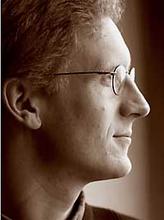
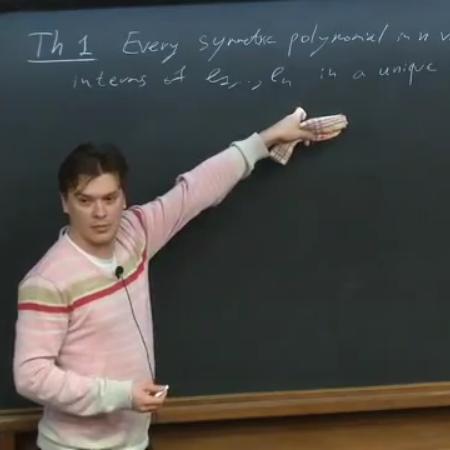
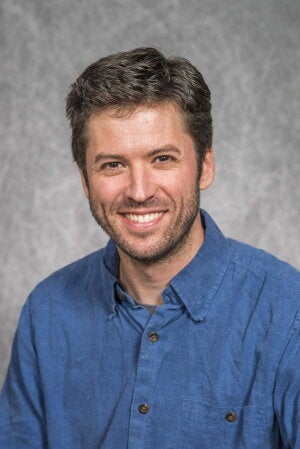
John Rognes is a Professor at the Department of Mathematics , University of Oslo, specializing in Algebraic Topology, Algebraic K-Theory, and Geometric Topology. His research bridges number theory and homotopy theory, with a focus on structured ring spectra and topological modular forms. Education : International Baccalaureate (1984), Cand. Mag. in Mathematics (1985), Princeton MA (1987), and PhD (1990) under Gunnar Carlsson. Positions : Professor at UiO since 1998, Visiting roles at Stanford (1996), Chicago (1996), and Bonn (2005-2006). His research areas include Algebraic K-Theory , Stable Homotopy Theory , Topological Cyclic Homology , and Motivic Homotopy . Articles highlight work on Adams spectral sequences, redshift phenomena, Segal conjectures, and topological Hochschild homology of modular forms. Scientific awards include the 1999 Professor Ingerid Dal and Ulrikke Greve Dals prize, Fulbright-Hays Fellowship, and multiple grants from the Research Council of Norway (YFF, SUPREMA). He supervised 18 Master’s and 9 PhD students, including Paul Arne Østvær, Vigleik Angeltveit, and Alice Hedenlund. Leadership : Chairman of the Abel Committee (2014-2018), Program Leader for Master programs in Mathematics (2021-2024), and organizer of international symposia. Grants : YFF program 'Brave new rings' (7.1 MNOK), RCN projects on topology and motivic homotopy (total >30 MNOK).
Ken Ono is the STEM Advisor to the Provost and the Marvin Rosenblum Professor of Mathematics at the University of Virginia. He also holds courtesy appointments as Professor of Electrical and Computer Engineering, Professor of Data Science, and Professor of Statistics. Additionally, he is a Fellow of the Shannon Center for Advanced Studies and serves on the Institute for Advanced Study board of trustees and the National Security Agency Advisory Board. His educational background includes a Ph.D. in Mathematics from UCLA (1993) and a B.A. in Mathematics from the University of Chicago (1989). Throughout his distinguished career, Ono has held leadership roles including Vice President of the American Mathematical Society, Chair of the Mathematics Section of the American Association for the Advancement of Science, and Chairman of the Department of Mathematics at UVa. Ken Ono specializes in Number Theory, Combinatorics, Algebra, and Arithmetic Geometry, with recent work expanding into sports analytics and swimming optimization. His research has produced numerous publications on partition theory, modular forms, and related areas, continuing the mathematical legacy of Srinivasa Ramanujan. His recent publications demonstrate a continued focus on partition theory, modular forms, and their connections to prime numbers and combinatorial structures. The work shows sophisticated connections between classical number theory and modern mathematical physics, with applications in cryptography and data science. Guggenheim Fellowship David and Lucile Packard Fellowship Alfred P. Sloan Foundation Fellowship NSF CAREER Award Presidential Early Career Award (2000) National Science Foundation Director's Distinguished Teaching Scholar (2005) University of Chicago Alumni Medal for Professional Achievement (2023) Fellow of the American Mathematical Society Ono has advised 34 PhD students and 17 postdocs, mentoring numerous award winners including 2 Breakthrough Mirzakhani Prize winners, 9 Morgan Prize winners, and 9 Schafer Prize winners. He founded and directs the Spirit of Ramanujan Global STEM Talent Search, which has awarded 125 budding scientists from 23 countries. His research grants have supported extensive REU programs, with continuous undergraduate research opportunities for 25 years. Beyond academia, Ono serves as a technical consultant for elite swimmers, has worked as an Associate Producer on the film The Man Who Knew Infinity , and is actively involved with the Infinity Arts Foundation. His interdisciplinary work spans from pure mathematics to practical applications in sports science, where he has developed data-driven approaches to optimize swimming performance and served as a consultant for Olympic medalists. He co-founded the Velocity Swim Camp with Olympic coach Todd DeSorbo, combining mathematical analytics with elite swimming training.
Massimo Bongiorno is an Assistant Professor in Electrical Engineering at Chalmers University of Technology. He holds a Master’s degree in Electronics Engineering from the University of Palermo (2002) and earned his Licentiate and PhD from Chalmers University. His research focuses on power electronics applications in power systems, particularly grid-forming converter systems, power quality, and renewable energy integration. MSc in Electronics Engineering (University of Palermo, 2002) Licentiate and PhD (Chalmers University of Technology) Research interests include: Power electronics in power systems Grid-forming converter stability Renewable energy integration Modular multilevel converter design Small-signal and large-signal stability analysis Energy storage system applications Recent publications highlight trends in: Converter control strategies for grid stability Dynamic modeling of power electronics systems Applications in offshore wind and hydro microgrids Impedance analysis and resonance mitigation Advanced fault ride-through techniques Multi-terminal HVDC grid control
Eva Bayer Fluckiger is an Honorary Professor at the School of Basic Sciences (SB) at EPFL, Lausanne. She holds a position in the Mathematics Section (SB-DEC) and is affiliated with the Department of Mathematics. Her academic career includes a Doctorate from the University of Geneva (1978) under Michel Kervaire, postdoctoral work in Germany, France, and the U.S., and a CNRS position (1987–2001). She became a full professor at EPFL in 2001. Her research focuses on algebraic number theory, Galois cohomology, quadratic and Hermitian forms, knot theory, and applications to algebraic codes. She has held visiting positions at prestigious institutions like IAS Princeton and has been actively involved in editorial roles and international committees. Her awards include the Vacheron Constantin Prize (1983) and the Maria Sybilla Merian Prize (2001). She has advised numerous PhD students and contributed over 150 publications, with recent work emphasizing K3 surfaces, lattice theory, and algebraic geometry. She is an editor of five international journals and has held leadership roles in mathematical societies, including the European Mathematical Society.
Roles & Affiliations: Charles Rezk is a Professor in the Department of Mathematics at the University of Illinois at Urbana-Champaign. He is affiliated with the College of Liberal Arts & Sciences and holds offices in both the Computing Applications Building and Altgeld Hall. He actively teaches advanced courses such as Homotopy Theory (Math 527) and Higher Category Theory (Math 595). Research Interests: Rezk specializes in algebraic topology, with a focus on homotopy theory, higher category theory, and infinity categories. His work explores topics like elliptic cohomology, spectral algebra, and model categories. He has contributed to foundational areas such as quasicategories and topological André-Quillen cohomology. Academic Contributions: Rezk manages the ALGTOP-L algebraic topology mailing list and maintains a comprehensive website with course materials, publications, and resources. His research includes notable papers on free colimit completions in infinity-categories (2025) and spectral algebra models of unstable periodic homotopy theory (2020). He also engages in educational outreach through lecture notes and video courses on finite group representations and abstract algebra. Professional Activities: Rezk has organized conferences, contributed to editorial boards, and participated in initiatives like the Bousfield Classes conference. His work bridges foundational category theory with applied homotopy theory, influencing both pure and applied mathematical research.
Professor Neil Strickland is a faculty member at the University of Sheffield's School of Mathematical and Physical Sciences, holding the rank of Professor. He earned his PhD from the University of Manchester in 1992 and held positions as a C.L.E. Moore Instructor at MIT and a Research Fellow at Trinity College Cambridge before joining Sheffield in 1998. He received the prestigious Whitehead Prize from the London Mathematical Society in 2005. His research focuses on stable homotopy theory, exploring connections between topology, algebraic geometry, and category theory. Key areas include formal group laws, chromatic homotopy theory, and equivariant cohomology. Prof. Strickland emphasizes translating topological problems into algebraic frameworks, leveraging category theory for structural insights. Grants: He has led EPSRC-funded projects, including 'Symmetric Powers of Spheres' and 'Equivariant Elliptic Cohomology and Class Field Theory,' and collaborated on grants like 'Higher Structures on Elliptic Cohomology.' Teaching: Prof. Strickland instructs courses such as MAS334 Combinatorics and MAS435 Algebraic Topology. His homepage provides further academic resources and materials. Awards: His recognition includes the Whitehead Prize, reflecting contributions to algebraic topology and homotopy theory.
Prof. Dr. Marc Nieper-Wißkirchen is a University Professor (W3) for Algebra and Number Theory at the Institute of Mathematics, University of Augsburg, since 2008. He has held visiting positions at the Max Planck Institute for Mathematics in Bonn and the University of Cambridge, and served as a Junior Professor at Johannes Gutenberg University Mainz (2004–2008). Since October 2021, he has been Vice Dean of the Faculty of Mathematics, Natural Sciences and Technology (MNTF). Education: Diploma in Mathematics (2000) from the University of Cologne, preceded by preliminary diplomas in physics (1997) and mathematics (1997). His doctoral studies (2000–2002) under Prof. Daniel Huybrechts focused on characteristic classes and Rozansky-Witten invariants of hyperkähler manifolds. His research spans algebraic geometry, differential geometry, and mathematical physics, with a focus on hyperkähler manifolds, Hilbert schemes of points, irregular singular connections, and Stokes phenomena. He has contributed to the understanding of Rozansky-Witten invariants, Chern numbers, and topological aspects of differential equations. Recent publications include works on Betti structures of hypergeometric equations (2022) and Stokes matrices for confluent hypergeometric equations (2022), reflecting his ongoing exploration of differential equations' geometric underpinnings. Earlier works address Hochschild homology, equivariant cohomology, and operads in algebraic contexts. His computational contributions include software demonstrations for elliptic curve arithmetic, Collatz sequences, and Google Matrix simulations. Technical expertise includes programming languages (TeX, PHP, HTML) and systems (Unix/Linux, Zope/Plone).
Tomer Moshe Schlank is a Professor of Mathematics at the University of Chicago, conducting cutting-edge research at the intersection of Algebraic Topology and Arithmetic Geometry with significant contributions to Chromatic Homotopy Theory and Algebraic K-Theory. His research program centers on deep structural connections between homotopy theory and number theory, particularly exploring redshift phenomena, ambidexterity in K(n)-local homotopy theory, and ∞-categorical frameworks. Schlank's work bridges abstract homotopy-theoretic constructions with concrete arithmetic applications, advancing our understanding of stable homotopy categories and their algebraic representations. Analysis of his recent publications reveals a dominant trend toward chromatic redshift phenomena in algebraic K-theory, cyclotomic extensions, and ambidextrous structures in homotopy theory. His work consistently demonstrates how higher categorical methods solve foundational problems in stable homotopy theory while generating new insights for arithmetic geometry. Tomer Schlank mentors numerous graduate students including PhD candidates Arye Deutsch, Shai Keidar, Jonatan Kogan, Asaf Yekutieli, Shauly Ragimov, Jacob Lerma, and Yuqin Kew ang, along with MSc student Iyar Mazor. His extensive network of former students and collaborators encompasses Edo Arad, Netanel Stein, Yizhak Zanghi, Asaf Horev, Lior Yanovski, Shachar Carmeli, Shay Ben-Moshe, Segev Cohen, Noam Zimhoni, Ariel Davis, and Shaul Barkan. Scientific Awards: None listed in the provided information.
Yanbo Wang is an Associate Professor and Vice Head of the Wind Power Research Programme at AAU Energy, part of Aalborg University's Faculty of Engineering and Science. He leads research in Electric Power Systems and Microgrids, focusing on intelligent energy systems and flexible markets. His work emphasizes stability analysis, control strategies for hybrid AC/DC systems, and renewable energy integration. He supervises multiple PhD projects on topics like multi-port energy routers and wind power converter optimization. Research interests include power electronics, microgrid stability, and energy storage systems. Key projects include the EU-funded 'S3SF: Smart Energy Solutions for Sustainable Future' and machine learning-based control strategies for multi-energy systems. He has authored over 176 publications, with recent work on DC microgrid reliability, converter design, and offshore wind energy systems. His team collaborates internationally to advance grid-friendly technologies and smart energy solutions. Notable contributions include advanced control schemes for retired batteries in DC microgrids and stability assessment methodologies for offshore wind inverters. He advises on six PhD projects and maintains a lab focused on renewable energy systems and power electronics innovation.
Anton Mellit is an Associate Professor in the Faculty of Mathematics at the University of Vienna. He holds a Doctor of Natural Sciences from the University of Bonn (2008) and completed postdoctoral positions at institutions including the Hausdorff Center for Mathematics (Bonn), Scuola Internazionale Superiore di Studi Avanzati (Trieste), and the Institute of Science and Technology Austria (Klosterneuburg). His research focuses on algebraic geometry, enumerative geometry, and their connections to representation theory, combinatorics, and number theory, with particular emphasis on moduli spaces, categorification, and character varieties. Education: Doctor of Natural Sciences (2008), University of Bonn Master in Applied Mathematics (2004), National Technical University of Ukraine Bachelor in Applied Mathematics (2002), National Technical University of Ukraine Research Interests: Investigates Poincaré polynomials of moduli spaces, Higgs bundles, and character varieties Studies Khovanov-Rozansky homology and torus knots Explores connections between Macdonald polynomials and affine Springer fibers Develops combinatorial approaches to algebraic geometry via Hilbert schemes and categorification Grants & Projects: ERC Consolidator Grant: Macdonald polynomials and related structures in geometry FWF Standalone Project: Refined invariants in combinatorics, low-dimensional topology, and geometry of moduli spaces Labs/Teams: Collaborates with researchers in geometric representation theory, quantum cohomology, and algebraic combinatorics, including notable co-authors like Erik Carlsson, Eugene Gorsky, and Maxim Smirnov.
Noriko Yui is a Professor of Mathematics at Queen's University in Kingston, Ontario. She holds academic affiliations within the Department of Mathematics and Statistics under the Faculty of Arts and Science. Her research bridges number theory, algebraic geometry, and mathematical physics, with a focus on arithmetic geometry and mirror symmetry, particularly in the modularity of Calabi-Yau threefolds. Yui earned her B.S. from Tsuda College (1966) and her Ph.D. in Mathematics from Rutgers University (1974), supervised by Richard Bumby. She has held visiting roles at the Max-Planck-Institute in Bonn and Newnham College, University of Cambridge. Her work includes collaborations with Fernando Q. Gouvêa, notably proving the modularity of rigid Calabi-Yau threefolds over Q. Her research areas span arithmetic geometry, number theory, algebraic/differential geometry, and particle physics theory. Key contributions include studies on L-functions, mirror symmetry, and the applications of Calabi-Yau manifolds in physics. Since 2007, she has served as managing editor of the journal Communications in Number Theory and Physics . Yui co-authored influential works such as Generic Polynomials: Constructive Aspects of the Inverse Galois Problem and edited volumes like Mirror Symmetry V . Her research emphasizes interdisciplinary connections between mathematics and theoretical physics, particularly in string theory contexts.
Christopher Beem is a Professor of Mathematics and Theoretical Physics at the University of Oxford's Mathematical Institute, with a concurrent role as a Fellow for Research and Tutorial Fellow in Mathematics at St. John's College. His career bridges advanced mathematical structures and cutting-edge theoretical physics. University: University of Oxford School: Mathematical Institute Rank: Professor Research focuses on Quantum Field Theory , Conformal Field Theory , and Supersymmetry , with deep connections to String Theory and algebraic frameworks. His work explores the mathematical foundations of quantum field theories through vertex operator algebras and chiral algebras. Recent publications (2022-2025) emphasize 3D gauge theories, superconformal symmetry, and algebraic structures in class S theories. Key methodologies include deformation quantization, boundary vertex algebras, and Feigin-Frenkel gluing techniques. Scientific Awards Principal Investigator, Simons Collaboration for the Nonperturbative Bootstrap (2016-2023) ERC Consolidator Grant: Algebraic Foundations of Supersymmetric Quantum Field Theory (2020-2025) Teaching contributions include undergraduate and graduate courses on quantum theory, string theory, differential equations, and vertex operator algebras, reflecting his interdisciplinary expertise.
Daniel Berwick-Evans is an Associate Professor in the Department of Mathematics at the University of Illinois at Urbana-Champaign (UIUC), part of the College of Liberal Arts & Sciences. He holds a PhD from UC Berkeley (2013) and previously served as a Szego Assistant Professor at Stanford University (2013–2015). His research bridges supersymmetric quantum field theories with differential geometry and algebraic topology. Education: PhD in Mathematics, UC Berkeley, 2013 Research Interests: Explores geometric and topological structures in supersymmetric field theories, including topics like elliptic cohomology, string structures, and localization techniques. His work integrates advanced tools from category theory, homotopy theory, and computational geometry. Recent Research Trends: Publications span theoretical frameworks (e.g., infinity-sheaves, modularity) and applied methods (e.g., discrete exterior calculus). Themes include higher categorical structures and their applications to physics. Awards & Grants: No awards explicitly listed in the text. Grants or funding details are not provided. Labs/Teams: No specific lab affiliations or research teams mentioned, though collaborations with co-authors like Eric Cliff and Arjun Nakade are evident from publications.
Yunfeng Jiang is a Professor of Mathematics at the University of Kansas, affiliated with the Department of Mathematics in the College of Liberal Arts & Sciences. His research focuses on algebraic geometry, with a particular emphasis on moduli spaces of stable maps, sheaves, and their enumerative invariants such as Gromov-Witten and Donaldson-Thomas invariants. His work intersects theoretical physics, including string theory and gauge theory, exploring connections between algebraic structures and physical theories. Recent research has addressed smoothing of surface singularities, equivariant geometry, and the interplay between birational geometry and enumerative invariants. He has contributed to the study of moduli spaces of general type surfaces, Vafa-Witten invariants, and S-duality conjectures on K3 surfaces. His work often involves advanced techniques like virtual fundamental classes and obstruction theories. Jiang has taught extensively at KU, including courses on linear algebra, calculus, algebraic topology, and specialized topics in algebraic geometry. His research is supported by the NSF (DMS-2401484) and has been disseminated through over 50 peer-reviewed publications in top journals like *Mathematische Annalen*, *Advances in Mathematics*, and *Pure and Applied Mathematics Quarterly*. His research trends emphasize geometric structures in higher dimensions, moduli problems, and applications to physics, with notable contributions to the quantum cohomology of moduli spaces and the study of root stacks in algebraic geometry.
Dr. Helena Verrill is an Assistant Professor at the Department of Mathematics, University of Warwick, focusing on teaching and outreach. Her research interests span Number Theory, Algebraic Geometry, Combinatorial Game Theory, and the Mathematics of Origami, with applications in generative art. She actively mentors students through third-year essays, research projects, and outreach initiatives like the Royal Institute Masterclasses. Her research explores modular forms, computational algebra, and arithmetic geometry, with notable contributions to ℓ-adic representations and noncongruence cuspforms. She bridges pure mathematics with artistic expression through origami tessellations and fractal patterns. Notable works include studies on Fano plane automorphisms and Harter-Heighway dragon curves. Her publications span journals like the *Proceedings of the American Mathematical Society* and *Journal of Number Theory*, alongside creative outputs in *Generative Art* and *Bridges Conferences*. She maintains a personal homepage with resources for mathematical art and education.