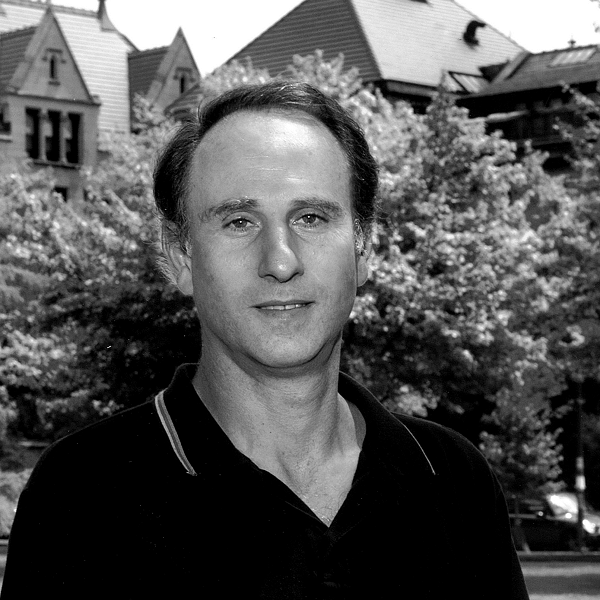
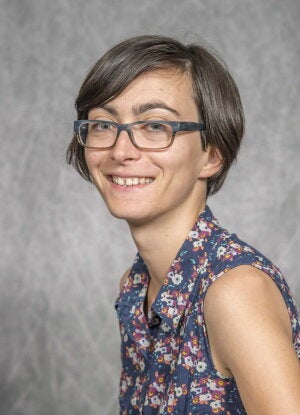
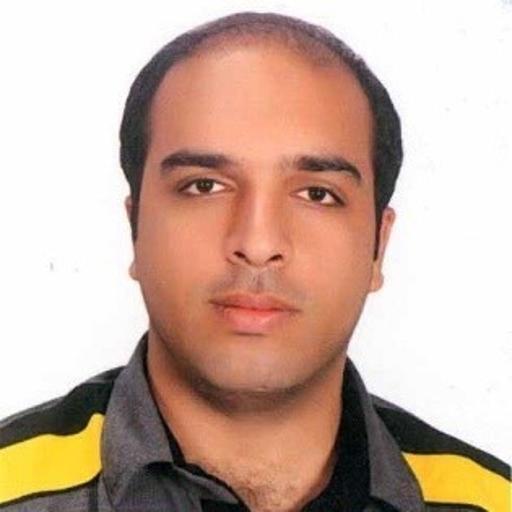
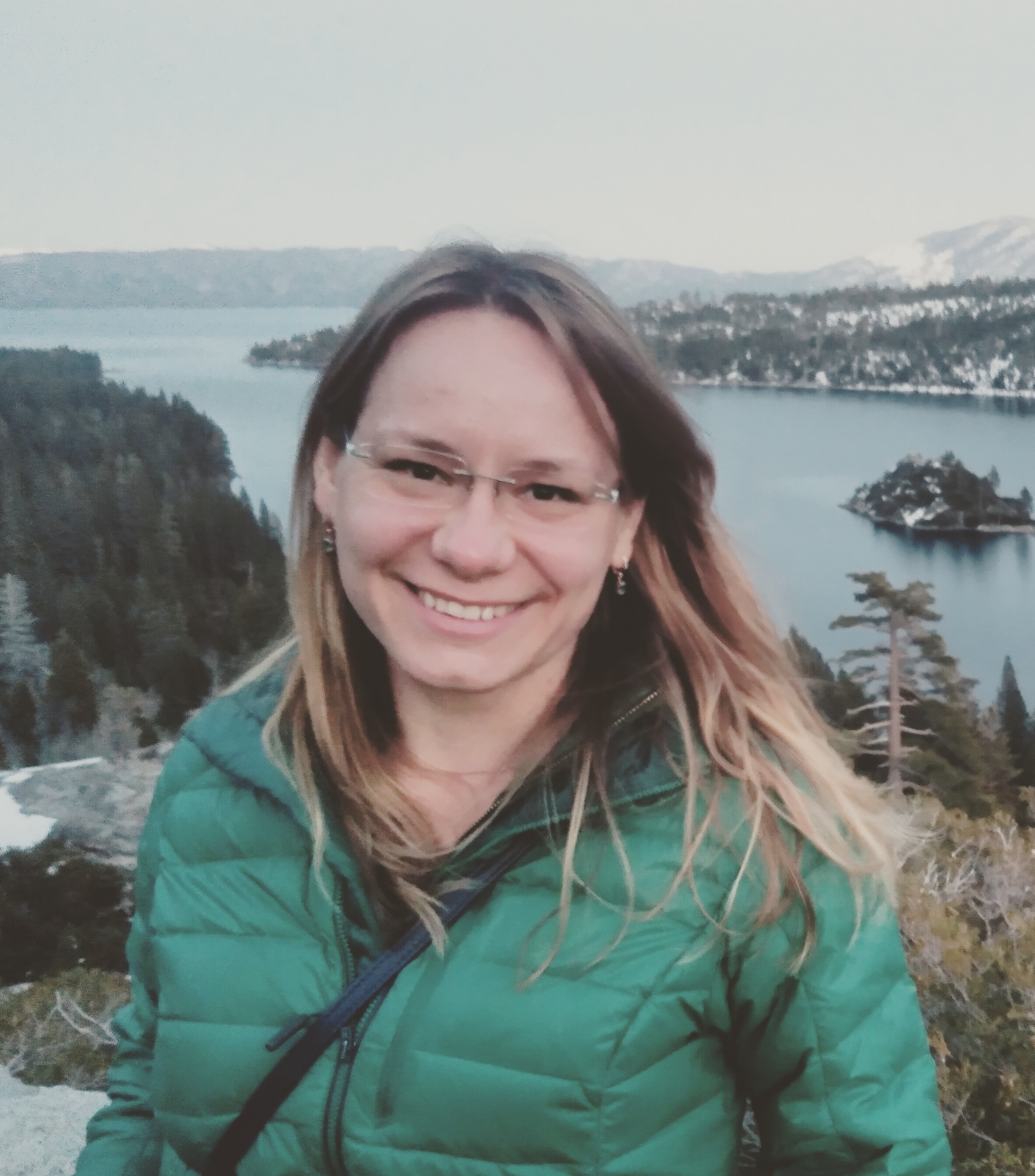
Sergio Bermudo Navarrete is a Professor at the Department of Economics, Quantitative Methods and Economic History, Universidad Pablo de Olavide. His research spans combinatorics, graph theory, and operator theory. Education: PhD in Mathematics (2003, University of Seville) with thesis on functional models of operators in Hilbert spaces. Research Interests: Focus on graph theory, domination problems, topological indices, and operator theory. Publication Trends: Recent work includes vertex-degree-based indices for oriented graphs, domination parameters in product graphs, and differential analysis of line graphs. Keywords span Computer Science , Mathematical Chemistry , and Operations Research . Collaborations: Frequent co-authors: José María Sigarreta Almira, José Manuel Rodríguez García, Juan Alberto Rodríguez-Velazquez. Contact: Email sbernav@upo.es .
Ravindra N. Bhatt is currently a Professor of Electrical and Computer Engineering at Princeton University and an associated faculty member in Physics. His academic career spans leadership roles at prestigious institutions, including Director of the Princeton Center for Complex Materials (1999-2005) and Acting Associate Director of the Princeton Center for Theoretical Science (2005-2012). He previously headed Theoretical Physics Research at Bell Laboratories. Ph.D., University of Illinois, Urbana, 1976 M.S., Physics, University of Illinois, Urbana, 1974 B.Sc. Hons., Physics, University of Delhi, India, 1971 Bhatt specializes in theoretical condensed matter physics, focusing on topological materials, quantum Hall effects, and spin-based quantum computation. His work explores disordered systems, many-body localization, and quantum dynamics in low-dimensional structures like graphene and semiconductor heterostructures. His recent publications emphasize topological phases, composite fermions, and critical ground state dynamics, employing methods such as Density Matrix Renormalization Group (DMRG) and Monte Carlo simulations. Key themes include disorder-driven quantum phase transitions and applications in quantum information science. Scientific honors include: Fellow, American Physical Society (1986) Guggenheim Fellowship (1995) Fellow, American Association for the Advancement of Science (2004) Bhatt has led major research centers at Princeton and contributed to quantum science initiatives. His group utilizes computational techniques like Transfer Matrix Methods and Sparse Matrix Diagonalization to study complex materials.
Alexey Gorshkov is an Adjunct Professor at the University of Maryland (UMD) affiliated with the Joint Quantum Institute (JQI) and the Quantum Information and Computer Science Laboratory (QuICS). His primary academic role is in theoretical physics, focusing on quantum optics, quantum information science, and condensed matter physics. He leads a research group exploring quantum magnetism with alkaline-earth atoms, driven-dissipative systems, topological matter, and strongly interacting photons. His work bridges AMO (atomic, molecular, and optical) systems with high-energy and condensed matter physics, emphasizing quantum simulation and novel quantum technologies like precise clocks and quantum computers. Education details are not explicitly listed, but his research collaborations with institutions like JQI and UMD suggest advanced academic training in theoretical physics. His research interests revolve around understanding and controlling quantum many-body systems, particularly in far-from-equilibrium scenarios, entanglement dynamics, and dissipation effects. He has contributed to studies on Rydberg atoms, quantum routing protocols, and error mitigation in quantum simulators. Recent articles highlight his work on quantum protocols for verifying speedups, time-independent information flow, and entanglement dynamics. His group's achievements include demonstrating one-dimensional anyons and developing methods for correlated noise estimation with quantum sensors. Awards and grants are not explicitly mentioned in the provided text, but his prolific publication record indicates sustained research impact. Labs and teams associated with him include the JQI and QuICS, where he collaborates on experimental and theoretical projects. Graduate student and postdoc positions are available in his group, focusing on areas like quantum magnetism and topological systems. His work often involves close ties with experimental groups, emphasizing practical applications of theoretical breakthroughs.
Professor Jelena Grbic is a distinguished mathematician serving as Professor of Mathematics within the School of Mathematical Sciences at the University of Southampton since 2012. Her academic journey began with a B.Sc. in Mathematics from the University of Belgrade, Serbia in 1997, followed by a Ph.D. in Algebraic Topology from the University of Aberdeen in 2004. Prior to her current position, she held academic appointments at the University of Manchester (2007-2012) as Lecturer and Senior Lecturer, and at the University of Aberdeen (2004-2006) as Lecturer. Professor Grbic's research spans multiple interconnected domains of pure mathematics, with a primary focus on modern homotopy theory, particularly unstable homotopy theory, and its applications across topology, algebra, and geometry. Her work centers on decompositions and exponent problems in homotopy theory, homotopy aspects of Toric Topology, Hopf algebras, and geometric problems related to cobordisms and string topology. This research bridges abstract mathematical theory with potential applications in data science and computational topology. Analysis of her recent publications (2020-2025) reveals a consistent research trajectory in algebraic topology with increasing interdisciplinary connections. Her work demonstrates sophisticated mathematical techniques applied to complex topological structures, particularly moment-angle complexes and polyhedral products. Notably, her 2022 paper 'Aspects of topological approaches for data science' indicates growing interest in applying topological methods to contemporary data analysis problems, suggesting an expanding research horizon beyond pure mathematics. Professor Grbic actively supervises PhD students, including current student Salvatore Elia in Mathematical Sciences, and teaches modules covering algebraic topology and homotopy theory. She serves as a reviewer for prestigious journals including Homology, Homotopy and Application (2019), Transactions of the London Mathematical Society (2021), and The LMS Newsletter (2017), contributing to the scholarly community through peer review and academic service.
Dr. Mo Adda is a Principal Lecturer at the University of Portsmouth's School of Computing, part of the Faculty of Technology. He holds a PhD in Distributed Systems and Parallel Processing from the University of Surrey. His research focuses on network security, distributed systems, wireless networks, and cybercrime prevention. He leads projects in the Centre for Cybercrime and Economic Crime, exploring fault management in networks, blockchain applications, and IoT forensics. With 16 supervised theses, he advises on topics like energy-efficient cloud systems and machine learning for environmental modeling. His work bridges academia and industry, addressing challenges in software-defined networks, traffic control, and secure data sharing in social networks. Education: PhD in Distributed Systems (University of Surrey) Affiliations: Centre of Excellence in Defence, Risk & Resilience; Portsmouth Centre for Advanced Materials and Manufacturing Research Interests Dr. Adda's research spans: Network security and fault detection mechanisms Blockchain applications in IoT and forensics Energy-efficient cloud data center optimization Machine learning for climate modeling Self-organizing network protocols Grants & Collaborations His projects include collaborations with industry partners on secure data leakage detection in cloud systems and resilient wireless protocols for harsh environments. He has pioneered fault classification systems using clustering algorithms and fuzzy logic. Labs & Teams He contributes to the Centre for Cybercrime and Economic Crime, focusing on digital forensics and network intrusion analysis. His team develops frameworks for privacy management in social networks and proactive routing in software-defined networks.
Maren Toft is a Professor in the Department of Sociology and Human Geography at the University of Oslo's Faculty of Social Sciences. Her academic career has progressed from Research Assistant (2013-2014) to PhD Candidate (2014-2018), Postdoctoral Fellow (2018-2022), Associate Professor (2022), and now Professor. Her research focuses on: Class theory and theory of elites Social mobility and class structuration Segregation and urban inequality Social capital and networks of power Advanced quantitative methods including social sequence analysis and correspondence analysis Toft's publication record shows a consistent focus on elite formation, wealth accumulation, and class reproduction. Her work frequently employs longitudinal approaches to examine how social origins influence life trajectories, particularly among the upper classes. She has made significant contributions to understanding how class structures persist in Scandinavian welfare states, challenging assumptions about equality in these societies. Her major scientific awards include: His Majesty the King's Gold Medal for her 2018 PhD dissertation 'Biographies of privilege' Norwegian sociological association's award for best international publication in 2020/2021 Norwegian sociological association's award for best international publication in 2017 Kunnskap Oslo's award for best Oslo-related Research in 2015 Norwegian sociological association's award for research dissemination in 2018 Toft actively supervises PhD students including Iselin Hewitt (studying urban planning and gentrification), Marte Lund Saga (examining business-politics networks), and Stian Uvaag (researching sibling similarities in mobility). She serves on the board of both the Department of Sociology and Human Geography and the Norwegian Sociological Association. She is involved in several major research projects including HISTCLASS, The Oslo Register Data Classification (ORDC), The Salmon Elite (SALELITE), and Weaving the fabric of Elite Bonds (WEB), which collectively examine various dimensions of elite formation, power structures, and social inequality in Norway and internationally.
Prof. Peter Scholze is a leading mathematician at the Max Planck Institute for Mathematics in Bonn, specializing in algebraic geometry and arithmetic geometry. He holds the academic rank of Professor and is part of the Arbeitsgruppe Algebraische Geometrie und Darstellungstheorie. His research focuses on foundational questions in algebraic geometry, number theory, and representation theory, particularly through the lens of the Langlands program, p-adic Hodge theory, and perfectoid spaces. Scholze has pioneered geometric approaches to the local Langlands correspondence and introduced revolutionary concepts like prismatic cohomology and condensed mathematics. He actively contributes to academia through advanced courses on topics such as geometrization of the Langlands program, étale cohomology, and condensed mathematics. His work bridges algebraic geometry with representation theory, addressing fundamental problems in arithmetic geometry and p-adic analysis. Scholze’s research outputs include seminal papers on perfectoid spaces, prismatic cohomology, and the geometrization of local Langlands correspondence. He collaborates extensively with leading mathematicians globally, contributing to collaborative research initiatives like the ARGOS seminar and the Habiro ring project. His teaching engagements include advanced lectures on algebraic geometry, representation theory, and p-adic geometry, reflecting his commitment to training the next generation of researchers. Despite no explicitly listed awards in the provided text, Scholze is widely recognized as a Fields Medalist (2018) and a leading figure in modern mathematics.
Alexander Gorodnik is a Professor of Mathematics at the University of Zurich, focusing on the interplay between dynamical systems and number theory. His work bridges ergodic theory, homogeneous dynamics, and Diophantine approximation, with applications to arithmetic counting problems and geometric distribution of lattice orbits. Current lectures include MAT121: Analysis I and MAT221: Analysis III at the University of Zurich Co-author of the book The ergodic theory of lattice subgroups (Princeton University Press, 2010) Editor of the journal Ergodic Theory and Dynamical Systems His research explores Diophantine approximation through dynamical systems, investigating how orbits of group actions distribute in homogeneous spaces. Key topics include mixing properties , central limit theorems , and metric theorems for multiplicative approximation. Recent publications address automorphic density estimates , discrepancy in intrinsic Diophantine approximation , and effective equidistribution of translated measures. His work often employs tools from representation theory and spectral analysis . Current working group members include Zhiyuan Deng , Zouhair Ouaggag , and Yuval Yifrach . He has taught courses at institutions in Zurich, Bristol, Princeton, and Mumbai, with lecture materials covering topics from ergodic theorems to Každan's property (T) .
David Kutasov is a Professor in the Department of Physics at the University of Chicago, affiliated with the Enrico Fermi Institute. His research focuses on string theory and quantum field theory, particularly addressing dynamics of strongly coupled systems, supersymmetry breaking, black hole physics, and cosmological singularities. Kutasov has contributed to understanding the interplay between string theory and field theory, including mechanisms for vacuum selection in early universe scenarios and brane dynamics. His work explores theoretical frameworks such as holography, time-dependent backgrounds, and tachyon condensation, with applications to particle physics and cosmology. Key research directions include analyzing string theory's predictions for nature and applying string-based insights to experimental particle physics and cosmic phenomena. Notable contributions span topics like D-brane interactions, non-supersymmetric vacua, and dualities in Chern-Simons theories. Kutasov's publications often bridge abstract string theory constructs with observable phenomena, emphasizing tools for analyzing string theory's implications in diverse physical contexts. Despite extensive contributions, no specific scientific awards are explicitly listed in the provided materials. His research remains active across multiple frontiers of theoretical physics, maintaining a strong focus on foundational questions in high-energy physics.
Vesna Stojanoska is an Associate Professor in the Department of Mathematics at the University of Illinois, holding the Norman P. Jones Professorial Scholar title and serving as a Hamstrom Scholar. Her research focuses on stable homotopy theory, chromatic phenomena, and interactions with arithmetic. She earned her PhD in Mathematics from Northwestern University in 2011 and has been recognized with a Fellowship from the Center for Advanced Study (2018-2019). Key research areas include advanced topics in algebraic topology, such as Picard groups, Brauer groups, and topological modular forms. Her work frequently explores connections between homotopy theory and arithmetic structures. Recent contributions include studies on Morava stabilizer groups, determinant spheres, and collaborative efforts through initiatives like the Women in Topology IV workshop. Dr. Stojanoska has advised three graduate students, including Zachary Halladay (expected 2025), Venkata Sai Bavisetty (2024), and Elizabeth Tatum (2022). Her office is located at #307, 805 W Pennsylvania Ave, Urbana, Illinois.
Mohsen Ghafouri is an Associate Professor at the Concordia Institute for Information Systems Engineering (Concordia University). His research focuses on cybersecurity, smart grids, and cyber-physical systems with emphasis on securing energy infrastructure against cyber-attacks. Key areas include detection and mitigation of false data injection attacks, grid resilience against load-altering threats, and secure transactive energy markets. Research interests include wide-area monitoring systems (WAMS), microgrid control, and integration of renewable energy sources. He has developed frameworks for real-time anomaly detection in power systems, blockchain-based security solutions, and machine learning approaches for cyber threat identification. His work addresses vulnerabilities in smart grid components like IEC 61850 substations and EV ecosystems. Recent publications (2024-2025) highlight advancements in securing FACTS controllers, EV charging systems, and distributed energy resources. He has proposed novel mitigation strategies using reinforcement learning, graph neural networks, and federated learning. No scientific awards or grant details are provided in the source text. No advising relationships or lab affiliations are explicitly stated.
Irina Bobkova is an Associate Professor in the Department of Mathematics at Texas A&M University, affiliated with the College of Arts & Sciences. Her research focuses on algebraic topology, particularly computational aspects of equivariant and chromatic homotopy theory. She has received significant support from the National Science Foundation (NSF) via a CAREER Grant and an RTG Grant. Her research interests include equivariant homotopy theory, chromatic homotopy theory, and the study of stable homotopy groups of spheres. She explores computational methods involving Morava stabilizer groups, Picard groups, and topological modular forms. Her work often involves collaborations with leading mathematicians in the field, such as Agnès Beaudry and Vesna Stojanoska. Bobkova has published extensively in top journals like Mathematische Zeitschrift , Journal of Topology , and Algebraic & Geometric Topology . Her recent work includes groundbreaking contributions to K(2)-local homotopy theory, duality resolutions, and the cohomology of Morava stabilizer groups. She co-organizes the South Central Topology Conference, fostering regional collaboration in topology. Her grants and awards reflect her leadership in advancing algebraic topology. She actively engages in academic service, including organizing workshops and mentoring early-career researchers. Despite no listed formal advisees, her collaborative approach shapes the field’s future directions.
Danica Kragic is a Professor of Computer Science at the School of Electrical Engineering and Computer Science at the Royal Institute of Technology (KTH) in Stockholm, Sweden. She serves as the Director of the Centre for Autonomous Systems and leads the Robotics, Perception and Learning Lab at KTH. Her research focuses on advancing robotics capabilities through computer vision and machine learning approaches. MSc in Mechanical Engineering from the Technical University of Rijeka, Croatia (1995) PhD in Computer Science from KTH (2001) Professor Kragic's research primarily centers on robotics, computer vision, and machine learning, with particular emphasis on robotic manipulation, grasp planning, and human-robot interaction. Her work bridges theoretical foundations with practical applications, exploring how robots can understand and interact with objects in complex environments. She investigates how visual and tactile sensing can be integrated to improve robotic perception and manipulation capabilities, with applications ranging from industrial automation to assistive robotics. Her recent publications demonstrate a strong focus on advanced grasp planning techniques, tactile sensing for manipulation, and mathematical representations for robotic control. Kragic's research shows increasing integration of machine learning approaches with traditional robotics frameworks, particularly in the areas of grasp synthesis, object recognition, and human-robot collaboration. Her work spans theoretical contributions in mathematical representations of grasps to practical implementations of robotic systems capable of adapting to novel objects and situations. 2007 IEEE Robotics and Automation Society Early Academic Career Award IEEE Fellow ERC Starting Grant (2012) Member of The Royal Swedish Academy of Sciences Member of The Royal Swedish Academy of Engineering Sciences Honorary Doctorate from Lappeenranta University of Technology Professor Kragic's research has been supported by major funding bodies including the EU, Knut and Alice Wallenberg Foundation, Swedish Foundation for Strategic Research, and Swedish Research Council. While specific student names aren't listed in the provided information, her publication record suggests extensive mentorship of PhD students and postdoctoral researchers in robotics and computer vision. Her lab, the Robotics, Perception and Learning Lab, serves as a hub for interdisciplinary research connecting computer science, engineering, and cognitive science perspectives on robotic systems. As Director of the Centre for Autonomous Systems at KTH, Kragic oversees a major research initiative focused on advancing autonomous technologies. Her Robotics, Perception and Learning Lab brings together researchers working on visual perception, machine learning, and robotic manipulation, with particular emphasis on developing systems that can understand and interact with objects in unstructured environments. The lab's work spans theoretical foundations of robotic manipulation to practical implementations of systems capable of learning from experience.
Ruben Verresen is an Assistant Professor of Molecular Engineering at the University of Chicago’s Pritzker School of Molecular Engineering. His research focuses on quantum-entangled states, topological phases of matter, quantum information theory, and their experimental realizations in engineered quantum systems. He collaborates with institutions like Harvard University, MIT, and Quantinuum to explore quantum technologies. Education: B.Sc. (2012): KU Leuven, Belgium M.Sc. (2013): Perimeter Institute for Theoretical Physics M.Sc. (2014): University of Cambridge PhD (2019): Max-Planck-Institute for the Physics of Complex Systems (Technical University of Dresden) Research interests include emergent phenomena in quantum devices, unifying concepts across physics disciplines, and tensor network methods. His work bridges theory and experiment, with notable contributions to topological order in quantum simulators and non-Abelian anyon detection. Awards include the Otto Hahn Medal (2021). Labs/Teams: Verresen Group at UChicago, collaborations with Harvard’s Lukin Lab and Quantinuum.
Dr. Xinan Zhang is an Associate Professor in the School of Engineering at The University of Western Australia (UWA), specializing in Electrical, Electronic, and Computer Engineering. He holds a BEng from Fudan University (2008) and a PhD from Nanyang Technological University (2014). Before joining UWA in 2019, he held roles as a Lecturer and Research Fellow in Singapore and Australia. His research focuses on power electronics, electrical machine drives, and renewable energy, with over 60 top-tier publications. He is the Portfolio Lead for Industry Engagement in UWA's School of Engineering and co-leads the Power and Clean Energy (PACE) research group. Education: BEng in Electrical Engineering, Fudan University (2004–2008) PhD in Electrical Engineering, Nanyang Technological University (2010–2014) Research Interests: Dr. Zhang’s work spans power electronics, renewable energy systems, energy storage, and smart grid technologies. He emphasizes practical applications, such as battery management systems for vanadium redox flow batteries and adaptive control strategies for microgrids. His contributions address challenges in energy efficiency, grid stability, and sustainable power solutions. Articles & Trends: Recent publications focus on advanced control algorithms for inverters, battery modeling, and renewable energy integration. His work combines data-driven methods with traditional control theory to enhance system efficiency and reliability. Notable areas include DC microgrid control, vanadium redox flow battery optimization, and model predictive control for power electronics. Awards: Listed in Stanford University’s Top 2% Scientists (2020–2022) Grants & Collaborations: He leads or co-leads projects funded by the Australian government and industry partners, including the GenX Betavoltaic Battery Pilot Manufacturing Process and Mine Electrification . These projects aim to advance clean energy technologies and industrial applications. Labs & Teams: As co-lead of the PACE group, he fosters interdisciplinary collaboration to tackle global energy challenges, aligning with UN Sustainable Development Goals for affordable and clean energy (SDG 7).