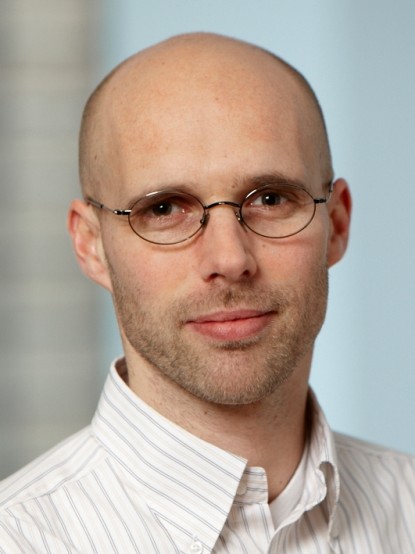
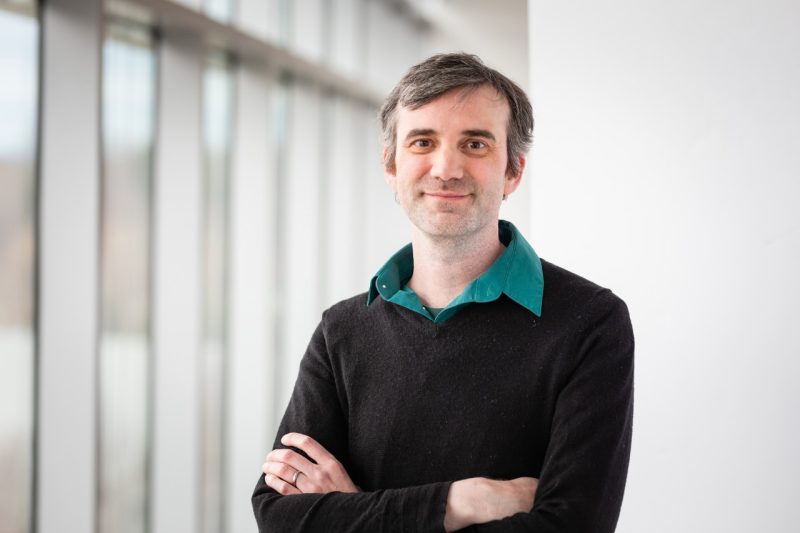
Prof. Dr. Martin Johns serves as Chair of Application Security at the Institute for Application Security within the Carl Friedrich Gauss Faculty at Technical University Braunschweig. He joined TU Braunschweig after working as Research Expert at SAP Security Research, where he shaped security strategy and led software security teams. Prior to SAP, he worked as software engineer in Germany at companies like TC Trustcenter and Infoseek Germany. Academic qualifications include a PhD in Computer Science (University of Passau, 2009) and a Diploma in Computer Science (University of Hamburg, 2003). His research focuses on web security and software security , particularly secure programming , vulnerability detection , and attack mitigation strategies. Recent publications cover topics like GDPR compliance frameworks , WebAssembly security , federated learning privacy , and server-side request forgery (SSRF) defenses. His work appears in top conferences including IEEE S&P, CCS, WWW, and ACM CODASPY.
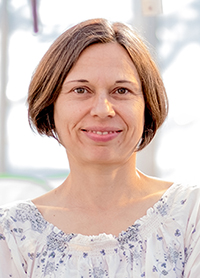
Zsofia Szendrei is a Professor in the Department of Entomology at Michigan State University (MSU), affiliated with the College of Agriculture & Natural Resources. Her work spans teaching (10%), research (40%), and extension (50%), focusing on vegetable production entomology. She leads the Szendrei Lab, which explores chemical ecology, biological control, and sustainable pest management. Her research emphasizes reducing reliance on synthetic pesticides through integrated approaches like habitat manipulation and molecular detection of trophic interactions. She collaborates closely with growers and extension educators to implement practical solutions for vegetable pest challenges. Education: M.Sc. in Horticulture (Hungary, 2001), Ph.D. in Entomology (MSU, 2005). Professional roles include Co-Editor-in-Chief of American Entomologist (2021–present) and leadership in MSU's Extension programs. She prioritizes student mentorship, fostering creativity and hands-on research in a collaborative lab environment. Key research themes include agroecology, pest-behavioral interactions, and pollinator conservation. Her extension efforts target reducing insecticide use while maintaining crop profitability. Recent work investigates heatwave impacts on crop-pest dynamics and pollinator protection. She has authored/co-authored over 50 peer-reviewed articles, with a focus on topics like cover crops, pathogen management, and invasive species. Her lab’s findings inform both academic discourse and real-world agricultural practices.
Amin Barari is an Adjunct Professor at the School of Engineering, RMIT University, Australia. His research focuses on geotechnical and offshore engineering, particularly in foundation systems for offshore wind turbines, soil-structure interaction, and seismic liquefaction mitigation. He has extensive experience in experimental and numerical analysis of pile foundations, bucket foundations, and caisson structures. His work integrates advanced computational methods (e.g., machine learning, finite element modeling) to predict foundation behavior under extreme conditions. Research interests include: offshore wind energy foundations, soil liquefaction, cyclic stability diagrams, and probabilistic hazard assessment frameworks. He has supervised multiple PhD/Masters projects on topics like resilient foundations in calcareous deposits and pile foundation dynamics in expansive soils. His publications span over 147 research outputs, emphasizing geotechnical challenges in coastal and offshore environments. Dr. Barari collaborates with international institutions and has expertise in experimental testing (e.g., large-scale load testing, centrifuge modeling) and advanced AI-driven frameworks for geohazard prediction. His work contributes to sustainable infrastructure design and risk mitigation strategies for renewable energy systems.
Patrick Mitran is a full-time Professor at the University of Waterloo's Department of Electrical and Computer Engineering, within the Faculty of Engineering. His research focuses on advanced wireless communication systems, including 5G/6G technologies, millimeter-wave and sub-THz communication, digital predistortion techniques, MIMO systems, and beamforming architectures. He leads projects addressing challenges in transmitter linearization, network resource allocation, and hardware-efficient signal processing. Key research interests include optimizing frequency multiplier-based transmitters, mitigating inter-cell interference in massive MIMO networks, and developing algorithms for reconfigurable intelligent surfaces (RIS). His work often intersects hardware design, signal processing, and network optimization, with applications in next-generation wireless infrastructure. Recent publications highlight innovations in ultrawideband signal generation for 6G testing, practical RIS configurations, and FPGA-based real-time digital predistortion implementations. His contributions emphasize both theoretical advancements and practical system-level solutions. Dr. Mitran's research group collaborates on cutting-edge topics such as hybrid NOMA in multi-cell networks, adaptive coding modulation for Gaussian channels, and interference decoding strategies. His work has been published in top-tier journals and conferences, reflecting a sustained impact on modern wireless communication technologies.
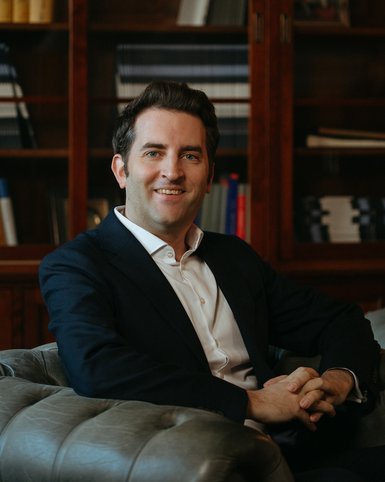
Cameron Musco is an Assistant Professor in the Manning College of Information and Computer Sciences at the University of Massachusetts Amherst. He is affiliated with the Theory Group and conducts research at the intersection of theoretical computer science, numerical linear algebra, and machine learning. His work focuses on randomized algorithms, streaming, and distributed computation, with applications in data science. Education: PhD in Computer Science, MIT (2019) BS in Computer Science and Applied Mathematics, Yale University Research Interests: Musco's research emphasizes algorithm design for large-scale data analysis, including fast randomized methods for linear algebraic problems. He explores topics such as low-memory computation, matrix approximations, and graph algorithms, driven by applications in machine learning and distributed systems. Publications: His recent work spans advancements in hierarchical matrix approximation, graph-based nearest neighbor search, and fair resource allocation, reflecting expertise in both theoretical foundations and practical algorithmic innovation. Awards: He has received an NSF Career Award, Google Research Scholar Award, and recognition for anti-racism leadership. He actively reviews for top conferences in theoretical computer science and machine learning. Advising & Grants: Musco advises multiple PhD students and has grants from NSF and Google. His lab collaborates on projects like low-rank matrix approximation and causal discovery. Labs/Teams: He is part of the Theoretical Computer Science Group and the Center for Data Science at UMass.
Professor Daniel Quevedo is a leading academic in Electrical and Computer Engineering at The University of Sydney. Previously, he held positions at Queensland University of Technology and Paderborn University, Germany, where he founded the Chair in Automatic Control. He earned his PhD from the University of Newcastle (Australia) and MSc/Ing. degrees from Universidad Técnica Federico Santa María (Chile). His research focuses on networked control systems, cyber-physical systems, and cybersecurity, with contributions to state estimation, control of power converters, and human-in-the-loop systems. He has pioneered work integrating machine learning, behavioral economics, and advanced mathematics to address challenges in interconnected digital-physical environments. Quevedo serves as Associate Editor for IEEE Transactions on Control of Networked Systems and IEEE Control Systems. He chairs the Committee of Experts for Germany’s Excellence Strategy on Digital Methods and has held leadership roles in IEEE technical committees. Notable awards include the IEEE Axelby Outstanding Paper Award (2018) and multiple fellowships. Teaching includes advanced control systems courses like Reinforcement Learning and Optimal Control. He is a Fellow of the IEEE and has published over 200 peer-reviewed articles, with recent work emphasizing privacy-preserving state estimation, resilient control systems, and energy-efficient wireless control. His research labs explore topics such as human-machine collaboration, cybersecurity in Industry 5.0, and data-driven control strategies. Current projects include secure remote state estimation frameworks and adaptive control under adversarial conditions.
George T. C. Chiu is a Professor in the School of Mechanical Engineering at Purdue University, with courtesy appointments in Electrical and Computer Engineering and Psychological Sciences. He holds a 50% appointment as Assistant Dean for Global Engineering Programs and Partnerships. His research focuses on mechatronics, dynamic systems and control, functional printing, and human-machine interaction, with applications in biomedical engineering, robotics, and advanced manufacturing. Education: PhD (1994), MS (1990) University of California, Berkeley; BS (1985) National Taiwan University. Research interests emphasize application-driven solutions for printing technologies, motion control, and embedded systems. Notable projects include developing inkjet printing for biomedical materials and sensor systems. Awards include ASME Fellowship (2013) and the 2024 ASME Rabins Leadership Award. Publications span topics like inkjet drop dynamics, control systems, and biofabrication. He has led initiatives such as the Purdue FIRST Programs, fostering K-12 STEM education through robotics mentorship. Editorial roles include Editor-in-Chief of IEEE/ASME Transactions on Mechatronics (2017-2019).
Sarah Green is a Professor at the University of Helsinki's Faculty of Social Sciences, Department of Social and Cultural Anthropology. Her research focuses on the anthropology of borders, livestock and microbial movements, and Mediterranean and Balkan regional dynamics. She has led projects such as "Crosslocations in the Mediterranean" and "Opening Pandora’s Box: Assessing The Risks of Permafrost Thaw" , exploring environmental and health intersections. As Editor-in-Chief of Social Anthropology , she has shaped academic discourse. Her recent work examines zoonotic disease control and nonhuman animal migration. She advises doctoral theses on topics ranging from Roma policy to digital intimacy in Egypt. Affiliated with Helsinki One Health, she bridges social and medical sciences. Education: Not explicitly detailed in texts, but her academic roles imply advanced anthropological training. Research Projects: Includes "InterEarth RESET" (climate change), "Trade, Transit and Travel in the Mediterranean" , and "EastBordNet" . Grants: Recipient of University profiling funding and Research Council of Finland grants. Her theoretical contributions include "Crosslocations" theory, analyzing spatial entanglements. She frequently participates in conferences like the American Anthropological Association meetings and contributes to editorial boards. Recent publications address border entanglements, postmodern gender theory, and Mediterranean geopolitics.
Prof. Heinz Koeppl is a Professor in the Department of Electrical Engineering and Information Technology at TU Darmstadt. His research focuses on self-organizing systems, systems biology, and control theory, with applications in synthetic biology, robotics, and stochastic processes. He explores interdisciplinary topics such as genetic circuit design, UAV swarm dynamics, and machine learning-driven modeling of biochemical systems. Key research areas include the development of deep learning frameworks for kinetic modeling, Bayesian optimization for riboswitch design, and mean field control theory for sparse networks. His work bridges theoretical foundations with practical engineering solutions, addressing challenges in molecular communication, gene regulation, and robotic swarm coordination. Publications from 2023–2025 highlight advancements in bio-inspired algorithms, swarm intelligence, and computational biology. Notable contributions include studies on RNA-based circuits, active matter dynamics, and optimization strategies for large-scale systems. His research emphasizes interdisciplinary collaboration, leveraging tools from electrical engineering, mathematics, and life sciences. No scientific awards are explicitly listed in the provided text. Advising and grants details are not available. Prof. Koeppl’s lab focuses on integrating systems biology approaches with engineering principles to solve complex problems in healthcare, environmental sustainability, and technological innovation.
Éric Bélanger is a Professor in the Department of Political Science at McGill University, specializing in Canadian and Quebec politics. His research focuses on electoral behavior, political parties, nationalism, and public opinion dynamics. He holds a PhD from the Université de Montréal and has published extensively on topics such as generational shifts in Quebec nationalism, party realignment, and municipal voting patterns. His work frequently employs quantitative methods, including advanced econometric modeling for election forecasting. Research interests include: Quebec and Canadian political systems Political party competition and realignment Nationalist movements and identity politics Economic voting and fiscal policy impacts Municipal elections and local governance Comparative studies of electoral systems His recent work highlights innovative approaches to forecasting elections in diverse contexts like France and Latin America, while maintaining a strong focus on Quebec-specific issues such as generational voting patterns and the evolving nationalist landscape. Bélanger’s research often bridges theoretical frameworks with empirical analysis, contributing to both Canadian and comparative political science literatures.
Dr. Jan Christoph Munck-Rieder is a Lecturer at EBS Business School in Oestrich-Winkel, Germany. He serves as Co-Head of the Strascheg Center for Impact in Innovation & Entrepreneurship (SCIIE) and leads the Gründungsfabrik Rheingau , a joint initiative with Geisenheim University. In addition to his academic role, he is the managing director of varISO GmbH in Mainz, a consultancy firm. Education: Business Administration studies at Johannes Gutenberg University Mainz Business Administration studies at Karlstad University, Sweden Research Interests: Dr. Munck-Rieder’s research focuses on innovation management , entrepreneurship , and innovation controlling . He explores how organizations can systematically manage innovation processes through effective control systems, balancing creativity with efficiency. His work also delves into the implications of digital transformation on budgeting, management accounting, and organizational development. He has contributed extensively to understanding how Industry 4.0 technologies reshape business models and control mechanisms in manufacturing and service sectors. Publications Overview: His recent publications span peer-reviewed journals and industry-focused outlets, with a clear emphasis on innovation control systems , new product development , and digital transformation . Topics include the performance effects of control instruments in innovation stages, bibliometric evolution of innovation control as a field, and empirical studies on digital budgeting. His work often bridges theoretical frameworks with practical applications in corporate and startup environments. Books and Editorial Contributions: Controlling von Start-Ups & Start-Up-Initiativen (2019, co-authored with R. Gleich) Co-editor of Kennzahlen optimal nutzen (2018) Multiple chapters in edited volumes on controlling, innovation, and digital transformation Industry Engagement & Consulting: Dr. Munck-Rieder has extensive consulting experience with firms such as INVENSITY , Volkswagen Consulting , Horváth , and SGP Management Consultants . His dual role in academia and industry allows him to integrate practical insights into research and teaching, particularly in innovation and entrepreneurship education.
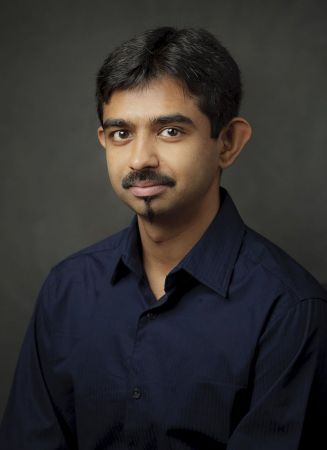
Parv Venkitasubramaniam is a Professor in the Department of Electrical & Computer Engineering at Lehigh University, affiliated with the P.C. Rossin College of Engineering. Previously, he served as a postdoctoral researcher at UC Berkeley under Prof. Venkat Anantharam. His research focuses on theoretical foundations of privacy and security in networks, leveraging statistical signal processing, information theory, and game theory. Key application areas include smart grids, transportation systems, and peer production networks. Education includes a Ph.D. and M.S. in Electrical Engineering from Cornell University, and a B.Tech from the Indian Institute of Technology. His doctoral work concentrated on wireless sensor networks, particularly distributed communication and statistical inference. Research interests span privacy-utility tradeoffs, cybersecurity in control systems, and resilient network design. He explores topics like stealthy attacks on dynamical systems, privacy-aware stochastic games, and resilient energy storage systems. Recent work emphasizes transportation system resilience and cyber-physical system security. His publications address cutting-edge challenges in anonymizing networks, detecting cyber attacks, and optimizing privacy-preserving mechanisms. Notable projects include NSF-funded research on anonymous networking and information-theoretic security frameworks.
Scott England is a Professor in the Department of Aerospace and Ocean Engineering at the College of Engineering, Virginia Polytechnic Institute and State University. He serves as the Project Scientist for NASA’s Ionospheric Connection Explorer (ICON), Co-Investigator for Global-scale Observations of the Limb and Disk (GOLD), and Participating Scientist for Mars Atmosphere and Volatile Evolution (MAVEN). Education PhD, University of Leicester (UK), 2005 MPhys First Class Honors, University of Leicester (UK), 2001 England’s research focuses on planetary atmosphere-space environment interactions, particularly gravity waves, atmospheric tides, and ionosphere-thermosphere coupling on Earth and Mars. His work integrates NASA mission data (ICON, GOLD, MAVEN) with numerical modeling to study thermal dynamics, wind systems, and solar flare impacts. Recent publications highlight his expertise in thermospheric gravity wave science, planetary wave-induced ionospheric variability, and Mars atmosphere studies using EMUS and IUVS instruments. Articles span topics like Seasonal variability of DE3/DE2 tides , Transient Martian hot oxygen corona , and Shock-induced plasma dynamics . Scientific Honors 2020 Dean's Award for Teaching Excellence 2016 RHG Exceptional Achievement for Mars Science As a professional leader, England served as Thermospheric Lead for the 2019 Planetary Mission Concept Studies Program and on the National Academy of Sciences Decadal Survey panel. He manages Virginia Tech’s participation in the Virginia Space Grant Consortium and has contributed to high-performance computing committees.
Dirk Praetorius is a Professor of Numerics of Partial Differential Equations (PDEs) at the Technische Universität Wien (TU Wien) , affiliated with the Institute for Analysis and Scientific Computing (ASC) within the Faculty of Mathematics and Geoinformation . He leads the research group on Numerics of PDEs and has held various leadership roles, including Institute Director (since 2020) and head of the Numerics research area. His work focuses on numerical methods for PDEs, including Finite Element Methods (FEM), Boundary Element Methods (BEM), adaptive algorithms, and computational micromagnetics. Education and Career: Praetorius earned his Diplom in Mathematics (2000) and PhD in Applied Mathematics (2003) from TU Wien, followed by a Habilitation in Numerical Analysis (2005). He has been a faculty member at TU Wien since 2005, progressing from Assistant Professor to full Professor in 2017. He has also held visiting positions at institutions such as the University of Jyväskylä and RICAM (Linz). Research Interests: His research spans numerical analysis, adaptive FEM/BEM, a-posteriori error estimation, matrix compression, and computational micromagnetics. He has contributed to modeling spin dynamics, magnetic skyrmions, and multiscale systems. His work emphasizes efficient algorithms for large-scale problems and optimal computational complexity. Awards and Editorial Roles: Praetorius received the TU Best Teacher Award (2021) and TU Best Lecture Award (2019). He serves as Senior Editor for Computational Methods in Applied Mathematics (CMAM) and on the editorial board of Applied Numerical Mathematics (APNUM) . He co-founded the outreach initiative TUForMath to promote mathematics education. Grants and Projects: He leads or co-leads several research projects funded by the Austrian Science Fund (FWF), including the collaborative SFB "Taming Complexity in Partial Differential Systems" (2017–2025) and international collaborations with Germany. His work addresses topics like functional error estimates, nonlinear PDEs, and computational design of magnetic devices. Labs and Teams: He contributes to the ASC Institute and coordinates interdisciplinary projects involving computational physics and engineering. His team develops software tools like MooAFEM and Commics for micromagnetic simulations.
Lucia Lee is an Assistant Professor in the Department of Chemistry at Queen's University, affiliated with the Faculty of Arts and Science. Her research focuses on applying green chemistry principles to supramolecular interactions involving main-group elements, particularly sigma-hole interactions, with applications in materials science and medicine. She holds a PhD from McMaster University and has completed postdoctoral studies at the University of Geneva and Weizmann Institute of Science. Dr. Lee's educational background includes a PhD supported by an NSERC grant, which explored chalcogen bonding in supramolecular materials. Her postdoctoral work at Weizmann focuses on stimuli-responsive materials using chalcogen elements for photoswitching applications. She has also contributed to academic governance through roles in the McMaster Graduate Students Association. Her research interests span analytical chemistry, quantum chemistry, inorganic and bioinorganic chemistry, organic chemistry, and free radical chemistry. Key projects include integrating chalcogen bonding into d-metal coordination chemistry, catalysis, and chemical biology to create functional materials. Her lab, located in CHE513, emphasizes sustainable approaches to material design through main-group supramolecular systems. Her articles explore topics like chalcogen bonding mechanisms, anion transport, and photoswitching in confined spaces, reflecting a strong focus on molecular assembly and functional materials. She has no listed scientific awards but demonstrates significant contributions to supramolecular chemistry through her publications and cross-appointments at Queen's Carbon to Metal Coating Institute.