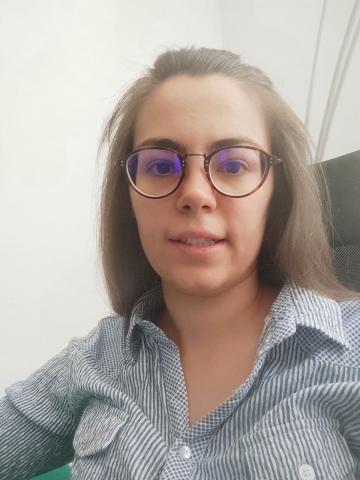
Michela Quadrini is an Assistant Professor at the University of Camerino with expertise spanning Bioinformatics , Computational Biology , and Graph Neural Networks . Her academic work focuses on RNA structure analysis, human activity recognition, and formal methods for collective adaptive systems. Research Interests include: RNA pseudoknots comparison and classification Machine learning applications in biomedical signal processing Spatial logics for complex system modeling Protein-protein interaction site prediction Ontology-based frameworks for activity recognition Publications demonstrate methodological innovation across: RNA structure alignment and translation tools (TARNAS) Graph neural network programming languages (μG) Stress detection from wearable sensor data Formal verification of collective systems Immunoinformatics feature engineering Technical Expertise combines computational biology with advanced machine learning techniques, evidenced by contributions to: Topological data analysis for RNA structures Convolutional neural network architectures Semantic ontologies in mechatronic systems Integral equation numerical methods
Yihai Chen is an Adjunct Associate Professor in the Department of Computing and Software at McMaster University. His work bridges formal methods in software engineering with healthcare technology applications. Medical device software certification Statistical web testing frameworks Generative AI for image synthesis Formal specification languages (Object-Z, XML, UML) His research spans medical device safety , web application reliability , and educational technology implementation . Recent work (2019) explores LSTM-based workload prediction in cloud environments alongside GAN-driven food dish generation . Key publication trends include: Formal methods in software engineering (2001-2022) Medical software certification (2014) Web testing frameworks (2013-2022) Model transformation techniques (2008) While no explicit awards are listed in available data, his 15 most recent publications demonstrate sustained contributions to software reliability , health informatics , and formal verification challenges.
Bin Chen is an Associate Professor at Michigan State University with joint appointments in the Genetics & Genome Sciences Program and Department of Computer Science and Engineering . His research combines multi-omics data , electronic medical records , and advanced machine learning to develop novel therapeutic approaches. Key affiliations : Genetics & Genome Sciences Program Computer Science and Engineering Department NIH BDMA Study Section Research focus : OMICS-driven drug discovery Biomarker identification Translational bioinformatics Virtual screening platforms Single-cell & spatial transcriptomics His lab actively develops machine learning models like transfer learning and deep reinforcement learning to analyze bulk/single-cell transcriptomics and EMR/EHR data. The team has made significant contributions to COVID-19 research, diffuse midline glioma , and Alzheimer's disease through computational drug repurposing and biomarker discovery . Selected scientific awards include: NIH R01 Diversity Supplement (2021) Early Career Research Excellence Award (2021) Best Paper Award at KDD Health Day (2022) NIH BDMA Study Section Membership (2025) The lab has trained numerous students and postdocs who have transitioned to academic and industry positions. Current funding includes NIH R01 grants , NCATS Translator program , and MSU-Spectrum Health Alliance collaborations.
Nicholas Kuehnel, MD serves as Associate Professor in the Department of Emergency Medicine and Pediatrics at the University of Wisconsin-Madison School of Medicine and Public Health. He holds dual leadership roles as Vice Chair of Clinical Operations for the Department of Emergency Medicine and Division Chief of Pediatric Emergency Medicine at American Family Children's Hospital, where he directs the region's only pediatric-specific emergency department serving infants through adolescents. His educational journey began with a Bachelor of Science in Biology and business certificate from UW-Madison, followed by medical training at the Medical College of Wisconsin. He completed pediatrics residency at Ann & Robert H. Lurie Children's Hospital (Northwestern University Feinberg School of Medicine) and Pediatric Emergency Medicine fellowship at Medical College of Wisconsin/Children's Hospital of Wisconsin. Dr. Kuehnel's research integrates machine learning and clinical decision support to address critical gaps in pediatric emergency care. His work spans early deterioration detection in hospitalized children, child abuse identification systems, and pandemic response optimization. As Co-Principal Investigator on NIH/NHLBI R01HL173037 (2024-2029), he develops interpretable clinical decision tools for pediatric cardiopulmonary deterioration. His methodology emphasizes equitable care delivery and safety science through health informatics innovation. Recent publications reveal a clear trajectory toward AI-driven clinical prediction models, with 2025 works focusing on explainable pediatric risk algorithms and critical event forecasting. His 2020-2023 output demonstrates adaptation to pandemic challenges through EHR-based surveillance and operational resilience studies, while earlier work established foundations in child abuse detection systems across diverse electronic health record platforms. His recognition includes: Safety Leadership Award, UW Health (2023) Physician Leadership Development Program, UW Health (2022-2023) Rising Star Clinical Excellence Award, UW Health (2021) Faculty Award for Excellence in Clinical Care, BerbeeWalsh Department (2019) As an educator, Dr. Kuehnel directs the Administration, Quality, and Leadership Fellowship program and serves as Quality Improvement Coach for medical students. His NIH-funded research ($2.1M R01 grant) drives collaborative work with pediatric intensivists, data scientists, and EHR specialists. Current grants focus on developing actionable clinical decision support tools that balance accuracy with interpretability for frontline clinicians. He operates within American Family Children's Hospital's specialized Pediatric Emergency Department, collaborating with multidisciplinary teams including pediatric emergency physicians, nurses, child life specialists, and social workers to advance evidence-based protocols for acute pediatric conditions ranging from oncologic emergencies to infectious disease complications.
M.Sc. Fabian Lehmann is a scientific collaborator at the Humboldt University of Berlin , affiliated with the Faculty of Mathematics and Natural Sciences and the Institute of Computer Science . His research focuses on knowledge management in bioinformatics and scientific workflows, particularly in areas like resource management, workflow scheduling, and energy-efficient computing. His recent work includes: Carbon-aware execution strategies for scientific workflows (2025) Runtime prediction techniques for heterogeneous infrastructures (2024-2022) Performance prediction and resource recommendation systems (2025-2022) Community-driven workflow standardization initiatives (2024-2022) Applications in environmental data analysis and earth observation (2023-2021) Contact: fabian.lehmann@informatik.hu-berlin.de Phone: 030 2093-41285 Address: Unter den Linden 6, 10099 Berlin
Carl Stahmer is the Executive Director of the UC Davis DataLab (Data Science and Informatics) and an Adjunct Associate Professor in the Department of English at UC Davis. He is also a faculty member at the Rare Book School at the University of Virginia. His research focuses on digital bibliography, print history, and computational methods in the early modern period. He co-founded Romantic Circles and has served as Associate Director of the English Broadside Ballad Archive (EBBA) since 2003, leading digitization efforts and developing analytic tools. His work includes redesigning the English Short Title Catalogue for linked data and contributing to platforms like Zotero. Recent publications highlight his expertise in linked data, network analysis, and NLP for cultural heritage and urban planning. Funders include the National Endowment for the Humanities, Mellon Foundation, and University of California Humanities Research Institute. Stahmer's projects integrate image recognition and text mining to transform archival practices, emphasizing accessibility and semantic discovery. He maintains a professional website at www.carlstahmer.com .
Marco Savino Piscitelli is a Fixed-Term Researcher at the Polytechnic University of Turin within the Department of Energy (DENERG) and member of the Interdepartmental Center SmartData@PoliTO. He actively contributes to the BAEDA Lab (Building Automation and Energy Data Analytics) since 2021. His academic activities span two schools: College of Architecture and Design (as member), and College of Electrical and Energy Engineering (as invited member). Research Interests focus on: Adaptive control strategies for smart buildings Data-driven energy management systems Knowledge graphs and LLMs for building interoperability Fault detection in HVAC and district heating systems Energy benchmarking frameworks Grid-interactive efficient buildings Commercial research projects with generative AI applications Recent Publications (2023-2025) demonstrate expertise in: AI-enhanced energy planning Brick-compliant semantic models Deep learning for power demand forecasting Multi-zone HVAC optimization Experimental building diagnostics Collective self-consumption strategies Teaching Roles include: Lecturer for Energy Management and Automation in Buildings (2023-2025) Collaborator for Energy Transition and Low-Carbon Architecture (2021-2025) Lecturer for Models and Scenarios for Energy Planning (2024) Titolare (lead instructor) for Building Physics and Air Conditioning (2024) Research Projects : 2024-2025 : Scientific Manager for "Data-Driven Performance Analysis through Generative AI" 2023-2024 : Scientific Head for "Advanced data-driven smart reporting systems" Labs & Teams : BAEDA Lab - Building Automation and Energy Data Analytics SmartData@PoliTO - Big Data and Data Science Laboratory Collaboration with CityLearn v2 development team
Michael Ho is a Sessional Lecturer II in the Department of Economics at the University of Toronto. His academic role focuses on teaching, with affiliations in the broader academic community. Despite his teaching position, his research interests and publications reflect interdisciplinary work in genomics, epigenetics, and computational biology. His research explores advanced topics such as epigenetic mechanisms in stem cells, cancer biomarker discovery, and clinical prediction models. Notable areas include the application of machine learning to genomic data analysis, validation frameworks for bioinformatics methods, and translational research in prenatal diagnostics and oncology. Recent work emphasizes the integration of chromatin dynamics, DNA methylation profiling, and AI-driven approaches to solve challenges in personalized medicine. His contributions span both foundational genomic studies and applied research in healthcare technology. Mr. Ho has actively participated in international collaborations, including guideline development for clinical prediction models (TRIPOD+ AI) and standards for genomic data interoperability (e.g., BED format). His publications highlight a commitment to methodological rigor in computational biology and translational genomics.
Paul Libbrecht is a Professor of Data and Computer Science at the online studies department of IU University of Applied Sciences. His expertise spans intelligent learning systems, web architectures, and mathematical models. He holds a PhD in Computer Science from the University of Saarland, focusing on learning materials for intelligent tutoring systems. Education: Bachelor's/Master's in Mathematics at University of Lausanne and Université du Québec à Montréal PhD in Computer Science, University of Saarland His research emphasizes infrastructure for research data, applied to learning analytics and web architectures. He contributed to foundational standards like MathML and the ActiveMath platform. His work bridges academia and industry, with roles at DFKI, Cabrilog, XWiki, and the Leibniz Institute. Grants & Advising: No explicit grants listed. No formal advisee names documented. Labs/Teams: Involved in development of ActiveMath platform and semantic web initiatives.
Dr. Camil Staps is a Researcher in the research area 'Semantics & Pragmatics' at Leibniz-Zentrum Allgemeine Sprachwissenschaft (ZAS Berlin). His research focuses on how abstract concepts like causation and evidentiality are represented in the mind, particularly studying the relation between spatial and non-spatial meanings of prepositions, demonstratives, and other function words. His educational background includes a PhD in Linguistics from Leiden University (2024), a Research MA in Hebrew and Aramaic Studies from Leiden University, and an MSc in Software Science from Radboud University Nijmegen. His research interests span computational linguistics, cognitive science, and formal semantics. Dr. Staps has received significant research funding including an NWO Rubicon Grant (2024-2026) and NWO PhDs in the Humanities Grant (2019-2024). His publications demonstrate a strong focus on formal semantics, Biblical Hebrew linguistics, and computational approaches to language analysis. He maintains several software projects including Məḇaqqēš (for Biblical Hebrew scholars), HebrewTools (educational tools), and Nitrile (a package manager for Clean programming language).
Marco Gori is a Full Professor at the Department of Information Engineering and Mathematical Sciences , University of Siena. His research spans Artificial Intelligence , Machine Learning , and Neural-Symbolic AI , with significant contributions to Educational Technology and Knowledge Graphs . He teaches Algorithms and Data Structures for undergraduate Management Engineering and Fundamentals of Machine Learning for graduate Artificial Intelligence and Automation Engineering . His recent work integrates Graph Neural Networks and State-Space Models for tasks like educational quiz generation and interoperable supply chain traceability. His publications highlight trends in Hybrid AI , focusing on interpretable models, cross-language educational tools, and temporal sequence processing. Articles like Grounding Methods for Neural-Symbolic AI and Interpretable-by-design Link Prediction underscore his emphasis on explainability and knowledge integration in AI systems.
Christian-Emil Smith Ore is an Associate Professor and head of the Unit for Digital Documentation (EDD) at the University of Oslo. With 25+ years in digital humanities, he focuses on cultural heritage documentation, lexicography, and electronic text editions. His work emphasizes standards like TEI for text encoding and CIDOC-CRM for data interchange to enable cross-disciplinary research integration. Research interests span: Digital methods for cultural heritage preservation Lexicographic research and corpus linguistics Semantic modeling of historical texts Development of digital infrastructures for humanities research Cross-institutional data interoperability Publications from 2017-2024 demonstrate consistent focus on lexicographic innovation, archaeological data modeling, and digital preservation. Key thematic clusters include: Evolution of Norwegian lexicography and language standardization Semantic frameworks for cultural heritage data integration Digital tools for historical text analysis and dictionary development Professional leadership includes: Co-founding the Medieval Nordic Text Archive (menota.org) Chairing Digital Humanities in Nordic countries (DHN) Co-chairing TEI ontology SIG Leading conceptual modeling for Archaeological Digital Excavation Documentation (ADED) infrastructure
Professor Kai Zheng is a leading academic in health informatics at the University of California, Irvine , affiliated with the School of Information and Computer Sciences and the Department of Informatics . His research focuses on improving healthcare outcomes through technology, emphasizing patient-clinician interactions, clinical workflow optimization, and digital mental health interventions. He advocates for transforming healthcare IT systems into intuitive tools akin to 'smartphones' to enhance usability and decision-making. Key research areas include electronic health records (EHR) redesign, mental health app development, and the application of AI in healthcare. Notable projects include: Designing user-centered asthma management apps Evaluating telehealth impacts on provider burnout Analyzing social media sentiment for public health insights His work integrates computational methods with ethnographic approaches to understand real-world healthcare challenges. Recent studies highlight workflow redesign, privacy-protecting data discovery, and mitigating unintended consequences of health IT adoption. Collaborative efforts with county mental health services and peer-driven innovation projects underscore his commitment to translating research into practical solutions for diverse populations, including marginalized groups and older adults.
Jack Wileden is a Professor of Computer Science at the University of Massachusetts Amherst and serves as Associate Dean of Student Affairs. He is also the Director of the Convergent Computing Systems Laboratory. His research focuses on software systems architecture, semantic frameworks, ontology engineering, and sustainable design. Wileden holds PhD, MS, and AB degrees in mathematics and computer science from the University of Michigan. Member of ACM, Senior Member of IEEE, Golden Core Member of IEEE Computer Society Recipient of IEEE CS Meritorious Service (1995) and Golden Core Member Awards (1997) Editor of IEEE Transactions on Parallel and Distributed Systems Research interests emphasize semantic integration across domains like healthcare, engineering, and sustainability. His work includes developing tools for CAD interoperability, knowledge management systems, and decision support ontologies. Recent efforts focus on applying semantic technologies to product lifecycle management and sustainable design methodologies. Articles from 2011–2015 highlight advancements in semantic frameworks, material selection algorithms, and ontology-based decision systems. His contributions span theoretical foundations (e.g., Arcadia environment architecture) to applied innovations like AIERO algorithms for ontology relationships. Lab leadership includes the Convergent Computing Systems Lab, advancing interdisciplinary computing solutions. Advising and grants information is not explicitly documented in provided texts.
Yue (Ray) Wang is an Assistant Professor at the School of Information and Library Science, University of North Carolina at Chapel Hill. He holds a PhD in Computer Science and Engineering from the University of Michigan, and prior degrees from Shanghai Jiao Tong University and Georgia Institute of Technology. His research focuses on text data mining, machine learning, and health informatics, with an emphasis on developing interactive and interpretable algorithms to reduce human effort in data analysis. He has contributed to clinical NLP, high-recall information retrieval, and computer-assisted qualitative analysis, winning awards such as the WSDM Best Paper Award (2016) and the Deborah Barreau Award for Teaching Excellence (2021). Dr. Wang’s work bridges computational methods with real-world applications, including environmental policymaking through extreme systematic reviews and NeuroBridge—a platform for neuroimaging data discovery. He teaches courses like INLS 509 (Information Retrieval) and INLS 690-270 (Data Mining). His recent research explores user-centered explainability in AI, leveraging crowdsourced experiments and in-lab studies to understand how users interact with machine predictions. He collaborates with organizations like the EPA on machine-assisted literature screening for environmental policy. Education: BS/BA in Information Security & English (Shanghai Jiao Tong University) MS in Computer Applied Technology (Shanghai Jiao Tong University) MS in Electrical and Computer Engineering (Georgia Tech) PhD in Computer Science and Engineering (University of Michigan) Awards: UNC Junior Faculty Development Award (2022) Outstanding Reviewer Award (WSDM 2022) Deborah Barreau Teaching Excellence Award (2021) WSDM Best Paper Award & Outstanding Reviewer (2016) Dow Distinguished Award (2015) Key Research Themes: User-centric AI interpretability Health informatics applications Large-scale data screening for policy Explainable retrieval models