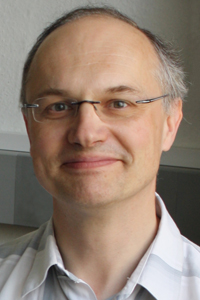
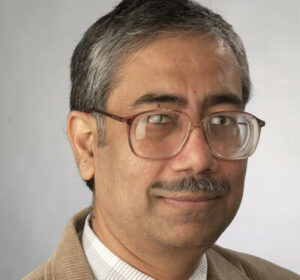
Professor Yahya Fathi specializes in optimization and operations research at North Carolina State University. His research includes mathematical programming, production systems, and quality engineering, with applications in manufacturing and data analytics. Awarded multiple teaching excellence honors.
George Hazelrigg is an Adjunct Professor and Affiliate Faculty in the Department of Mechanical Engineering at George Mason University, with a career spanning academia, industry, and the National Science Foundation (NSF). He earned BS and MS degrees in mechanical engineering from NJIT, and MA, MSE, and PhD in aerospace engineering from Princeton University. Education: PhD, MSE, MA in Aerospace Engineering (Princeton University); MS, BS in Mechanical Engineering (NJIT) Hazelrigg’s research focuses on systems engineering and engineering design decision-making, with current work supported by the NSF titled “Toward a Theory of Systems Engineering.” This project explores mathematical foundations for optimizing design requirements and validating systems engineering processes. His publications from 2019–2025 emphasize systems engineering theory, model validation, tolerancing, decision-making under uncertainty, and pedagogical approaches. Recent work addresses incentive structures, differentiable variables in design, and validation frameworks. Throughout his career, Hazelrigg has taught at prestigious institutions including Princeton University, UC San Diego, and Ajou University in Korea. At the NSF, he managed research programs across four divisions, oversaw $210 million in annual budgets, and served as deputy and acting division director for the Division of Civil, Mechanical, and Manufacturing Innovation (CMMI).
Dr Adelaide Marzano is a Lecturer at the School of Computing Engineering and the Built Environment, Edinburgh Napier University, and a Visiting Professor at Pentecost University, Ghana. Her research focuses on manufacturing systems, CAD integration, tolerance analysis, and educational technology. She actively contributes to the Centre for Engineering and Mathematical Modelling, examining topics such as digital twin simulations for industrial ergonomics and e-learning efficacy. She serves as a PhD External Examiner and is a member of the Institution of Mechanical Engineers. Affiliations: Edinburgh Napier University (Primary), Pentecost University (Visiting) Key Roles: PhD Examiner, Research Group Member (Centre for Engineering and Mathematical Modelling) Her research spans manufacturing processes, including tolerance-aware product development and virtual reality applications in aerospace training. Recent work includes optimizing distillery operations via digital twin frameworks and investigating student preferences for e-learning tools across UK and Portuguese institutions. She also collaborates with industries like COMAU on ergonomic work cell design. Her current PhD project supervision involves machining optimization of additively manufactured medical components, emphasizing interdisciplinary approaches to advance manufacturing precision and efficiency.
Anders Forslund is a researcher at Chalmers University of Technology, specializing in Product Development with a focus on aerospace and mechanical engineering. His work bridges theoretical research and practical application in multidisciplinary design. Department: Product Development Key Collaborations: VINNOVA, EU Horizon 2020, AIAA, ASME His research interests revolve around robust design and uncertainty modeling for aerospace structures. He develops simulation platforms to minimize geometric variation in welded components and optimize turbine lifecycle robustness. His work integrates genetic algorithms , 3D scanning , and PLM systems for multidisciplinary convergence. The 15 most recent publications span 2011–2018, covering welding optimization , geometric robustness , simulation frameworks , and sustainable aerospace design . Key trends include bridging CAD/point cloud gaps , virtual trimming , and set-based design in collaborative platforms. Anders participates in grants and projects such as: TOICA (2013–2016): EU-funded thermal-driven aircraft design. ELISE (2018–2018): Vinnova-funded electric aviation. Design av de aerodynamiska egenskaperna för ett elektriskt flygplan (2021–2022): Chalmers-led aerodynamic R&D. He has contributed to research teams in propulsion, thermal sciences, and acoustic engineering, collaborating with experts like Rikard Söderberg and Lars Davidson.
Professor Mohammad Reza Movahhedy is affiliated with the Department of Mechanical Engineering at Sharif University of Technology , Tehran, Iran. He holds the academic rank of Professor and specializes in Manufacturing Engineering . His research focuses on Additive Manufacturing, Machining Dynamics, and FEM Simulation. Education: PhD, Mechanical Engineering, University of British Columbia (2000) M.Sc., Mechanical Engineering, University of Waterloo (1994) B.Sc., Mechanical Engineering, University of Tehran (1988) Research Interests: Additive Manufacturing (3D Printing, Laser Cladding) Meta-Materials Fabrication Hybrid Machining Processes (Ultrasonic/Laser Assisted) Machining Dynamics and Machine Tool Behavior FEM Simulation of Metal Cutting/Forming Experimental Modal Analysis Computer-Aided Tolerancing Professional Contact: Email: movahhed@sharif.edu
Marco Mazzarisi serves as an Assistant Professor in the Department of Mechanics, Mathematics and Management at the Polytechnic University of Bari, Italy, specializing in Manufacturing Technology and Systems (ING-IND/16 classification). Based at Via Orabona 4, 70125 Bari, he can be contacted via marco.mazzarisi@poliba.it or the departmental line +39 080 596 3522. His research centers on laser-based additive manufacturing processes, with primary expertise in Laser Metal Deposition (LMD) and Directed Energy Deposition. Key investigation areas include real-time process monitoring using coaxial infrared systems and off-axis optical techniques, defect detection (particularly subsurface voids), melt pool dynamics analysis, and sustainability assessment through exergetic analysis. His work focuses on nickel-based superalloys (Inconel 718) and stainless steels (AISI 316L), addressing critical challenges in geometric accuracy, energy consumption, and material compatibility in hybrid manufacturing. Analysis of his 2020-2025 publications reveals consistent innovation in LMD monitoring methodologies. His research demonstrates strong interdisciplinary integration between thermal physics, optical engineering, and sustainable manufacturing principles. Notable contributions include the development of off-axis monitoring frameworks, causal models for void prediction, and exergy-based sustainability metrics that bridge process quality with environmental impact assessment. Scientific awards: No awards, fellowships, or medals are documented in the provided materials. Advising and grants: No information regarding graduate student supervision, research grants, or funding sources is provided in the source text. Laboratory facilities: The text does not specify any dedicated laboratories, research teams, or collaborative groups associated with Dr. Mazzarisi's work.
Dr. Benjamin Durakovic is an Associate Professor at the Faculty of Engineering and Natural Sciences, International University of Sarajevo since 2016. He holds a PhD in Industrial Engineering (2016), MSc in Industrial Engineering and Management (2008), and a Dipl. Eng. in Energy Engineering from the University of Sarajevo (2003). Education: PhD in Industrial Engineering, International University of Sarajevo (2016) MSc in Industrial Engineering and Management, University of Sarajevo (2008) Dipl. Eng. in Energy Engineering, University of Sarajevo (2003) Research Interests: His work focuses on lean manufacturing integration with Industry 4.0, phase change materials (PCMs) in construction and energy systems, thermal energy storage, quality management, and optimization of manufacturing processes. He explores applications of PCMs in building envelopes, electronics cooling, and sustainable composites, while also investigating the impact of industrial IoT on quality control and workforce productivity. Recent Articles: Recent publications highlight advancements in PCM applications, lean 4.0 manufacturing, measurement system capability, and error analysis in shift-based production. His research bridges theoretical frameworks with practical case studies in metal coating, textile, and rebar manufacturing. Advising & Grants: No formal advisees listed, but his research emphasizes industry collaboration and applied solutions. His work contributes to innovation ecosystems through initiatives like the Science-Technology Park Ilidža. Labs & Teams: Engaged in interdisciplinary projects at the International University of Sarajevo, focusing on smart technologies, sustainable materials, and advanced manufacturing systems.
Fabio Pini is an Associate Professor at the University of Modena and Reggio Emilia's Department of Engineering 'Enzo Ferrari'. His research focuses on robotics, manufacturing engineering, and advanced design methodologies. He leads the IDEALab (Intelligent Design, Engineering, and Automation Laboratory) and teaches courses in Smart Robotics, Automotive Design, and Additive Manufacturing. Education: Not explicitly stated in provided texts. Research Interests: Collaborative robotics and human-robot interaction Computer-aided design (CAD) and topology optimization Additive manufacturing processes and sustainability Automotive component design and lightweighting Robotics in medical applications (e.g., surgical navigation) Manufacturing process integration and automation Teaching: Smart Robotics (Master's in Electronics/Computer Engineering) Formula SAE Vehicle Design (Mechanical Engineering) Integrated Computer-Based Design (Mechanical Engineering) Automotive Computer-Aided Design (Advanced Automotive Engineering) Labs/Teams: IDEALab focuses on intelligent design systems, robotic automation, and advanced manufacturing solutions. Collaborations include industry partners for automotive and medical robotics projects.
James M. Zavislan is an Associate Professor at the University of Rochester's Institute of Optics and currently serves as Associate Dean for Education at the Hajim School of Engineering and Applied Sciences. He holds a BS (1981) and PhD (1988) in Optics from the University of Rochester, both with distinction. Previously, he worked at IBM Almaden Research Center and co-founded Lucid, Inc., where he directed research and product development. His research focuses on enhancing optical imaging systems through coherence modeling and measurement, with applications in biomedical imaging, material science, and remote sensing. He also specializes in optical design, fabrication, and manufacturing-oriented design. Zavislan has authored/co-authored 49 papers, co-edited a book, and holds 62 US patents. He leads the Hajim School’s hands-on engineering design series (EAS 141-144) and directs the optics teaching labs. His teaching spans geometrical optics, radiometry, product development, and optical engineering laboratories. Awards: Fellow of Optica; Fellow of the National Academy of Inventors Inventions: 62 issued US patents Labs/Teams: Faculty Director of Optics Teaching Labs Grants/Awards: Not explicitly detailed in text
Burkhard Alpers is a Professor in the Faculty of Mechanical Engineering and Materials Science at Aalen University. His work bridges mathematics and engineering education, focusing on innovative teaching methods and digital tools. He teaches mathematics and IT and is actively involved in the Faculty Council. University: Aalen University School: Faculty of Mechanical Engineering and Materials Science Academic Rank: Professor Email: burkhard.alpers@hs-aalen.de His research is centered on the mathematical education of engineers, with a strong emphasis on integrating computer algebra systems (CAS) like Maple into the curriculum. He develops digital learning environments such as the Mathematical Application Project Server (MAPS) and educational microworlds like the "Formula 1" project to enhance student learning. His work explores how students apply mathematical knowledge in engineering contexts, such as machine design and CAD usage. The analysis of his recent publications reveals a consistent focus on applied mathematics in engineering education. His work heavily features the use of technology, including Dynamic Geometry Software (DGS), Maple, and web-based servers, to create interactive and realistic learning scenarios. Key themes include modeling real-world problems (e.g., billiards, Formula 1), developing intelligent tutoring environments, and researching the mathematical competencies required by mechanical engineers. No scientific awards are mentioned in the provided text. There is no information available in the text regarding student advising or research grants. Burkhard Alpers has developed several notable educational tools and platforms, including the Mathematical Application Project Server (MAPS) and the "Formula 1" mathematical microworld. These projects represent his lab or team's focus on creating digital infrastructure and interactive simulations to support engineering mathematics education.
Milenko Sekulić is a Full Professor at the Chair of Machining within the Department of Production Engineering, Faculty of Technical Sciences, University of Novi Sad. He has held this position since 2017 and currently serves as Head of the Chair of Machining (since 2018), following previous roles as Associate Professor (2012-2017) and Assistant Professor (2008-2012) at the same institution. His academic foundation includes a Bachelor's degree (1993), Magister degree (1998), and PhD (2007), all in Mechanical Engineering from the Faculty of Technical Sciences. His educational journey focused on cutting force analysis in milling, development of cutting force calculation models, and determination of drilling forces. Professor Sekulić's research centers on advanced manufacturing engineering, specializing in machining process optimization, thermal analysis, and cutting force prediction. His work integrates fuzzy logic, evolutionary algorithms, and response surface methodology to solve complex problems in electrical discharge machining, abrasive water jet systems, and high-pressure jet assisted turning. Key contributions include energy efficiency models for EDM, surface roughness prediction frameworks, and thermal state optimization in creep-feed grinding. Analysis of his 15 most recent publications reveals a strong trend toward sustainable and intelligent manufacturing solutions. His work consistently addresses material-specific challenges (particularly nickel-based alloys), develops predictive models for machining outcomes, and pioneers hybrid techniques like laser-assisted cutting. The research demonstrates increasing sophistication in combining computational intelligence with traditional manufacturing physics. No scientific awards or fellowships are documented in the available information. Professor Sekulić actively mentors students through thesis supervision and teaching, building on his own academic progression within the institution. His leadership as Head of Chair involves guiding research direction and laboratory activities for the machining group. International collaborations with Slovenian institutions (evident in co-authored publications) highlight his cross-border research engagement. He leads the Chair of Machining research team, which maintains specialized laboratories for conventional and non-conventional machining processes including EDM, water jet systems, and high-pressure jet assisted equipment. Current work focuses on AI-driven process optimization and sustainable manufacturing techniques.
Miodrag Hadžistević is a Full Professor at the Department of Production Engineering within the Faculty of Technical Sciences at the University of Novi Sad. His career spans over two decades, including roles as Assistant Professor (2005-2010) and Associate Professor (2010-2015) in the same department. Academic Timeline Full Professor (2015-present) Associate Professor (2010-2015) Assistant Professor (2005-2010) Administrative Roles Head of Department of Production Engineering (2012-2018) Head of Chair of Metrology, Quality, Equipment, Tools, and Ecological-Engineering Aspects (2018-2024) His research focuses on precision engineering, quality management, and manufacturing technologies. Key contributions include innovations in coordinate measuring machine accuracy, flatness error evaluation, and dental engineering applications. Publications span journals like Precision Engineering , Metalurgija , and Journal of Craniofacial Surgery . While no explicit awards are mentioned, his work demonstrates expertise in metrology, tool design, and ecological-engineering aspects. Recent articles reveal a strong emphasis on dimensional accuracy analysis, dental prosthetics fabrication, and advanced manufacturing methods. His work integrates CAD/CAE systems, Monte Carlo simulations for uncertainty evaluation, and rapid prototyping technologies. The research also explores material behavior in machining processes and corrosion protection techniques.
Utpal Roy is a Professor in the Department of Mechanical Engineering at Syracuse University. He holds a Ph.D. from Purdue University and specializes in areas such as geometric tolerances, sustainable manufacturing, and computer-aided design. His research emphasizes integrating artificial intelligence with manufacturing processes and developing sustainable product lifecycle frameworks. Dr. Roy has been recognized with the L. C. SMITH Award for Faculty Excellence (2008) and the Pi Tau Sigma Outstanding Professor Award (1993). He has contributed to over 15 peer-reviewed articles focusing on topics like disassembly planning, geo-solar energy systems, and multi-objective sustainability optimization. His work bridges theoretical advancements with practical applications in energy-efficient building design and end-of-life product management. He has served as an Associate Editor for the International Journal of Product Development and SME’s Journal of Manufacturing Systems. His research trends emphasize sustainable manufacturing practices, ontology-based systems for disassembly, and innovative energy storage technologies.
Martin Roth is a Postdoctoral Researcher in the Geometry Assurance & Robust Design research group at Chalmers University of Technology, working within the Product Development department under the School of Mechanics and Maritime Sciences. His research focuses on geometry assurance of products with mega-cast parts, collaborating with the automotive industry to optimize methods and tools for advanced variation simulation and geometry assurance of complex assemblies. Dr. Roth's primary research interests include: Product Design Geometry Assurance Tolerancing Optimization Simulation His recent scholarly output demonstrates a strong trend toward integrating advanced computational methods with industrial applications, particularly in developing holistic frameworks for tolerancing in product design and closing gaps in the digital thread using the Quality Information Framework standard. His work combines sampling-based tolerance-cost optimization techniques with practical manufacturing challenges, especially for mega-cast aluminum parts in automotive applications. Dr. Roth is actively involved in two major VINNOVA-funded research projects: Digital synchronization of geometry data for efficient value chains (DigiSync) (2024-2027) Geometrical robustness for mega casted aluminum part (GROMCAP) (2023-2026)
Sebastian Repetzki is a Lecturer and Head of the Mechanical Engineering Department at the Management Center Innsbruck (FH), leading the Mechatronics program since 2012. He has extensive experience in mechanical engineering education, industrial projects, and research, particularly in robotics, CAD/CAM, and automation. His academic roles include teaching design, machine elements, and robotics, while overseeing laboratory facilities and curriculum development. Education: Graduate Engineer (TH) in Mechanical Engineering from RWTH Aachen University (1986). His research spans tolerance analysis, sensor integration, and industrial robot applications. He has supervised numerous theses on topics like force-torque sensing, 3D imaging, and load stabilization systems. Research interests focus on practical applications of robotics, CAD systems, and mechatronics. Notable projects include the development of a high-performance pelleting machine (BioStiXX) and a 6-DOF pointing device for virtual reality. His work bridges academic research and industrial innovation, with expertise in manufacturing processes and automation. Publications highlight contributions to vehicle dynamics simulation, force-torque sensor calibration, and historical machine reconstruction. Awards include the Springorum commemorative coin for academic excellence (1986). He advises over 100 students annually, emphasizing hands-on projects and industry collaboration.