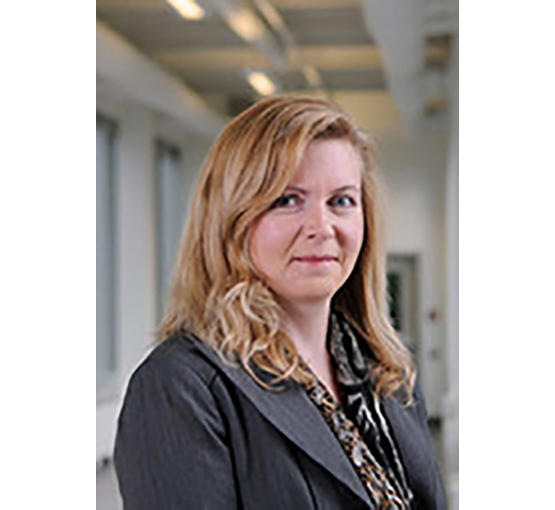
John Collomosse is a Professor of Computer Vision and AI at the University of Surrey, leading DECaDE (UKRI/EPSRC Centre for the Decentralised Digital Economy) and the Centre for Vision, Speech and Signal Processing (CVSSP). He also serves as a Principal Scientist at Adobe Research, managing the Cross-Modal Representation Learning (XRL) group. His research focuses on AI, Distributed Ledger Technology (DLT), media provenance, and blockchain applications to combat misinformation and enhance data integrity. Collaborations include the Content Authenticity Initiative (CAI) and the ARCHANGEL project, which pioneered AI and blockchain for tamper-proof archives. He holds a PhD, is a Fellow of the IET, and has advised UK/EU bodies on digital economy policies. His work bridges academia and industry, with contributions to generative AI, watermarking, and decentralized systems. Publications span content authenticity, style transfer, and generative models. Awards include a 2024 prestigious fellowship. His labs include Surrey Institute for People-Centred AI (PAI) and DECaDE, fostering interdisciplinary research in AI ethics, provenance, and digital economy frameworks.
Deirdre Ahern is Professor of Law at Trinity College Dublin's School of Law and Director of the Technologies, Law and Society Research Group. She serves on Ireland's AI Advisory Council and the European Commission's Company Law Expert Group, providing policy advice on AI governance, corporate sustainability, and financial regulation. Research focuses on: Corporate governance in technological contexts AI regulation and quantum technology ethics Directors' duties in sustainability frameworks FinTech innovation and regulatory sandboxes Publications examine governance innovation during crises, corporate liability frameworks, and regulatory responses to emerging technologies. Recent work addresses generative AI governance and sustainability reporting requirements. Awards: Research Ally Award (2024) Excellence in Supervision Award (2024) Fellow of Trinity College Dublin (2012) Kevin Boyle Prize shortlist (2011) Leadership: Directs research projects on EU Corporate Sustainability Due Diligence and AI regulation. Leads PhD supervision in quantum technology ethics, AI governance, and sustainability frameworks.
Dr. Emma Hoes is a Postdoctoral Research Fellow at the Department of Political Science, University of Zurich. She holds a PhD from the European University Institute in Florence, Italy. Her research focuses on digital technologies' impact on information ecosystems, with emphasis on AI, misinformation, and content moderation. She is involved in the ERC-funded PRODIGI project and the Digital Democracy Lab. Her work challenges alarmist views on AI and disinformation, emphasizing evidence-based interventions. Key research themes include the effectiveness of misinformation countermeasures, AI governance, and the societal implications of social media. She employs experimental methods (surveys, field experiments) and computational social science approaches. Recent publications explore platform governance, media literacy, and policy U-turns. Teaching: She instructs the course Agenda Setting and the Media: Framing the Political Debate at UZH. Professional contributions include non-academic chapters on media polarization and conspiracy theories, plus media appearances in Phys , Algemeen Dagblad , and Dutch radio. Her work appears in top journals like Nature Human Behavior , Political Communication , and European Political Science Review . Ongoing projects examine AI-generated news engagement, conspiracy theory prevalence, and experimental methodological dilemmas.
Christos Matsoukas is a Researcher and Industry doctoral student at the Division of Computational Science and Technology, KTH Royal Institute of Technology. His work bridges Artificial Intelligence and Planetary Science, focusing on medical image analysis via advanced machine learning techniques and exploring Titan's surface composition using remote sensing data from missions like Cassini. His research interests span Medical Image Analysis, leveraging transformer models and self-supervised learning for diagnostic applications, as well as Planetary Science analyzing Titan’s chemical composition through spectral and morphological analysis of craters and geological features. Recent studies investigate the efficacy of foundation models in low-data medical contexts and domain adaptation strategies for high-content imaging. Publications highlight innovations like Random Token Fusion for multi-view diagnosis, Metadata-guided consistency learning, and compositional mapping of Titan’s surface using Cassini/VIMS and RADAR data. His work contributes to both AI-driven healthcare solutions and understanding Titan’s habitability potential.
Marina Gavrilova is a Professor and Associate Head (Research and Strategic Planning) in the Department of Computer Science at the University of Calgary. Her research focuses on biometric security, machine learning, pattern recognition, and interdisciplinary computational sciences. She is a co-founder of the Biometric Technologies Laboratory and the SPARCS laboratory, and serves as Founding Editor-in-Chief of Springer's Transactions on Computational Sciences. Her work spans ethical AI frameworks, multimodal biometric systems, and healthcare applications. Dr. Gavrilova holds Senior ACM and IEEE membership statuses and has received prestigious awards including the Canada Foundation for Innovation Grant and the University of Calgary’s U Make a Difference Award. Her editorial roles include positions with IEEE Transactions on Computational Social Sciences, IEEE Access, and multiple biometrics journals. Her research explores emotion-aware de-identification systems, trustworthy AI, and bias mitigation in healthcare machine learning. Key contributions include advancements in generative adversarial networks, fusion strategies for multimodal data, and computational methods for medical imaging. She advocates for ethical AI practices and interdisciplinary collaboration to address societal challenges in security and privacy. Lab affiliations include the Biometric Technologies Lab and SPARCS Lab, which focus on computational security and interdisciplinary research. Ongoing work emphasizes social behavioral biometrics, autonomous systems, and AI-driven healthcare solutions.
Dr. Matthew Jones is an Honorary Research Fellow at Swansea University's Faculty of Medicine, Health and Life Science, specializing in mental health research with particular focus on gambling disorders and opioid use disorder (OUD). His current position involves working as a research officer on the SAGE study (Scoping the Accessibility of Safer Gambling Information in the United Kingdom Armed Forces: A Pilot Evaluation Study), funded by GREO with Professor Simon Dymond, Matt Fossey, and Justyn Larcombe. This research involves surveying and interviewing armed forces personnel, affected others, and healthcare professionals to capture data related to gambling and mental health, as well as evaluating screening tools for problem gamblers in the military. Dr. Jones' research interests primarily center around the intersection of mental health and substance use disorders, with significant work in opioid use disorder and gambling disorders. His work employs diverse methodologies including data linkage studies, qualitative analysis, and clinical trials. A substantial portion of his recent research examines the unique mental health challenges faced by military personnel, particularly regarding gambling behaviors and associated mental health conditions. His earlier work extensively investigated opioid overdose decedents in Wales using cross-sectional data linkage studies, examining socio-demographics and health service utilization patterns. Analysis of Dr. Jones' publication record reveals a clear trajectory focusing on public health interventions for substance use disorders. His research spans both clinical and population health approaches, with recent work emphasizing military populations while maintaining his expertise in opioid-related research. The publications demonstrate strong interdisciplinary collaboration across emergency medicine, psychiatry, and public health domains, with particular emphasis on harm reduction strategies and innovative screening tools. Dr. Jones has been actively involved in significant research grants, most notably the SAGE study examining gambling in UK Armed Forces. His career history shows progression from Research Assistant (2016-2017) to Research Officer (2017-2020) within Swansea University Medical School's Health Services Research department, indicating growing responsibility in research projects. While no specific scientific awards are listed in the available information, his consistent publication record in reputable journals demonstrates recognition within his research community. Dr. Jones' work demonstrates a commitment to translating research into practical interventions, particularly in the areas of opioid overdose prevention and gambling harm reduction. His current focus on military populations represents an important expansion of his research into specialized population groups with unique mental health challenges. The integration of both qualitative and quantitative approaches in his methodology portfolio highlights his comprehensive approach to understanding complex health behaviors and developing effective interventions.
Andrea Michienzi is an Assistant Professor in the Department of Computer Science at the University of Pisa. His research focuses on decentralized social networks, blockchain technology, and the metaverse, with an emphasis on improving privacy, security, and economic dynamics in Web3 environments. He has contributed to frameworks like AWESOME for analyzing Web3 social media and has explored challenges in NFT security, P2E gaming economies, and community management in decentralized systems. Teaching: He instructs the course Basi di dati e Laboratorio di programmazione Web within the Bachelor of Digital Humanities program, emphasizing practical coding and database applications. Research awards: He received a Best Paper Award in 2018 for work related to dynamic community detection in decentralized networks. His publications span topics like bot detection in blockchain games, wealth distribution analysis, and cryptographic protocols for secure messaging. His work integrates computer science, economics, and sociology to address scalability, trust, and ethical challenges in emerging decentralized platforms.
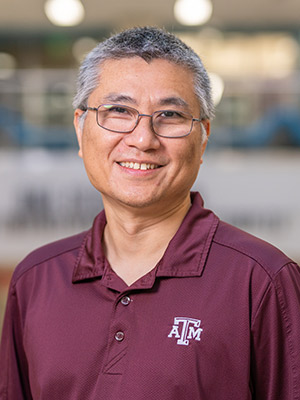
Xiaoning Qian is a Professor in the Department of Electrical and Computer Engineering at Texas A&M University, holding the Segers Family Dean's Excellence Professorship II. He is also affiliated with the Department of Computer Science and Engineering and has a joint appointment at Brookhaven National Laboratory's Computational Science Initiative. His research focuses on machine learning, Bayesian methods, bioinformatics, and materials science. Education: B.S.E. and M.S.E., Shanghai Jiaotong University M.Ph. and Ph.D., Yale University Research Interests: Bayesian learning and experimental design Signal and image processing Applications in bioinformatics, genomics, and materials science Awards: NSF CAREER Award (2016) TEES Faculty Fellow (2017) J. T. Oden Faculty Fellow (2019) College of Engineering Excellence Faculty Award (2020) Labs & Collaborations: Biomedical Imaging, Sensing, and Genomic Signal Processing Group (Texas A&M) Brookhaven National Laboratory (Applied Math group)
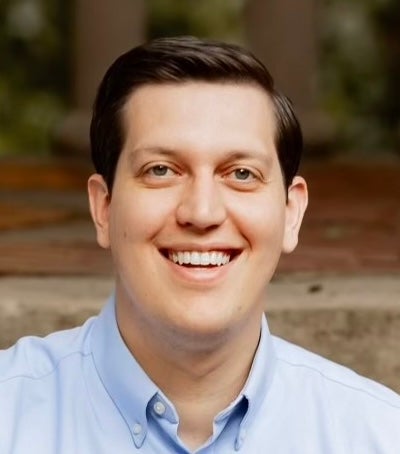
Lorenzo Luzi is a Teaching Professor in the Department of Statistics at Rice University, affiliated with the D2K Lab. He holds a B.S. in Electrical Engineering from Washington State University and an M.S. and Ph.D. in Electrical and Computer Engineering from Rice University, where he was advised by Dr. Richard Baraniuk. His research focuses on artificial intelligence, generative models, and machine learning, with significant contributions to bias mitigation, overparameterization, and GAN evaluation techniques. He has collaborated with Pacific Northwest National Laboratory (PNNL) on projects related to computational methods and imaging. Lorenzo emphasizes teaching and pedagogy, developing courses in machine learning, data science, and electrical engineering. His work bridges theoretical advancements in AI with practical educational strategies. Beyond academia, he enjoys family time and outdoor activities.
Felice Dell'Orletta is a researcher at the Institute of Computational Linguistics "Antonio Zampolli" (ILC), part of the Italian National Research Council (CNR). With numerous publications spanning from 2023 to 2025, Dell'Orletta is actively contributing to the field of computational linguistics and natural language processing. The researcher's work demonstrates strong collaboration with colleagues including Alessio Miaschi, Giulia Venturi, and Dominique Brunato across multiple projects. Dell'Orletta's research interests focus on the intersection of linguistics and artificial intelligence, particularly in the development and evaluation of Large Language Models. Key areas include linguistic profiling methodologies, text style transfer applications, and the analysis of text coherence across languages. The researcher has made significant contributions to Italian language processing, developing specialized techniques for adapting language models to the Italian linguistic context. The publication record shows a clear trend toward practical applications of NLP research, particularly in healthcare communication (reducing physician-patient expertise gaps), software engineering (feature extraction from mobile app reviews), and mental health assessment (linguistic markers of psychological conditions). Dell'Orletta's work bridges theoretical linguistic concepts with real-world AI applications, demonstrating both academic rigor and practical relevance. Dell'Orletta has been involved in multiple collaborative research projects, as evidenced by the extensive co-authorship network across publications. The research spans both technical NLP advancements and interdisciplinary applications in healthcare, education, and psychology. Recent work on linguistic profiling of LLMs represents a significant contribution to understanding the linguistic capabilities and limitations of current language models.
Dr. Orhan Elmaz is a Senior Lecturer in Digital Humanities at the School of Modern Languages, University of St Andrews. His research focuses on Arabic linguistics, Quranic exegesis, and Digital Humanities methodologies, particularly corpus and computational linguistics. Notable contributions include analyzing Quranic hapax legomena, developing a Media Arabic dictionary based on a 200-million-token corpus, and examining adaptations of One Thousand and One Nights . Current projects explore Hadith Arabic and transcultural Muslim women’s rights movements in the 19 th -20 th centuries. His teaching spans classical/modern Arab culture, Arabic literature, and language modules such as Media Arabic and Classical Arabic Poetry. Research collaboratives include editing special journal issues on Digital Modern Languages and translating Turkmen poetry. Elmaz supervises three PhD students and has served as an external examiner for doctoral candidates. Publications reflect interdisciplinary strengths: combining linguistic analysis with cultural studies (e.g., Hadith corpus linguistics) and bridging historical Islamic texts with modern computational methods. His work frequently intersects with transcultural themes, such as women’s rights movements and global literary traditions.
Professor Duncan Sheehan is a Professor of Business Law at the University of Leeds, leading the Centre for Business Law and Practice. He holds a doctorate from the University of Oxford and previously served at the University of East Anglia as Professor of Commercial Law. His expertise spans unjust enrichment, trusts, and personal property law, with a recent focus on crypto-assets and secured transactions law reform. He is President of the Society of Legal Scholars (2024-2025), having held roles such as Honorary Membership Secretary and Research Committee member. Academic memberships include the Chancery Bar Association and involvement with the Law Commission on projects like Electronic Trade Documents. His teaching covers Trusts, International Credit & Security Law, and Principles of International Finance at postgraduate level. Research interests include comparative private law theory, particularly in mixed jurisdictions (Scotland, South Africa), and philosophical underpinnings of unjust enrichment. Notable contributions include organizing conferences on secured transactions law reform (2017) and digital assets (2024), alongside a forthcoming book on the scope and structure of unjust enrichment (2024). His work bridges legal theory and practice, addressing modern challenges like blockchain and cryptocurrency regulation. Professional activities include advising the City of London Law Society on secured transactions and serving on the AHRC Peer Review College. His leadership roles within Leeds Law School include REF 2021 Unit of Assessment Lead and Director of Postgraduate Research Studies. Recent research trends highlight interdisciplinary approaches, integrating philosophy of action with private law, as evidenced by his podcast on 'Is Unjust Enrichment a Thing?' (2023).
Sergio Escalera is a Professor at the Department of Mathematics and Informatics, Universitat de Barcelona, and leads the Human Behavior Analysis Group (HuPBA). He holds affiliations at Aalborg University (Distinguished Professor), Computer Vision Center (UAB), and Mathematics Institute of Barcelona. His roles include editorships at journals like TPAMI and Data-centric Machine Learning. He co-created the Codalab platform and co-founded NeurIPS competitions. His research focuses on human-centric AI, including visual and multimodal data analysis, and he has pioneered challenges like ChaLearn Looking at People. Education: Doctorate in Computer Science (Universitat de Barcelona). Research spans computer vision, machine learning, and topological deep learning. He has published over 560 papers and holds patents in AI and biometrics. Research Interests: Inclusive human analysis, transparent AI, affective computing, and sports analytics. Notable projects include SoccerNet for sports video understanding and MyoPS for cardiac MRI analysis. His work bridges theory (e.g., Cellular Transformers) and applications (e.g., mental health monitoring). Awards: ICREA Academia, ELLIS Fellow, AAIA Fellow, multiple best-paper nominations. He has advised 20+ PhD/Master students and led grants totaling millions in funding. Key labs include HuPBA and collaborations with institutions like NVIDIA Jetson Research. Current Projects: MetrikaMind (mental health AI platform), SoccerNet 2024 challenges, and TopoX (topological machine learning software). Active in 3D human motion generation, unlearning algorithms, and robust OOD detection.
Luis de la Cruz Piris is an Assistant Professor in the Department of Telematics Engineering at Universidad de Alcalá. His research focuses on network optimization, cybersecurity, and intelligent transportation systems. He is part of the NetIS research group (Networks and Intelligent Systems). He earned his Ph.D. in 2019 with a thesis on multi-objective optimization strategies for vehicle coordination at urban intersections, supervised by Dr. Iván Marsá Maestre and Dr. Miguel Ángel López Carmona. His research interests include wireless network optimization (e.g., Wi-Fi channel assignment), IoT security frameworks, and AI-driven threat mitigation. Notable projects include the EnvAdapt-CRO-SL algorithm for dynamic channel management and CloudWall, a resilient healthcare IT infrastructure framework. Recent work explores unsupervised learning for cybersecurity, cooperative approaches to Wi-Fi performance, and distributed multi-agent systems for network resilience. His publications span topics like smart traffic light management, OAuth token configuration in IoT, and fuzzy ontology-based driver behavior analysis.
Miguel Ángel Sicilia Urbán is a Full Professor in the Department of Computer Science at Universidad de Alcalá, Spain. His research focuses on software engineering, data management, and fuzzy systems, with recent work extending into blockchain technology, cryptocurrency, and semantic web applications. He holds a Ph.D. from Universidad Carlos III de Madrid (2003), where his thesis explored adaptive hypermedia models with imperfect information support. Research Interests His expertise spans collaborative filtering algorithms, software cost estimation, and the application of fuzzy logic in database systems. Current projects include metadata traceability, privacy-preserving computing, and the analysis of cryptocurrency markets. Sicilia is also active in semantic web technologies, including linked data integration and knowledge graph development. Publications & Collaborations With over 20 years of research output, Sicilia has authored/co-authored 11 indexed publications since 2001, including foundational work on OWA-based collaborative filtering and Choquet integral aggregation. Notable collaborations include projects with researchers like Elena García on usability criteria modeling and Juan J. Cuadrado-Gallego on software estimation models. Awards & Recognition While no specific awards were explicitly mentioned, his contributions to software engineering and data management have been recognized through multiple co-edited conference proceedings and citations in interdisciplinary fields like medical informatics and environmental economics. Contact Email: msicilia@uah.es