Hüsnü Dal is a Professor at Middle East Technical University (METU) in Ankara, Turkey, specializing in computational mechanics of materials. His research bridges engineering and biomedical applications through advanced computational modeling techniques. Education: Bachelor's Degree, Middle East Technical University, 2001 Master's Degree, University of Stuttgart, 2005 PhD, Dresden University of Technology, 2011 Research Focus: Prof. Dal's work centers on computational micromechanics, multiscale and multifield problems, and materials theory. He investigates fracture in multiphysics media with applications in lithium-ion batteries and tissue mechanics, developing novel constitutive models for complex material behaviors under extreme conditions. His research integrates thermomechanical coupling, viscoplasticity, and data-driven approaches to solve engineering challenges in both synthetic polymers and biological systems. Publication Trends: Recent publications (2023-2025) reveal a dominant focus on data-driven constitutive modeling and phase-field fracture methods. His work spans rubber mechanics, polymeric foams, biological tissues, and battery materials, characterized by strong interdisciplinary connections between materials science, biomechanics, and computational engineering. Key themes include anisotropic hyperelasticity, thermo-viscoplastic fracture, and spatial property variations in additively manufactured materials.
Dr. Amir K. Miri is an Assistant Professor in the Department of Biomedical Engineering at New Jersey Institute of Technology (NJIT) and Director of the Advanced Biofabrication Lab. His work focuses on additive manufacturing for biomedical applications, particularly bioprinting technologies for tissue regeneration and disease modeling. After receiving his PhD in Mechanical Engineering from McGill University (2013) and completing postdoctoral training at the MIT-Harvard Division of Health Sciences and Technology, he began his academic career at Rowan University before joining NJIT. PhD, Mechanical Engineering, McGill University (2013) MSc, Mechanical Engineering, Sharif University of Technology (2007) BSc, Mechanical Engineering, Iran University of Science and Technology (2005) Dr. Miri's research spans advanced bioprinting platforms, including multi-axial extrusion, handheld printers, and digital light projection systems. His work emphasizes the development of biomimetic models for cancer, vocal fold tissue, and vascular systems, with a particular focus on microfluidic integration and material optimization for bioprinting. He has pioneered low-cost prototyping solutions for resource-limited settings and explored the role of extracellular matrix mechanics in cellular behavior. Key trends in his publications include 3D bioprinting for tumor modeling, microfluidic device applications in drug screening, and the use of hydrogels like GelMA in cancer research. His group has also advanced acoustic metasurface technology for biomedical wave manipulation and investigated the interplay between biomaterial rheology and bioprinting resolution. Dr. Miri leads a research team at NJIT focused on biofabrication and microfluidics, though specific student advisees are not listed in the provided information. His lab emphasizes interdisciplinary collaboration, particularly in the development of multi-material and multi-scale tissue constructs.
George M. Church is a Professor of Genetics at Harvard Medical School and affiliated with MIT, where he directs PersonalGenomes.org, providing open-access genomic, environmental and trait data. His laboratory focuses on transformative technologies for reading and writing 3D/4D biological structures with attention to ethics, safety, and equitable access. Church has co-initiated major scientific initiatives including the BRAIN Initiative (2011) and multiple Genome Projects (GP-Read-1984, GP-Write-2016, PGP-2005). Church's research spans multiple cutting-edge domains including genome engineering, synthetic biology, aging reversal, and space genetics. His lab pioneered foundational methods for direct genome sequencing, molecular multiplexing and barcoding in 1984, leading to the first genome sequence in 1994. His innovations contributed to nearly all next-generation DNA sequencing methods and companies. Current research directions include machine learning for protein engineering, tissue reprogramming, organoids, gene therapy, and in situ 3D DNA/RNA/protein imaging. His work bridges fundamental biology with therapeutic applications across diverse fields from Alzheimer's disease to de-extinction biology. Church's recent publications reveal a remarkable breadth of scientific inquiry, spanning from fundamental genome editing techniques to applications in aging research, neuroscience, and space biology. His work increasingly integrates artificial intelligence with biological systems, as seen in papers on machine-guided cell-fate engineering and automation of systematic reviews with large language models. His research maintains a strong translational focus, with numerous papers addressing therapeutic applications in cancer immunotherapy, gene therapy, and diagnostics. The consistent theme across his diverse publications is the development and application of transformative technologies to address fundamental biological questions and medical challenges. National Academy of Sciences (NAS) membership National Academy of Engineering (NAE) membership Franklin Bower Laureate for Achievement in Science Co-initiator of the BRAIN Initiative (2011) Director of multiple NIH Centers for Excellence in Genomic Science (2004-2020) Church directs numerous research centers including the NIH-CEGS, Personal Genome Project (PGP), Lipper Center for Computational Genetics, and Wyss Institute Synthetic Biology center. His laboratory has trained PhD students across multiple Harvard and MIT programs including Biophysics, BBS, Biomedical Informatics, ChemBio, Chemistry, SSQB, MCO, Virology, HST, EE/CS, Physics and Applied Math. His commercial impact is extensive through companies spanning medical diagnostics (Knome/PierianDx, Alacris, Nebula, Veritas) and synthetic biology/therapeutics (AbVitro/Juno, Gen9/enEvolv/Zymergen/Warpdrive/Gingko, Editas, Egenesis). Church also pioneered new privacy, biosafety, ELSI, environmental and biosecurity policies. The Church Lab operates across multiple research domains including molecular multiplexing, next-generation sequencing, nanopore technology, and genome engineering. The lab maintains strong connections with the Personal Genome Project, Wyss Institute, and multiple commercial ventures. Current research directions include the Spatial Atlas of Human Anatomy (SAHA), human skin rejuvenation via mRNA, and space genetics research through the Consortium for Space Genetics and BioAstra. The lab's mission focuses on transformative technologies for reading and writing 3D/4D structures at any scale, inspired by but not limited by biology.
Elizabeth Brainerd is the Robert P. Brown Professor of Biology and Professor of Medical Science in the Department of Ecology and Evolutionary Biology at Brown University. She has been a leading figure in vertebrate biomechanics and evolutionary morphology since joining Brown in 2005, where she directs the Keck XROMM Core Facility. Previously, she served as Assistant Professor (1994-1999) and Associate Professor (2000-2005) at the University of Massachusetts Amherst. Her research focuses on biomechanics and evolutionary morphology, combining anatomical studies with engineering principles to understand animal movement. Brainerd is a pioneer of X-ray Reconstruction of Moving Morphology (XROMM) technology, which enables 3D visualization of skeletal movement in living animals. Her work spans diverse vertebrate groups including fish, amphibians, reptiles, birds, and mammals, with applications to feeding, breathing, and locomotion mechanics. Brainerd's research has been consistently supported by major NSF grants, including the development of microXROMM for high-resolution imaging of small animals. Her publications reveal a trajectory from foundational work on breathing mechanics to innovative applications of XROMM technology across multiple vertebrate systems, particularly in suction feeding mechanics and skeletal kinematics. Her scientific recognition includes: Fellow of the American Association for the Advancement of Science (2004) Distinguished Research Achievement Award from Brown University (2019) Fellow of the American Association for Anatomy (2020) Joseph S. Nelson Lifetime Achievement Award in Ichthyology (2021) Bidder Prize Lecture from the Society for Experimental Biology (2023) Brainerd has mentored 7 doctoral students and 5 MS students to completion, plus over 50 undergraduate researchers. She has served as President of both the International Society of Vertebrate Morphology (2016-2019) and the Society for Integrative and Comparative Biology (2019-2021). Her teaching includes undergraduate courses in Comparative Anatomy, Comparative Physiology, and Human Physiology, graduate courses in Muscle Architecture and Biomechanics, and medical education in Human Anatomy.
Prof. Dr.-Ing. Jörg Müssig serves as a Professor at Bremen University of Applied Sciences within Faculty 5 (Department 2), focusing on sustainable composite materials development. His research bridges engineering and environmental science through innovation in natural fiber applications for industrial use. His primary research domains encompass natural fiber composites, biobased materials, and sustainable material systems, with specialized expertise in flax, hemp, and nettle fiber reinforcement. He investigates mechanical properties, interfacial adhesion mechanisms, flame retardancy solutions, and processing techniques like injection molding and filament winding, emphasizing sustainability metrics and biomimetic design principles. Analysis of his 2024-2025 publications reveals dominant themes in natural fiber composite optimization, particularly regenerated cellulose systems and coupling agent-free interfaces. Emerging trends include consumer perception studies of biobased materials and integration of ecological parameters into industrial design processes, reflecting expanding interdisciplinary approaches. Prof. Müssig leads extensive grant-funded projects including edible mushroom mycelium composites (2024-2026), sulfur-based flame retardants (2024-2026), natural fiber sector market analysis across Europe (2024-2025), and marine durability studies (2024-2025), demonstrating sustained research leadership with significant industry and cross-institutional collaborations. His work operates within a robust research ecosystem at Bremen University of Applied Sciences, where his project portfolio indicates leadership of a specialized team focused on sustainable material innovation, though specific lab infrastructure details remain unmentioned in source materials.
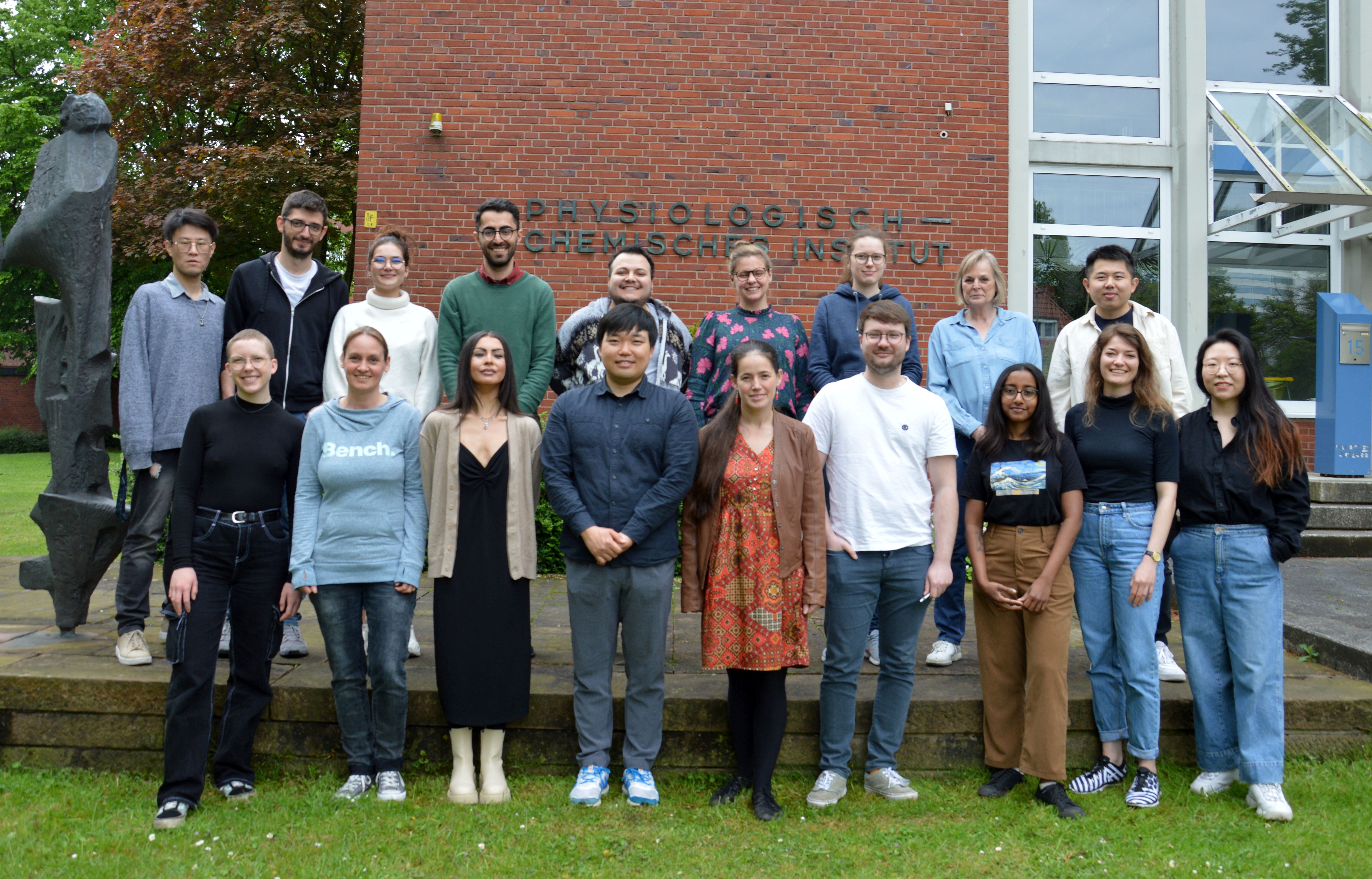
Seraphine V. Wegner is a Full Professor at the Institute of Physiological Chemistry and Pathobiochemistry within the Medical Faculty of the University of Münster. She leads an active research group focused on the spatiotemporal control of cell-material and cell-cell interactions using visible light. Her work bridges synthetic biology, cell biology, and photochemistry to create innovative approaches for tissue engineering and minimal cellular systems. Dr. Wegner's educational background includes a PhD from the University of Chicago (2005-2010) and undergraduate studies at Middle East Technical University in Turkey (2002-2005). Her career path has taken her through prestigious institutions including the Max Planck Institutes in Mainz and Heidelberg, where she established her independent research before joining the University of Münster as a Full Professor in 2019. Her research spans several interconnected areas including light-controlled minimal cellular systems, photoswitchable cell-cell interactions for tissue engineering, light-controlled cell-material interactions, and engineering designer biofilms with light. These research themes share a common thread of using light as a non-invasive tool to precisely control biological processes with high spatial and temporal resolution. Dr. Wegner's publication record shows consistent high-impact output across leading journals in cell biology, synthetic biology, and materials science. Her recent work demonstrates increasing sophistication in multi-color light control systems and applications in both fundamental biological questions and potential therapeutic approaches. ERC Consolidator Grant (2024): LIGHTHOUSE - Light as a signal for nonchemical cell-to-cell communication ERC Starting Grant (2018): ARTIST - Artificial cell-cell interactions for light switchable cell organization and signaling Young Leaders in Science Program, Schering Foundation (2016) MaxSynBio Independent Group Leader, BMBF/MPG (2015) Her research group actively collaborates across disciplines, with projects spanning from fundamental biophysics of cell adhesion to potential medical applications in tissue engineering and bacterial therapeutics. Dr. Wegner has established herself as a leader in the emerging field of optogenetic control of multicellular systems.
Paul Major is Professor and Chair of the School of Dentistry, Senior Associate Dean (Dental Affairs), and ACFD Project Lead at the University of Alberta's Faculty of Medicine & Dentistry. He leads the Orthodontic Biomechanics Research Group and co-founded the Inter-disciplinary Airway Research Clinic (I-ARC), driving innovation across dental academia and clinical practice. His educational background includes a Doctorate of Dental Surgery (DDS) from the University of Alberta (1980) followed by MSc and Orthodontic Specialty training at the same institution (1988). He joined the academic staff in 1989 and served as Director of the TMD/Orofacial Pain Program (1991-2001) and Orthodontic Graduate Program (2001-2010). Dr. Major's research centers on Orthodontic Biomechanics , 3D Craniofacial Imaging , and Ultrasound Imaging . His Orthodontic Biomechanics Research Group developed the OSIM system for 3D force measurement on dental appliances, while his imaging work pioneers reconstruction of craniofacial structures and periodontal ultrasound diagnostics. Through the I-ARC, he leads interdisciplinary studies on pediatric sleep-disordered breathing, examining craniofacial morphology and orthodontic interventions. Analysis of his 190+ publications reveals consistent innovation in biomechanical analysis of orthodontic appliances, machine learning for dental image processing, and hydrogel development for intraoral imaging. Recent work bridges dentistry with engineering through projects on dental aerosols, clear aligner mechanics, and airway measurement software. Dr. Major has supervised over 75 graduate students while maintaining clinical teaching duties despite administrative leadership roles. His research is supported by grants enabling the OSIM system development and interdisciplinary I-ARC projects. He directs the Orthodontic Biomechanics Research Group's experimental biomechanics work and the I-ARC's clinical research team, which integrates pediatric ENT, pulmonology, radiology, and biomedical engineering specialists to advance treatment of pediatric sleep apnea through craniofacial analysis and innovative imaging techniques.
Alireza Vakil Amirkhizi serves as Professor in the Department of Mechanical and Industrial Engineering at the Francis College of Engineering, University of Massachusetts Lowell. His research focuses on mechanics of materials under extreme conditions and advanced composite systems. His academic credentials include: Ph.D. in Mechanical and Aerospace Engineering, University of California, San Diego (Dissertation: Multifunctional Composites and Structures with Integrated Mechanical and Electromagnetic Properties) M.S. in Mechanical and Aerospace Engineering, University of California, San Diego B.S. in Civil and Environmental Engineering, Sharif University of Technology (Thesis: Experimental Study of Concrete Shear Walls Reinforced with Punched Steel Plates under Cyclic Loading) Dr. Amirkhizi's research spans applied mechanics and materials science with emphasis on dynamic behavior of materials under high strain-rates, extreme pressures, and temperature variations. His work explores metamaterials for wave manipulation, biomechanics of soft tissues, and molecular-level design of polymeric materials. Current investigations focus on structure-property relationships for next-generation protective systems and energy-absorbing composites. His publication record (2006-2019) reveals consistent contributions in composite mechanics , polymer physics , and metamaterial design . Key themes include constitutive modeling of pressure-sensitive polymers, micromechanical analysis of composite systems, and electromagnetic-mechanical coupling in chiral materials. His work bridges experimental validation with computational modeling across multiple length scales. Notable recognitions: Dissertation Fellowship (2006), UC San Diego Highest Academic Achievement Award (2004), UC San Diego MAE Department Certificate of Recognition (2003), UC San Diego Research funding demonstrates strong military and defense partnerships. As Principal Investigator, he secured grants from the U.S. Army (Natick Soldier RDEC), Air Force (AFOSR, SBIR), Office of Naval Research, and DARPA for projects including parachute material shelf-life analysis, cavitation-resistant coatings, and microstructurally-architected materials. Collaborative projects with S. Nemat-Nasser at UC San Diego involved blast-mitigating polymers and multi-frequency dynamic materials. His laboratory activities focus on experimental characterization of materials under dynamic loading, supported by advanced testing facilities for high-strain-rate mechanics and multi-physics material response.
Marcelo Epstein is a Professor in the Department of Mechanical and Manufacturing Engineering at the University of Calgary's Schulich School of Engineering. He also holds an adjunct position in the Faculty of Humanities, focusing on Classics. His academic journey includes degrees from the University of Buenos Aires, Technion-Israel Institute of Technology, and the University of Calgary. Epstein is renowned for contributions to Continuum Mechanics, Differential Geometry, and Biomechanics, with over 189 peer-reviewed articles and several authored/edited books. His research spans material defects, growth mechanics, and geometric theories in solids. Notable recognitions include the Frank Spragins Technical Award (2020), Tullio Levi-Civita award (2014), and CANCAM Medal (2009). Epstein has advised 25 graduate students and pioneered courses like ENME 653 (Continuum Mechanics) and LATI 205/207 (The Latin of Science). He has held visiting roles at institutions worldwide, including Oxford, Paris VI, and Ben-Gurion University. Epstein’s work bridges engineering and humanities, exemplified by his book The Latin of Science , blending scientific texts with classical language studies. His research on material evolution, dislocations, and biomechanical modeling has significantly influenced applied mechanics and interdisciplinary education.
Wei Shi is an Associate Professor of Chemistry (Organic) at Ball State University’s College of Sciences and Humanities, Department of Chemistry. He joined the institution in 2019, specializing in teaching Organic Chemistry and conducting research in Medicinal Chemistry, Chemical Biology, and Organic Synthesis. His research focuses on designing chemical probes derived from natural products to understand small molecule regulation of macro-biomolecules for disease treatment. Education: B.Sc. in Electrochemistry from Shanghai Jiao Tong University (China), M.Sc. in Bioorganic Chemistry from East China University of Science & Technology (China), Ph.D. in Chemistry from the University of Alberta (Canada), and postdoctoral training at Johns Hopkins School of Medicine (USA). Research Interests: Explores the pharmaceutical potential of bioactive natural products, particularly glycoconjugates, aiming to design novel drug candidates with enhanced therapeutic profiles. Key projects include studying ipomoeassin F’s mechanism of action as an ER translocon inhibitor and developing itraconazole analogs for antiangiogenic and anticancer applications. Selected Publications: Over 20 peer-reviewed articles, including landmark studies on ipomoeassin F’s Sec61α binding, itraconazole’s dual targeting of NPC1/VDAC1, and structural analog design. Recent work highlights Sec61 translocon inhibition mechanisms in Mycobacterium ulcerans pathogenesis and ER stress response modulation in cancer cells. Labs/Teams: Director of the Shi Research Group , focusing on natural product-inspired drug discovery and chemical biology.
Leonid Chernyak is a Professor in the Department of Physics at the University of Central Florida's College of Sciences. He received his PhD in Physics from Weizmann Institute of Science (Israel) in 1996 and joined UCF in 1999 after spending a year as a Research Associate at Colorado State University and Texas Tech University. Dr. Chernyak's research focuses on semiconductor physics, particularly wide bandgap semiconductors including Gallium Nitride (GaN), Zinc Oxide (ZnO), and Gallium Oxide (Ga2O3). His work centers on electron transport phenomena, radiation effects on semiconductors, and device characterization using techniques like electron beam induced current (EBIC) and cathodoluminescence. His research has significant applications in radiation-hardened electronics, power devices, and optoelectronics. His publication record shows a consistent research trajectory with over 100 publications spanning more than two decades, with recent work focusing increasingly on Ga2O3 as a promising ultra-wide bandgap semiconductor for next-generation power electronics. His articles demonstrate expertise in characterizing radiation damage and developing mitigation strategies through electron injection techniques. Scientific Awards 7 National Science Foundation Awards (2002-2021) 2 American Chemical Society Awards (2002-2021) 7 NATO Awards (2002-2021) 3 US-Israel Binational Science Foundation Awards (2002-2021) 3 Israel Ministry of Defense Awards (2002-2021) University of Central Florida Research Incentive Award (2004, 2015, 2021) Senior Member, Institute of Electrical and Electronics Engineers (IEEE) (1999) Minerva Award of German-Israeli Scientific Foundation (1992) Dr. Chernyak has served as a reviewer for numerous funding agencies, with 15 invitations to NSF panel reviews and 3 invitations to NATO panels between 2001-2020. His work has been recognized with an h-index of 28, and he has been included in various editions of Who's Who in America and Who's Who in Science and Engineering. His research has secured approximately $6 million in funding, demonstrating significant external recognition of his work's importance. He has also contributed 7 book chapters to the field, further establishing his expertise in semiconductor physics and materials characterization.
Seeram Ramakrishna is a Professor of Materials Engineering at the Department of Mechanical Engineering, National University of Singapore (NUS), affiliated with the College of Design and Engineering. He holds a PhD from the University of Cambridge and a TGMP from Harvard University. His research focuses on circular economy, nanotechnology, and sustainable materials engineering, with notable contributions to electrospinning, biomaterials, and energy storage systems. Key educational background includes: PhD in Materials Science (University of Cambridge) TGMP in Advanced Manufacturing (Harvard University) Research interests span cross-disciplinary areas such as: Development of eco-friendly nanocomposites Electrospun nanofiber applications in healthcare and energy Circular economy frameworks for sustainable materials Advanced manufacturing techniques for biomedical devices His publications highlight innovations in: High-efficiency solar steam generation via core-shell fibers Flexible wearable sensors for health monitoring Green synthesis of supercapacitor materials Plastic waste circularity through informatics-driven approaches Notable projects include books on circular economy fundamentals and biomaterials. His work bridges material science with environmental sustainability, addressing global challenges in energy, healthcare, and pollution control.
Dr. Liang Cui is an Associate Professor at the University of Surrey , affiliated with the School of Sustainability, Civil and Environmental Engineering and Institute for Sustainability . With a PhD from University College Dublin (2006) and BE (1st honor) from Tsinghua University (2002) , his career spans geotechnical research and education since joining Surrey in 2009. Key roles: Undergraduate Programme Leader (2020-2022, 2023-on), MSc Programme Leader for Advanced Geotechnical/Civil/Structural Engineering (2022-2023) Professional memberships: Chartered Engineer (CEng), Member of Institution of Civil Engineers (MICE), Fellow of Higher Education Academy (FHEA) His primary research focuses on numerical modeling (DEM/FEM) for geotechnical applications including offshore wind foundations , geothermal energy systems , methane hydrate exploitation , and extra-terrestrial soil mechanics . Secondary interests involve material characterization of polymeric foams , porous media , and biological tissues . Recent 15 publications (2023-2025) demonstrate expertise in soil-structure interaction for renewable energy infrastructure, thermal feedback in groundwater heat pumps, and hypothesis-driven DEM simulations for lunar/martian environments. Collaborative projects span institutions including Tsinghua University , University of Bristol , and Indian Institute of Technology Bhubaneswar . Scientific Awards: Sustainability Fellow (University of Surrey, 2023) Chartered Engineer (CEng) and MICE FHEA for educational contributions Dr. Cui supervises 7 postgraduate researchers and contributes to teaching modules in soil mechanics and energy geotechnics. His work addresses challenges in hybrid marine energy systems , needleless drug delivery , and seismic resilience of critical infrastructure.
Jonas Stålhand is a Professor at Linköping University, affiliated with the Department of Management and Engineering (IEI) and the Division of Solid Mechanics (SOLMEK). His research focuses on biomechanics, smart textiles, haptic technologies, and cardiovascular mechanics. He leads interdisciplinary projects such as a study on pain relief using smart textile garments, combining neuroscience, materials science, and biomechanics. His work spans arterial wall mechanics, wearable haptic systems, and biomaterial characterization. Recent projects include parameter identification in arteries and the development of electroactive yarn actuators for wearable applications. Collaborations involve multidisciplinary teams across engineering, medicine, and textile science. Research interests emphasize translating biomechanical insights into clinical and industrial applications. Notable contributions include studies on aortic stress analysis, acetabular cup stability, and electroactive polymer-based actuators. His publications address both fundamental and applied aspects of soft tissue mechanics and medical engineering. No scientific awards are explicitly listed, but his work has been highlighted in university news for its innovative potential in healthcare and technology.
David Tosh is a Professor in the Department of Life Sciences at the University of Bath. His research focuses on cellular reprogramming, developmental biology, and regenerative medicine, with applications to cancer and stem cell therapy. He leads a lab investigating cell type conversions (e.g., pancreatic to liver cells) and their implications for disease like Barrett’s metaplasia. Current lab members include Heather Bone, Christopher Brimson, Zoe Burke, and others listed in the text. He collaborates on projects such as the NextGen-O2k High-Resolution Respirometry initiative and contributes to animal-free 3D tissue modeling. Key research themes include understanding transcription factors driving cell fate decisions, translational applications of reprogramming for therapy, and links between cellular plasticity and cancer progression. His work aligns with UN Sustainable Development Goals related to health and innovation.