Alexey Tumanov is an Assistant Professor in the School of Computer Science at Georgia Institute of Technology, part of the College of Computing. His research focuses on systems for machine learning, resource management, and scheduling in distributed environments. He holds a PhD from Carnegie Mellon University and conducted postdoctoral research at UC Berkeley under Ion Stoica. Previously, he worked at the University of Toronto and in industry on cloud computing and datacenter systems. Education: PhD in Computer Science, Carnegie Mellon University (2019) Postdoc, UC Berkeley RISELab (2019) MSc in Computer Science, University of Toronto (2012) BSc in Computer Science, University of Toronto (2010) Research Interests: Tumanov's work addresses challenges in distributed machine learning, including efficient resource management for inference and training pipelines, scheduling algorithms for soft-real-time systems, and federated learning. His lab (SAIL) develops systems like SARATHI-SERVE and RocketKV to optimize LLM inference and co-scheduling. He emphasizes practical deployments in healthcare (HOLMES) and cloud environments. Key Contributions: Ray distributed framework for AI (OSDI 2018) ESCHER scheduler for ephemeral cloud resources (SoCC 2022) InferLine ML pipeline orchestration (SoCC 2020) Awards: NSERC CGS-D3 Scholarship (2016) Best Paper at EuroSys 2016 (TetriSched) Google PhD Fellowship Nominee (2018) Lab & Teaching: Leads the Systems for Artificial Intelligence Lab (SAIL) at Georgia Tech. Teaches advanced courses on operating systems (CS3210) and systems for ML (CS8803-SMR). Supervises 15+ graduate students across PhD and MS programs.
An Braeken is a Professor in the Department of Engineering Technology at Vrije Universiteit Brussel (VUB), Belgium. Their research focuses on cryptography, IoT security, blockchain technology, and post-quantum security protocols. They lead projects such as 'Evolution in Security and Privacy for 6G networks' and 'Tech4Health: Venturing into Future Health Technologies', emphasizing secure communication and resource management in next-generation networks. Research interests include authentication protocols, embedded systems security, and decentralized technologies. Key projects address 6G network slicing, secure edge computing, and blockchain applications in healthcare. Braeken has received the 2021 IACR RWC Cryptohackathon 2nd Prize for contributions to functional encryption. Collaborations span academia and industry, including work on Rust programming for embedded systems and acoustic authentication techniques. Over 240 publications and 46 research projects highlight their leadership in cybersecurity and IoT innovation.
Kostas Siozios is a researcher affiliated with Aristotle University of Thessaloniki (AUTH) in Greece. His work spans computer architecture, embedded systems, and machine learning, with a focus on hardware-aware optimization, energy efficiency, and edge computing. Key research areas: Computer Architecture Machine Learning Edge Computing Approximate Computing Printed Electronics Cyber-Physical Systems Recent publications highlight advancements in federated learning, DNN acceleration, and energy-efficient design for emerging hardware. His work often integrates evolutionary algorithms, genetic optimization, and variability-aware strategies. Collaborations include researchers from institutions like RWTH Aachen, TU Delft, and ETH Zurich. Topics frequently address hardware-software co-design, low-power systems, and reconfigurable architectures.
Prof. Dr.-Ing. habil. Gerhard Wunder is a Cybersecurity & AI Professor at Freie Universität Berlin (FU Berlin), supported by the prestigious DFG Heisenberg Fellowship. He leads the Cybersecurity and AI group focusing on secure AI systems, federated learning, quantum cryptography, and 5G/6G communications. His affiliations include the Department of Mathematics and Computer Science, Institute for Computer Science, and the Heisenberg CIT Group. Educations: Electrical Engineering Diploma (TU Berlin, 1999), PhD (TU Berlin, 2003, Summa Cum Laude), Habilitation Degree (2007). Visiting Professorships at Georgia Tech and Stanford University. Consultant at Bell Labs (2009). Research interests span secure machine learning, physical layer security, federated learning, blockchain applications, and wireless security. His work addresses challenges in IoT security, explainable AI, and next-gen communication systems. Notable projects include PROPHYLAXE (IoT security), UltraSec (UWB IoT security), and 5GNOW (5G waveforms). Recent publications emphasize UWB security, federated learning optimizations, and causal models for quantum correlations. Awards include the IEEE Best Tutorial Paper (2021) and the Heisenberg Fellowship (2014). He coordinates EU projects like FANTASTIC-5G and leads initiatives on generative AI risks. Grants and funding include DFG priority programs (CoSIP, CPN), BMBF projects, and EU Horizon 2020. Active in conference organization, notably co-chairing IEEE GLOBECOM 2017 and IEEE ICC 2022 tracks. Labs/Teams: Cybersecurity and AI group at FU Berlin, Heisenberg CIT Group, collaboration with Fraunhofer HHI and industry partners like Bundesdruckerei GmbH.
Amandeep Kaur is a researcher with affiliations across multiple institutions including the University of Cambridge , IIT Delhi , and Central University of Punjab . Her work spans interdisciplinary fields such as machine learning , deep learning , cybersecurity , and biomedical signal processing . Her research focuses on solving complex problems in healthcare, network security, and agricultural technology. Key contributions include optimizing SDN environments for DDoS attack detection, advancing 6G IoMT applications, and developing deep learning models for rice disease detection and COVID-19 classification using X-rays. The 15 most recent articles highlight her expertise in multi-objective optimization , hybrid algorithms , and federated learning for privacy protection. Topics range from smart city management and blockchain security to medical image segmentation and sentiment analysis in multilingual contexts.
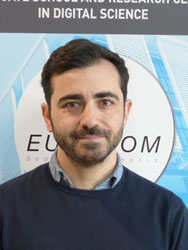
Roberto Morabito is an Assistant Professor in the Communication Systems department at EURECOM, focusing on edge computing, IoT, and AI integration in telecommunications. His work emphasizes optimizing resource-constrained environments through techniques like TinyML-as-a-Service, federated learning, and hierarchical inference architectures. He has pioneered research into edge-native large language models (LLMs), 6G-enabled AI systems, and lightweight virtualization for IoT gateways. Key research themes include energy-efficient AI deployment at the network edge, smart environment interaction via context-aware systems, and interoperability frameworks for distributed AI applications. His contributions span standardization efforts in IoT protocols (e.g., CoAP, MQTT), open-source projects like Kuksa for automotive systems, and empirical evaluations of edge computing performance in vehicular and smart city scenarios. Publications from 2023-2025 highlight advancements in hierarchical LLM routing, edge-first generative AI, and adaptive resource management for federated learning. His work bridges theoretical models with practical implementations, addressing challenges like model quantization, latency reduction, and scalability in heterogeneous networks.
Giovanni Iacca is an Associate Professor at the University of Trento's Department of Information Engineering and Computer Science (DISI), where he serves as Coordinator of the Master's Degree in Computer Science and Deputy Director of the Information Engineering and Computer Science Doctoral School. He leads the Distributed Intelligence and Optimization Lab (DIOL) and teaches courses including Computer Architectures, Introduction to Machine Learning, Bio-Inspired Artificial Intelligence, and Optimization Techniques across multiple academic programs. PhD in Computer Science, University of Jyväskylä, Finland (2011) MSc in Computer Engineering, Technical University of Bari, Italy (2006) Professor Iacca's research focuses on the intersection of evolutionary computation, machine learning, and optimization with applications in distributed systems and robotics. His work spans from theoretical foundations of memetic computing and multi-objective optimization to practical implementations in soft robotics, embedded systems, and healthcare applications. Recent efforts emphasize interpretable AI, particularly in reinforcement learning contexts, where his team develops methods to make decision processes transparent while maintaining performance. His research bridges the gap between fundamental algorithmic development and real-world engineering challenges, with over 15 years of industrial experience in optimization applied to engineering, logistics, and scheduling. Analysis of his recent publications reveals a strong trend toward interpretable AI systems, particularly in reinforcement learning contexts, with significant contributions to federated learning optimization, evolutionary neural architecture search, and applications in healthcare scheduling. His work consistently combines evolutionary algorithms with modern machine learning techniques to solve complex optimization problems across diverse domains including soft robotics, batteryless edge computing, and supply chain management. Scientific Awards: EvoApplications Best Paper Award (2017) UKCI AWARENESS Best Paper Award (2012) IEEE CIS Outstanding Student-Paper Award (2011) Professor Iacca actively supervises a large research group with numerous PhD students across multiple doctoral programs, including Information Engineering and Computer Science, Industrial Innovation, and the National PhD in Artificial Intelligence for Society. His lab has secured significant research funding through collaborations with industry partners and international research consortia. Recent grants support work on interpretable reinforcement learning, federated optimization, and applications of evolutionary computation in healthcare and robotics. He has also been appointed to editorial roles for prestigious journals including IEEE Transactions on Evolutionary Computation and Evolutionary Intelligence. The Distributed Intelligence and Optimization Lab (DIOL) under Professor Iacca's leadership comprises over 30 researchers including postdocs, PhD students, and master's students. The lab maintains strong international collaborations and has developed specialized expertise in evolutionary computation, interpretable AI, and optimization for embedded systems. Current projects include work on the EIC Pathfinder Challenge "Awareness Inside," development of methods for batteryless edge intelligence, and applications of evolutionary algorithms to healthcare scheduling problems.
Professor Sklavos Nikolaos serves in the Computer Hardware and Architecture Department at the University of Patras, where he leads research in hardware security and cryptographic engineering. His academic profile demonstrates deep expertise in securing embedded systems and IoT devices through innovative hardware implementations. His research spans Hardware Security , Cryptographic Engineering , Cybersecurity , Hardware Design , and Embedded Systems with particular focus on lightweight cryptography for resource-constrained environments. Current investigations include quantum-resistant security architectures, privacy-preserving e-health systems, and secure implementations for 5G/6G communications. His work bridges theoretical cryptography with practical hardware constraints, emphasizing side-channel attack resistance and energy efficiency. Analysis of his recent publications reveals strong trends in hardware-accelerated cryptography (particularly FPGA/ASIC implementations), IoT security frameworks , and privacy mechanisms for healthcare applications . Notable subfields include lightweight cryptographic standards, hardware trojan detection, and security for tinyML devices. His research consistently addresses real-world constraints like area minimization, power efficiency, and latency requirements while maintaining robust security guarantees. Professor Sklavos actively supervises doctoral, master's, and undergraduate thesis projects while teaching advanced courses in Cybersecurity, Embedded Systems, and Hardware Security. He maintains the SCYTALE research group focused on cryptographic engineering and hardware security solutions. His educational initiatives include integrating hands-on cybersecurity training for 5G/6G technologies into STEM curricula.
Roberto Bittencourt is an Assistant Teaching Professor at the Department of Computer Science, University of Victoria (UVic), Canada. Previously, he served as a Professor at the State University of Feira de Santana (UEFS), Brazil from 2000 to 2023, where he founded the Computer Engineering Undergraduate Program (2003) and chaired the Computer Science Graduate Program (2018). His research focuses on computer science education and software engineering education, with a prior emphasis on social computing. He holds a Ph.D. from Federal University of Campina Grande (2012), M.Sc. from Linköping University (2000), and B.Sc. from Federal University of Paraíba (1996). His work emphasizes active learning methodologies, programming education, and computational thinking integration in K-12 curricula. He has developed educational tools like Python Enhanced Error Feedback and contributed to textbooks for computing education in Brazilian schools. His research also explores project-based learning (PBL), student motivation, and the role of open-source software in education. He remains an affiliated faculty member at UEFS, advising graduate students. Key contributions include founding academic programs, designing educational technologies, and publishing extensively on pedagogical strategies in computing education. His work bridges theory and practice, aiming to improve access and engagement in STEM fields through innovative teaching methods.
Carlee Joe-Wong is the Robert E. Doherty Career Development Associate Professor in the Electrical and Computer Engineering department at Carnegie Mellon University (CMU), part of the College of Engineering. She leads the LIONS research group (Learning, Incentives, and Optimization in Networked Systems), focusing on mathematical and economic aspects of computer and information networks. Her work emphasizes practical system deployments, such as her co-founded startup DataMi, which commercialized smart data pricing (SDP) solutions deployed globally by ISPs like AT&T and Airtel. Previously, she held roles at Princeton University (Ph.D., M.A., A.B. in Mathematics/Applied Mathematics) and served as Director of Advanced Research at DataMi (2013–2014). Her research spans network economics, edge computing, federated learning, and autonomous vehicle policy. Notable contributions include foundational work on burstable cloud instances, dynamic pricing mechanisms, and resilience in mixed-autonomy transportation systems. Awards include the INFORMS ISS Design Science Award (2014), Best Paper at IEEE INFOCOM (2012), and DOE Early Career Award (2024). She has advised numerous industry collaborations and contributed to standards in distributed learning and networked systems through initiatives like the Fog Computing framework and federated learning benchmarks. Education: Ph.D. (2016), M.A. (2013), and A.B. (2011) in Applied Mathematics from Princeton University. Active in policy briefs on autonomous vehicles and energy-efficient computing systems.
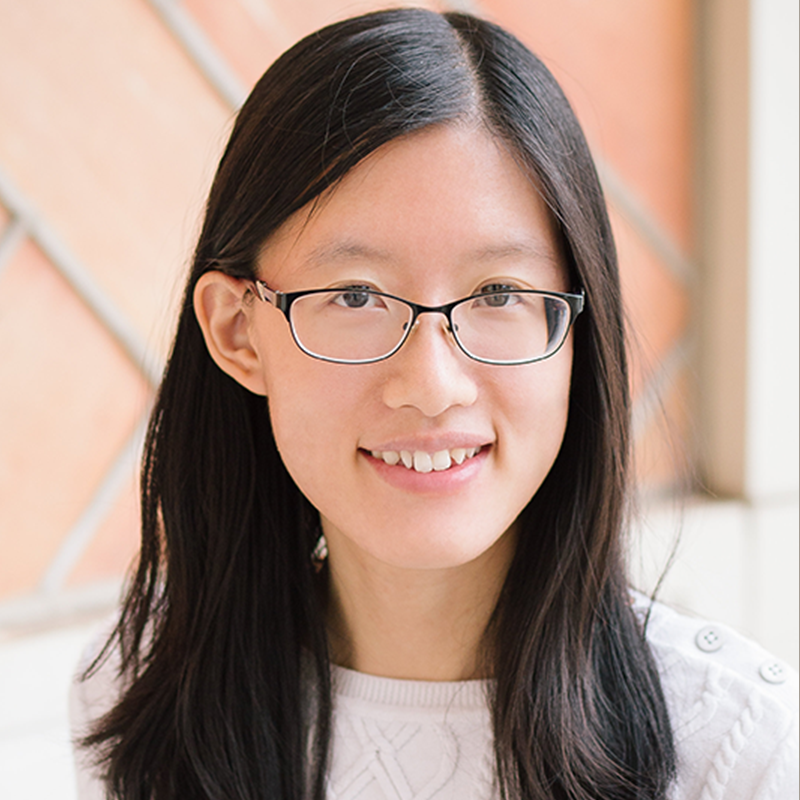
Denisa Constantinescu is a postdoctoral researcher at the Embedded Systems Laboratory (ESL) at École Polytechnique Fédérale de Lausanne (EPFL) since 2022, affiliated with EcoCloud for sustainable computing technologies. She holds a PhD in Mechatronics (2022) and a Master's in Computer Engineering (2017) from Universidad de Málaga, and a B.Sc. in Systems Engineering from University Politehnica of Bucharest (2015). Her research focuses on sustainable and energy-efficient algorithms for wearables, IoT, and data centers, with specialization in scientific computing for astronomy, mobile robot navigation, and biomedical domains . She has received recognition including the Intel oneAPI Innovator Award (2020) and the SCIE-ZONTA Award (2021) . Her recent publications address themes like FPGA acceleration in genomics and astronomy , privacy-preserving biomedical algorithms , urban digital twins for climate action , and energy-efficient interferometry for radio astronomy . She actively contributes to scientific community service as a reviewer and organizer for conferences like PASC25 and ICPP 2025. Intel oneAPI Innovator (2020) SCIE-ZONTA 2021 Award IMFAHE Shark Tank Contest Winner Erasmus Student Scholarship As a daily supervisor of 5 PhD students and 2 Master's theses at EPFL, and through her involvement with Campus Tech Chicas in Spain, she advocates for equal opportunities in education.
Sasu Tarkoma is a Professor and Acting Dean at the Faculty of Science , University of Helsinki, with affiliations to the Helsinki Institute of Sustainability Science and Helsinki Institute of Urban and Regional Studies . His research focuses on Computer Science , particularly in Artificial Intelligence , Internet of Things , and 5G/6G networks . Education : PhD in Computer Science (University of Helsinki) Academic Roles : Supervisor for Doctoral Programme in Computer Science, Docent in Department of Computer Science Research Interests span AI-driven network optimization, edge computing for 5G/6G, digital twinning, and IoT-based environmental monitoring. His work addresses challenges in federated learning , low-cost sensing , and autonomous drone deployments . Supervision and Projects : Supervised numerous Master's and PhD students, including Pengfeng Su and Peifeng Su. Leads projects like BF AgentFormers (AI for platform stability) and NordForsk - Tarkoma (2024-2028) focusing on 6G data-driven systems. Scientific Awards : Recipient of The best textbook of 2009 prize Collaborations include partnerships with institutions in Finland and international actors like ACM and IEEE, with activities in conferences and peer review (e.g., ACM DEBS 2025).
Georgios C. Anagnostopoulos is a tenured Associate Professor at Florida Institute of Technology's College of Engineering and Science, Department of Electrical Engineering and Computer Science. He leads the Machine Learning Research Group and co-directs the Center for Advanced Data Analytics & Systems (CADAS). Ph.D. in Electrical Engineering (University of Central Florida, 2001) M.S. in Electrical Engineering (University of Central Florida, 1997) Eng. Dipl. in Electrical Engineering (University of Patras, Greece, 1994) His research spans foundational AI/ML with applications in social network dynamics, environmental monitoring, and cybersecurity. Key contributions include: Information diffusion modeling via self-exciting processes Deep learning for nuclear explosion detection and flood hazard assessment Transformer-based edge computing for environmental sound classification Multi-task learning with Rademacher complexity analysis Multi-domain cyber-physical systems analysis Recent publications focus on optimization algorithms for social network analysis, flood prediction in ungauged basins, and acoustic gunshot detection systems. He has secured over $3 million in federal funding, including grants from DARPA and the Defense Threat Reduction Agency. Scientific awards held by his mentees include: Barry Goldwater Scholarship (Joey Velez-Ginorio) NSF Graduate Research Fellowship (multiple recipients) Frost Scholarship (Oxford University) UCF Distinguished Undergraduate Researcher Award He has advised over 8 graduate students, including Ph.D. researchers in machine learning and software engineering now employed at Google, Twitter, Expedia Group, and pursuing doctoral studies at University of Pennsylvania. His group maintains active collaborations with Air Force Research Laboratory and University of Central Florida.
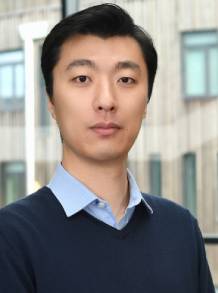
Dr. Yuchen Zhao is a Lecturer in the Cyber Security and Privacy Research Group at the University of York's Department of Computer Science. His research focuses on privacy-preserving machine learning, edge computing, and healthcare technology, particularly in smart healthcare systems using federated learning. He holds a Ph.D. from the University of St Andrews and has worked at institutions such as Imperial College London and the University of Southampton. Education: Ph.D. in Computer Science, University of St Andrews (2017) M.Sc. in Information Security, Wuhan University (2013) B.Eng in Information Security, Huazhong University of Science and Technology (2011) His research interests include user-centric systems powered by personal data and privacy protection mechanisms in IoT and edge environments. Notable projects include AI Testing Innovation (Innovate UK) and Building a Minimal Viable Digital Identity (EPSRC SPRITE+). He collaborates with interdisciplinary teams to advance usable privacy and security in healthcare and smart systems. Dr. Zhao is actively recruiting PhD students interested in privacy-preserving machine learning, edge computing, and usable privacy. His work bridges theoretical advancements with practical implementations, aiming to reform real-world systems through secure, privacy-aware technologies.
Maurício Breternitz is an Invited Assistant Professor and Principal Researcher at ISTAR-IUL, ISCTE - University Institute of Lisbon. With a PhD in Computer Engineering from Carnegie-Mellon University and extensive industrial research experience at AMD, Intel, and IBM, he focuses on bridging academia and industry for practical innovation. His academic service includes leadership roles in conferences like IISWC and editorial responsibilities at IEEE Micro. Education: Electronics Engineer (ITA, Brazil), MSc in Computer Science (UNICAMP), PhD in Computer Engineering (Carnegie-Mellon) Research: Machine Learning acceleration, Neuromorphic systems, Cloud workloads optimization, Heterogeneous computing His work spans two decades of patents (56 issued, 55 pending) and projects like the Horizon 2020 DIVIDEND CHIST-ERA and the FCT-funded AIMHealth initiative for AI-based public health solutions. Recent publications emphasize weightless neural networks, edge computing, and federated learning applications. Key contributions include: GPU acceleration for Hadoop MapReduce APU code migration techniques Microcode compression algorithms saving $18M Founding the International Workshop on Architectural Support for Binary Translation He has advised 7 Master's theses and 1 ongoing PhD project at UNICAMP, while serving on editorial boards and program committees for top-tier conferences like ISCA and CGO.