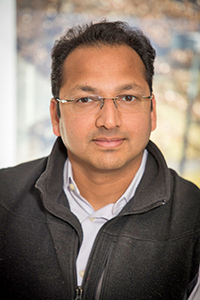
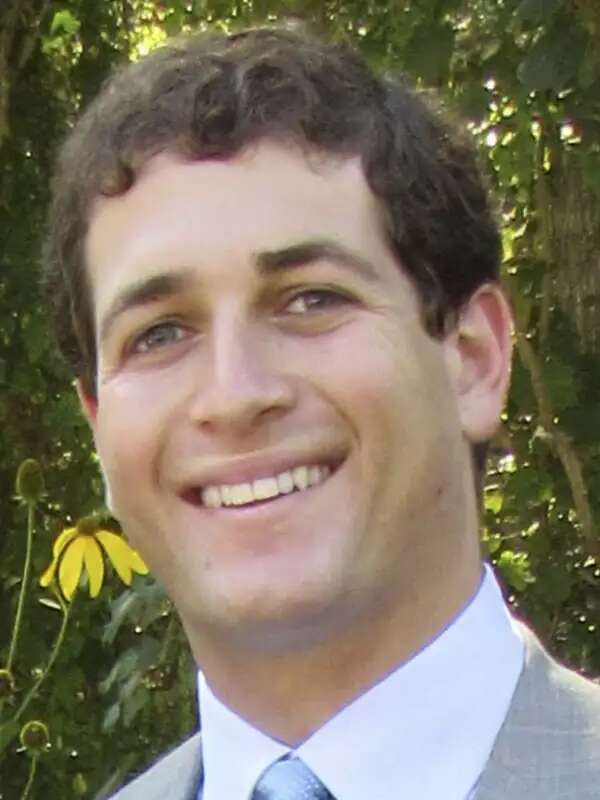
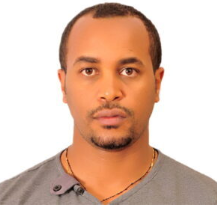
Sohaib Kiani is an Assistant Professor of Math and Computer Science at Beloit College, USA. He holds a B.Sc. in Communication Engineering from NU-FAST Islamabad, an M.Sc. in Communication Engineering & IT from RWTH Aachen University, and a Ph.D. in Computer Science from the University of Kansas. His research focuses on Trustworthy Machine Learning, emphasizing explainability, fairness, privacy, causality, and robustness. Key areas include causal ML in decision-making systems, multi-view data applications, and democratizing ML through Tiny ML. Recent work includes a 2023 ECAI publication on counterfactual prediction and a 2021 ACSAC distinguished paper on adversarial example detection. He teaches courses like Object-Oriented Programming and Information Security. Awards include the Distinguished Paper Award at ACSAC 2021. Research opportunities are available via a dedicated sign-up link.
Jonatan Langlet is a postdoctoral researcher at KTH Royal Institute of Technology, affiliated with the Division of Software and Computer Systems (SCS) and the Network Systems Lab (NSLab). Holding a Digital Futures fellowship, his work bridges programmable hardware, network telemetry, and machine learning, with a focus on high-speed monitoring and security technologies embedded in network switches and cards. Education: PhD in Computer Science (2024) from Queen Mary University of London, supervised by Prof. Gianni Antichi Teaching: Distributed Systems (QMUL 2021-2022), Data Structures and Algorithms (Karlstad 2019) Research spans three main areas: In-Network Intelligence : Developing machine learning inference capabilities within programmable switches (P4), optimizing neural networks for hardware constraints Telemetry Systems : Creating RDMA-based telemetry pipelines for zero-CPU, line-rate data collection (Direct Telemetry Access, ACM SIGCOMM 2023) 5G Network Innovation : Designing programmable pipelines for 5G user plane functions (IEEE TMC 2022) His publications in top venues like ACM SIGCOMM, SIGMETRICS, and HotNets demonstrate technical depth in programmable hardware, while community roles (TPC member, reviewer) highlight academic engagement. The Digital Futures fellowship supports his ongoing work on large-scale monitoring technologies.
Vijay Janapa Reddi is the Gordon McKay Professor of Electrical Engineering at Harvard University's John A. Paulson School of Engineering and Applied Sciences (SEAS). His research focuses on machine learning systems, embedded AI, and autonomous systems. He leads initiatives in TinyML (Tiny Machine Learning) and edge computing, emphasizing energy-efficient hardware-software co-design. His work bridges computer architecture, robotics, and data-centric AI, with applications in healthcare, robotics, and sustainable technology. Research interests include TinyML education, fault-tolerant autonomous systems, and benchmarking frameworks like MLPerf. He co-founded the TinyML open education initiative and collaborates with industry partners such as Google and Edge Impulse. His lab develops hardware accelerators for edge AI, focusing on low-power embedded devices and safety-critical systems. Key projects include the Edge SEAS Lab and TinyML SEAS Lab, advancing real-time robotics computing and sensor-driven AI. Publications emphasize system-level challenges in AI deployment, from neuromorphic computing to federated learning in healthcare. His work addresses societal impacts, including AI for developing regions and ethical considerations in sensor technologies.
Maria Papaioannou is a Postdoctoral Researcher at the Department of Applied Mathematics and Computer Science (DTU Compute) at the Technical University of Denmark, specializing in cybersecurity engineering with contributions to UN Sustainable Development Goals through secure technology development. Her research focuses on Machine Learning applications for Internet of Things security, including intrusion detection systems, honeypot optimization, and user-centric authentication. She investigates technical implementations of tiny machine learning for resource-constrained devices while addressing human factors in security adoption, particularly for emerging technologies like passkeys. Recent publications reveal strong thematic convergence across machine learning-driven security solutions for IoT ecosystems, emphasizing both algorithmic innovation and usability considerations. Her review articles systematically analyze research gaps in intrusion detection scalability, passkey adoption barriers, and adaptive deception technologies, highlighting interdisciplinary connections between cybersecurity, human factors, and embedded systems engineering.
Philipp van Kempen is a researcher at the Chair of Design Automation (Prof. Schlichtmann) at the Technical University of Munich. His work focuses on electronic design automation, specifically targeting RISC-V architecture, TinyML optimization, and LLVM compiler infrastructure for custom hardware accelerators. Key Research Areas: RISC-V ISA extensions, autovectorization, neural network accelerators, and compiler toolchain automation. Collaborations: Works with Daniel Mueller-Gritschneder, Ulf Schlichtmann, and Jefferson Parker Jones. His recent publications highlight contributions to benchmarking TinyML CNN kernels on RISC-V vector hardware, developing semi-automated LLVM support for ISA extensions, and optimizing TinyML inference through frameworks like MLonMCU and muRISCV-NN.
Luciano Prono serves as a Fixed-term Assistant Professor at the Department of Electronics and Telecommunications (DET) at Politecnico di Torino, where he is also a member of the Interdepartmental Center SmartData@PoliTO - Big Data and Data Science Laboratory. His academic appointment falls under Scientific Disciplinary Sector IINF-01/A - Electronics within Area 0009 - Industrial and Information Engineering. Dr. Prono's research spans multiple cutting-edge domains in AI and signal processing, with particular expertise in neuromorphic computing, edge AI implementation, biomedical signal processing, and IoT systems. His work bridges theoretical AI concepts with practical hardware implementations, focusing on efficient neural network architectures that can operate effectively on resource-constrained devices. His publication record demonstrates a strong trajectory in developing novel neural network paradigms, particularly centered around Multiply-And-Max/Min (MAM) neurons that enable aggressive pruning while maintaining performance. These publications span top-tier venues including IEEE Transactions on Pattern Analysis and Machine Intelligence, IEEE Transactions on Neural Networks and Learning Systems, and major IEEE conferences like ISCAS and CVPRW. The research shows a clear progression from theoretical foundations of novel neural architectures to practical implementations in robotics, biomedical applications, and edge computing scenarios. Dr. Prono actively supervises PhD research, currently guiding Lorenzo Nikiforos and Elisabetta Spinazzola in the 40th cycle of the Electrical, Electronics and Communications Engineering PhD program. His teaching responsibilities include Cloud Computing and Data Center Design Lab for the Communications Engineering Master's program and Applied Electronics for the Engineering Physics Bachelor's program. His research aligns with multiple ERC sectors including artificial intelligence systems (PE6_7), machine learning applications (PE6_11), communication networks (PE7_8), and signal processing (PE7_7), demonstrating the interdisciplinary nature of his work that bridges computer science, electrical engineering, and biomedical applications.
Brian Plancher is an Assistant Professor of Computer Science at Barnard College, Columbia University, and will transition to Dartmouth College in Fall 2025. He leads the Accessible and Accelerated Robotics Lab (A²R Lab), focusing on optimizing robotic systems through algorithm-hardware-software co-design. His research spans Robotics, Embedded Systems, and Machine Learning, with an emphasis on accessibility in STEM education and global TinyML initiatives. He co-chairs the TinyMLedu Open Education Initiative and serves on the IEEE RAS Technical Committee. Education: PhD (2022), MEng (2018), and BA (2013) in Computer Science from Harvard University. Research Interests: Developing open-source algorithms for dynamic motion planning, GPU-accelerated optimization, and education initiatives to lower barriers in robotics and embedded ML. Recent efforts include TinyMPC (microcontroller optimization) and MPCGPU (real-time NMPC on GPUs). Grants & Awards: NSF CSSI Grant (2024), Toyota Research Institute Grant (2025), and best paper/poster awards at IEEE ICRA and robotics conferences. His work emphasizes sustainability, ethics, and global accessibility in AI and robotics. Lab & Teaching: Teaches Parallel Optimization for Robotics at Barnard and organizes the Optimization for Robotics Summer School. Collaborates internationally on TinyML4D to scale education in developing countries.
Dr. Yohannes Bekele is an Assistant Professor of Electrical and Computer Engineering at Hampton University's School of Engineering, Architecture and Aviation. His research focuses on cyber-physical system security, reliable distributed computing, and edge computing. He holds a Ph.D. from North Carolina A&T State University (2023), MSc from Addis Ababa University (2018), and BSc from Arba Minch University (2007). Prior to academia, he worked as a senior engineer/project manager at Ethio Telecom and held technical roles in various organizations. His expertise includes hardware fault analysis, secure embedded systems, and transportation IoT security. He currently teaches courses aligned with his research and leads projects on cyber-physical system reliability. Dr. Bekele is affiliated with professional organizations like NSBE and IEEE. Recent publications highlight work on federated learning-based intrusion detection systems, QEMU fault injection tools, and rowhammer attacks on embedded devices. His research bridges theoretical cybersecurity concepts with practical implementation in edge and embedded systems. Dr. Bekele has no listed scientific awards but demonstrates active participation in conferences such as IEEE HOST and AFRICON. His teaching and research emphasize hands-on projects, reflected in courses taught and industry collaborations.
Dr. Tommaso Polonelli is a Lecturer and Postdoctoral Researcher at ETH Zürich's Department of Information Technology and Electrical Engineering, affiliated with the Center for Project-Based Learning (PBL). He leads teaching initiatives and research in IoT systems, energy-efficient electronics, and autonomous technologies. His research focuses on energy-efficient systems, smart sensing, and ultra-low power computing, with applications in UAVs, wind turbine monitoring, and wearable devices. He also serves as a Scientific Advisor at RTDT Laboratories AG, an ETH spin-off. Polonelli holds a PhD (2020) and Master’s degree (2017) in Electronic Engineering from the University of Bologna. He has co-authored over 60 publications and received awards such as the Spark Award (2021), KITE Award finalist (2024), and the Certificate of Achievement for National Scientific Qualification (2023). He is an active IEEE member and contributes to both academia and industry through innovations in sensor technology and predictive maintenance. His work emphasizes interdisciplinary collaboration, with projects ranging from structural health monitoring to AI-enhanced systems. Recent efforts include Aerosense—a MEMS-based monitoring system for wind turbines—and ElectraSight, a smart eyewear platform with non-invasive eye tracking.
Robert Sablatnig is an Associate Professor and Head of the Institute for Visual Computing and Human-Centered Technology at TU Wien (Vienna University of Technology). His roles include leading the Computer Vision research unit and serving on the Faculty Council. His research focuses on 3D Vision, Computer Vision applications in Cultural Heritage preservation, and Machine Learning. He holds a doctoral degree and has extensive expertise in image processing, object recognition, and multispectral imaging. Key research interests include 3D reconstruction, range finding, stereovision, robot vision, and applications in industry and cultural heritage. He leads projects funded by the Austrian Science Fund (FWF), EU, and industry partners, such as the 'Etruscan Mirrors in Austria' and 'Visual History of the Holocaust' initiatives. Sablatnig has authored over 200 publications, with recent work emphasizing synthetic data generation for handwritten text detection and deep learning for cultural heritage analysis. His lab develops tools for document enhancement, bomb crater detection in historical aerial imagery, and forensic footwear impression retrieval. He collaborates internationally on initiatives like the Time Machine Project to digitize global cultural heritage.
Jane Kelly is a Researcher at Charles Sturt University, affiliated with the Faculty of Agricultural, Environmental and Veterinary Sciences and the Gulbali Research Institute. Her work focuses on livestock management, biosecurity, and the application of remote sensing and artificial intelligence in agricultural and environmental systems. Education: PhD in Agriculture, Charles Sturt University (Awarded: 23 Dec 2020) Graduate Diploma in Education, University of Western Sydney (Awarded: 03 Apr 2002) Bachelor of Science in Agriculture (Honours), University of Sydney (Awarded: 23 May 2001) Her research interests include weed-livestock interactions, zoochory, feral livestock management, remote detection of weeds using drones and AI, and sustainable agricultural practices. She actively contributes to the integration of digital technologies in weed and biosecurity management. Recent publications highlight a strong trend in using UAV-based multispectral and hyperspectral imaging combined with artificial intelligence for detecting invasive species such as African Lovegrass, Bitou bush, and mouse-ear hawkweed. Her work bridges ecological research with practical agricultural applications, emphasizing real-time monitoring and precision management. Scientific Awards and Grants: CAWS Travel Award (2022) – Successful A No-Antibiotic Low Emission verification and traceability pathway for lamb production (2024) – Grant Development of drone technology for Tropical Soda Apple control (2022) – Successful Grant A Smart Weed Seed Management Tool (2020) – Unsuccessful Grant Development of digital feed efficiency measurement in sheep (2021) – Unsuccessful Grant Jane Kelly is actively involved in advising and collaborative research, particularly in grant-funded projects focusing on sustainable livestock systems. She co-founded the Weed Remote Sensing Community of Practice, fostering knowledge exchange. She participates in public engagement through field days, media contributions, and academic conferences, enhancing the impact of her research. She is a key member of interdisciplinary research teams utilizing drone technology and AI for environmental monitoring. Her lab collaborations involve experts in remote sensing, machine learning, and agricultural engineering, working toward scalable solutions for invasive species management.
Przemysław Pawełczak is an Associate Professor at Delft University of Technology within the Embedded and Networked Systems Group. He leads the Sustainable Systems Lab , focusing on battery-free and energy-efficient computing systems. PhD from TU Delft (2009) on Opportunistic Spectrum Access MSc from Wrocław University of Science and Technology (2004) His research centers on Internet of Things sustainability , with emphasis on eliminating batteries and reducing environmental impact. This includes hardware-software co-design for intermittent computing, wireless communication optimization, and quantum network protocols. 2022: DIPS framework for debugging battery-free systems 2022: Protean platform for heterogeneous battery-free computing 2021: BFree Python-based sensor prototyping 2019-2022: Quantum Internet Alliance contributions Key research trends include intermittent execution models , energy-harvesting hardware , and quantum communication protocols . His work spans from theoretical foundations to practical implementations in real-world systems. Scientific recognition includes: Dutch Research Council Veni 2012 grant He has supervised multiple PhD students and postdocs, including: Current: James Scott Broadhead, Jasper de Winkel Graduated: Amjad Yousef Majid (now TU Delft postdoc), Qingzhi Liu (Wageningen University lecturer) Leading projects include: Towards Energy Autonomous Systems for IoT (2016–Now) Quantum Internet Alliance (2019–2022) Low-Energy Visible Light IoT Systems (2019–2021) He coordinates the Sustainable Systems Lab and contributes to academic service through editorial roles and conference committees.
Mart Lubbers is an Assistant Professor at Radboud University , focusing on Computer Science . He transitioned from a PhD candidate (2018–2023) and Researcher roles to his current faculty position, with a research emphasis on Task-Oriented Programming and IoT systems . Academic affiliations: Radboud University (current), Netherlands Defence Academy (2017), Max Planck Institute for Psycholinguistics (2013–2015) Teaching: Compiler Construction , New Devices Lab , and Sustainable IoT workshops in SusTrainable summer schools His research bridges Embedded Systems , Functional Programming , and Green Computing , particularly through the development of the mTask framework for IoT orchestration. Publications highlight innovations in DSL design , low-power computing , and tierless language architectures . Current supervision includes PhD candidates Niek Janssen and Benedikt Rips , alongside BSc advisees. He actively contributes to conferences as PC member/chair (TFP, IFL, CompSys).
Sebastian Bader is an Associate Professor at Mid Sweden University 's Department of Computer and Electrical Engineering (DET). His research focuses on energy harvesting for autonomous sensor systems, particularly in Industrial IoT contexts. He leads the Master of Science in Electrical Engineering programs and teaches Embedded Systems Programming , Embedded Machine Learning , and Sensor Networks . Diplom-Ingenieur (Information Technology), University of Applied Sciences, Wilhelmshaven Licentiate of Technology (2011) and Doctor of Technology (2013), Mid Sweden University Research interests include: Self-powered systems utilizing ambient energy sources Tiny Machine Learning (TinyML) on resource-constrained devices Variable Reluctance Energy Harvesting Sustainable IoT architectures Acoustic Emission Analysis for industrial monitoring Scientific roles and honors: Senior Member of IEEE PSMA Energy Harvesting Committee member Associate Editor for Sustainable Computing: Informatics and Systems Topic Editor for MDPI Sensors Journal IEEE Sensors Applications Symposium steering committee His work spans energy-autonomous embedded systems, with applications in rotating machinery, environmental monitoring, and structural health assessment. He supervises PhD students and collaborates internationally with institutions like CSIRO and University of Southampton.
Hamam Mokayed is an Associate Professor at Luleå University of Technology, working within the Department of Computer Science, Electrical and Space Engineering. His research focuses on Machine Learning, with specialization in the Embedded Intelligent Systems LAB division. Dr. Mokayed's research interests center around computer vision, machine learning, and deep learning, with particular applications to intelligent vehicles and visual systems operating in challenging environments such as snow, ice, and extreme weather conditions. His work in northern Sweden has uniquely positioned him to address vehicle intelligence challenges in complex, dynamic road conditions. Additionally, he actively researches AI applications in pedagogy, exploring how artificial intelligence can enhance teaching and learning methodologies. His recent publications demonstrate significant contributions across diverse fields including battery technology, biomedical engineering, quantum physics, computer vision, and medical imaging. These works showcase his expertise in applying machine learning techniques to solve complex problems across multiple disciplines. Dr. Mokayed has contributed to EU/National projects such as AI4EDU, Universeh, and REEDEAM, focusing on course development, MOOCs, and AI-supported learning environments. His professional development includes 20+ credits in higher education didactics, a Project Management Professional (PMP) certification, and specialized training in presentation and communication skills. With over 15 years of experience at the intersection of vehicle intelligence systems and academia, Dr. Mokayed has produced numerous publications in leading conferences and journals, along with 15 registered intellectual properties, demonstrating his commitment to both innovation and education in the field of machine learning and intelligent systems.