Luciano Pronoمشاهده پروفایل
استادیار
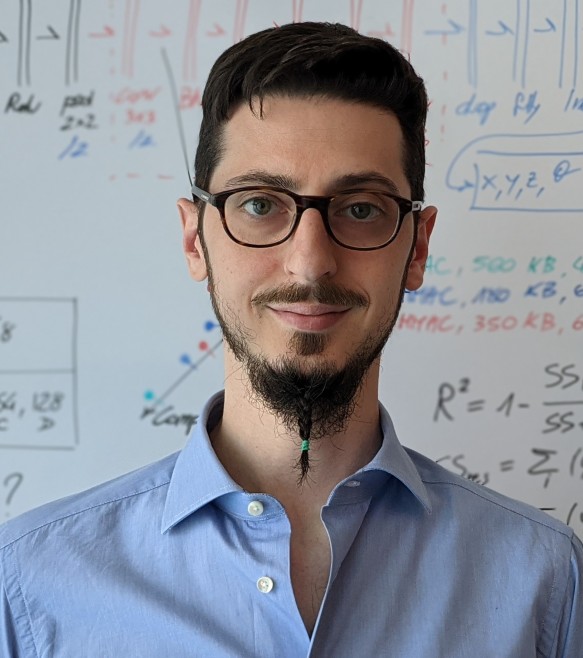
Luciano Prono serves as a Fixed-term Assistant Professor at the Department of Electronics and Telecommunications (DET) at Politecnico di Torino, where he is also a member of the Interdepartmental Center SmartData@PoliTO - Big Data and Data Science Laboratory. His academic appointment falls under Scientific Disciplinary Sector IINF-01/A - Electronics within Area 0009 - Industrial and Information Engineering. Dr. Prono's research spans multiple cutting-edge domains in AI and signal processing, with particular expertise in neuromorphic computing, edge AI implementation, biomedical signal processing, and IoT systems. His work bridges theoretical AI concepts with practical hardware implementations, focusing on efficient neural network architectures that can operate effectively on resource-constrained devices. His publication record demonstrates a strong trajectory in developing novel neural network paradigms, particularly centered around Multiply-And-Max/Min (MAM) neurons that enable aggressive pruning while maintaining performance. These publications span top-tier venues including IEEE Transactions on Pattern Analysis and Machine Intelligence, IEEE Transactions on Neural Networks and Learning Systems, and major IEEE conferences like ISCAS and CVPRW. The research shows a clear progression from theoretical foundations of novel neural architectures to practical implementations in robotics, biomedical applications, and edge computing scenarios. Dr. Prono actively supervises PhD research, currently guiding Lorenzo Nikiforos and Elisabetta Spinazzola in the 40th cycle of the Electrical, Electronics and Communications Engineering PhD program. His teaching responsibilities include Cloud Computing and Data Center Design Lab for the Communications Engineering Master's program and Applied Electronics for the Engineering Physics Bachelor's program. His research aligns with multiple ERC sectors including artificial intelligence systems (PE6_7), machine learning applications (PE6_11), communication networks (PE7_8), and signal processing (PE7_7), demonstrating the interdisciplinary nature of his work that bridges computer science, electrical engineering, and biomedical applications.