
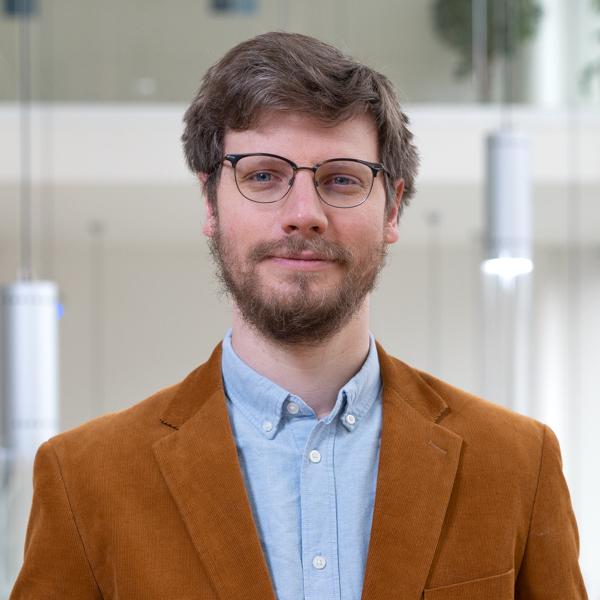
Nico Döttling is a faculty member at the CISPA Helmholtz Center for Information Security, where he leads research in cryptographic foundations. His work focuses on advancing theoretical and practical aspects of modern cryptography, with particular emphasis on homomorphic encryption, post-quantum cryptography, and secure multi-party computation. Dr. Döttling received his PhD in Computer Science from the Karlsruhe Institute of Technology in 2014 under the supervision of Jörn Müller-Quade. Prior to joining CISPA in 2018, he held positions as an Assistant Professor at Friedrich-Alexander University Erlangen-Nuremberg (2017-2018), a postdoctoral researcher at UC Berkeley (2016-2017) supported by a DAAD fellowship, and a postdoctoral researcher at Aarhus University's Cryptography Group (2014-2016) working with Ivan Damgård and Jesper Buus Nielsen. Dr. Döttling's research centers on the theoretical foundations of cryptography with practical applications. His work spans public-key encryption, communication-efficient secure multi-party computation, homomorphic encryption, and post-quantum cryptographic systems. He has made significant contributions to laconic cryptography, time-lock puzzles, and verifiable delay functions, with his ERC Starting Grant project 'Next Generation Laconic Cryptography (LACONIC)' driving innovation in communication-efficient cryptographic protocols. His research bridges theoretical computer science with practical security applications, addressing fundamental questions while developing usable cryptographic primitives. Analysis of Dr. Döttling's recent publications reveals a strong focus on efficient cryptographic primitives with particular attention to communication complexity, security proofs, and practical implementations. His work spans theoretical foundations of cryptography, post-quantum security, and novel applications of cryptographic techniques to real-world problems. A notable trend is his exploration of laconic cryptography - developing protocols with minimal communication overhead - which has applications in resource-constrained environments and large-scale distributed systems. Dr. Döttling's scientific achievements have been recognized with several prestigious awards: ERC Starting Grant for the project 'Next Generation Laconic Cryptography (LACONIC)' (2021) Best Paper Award at Crypto for 'Identity-Based Encryption from the Diffie-Hellman Assumption' (2017) Postdoctoral Fellowship at UC Berkeley sponsored by DAAD (2016) Best Paper Award at ProvSec 2015 for 'From Stateful Hardware to Resettable Hardware Using Symmetric Assumptions' (2015) Biennial dissertation award for best dissertation in computer science at Karlsruhe Institute of Technology (2014) As a faculty member at CISPA, Dr. Döttling leads an active research group focused on cryptographic foundations. His ERC Starting Grant provides significant research funding to advance laconic cryptography. While specific information about his advisees is not provided in the source material, his extensive publication record with multiple co-authors suggests active collaboration with students and researchers. His work bridges theoretical cryptography with practical security applications, making contributions that advance both academic understanding and real-world cryptographic implementations. Dr. Döttling leads the Algorithmic Foundations and Cryptography research group at CISPA, focusing on developing theoretically sound yet practically efficient cryptographic protocols. His team explores innovative approaches to longstanding cryptographic challenges, particularly in making cryptographic protocols more communication-efficient without sacrificing security. Current research directions include post-quantum cryptographic systems, verifiable delay functions, and novel applications of homomorphic encryption to privacy-preserving computation.