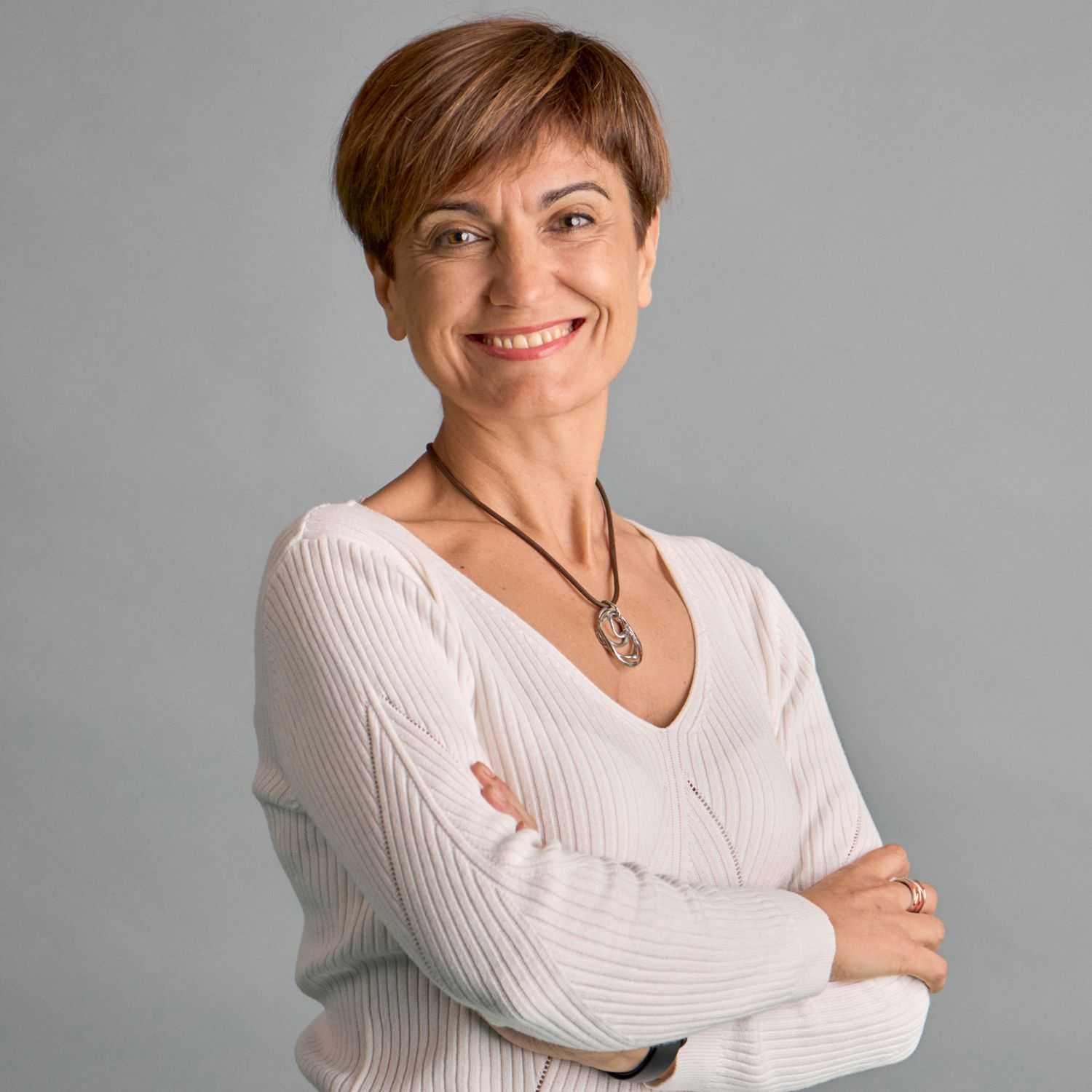
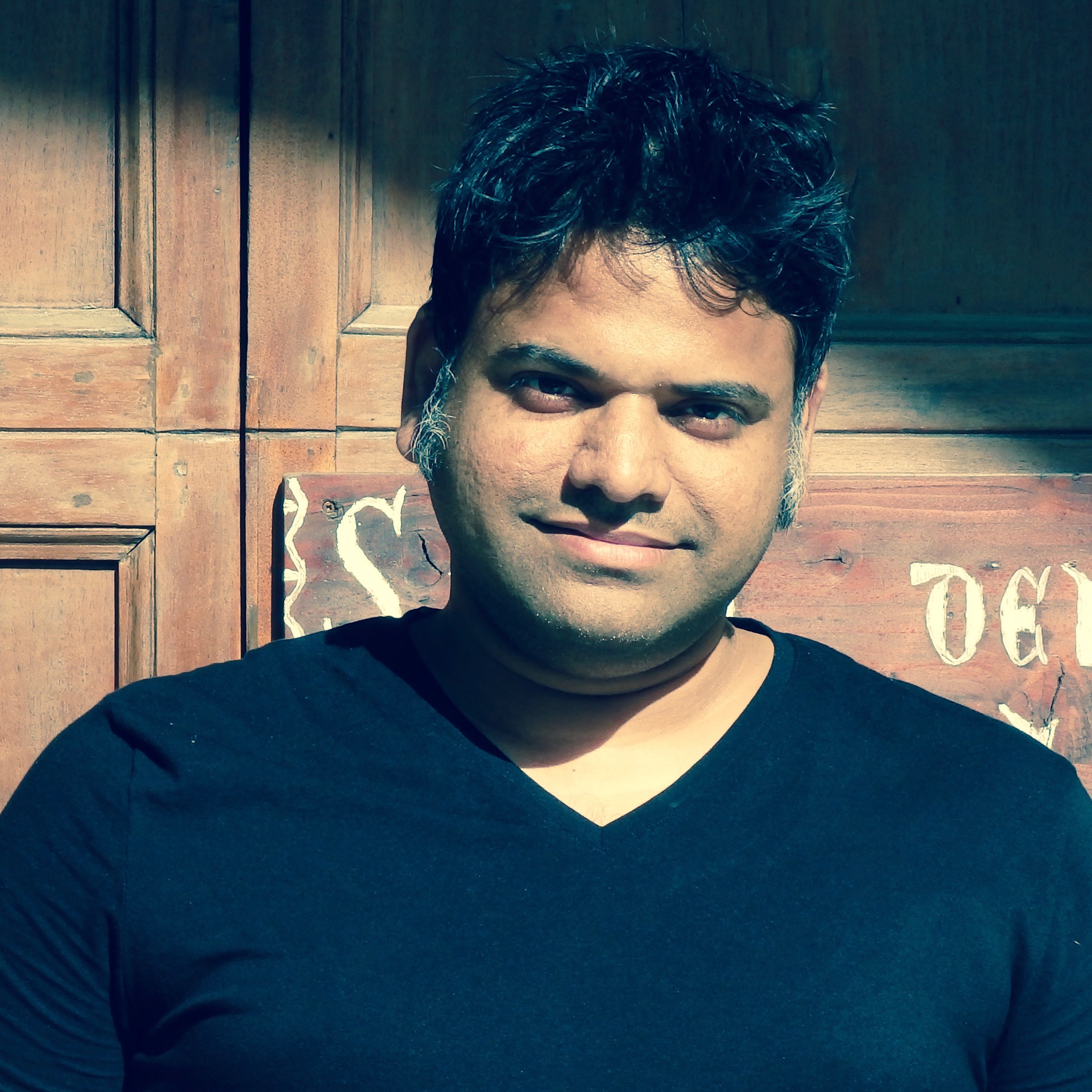
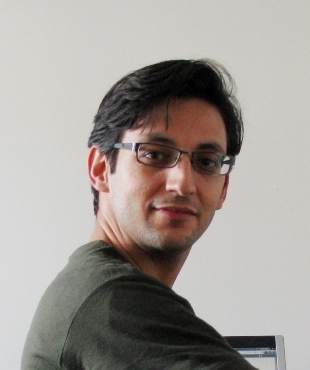
Dora Blanco Heras is a Full Professor in the Department of Electronics and Computer Engineering at the University of Santiago de Compostela. She holds a BS in Physics (1993) and a PhD cum laude from her current university. Research Focus: High Performance Computing, Computer Vision, Remote Sensing Projects: Rapid Digital Monitoring of River Ecosystems, High Performance and Cloud Computing for Demanding Applications Her work emphasizes GPU-accelerated algorithms for multispectral/hyperspectral image processing, anomaly detection, and human-computer interfaces for sustainability indices. She has contributed to technical committees like GRSS Earth Science Informatics and organized summer schools on geospatial AI.
Manuel Mucientes Molina is a Full Professor at the Research Center on Intelligent Technologies (CiTIUS) within the University of Santiago de Compostela . His research focuses on Artificial Intelligence , particularly in Computer Vision and Machine Learning , with applications in object detection, process mining, and healthcare diagnostics. Research Areas : Machine learning, Computer vision, Process mining, Deep learning, AI for healthcare. Projects : Protonterap-IA (2025), AZOR (2024), RAI4P (2021), eXplica-IA (2018), DronePlan (2014), SoftLearn (2012). Publications highlight advancements in few-shot object detection, small object tracking, and AI-driven conformance checking. Notable collaborations include work on X-ray vision systems and medical mask detection in operating rooms. Awards : Best Student Paper Nomination (2015), Runner-up best industry-oriented paper award (2008). Teaching includes courses on Statistical Learning, Deep Learning, and Automata Theory at the M.Sc. and B.Sc. levels.
Ashutosh Trivedi is an Associate Professor of Computer Science at the University of Colorado Boulder, currently on leave from his position as Assistant Professor in the Department of Computer Science and Engineering at the Indian Institute of Technology Bombay. He is affiliated with multiple research initiatives including the Centre for Formal Design and Verification of Software (CFDVS) at IIT Bombay, Free and Open Source Software for Education (FOSSEE), and the Indo-French project on Algorithmic Verification of Real-Time Systems (AVeRTS). At CU Boulder, he leads the Programming Languages and Verification (CUPLV) research group focusing on trustworthy AI systems. Trivedi's research centers on bridging formal methods with artificial intelligence to create more trustworthy systems. His work spans formal verification of cyber-physical systems, reinforcement learning with formal guarantees, and developing techniques for ensuring software fairness and accountability. He specializes in using formal languages, automata, and logic to transform vague natural-language instructions into precise specifications for AI systems. His recent projects include developing reinforcement learning algorithms for cardiac pacemaker design based on formal safety requirements, using SAT solvers to ground large language model outputs in logical reasoning, and encoding state representations in reinforcement learning using formal languages. His publication trends reveal a strong focus on neurosymbolic approaches that combine neural networks with symbolic reasoning, particularly for safety-critical applications. Recent work demonstrates increasing integration of formal methods with reinforcement learning, with applications spanning medical devices, tax preparation software, and puzzle-solving AI. His research shows a clear trajectory toward making AI systems more explainable, accountable, and verifiable through principled mathematical frameworks. Distinguished Paper Award at CAV for Regular Reinforcement Learning (2024) NeuS 2025 Disruptive Idea Award for Stochastic Neural Simulation Relations for Transferring Control under Uncertainty ACM Senior Member recognition (2024) Royal Society Wolfson Visiting Fellowship (2024) Trivedi has successfully advised multiple PhD students to completion, including Shadi Tasdighi Kalat (2025), Mateo Perez (2025), John Komp (2024), Vishnu Murali (2024), and Taylor Dohmen (2024). His teaching portfolio includes foundational courses in automata theory, digital logic design, and cyber-physical systems at both IIT Bombay and CU Boulder. He has served on program committees for major conferences including FSTTCS, HSCC, and FORMATS, and organized workshops such as ICLA 2015 and ALC 2015. As leader of the CUPLV research group, Trivedi directs projects focused on formal verification of AI systems, reinforcement learning with safety guarantees, and software fairness. His group collaborates with medical researchers on cardiac device verification and with legal scholars on tax software accountability, reflecting his commitment to applying formal methods to real-world problems with significant societal impact.
Jörg Raisch is a Professor of Control Systems at the Technische Universität Berlin , affiliated with the Faculty IV - Electrical Engineering and Computer Science and the Institute for Energy and Automation Technology . He holds the chair of "Fachgebiet Regelungssysteme" since March 2006. Raisch studied "Technische Kybernetik" (Engineering Cybernetics) at Stuttgart University, Germany, and Control Systems at UMIST, Manchester, UK. He earned his Ph.D. in Chemical Engineering from Stuttgart University, followed by postdoctoral work at the University of Toronto and a DFG fellowship for his habilitation (1998). He established a research group at the Max Planck Institute for Dynamics of Complex Technical Systems in Magdeburg and served as an External Scientific Member since 2002. His research spans control theory , discrete event systems , max-plus algebra , and applications in energy systems and robotics . Recent work focuses on clock drift effects in low-inertia power systems , iterative learning control , and distributed control for microgrids . His publications highlight methodologies for timed event graphs , probabilistic behavioral distances , and wind turbine optimization . From 2007–2013, he represented Germany in the European Control Association (EUCA). He served on editorial boards of journals like Automatica and IEEE Transactions on Control Systems Technology . He held leadership roles in IFAC Technical Committee TC1.3 as Vice-Chair (2014–2017, 2020–present) and Chair (2017–2020) .
Cristian Spitoni is an Assistant Professor in the Mathematical Modeling group at the Mathematical Institute within the Faculty of Science at Utrecht University. His office is located in the Hans Freudenthal Building at Budapestlaan 6, Room 510, 3584 CD Utrecht. He maintains an active research profile spanning mathematical physics, statistics, and interdisciplinary applications in medical informatics and neuromorphic computing. His primary research interests include Stochastic Modeling, Statistical Physics, Non-Equilibrium Statistical Physics, and Survival Analysis. Dr. Spitoni's work demonstrates a remarkable interdisciplinary range, bridging theoretical mathematics with practical applications in healthcare and computing. His research trajectory shows a fascinating evolution from fundamental statistical physics problems to medical applications and more recently to neuromorphic computing. Analysis of his recent publications (2023-2025) reveals three major research thrusts: 1) Theoretical work on probabilistic cellular automata and metastability in statistical physics; 2) Medical statistics applications focusing on ICU infections, sepsis, and survival analysis; and 3) Cutting-edge research in neuromorphic computing, particularly on memristors, fluidic circuits, and brain-inspired computing architectures. His work increasingly shows interdisciplinary convergence, with mathematical techniques from statistical physics being applied to both medical informatics and neuromorphic engineering problems. Dr. Spitoni has established productive collaborations with researchers across multiple disciplines, including medical researchers at Utrecht University Medical Center and physicists working on novel computing architectures. His research has been published in high-impact journals spanning physics, mathematics, medical informatics, and computer science, demonstrating the breadth and significance of his contributions. His teaching responsibilities include courses such as Interacting Particle Systems in the Lattice and Continuum, Introduction to Complex Systems, and Mathematical Statistics, reflecting his expertise in both theoretical and applied mathematical modeling.
Rae Gillibrand is a Lecturer in Inclusive Learning for the Schools of History and English at the University of Leeds, appointed in 2022. She is also the Director of Admissions for the School of History and a member of several research groups including Galleries, Libraries, Archives, and Museums and Health Histories. Previously, she taught History and Heritage Studies at Aberystwyth University and served as the Jaipreet Virdi Fellow for Disability Studies at the Medical Heritage Library (2021-2022). Dr. Gillibrand's educational background includes a PhD in Medieval Disability Studies (2020), an MA in Medieval Studies (2015), and a BA in History (2014), all from the University of Leeds. As a woman from a working-class background and the first in her family to attend university, she brings a unique perspective to her work on inclusivity in academia. Her research focuses on the history of disability, the body, and bodily technologies in premodern contexts. She investigates how people experienced, understood, and augmented their bodies throughout history, with particular attention to premodern disability technology, cosmetic devices, medical technology, and automata. Her work employs visual and material approaches to understand the connections between assistive aids and individual/group identities, as well as the overlap between health and attempts to 'beautify' the body. Dr. Gillibrand's publications and presentations reveal a consistent focus on the material culture of disability throughout history, particularly in medieval contexts. Her work examines how assistive technologies were designed, constructed, and sold, while also considering how contemporaries conceptualized bodily augmentation. She has presented on topics ranging from medieval prosthetics and guide dogs to historical eyeglasses and hearing aids, demonstrating how these technologies were integrated into social identities and daily life. Jaipreet Virdi Fellow for Disability Studies at the Medical Heritage Library (2021-2022) Fellow of the Higher Education Academy (HEA) Dr. Gillibrand is committed to extending education beyond academia through public engagement, having designed and led public events with local museums, libraries, and archives, as well as contributing to podcasts and radio shows. She is available to supervise PhD students interested in premodern health, medicine, the body, and history, heritage, and museum studies. Her work on inclusivity practices aims to improve the student experience for those from traditionally marginalized backgrounds within academia. She is involved with research projects including 'Dental Histories: Towards a Digital Museum' and 'Stigma and Shame? Challenging Menstrual Taboo Through Time,' working within the Health Histories research group to explore the intersections of medical history, material culture, and social experience.
Голуб Тетяна Василівна serves as an Associate Professor in the Department of Computer Systems and Networks at Zaporizhzhia National Technical University's Faculty of Computer Science and Technologies. With over 12 years of academic experience since joining the university in 2011, she specializes in computer electronics, computer circuitry, signal and image processing, and reliability of computer systems. Dr. Golub's research focuses on text processing algorithms, text classification, and data processing with particular emphasis on hardware acceleration using FPGA technologies. Her work bridges theoretical computer science with practical engineering applications, developing efficient methods for natural language processing tasks through specialized hardware implementations. She has pioneered approaches to optimize text classification speed while maintaining accuracy through innovative vector space modeling and stemming algorithms. Her publication record shows a strong trajectory from foundational work on text classification methods (2019) through hardware acceleration techniques (2020-2021) to current research on AI applications in education and neural network-based classification systems (2023-2025). The research demonstrates consistent focus on improving computational efficiency of text processing systems while expanding into educational technology applications. Dr. Golub maintains active scholarly presence with verified profiles on Scopus (ID: 57189328111), Web of Science (Researcher ID: G-9688-2019), Google Scholar, and ORCID (0000-0001-6024-008X), reflecting her commitment to academic transparency and international scholarly communication. She teaches core computer engineering subjects while conducting research that combines theoretical computer science with practical hardware implementation. Her laboratory work in computer electronics provides students with hands-on experience in circuit design and digital systems. Fluent in English, Ukrainian, and Russian, Dr. Golub operates from room 53b at the university's Zaporizhzhia campus (69063, Ukraine, Zhukovsky Street, 64).
Christian Johansen is a Professor in the Department of Information Security and Communication Technology at the Norwegian University of Science and Technology (NTNU), Faculty of Information Technology and Electrical Engineering. He leads the Systems Security group (S2G) and is affiliated with the Center for Cyber and Information Security (CCIS), the Norwegian Cyber Range, and the S2G Playground. Professor Johansen's research focuses on Security and Theoretical Computer Science, with emphasis on developing formal methods and tools for ensuring reliability of complex systems. His work spans security, safety, and concurrency properties in software systems, cyber-physical systems like Smart Grids, Internet of Things security, and modeling concurrency in multi-core and high-performance computing. Among his notable contributions are the Timed Distributed pi-calculus, ST-structures, Dynamic Structural Operational Semantics, Synchronous Kleene Algebra, and Higher Dimensional Modal Logic. His research interests include modeling of security protocols, programming language semantics, verification of distributed systems, concurrent systems modeling, and legal electronic contracts. His recent publications show a strong trend toward concurrency theory, security, and privacy, with significant contributions to pi-calculus variants, higher-dimensional automata, attribute-based encryption, and semantic access control frameworks. Many of his papers appear in top venues such as CONCUR, ATVA, FM, POST, CCS, JLAMP, IJCIP, FMSD, and LMCS. Professor Johansen actively mentors students and collaborators, having worked with Manish Shrestha on the LightSC Security Classification Method for Smart Grids and IoT, and with Bjørnar Luteberget on the SAT modulo Discrete Event Simulation method for railway capacity verification. He has secured funding from competitive sources including EU-FP7-FET-Young-Explorers, Horizon-2020, NFR-FRINATEK, UK's EPSRC, and ECSEL-JU. His work often bridges theoretical computer science with practical security applications in critical infrastructure domains.
Daniel Bermuth is a Researcher at the Chair of Software Engineering within the Institute for Software & Systems Engineering at the University of Augsburg . His work focuses on the intersection of Machine Learning and Collaborative Robotics , with a particular emphasis on Software-driven Robotics and Automation . Education Master in Computer Science (2017-2020), University of Augsburg Bachelor in Computer Science (2014-2017), University of Augsburg Research Interests Development of AI-based safety mechanisms for human-robot collaboration Real-time human pose estimation using RGBD imaging and voxel fusion techniques Efficient spoken language understanding architectures via n-grams, tries, and finite state transducers Privacy-aware voice assistants operating in offline environments Fast speech-to-text models for multilingual applications Publications demonstrate expertise in Robotics , Artificial Intelligence , Computer Vision , and Natural Language Processing . Key subfields include Human-Robot Interaction , 3D Pose Estimation , Speech Recognition , Privacy-preserving AI , Efficient Parsing Algorithms , and Multilingual Language Models . Laboratory Works within the Institute for Software & Systems Engineering under Prof. Dr. Wolfgang Reif Active in developing software solutions for robotics and speech processing
Dildar Hussain is an Assistant Professor in the Department of Artificial Intelligence Data Science at Sejong University, South Korea, where he has been serving since September 2022. His academic journey includes a Ph.D. in Biomedical Engineering from Kyung Hee University (2019), preceded by an MS in the same field (2014) and a BCS from Kohat University of Science and Technology, Pakistan (2010). Prior to his current position, he held significant roles including Postdoctoral Research Fellow at the Korea Institute for Advanced Study (KIAS), a subordinate institute of KAIST (2019-2022), Research and Development Engineer at YOZMA BMTech CO., LTD (2013-2019), and Research Associate at NUST Pakistan (2010-2012). His teaching portfolio at Sejong University includes Computer Organization and Architecture, Introduction to Data Analysis, Advance Programming Usage, Computer Vision, Artificial Intelligence and Cyber Security, Basic Coding Based on Computational Thinking, and Introduction to Applied Image Processing. Artificial Intelligence and Machine Learning applications in healthcare Medical Imaging and DXA image analysis Computer Vision and Image Processing techniques Biomedical informatics and computer-aided diagnosis Automation solutions in healthcare settings Natural language processing applications Hussain's research output shows a strong focus on applying deep learning techniques to medical imaging problems, particularly in osteoporosis detection using DXA imaging systems. His work spans multiple healthcare domains including cancer detection, diabetic retinopathy analysis, and embryo viability assessment. Recent publications (2023-2025) demonstrate expansion into diverse areas like text sentiment analysis, skin lesion diagnosis, and even materials science through computational studies of hydrogen storage materials. Kyung Hee University scholarship for Ph.D. Hussain has advised numerous research projects and collaborated extensively across disciplines, with co-authors from institutions worldwide. His industry experience at YOZMA BMTech significantly contributed to the implementation of machine learning algorithms for DXA image analysis in osteoporosis diagnosis devices. Current research directions include advancing AI techniques for medical diagnostics and exploring applications of deep learning in diverse scientific domains beyond traditional healthcare settings.
Bengt Lennartson is a Professor of Automation at Chalmers University of Technology and Head of the Department of Systems and Control Engineering. His research focuses on automation engineering, sustainable production, robotics, and energy optimization, with over 280 international publications. Collaborations include industry leaders like Volvo, Daimler, Kuka, and TetraPak. IEEE Fellow for contributions to automation systems Specializes in hybrid/discrete-event systems Develops energy optimization strategies for robotic production lines Recent work explores Plug-and-Produce systems , digital twin calibration , and stochastic energy optimization in robotics. His team integrates AI with formal methods for safety verification and develops open-source educational tools like biomedical exoskeletons. Scientific awards include IEEE Fellowship , with articles addressing energy-efficient robot trajectories, safety-aware multi-agent control, and formal verification of cyber-physical systems.
Mahdi Vasighi is currently serving as an Assistant Professor at the Department of Computer Science and Information Technology, Institute for Advanced Studies in Basic Sciences (IASBS) in Zanjan, Iran, a position he has held since February 2012. Prior to this, he was a Post-doc Researcher at the same institution from February 2011 to February 2012. He has also served as a Visiting Researcher at the Milano Chemometrics and QSAR Research Group, University of Milano - Bicocca, Milan, Italy from September to October 2009, and as a Guest Lecturer at the Pasteur Institute, Tehran, Iran since September 2016. Dr. Vasighi earned his educational qualifications from the Institute for Advanced Studies in Basic Sciences (IASBS) in Zanjan, Iran, where he completed his Ph.D. in Chemometrics in May 2010 and his M.Sc. in Analytical Chemistry between 2002 and 2005. His undergraduate education was in Pure Chemistry at Imam Khomeini International University, Qazvin, Iran, from 1998 to 2002. Dr. Vasighi's primary research interests lie at the intersection of bioinformatics, machine learning, and data analysis. His work focuses on structural bioinformatics, particularly on modeling relationships between biological sequences and their corresponding structure or function. He has made significant contributions to the field of self-organizing maps with dynamic structure, developing innovative approaches like the Directed Batch Growing Self-Organizing Map (DBGSOM) that enhance topology preservation and visualization of high-dimensional data. His research spans multiple domains including protein structural classification, cancer diagnostics using fluorescence spectroscopy, and drug discovery for diseases like COVID-19. Dr. Vasighi's publication record demonstrates a strong trajectory in applying machine learning techniques to solve complex problems in bioinformatics and medical diagnostics. His recent work shows an increasing focus on applying computational approaches to healthcare challenges, including cancer detection, protein analysis, and drug discovery for viral diseases. He has successfully bridged the gap between theoretical machine learning advancements and practical applications in biology and medicine, with a particular emphasis on developing interpretable models that can be used by domain experts. Dr. Vasighi has actively contributed to the academic community through teaching and conference organization. He has served as Local Chair for the International Conference on Contemporary Issues in Data Science 2019 (CiDaS 19) and as Scientific Committee Member and Organizing Chair for previous CICIS conferences. His teaching portfolio includes graduate courses in Artificial Neural Networks, Computational Data Mining, Bioinformatics, Statistical Pattern Recognition, and Multimedia Systems. Dr. Vasighi has supervised numerous MSc students, with over twenty graduated students and nine current students listed in his profile. His research has been supported through collaborations with institutions like the Pasteur Institute, where he worked on projects related to nuclear magnetic resonance-based screening of thalassemia and determination of coronary heart disease risk using NMR spectra of plasma lipoproteins. Through his Directed Batch Growing Self-Organizing Map (DBGSOM) package and other software contributions, Dr. Vasighi has made his research tools accessible to the broader scientific community. His work continues to push the boundaries of how machine learning can be applied to solve challenging problems in bioinformatics and medical diagnostics.
Jérôme Leroux is a Directeur de Recherche (DR CNRS) at the Laboratoire Bordelais de Recherche en Informatique (LaBRI) , affiliated with the University of Bordeaux , France. His research focuses on formal verification of infinite-state systems, vector addition systems, Presburger arithmetic, and acceleration techniques for symbolic computation. Key research themes include: Vector Addition Systems (VASS) and Petri Nets Automata-based representations for Presburger arithmetic Abstract interpretation and CEGAR frameworks Verification of asynchronous distributed systems His recent publications highlight work on acceleration techniques for convex binary relations, serialized digit automata, and regular acceleration methods for number decision diagrams. These contributions are implemented in tools like the Talence Presburger Arithmetic Suite (TAPAS) and the FAST tool for symbolic verification. Scientific awards include a Best Paper Award at TURING'100 . He has advised several Ph.D. students and postdoctoral researchers, including Alexander Heußner and Thibault Hilaire (current Ph.D. candidate). Leroux is actively involved in organizing conferences like MFCS'23 and serving on program committees for venues such as VMCAI'26 .
Mathieu Hoyrup is a permanent researcher (Chargé de Recherche) at Inria , affiliated with the Mocqua team at the LORIA research center in Nancy, France. His research bridges mathematical logic, computability theory, and dynamical systems through the lens of computable analysis and algorithmic randomness. Research Interests : Recursion theory, computable analysis, algorithmic randomness, ergodic theory, and dynamical systems. Advising : Supervised PhD students Hugo Férée, Djamel Eddine Amir, Alexis Terrassin, and Rémi Pallen. Academic Service : Organized the Computability and Complexity in Analysis conferences (2013–2022) and the Continuity, Computability, Constructivity (CCC 2017). Education : PhD in Mathematics from Université Paris Diderot (2008); Habilitation à diriger des recherches (2021) on topological aspects of representations in computable analysis.
Piotr Hofman is an Assistant Professor at the Institute of Informatics, Faculty of Mathematics, Informatics and Mechanics , University of Warsaw. His research focuses on theoretical computer science, particularly automata theory, formal verification, and computational complexity related to systems with infinite alphabets and data constraints. PhD in Computer Science (2014) from the University of Warsaw under Sławomir Lasota. Postdoc (2013-2014) at University of Bayreuth with Wim Martens. Postdoc (2014-2016) at LSV de Cachan with Stefan Göller. His work explores algorithmic problems in automata over infinite alphabets, including one-counter nets, Petri nets with data, and unambiguous vector addition systems (VASS). Key contributions include decidability results for bisimulation and simulation problems, complexity bounds for equivalence checking, and novel techniques for reachability and coverability analysis. Recent publications address orbit-finite linear equations, Parikh's theorem for infinite alphabets, and lower bounds for coverability in pushdown VAS. He has received grants like NCN UMO-2016/21/D/ST6/01368 for algebraic invariants in data nets. He supervises research projects and collaborates with institutions in Poland, France, and India. His teaching includes concurrency theory and software engineering courses.