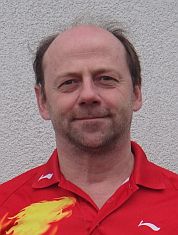
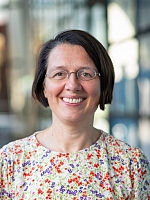
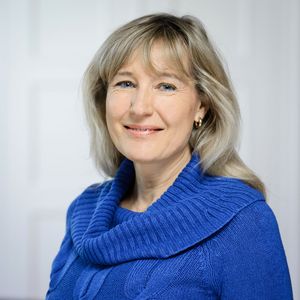
Dr. Juozas Šulskus is a Professor at the Institute of Chemical Physics , Vilnius University. His research focuses on methods of quantum mechanics in molecular theory, computational chemistry, and molecular electronic/vibrational spectra modeling. Research Interests : Quantum chemistry, molecular spectroscopy, parallel computing for molecular systems, and photophysical processes. Teaching : Computational Chemistry, Parallel Computation Methods in Physics, Atomic and Molecular Theory. Leadership : Dean of Vilnius University Physics Faculty, Member of the Commission for Pedagogical Names, and Substitute on the EuroHPC Governing Board. His work emphasizes quantum mechanical modeling of molecular systems and parallel computation for simulating excited-state dynamics. Articles highlight studies on carotenoid spectra , fluorescence quenching , and phosphorescent polymers , with recent trends in optoelectronic material design and carrier localization in semiconductors .
Kohei Imura is a Professor at the School of Advanced Science and Engineering of Waseda University , where he leads research in Nanophotonics , Plasmonics , and Surface-Enhanced Spectroscopy . His work focuses on the optical properties of metal nanostructures, including gold and silver nanoparticles , and their applications in bioimaging , chemical sensing , and optical field manipulation . Research Areas : Fundamental Physical Chemistry, Nanometer-Scale Chemistry Key Techniques : Scanning Near-Field Optical Microscopy (SNOM), Time-Resolved Spectroscopy, Electromagnetic Simulations His recent publications highlight three-dimensional plasmon mode mapping , chiral nano-optical field control , and enhanced photoluminescence via plasmonic coupling. His studies on gold nanoplates and carbon dot composites reveal mechanisms for improving light-matter interactions at the nanoscale. Scientific Awards include the Minister of Education, Culture, Sports, Science and Technology Award for Young Scientists (2012), Chemical Society of Japan Progress Award (2007), and multiple Spectroscopical Society of Japan recognitions. He actively contributes to academic societies, serving in roles such as JSPS Special Researcher Review Committee and Molecular Science Society Officer .
Jean-Sebastien Girardon is an Associate Professor at the University of Lille, affiliated with the Unité de Catalyse et de Chimie du Solide (UCCS) - UMR CNRS 8181, specializing in Heterogeneous Catalysis within the Materials for Catalysis (MATCAT) team since 2016. His research focuses on the synthesis and characterization of nanoparticles and the development of innovative catalytic systems for biomass valorization. University: University of Lille Research Unit: UCCS (Unité de Catalyse et de Chimie du Solide) - UMR CNRS 8181 Department: Heterogeneous Catalysis / MATCAT team Contact: jean-sebastien.girardon@univ-lille.fr Dr. Girardon's research expertise spans nanoparticle synthesis and characterization (particularly 'in situ' techniques and synchrotron radiation), development of microfluidic-scale reactors for heterogeneous catalysis, bi-functional reactors for hybrid catalysis (combining enzymatic and mineral catalysis), and plasmonically-activated catalytic systems using visible radiation. His work primarily addresses biomass valorization challenges. His teaching responsibilities include first-year Bachelor's and Master's degree courses. Analysis of his 15 most recent publications (2019-2023) reveals a consistent focus on catalytic processes for biomass conversion, particularly glycerol oxidation and furfural hydrogenation. His research increasingly incorporates advanced characterization techniques and explores hybrid catalytic systems that combine the advantages of different catalytic approaches. There's a clear progression toward more sustainable and energy-efficient catalytic processes, with significant emphasis on plasmonic effects and nanoalloy catalysts. Dr. Girardon has held several significant scientific responsibilities including: President of the SOLEIL users' organization (2017-2019) Vice-president of the SOLEIL users' organization (2015-2017) Secretary of the Catalysis Study Group (2012-2016) Co-founder of GdR 3590 C(RS)2 on Catalysis, Surface Reactivity and Synchrotron Radiation He has successfully supervised numerous PhD and Master's students on topics related to nanoparticle catalysts, microfluidic reactors, and biomass conversion processes. His collaborative approach is evident through partnerships with both national and international laboratories as well as private industry partners.
Dieter Baurecht is an Associate Professor at the Institute of Physical Chemistry , University of Vienna. His research focuses on Advanced FTIR Spectroscopy , with expertise in Time-Resolved FTIR , Modulation Spectroscopy , and Raman Microscopy . He investigates thin layers, multilayer assemblies, and biological interfaces using specialized Nanostructure Research Equipment . Academic Roles : Associate Professor (since 2005), Deputy Head of Nanostructure Research, IT Officer at Physical Chemistry Institute Teaching : Courses in Physical Chemistry , Quantum Theory , Mathematics for Chemists , and Spectroscopic Lab Work Research Focus Dr. Baurecht’s work bridges Spectroscopy , Biophysics , and Biosensor Development . He leads projects like Mathematical Models for BioFETs (FWF P20871-N13) and ASEA Uninet (2009-2023). His methods include: Quantitative FTIR-ATR for surface layers Raman microscopy for polymer and bacterial analysis Step-Scan and Rapid-Scan FTIR instrumentation Collaborations His research spans institutions such as: University of Vienna Nano Research Austrian Institute of Technology BOKU Vienna (Biologically Inspired Materials) University of Vienna Drug Delivery Platform International partners in Thailand (Ubon Ratchathani, Chiang Mai) Instrumentation BRUKER IFS-66 FTIR with Step-Scan BRUKER Tensor-37 FTIR Shared equipment at Vienna Nano Research Center
Hidetsugu Shiozawa is an academic researcher at the Faculty of Physics, specializing in materials science and nanotechnology. His work focuses on electronic structure analysis, molecular doping, and hybrid nanosystems involving carbon nanotubes and metal-organic frameworks. Research Interests: Metal-Organic Frameworks (MOFs), Carbon Nanotubes, Electronic Properties, Electrochemical Doping, Fluorescence, and Sustainable Energy Materials. Recent Research Trends: His publications highlight advancements in MOF conductivity , humidity sensors , biowaste-derived electrodes , and magnetic behavior in coordination polymers . Key methodologies include angle-resolved photoemission, resonance Raman spectroscopy, and in-situ electrochemical analysis. Projects: Current projects involve electrically conductive MOFs and single-molecule magnet control using nanoscaffolds . Past projects explored encapsulation dynamics in carbon nanotubes and spintronic applications of confined nanomaterials.
Prof. Dr. Janina Kneipp is a Professor (W3) of Physical Chemistry at Humboldt-Universität zu Berlin, where she has led an active research group since 2012. She previously held positions as Assistant Professor at HU Berlin/BAM (2008-2012), Junior Researcher at BAM (2005-2008), and research appointments at Harvard Medical School, Princeton University, and Erasmus Universiteit Rotterdam. Education: Dr. rer. nat. (summa cum laude), Freie Universität Berlin (2002) Undergraduate/Graduate Studies in Biology & Physics, Freie Universität Berlin (1992-1998) Research Focus: Her interdisciplinary work bridges physical chemistry and biospectroscopy, with particular emphasis on: Surface-enhanced Raman scattering (SERS) for complex sample analysis Plasmonic catalysis and hot electron chemistry Multiphoton-excited vibrational spectroscopy Nanoscale biochemical mapping in plant and animal systems Development of advanced plasmonic substrates Publication Trends: Recent work demonstrates strong focus on multimodal spectroscopy applications, with studies combining SERS, hyper-Raman, IR, and synchrotron techniques to address questions in catalysis, nanoparticle-cell interactions, plant biochemistry, and biosensing. Publications frequently incorporate advanced nanomaterials, electrochemical methods, and machine learning-assisted spectral analysis. Scientific Awards: Fellow, European Academy of Sciences (2020) Caroline von Humboldt Professorship (2019) Wilhelm Ostwald Fellow, BAM (2012) Bunsen-Kirchhoff Award, GDCh (2010) ERC Starting Grant (2010) Academic Leadership: Currently advises 5 PhD students and leads multiple collaborative initiatives. Serves as Board Member of Einstein Center Catalysis (since 2019), Head of Chemistry Department (2014-2016), and Speaker of Graduate School SALSA (since 2012). Secured funding through DFG, EU networks, and ERC grants supporting spectroscopy infrastructure development. Lab & Team: Leads the KneippLab research group with 2 postdoctoral researchers, 5 graduate students, and technical staff. Research focuses on developing spectroscopic methods for interrogating biological and chemical processes at nanoscale resolution using plasmonic enhancement strategies.
Dr. Ramona Schlesinger is a Researcher leading the Schlesinger Research Group at Freie Universität Berlin's Department of Physics: Genetic Biophysics. Her lab focuses on the biophysics of membrane proteins and signal transduction mechanisms, with specialized expertise in photosensory processes and ion transport systems. Research Focus: The group investigates membrane protein dynamics using advanced spectroscopic techniques including time-resolved FTIR, Raman, and EPR spectroscopy. Key research themes include: Conformational changes in light-sensitive proteins (rhodopsins, phytochromes) Proton/ion transfer mechanisms in membrane channels Protein folding and structural dynamics Development of novel spectroscopic methods for in vivo analysis Current Research Projects: Mechanistic studies of Channelrhodopsin-2 gating Photoconversion dynamics in phytochromes Halorhodopsin functionality in living cells Nanodisc-based membrane protein reconstitution Team & Advising: Dr. Schlesinger currently supervises seven students conducting research in protein biophysics, with projects spanning heterologous expression systems, spectroscopic characterization, and structural analysis of membrane proteins.
Max Planck Institute for the Science of LightGermany
Julia Weinstein is a Professor of Physical Chemistry in the Department of Chemistry at the University of Sheffield, where she has been since 2005. Her educational background includes: Diploma in Chemistry (with honours) from Moscow Lomonosov State University (1990) PhD from Moscow Lomonosov State University (1994) Professor Weinstein's research spans photochemistry and ultrafast spectroscopy, with applications in photocatalysis, photodynamic therapy, and antibacterial treatments. Her group utilizes advanced techniques including time-resolved infrared and Raman spectroscopy to study charge, spin, and structural dynamics in condensed phases. Current work focuses on vibronic coupling, optical control of charge transfer, and time-resolved X-ray spectroscopy as part of the UK XFEL project science team. She has received several prestigious awards and fellowships: Lomonosov Award in Science (2003) John Van Geuns Lecture (2004) RSC Chemical Dynamics Award (2017) Royal Society/NATO Postdoctoral Fellowship (2000) EPSRC Advanced Research Fellowship (2004) Professor Weinstein leads a research group at Sheffield and maintains a long-standing collaboration with the Central Laser Facility of the STFC, serving on advisory boards for Chemical Science and Faraday Discussions journals.
Dr. Denis Akimov is a Researcher at the Leibniz Institute of Photonic Technology (Leibniz-IPHT) in Jena, Germany, working within the Research Department of Spectroscopy/Imaging and the Molecular Imaging working group. His email contact is denis.akimov@leibniz-ipht.de and his office is located in building HG, room S47. Dr. Akimov's research focuses on advanced optical imaging and spectroscopy techniques, with particular expertise in nonlinear optical microscopy. His work spans several key areas including coherent anti-Stokes Raman scattering (CARS), surface-enhanced spectroscopy, plasmonics, and ultrafast laser techniques. He has made significant contributions to the development of molecular imaging approaches for biomedical applications, especially in cancer diagnostics. Analysis of his publication record from 2015-2025 reveals a strong emphasis on plasmon-enhanced nonlinear optical techniques, particularly using specialized grating structures like azimuthally chirped gratings and plasmonic Doppler gratings. His research demonstrates how plasmonic nanostructures can enhance light-matter interactions across multiple frequencies, with applications spanning from fundamental molecular dynamics studies to practical biomedical imaging solutions. A notable trend is his focus on spatially resolved enhancement effects in nonlinear spectroscopy and the development of methods to suppress background signals for improved molecular specificity. Dr. Akimov has collaborated extensively with Jürgen Popp and other researchers at Leibniz-IPHT, contributing to numerous high-impact publications in journals such as Laser & Photonics Reviews, ACS Nano, and Nano Letters. His work bridges fundamental optical physics with practical biomedical applications, particularly in cancer diagnostics where his multimodal imaging approaches show promise for improving surgical decision-making.
Michael Schmitt is an Adjunct Professor and Scientist at the Leibniz Institute of Photonic Technology (Leibniz-IPHT) in Jena, Germany, where he works in the Research Department of Spectroscopy and Imaging within the Molecular Imaging Group. His research focuses on advanced optical techniques for biomedical applications, with particular expertise in various forms of Raman spectroscopy and multimodal imaging systems. Dr. Schmitt's research spans multiple disciplines at the intersection of photonics, biomedicine, and materials science. His work primarily focuses on developing and applying advanced spectroscopic and imaging techniques including: Surface-enhanced and coherent Raman spectroscopy methods Time-resolved spectroscopic techniques for molecular analysis Multimodal imaging systems combining different optical techniques Applications in biomedical diagnostics, particularly for early disease detection Development of novel probes and contrast agents for molecular imaging His recent publications (2024-2025) demonstrate a strong focus on translating advanced optical techniques into practical biomedical applications. The research shows consistent collaboration with Professor Jürgen Popp's group at Leibniz-IPHT, with Dr. Schmitt frequently contributing expertise in spectroscopic methods and instrumentation. Key application areas include cancer diagnostics, sepsis detection, retinal imaging, and point-of-care diagnostic tools. The work often involves interdisciplinary collaboration with biologists, clinicians, and materials scientists. While no specific awards are mentioned in the available information, Dr. Schmitt's publication record in high-impact journals demonstrates significant contributions to the field of biomedical photonics. Dr. Schmitt appears to be an active researcher within the Molecular Imaging Group at Leibniz-IPHT, collaborating extensively on projects involving advanced spectroscopic instrumentation. His work seems to focus on the development and application of cutting-edge optical techniques rather than direct student supervision, though he likely contributes to mentoring junior researchers within the institute. The Molecular Imaging Group at Leibniz-IPHT where Dr. Schmitt works maintains state-of-the-art facilities for optical spectroscopy and imaging, supporting research from fundamental photonics to clinical applications. The group appears particularly strong in Raman-based techniques and multimodal imaging approaches.
Vito Foderà is Professor of Biophysics at the Department of Pharmacy, Faculty of Health and Medical Sciences, University of Copenhagen, Denmark. He leads a highly interdisciplinary research team working at the interface between physics, biology and pharmaceutical sciences. His laboratory, the Drug Delivery and Biophysics of Biopharmaceuticals group, focuses on understanding protein and peptide behavior to develop novel drug delivery systems and improve protein therapeutics. Professor Foderà received his PhD in Physics from the University of Palermo in 2009, followed by postdoctoral work at the Cavendish Laboratory, University of Cambridge. He joined the University of Copenhagen in 2009 and progressed from Research Associate to Assistant Professor (2014), Associate Professor (2016), and was promoted to Professor in June 2023. His research spans four main interconnected areas: Protein and Peptide Self-Assembly (since 2006), Biophysics of Protein-Membrane Interaction (since 2014), Biomaterials for Drug Delivery (since 2017), and Protein Particles in Drug Formulations (since 2018). He combines theoretical frameworks with experimental techniques including UV-Vis spectroscopy, X-ray and neutron scattering, and optical and electron microscopies. His work bridges fundamental biophysics with pharmaceutical applications, particularly in developing advanced materials for nanomedicine and understanding protein-related neurodegenerative diseases. Analysis of his recent publications reveals a strong trend toward understanding protein aggregation mechanisms, particularly insulin and α-lactalbumin systems, with increasing focus on pharmaceutical applications. His research integrates computational modeling with advanced experimental techniques to connect molecular-level interactions to macroscopic material properties. Key disciplines represented in his work include biophysics, structural biology, pharmaceutical sciences, and materials science, with growing emphasis on translational applications in drug delivery and protein formulation. Villum Young Investigator Award (2018-2025, 8.6 M DKK) Villum Young Investigator Plus Award (2023-2026, ~4 M DKK) Professor Foderà actively mentors a large research group including postdocs (Samuel Lenton, Mai Bay Stie, Marco Polimeni), PhD students (Kleopatra Kalouta, Xuedan Sun, Inna Brakti, Giorgia Puleo, Filippo Vitale, Xuezhi Zhou, Gabriele Lo Buglio), and numerous master's students. His research is supported by multiple significant grants including Villum Foundation awards, Novo Nordisk Foundation projects, China Scholarship Council funding, and industrial collaborations with Novo Nordisk A/S. His laboratory maintains strong connections with international collaborators in academia, large-scale facilities, and industry. The group is affiliated with CPHSAXS (Small Angle X-ray scattering facility), LINXS (Lund Institute of Advanced Neutron and X-ray Science), and ISBUC (Integrative Structural Biology at University of Copenhagen), providing access to advanced instrumentation and expertise.