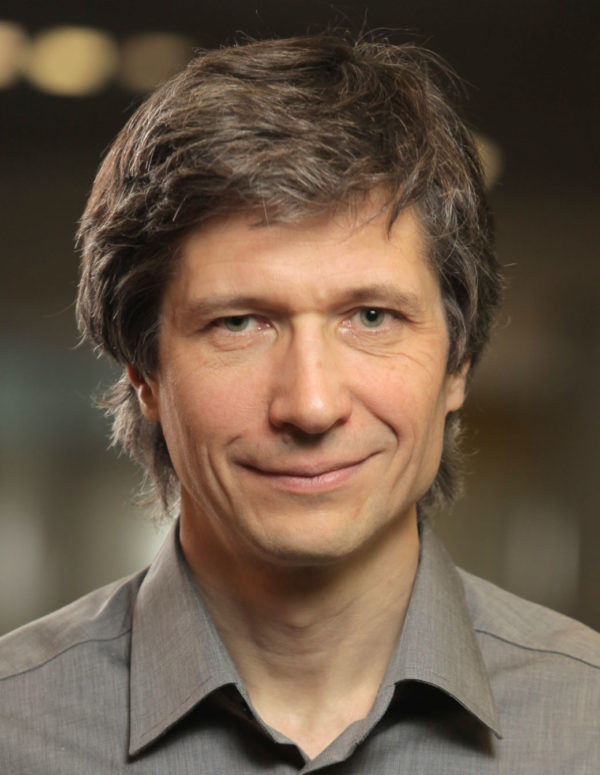
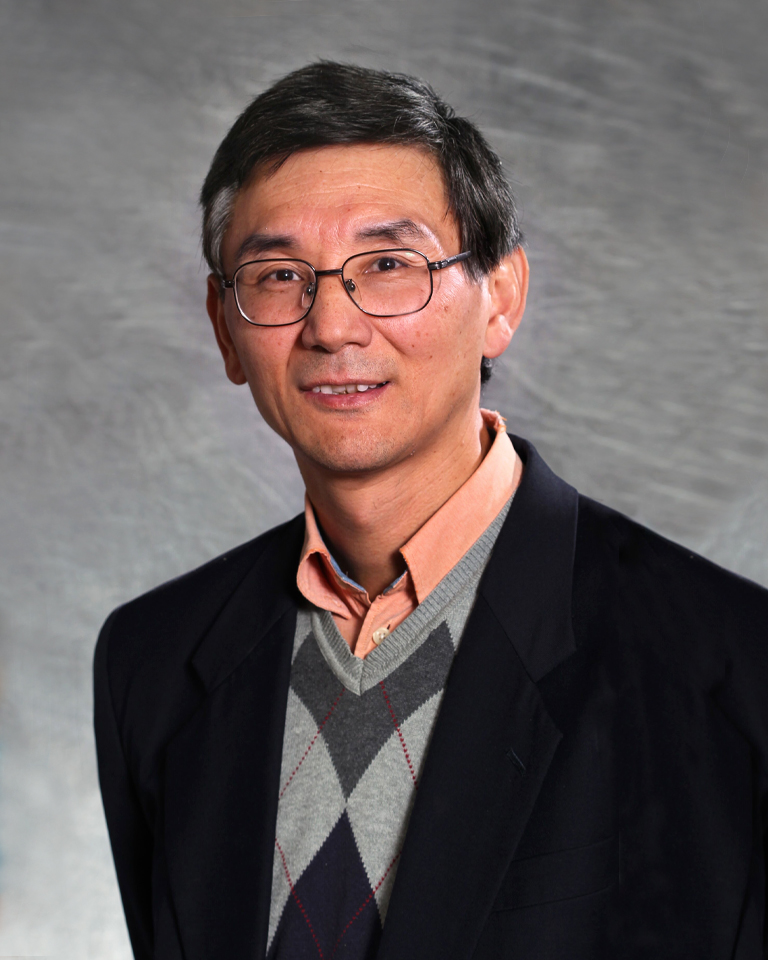
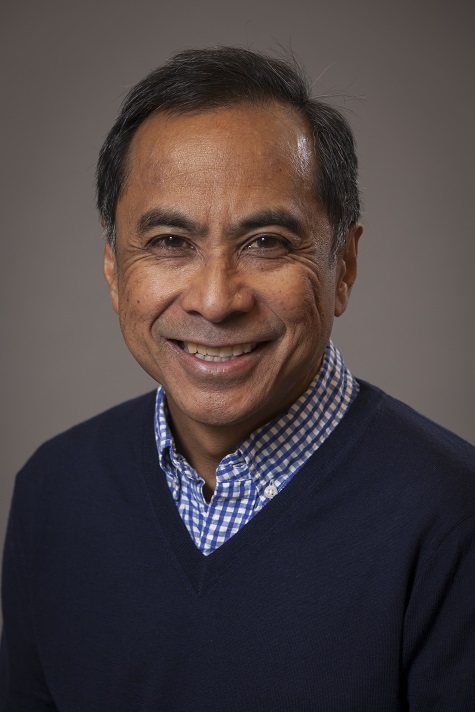
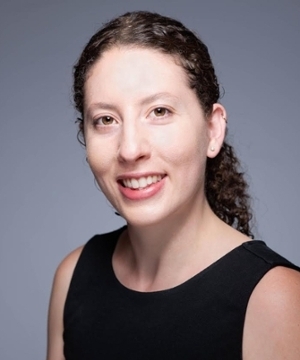
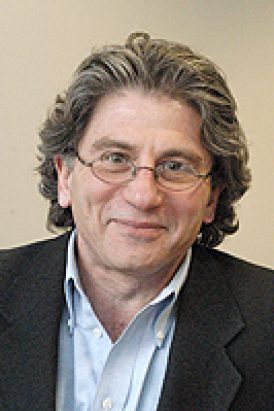
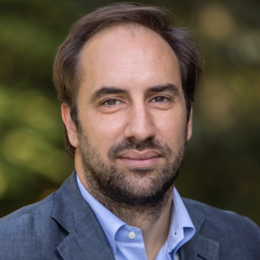
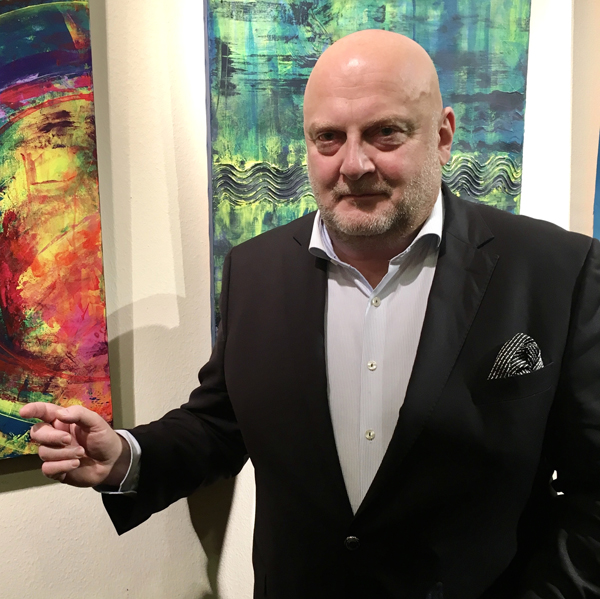
Aleksei Zheltikov is a University Distinguished Professor at Texas A&M University's Department of Physics and Astronomy. He holds dual affiliations with the International Laser Center and Physics Department of M.V. Lomonosov Moscow State University, and the Russian Quantum Center. His research focuses on ultrafast nonlinear optics and biophotonics, addressing applications in imaging, laser filamentation, and strong-field physics. Zheltikov earned his PhD (1990) and Doctor of Science (1999) degrees from Moscow State University, becoming a full professor there in 2000 before joining Texas A&M in 2010. He leads a research team including Xinghua Liu and Ajithamithra Dharmasiri. Recipient of prestigious awards including the Russian Federation State Prize (1997), Lamb Award (2010), and Kurchatov Prize (2014), his work bridges fundamental optics research with medical diagnostics and quantum technologies. Key contributions include developing laser filament-based imaging techniques and advancing Raman scattering-based frequency conversion methods in hollow-core fibers.
Edoardo Charbon is a Full Professor at École Polytechnique Fédérale de Lausanne (EPFL) in the School of Engineering, where he leads the Advanced Quantum Architecture Lab (AQUA). He also serves on the School Council STI and is Co-Director of STI-SSIQ Administration. Previously, he was a full professor and chair at Delft University of Technology from 2008 to 2016. Charbon received his Elektrotechnik Diploma from ETH Zurich, M.S. from UC San Diego, and Ph.D. from UC Berkeley, all in electrical engineering. His career spans industry experience at Cadence Design Systems and Canesta Inc. before joining EPFL in 2002. His research focuses on ultra high-speed and 3D optical sensors, with applications in LiDAR, FLIM (Fluorescence Lifetime Imaging Microscopy), PET (Positron Emission Tomography), FCS (Fluorescence Correlation Spectroscopy), and NIROT (Near-Infrared Optical Tomography). He has pioneered deep-submicron CMOS SPAD technology, which is now mass-produced and used in smartphones, telemeters, and medical diagnostics. His recent work bridges cryo-CMOS circuits for quantum computing with advanced optical sensing techniques. Analysis of his recent publications reveals a strong trend toward integrating quantum technologies with practical imaging applications. His work spans from fundamental device development (SPAD sensors, cryo-CMOS circuits) to applied systems (LiDAR engines, medical imaging devices), with increasing integration of machine learning techniques for real-time processing. 2023 IISS Pioneering Achievement Award Fellow of the IEEE Distinguished visiting scholar, W. M. Keck Institute for Space at Caltech Fellow, Kavli Institute of Nanoscience Delft Distinguished lecturer, IEEE Photonics Society Professor Charbon has authored or co-authored over 500 papers and two books, and holds 27 patents. His research has been supported by collaborations with organizations including Bosch, X-Fab, Texas Instruments, Maxim, Sony, Agilent, and the Carlyle Group. He has driven significant innovation in CMOS SPAD technology, which is now commercially deployed in various applications. He leads the Advanced Quantum Architecture Lab (AQUA) at EPFL, which focuses on the development of advanced sensor systems combining quantum technologies with conventional electronics. The lab has been instrumental in creating SPAD-based imaging systems that push the boundaries of time-resolved optical detection.
Gunnar Kusch is a Senior Research Associate at the Department of Materials Science & Metallurgy, University of Cambridge. His research focuses on defects in semiconductors, porous AlGaN materials, and advanced characterization techniques like cathodoluminescence (CL) and atom probe tomography (APT). He holds a PhD from the University of Strathclyde and leads projects on UV-B LED optimization, nanoscale defect behavior analysis, and semiconductor device design. His work bridges materials synthesis, characterization, and device performance, with applications in energy-efficient lighting and solar cell technology. Key research areas include: Defect engineering in III-nitride semiconductors Porous AlGaN templates for high-efficiency UV emitters Correlative microscopy techniques (CL, EBSD, APT) Composition-structure-property relationships in photovoltaic materials Notable contributions include developing CL-based methods for nanoscale defect analysis and demonstrating improved Cu(In,Ga)S₂ solar cell efficiencies through compositional engineering. His laboratory focuses on translating microscopic insights into macroscopic device improvements.
Yiguang Ju is the Robert Porter Patterson Professor of Mechanical and Aerospace Engineering at Princeton University, affiliated with the HMEI Grand Challenges Program. His research focuses on plasma-assisted combustion, alternative fuels, and nano-material synthesis via flame processes. He investigates energy-efficient systems for microscale energy conversion, catalytic reactions, and low-temperature plasma chemistry. Research interests include non-equilibrium plasma dynamics, ammonia synthesis, and high-pressure oxidation kinetics. He develops advanced diagnostics like hybrid laser spectroscopy and machine learning models to study reaction mechanisms. Recent work explores plasma-enhanced combustion for hydrogen and alternative fuels, with applications in energy storage and emission reduction. His studies address challenges in plasma-chemistry interactions, material synthesis, and high-pressure combustion systems. His articles highlight innovations in plasma catalysis, combustion kinetics, and atmospheric chemistry. Collaborative projects include plasma-based material recycling and supercritical-pressure reactor analysis. He leads initiatives in clean energy technologies and sustainable chemical processes.
Mathieu Odijk is a Full Professor at the University of Twente's Faculty of Science and Technology, leading the Integrated Devices and Systems department. His research focuses on microfluidic systems, catalysis, and organ-on-chip platforms, with contributions to UN Sustainable Development Goals through advanced material characterization and biomedical engineering. He has authored over 120 publications and holds an h-index of 27 with 1,820 citations. Expertise: Microfluidics, catalyst particle diagnostics, SERS substrates, organ-on-chip systems, and spectroscopic techniques. Collaborations include Weckhuysen (catalysis), van den Berg (microfluidics), and Meirer (materials science). Key projects: Modular organ-on-chip platforms (STARTER), droplet-based catalyst screening, and real-time reaction monitoring via ATR-IR systems. His research combines nanotechnology and chemical engineering to develop tools for sustainable energy, environmental remediation, and biomedical applications. Recent work includes microreactors for catalyst particle analysis, light-driven urea oxidation for wearable kidney devices, and standardized platforms for organ-on-chip research.
Dr. Edward L. Quitevis is a Professor in the Department of Chemistry and Biochemistry at Texas Tech University, holding joint appointments in Physics. He earned his Ph.D. from Harvard University (1981) and completed postdoctoral research at the University of Toronto (1981-1984). His research focuses on the dynamics of complex fluids, particularly ionic liquids and supercooled liquids, using advanced techniques like optical heterodyne-detected Raman-induced Kerr effect spectroscopy (OHD-RIKES) and fluorescence recovery after photobleaching (FRAP). Key interests include nanostructural organization in ionic liquids, intermolecular dynamics, and the glass transition phenomenon in supercooled systems. Current research themes include understanding the relationship between nanostructure and dynamics in ionic liquids, studying ultraslow translational/rotational diffusion near the glass transition, and exploring applications of ionic liquids in materials science. His group has developed novel insights into the role of cation-anion interactions and nanoscale segregation in these systems. Dr. Quitevis collaborates widely, with publications in top journals like Physical Chemistry Chemical Physics and Journal of Chemical Physics . Students advised include Jagdeep Kaur, Dujuan Meng, Mahesh Thakurathi, and Sophia Sagala. His lab focuses on experimental and theoretical approaches to probe liquid-state dynamics, with recent work on cellulose dissolution, graphene exfoliation in ionic liquids, and lubrication applications.
Herb Winful is a Professor of Optics at the University of Michigan's College of Engineering, Department of Electrical and Computer Engineering. He specializes in nonlinear optics, laser physics, quantum tunneling , and photonics , with a focus on phenomena like superluminal group velocities, frequency comb generation, and light storage via stimulated Brillouin scattering. Research areas span quantum tunneling times , nonlinear photonic materials , and coherent beam combining in fiber laser arrays. His work includes frequency comb spectroscopy using quantum-well diode lasers, ultrafast erbium fiber lasers , and negative group delay engineering in birefringent waveguides. The article list reveals expertise in supercontinuum generation , evanescent wave dynamics , photonic crystals , and nonlinear pulse manipulation . Key subfields include stimulated Brillouin/Raman scattering , parabolic similaritons , and time-domain modeling of optical systems. Award-winning scientific contributions include resolving the Hartman effect paradox and optimizing fiber laser arrays for high-power applications. His research bridges theoretical insights with practical innovations in optical engineering and quantum optics .
Andrea Pickel is an Assistant Professor at the University of Rochester, holding joint appointments in the Department of Mechanical Engineering, Materials Science, and the Institute of Optics, while also serving as a Scientist at the Laboratory for Laser Energetics (LLE). She received her PhD in Mechanical Engineering from UC Berkeley (2019) and a BS from Carnegie Mellon University (2014). Her research focuses on nanoscale heat transfer, leveraging luminescent materials and super-resolution imaging to address challenges in thermal management, catalysis, and energy systems. Education: PhD, Mechanical Engineering, UC Berkeley, 2019 BS, Mechanical Engineering, Carnegie Mellon University, 2014 Research interests include luminescence nanothermometry, single-nanoparticle imaging, and high-temperature thermal metrology. Her work integrates experimental methods like stimulated emission depletion (STED) imaging and operando spectroscopy to advance understanding of energy transport at the nanoscale. Notable awards include the NSF CAREER Award (2022), ACS PRF Doctoral New Investigator Award (2020), and Furth Fund Award (2021). She was also named a Scialog Fellow in 2024. Advancing thermal measurement techniques, her group collaborates across disciplines to tackle applications in carbon capture, battery technology, and plasmonic photocatalysis. Current projects emphasize developing dual-mode sensing tools for real-time thermal and chemical monitoring. Labs/Teams: Active at the Laboratory for Laser Energetics (LLE) and leads the Pickel Research Group in the Department of Mechanical Engineering.
Qiang Li is a SUNY Empire Innovation Professor in the Department of Physics and Astronomy at Stony Brook University and holds a joint appointment at Brookhaven National Laboratory (BNL) as the leader of the Advanced Energy Materials Group. His roles span both research and academia, with a focus on quantum materials and their applications in energy and quantum information science. University: Stony Brook University Affiliations: Brookhaven National Laboratory, Department of Physics and Astronomy His research bridges fundamental and applied studies of topological quantum materials , superconductivity , thermoelectrics , and quantum information science . Key areas include synthesizing single crystals and thin films, exploring low-temperature transport properties, and developing scalable methods for superconducting and thermoelectric devices. Recent work highlights light-induced symmetry switching in Weyl semimetals and topological phase transitions. His publications emphasize quantum materials , particularly Dirac/Weyl semimetals , iron-based superconductors , and topological insulators , with techniques ranging from terahertz spectroscopy to phononic control of quantum states. Collaborations with institutions like Ames Laboratory and the University of Alabama at Birmingham are notable. Scientific Awards: Brookhaven Science and Technology Award (2019) R&D 100 Award for aFCL (2015) Fellow of American Physical Society (2013) New York State Leader in Superconductivity (2011) Qiang Li advises PhD students such as Pedro Lozano and leads the Quantum Materials Laboratory at Stony Brook, which integrates theory, AI-driven design, and experimental synthesis for quantum applications. His work is supported by the U.S. Department of Energy's Office of Basic Energy Science.
Prof. Dr. Thomas Taubner serves as a Professor at the Institute of Physics within the Faculty of Mathematics, Computer Science and Natural Sciences at RWTH Aachen University. He leads the IR Nano-Optics and Metamaterials research group, operating from Campus Melaten (Physics Building 26, Room A 104). His team focuses on cutting-edge nanophotonic technologies with applications in infrared optics and reconfigurable optical systems. Taubner's research spans nanophotonics, infrared spectroscopy, metamaterials, and phase-change materials, with particular expertise in plasmonic phase-change materials like In 3 SbTe 2 . His group pioneers techniques for dynamic control of light at the nanoscale through near-field microscopy, beam steering, and thermal emission manipulation. Key areas include 2D material characterization, phonon polariton engineering, and ultrafast optical phenomena in semiconductor heterostructures. Analysis of his recent publications reveals a dominant focus on programmable infrared nanophotonics using plasmonic phase-change materials. His work consistently demonstrates reconfigurable optical devices through direct laser writing, geometric phase metasurfaces, and real-space imaging of confined electromagnetic waves. The research shows strong interdisciplinary connections between condensed matter physics, materials science, and optical engineering, with practical applications in thermal management, sensing, and next-generation optical computing. Prof. Taubner actively supervises doctoral and master's students, regularly advertising thesis positions and doctoral openings through his research group. His team maintains advanced laboratory facilities for nanofabrication, near-field optical characterization, and ultrafast spectroscopy, supporting both fundamental research and technology development in infrared nanooptics.
Roberto Merlin is a Peter A. Franken Collegiate Professor of Physics and Professor of Electrical Engineering and Computer Science (EECS) at the University of Michigan. Born in Buenos Aires, Argentina, he earned an M.S. in 1973 from the University of Buenos Aires and a Ph.D. in 1978 from the University of Stuttgart under Manuel Cardona. After postdoctoral work at the University of Illinois, he joined the University of Michigan Physics faculty in 1980 and holds a joint appointment in EECS since 2000. He has held visiting positions at institutions including Max-Planck-Institut FKF, Hong Kong University of Science and Technology, and ETH Zurich. Merlin's research focuses on experimental condensed matter physics, particularly ultrafast optical techniques like spontaneous and impulsive Raman spectroscopy. His work spans coherent phonon dynamics, metamaterials for subwavelength focusing, and light-induced phase transitions in quantum materials. Recent publications address magnetophononics, phonon Bloch oscillations, and radiation-less interference in evanescent-field plates, reflecting his interdisciplinary interests in optics, quantum mechanics, and materials science. His scientific contributions have been recognized by fellowships from the American Physical Society (1996), Optical Society of America (2000), and Simons Foundation (2013), along with the Frank Isakson Prize (2006) and Ellis R. Lippincott Award (2017). He has served in leadership roles for APS committees and conference chairs, and his editorial work includes Physical Review Letters and Solid State Communications.
Mingda Li is an Associate Professor in the Department of Nuclear Science and Engineering at the Massachusetts Institute of Technology (MIT), holding the Class of 1947 Career Development Professorship. His research spans quantum materials, nanoscale energy transport, and AI-driven materials discovery, utilizing neutron/X-ray scattering techniques and machine learning to address challenges in quantum computing, thermal management, and energy conversion. He leads the Quantum Measurement Group and teaches graduate courses including Quantum Theory of Materials Characterization. Education: Bachelor of Science in Engineering Physics, Tsinghua University, 2009 Doctor of Philosophy in Nuclear Science and Engineering, MIT, 2015 Postdoctoral Research, MIT Mechanical Engineering Department Research Interests: Dr. Li's quantum research develops theoretical frameworks for topological order and defect-engineered quantum materials, with applications in microelectronics and quantum computing. His energy transport studies investigate phonon/electron dynamics at interfaces under non-equilibrium conditions to design materials for thermal management in electronics. The AI program creates symmetry-aware generative models that integrate ab initio calculations with experimental data, enabling closed-loop materials discovery for quantum and energy technologies. Publication Trends: Analysis of 15 recent 2025 publications reveals dominant themes in quantum materials (topological semimetals, 2D magnets), AI-driven design (generative models, symmetry-equivariant networks), and advanced characterization (neutron/X-ray spectroscopy). Key innovations include defect engineering for thermal transport, machine learning for spectroscopic data interpretation, and quantum phenomenon discovery in complex materials, reflecting strong interdisciplinary integration. Scientific Awards: No scientific awards were mentioned in the provided text. Advising and Grants: Dr. Li mentors graduate students in the Quantum Measurement Group, guiding research in quantum materials characterization and AI applications. He has taught core courses including Applied Nuclear Physics and Machine Learning in Nuclear Science and Engineering. His research is supported by grants focused on quantum engineering and nuclear materials, with collaborations spanning national laboratories and industry partners for quantum computing and energy applications. Labs and Teams: The Quantum Measurement Group operates at the intersection of experimental physics and computational science, utilizing neutron scattering facilities (including Spallation Neutron Source) and ultrafast X-ray techniques. The team develops custom software for data analysis and collaborates with institutions like MIT.nano for materials synthesis, maintaining a pipeline from theoretical prediction to device-level validation for quantum and thermoelectric materials.
Stefano Bonetti is an Associate Professor in the Department of Physics at Stockholm University , leading the Ultrafast Condensed Matter Dynamics Group . His research focuses on manipulating quantum materials using terahertz (THz) and near-infrared laser fields to study spin dynamics and ultrafast phenomena at nanoscale and femtosecond timescales. PhD in Materials Physics (KTH Royal Institute of Technology, Sweden) MSc in Engineering Physics (KTH) BSc in Technical Physics (Politecnico di Milano, Italy) Recent research efforts involve time-resolved X-ray microscopy to visualize spin currents and magnetization dynamics, leveraging facilities like free-electron lasers. His work bridges experimental physics and applied materials science, aiming to enhance energy efficiency in data storage technologies by understanding ultrafast spin-lattice interactions . Key scientific awards and grants: ERC Starting Grant (2017-2021) Wallenberg Academy Fellow (2018-2023) VR's free grant (2019-2023) International Career Grant (COFUND) (2015-2019) He has contributed to developing THz-based techniques for magnetic control and authored foundational work on spin-wave solitons and nonlinear magnetoelastic coupling . His group collaborates internationally, utilizing advanced synchrotron and free-electron laser facilities.
Thomas Brunold is a Professor of Chemistry at the University of Wisconsin–Madison, focusing on the geometric and electronic properties of metal centers in proteins and cofactors . His work integrates spectroscopic techniques (electronic absorption, circular dichroism, magnetic circular dichroism, resonance Raman, electron paramagnetic resonance) with density functional theory (DFT) and quantum mechanics/molecular mechanics (QM/MM) calculations to validate bonding descriptions and explore catalytic intermediates. Bio-organometallic cofactors (adenosylcobalamin, methylcobalamin, NiF430) Metal-dependent superoxide dismutases (Ni-, Fe-, Mn-SODs) Polynuclear NiFeS enzymes (ACS, CODH) His research spans vitamin B12 chemistry , metalloenzyme specificity , and redox-active clusters , with a focus on resolving substrate-bound intermediates and mechanistic debates in catalytic cycles. Recent publications emphasize ligand dynamics , second-sphere residue effects , and metal-cofactor interactions . Scientific awards include the Taylor Teaching Award (2024) , Kellett Mid-Career Award (2020) , and NSF-CAREER Award (2003) . He mentors students in the Brunold Lab, including Ryan Hall , Laura Elmendorf , and Maddy Rodemeier (co-advised with Andrew Buller), with multiple Outstanding TA Awards to lab members.
Michael George is a Professor of Chemistry at the University of Nottingham, United Kingdom. He was elected to the Academy of Europe in 2021 in the Chemical Sciences section and maintains a research group homepage at http://www.nottingham.ac.uk/research/groups/photoelectro/photo-electro.aspx. His research spans multiple innovative areas of chemistry: Innovative reactor design Green and sustainable chemistry Spectroscopy & reaction monitoring Ultrafast time-resolved vibrational spectroscopy Organometallic alkane & noble gas complexes Continuous photo-, electro- and thermal-chemistry for chemical manufacture Supercritical fluids and high pressure phase behaviour Inorganic and organic photochemistry His work bridges fundamental chemical research with practical applications for sustainable chemical manufacturing and environmental solutions, with particular emphasis on photoelectrochemical processes as indicated by his research group's focus. Scientific Awards 2020: Norman Sheppard Award of the Infrared & Raman Discussion Group 2018: United Nations Industrial Development Organization Bronze Award for Research in Chemical Leasing 2016: Meggers Award, Society for Applied Spectroscopy and Camellia Award, Ningbo Municipal Government, China 2014: Fellow of the Royal Society of Chemistry 2013: Royal Society of Chemistry Inorganic Reaction Mechanisms Medal 2012: Fellow of the Society for Applied Spectroscopy 2011: Craver Award, Coblentz Society 2010: Seaborg Memorial Lecturer, UC Berkeley 2009: Williams Evans Fellowship, University of Otago, New Zealand 2008-2013: Royal Society Wolfson Merit Award 2005: Royal Society of Chemistry Photochemistry Medal and Horiba Ltd. Japan, Masao Horiba Special Award 2004: Royal Society of Chemistry, Corday-Morgan Medal 2002-2003: Royal Society of Chemistry, Edward Frankland Fellowship 1995: John van Geuns Lecture, University of Amsterdam Michael George's career progression at the University of Nottingham demonstrates remarkable dedication to chemical sciences, having advanced from Research Officer (1996-1998) to Lecturer (1998-2001), Reader (2001-2002), and Professor of Chemistry (2003-present), with his work receiving international recognition across multiple continents.