Erniel Bayhon Barrios is a Professor at the Malaysia School of Business, Monash University. Formerly a professor at the University of the Philippines Diliman and a visiting scholar at Karlstad University (Sweden) and the Asian Development Bank Institute (Japan). He holds a PhD in Statistics (1990) from the University of the Philippines Diliman. His research focuses on computational statistics, nonparametric methods, data science, and computational econometrics, with applications in spatiotemporal modeling, time series, and financial markets. He has contributed to high-dimensional data analysis, volatility modeling, and robust statistical techniques. Key projects include the National Mental Health Survey and Well-Being (2019–2021) and building a data-driven organization for the Habib Group (2025–2026). He is an elected member of the International Statistical Institute (2012), associate editor of Communications in Statistical Applications and Methods , and served on the board of the International Association of Statistical Computing (2022–2025). He advises PhD students on topics like stochastic frontier models, data assignment in big data, and high-frequency time series analysis. His work aligns with UN Sustainable Development Goals related to education and economic growth.
Ram Rajagopal is an Associate Professor of Civil and Environmental Engineering and Electrical Engineering at Stanford University, and a Senior Fellow at the Precourt Institute for Energy. He leads the Stanford Sustainable Systems Lab (S3L), focusing on large-scale monitoring, data analytics, and stochastic control for infrastructure networks, particularly power systems. His research emphasizes renewable energy integration, smart distribution systems, and demand-side data analytics. Education: PhD in Electrical Engineering and Computer Sciences & MA in Statistics (UC Berkeley), MS in Electrical and Computer Engineering (UT Austin), and BEng in Electrical Engineering (Federal University of Rio de Janeiro). Research interests include power grid optimization, renewable energy systems, and data-driven approaches to infrastructure challenges. He has pioneered work in grid flexibility, distributed energy resources, and machine learning applications for energy systems. His lab develops technologies like Smart Dim Fuses and the EV-EcoSim platform for EV charging infrastructure optimization. Received NSF CAREER Award, Powell Foundation Fellowship, and Berkeley Regents Fellowship Over 30 patents and best paper awards Advises/founded companies in sensor networks, power systems, and data analytics Labs/Teams: Stanford Sustainable Systems Lab (S3L), Powernet Project. His work spans grid resilience, energy equity, and scalable energy solutions.
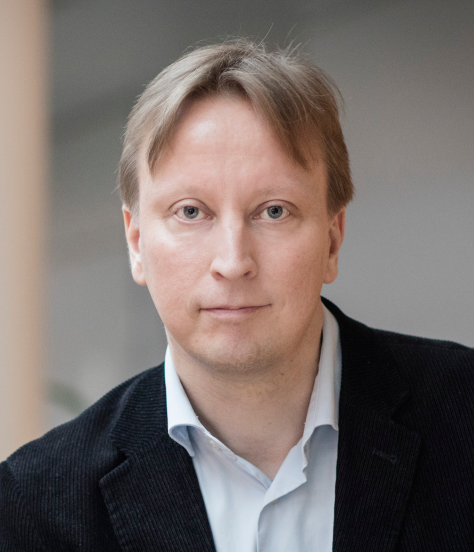
Professor Simo Särkkä holds a position in Sensor Informatics and Medical Technology at the Department of Electrical Engineering and Automation (EEA), Aalto University. His research focuses on multi-sensor data processing, Bayesian filtering, machine learning, and their applications in medical technology, brain imaging, and inverse problems. He leads research groups including the Helsinki Institute for Information Technology (HIIT) and Sensor Informatics and Medical Technology. His work bridges theoretical advancements in probabilistic methods with practical implementations in healthcare and engineering. Key research interests include Gaussian processes, stochastic differential equations, quantum machine learning, and signal processing. He has contributed to advancements in algorithms for nonlinear state-space models, parallel computing techniques, and medical imaging technologies such as scatter correction in CT scans. His methodologies are applied across domains like autonomous systems, robotics, and bioengineering. Notable publications span topics like quantum-assisted Gaussian regression, physics-informed machine learning for industrial processes, and parallel-in-time numerical methods. His work emphasizes computational efficiency and robustness in high-dimensional and real-time systems.
Ming Hu is a Professor and University of Toronto Distinguished Professor of Business Operations and Analytics at Rotman School of Management, University of Toronto. He serves as Area Coordinator for the Operations Management & Statistics Area and holds editorial leadership roles including Editor-in-Chief of Naval Research Logistics and Associate Editor for multiple top journals. MS in Applied Mathematics, Brown University (2003) PhD in Operations Research, Columbia University (2009) His research focuses on sharing economy , social operations , and platform economics , examining how operational decisions can maximize societal benefit. Key areas include crowdfunding , two-sided markets , crowdsourcing , and group buying , with applications to DEI , sustainability , and AI-empowered operations . Recent work analyzes spatial operations in delivery systems, algorithmic fairness , and climate change adaptation in agricultural supply chains. His publications span top journals like Management Science and Operations Research , covering topics from blockchain traceability to quantum-inspired optimization . Scientific recognitions include: Wickham Skinner Early-Career Research Award (2016) Best Operations Management Paper in Management Science (2017) 2018 Poets & Quants Best 40 Under 40 MBA Professors As an Amazon Scholar (2022–) and Chair of Chain Analytics Institute (2023–), he bridges academic research with industry applications in AI-driven logistics and sustainable operations.
Lourens Waldorp is an Associate Professor at the University of Amsterdam within the Faculty of Social and Behavioural Sciences , specifically the Department of Psychological Methods . His research focuses on network theory, causal inference, and statistical modeling in psychology and neuroscience. University of Amsterdam IAS Fellow (2024) His research interests include: Network psychometrics Causal inference in psychological models High-dimensional statistical methods Dynamical systems in psychopathology Graph theory applications Signal processing for biophysical data The trends in his recent publications center on causal modeling, network analysis of psychopathology, and statistical techniques for time-series data. He has developed methods for perturbation graphs, moderated network models, and dynamic intervention frameworks. Notable scientific awards : IAS Fellowship for 6 months (2024) He advises PhD students like Kyra Evers and collaborates with researchers across disciplines, including J. Haslbeck , D. Borsboom , and O. Ryan . His work intersects with network theory and clinical psychology .
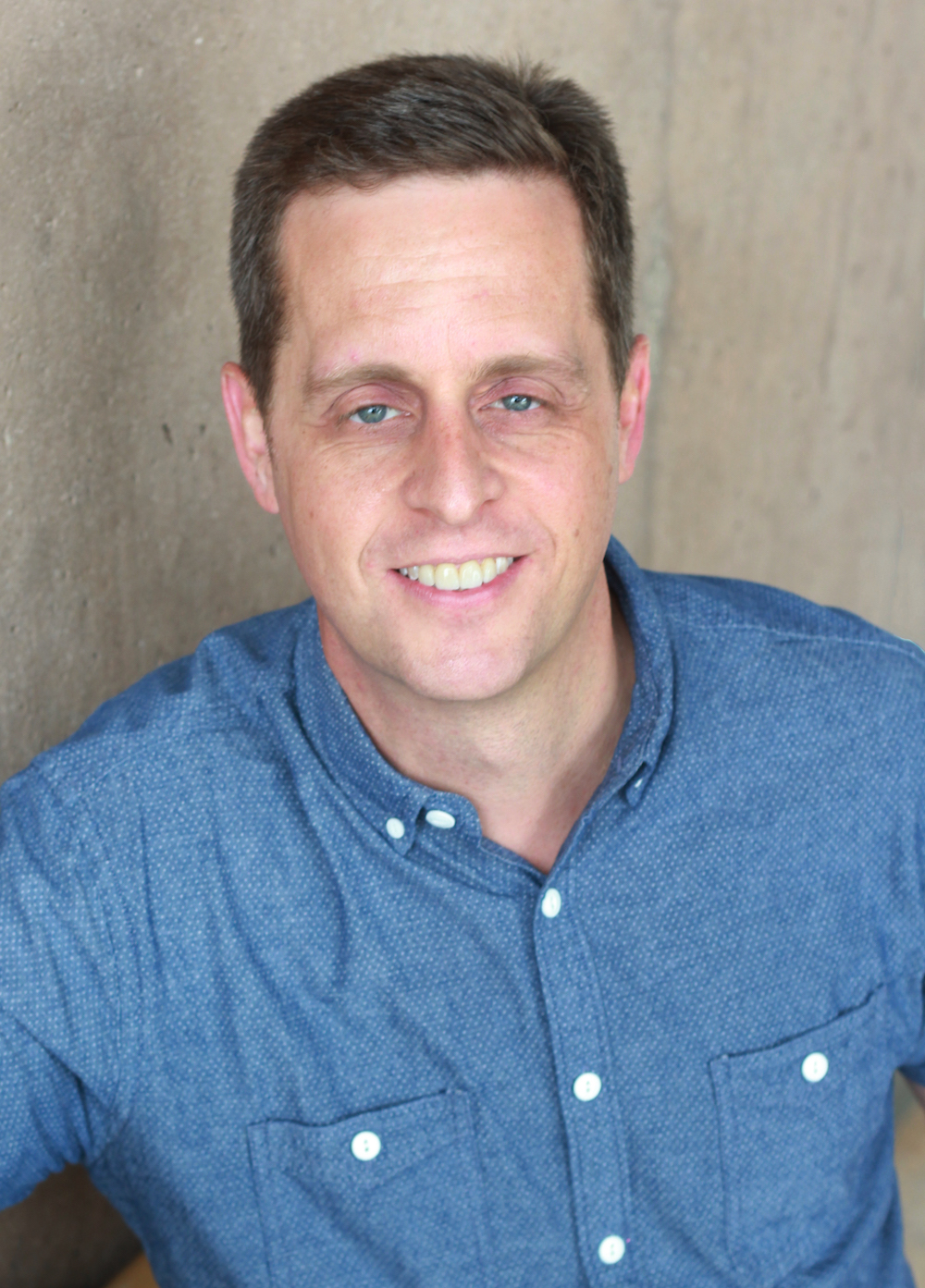
Erik B. Sudderth is a Professor of Computer Science and Statistics and Chancellor's Fellow at the University of California, Irvine (UCI). He leads the Learning, Inference, & Vision Group and directs multiple research centers, including the UCI Center for Machine Learning and Intelligent Systems and the HPI Research Center in Machine Learning and Data Science. He previously served as an Associate Professor at Brown University. Education: B.S. (summa cum laude) in Electrical Engineering from UC San Diego (1999), M.S. and Ph.D. in EECS from MIT (2002, 2006). His research focuses on statistical methods for scalable machine learning, Bayesian nonparametrics, probabilistic graphical models, and applications in computer vision, AI, and environmental science. Key areas include nonparametric clustering, deep generative models, and particle-based inference algorithms. Research interests span diverse topics: advancing Bayesian nonparametric models for medical time series, scalable variational inference, and AI ethics. Notable contributions include the NET-VISA seismic monitoring system (ISBA Mitchell Prize, 2014), the BNPy toolbox (NSF CAREER Award), and work on diverse particle max-product algorithms for continuous inference. Scientific awards include the NSF CAREER Award, ISBA Mitchell Prize, and recognition as one of "AI's 10 to Watch" (IEEE). He has served as editor for top journals (JMLR, IEEE PAMI) and conference chairs (NeurIPS, CVPR). His work bridges theory and practice, with applications in robotics, climate science, and healthcare. Labs/Teams: UCI Learning, Inference, & Vision Group; UCI Center for Machine Learning; CREATE Technology Center. Grants include NSF funding for visually impaired collaboration tools and soil biogeochemical modeling.
Mark Lewis is the Kennedy Chair in Mathematical Biology at the University of Victoria, holding joint appointments in the Departments of Mathematics and Statistics and Biology. His research focuses on spatial ecology and mathematical modeling, addressing ecological challenges such as animal movement, invasive species, and disease dynamics. Lewis earned his D.Phil. in Mathematical Biology from the University of Oxford and has been elected a Fellow of the Royal Society UK. His work integrates mathematical analysis, field studies, and interdisciplinary approaches to solve ecological problems. Current projects include modeling polar bear populations, cyanobacteria dynamics, and the impact of climate change on wildlife. Lewis supervises students across both UVic and his former University of Alberta lab. Education: D.Phil. in Mathematics (Mathematical Biology), University of Oxford Awards: Royal Society Fellowship, CRM-Fields-PIMS Prize, and Okubo Prize Key Research Areas: Animal movement modeling, aquatic ecology, wildlife disease, and invasive species management Publications highlight his contributions to understanding disease spread, parasite dynamics, and ecological responses to environmental changes. Lewis collaborates widely, applying mathematical tools to real-world conservation and health challenges.
Joseph Bentsman is a Professor in the Department of Mechanical Science and Engineering at the University of Illinois at Urbana-Champaign's Grainger College of Engineering. He also holds affiliate appointments in the Department of Aerospace Engineering (since 2015) and the Department of Electrical and Computer Engineering (since 2018). His academic journey began with an M.S. from Byelorussian Polytechnic Institute in Minsk, USSR (1979), followed by a Ph.D. in Electrical Engineering from Illinois Institute of Technology (1984). Professor Bentsman's research focuses on control of nonlinear and distributed parameter systems, nonlinear oscillations, network control, stability theory, and stochastic multiscale methods. He pioneered a new class of dynamical systems with active singularities that admit control actions during singular phases of motion, which represent a novel category of hybrid systems characterized by impulsively controlled discrete transitions. His recent work has expanded into biomedical applications, particularly thermophysical modeling of tissue during electrosurgery and control of phase change processes. His recent publications (2021-2024) reveal a strong trend toward biomedical applications of control theory, particularly in modeling heat conduction in biological tissues, electrosurgical processes, and phase change phenomena. Approximately 60% of his recent work focuses on biomedical applications, while the remainder continues his foundational work on nonlinear control systems, distributed parameter systems, and systems with active singularities. Key subfields include Stefan problems, enthalpy-based control, telegraph equation modeling, and PDE-based control of complex physical processes. NSF Presidential Young Investigator Award (1989) Life Fellow of American Society of Mechanical Engineers Life Senior Member of IEEE IEEE Control Systems Society Technical Committee Chair on Power Generation (2015-2019) International Society of Automation POWID Achievement Award (2014) 2018 AIST Computer Applications Best Paper Award Featured in 'People in Control', IEEE Control Systems Magazine (2018) Professor Bentsman has been instrumental in developing educational approaches that integrate signal processing, instrumentation, control, and machine learning, as evidenced by his two textbooks. His work on the steel continuous casting process, particularly the mold oscillation system, has led to practical industrial applications. He has also made significant contributions to power plant control systems and boiler/turbine control. His research group appears to focus on both theoretical control systems development and practical implementation in industrial and biomedical settings, with strong connections to steel manufacturing, power generation, and medical device industries.
Paolo Gardoni is the Alfredo H. Ang Family Professor and an Excellence Faculty Scholar in the Department of Civil and Environmental Engineering at the University of Illinois Urbana-Champaign, with additional professorial appointments in Industrial & Enterprise Systems Engineering and Biomedical & Translational Sciences. He also serves as Director of the MAE Center and Editor-in-Chief of Reliability Engineering & System Safety. Education Ph.D. in Civil Engineering, University of California, Berkeley (2002) M.A. in Statistics, University of California, Berkeley (2001) M.Eng. in Structural Engineering, University of Tokyo (1997) Laurea (BS+MS equivalent) in Structural Engineering, Politecnico di Milano (1997) Research Interests Gardoni’s scholarship integrates probabilistic methods with large-scale infrastructure systems to advance reliability, risk, and life-cycle analysis. His work quantifies the performance of deteriorating systems under natural and anthropogenic hazards, models societal impacts of disasters, and develops decision frameworks for sustainable and resilient infrastructure. He also examines ethical, social, and legal dimensions of risk, and investigates optimal strategies for hazard mitigation, disaster recovery, and climate adaptation. Across more than 250 refereed journal papers, he has advanced sub-fields ranging from probabilistic mechanics and earthquake engineering to catastrophe bond pricing and engineering ethics, leveraging tools such as stochastic differential equations, Bayesian networks, and physics-informed machine learning. Awards & Honors Alfredo Ang Award on Risk Analysis and Management of Civil Infrastructure (ASCE, 2021) Best Paper Awards in ASCE Journal of Sustainable Water in the Built Environment (2019) and Geotechnical Research (2018 Telford Premium Prize) Fellowships and named professorships: Alfredo H. Ang Family Professor, Excellence Faculty Scholar, and courtesy or honorary professorships at Tsinghua, IIT Guwahati, Tongji, Jianghan, and Loughborough universities. Research Leadership & Funding Gardoni has secured over $58 million in research funding from NSF, DHS, NIST, USAID, Qatar National Research Fund, and other agencies. He directs the MAE Center—formerly an NSF Engineering Research Center—focused on multi-hazard engineering approaches, and is Editor-in-Chief of Reliability Engineering & System Safety (Elsevier, IF 9.4). He founded and formerly led the journal Sustainable and Resilient Infrastructure (Taylor & Francis) and serves on editorial boards of nine additional journals. Advising & Mentorship He has graduated 27 PhD and 35 Master’s students, many of whom now hold faculty positions worldwide. His group maintains an active pipeline of doctoral and post-doctoral researchers working on resilience analytics, infrastructure monitoring, and risk-informed decision-making. Laboratories & Collaborations He leads the MAE Center and is affiliated with the Critical Infrastructure Resilience Institute (CIRI) and the Biomedical and Translational Sciences group. International collaborations span the UK (Loughborough), India (IIT Guwahati), and China (Tsinghua, Tongji, Jianghan), fostering cross-disciplinary research in reliability and resilience engineering.
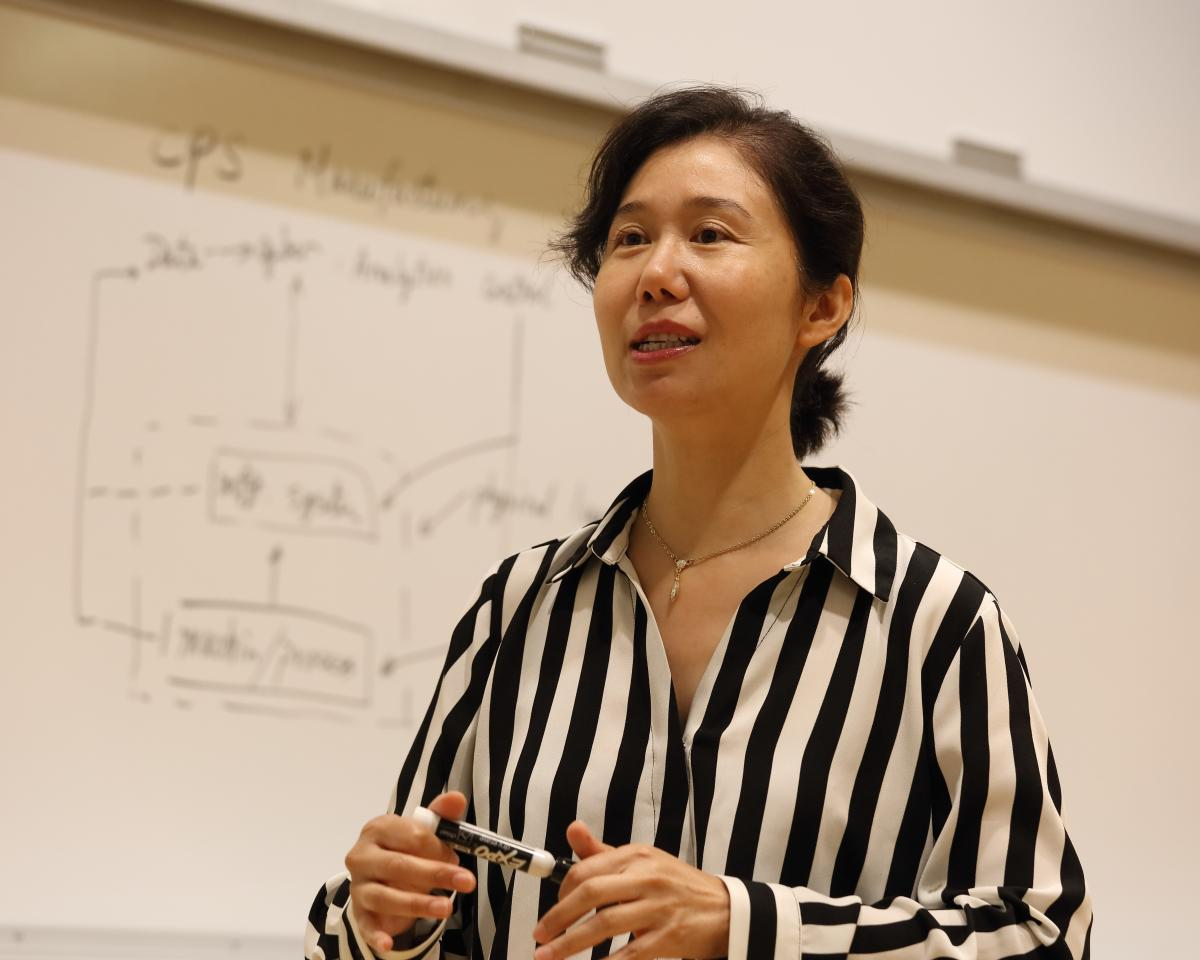
Qing (Cindy) Chang is a Professor in the Department of Mechanical and Aerospace Engineering at the University of Virginia, where she directs the Intelligent Systems Lab. She joined UVA in 2019 after serving as an associate professor at Stony Brook University. Prior to academia, she spent a decade at General Motors R&D, receiving their highest innovation awards. Education: M.S. from University of Wisconsin-Madison Ph.D. in Manufacturing from University of Michigan Research Focus: Chang's work integrates math-based modeling and data-driven methods to optimize manufacturing systems. Key areas include: Adaptive control and machine learning for production efficiency Human-robot collaboration frameworks Sustainable manufacturing through energy management Real-time control of cyber-physical production systems Reinforcement learning applications in industrial automation Research Trends: Her recent publications (2024-2025) demonstrate strong focus on AI-driven manufacturing optimization, with 80% leveraging reinforcement learning/LLMs for robotic control. Key themes include multi-agent coordination (67% of papers), energy efficiency (53%), and flexible production systems (47%). Awards & Recognition: Inducted as SME Scholar (2024) 20 Most Influential Professors in Smart Manufacturing - SME (2020) NSF CAREER Award (2014) Three-time GM Boss Kettering Award winner (2005,2006,2008) ASME and SME Fellow Leadership & Funding: Serves on NAMRI/SME Board of Directors with editorial roles across ASME/IEEE/SME journals. Research supported by NSF (including CAREER), Department of Energy, and multiple industry partners. Leads projects on human-robot collaboration and sustainable manufacturing. Lab & Collaboration: Directs the Intelligent Systems Lab at UVA, focusing on industrial AI applications. Collaborates with automotive and energy sectors to translate research into practical solutions for smart factories.
Joanna Millstein is a Post-doctoral Fellow in Geophysics at the Colorado School of Mines. She earned her Ph.D. in Geophysics from the Massachusetts Institute of Technology in 2023 as part of the MIT-WHOI Joint Program in Oceanography and Engineering, where her dissertation focused on The Flow and Fracture of Antarctic Ice Shelves . She also holds an A.B. in Earth Sciences from Dartmouth College (2017). Her research centers on the deformation and fracture of glacier ice, working at the intersection of fracture mechanics, remote sensing (particularly SAR and InSAR processing), statistical mechanics, and stochastic models. Millstein uses observational data from satellites and field measurements to derive mechanical and statistical models for glacier ice processes, with particular focus on reconciling observations of ice fracture and iceberg calving with theoretical models. Her work aims to resolve the nonlinear physics of glacier ice to better understand future global climate change impacts. Millstein's publication record shows a strong focus on Antarctic ice dynamics, with recent work applying extreme value theory to analyze 47 years of iceberg calving events. Her research demonstrates consistent attention to both theoretical modeling and practical applications for understanding climate change impacts on polar regions. She has developed computational tools including CryoCloud, reflecting her commitment to open science and cloud-based infrastructure for cryosphere research. Her scientific contributions span ice shelf mechanics, fracture prediction, rheology, and statistical modeling of glacial processes. Millstein maintains an active research presence with publications extending to 2025, demonstrating ongoing contributions to the field of glaciology and climate science. She is affiliated with the glaciology research center at Colorado School of Mines and maintains an active GitHub presence with climate-related code repositories. Her work bridges theoretical geophysics with practical climate change impact assessment, particularly regarding ice sheet stability and sea level rise projections.
Jim Hall is a Professor of Climate and Environmental Risk at the University of Oxford's School of Geography and the Environment, and serves as Director of Research there. He is also a Visiting Fellow at Linacre College and holds leadership roles including Chair of the Science Advisory Committee at IIASA, and Expert Advisor to the UK's National Infrastructure Commission. His work focuses on systemic risk analysis, infrastructure resilience, and policy implications of climate change adaptation. Prof Hall has pioneered methodologies like the National Infrastructure Systems Model (NISMOD) and chairs the Data and Analytics Facility for National Infrastructure (DAFNI). His research spans flood risk management, energy systems decarbonization, and transboundary water resource conflicts in regions such as the Eastern Nile Basin and the Caribbean. Key research areas include robust decision making under uncertainty, info-gap theory applications, and integrated assessments of human-environmental systems. He has contributed to major international assessments, including the IPCC's Fourth Assessment Report, and developed frameworks for multi-hazard stress testing of infrastructure networks. Scientific Awards: George Stephenson Medal (2001), Prince Sultan Prize for Water (2018), Royal Academy of Engineering Fellowship (2010) His advising and grants work includes mentoring a DPhil student Erin Canning and leading projects like MARIUS and ENHANCE. He has also developed innovative modeling tools for coastal erosion prediction and probabilistic assessments of global shipping fuel transitions. Prof Hall’s research groups actively engage in interdisciplinary projects, including the Oxford Martin Programme on Resource Stewardship and the UK Infrastructure Transitions Research Consortium. His work emphasizes bridging scientific analysis with actionable policy solutions for climate adaptation.
Professor Jiti Gao is a Donald Cochrane Chair in Econometrics & Business Statistics at Monash University's Faculty of Business and Economics. He leads the Department of Econometrics and Business Statistics, specializing in non- and semi-parametric econometrics, time-series analysis, and panel data methodologies. His research focuses on developing statistical models for climate change, energy demand, and financial forecasting. Affiliations: Monash University, Impact Labs Grants: Multiple ARC Discovery Projects (e.g., 2020–2025 on climate-energy time series, 2017–2020 on econometric model building) Collaborations: CSIRO, Yale University, and international partners from China, Norway, and Singapore Research interests include climate econometrics, financial time series, and policy evaluation. Over 136 publications span econometric theory and applications, with recent work on nonlinear trending models and quantile regression. His grants emphasize methodological advancements in time series and panel data analysis. Awards: Not explicitly mentioned, but recognition includes Australian Professorial Fellow status and international research leadership roles. Advising/Grants: Primary Investigator on multiple ARC-funded projects, focusing on climate modeling and financial econometrics Labs/Teams: Part of Monash's Impact Labs and collaborates with global institutions on climate and econometric initiatives
Padhraic Smyth is a Distinguished Professor and Hasso Plattner Endowed Chair in Artificial Intelligence at the University of California, Irvine (UCI), holding joint appointments in the Department of Computer Science and Department of Statistics. He leads the DataLab research group, focusing on machine learning, AI, and their applications in climate science, healthcare, and education. His research spans probabilistic modeling, deep learning, and human-AI collaboration. Education: PhD in Electrical Engineering from the California Institute of Technology (1988), MSEE (1985), and BEng (1984). Prior to UCI, he worked at NASA's Jet Propulsion Laboratory (1988–1996). Research Interests: Machine learning, AI, pattern recognition, Bayesian methods, climate science applications, algorithmic fairness, and human-AI interaction. He has published over 200 papers and co-authored textbooks like Modeling the Internet and the Web . Awards: ACM Fellow, IEEE Fellow, AAAI Fellow, AAAS Fellow, and ACM SIGKDD Innovation Award recipient. He has held leadership roles in UCI's Center for Machine Learning and Data Science. Key Projects: Human-AI collaboration frameworks, robustness in deep learning, climate modeling using spatio-temporal data, and AI fairness with missing attributes. Collaborates with institutions like NASA and industry partners (e.g., Google, eBay). Labs/Teams: Director of UCI’s Data Science Initiative and HPI Research Center in Machine Learning. Supervises a vibrant PhD program with over 30 alumni in academia and industry.
Chris Darimont is a Professor and Raincoast Research Chair in Applied Conservation Science within the Department of Geography at the University of Victoria's Faculty of Social Sciences. His work bridges natural and social sciences to address urgent conservation challenges, with a geographic focus on British Columbia's Central Coast (Great Bear Rainforest) but designed for global relevance. His research spans three primary domains: landscape ecology at the marine-terrestrial interface, conservation biology of harvest management, and conservation ethics. Darimont maintains deep collaborations with First Nations communities and conservation organizations like the Raincoast Conservation Foundation (where he previously served as Science Director) and Hakai Institute. His work frequently integrates Indigenous Knowledge with scientific methods, exemplified by projects like the Nuxalk Sputc (Eulachon) initiative and Heiltsuk bear monitoring. Darimont's publication record shows consistent focus on human-wildlife interactions, particularly bear-salmon ecosystems, trophy hunting ethics, and Indigenous-led conservation. His highly cited 2009 PNAS paper "Human predators outpace other agents of trait change in the wild" and 2015 Science paper "The unique ecology of human predators" established foundational frameworks in conservation science. Recent work increasingly emphasizes decolonial approaches and Two-Eyed Seeing methodologies. As an educator, he teaches GEOG 391 (Contemporary Topics in Coastal Conservation) and GEOG 353 (Coastal and Marine Resources), prioritizing student mentorship as his "favourite form of outreach." His research is regularly featured in high-profile media including National Geographic and The New York Times, reflecting his commitment to science communication and public engagement.