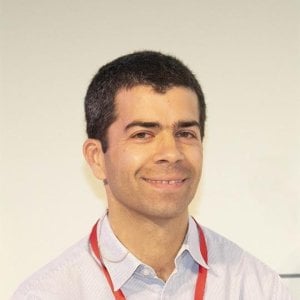
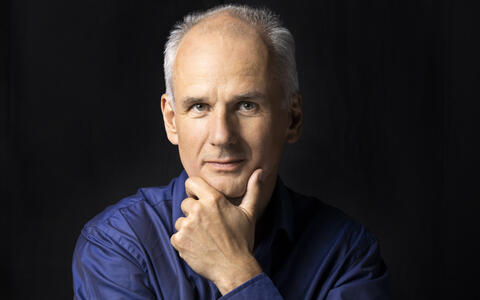
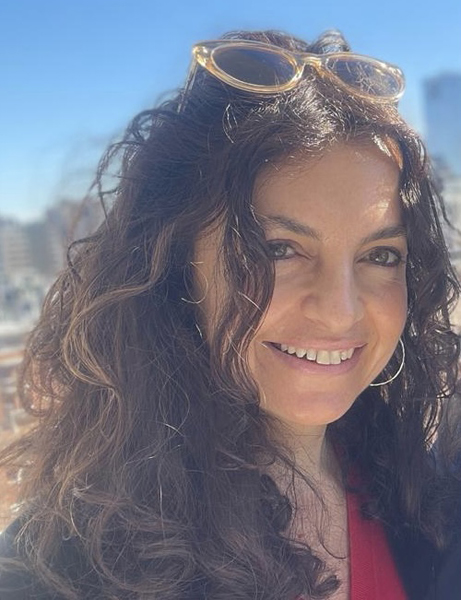
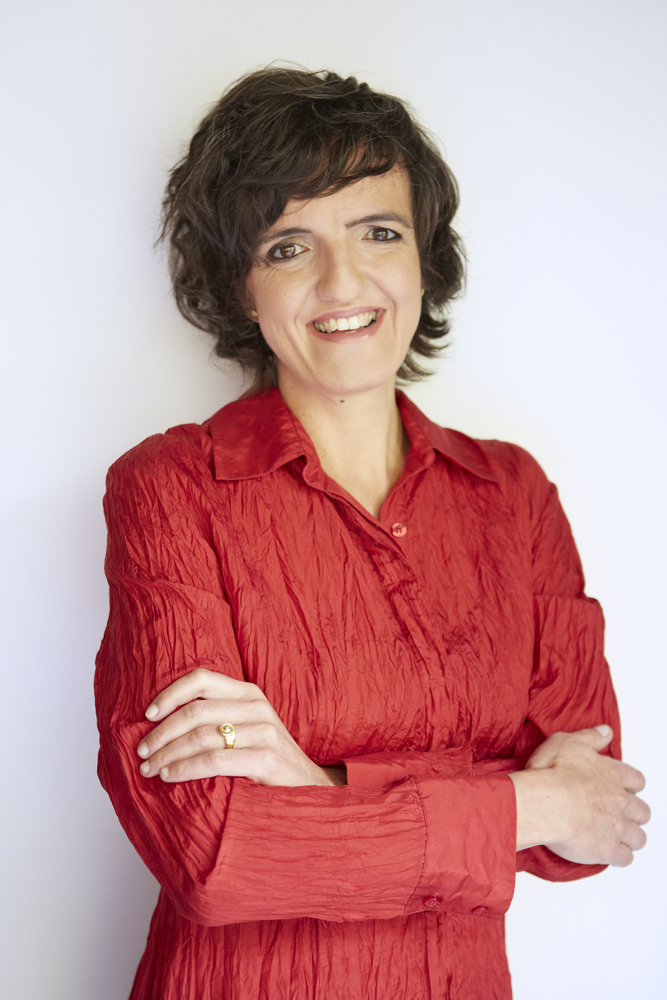
Krishnan Bhaskaran is a Professor of Statistical Epidemiology at the London School of Hygiene & Tropical Medicine (LSHTM) , affiliated with the Faculty of Epidemiology and Population Health and the Department of Non-communicable Disease Epidemiology . He leads the Beyond Cancer research group , supported by a Wellcome Senior Research Fellowship . He co-founded the OpenSAFELY platform for real-time pandemic data analysis. Education: Background in Mathematics and Medical Statistics Research Interests: Cancer survivorship, cardiovascular and mental health outcomes in cancer survivors, pharmacoepidemiology of drug interactions, and methodological advancements in electronic health records analysis Publication Trends: His recent work focuses on long-term health consequences of cancer and its treatments, drug interactions in cardiovascular therapies, and the impact of chronic conditions on cancer risk. Many studies utilize large UK datasets and the OpenSAFELY platform. Scientific Awards: Wellcome Senior Research Fellowship Grants & Leadership: He has secured major funding from Cancer Research UK , British Heart Foundation , and Wellcome Trust to investigate cardiovascular risks post-cancer, health inequalities in endocrine therapy adherence, and drug safety in anticoagulant use.
Brian Møller Andersen is a Professor in Solid State Physics at the Niels Bohr Institute, University of Copenhagen, where he has maintained continuous academic appointments since completing his PhD. His research spans multiple frontiers of condensed matter physics with significant contributions to superconductivity and magnetism. PhD in Theoretical Physics, University of Copenhagen (2001-2003) PhD studies at Stanford University (2000-2001) MSc in Theoretical Physics, University of Copenhagen (1998-2000) International Exchange at UC Berkeley (1997-1998) BSc in Mathematics and Physics, University of Copenhagen (1994-1997) Andersen's primary research focuses on Superconductivity , particularly high-temperature superconductors where magnetism and superconductivity coexist, and Magnetism in novel quantum materials. His work extends to Quantum Transport phenomena, Ultracold Atoms in optical lattices, Topological Insulators , and Strongly Correlated Systems . Recent publications reveal a growing emphasis on altermagnetism, kagome lattice physics, and topological superconductivity, indicating significant evolution in his research trajectory toward emergent quantum phenomena. Analysis of his 15 most recent publications (2024-2025) shows a clear progression into cutting-edge areas: 60% focus on altermagnetism and novel magnetic states, 40% on unconventional superconductivity in topological materials, and 30% examining quantum confinement effects. His work demonstrates increasing interdisciplinary connections between condensed matter theory, materials science, and quantum information science, with frequent collaborations across Europe and the US. Andersen has received significant research support through prestigious fellowships including the Lundbeck Foundation fellowship (Associate Professor level, 2012-2017) and FNU Steno Stipend (Assistant Professor level, 2009-2013), alongside early career support from the Villum Kann Rasmussen Post. Doc. Stipend. His research group at the Niels Bohr Institute focuses on theoretical modeling of quantum materials, particularly computational approaches to understanding competing orders in correlated electron systems. The group maintains strong connections with experimental teams conducting neutron scattering, STM, and ARPES measurements to validate theoretical predictions.
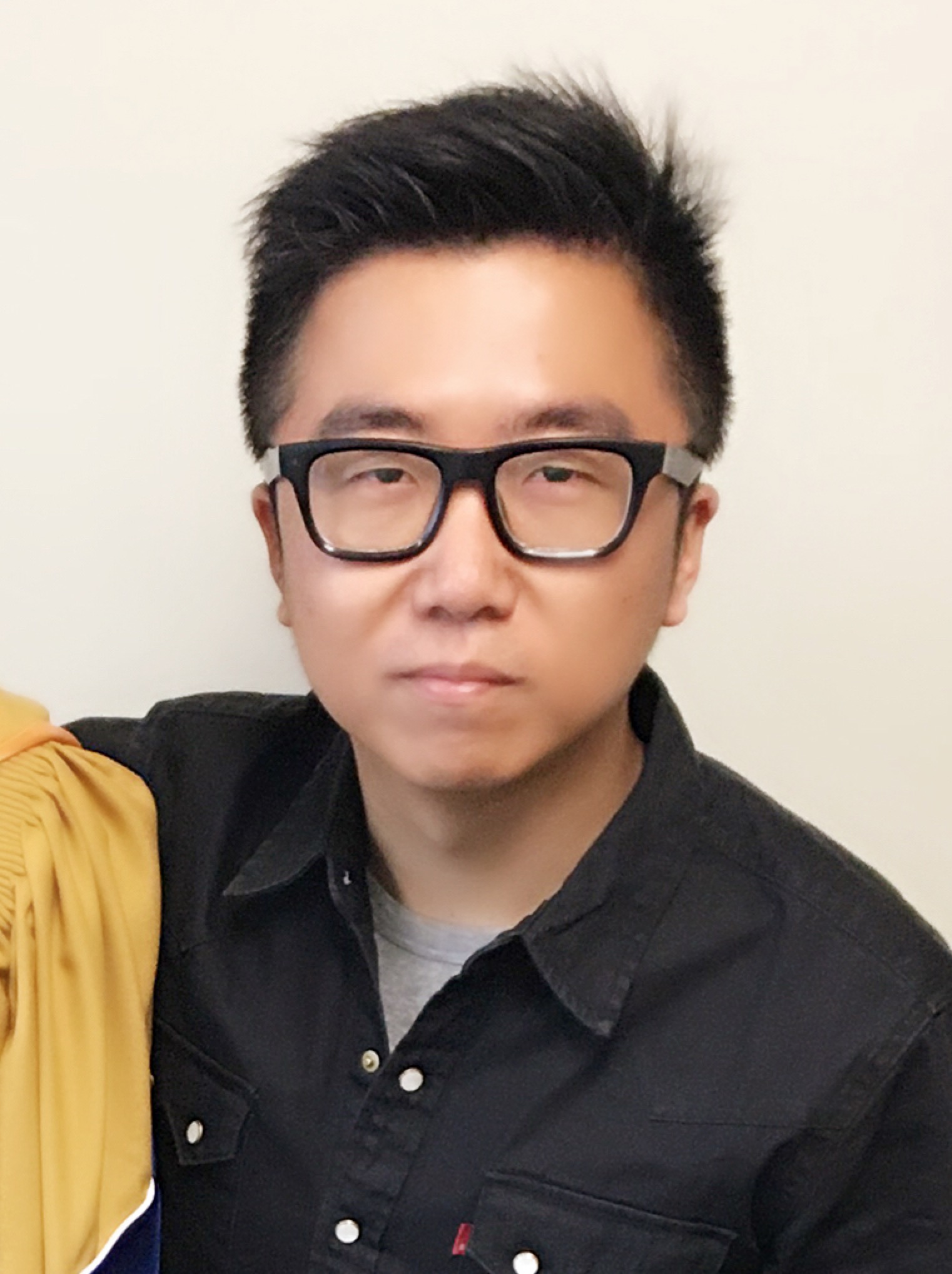
Cheng Zhang is an Associate Professor (with Tenure) in Information Science and a Field Member in Computer Science at Cornell University. He directs the Smart Computer Interfaces for Future Interaction (SciFi) Lab , focusing on integrating human-centered AI with advanced sensing technologies to empower everyday wearables. Ph.D. in Computer Science, Georgia Institute of Technology (2020) M.S. in Software Engineering, Chinese Academy of Sciences B.S. in Software Engineering, Nankai University His research examines how to solicit information on and around the human body to address real-world challenges in interaction, health sensing, and activity recognition. He builds novel sensing systems spanning hardware prototypes, algorithm design (machine learning and physics-based modeling), and high-impact applications in accessibility and health. Article Trends : His recent work includes low-power, minimally intrusive wearables (e.g., EchoForce for muscle activity tracking, Ring-a-Pose for hand poses, SeamFit for smart clothing) using acoustic sensing and machine learning. The 15 most recent articles span 2025–2023, with applications in silent speech, authentication, and pose estimation. Scientific Awards : NSF CAREER Award Ubicomp 10-Year Impact Award Best Paper Honorable Mentions at ISWC’24 and ISWC’23 Advising : Mentored Ph.D. students like Ruidong Zhang (Qualcomm Fellowship recipient) and Ke Li, with research featured in Cornell Chronicle and IEEE Spectrum .
Carl Müller-Crepon is an Assistant Professor at the Department of Government, London School of Economics and Political Science (LSE) . His research focuses on state-building, political ethnicity, conflict, and geographic analysis, particularly in Africa and Europe. He previously held roles at the University of Oxford and ETH Zurich, and has affiliations with Harvard University. His work combines computational methods with geospatial data to study historical and modern dynamics of ethnicity, state capacity, and political violence. Education: PhD in Political Science, ETH Zurich (2019) MA in Political Science, ETH Zurich (2015) BA in International Affairs and Economics, University of St. Gallen (2013) Research Interests: His work explores how administrative borders shape ethnic identities, the impact of colonial policies on development, and the role of nationalism in territorial disputes. He innovates in geospatial data analysis and machine learning, publishing in top journals like the American Political Science Review and International Organization . Key Contributions: Developed the SIDE dataset for fine-grained ethnic demography analysis. Studied the reciprocal relationship between ethnic geographies and political borders since the 19th century. Explored state capacity in Africa using travel time metrics and road networks. Grants & Labs: Leading projects on colonial administrative design and ethnic persistence. Collaborations with institutions like ETH Zurich’s International Conflict Research Group.
Mark Hebblewhite is a Professor in Ungulate Ecology at the Wildlife Biology Program, University of Montana. His research integrates ecological theory with applied wildlife management, focusing on species like elk, wolves, and grizzly bears. Institution: University of Montana Academic Rank: Professor Research Interests span: Wildlife-habitat interactions Predator-prey dynamics Conservation of endangered species Remote sensing for forest and wildlife monitoring Climate change impacts on ecosystems Recent Publications emphasize: Multi-scale movement ecology Remote sensing integration for forest inventory Anthropogenic effects on wildlife behavior Fire ecology and post-disturbance recovery LiDAR and satellite-based vegetation mapping Collaborations include researchers from the University of Alberta, University of British Columbia, Colorado State University, and the Wildlife Conservation Society.
Alistair McCulloch is a Professor in the Learning and Teaching Unit at the University of South Australia, with significant expertise in doctoral education and research supervision. Previously, he served as Professor and Dean of Research and Knowledge Transfer at Edge Hill University near Liverpool for over 12 years, where he was responsible for the development and quality of the university's research degree programs. His primary research interests focus on doctoral education, PhD supervision, and graduate education, with particular attention to the experiences of part-time doctoral students, especially working mothers. McCulloch's work explores sociocultural transitions in doctoral education, the role of oral examinations (vivas), and the concept of serendipity in research. His research demonstrates a consistent concern with the wellbeing of doctoral students and the structural factors that affect their success. McCulloch's publication record shows a clear evolution from early work in political history (notably his 1979 thesis on the 1910 UK General Election) toward contemporary issues in higher education. His recent work (2022-2025) focuses on critical issues in doctoral education including student wellbeing, supervisor-student relationships, and assessment practices. He has been particularly active in examining the experiences of marginalized doctoral student populations and has contributed significantly to the literature on part-time doctoral study. As an academic leader, McCulloch has been involved with the Quality in Postgraduate Research (QPR) conference series held in Adelaide, South Australia, which brings together international scholars interested in doctoral education. His work bridges theoretical perspectives (including Marxist theory on work and alienation) with practical concerns in doctoral program design and implementation.
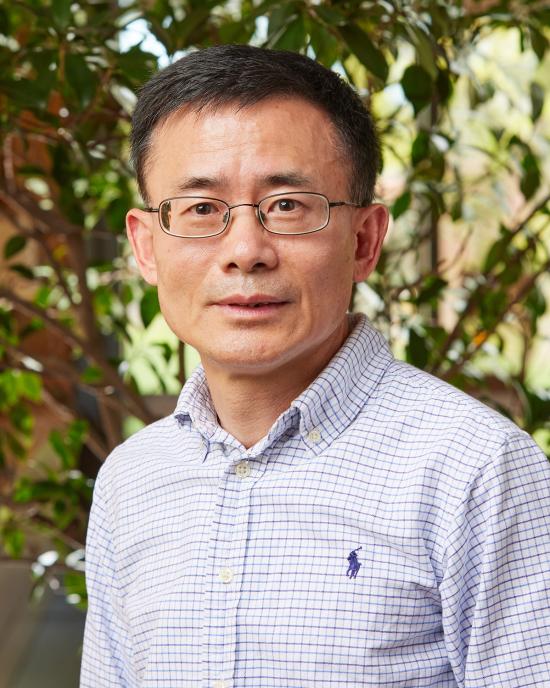
Xuhui Lee is the Sara Shallenberger Brown Professor of Climate Science at Yale University's School of the Environment. He maintains offices at Kroon Hall (195 Prospect Street) and laboratory facilities at the Class of 1954 Environmental Science Center (21 Sachem Street, Room 300) in New Haven, Connecticut. Professor Lee is an active researcher and educator specializing in the interactions between the terrestrial biosphere, atmosphere, and anthropogenic drivers, with particular expertise in boundary-layer meteorology and climate science. He is currently on leave for the Fall 2025 semester but continues to accept doctoral students. Professor Lee received his B.S.C. and M.S.C. from Nanjing Institute of Meteorology in China, followed by a Ph.D. from the University of British Columbia. His academic journey has positioned him as a leading expert in climate science, particularly in the areas of land-atmosphere interactions and urban climate systems. Professor Lee's research focuses on boundary-layer meteorology, micrometeorological instrumentation, remote sensing, and carbon cycle science. His work examines biophysical effects of land use on the climate system, greenhouse gas fluxes in terrestrial environments (including forests, cropland, and lakes), isotopic tracers in carbon dioxide and water vapor cycling, and urban climate adaptation and mitigation strategies. His lab employs diverse methodologies including field observations (eddy covariance, optical isotope instruments, and greenhouse gas analyzers), mathematical models (land surface models, large-eddy simulation, WRF, and earth system models), and environmental remote sensing (satellites and drones). The Lee Lab investigates phenomena across multiple scales from micro (urban greenspaces) to global (land wet-bulb temperature, historical deforestation). Analysis of Professor Lee's recent publications reveals a strong focus on urban climate systems, greenhouse gas emissions, and land-atmosphere interactions. His 2024-2025 work demonstrates increasing application of advanced remote sensing technologies and machine learning approaches to climate problems, with significant attention to urban heat islands, methane and CO2 emissions monitoring, and the impacts of land use change on climate systems. His research shows a clear trajectory toward more sophisticated integration of observational data with modeling approaches to address critical climate challenges. Sara Shallenberger Brown Professor of Climate Science (named professorship) Professor Lee actively mentors doctoral students and has established the Lee Lab as a hub for climate research at Yale. His lab group conducts field observations, mathematical modeling, and remote sensing analysis to advance understanding of climate systems. The lab's research infrastructure supports investigations from micro-scale urban environments to global climate patterns, with particular emphasis on urban heat mitigation and greenhouse gas monitoring. The Lee Lab at Yale, located in Room 300 of the Class of 1954 Environmental Science Center, serves as the primary research facility for Professor Lee's team. The lab deploys an array of research methodologies including field observations with eddy covariance systems and optical isotope instruments, mathematical modeling using land surface models and earth system models, and environmental remote sensing with satellites and drones. The lab's research spans multiple spatial scales from micro (urban greenspaces) to global (land wet-bulb temperature patterns), addressing critical questions about climate change impacts and mitigation strategies.
Nikolaus Rajewsky is a leading Professor at the Max Delbrück Center for Molecular Medicine (MDC) and Charité – Universitätsmedizin Berlin , where he founded and directs the Berlin Institute for Medical Systems Biology (BIMSB) . His lab integrates experimental (biochemistry, molecular biology) and computational (bioinformatics, physics) approaches to study RNA regulation in gene expression , with applications to developmental biology, regeneration, neurodegenerative diseases, and cancer . Using model systems like C. elegans , planaria, and human brain organoids, his team pioneers cutting-edge methods such as MirDeep , DistMap , and FLAM-seq for RNA analysis. His research focuses on single-cell transcriptomics , spatial RNA sequencing , and circular RNA (circRNA) regulation , revealing novel roles for circRNAs like CDR1as in neuropsychiatric disorders. Recent work includes 3D tumor microenvironment mapping and computational modeling of RNA metabolism in diseases. Scientific Awards : Gottfried Wilhelm Leibniz Prize (2012) EMBO Membership (2010) Honorary PhD, Sapienza University of Rome (2014) Berlin Science Award (2009) His team's recent articles highlight breakthroughs in 3D spatial transcriptomics , circRNA degradation mechanisms , and mitochondrial disease modeling using human brain organoids. The lab actively collaborates with clinical partners across Charité and European institutions, driving the LifeTime initiative for cell-based interceptive medicine.
Celia Byrne is an Associate Professor in the Department of Preventive Medicine and Biostatistics at the Uniformed Services University of the Health Sciences (USUHS). She holds a dual appointment in the Department of Epidemiology and Biostatistics. Her academic background includes a Bachelor's in Biology from Earlham College and a PhD/Master's in Epidemiology from UCLA. Her research focuses on environmental exposures, breast cancer epidemiology, and public health disparities. Key projects include investigating polycyclic aromatic hydrocarbons (PAHs) and breast cancer risk, environmental metal impacts on breast density, and the effects of SARS-CoV-2 on long-term health outcomes in military populations. She has led federally funded studies, such as the US Army-funded PAHs and Breast Cancer Risk project and a National Institute of Environmental Health Sciences study on metal/metalloid exposures. Byrne’s work bridges epidemiology and biostatistics, emphasizing methodological rigor in analyzing population-level health data. Her recent studies address post-COVID-19 sequelae, vaccination impacts, and racial disparities in endocrine-disrupting chemical exposure. Collaborations include multidisciplinary teams across military and civilian institutions. Her publications span environmental health, infectious disease epidemiology, and breast cancer research. Notable contributions include analyses of long-COVID symptoms, hybrid immunity mechanisms, and the role of acculturation in breast density among immigrant populations.
Elisa Riedo is a tenured Professor of Chemical and Biomolecular Engineering at New York University (NYU) Tandon School of Engineering, with joint appointments as Professor of Physics in NYU’s College of Arts and Science and as affiliated Professor of Mechanical Engineering at Tandon. She serves as Director of Faculty Development at NYU Tandon and has held prior tenured positions at Georgia Tech (2003–2015) and CUNY ASRC (2015–2018). Her academic career spans over two decades, with a Ph.D. in Physics from the University of Milano (2000) and postdoctoral work at EPFL. Her research focuses on nanotechnology , graphene and 2D materials , and thermal scanning probe lithography (tSPL) , with applications in biomedical diagnostics quantum electronics electromagnetic interference shielding mechanical reinforcement of materials She pioneered tSPL for sustainable nanofabrication and discovered diamene—a single-layer diamond structure from graphene under pressure. Her recent work involves transparent infrared electrodes using silver nanowires (2025) and self-organized graphene stacking domains for quantum technologies (2024). She has secured major grants from National Science Foundation , Department of Defense , and Army Research Office . Scientific honors include: 2023 NYU Tandon Excellence in Research Award 2013 American Physical Society Fellow 2005 CREA Innovation Award Membership in the Academy of Europe (2023) She contributes to editorial boards for journals like 2D Materials and Applications and advises companies such as Mirimus Inc. and SwissLitho AG .
Silvia Arber holds a joint appointment as Full Professor for Neurobiology/Cell Biology at the Biozentrum, University of Basel, and serves as Senior Group Leader at the Friedrich Miescher Institute (FMI) in Basel, Switzerland. Her laboratory investigates the organization, function, and development of neuronal circuits controlling motor behavior, with a particular focus on how these circuits enable precise movement control. Arber obtained her PhD in 1996 from the Friedrich Miescher Institute under Pico Caroni, followed by postdoctoral training with Thomas Jessell at Columbia University (1996-2000), where she studied transcription factors in spinal cord neuronal differentiation. Her educational background includes Biology II studies at the Biozentrum of the University of Basel with graduation in Cell Biology (1987), a diploma thesis at the FMI (1990), and graduate work at the FMI (1992). Her research program centers on elucidating how neuronal circuits orchestrate accurate motor behavior in response to sensory cues and voluntary movement initiation. Using mouse as a model system, her laboratory employs multi-faceted approaches including advanced mouse genetics, viral technologies for transsynaptic circuit tracing, optogenetics and pharmacogenetics for functional manipulation, quantitative behavioral analysis, electrophysiology, and gene expression profiling. Her work has revealed precise synaptic interactions within dedicated motor circuit modules throughout the nervous system and how these impact function, with implications for understanding diseases causing motor deficits and spinal cord injury. Analysis of Arber's publication record shows a consistent focus on motor circuit organization, with particular emphasis on transcriptional control mechanisms, circuit connectivity mapping, and the relationship between developmental processes and functional circuit organization. Her work bridges molecular, cellular, and systems neuroscience, providing fundamental insights into how the nervous system controls movement. The Brain Prize (2022) Elected to the National Academy of Sciences of the United States (2020) Physiological Society Annual Review Prize Lecture (2019) Pradel Research Award (2018) W. Alden Spencer Award (2018) Louis-Jeantet Prize for Medicine (2017) ERC Advanced Grant (2010-2015) EMBO Member (2005) EMBO Young Investigator Award (2001) While specific students are not listed in the provided materials, Arber's laboratory has received significant research funding including an ERC Advanced Grant (2010-2015) and multiple prestigious awards supporting her research program. Her laboratory at the Biozentrum (Room 11.038) collaborates closely with the Friedrich Miescher Institute, where she serves as Senior Group Leader. The research group employs cutting-edge technologies for neural circuit analysis and has contributed fundamental insights into motor circuit organization, with implications for understanding and potentially treating movement disorders and spinal cord injuries.
Kenneth BENOIT is the Dean and Full-time Professor of Computational Social Science at the School of Social Sciences, Singapore Management University (SMU). Previously, he served as Director of the Data Science Institute at the London School of Economics (LSE) from 2020 to 2024. He holds a PhD in Government from Harvard University, specializing in statistical methodology. His research focuses on computational methods for analyzing textual data, particularly political texts and social media. Key areas include text-as-data techniques, natural language processing, and the application of large language models in social sciences. He has pioneered methods combining machine learning with crowd-sourced coding to improve the accuracy of political text analysis. Ken’s work emphasizes the analysis of big data, electoral systems, and comparative party competition, with notable contributions to the European Parliament and policy positioning studies. His expertise extends to software development, including R packages like quanteda and spacyr , which are widely used in text analysis. His articles and publications span methodological innovations, policy analysis, and interdisciplinary applications. Notable projects include scaling political party positions and examining the role of AI in public policy. He is actively involved in academic leadership, having served on editorial boards and organized collaborative research initiatives like the CIVICA research hackathon. Beyond SMU, he maintains professional profiles on LinkedIn and GitHub , reflecting his commitment to open-source tools and scholarly collaboration.
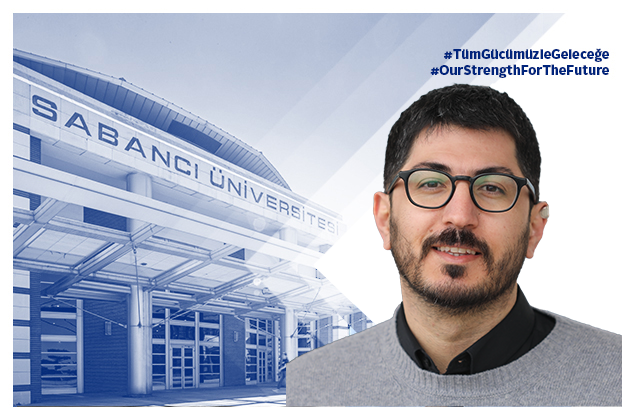
Dr. Morteza Ghorbani is a researcher and faculty member at Sabancı University's Faculty of Engineering and Natural Sciences (FENS), specializing in fluid mechanics and environmental engineering. He leads the AquaCav project, a collaborative effort with Oxford Brookes University, focused on developing sustainable water treatment solutions using hydrodynamic and acoustic cavitation. His research addresses global challenges such as PFAS pollution and wastewater management, with applications in biomedical devices and energy-efficient technologies. Key collaborations include projects funded by the International Science Partnership Fund (ISPF), leveraging his expertise in microfluidic systems and cavitation dynamics. Dr. Ghorbani's work combines experimental and numerical methods to optimize cavitation-based processes for environmental and biomedical applications. His contributions span from fundamental fluid dynamics studies to applied technologies like flexible cystoscopes and clot-on-a-chip platforms. Scientific achievements include the ISPF Research Collaboration Grant (2024) and advancements in PFAS removal, graphene exfoliation, and microalgae cultivation. His research group at Sabancı University explores interdisciplinary solutions at the intersection of engineering, nanotechnology, and sustainability.
Dr. Roger Moser is a Senior Lecturer at Macquarie University's Department of Management Innovation, Strategy and Entrepreneurship Research Centre. He also holds adjunct roles at the Indian Institute of Management Udaipur (since 2012) and the University of St. Gallen (since 2012). His research focuses on Decision Intelligence, Strategic Management, and International Management, particularly exploring how executives leverage data (small/big) to enhance decision-making frameworks. He has over 99 publications since 2005, with notable works in journals like Journal of Service Research and Journal of Business Research . Dr. Moser holds a Dr. rer. pol. from EBS European Business School (2006) and a lic. oec. HSG (MSc) from the University of St. Gallen (2003). His research interests include Decision Model Innovation, Social Capital in emerging markets, and strategic alignment in supply chains. He has conducted impactful studies on access-based services in India, supplier integration in China's automotive sector, and humanitarian logistics using satellite data. His recent work emphasizes technology integration in B2B value creation, decision frameworks for uncertainty reduction (e.g., in agriculture and disaster management), and AI-driven expert systems. He has presented at global forums on topics like digital transformation and decision intelligence applications, contributing to both academic and practitioner discourse. External Roles: Adjunct Professor of Business Policy, Indian Institute of Management Udaipur Titularprofessor / Permanent Lecturer, University of St. Gallen Notable impacts include a project providing clean drinking water in India through access-based solutions, recognized for quality-of-life and societal contributions. His research has been cited over 1,666 times with an h-index of 21.
Serge CARDINAL is a Full Professor at the Department of Art History, Cinema, and Audiovisual Media at Université de Montréal. His research focuses on the intersections of sound, music, and cinema, blending philosophical inquiry with creative practice. He leads projects exploring musicality in film, interdisciplinary analysis methods, and the legacy of cinema through installations and exhibitions. Education: The text does not explicitly detail his formal education, but his extensive academic output and professorial role suggest advanced degrees in cinema studies and related fields. Research Interests : Musicality in film, research-creation, Deleuzean philosophy applied to cinema, actor studies, and interdisciplinary audiovisual practices. His work bridges theory and practice, using soundscapes, installations, and performances to analyze cinematic material. Recent Projects : Includes installations like Tombeau de Gilles Groulx (2019) and The Political Glenn Gould (2024), as well as collaborative research networks like the OICRM. He has explored digital tools for cinematic analysis (Numalyse, 2025) and sound transcription in intermedia contexts (Studio Glenn Gould, 2021). Grants & Funding : Recipient of grants from FRQSC and SSHRC for projects on sound in Quebec cinema, research-creation methodologies, and interdisciplinary music-cinema studies. Leads teams in strategic research programs and individual creation grants. Labs/Teams : Member of the Observatoire interdisciplinaire de création et de recherche en musique (OICRM) and the research-creation lab La création sonore: cinéma, arts médiatiques, arts du son .