Xavier Serra is a Full Professor at the Department of Engineering at Universitat Pompeu Fabra (UPF), Barcelona. He is the founder and director of the Music Technology Group (MTG), and leads the UPF-BMAT Chair on AI and Music. He also coordinates the Master in Sound and Music Computing and serves as President of the Phonos Foundation. His research focuses on audio signal processing, sound and music computing, and computational musicology, emphasizing open science and open innovation. Education: BSc in Biology, University of Barcelona (1981) Master in Music, Florida State University (1983) PhD in Computer Music, Stanford University (1989) Research Interests: Audio Signal Processing Data-Driven and Knowledge-Driven Methodologies Music Information Retrieval Cultural Music Analysis (e.g., Carnatic/Turkish/Andalusian Music) Music Education Technology Notable Projects: CompMusic (ERC Advanced Grant, 2010-2017): Multicultural computational music analysis Open datasets: Freesound, Saraga, FSD50K Technologies: Reactable, Vocaloid, Essentia API Recent Trends in Articles: Focus on AI-driven audio processing (neural fingerprints, generative models), cross-cultural music analysis, and explainable music difficulty estimation. Awards: ERC Advanced Grant (2010) for CompMusic Project. Labs/Teams: Director of MTG, Phonos Foundation, and UPF-BMAT Chair. Active in open-source projects and international collaborations.
J. Edward Colgate is the Walter P. Murphy Professor of Mechanical Engineering and Director of the Human Augmentation via Dexterity (HAND) Engineering Research Center at Northwestern University's McCormick School of Engineering. He also holds the title of Breed Senior Professor of Design. His academic career includes leadership roles as founding co-Director of the Segal Design Institute and director of the Master of Science in Engineering Design and Innovation program. Colgate earned his Ph.D. (1988), S.M. (1986), and S.B. in Physics (1983) from the Massachusetts Institute of Technology. Colgate's research focuses on physical human-robot interaction with specialization in surface haptic interactive design and electroadhesion technology development. His work spans three interconnected domains: haptic interfaces (including wearable haptic arrays and Touchbot systems), robot dexterity through Shape-Based Remote Manipulation (SBRM) for overcoming communication delays, and high-speed electroadhesive actuators. The Northwestern Haptics Lab under his direction aims to create realistic virtual environments by merging these research vectors. His publications demonstrate consistent focus on tactile perception mechanisms, electroadhesion applications, and haptic rendering algorithms. Recent work explores texture playback fidelity, wearable electroadhesive arrays, robotic manipulation, and human-swarm control systems, reflecting interdisciplinary integration of mechanical engineering, materials science, and neuroscience principles. Awards: Elected to National Academy of Engineering (2021) for contributions to haptics, human-robot systems, and design education Inducted into National Academy of Inventors (2015) Educational initiatives include developing Northwestern's Design Thinking and Communication curriculum, establishing the Certificate in Engineering Design, and creating the Master of Science in Engineering Design and Innovation. He teaches ME 390: Introduction to System Dynamics using a flipped classroom model. Colgate directs the Northwestern Haptics Lab within the Center for Robotics and Biosystems, focusing on fundamental haptics research with applications in virtual reality, prosthetics, and human-assistive devices. The lab maintains active industry partnerships for technology transfer of haptic innovations.
David Latulippe is a Professor in the Department of Chemical Engineering at McMaster University. He joined McMaster in 2012 after postdoctoral work at Cornell University and a PhD at Penn State University, focusing on membrane filtration for DNA purification. His industrial experience includes roles at ZENON Environmental (now GE Water) in hollow-fiber membrane design for water treatment. Research interests include Membrane science and technology Bioprocessing of therapeutic viruses Microscale systems for biological applications Environmental engineering solutions for water treatment Current projects involve collaborations with industry partners like Ceapro and Aevitas, and the development of a biomanufacturing automation lab with Sartorius. Recent publications highlight advancements in Nanofiltration and microfiltration for viral vectors Conductive membranes for electrochemical applications Microfluidic systems for DNA analysis Environmental monitoring of biocides and microplastics Scientific recognition includes the Young Membrane Scientist Award (2014). Teaching activities focus on Fluid Mechanics (CHEMENG 2O04) and Industrial Separation Processes (CHEMENG 4M03).
Alla Sheffer is a Professor and Associate Head of Faculty Affairs in the Department of Computer Science at the University of British Columbia, Faculty of Science. She is affiliated with multiple research centers including CAIDA (Centre for Artificial Intelligence Decision-making and Action), the Institute of Applied Mathematics, and ICICS (Institute for Computing, Information and Cognitive Systems). B.Sc., Hebrew University, Jerusalem (1991) M.Sc., Hebrew University, Jerusalem (1995) Ph.D., Hebrew University, Jerusalem (1999) Postdoctoral Research Associate, University of Illinois, Urbana-Champaign (1999-2001) Assistant Professor, Technion, Israel (2001-2003) Assistant Professor, University of British Columbia (2003-2008) Associate Professor, University of British Columbia (2008-present) Professor Sheffer's research focuses on geometry processing, addressing algorithmic challenges in digital shape modeling and manipulation. Her work primarily deals with discrete geometry representations, specifically meshes (polygonal model representations), with applications in computer graphics and computer-aided engineering. She utilizes tools from computational and differential geometry, discrete mathematics, and graph theory to generate, manipulate, and edit discrete geometric models. Her research spans virtual and augmented reality, visual computing, and 3D modeling, with significant contributions to sketch-based modeling, mesh processing, and cloth simulation. The 15 most recent publications reveal a consistent research trajectory in geometry processing, with recent work focusing on vector sketch processing, VR drawing tools, and advanced mesh manipulation techniques. Her work demonstrates a strong connection between human perception and computational methods, particularly in the interpretation of freehand sketches and the generation of perceptually-accurate geometric representations. The recurring themes across her publications include flowlines, curve networks, mesh parameterization, and the application of perceptual studies to improve algorithmic outputs. Eurographics Fellow ACM Fellow IEEE Fellow Royal Society of Canada Fellow SIGGRAPH Academy Member UBC Killam Research Prize NSERC Discovery Accelerator Supplement IBM Faculty Award Professor Sheffer has supervised numerous doctoral and master's students, with recent theses focusing on geometric mesh processing, vector sketch interpretation, VR drawing tools, and garment modeling. Her research group maintains strong connections with industry through various partnerships and has received substantial grant funding to support their innovative work in geometry processing and computer graphics. She teaches courses in computer graphics, geometric modeling, and video game programming, contributing significantly to both undergraduate and graduate education in computer science.
Eloi Moliner Juanpere is a Doctoral Researcher and Doctoral Student at Aalto University's School of Electrical Engineering, Department of Information and Communications Engineering. His research focuses on audio signal processing, leveraging diffusion-based generative models for tasks such as dereverberation, timbre transfer, and audio restoration. His work aligns with the UN Sustainable Development Goals through innovative contributions to audio technology. Proficient in deep learning and inverse problem solving, Moliner Juanpere has published extensively in top conferences like IEEE ICASSP and DAFx, emphasizing unsupervised methods for audio enhancement. Recent publications highlight advancements in diffusion models for room acoustics estimation blind bandwidth extension neural audio effects modeling timbre transfer in musical signals Scientific recognition includes Best Student Paper Award (1st place) at IWAENC 2024 Best Student Paper Award at ICASSP 2023 Third Best Paper Award at DAFx-22 He contributes to collaborative projects such as NordicSMC (2018–2023) and SA Profi 6 (2021–2027), focusing on neural networks and audio signal enhancement. His research also involves creating datasets like the Magnetic Tape Recorder Dataset (2023) for audio restoration applications.
Mara Mills is an Associate Professor and Ph.D. Director in the Department of Media, Culture, and Communication at New York University’s Steinhardt School. She directs NYU’s Center for Disability Studies and co-edits the journal *Catalyst: Feminism, Theory, Technoscience*. Her interdisciplinary work bridges disability studies, STS, and sound studies, focusing on the histories of assistive technologies and digital media. Mills holds degrees in Biology (BA/MA), Literature (BA), Education (MA), and a PhD in History of Science from Harvard University. Her research explores disability and media through projects funded by the NSF, NEH, and Mellon Foundation. Notable works include *How to be Disabled in a Pandemic* (2025) and *Crip Authorship* (2023). Awards include the IEEE History Prize and Walter Benjamin Award. Mills teaches courses like *Disability, Technology, and Media*, emphasizing accessibility frameworks. She coordinates public humanities initiatives and has advised on AI ethics, cochlear implants, and ventilator allocation protocols. Key grants include NSF support for pandemic disability studies and NEH funding for cochlear implant research. Her public writing appears in *Artforum*, *Aperture*, and *Public Books*. Upcoming projects include a book on time-stretching technology with Jonathan Sterne and a history of information theory.
Prof. Dr.-Ing. David E. Rival is a full Professor at the Institute of Fluid Mechanics within the Faculty of Mechanical Engineering at Technische Universität Braunschweig. His research spans interdisciplinary domains at the intersection of experimental fluid dynamics, data assimilation, network science, and bio-inspiration, with applications in renewable energy systems and bio-mimetic engineering. Former Associate Professor at Queen’s University, Canada Doctoral work on dragonfly flight aerodynamics at TU Darmstadt Alexander von Humboldt research fellowship recipient (2020) Postdoctoral associate at MIT studying shape morphing in nature Research chair at University of Calgary on atmospheric sensing His work focuses on unsteady flow phenomena, bio-inspired design, and advanced measurement techniques. Key projects include: Co-chairing NATO AVT task group on flow separation International collaborations with AFOSR, NATO, and ONR Development of cost-effective flow-tracking sensors for natural environments Investigations into shear-thinning suspension dynamics and vortex ring behavior Recent publications demonstrate a strong emphasis on: Large-scale particle tracking with natural light and UAVs Machine learning for sparse data reconstruction in fluid flows Soft coastal protection methods and ecohydraulics Advanced sensing techniques for atmospheric and industrial applications Scientific Awards: 2020: Alexander von Humboldt Research Fellowship Notable research achievements include textbook authorship on Biological and Bio-Inspired Fluid Dynamics (Springer) and media features in The Nature of Things (David Suzuki) and Discovery Channel’s Daily Planet .
Hung Le is an Associate Professor in the College of Information & Computer Sciences at the University of Massachusetts Amherst. He leads research in theoretical computer science with a focus on graph algorithms, spanners, and metric embeddings. He is a member of the UMass Theory Group and serves as Chair of PhD Admissions. PhD in Computer Science, Oregon State University, 2018 BS in Computer Science, Hanoi University of Science and Technology Hung Le's research centers on algorithm design for graph problems, especially understanding structural properties of graphs in theoretical settings. His work spans approximation algorithms, spanners, fault tolerance, metric embeddings, and computational geometry. He has made significant contributions to light spanners, tree covers, and distance oracles, particularly in planar and doubling metrics. His recent publications show a strong trend in designing efficient, sparse, and light structures for geometric and minor-free graphs, with a focus on optimal tradeoffs and lower bounds. Key themes include locality-sensitive orderings, shortcut partitions, and tree covers with constant stretch and size. NSF CAREER Award Google Research Scholar Program (2024) PIMS Postdoctoral Fellowship Hung Le has advised numerous students and postdocs, including An La and Cuong Than, whose work has led to STOC and FOCS publications. His research is funded by multiple NSF grants (CCF-2121952, CCF-2237288, CCF-2517033) and a Google Research Scholar Award. He has served on program committees (e.g., WADS 2025) and co-chaired SOSA 2021. He is actively involved in the theoretical computer science community, maintains a technical blog 'Rambling on Graphs', and contributes to open problems in graph theory and algorithm design.
Paul Théberge is a Professor at Carleton University, cross-appointed to the Institute for Comparative Studies in Literature, Art and Culture and the School for Studies in Art and Culture (Music). He teaches graduate courses in Cultural Mediations (technologies of culture), Film Studies (sound in visual media), and Music (sound studies), reflecting his interdisciplinary academic home within Ottawa's major research institution. His research interrogates the material and cultural dimensions of sound technologies, with core expertise in music-technology-culture intersections, internet-mediated musical practices, and sonic applications in film/television. Théberge's scholarship bridges musicology, media studies, and science and technology studies, examining how recording technologies reshape creative practice and auditory experience across historical periods from analog tape to digital streaming platforms. Analysis of his 15 most recent publications reveals persistent engagement with sound's materiality—from multichannel audio histories to the embodied nature of listening—and consistent exploration of technological transitions, particularly the internet's disruption of traditional music production/distribution models. His work demonstrates deep methodological versatility spanning archival research, ethnographic observation, and creative composition. Scientific recognition includes: International Association for the Study of Popular Music (US branch, 1998) Society for Ethnomusicology (2000) While the source text doesn't specify current advising activities, his extensive editorial work (e.g., co-editing Living Stereo ) and composition output suggest significant mentorship through collaborative projects. His research has been supported through Canada Research Chair funding and industry partnerships like Sony Classical International.
Claire Prada is a CNRS Research Director at the Institut Langevin , specializing in laser ultrasound , guided wave propagation , and time-reversal acoustics . Her work bridges fundamental wave physics and applied nondestructive testing. Research Pillars : Zero-group-velocity (ZGV) Lamb modes for material characterization Anisotropic wave propagation and negative refraction phenomena Time-reversal operator decomposition for structural monitoring Passive acoustic defect localization with ambient noise Technological Innovations : Fourier-domain reconstruction algorithms for 3D imaging Single-pixel photoacoustic microscopy Adaptive projection methods for rib-cage ultrasound focusing Wave Physics Discoveries : Documentation of power flux skewing in anisotropic plates Identification of beating resonance patterns in elastic media Experimental validation of negative reflection in chaotic waveguides Medical & Industrial Applications : Quantitative elastography for tissue stiffness measurement Jet engine blade damage detection Cortical bone femoral neck assessment Thin layer thickness measurement via ZGV resonance shifts
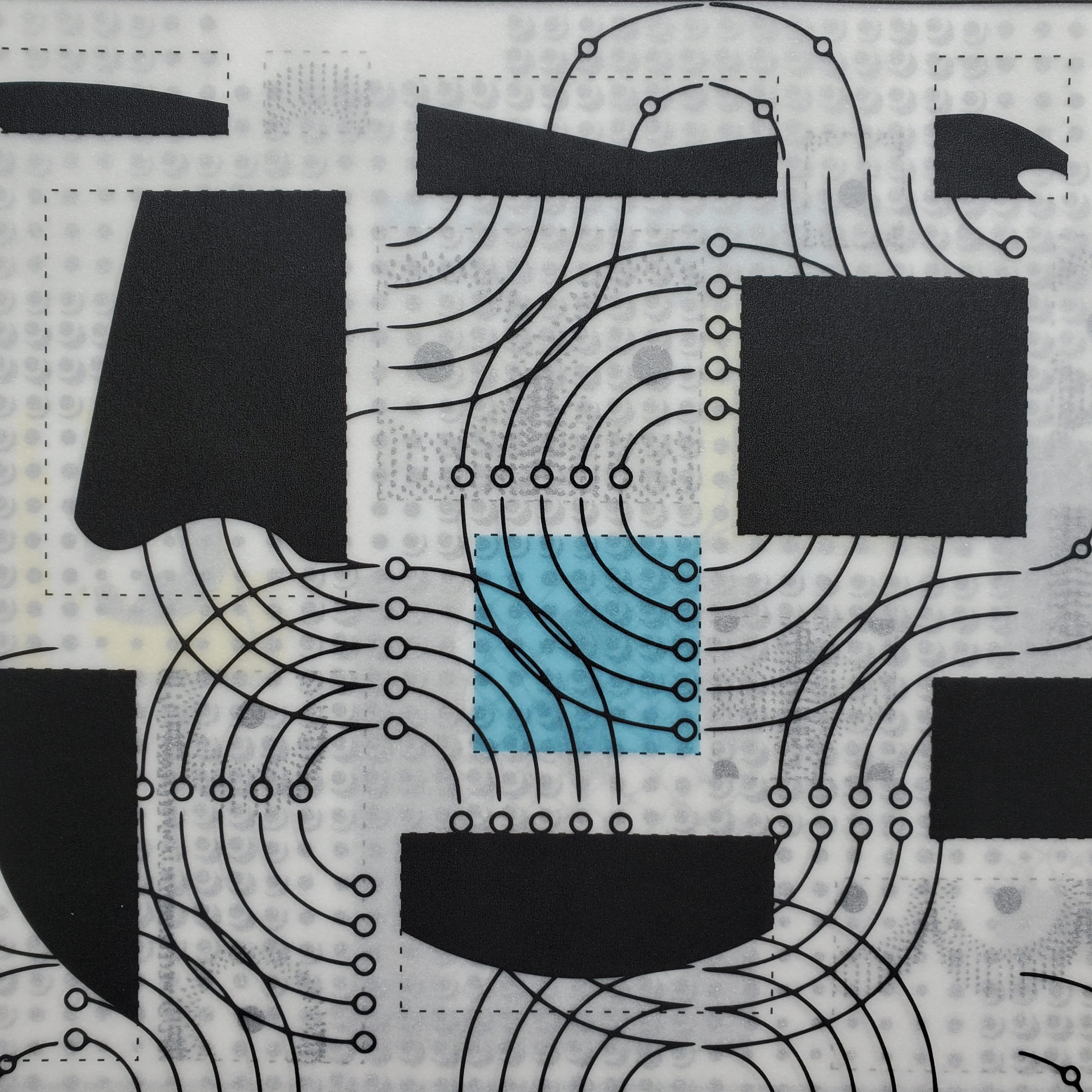
Veronica Graham is a new media artist and printmaker serving as Lecturer in Stanford University's Department of Art & Art History. Based in Oakland and Portland, she founded the design studio Most Ancient in 2010, specializing in experimental comics and exploration games. Her interdisciplinary practice bridges digital media and analog print publishing through poetic world-building that confronts contemporary environmental and social challenges. Her research centers on virtual reality narratives, climate-focused printmaking, and surrealist comics that explore internalized fictions. Key projects include the VR experience Diatribes (2024), examining fears about global warming through a haunted house framework, and the Global Warming Agitprop Posters series (2020-present) using phosphorescent materials to visualize ecological instability. She employs techniques like Wang tile systems for pattern generation and split fountain printing to stretch technical boundaries. 2025 Writer-in-Residence, Writing Space, Chicago 2024 IndieCade Impact Award Nominee for Diatribes 2022 Oculus Launch Pad Grant Recipient 2019 Best American Comics Notable Comics selection 2017 Artist’s Book Residency Grant, Women’s Studio Workshop Graham’s work appears in MoMA, NYPL, and SFMOMA collections. Her VR projects have been presented at Kala Art Institute, Printed Matter (NYC), and Sónar+D. As an educator, she lectures on virtual reality at Stanford and has conducted workshops at institutions including Tufts University and UC Berkeley. Her studio Most Ancient functions as both creative laboratory and publishing platform, supporting collaborative projects like Real Milk (2023) which examines agricultural automation through translucent book design.
Professor Mark Thompson is an Associate Professor in Engineering Science at the University of Oxford and a Tutor/Fellow at Wadham College. He holds an MEng in Engineering and Materials Science (Oxford, 1997) and a PhD in Biomechanics from the University of London (2001). His research focuses on biomechanical engineering with emphasis on tissue repair, prosthetic design, and trauma modeling. Key projects include the OxVent ventilator and in vitro microvasculature systems for traumatic injury studies. His work bridges clinical and engineering challenges, addressing issues like prosthetic maintenance, musculoskeletal modeling, and biomaterials for regenerative medicine. Thompson collaborates with institutions like the Institute of Biomedical Engineering and has contributed to open-source frameworks for motion capture analysis. Current research trends involve mechanobiology of soft tissues and bioprinting for trauma research. Labs/Teams: Affiliated with the Institute of Biomedical Engineering and Oxford e-Research Centre. His work aligns with translational medicine and emergency medical device development. Future directions include optimizing 3D-printed bio-artificial tissues and advancing tactile feedback systems for prosthetics.
Sam Pluta is Associate Professor and Chair of Music, Technology & Media at the Peabody Institute of Johns Hopkins University. He is a composer, sound artist, and performer specializing in computer music and live electronics, with a focus on integrating reactive digital sound environments into instrumental and improvisational contexts. His research and artistic work centers on the development of interactive musical systems that enable shared agency between human performers and computers. His expertise spans composition, software engineering (particularly in SuperCollider, C++, Python, and Rust), real-time neural network inference for audio, and extreme time-stretching techniques. He has developed custom software, VST plugins, and SuperCollider UGens for oversampling oscillators and live performance. Pluta’s performances and compositions have been presented at major international venues and festivals including the Lucerne Festival, Moers Festival, Donaueschingen Festival, Bimhuis, Warsaw Autumn, and The Vortex. He has collaborated with leading figures in new music and improvisation such as George Lewis, Peter Evans, Ikue Mori, Craig Taborn, and Evan Parker, and is Technical Director and principal electronics performer for the Wet Ink Ensemble. He has previously taught at the University of Chicago, Bennington College, Manhattan School of Music, and The Walden School. His work bridges the domains of composition, performance, software development, and audio engineering, positioning him at the forefront of contemporary computer music practice.
Lena Ting is Professor and McCamish Foundation Distinguished Chair in Biomedical Engineering at Georgia Institute of Technology's College of Engineering, Coulter Department of Biomedical Engineering, with a secondary appointment in Rehabilitation Medicine at Emory University. She co-directs the Georgia Tech and Emory Neural Engineering Center and leads the Neuromechanics Lab. Her research spans Neuromechanics of movement control Rehabilitation engineering for Parkinson's disease and stroke Computational modeling of sensorimotor systems Human-robot interaction for gait rehabilitation Cortical correlates of balance control She bridges engineering, neuroscience, and physiology to address movement impairments in aging, cerebral palsy, and neurological disorders. Her 15 most recent publications (2024-2025) reveal strong focus on Cortical biomarkers for balance dysfunction Individual-specific gait signatures Neuromechanical modeling of spasticity Non-mechanical human-robot interaction Computational frameworks for sensorimotor control with significant applications in Parkinson's disease, stroke rehabilitation, and cerebral palsy. Scientific recognition includes: McCamish Foundation Distinguished Chair Blue Sky Award for Parkinson's research She directs the Neuromechanics Lab which develops robotic devices, computational models, and AI-driven approaches to personalize rehabilitation. Current projects include physiologically-inspired exoskeleton controllers, gait rehabilitation predictors for stroke survivors, and precise clinical assessment methods. She leads multiple grants including a $15M NSF grant on muscle dynamics and Parkinson's disease research.
Dr. Qiang Zhang is a Researcher affiliated with the Institute of Biomechanics at ETH Zürich, specifically within the Professorship for Movement Biomechanics. His work focuses on biomechanical analysis of human movement, with particular emphasis on musculoskeletal health, sports injury prevention, and rehabilitation engineering. His research integrates advanced sensor technologies, computational modeling, and clinical applications. Research interests include gait analysis in aging populations, muscle synergies in locomotion, ACL injury mechanisms in athletes, and wearable sensor systems for real-time musculoskeletal monitoring. He has contributed to studies on rehabilitation protocols for stroke patients and biomechanical evaluations of orthotic devices. His interdisciplinary approach bridges biomechanics, biomedical engineering, and clinical practice. Publications highlight innovations in strain sensor design, fatigue effects on athletic performance, and systematic reviews of ligament biomechanics. While no formal awards are listed, his work reflects sustained engagement with cutting-edge biomechanical research. Dr. Zhang collaborates with sports medicine and orthopedic teams at ETH, contributing to advancements in injury prevention and rehabilitation technologies.