Kyle Hocking is a Research Assistant Professor of Vascular Surgery and Biomedical Engineering at Vanderbilt University's School of Engineering. His work focuses on vascular physiology, hemodynamic monitoring, and biomedical device development, particularly in vein grafts and non-invasive venous analysis (NIVA). His research integrates nanotechnology for drug delivery and explores the impact of mechanical forces on vascular tissue. Collaborations include studies on endothelial dysfunction, surgical techniques, and clinical outcomes in heart failure and trauma. Key contributions include developing NIVA for fluid status assessment and elucidating mechanisms of vein graft failure. Recent projects emphasize clinical translation of NIVA technology for heart failure, hemorrhage management, and pediatric neurosurgery. His work bridges engineering and medicine, addressing challenges in vascular surgery, critical care, and diagnostic innovation. Collaborators include leading experts in cardiovascular biology, neurosurgery, and biomedical engineering. His research portfolio spans over 50 peer-reviewed articles, with emphasis on venous waveform analysis, nanopolyplex drug delivery systems, and vascular biology. Current efforts focus on improving surgical outcomes through advanced biomaterials and real-time monitoring systems.
Vincenzo Gulisano is an Associate Professor in the Department of Computer Science and Engineering at Chalmers University of Technology. He holds a Ph.D. from the Technical University of Madrid and master's and bachelor's degrees from the University of Trieste. His research focuses on distributed systems, data streaming, and concurrent data structures with applications in cyber-physical systems such as Advanced Metering Infrastructures (AMI) and DDoS detection. He leads the Master Program in Computer Systems and Networks (MPCSN) and teaches courses like Operating Systems (EDA092/DIT400). His work emphasizes scalable and fault-tolerant stream processing frameworks like STRETCH and Erebus, which address challenges in real-time analytics and elastic resource management. Gulisano collaborates on projects integrating machine learning (e.g., IP-LSH-DBSCAN for parallel clustering) and cybersecurity (e.g., Metis for AMI intrusion detection). He has published widely in top-tier conferences like VLDB, Euro-Par, and IEEE TPDS, with contributions to stream synchronization, scheduling policies, and energy-sharing communities. Gulisano’s research bridges theoretical foundations and practical implementations, addressing scalability, determinism, and explainability in data-driven systems. His work often involves interdisciplinary collaborations, combining algorithms, hardware, and middleware design for efficient data processing in edge and cloud environments.
Dr. André Ferreira Castro is a Researcher at the Cuntz Lab affiliated with the Technical University of Munich . His work focuses on modeling neuronal development, particularly dendritic arborization and synaptic organization, using advanced computational techniques and genetic manipulations in Drosophila melanogaster . He designs experiments to quantify structural changes in neurons during development and plasticity, aiming to mechanistically understand the brain's functional architecture. His recent research explores themes such as dendritic growth models synaptic density conservation invariant network principles emotion regulation via AI developmental circuit assembly , reflecting a blend of computational neuroscience, developmental biology, and structural modeling. The work spans from foundational studies in invertebrate models to broader implications for brain architecture across species. He can be contacted via email at acastro@mrc-lmb.cam.ac.uk for collaborations or inquiries at TUM.
Dr. Paul Newland is a Senior Lecturer and Associate Head of Department – Postgraduate (Composition) at Guildhall School of Music, specializing in acoustic, interdisciplinary, and site-specific composition techniques. He has directed the Department's Masters programme since 2012. His educational background includes: Composition studies under Anthony Gilbert and Sir Harrison Birtwistle at Royal Northern College of Music Michael Finnissy at Royal Academy of Music Doctorate under Simon Holt at Royal Holloway University (2005) Paul's research explores: Innovative acoustic composition through material sparsity and amplification Interdisciplinary collaborations with dance and visual arts Japanese cultural influence in Western contemporary composition Temporal manipulation techniques in sound patterning Open score experimentation and performance interpretation Recent outputs demonstrate focus on: Fragment-based composition (2023-2024 works) Vocal ensemble integration (2023 spring snow) Electroacoustic explorations (2022 runaway horses) Duration-based spatial works (2018 locus: An assembly) Key awards: Paul Hamlyn Award for Composition (1993) Japanese Government Monbusho Scholarship (1999-2002) Professional engagements include: Performances by BBC Symphony Orchestra, London Sinfonietta, and Arditti Quartet International festivals: Huddersfield Contemporary Music Festival, Ultima (Norway), Gaudeamus (Holland) Co-founder of [rout] ensemble and exquisite corpse guitar duo Collaboration with choreographer Marina Collard on 11+ dance works Recordings released by NMC, Divine Art, and BML labels
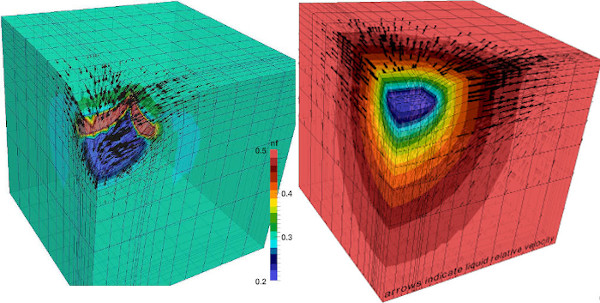
Dr. Dorival Pedroso is a Senior Lecturer at the School of Civil Engineering, The University of Queensland , Australia. His expertise lies in numerical and computational methods for solid mechanics, porous media modeling, and geotechnical engineering. Research spans porous media dynamics , molecular dynamics , and evolutionary algorithms . Recipient of the Argyris Lecture Award (2016) , recognizing contributions to finite element method (FEM) for modeling porous media. Developed open-source software libraries (Gosl, Russell) for scientific computing and optimization. Research Themes include: Computational mechanics for unsaturated soils and granular materials . Development of Hencky bar-grid models and isogeometric shell formulations . Multi-objective optimization via parallel evolutionary algorithms. Recent Trends in publications focus on finite element methods , porous media dynamics , and reliability analysis using genetic algorithms. Scientific Awards Argyris Lecture Award (2016): Top honor for FEM innovation in porous media modeling. Grants & Collaborations ARC-DECRA (2012): Highly competitive early-career award. Advance Queensland Project: $2M+ funding as Chief Investigator. ARC Discovery Projects, Linkage Grants, and industry sponsorships. Teaching includes Advanced Soil Mechanics (CIVL4230) and Ground Improvement (CIVL6215) , covering topics like consolidation, liquefaction, and reinforcement techniques.
Vittorio SCARANO is a Full Professor at the University of Salerno, affiliated with the Department of Computer Science. His office is located at Fisciano Campus, Building F, Fourth Floor, Room 001. Reception hours are held on Thursdays (9:00–11:00) and Fridays (11:00–12:00) via Microsoft Teams ( vitsca@unisa.it ). Additional appointments can be scheduled by email. His research focuses on Computer Science , with emphasis on: Distributed Systems and P2P Networks Collaborative Learning Environments Algorithm Design and Optimization Mobile and Adaptive Learning Technologies His publications demonstrate consistent work in networking, distributed computing, and educational tools, with recent expansions into mobile learning infrastructure. No scientific awards, grants, or student advising relationships are documented in the sources. He participates in international academic exchanges through Erasmus+ agreements for study and traineeship, though specific lab/team details are unavailable.
Professor Newton Armstrong at City St George's, University of London is a composer, performer, and electronic musical instrument designer whose work bridges instrumental and electronic music with focus on human-technology-environment interactions. Ph.D., Princeton University (2006) M.F.A., Princeton University (2003) M.Mus., University of Melbourne (1996) B.Mus. (Hons), University of Melbourne (1991) His research explores: Instrumental and Electronic Composition through hybrid acoustic-electronic systems Digital Performance via custom software/hardware development Sound Art with environmental acoustics and psychoacoustic phenomena Machine Learning applications in rhythm perception and generation Experimental Music Aesthetics in 20th/21st century contexts From his 15 most recent works, key trends emerge in: Neural network models for expressive timing Spatialized sound installation design Instrument development for enactive performance Contemporary chamber music with extended techniques Temporal structure analysis through mathematical frameworks Urban acoustic ecology applications
Dr. Han Yu is an Associate Professor at the College of Computing and Data Science (CCDS), Nanyang Technological University (NTU), Singapore. He leads the TrustFUL Research Lab, focusing on trustworthy federated learning and ethical AI systems. His work bridges AI, data privacy, and collaborative computing, with over 300 publications in top conferences/journals. He holds prestigious fellowships and chairs roles in IEEE and AAAI. Dr. Yu earned his PhD in Computer Science from NTU in 2014, followed by postdoctoral research at the Lee Kuan Yew Fellowship. His research has been recognized with multiple awards, including World's Top 2% Scientists in AI and the TOYP Singapore honor. Education: PhD (2014), BEng (2007), both from NTU's School of Computer Engineering. Professional roles include Associate Editor of IEEE TNNLS and sponsorship roles in IJCAI/WWW conferences. He has secured grants exceeding S$10M for projects like federated learning in healthcare and edge-cloud networks. His lab develops tools like FedVision and CrowdFL, addressing real-world challenges through federated learning frameworks. Dr. Yu also contributes to AI ethics education, teaching courses on ethical AI governance and sustainable computing. His research spans federated learning security, multi-modal LLMs, and healthcare applications, with recent breakthroughs in quantum federated learning and privacy-preserving algorithms. Over 25 PhD students have graduated under his mentorship, contributing to industry and academia. Awards highlight his impact, including the Innovative Application of AI Award (AAAI 2025) and recognition in federated learning’s foundational work.
Julia Komjathy is an Associate Professor at Delft University of Technology's Faculty of Electrical Engineering, Mathematics and Computer Science (EWI), within the Delft Institute of Applied Mathematics (DIAM). She leads the Applied Probability Group and focuses on probabilistic network models, including random graphs, spatial networks, and epidemic processes. Her research explores structural properties like 'explosion' in weighted graphs and phase transitions in contact processes. Education: Ph.D. in Mathematics from TU Budapest under Professors Márton Balázs and Károly Simon (2012). Thesis: Topics in Markov chains: Mixing and escape rate . Research Interests: Random graph models of complex networks Spatial random graphs and hyperbolic geometry Weighted random graphs and distance evolution Epidemic spread dynamics on networks Branching processes and percolation theory Phase transitions in scale-free systems Professional Activities: Organizer of TU Delft's Probability & Statistics Seminar Keynote speaker at WAW 2024 (Warsaw) and Discrete Probability Days 2023 (Barcelona) Supervised 4 PhD students, including Enrico Baroni (2017), Viktoria Vadon (2020), and Joost Jorritsma (2023) Awards: None explicitly listed, but her work has been published in top journals like PNAS, Annals of Applied Probability, and Random Structures & Algorithms. Current Projects: Investigating degree-dependent contact processes, first-passage percolation growth regimes, and cluster-size decay in spatial networks.
Yannick Malevergne is a Professor of Finance at the University of Paris 1 Panthéon-Sorbonne, affiliated with the Sorbonne School of Management and the PRISM research center. He serves as Deputy Director of the Sorbonne School of Management and Director of the Finance division at PRISM. His research focuses on financial asset valuation, risk management, and statistical properties of financial markets, with contributions to econophysics and multifractal analysis. Education: Doctorate in Physics (2000-2002), University of Nice Sophia-Antipolis DEA and Agrégation in Physics (1996-2000), École Normale Supérieure de Lyon Higher Education Aggregation in Management Sciences (2007) Accreditation to Supervise Research (2006), University of Lyon III Research Interests: Malevergne's work bridges finance and physics, exploring topics like financial risk modeling, asset pricing, market dynamics, and the statistical properties of financial time series. His studies address bubbles, crashes, portfolio optimization, and the application of multifractal analysis to financial data. Recent Article Trends: His recent work includes modeling financial bubbles and drawdowns, microstructure analysis using Cox-BESQ processes, and risk apportionment theories. He also investigates macroeconomic leverage dynamics and volatility correlations in asset returns. Professional Roles: Malevergne has held academic positions at Jean Monnet University (2007-2016) and part-time roles at EMLYON Business School (2004-2016). He has collaborated with institutions like ETH Zurich and contributed to financial risk research through publications and books like Extreme Financial Risks: From Dependence to Risk Management . Labs/Teams: His affiliations include the PRISM research center and Sorbonne School of Management, where he leads the Finance division. His work integrates interdisciplinary approaches from economics, physics, and signal processing.
Prof. Alexander Gelfgat is a faculty member at the School of Mechanical Engineering , part of the Faculty of Engineering at Tel Aviv University . His research focuses on hydrodynamic stability , bifurcations , flow control , and computational fluid dynamics (CFD) , particularly in crystal growth , MHD , and high-performance computing contexts. Research Interests: Hydrodynamic stability and bifurcations Convection and rotating flows Shear layer dynamics Moving boundary tracking Crystal growth and melt flow His work spans three-dimensional flow instabilities , with applications to Czochralski crystal growth , Dean flows , and two-phase stratified channels . Recent studies emphasize non-modal disturbances and quasi-two-dimensional flow projections for enhanced visualization. Prof. Gelfgat has advised notable researchers including Yuri Feldman and Helena Vitoshkin . His publications address critical challenges in boundary layer instability , cross-flow wave propagation , and pressure-velocity coupled formulations for lid-driven flows in complex geometries.
Prof. Dimitris Syvridis serves as a Full Professor at the Department of Informatics and Telecommunications, National and Kapodistrian University of Athens (NKUA), where he leads the Photonics Technology Laboratory. With over three decades of academic service at NKUA since 1993, he has participated in numerous European research projects focusing on photonic technologies and optical communications infrastructure. His educational foundation includes: BSc in Physics (1982) MSc in Telecommunications (1984) PhD in Physics (1988) Prof. Syvridis's research centers on optical communications , photonic integration , and quantum security systems . His work pioneers practical implementations of quantum key distribution (QKD) networks and optical physical unclonable functions (PUFs), addressing critical vulnerabilities in hardware security. Recent publications demonstrate expertise in machine learning-resistant security mechanisms and field-deployable quantum communication systems, with over 130 scientific contributions to the field. Analysis of his 2024-2025 publications reveals dominant themes in quantum-safe cryptography (75% of output), particularly QKD system optimization and optical PUFs. His research consistently bridges theoretical quantum concepts with real-world deployment challenges, including aerial fiber transmission, free-space optics, and hybrid network architectures. The interdisciplinary nature of his work spans photonics, cybersecurity, and machine learning countermeasures. Prof. Syvridis actively contributes to the scientific community as a reviewer for IEEE journals and leads the Photonics Technology Laboratory's research in secure optical networks. The laboratory maintains strong European collaborations and focuses on translating photonic innovations into field-deployable security solutions, particularly for next-generation communication infrastructures requiring quantum-resistant protection.
Luca Lampani is an Associate Professor in the Department of Mechanical and Aerospace Engineering (DIMA) at the University of Rome "Sapienza" since November 1, 2010. His primary academic appointment is in the Scientific Disciplinary Sector ING-IND/04 (Aerospace Constructions and Structures). He teaches "Thermal and thermoelastic analysis of aerospace structures" for the Master of Science Degree in Space and Astronautical Engineering and "Laboratory of computational mechanics for structures" for the Bachelor Degree in Aerospace Engineering. Lampani also serves as Technical Officer of the Aerospace Composite Material Laboratory at DIMA and is a member of the Academic Board of the PhD in Aeronautic and Space Engineering at Sapienza University since November 26, 2013. Dr. Lampani earned his Ph.D. from the Department of Aerospace Engineering and Astronautics at University "La Sapienza" in April 2010. His dissertation focused on "Finite element modeling of dielectric elastomer actuators and space applications." Prior to his current position, he held multiple research contracts and fellowships at the same institution, beginning in November 2001. Professor Lampani's research focuses on computational mechanics and finite element analysis applied to aerospace structures, with particular expertise in composite structures, thermal structures, and intelligent materials and structures. His work bridges theoretical modeling with practical aerospace applications, exploring innovative solutions for space vehicle design and structural integrity. His research has significant implications for developing more resilient spacecraft components that can withstand extreme environments encountered during space missions. The integration of smart materials and structural health monitoring systems represents a key thread throughout his research career. His extensive publication record demonstrates a consistent focus on structural analysis of composite materials, with recent work (2020-2025) showing increasing emphasis on smart manufacturing approaches for aerospace applications, integration of nanomaterials for enhanced composite performance, and development of energy harvesting systems using piezoelectric materials. A notable trend is the application of Industry 4.0 concepts to traditional aerospace manufacturing processes, particularly for satellite constellations and small spacecraft production. Professor Lampani has secured numerous research contracts and fellowships throughout his career, serving as principal investigator on thirteen contracts and four research fellowships at Sapienza University. His research portfolio spans topics including multi-physics analysis of re-entry vehicles, inflatable structures for space, active thermal protection systems, and structural analysis of launch vehicle components. His work has been funded by major aerospace organizations including ESA/ESTEC, CIRA, AVIO, and Space Engineering. As Technical Officer of the Aerospace Composite Material Laboratory at DIMA, Lampani oversees experimental facilities for testing and characterizing advanced aerospace materials. He is also President and Associate of the spin-off company "Smart Structures Solutions s.r.l." (www.smartstru.com), which translates academic research into commercial applications focused on smart structural systems. His laboratory work emphasizes the practical implementation of computational models developed through his theoretical research, with particular focus on structural health monitoring and damage detection in composite aerospace structures.
Neil Kelson is a Professor at Queensland University of Technology (QUT), specializing in computational science and engineering. He holds a PhD in Engineering Mathematics from QUT (2000). His primary affiliations are within the Faculty of Science and Engineering, School of Mathematical Sciences. Research Interests: Dr. Kelson's work focuses on computational fluid dynamics (CFD), numerical simulation, and hardware-accelerated computing using FPGAs. He has pioneered methods for solving linear systems on heterogeneous architectures and has contributed to biomedical engineering through CFD applications in aneurysm analysis and heart pump design. His recent work emphasizes parallel computing and FPGA-based algorithms for real-time systems. Key Contributions: Over 78 publications span topics like tridiagonal linear solvers (2019), MHD flow modeling (2018), and FPGA hardware implementations (2012–2016). His CFD research addresses agricultural fumigation (2016) and biomedical devices like biventricular assist devices (2006–2009). He has also developed educational frameworks for computational science curricula (2013). Grants and Collaborations: Collaborations include projects on FPGA-based UAV path planning (2012), ECG signal processing (2014), and turbulence modeling (1990s–2000s). No explicit grants are listed in the provided texts. Labs/Teams: While specific labs aren't mentioned, his work aligns with QUT's computational engineering and mathematical sciences research groups. He has advised on FPGA and CFD-related projects across academia and industry.
Ali Jafari is a Professor of Computer and Information Technology at Purdue University's Indianapolis campus. His research focuses on interdisciplinary areas including control systems, thermal engineering, fluid dynamics, and nanotechnology. He holds a position in the College of Engineering, Department of Computer and Information Technology. His work spans topics such as energy-efficient HVAC systems, nanofluid behavior under electromagnetic fields, and numerical analysis of fluid flow in complex geometries. His research on leak detection in compressed air systems and optimization of refrigerant systems highlights his contributions to industrial and environmental engineering. Dr. Jafari’s publications emphasize practical applications of advanced computational methods, such as genetic algorithms and numerical simulations. His studies on non-Newtonian fluids and biomedical nanofluids demonstrate his expertise in both theoretical and applied engineering problems. Office: EL 101, Purdue Engineering & Technology Building Address: 799 W. Michigan St., Indianapolis, IN 46202 Website: https://www.thecn.com/aj10