
Cyrill Stachniss is a Full Professor at the University of Bonn , where he heads the Lab for Photogrammetry and Robotics and is affiliated with the Lamarr Institute for Machine Learning and Artificial Intelligence . He was previously a Visiting Professor in Engineering at the University of Oxford until 2025. His academic journey includes positions at the University of Freiburg, University of Zaragoza, and the Swiss Federal Institute of Technology. University: University of Bonn School: Faculty of Engineering Department: Department of Photogrammetry Academic Rank: Professor His research spans robotics, photogrammetry, SLAM, autonomous navigation, perception systems, agricultural robotics, and unmanned aerial vehicles . He emphasizes probabilistic techniques for mobile robots and has made significant contributions to visual and LiDAR-based localization, scene understanding, and 3D reconstruction. The recent publications highlight a strong trend toward neural implicit representations, agricultural phenotyping, radar-based perception, and active learning . His team develops robust systems for real-world deployment in dynamic and unstructured environments, particularly in precision farming and autonomous vehicles. Scientific Awards: IEEE RAS Early Career Award (2013) Microsoft Research Faculty Fellow (2010) 7th EURON Georges Giralt Award (2008) Multiple Best Paper Awards at ICRA, IROS, RSS, and RAL Faculty Teaching Award, University of Freiburg He has advised numerous students and leads the DFG Cluster of Excellence PhenoRob and Research Unit FOR 1505 Mapping on Demand . His lab has co-founded three startups, reflecting strong industry and societal impact. He also runs the educational video series 5 Minutes with Cyrill , explaining key robotics concepts.
جستجوی استاد راهنمای دانشگاهی
برای مسیر پژوهشیتان، استاد راهنما، استاد دانشگاه و پژوهشگر مناسب را پیدا کنید و با آنها ارتباط بگیرید.
نمایش ۱-۱۵ از ۳۲۸ استاد راهنما
اطلاعات پروفایلها از صفحات عمومی دانشگاهها گرفته شده و ممکن است بهروز نباشد.
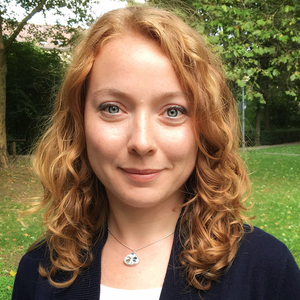
Zeynep Akata is the Liesel Beckmann Distinguished Professor of Computer Science at the Technical University of Munich (TUM) and Director of the Institute for Explainable Machine Learning at Helmholtz Munich. Previously she was a W3 Professor at the University of Tübingen (2019-2023) and held faculty and post-doctoral positions at the University of Amsterdam, UC Berkeley and the Max Planck Institute for Informatics. Her research focuses on multimodal learning and explainable artificial intelligence . Education: PhD, University of Grenoble / INRIA Rhône-Alpes, 2014 MSc, RWTH Aachen University, 2010 BSc, Trakya University, Turkey, 2008 Research Interests: Professor Akata’s group develops algorithms that learn from vision, language and other modalities simultaneously, with a strong emphasis on zero-shot, few-shot and continual learning . A central theme is making decisions interpretable, leading to work on explainable AI, concept bottleneck models, multimodal reasoning and human-aligned representation learning . Recent projects investigate large-scale multimodal language models, dataset distillation, model merging and continual knowledge editing. Publication Trends: Her 2024-2025 publications reveal a shift toward foundational large-scale models (diffusion, LLMs, vision-language transformers) while retaining the core themes of interpretability and generalization under limited supervision . Topics span dataset distillation, model merging, continual learning, fairness auditing of generative models and novel evaluation protocols for zero-shot learning systems. Scientific Awards: Lise-Meitner Award for Excellent Women in Computer Science (2014) Young Scientist Honour, Werner-von-Siemens-Ring Foundation (2019) ERC Starting Grant, European Commission (2019) DAGM German Pattern Recognition Award (2021) ECVA Young Researcher Award (2022) Alfried Krupp Award (2023) Advising & Funding: Prof. Akata currently supervises or co-supervises 25+ PhD students across TUM and the University of Tübingen via ELLIS and IMPRS-IS doctoral programs. She holds major grants including an ERC Starting Grant and DARPA Explainable AI funding, and is a frequent program chair and area chair for premier conferences (CVPR 2024, ECCV 2026, NeurIPS, ICML, etc.). Labs & Teams: She leads the Institute for Explainable Machine Learning at Helmholtz Munich and heads the Multimodal Learning and Explainable AI group at TUM. The institute collaborates closely with the ELLIS Institute Tübingen and Cyber Valley ecosystem, and maintains close ties with the Max Planck Institute for Intelligent Systems and Informatics.
Holger Fröning is a full professor at Heidelberg University’s Institute of Computer Engineering (ZITI), where he leads the Hardware and Artificial Intelligence (HAWAII) Lab. His research focuses on embedded machine learning , high-performance computing , and hardware-software co-design , with emphasis on resource efficiency, power optimization, and emerging architectures like analog , photonic , and resistive memory systems. He has held leadership roles including Managing Director of ZITI (2023–present) and Dean of Studies for Computer Science (2019–2022) , and has collaborated with institutions such as NVIDIA Research, Chinese Academy of Sciences, and Graz University of Technology. Research Trends : His recent publications explore Bayesian neural networks , green machine learning , analog computing noise mitigation , and GPU/FPGA optimization . Articles highlight photonic computing for AI , memory-efficient training , and hardware-aware DNN compression . Scientific Awards : 2025 HiPEAC Paper Award (Nature Computational Science) 2014 Google Faculty Research Award Multiple Best Paper Awards (IPDPS, ICPP, ECML-PKDD workshops) Leadership & Service : Organized workshops (WEML, ITEM, F4HD), chaired tracks at EuroPar and ISC, and served on program committees for ICPR, ECAI, and FPL. Education & Affiliations : PhD and MSc from University of Mannheim (2007/2001). Sponsors include DFG, FWF, FFG, NVIDIA, SAP, and XILINX.
Prof. Christian Heipke is a distinguished academic serving as Dean of the Faculty of Civil Engineering and Geodetic Science at Leibniz University Hannover, Germany. He also holds the position of Executive Director at the Institute of Photogrammetry and GeoInformation (IPI), one of the leading research institutions in geospatial sciences within the faculty. His leadership extends across multiple committees including the Curriculum and Teaching Committee, Admissions and Examination Boards for Geodetic Science and Geoinformatics, and Navigation and Environmental Robotics. As a Professor at IPI, he maintains active research while overseeing significant academic and administrative responsibilities at the university. Professor Heipke's research spans multiple domains within geospatial sciences, with particular emphasis on: Advanced photogrammetric techniques and algorithms Remote sensing applications for environmental monitoring Computer vision approaches for geospatial data analysis Urban development monitoring using satellite imagery Machine learning applications in geoinformatics Disaster prediction and management systems His recent scholarly output reveals a strong focus on integrating cutting-edge computer vision and deep learning techniques with traditional photogrammetric methods. Analysis of his 15 most recent publications shows a clear trajectory toward more sophisticated AI-driven approaches for processing geospatial data, with particular attention to time-series analysis, uncertainty quantification, and multi-view systems. His work bridges theoretical advancements with practical applications in flood forecasting, deforestation monitoring, urban planning, and construction materials analysis. The geographic scope of his research has expanded significantly, with recent projects focusing on international case studies in the Philippines and tropical regions. Professor Heipke leads the Institute of Photogrammetry and GeoInformation, a major research hub that has celebrated 75 years of contributions to the field. His leadership extends to the Graduiertenkolleg 2159: "Integrity and Collaboration in Dynamic Sensor Networks," where he serves as a professor overseeing doctoral research. The institute maintains state-of-the-art facilities for processing satellite imagery, aerial photography, and developing novel algorithms for geospatial data analysis. Under his direction, the institute has strengthened its international collaborations and interdisciplinary research approaches, particularly in addressing Sustainable Development Goals through geospatial technologies.
- Photogrammetry
- Geoinformation
- Remote Sensing
- +۷ مورد دیگر
Vladimir Spokoiny is a Professor at the Departments of Mathematics and Economics of the Humboldt University of Berlin and Head of the Research Group "Stochastic Algorithms and Nonparametric Statistics" at the Weierstrass Institute for Applied Analysis and Stochastics (WIAS) in Berlin, Germany. His research spans multiple areas of statistics, machine learning, and financial mathematics, with significant contributions to nonparametric statistics, high-dimensional data analysis, and statistical methods in finance. Spokoiny received his M.Sc. in applied mathematics from the Moscow Institute of Railway Engineering in 1981 and his Ph.D. in mathematics from Lomonosov Moscow State University in 1988. He completed his Habilitation at Humboldt University in 1996. His academic career includes positions at the All-Union Institute of Railway Transport in Moscow, the Institute for Information Transmission Problems in Moscow, and the Institute for Applied Analysis and Statistics in Berlin before joining the Weierstrass Institute and Humboldt University where he has been a professor since 2002. Spokoiny's research focuses on adaptive nonparametric smoothing and hypothesis testing, high dimensional data analysis, statistical methods in finance, image analysis with applications to medicine, classification, and nonlinear time series. His work often addresses the challenges of nonstationarity in time series data and develops innovative methods for volatility estimation and risk management. He has made significant contributions to the development of adaptive weights smoothing procedures, which have applications in image processing, community detection, and manifold learning. His recent work has expanded into high-dimensional statistics, Bayesian inference, and optimization methods for machine learning, with publications demonstrating novel approaches to Gaussian approximation, Laplace methods, and statistical inference in non-Euclidean spaces. Spokoiny has supervised numerous PhD students including Oliver Reiss, Danilo Mercurio, Ying Chen, Elmar Diederichs, and Mstislav Elagin, whose research has focused on mathematical finance, time series analysis, and statistical methods. He serves as an Associate Editor for The Annals of Statistics (since 2004) and Statistics and Decisions (since 2002), and has previously served on the editorial board of the Journal of Statistical Planning and Inference. His professional activities include reviewing for major statistical journals including Annals of Statistics, Bernoulli, Econometrica, and Journal of American Statistical Association, as well as reviewing grant proposals for the National Science Foundation (USA), German Research Foundation, and Netherlands Organisation for Scientific Research. Spokoiny is a member of several professional societies including the International Statistical Institute, American Statistical Association, Institute of Mathematical Statistics, and Bernoulli Society. He is fluent in Russian (mother tongue), English, and German, and has good knowledge of French. His research group at WIAS focuses on developing novel statistical methodologies with applications across various scientific domains, particularly emphasizing adaptivity and robustness in complex data environments. The group's work has significant implications for financial risk management, medical imaging, and machine learning applications, with recent publications addressing fundamental questions in high-dimensional statistics and nonparametric inference.
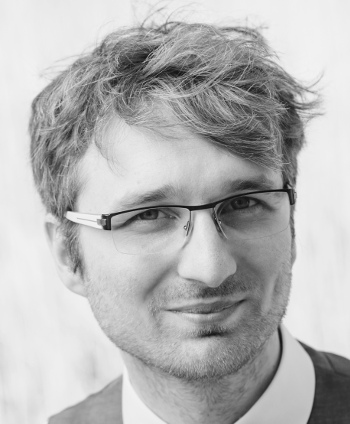
Michael Schaubمشاهده پروفایل
استادیار
Michael Schaub is a tenure-track Assistant Professor in the Department of Computer Science at RWTH Aachen University, specializing in Computational Network Science. His research focuses on analyzing complex systems through network and graph models, integrating dynamical systems, control theory, and machine learning. He leads the Computational Network Science group, advancing methodologies for higher-order network models like simplicial complexes and hypergraphs. Schaub holds a PhD from Imperial College London and has held postdoctoral positions at MIT and Oxford. He is an ERC Starting Grant recipient (2022) and a Marie Curie Fellow, recognized for contributions to network dynamics and topological data analysis. Education: PhD in Mathematics, Imperial College London (2011-2015) MSc in Biomedical Engineering, Imperial College London (2010) BSc in Electrical Engineering, ETH Zurich (2007-2010) Research Interests: Schaub’s work spans interdisciplinary applications of network science, including biological systems, social networks, and technical infrastructures. Key areas include: Higher-order network models (hypergraphs, simplicial complexes) Graph signal processing and dynamics on networks Community detection and dynamical systems analysis Topological data analysis and machine learning Grants & Awards: ERC Starting Grant (2022): HIGH-HOPeS project Marie Skłodowska-Curie Fellowship (2017-2019) Junior Fellow, German Informatics Society (GI) Member of Junges Kolleg (North Rhine-Westphalia Academy) Labs & Teams: Leads the Computational Network Science Lab at RWTH Aachen, collaborating internationally on projects like the ELLIS Society and the European Laboratory for Learning and Intelligent Systems (ELLIS). Active in organizing workshops (e.g., Toponets, SIAM MDS).
- Network Science
- Dynamical Systems
- Machine Learning
- +۳ مورد دیگر
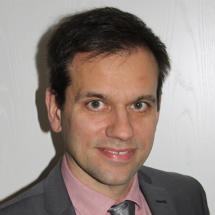
Prof. Dr.-Ing. Lars Linsen is a full Professor of Computer Science at the Westfälische Wilhelms-Universität (WWU) Münster, leading the VISualization & graphIX (VISIX) group. His primary affiliation is the Institute of Computer Science within the Faculty of Mathematics and Computer Science. He holds adjunct professorships at Jacobs University, Bremen, and has held previous academic roles including Full Professor at Jacobs University (2012–2017) and Associate/Assistant Professor roles in Germany and the U.S. His research focuses on interactive visual analysis, medical visualization, and scientific visualization, with applications in life sciences and engineering. Education: PhD (Dr.-Ing.) in Computer Science from Universität Karlsruhe (2001), M.Sc. (Diplom) in Computer Science (1997), B.Sc. (Vordiplom) in Computer Science (1994). Awards: IEEE Visualization Design Contest Winner (2008, 2022, 2018), Preis des Fördervereins des Forschungszentrum Informatik (2002). Research Highlights: Develops visualization tools for medical imaging (e.g., mass spectrometry imaging, MRI data analysis) and physical simulations (e.g., wildfire spread analysis, asteroid impact modeling). Active in EU-funded projects like Pig-Pro-QuO (surface coatings) and cells-in-motion initiatives. Supervised over 20 PhD/MS advisees, including notable graduates in medical visualization and simulation ensemble analysis. Publications: Over 100 peer-reviewed articles in top venues like IEEE Transactions on Visualization and Computer Graphics, Computers & Graphics, and EuroVis. Key works include SciVis contest-winning wildfire analysis frameworks and medical visualization tools for stenosis detection. Teaching: Offers courses on visualization, computer graphics, and computational science. Actively involved in thesis supervision and curriculum development at both WWU Münster and Jacobs University. Grants & Collaborations: Principal investigator on DFG-funded projects (e.g., hemodynamics simulations, ensemble visualization) and industry collaborations (e.g., Tascon GmbH for coating quality analysis). Member of the Cells-in-Motion Interfaculty Centre and CDH board at WWU.
Prof. Dr. Fabian Gieseke is a Professor and Chair of Machine Learning and Data Engineering at the University of Münster. He holds a PhD in Computer Science from Carl von Ossietzky University of Oldenburg and a dual degree in Mathematics and Computer Science from the University of Münster. His research focuses on Machine Learning, High-Performance Computing, and their applications in Geosciences, Smart Cities, and Astrophysics. Education: PhD in Computer Science (2012), Carl von Ossietzky University of Oldenburg University studies in Mathematics and Computer Science (2006–2011), University of Münster Research Interests: Data Mining and Machine Learning High-Performance Computing & Distributed Systems Deep Learning Applications in Environmental Science and Astrophysics Geospatial Data Analysis using Satellite Imagery Publications Trends: His recent work emphasizes large-scale environmental monitoring via deep learning, including canopy height estimation, forest biomass prediction, and national-scale tree counting. He also explores interactive systems for geospatial data retrieval and optimization of machine learning models for resource-constrained environments. Advising & Grants: Supervised over 30 theses on topics like satellite image analysis, deep learning on microcontrollers, and data marketplaces for smart grids. Active in securing grants for interdisciplinary projects combining AI with Earth observation. Labs/Teams: Leads the Machine Learning and Data Engineering group at the University of Münster, focusing on scalable AI solutions for real-world challenges in science and industry.
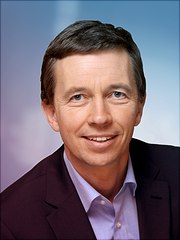
Prof. Dr. Bernd Lucke is a full professor at the University of Hamburg , affiliated with the Faculty of Business, Economics and Social Sciences and Department of Economics . He holds the Chair for Economic Growth and Business Cycles and has been active in research, teaching, and public policy discourse. Research Interests : Macroeconomics, Monetary Policy, European Economic Policy, Business Cycles, Econometrics, Development Policy, and Public Finance. Publications : His recent work (2025–2020) focuses on synthetic control methods for EU monetary analysis, ECB policy critiques, debt sustainability, digital currency legislation, and expropriation impacts on FDI. Earlier works span econometric testing of Ricardian equivalence, productivity shocks, and growth modeling. Media Contributions : Regular political commentary in outlets like Cicero and Frankfurter Allgemeine Zeitung , often critiquing ECB decisions, EU fiscal integration, and inflation dynamics. Contact : bernd.lucke@uni-hamburg.de
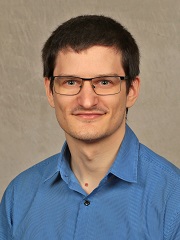
Dr. Philipp Allgeuer is a Postdoctoral Research Associate at the Knowledge Technology Research Group within the Department of Informatics at the University of Hamburg. His work focuses on humanoid robotics, bipedal locomotion, and sensor fusion. He holds a PhD from the Autonomous Intelligent Systems Group at the University of Bonn, alongside dual bachelor's degrees in Mechatronic Engineering and Mathematical/Computer Sciences (both with First-Class Honors). His research contributions include the development of the igus Humanoid Open Platform and the NimbRo-OP series of humanoid robots, recognized with awards like the RoboCup HARTING Open Source Award (2016) and the Best Humanoid Award (2018). He has authored influential papers on fused angles for robot balance, tilt phase space representations, and neuro-inspired control architectures. Allgeuer's teams have dominated RoboCup competitions, winning titles in AdultSize and TeenSize leagues multiple times. His open-source software frameworks (e.g., rot_conv_lib , attitude_estimator ) and hardware designs are widely used in robotics research. Recent work explores multimodal human-robot interaction and AI-driven robotic task coordination. He is affiliated with the Knowledge Technology Research Group and contributes to projects like the NICOL humanoid robot, bridging social interaction and reliable manipulation. His research spans from low-level control algorithms to high-level behavior planning systems.
- Robotics
- Humanoid Robotics
- Bipedal Locomotion
- +۵ مورد دیگر
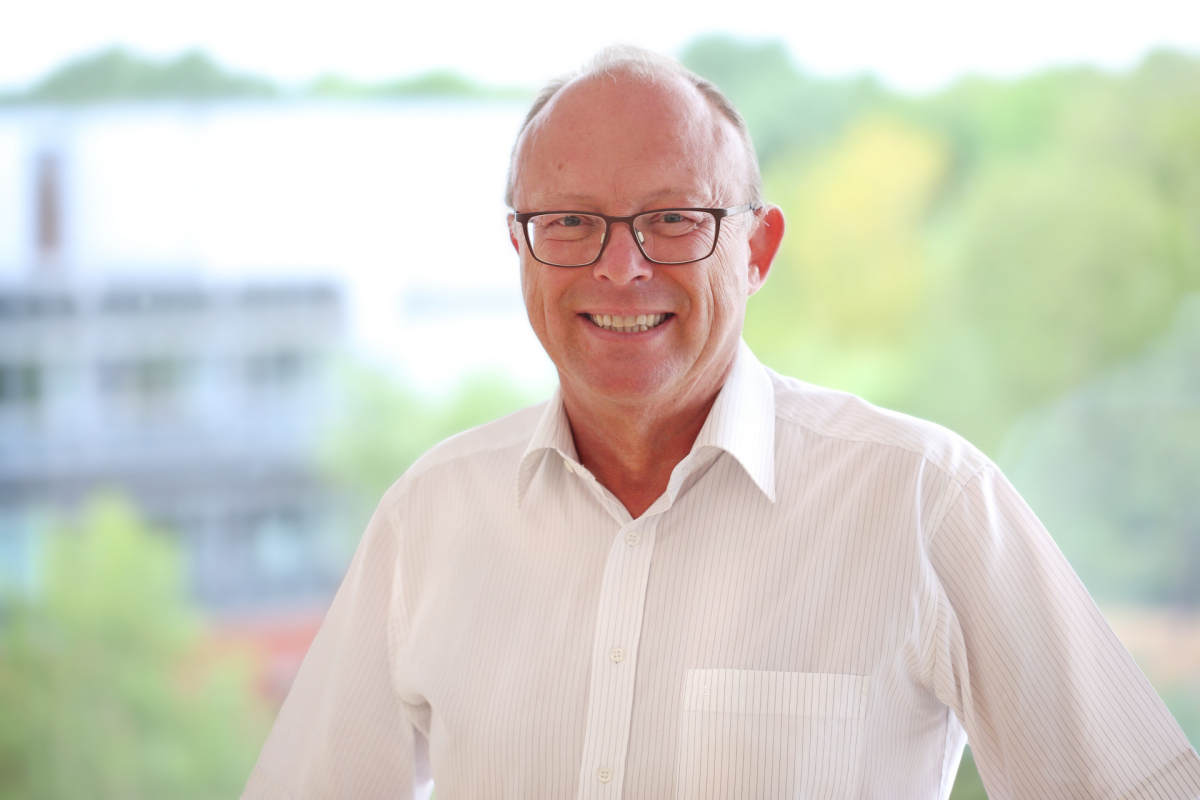
Prof. Dr. Rudolf Amann serves as Managing Director at the Max Planck Institute for Marine Microbiology in Bremen, Germany, and leads the Department of Molecular Ecology. His work pioneers molecular methods for studying marine microorganisms, with a focus on fluorescence in situ hybridization (FISH) to identify and quantify microbial cells. Managing Director, Max Planck Institute for Marine Microbiology (since 2018) Department Head, Molecular Ecology Research Center, Bremen, Germany Research Interests: Marine microbial diversity and ecology Carbon cycle dynamics in coastal and deep-sea environments Phytoplankton-bacterioplankton interactions Microbial taxonomy and phylogenetics Single-cell identification techniques (FISH, CARD-FISH) Integration of metagenomics and proteomics Publication Trends: Recent work focuses on microbial interactions in extreme environments (hydrothermal vents, Arctic waters), carbohydrate cycling in oceanic systems, and ecological differentiation of bacterial populations through advanced imaging and omics technologies. Contact: ramann@mpi-bremen.de

Prof. Dr. Wolfgang Nejdl is a Professor at the Institute for Data Science within the Faculty of Electrical Engineering and Computer Science at Leibniz University Hannover. He serves as Executive Director of the L3S Research Centre and Leibniz Forschungszentrum Inclusive Citizenship. Web Science Information Retrieval Artificial Intelligence Deep Learning His recent research focuses on AI applications in medicine , multimodal data fusion , and ethical AI systems . Projects include CAIMed (AI in Causal Medicine) and DAISEC (AI & Cybersecurity). His publications span conferences like AAMAS, WWW, and SIGIR. Notable awards include membership in the National Academy of Science and Engineering (acatech) . Former students hold positions at institutions like Stanford, TU Dresden, and ETH Zürich. Current projects involve climate resilience AI , federated learning for healthcare , and quantum-inspired data science .
Prof. Vladimir Spokoiny is a leading figure in stochastic algorithms and nonparametric statistics at the Weierstrass Institute for Applied Analysis and Stochastics (WIAS) and Humboldt University of Berlin . His work bridges mathematical statistics with practical applications in finance, medicine, and machine learning. Born in 1959 in Moscow, USSR PhD from Lomonosov Moscow State University (1988) Habilitation from Humboldt University (1996) Head of WIAS research group since 2000 Professor at Humboldt University since 2002 Spokoiny's research focuses on adaptive nonparametric methods, high-dimensional data analysis, and statistical finance. His innovations in local homogeneity testing and propagation-separation methods have advanced volatility modeling, image analysis, and manifold learning. He employs Bayesian optimization frameworks and stochastic control techniques for financial instrument pricing. Recent scientific contributions include generalized bootstrap procedures for Bures-Wasserstein barycenters (2024), dimension-free Laplace approximation bounds (2023), and structure-adaptive manifold estimation (2022). His 19+ PhD students and editorial roles in top journals like The Annals of Statistics demonstrate sustained academic impact. International Statistical Institute member American Statistical Association fellow Institute of Mathematical Statistics member Bernoulli Society member
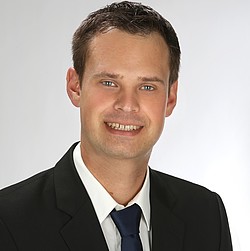
Jun.-Prof. Dr. Christian Krupitzer is a Tenure Track Professor in Food Informatics at the University of Hohenheim's Institute of Food Science and Biotechnology, part of the Faculty of Natural Sciences. He leads the Department of Food Informatics and is a member of the Computational Science Hub (CSH). His research focuses on self-adaptive software systems, machine learning (especially edge computing), IoT technologies, and software engineering applied to food processing and agricultural systems. Education: PhD in Business Information Systems (Dr. rer. pol.), University of Mannheim (2018) M.Sc. and B.Sc. in Business Information Systems, University of Mannheim (2010–2012) High School Diploma (Abitur) from Wilhelmi-Gymnasium Sinsheim (2007) Research Interests: Krupitzer’s work integrates computational methods with food science, emphasizing adaptive systems for food quality monitoring, IoT in agriculture, and machine learning for predictive analytics. He explores edge computing’s role in real-time decision-making and secure group communication schemes for IoT networks. Publications: His recent work spans predictive maintenance in Industry 4.0, digital twins in food systems, and blockchain applications in supply chain authentication. The articles highlight trends in interdisciplinary approaches combining AI, IoT, and domain-specific challenges in food production and logistics. Awards: No scientific awards explicitly listed in the provided materials. Grants & Advising: While specific grants are unmentioned, his roles as department head and tenure-track professor suggest involvement in research funding. No formal advisee list provided, though his team includes postgraduate researchers like Dana Jox, Daniel Einsiedel, and others. Labs & Teams: Leads the Food Informatics department and collaborates with the Computational Science Hub. His team focuses on developing innovative solutions for food systems through computational methods.
Irena Koprinska is a prominent researcher at the University of Sydney with over 150 publications from 1996 to 2025. Her work spans multiple interdisciplinary domains with significant contributions to machine learning applications in educational technology, time series forecasting, and health informatics. She maintains strong research collaborations, particularly with Kalina Yacef (38 joint publications), Mashud Rana (26 papers), and Bryn Jeffries (22 papers), indicating leadership in her research group. Her research interests focus on practical applications of machine learning across diverse domains. In educational data mining, she has pioneered methods for predicting student performance in programming courses, analyzing syntax errors, and developing automated hint generation systems. Her work in time series forecasting has made significant contributions to solar power prediction using advanced neural network architectures. Additionally, she has applied machine learning techniques to medical domains, particularly in sleep disorder detection and analysis. The analysis of her 15 most recent publications (2022-2025) reveals a continued focus on educational technology and time series analysis, with increasing attention to interpretable methods and health applications. Her work demonstrates a consistent trajectory of applying sophisticated machine learning techniques to solve real-world problems across multiple domains, with particular emphasis on creating practical tools for education and renewable energy management. Notable Research Contributions: Development of the HINTS framework for automated programming hint generation Innovative approaches to multistep-ahead time series forecasting Applications of deep learning to sleep disorder detection Methods for predicting student performance in programming education Her publication record in top venues including Machine Learning journal, AIED, EDM, and IJCNN demonstrates significant impact in both machine learning and educational technology communities. The consistent output of high-quality research over nearly three decades indicates sustained scholarly productivity and leadership in her fields of expertise.