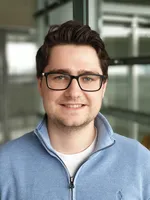
Christoph Heinzl is a Professor of Cognitive Sensor Systems at the University of Passau since September 2022. He leads the Knowledge-based Image Processing research group at the Fraunhofer Development Center X-ray Technology (EZRT) . His academic background includes a PhD in Informatics and a Habilitation in 2022 , both from TU Wien . Research Focus: Scientific visualization, visual analytics, immersive analytics, virtual/augmented reality, machine learning, and X-ray computed tomography (XCT). Key Trends: Development of novel visualization techniques for complex volumetric data (e.g., dynamic volume lines, visual coherence frameworks), parameter space analysis, and cross-virtuality collaboration tools. Applications: Aerospace component inspection, defect analysis in composites (CFRP, GFRP), porosity quantification, and 4DCT time-series exploration.
Professor Amr Rizk is the Director of the Networks and Communication Systems (NCS) Lab at the University of Duisburg-Essen, where he has been serving as Professor since April 2021. Previously, he was Assistant Professor at Ulm University (2019-2021) and completed his habilitation at TU Darmstadt in 2019. His academic journey includes research positions at prestigious institutions including University of Massachusetts Amherst, University of Warwick, and TU Darmstadt where he was an Athene Young Investigator. Professor Rizk's research spans multiple aspects of networking and communication systems with a particular focus on network performance analysis, stochastic modeling, and practical implementations. His work bridges theoretical foundations with real-world applications, especially in content delivery, video streaming, and network protocols. He has made significant contributions to network calculus, quality of experience optimization, and novel approaches to congestion control and caching mechanisms. His publication record demonstrates consistent high-impact contributions across top networking conferences and journals. Recent work shows a growing emphasis on programmable data planes, AI/ML applications in networking, and advanced techniques for network measurement and performance prediction. His research group at Duisburg-Essen maintains strong connections with both academic and industrial partners in the networking ecosystem. Best Paper Award at ACM MMSys Conference (2023) Distinguished TPC Member for IEEE INFOCOM (2020, 2022) Best Paper Award at ACM/USENIX Middleware Conference (2017) Athene Young Investigator Award, TU Darmstadt (2017) Professor Rizk serves as Associate Editor for Elsevier Computer Communications and has extensive experience with research funding bodies as a reviewer. His leadership extends to conference organization, including roles as PC Co-Chair for IEEE MIPR (2023) and Steering Committee member for Workshop on Network Calculus (2022). He maintains active participation in numerous top networking conferences as Technical Program Committee member, reflecting his standing within the international networking research community.
Tobias Neckel is an Associate Professor at the Institute for Informatics at the Technical University of Munich (TUM), where he leads research projects and coordinates academic programs. He has been the project team leader of the IGGSE Project ExaNIML since 2018, main coordinator of the Ferienakademie since 2014, and Program Coordinator of the Bavarian Graduate School of Computational Engineering (BGCE) since 2009. Diploma in Technomathematik from TU München (2005) Dr. rer. nat. in Informatics from TU München (2009) Neckel's research focuses on Uncertainty Quantification, Random Differential Equations, and High Performance Computing. His work develops efficient numerical algorithms using hierarchic and adaptive methods such as octrees/spacetrees and sparse grids, with applications in fluid-structure interactions and incompressible fluid flow simulation. His research bridges theoretical mathematics with practical computational science, emphasizing robust and efficient implementations. His recent publications demonstrate a strong trajectory in multi-fidelity modeling, uncertainty quantification, and high-performance computing. Neckel has made significant contributions to scalable hierarchical approximation methods, dynamic resource management in HPC, and the application of machine learning techniques to computational science problems. His work spans diverse application domains including plasma physics, hydrology, and computational engineering. Lehrfonds prize of the TUM (2014) Ernst Otto Fischer prize of the TUM (2011) Promotionspreis des Bunds der Freunde der TU München (2009) Neckel has supervised numerous graduate students and has been actively involved in curriculum development and teaching innovation. His book "Bits and Bugs: A Scientific and Historical Review of Software Failures in Computational Science" (2019) represents a significant contribution to understanding software reliability in scientific computing. He has organized minisymposia at major conferences including SIAM CSE and SIAM UQ, and serves on program committees for various computational science conferences. As coordinator of the Ferienakademie and the BGCE, Neckel plays a central role in advanced computational engineering education in Bavaria. His research group develops software for exascale computing and contributes to the Transregional Collaborative Research Centre 89 on Invasive Computing. Neckel also maintains international collaborations, with research stays at institutions including the Australian National University and Tokyo Institute of Technology.
Cornelius Faber is a University Professor in the Department of Radiology at the University of Münster, Germany, where he leads the Experimental Nuclear Magnetic Resonance research group. His work focuses on developing and implementing novel MRI techniques that extend the boundaries of magnetic resonance imaging in terms of spatial and temporal resolution, sensitivity, and specificity for physiological, structural, and molecular changes. He actively participates in the "Cells in Motion" interdisciplinary research initiative at the university. Professor Faber's research spans multiple critical areas in medical imaging and biomedical science. His primary expertise lies in MRI cell tracking , enabling visualization of cellular dynamics in vivo. He has made significant contributions to infection imaging , developing methods to detect and characterize microbial infections using MRI. His work on MR methodology development has advanced quantitative imaging techniques, while his research on multimodal integration in MR and MRI contrast mechanisms has provided deeper insights into molecular and cellular processes. His research bridges physics, engineering, and biomedical applications, with particular relevance to inflammation, cancer, neurological disorders, and cardiovascular disease. Analysis of Professor Faber's extensive publication record reveals a clear evolution from fundamental MRI technique development toward increasingly sophisticated applications in disease models. His recent work demonstrates a strong trend toward multimodal imaging approaches that combine MRI with complementary techniques such as mass spectrometry, optical imaging, and PET. This integration creates comprehensive diagnostic platforms that provide both anatomical and molecular information. A notable pattern is the focus on cellular dynamics, particularly immune cell behavior in inflammatory conditions and tumor microenvironments, with applications spanning neuroscience, oncology, and cardiology. Professor Faber leads a multidisciplinary research team of approximately 15 members, including scientists, doctoral students, technicians, and medical students. His laboratory is deeply integrated with the University of Münster's research infrastructure, particularly the Multiscale Imaging Centre. The group's work contributes significantly to advancing preclinical MRI methodologies while maintaining strong clinical relevance, with numerous publications in high-impact journals across medical imaging, neuroscience, and biomedical engineering disciplines.
Claire Vernade is a Group Leader at the University of Tübingen in the Cluster of Excellence Machine Learning for Science. She leads an active research group focused on theoretical aspects of sequential decision making, with particular expertise in bandit problems and reinforcement learning theory. Her work bridges theoretical foundations with practical applications in scientific discovery. Her research interests span sequential decision making, bandit problems, theoretical Reinforcement Learning, Learning Theory, and principled learning algorithms. She has made significant contributions to understanding non-stationary environments, lifelong learning frameworks, and the theoretical foundations of bandit algorithms. Her work on "Eigengame: PCA as a Nash Equilibrium" received an Outstanding Paper Award at ICLR 2021. Dr. Vernade has been awarded prestigious grants including an Emmy Noether award (2022) for her FoLiReL project and an ERC Starting Grant (2024) for her ConSequentIAL project. Her current ERC project explores the role of Reinforcement Learning in developing Continual Learning agents, with applications to scientific domains like drug discovery and micro-chemistry. Emmy Noether award under the AI Initiative call (2022) ERC Starting Grant (2024) Outstanding Paper Award at ICLR 2021 She currently supervises three PhD students and actively recruits postdocs and PhD candidates through the IMPRS-IS and ELLIS doctoral programs. Her group collaborates extensively with the broader machine learning community, organizing workshops like FoRLaC at ICML 2024 and serving as co-chairs for tutorials at major conferences. Dr. Vernade is also deeply committed to diversity and inclusion in machine learning, co-leading initiatives like Women in Learning Theory and Tübingen Women in Machine Learning.
Surjo R. Soekadar is the Einstein Professor of Clinical Neurotechnology at Charité – University Medicine Berlin. He leads the Clinical Neurotechnology Laboratory , which focuses on developing noninvasive neurotechnologies for treating neurological and psychiatric disorders through closed-loop brain stimulation and advanced brain-machine interfaces (BCI/BMI). His work integrates real-time EEG/MEG monitoring with electromagnetic stimulation to modulate pathological brain oscillations and enhance neuroplasticity in conditions like stroke, spinal cord injury, and psychiatric disorders. Education : Studied medicine in Mainz, Heidelberg, and Baltimore Clinical Training : Residency in Psychiatry and Psychotherapy at University of Tübingen Academic Journey : 2008-2011 Research Fellow at NINDS (USA); 2017 Venia Legendi at University of Tübingen; 2018 First Professor of Clinical Neurotechnology in Germany His research interests span: • Closed-loop neurostimulation combining real-time brain state monitoring with targeted intervention • Next-generation BCI using optically pumped magnetometers (OPM) for mobile MEG recordings • Neurorehabilitation through exoskeleton control and sensory feedback • Neurophysiological modeling of entropy measures and phase flows Recent publications highlight: • Adaptive deep brain stimulation protocols • Real-time phase-sensitive tACS applications • OPM-based BCI innovations • Stroke recovery mechanisms through corticospinal tract analysis Scientific recognition includes: International BCI Research Award BIOMAG Award NARSAD Young Investigator Award Funded by the European Research Council (ERC) , his lab trains doctoral students like David Haslacher (EEG/MEG integration), Khaled Nasr (multicoil TMS optimization), and Annalisa Colucci (entropy-driven BCI development). The team also explores quantum AI applications in clinical decision-making and bidirectional BCI systems using OPM and tES.
Timothy Baldwin is a Professor at the University of Melbourne, School of Computing and Information Systems, with additional affiliation at Mohamed bin Zayed University of Artificial Intelligence in UAE. His research spans natural language processing, large language models, and multilingual AI systems. His research interests focus on the safety, reliability, and ethical aspects of large language models. He investigates bias evaluation and debiasing techniques, uncertainty quantification methods, fact-checking systems, and multilingual model safety. His work addresses critical challenges in making AI systems more transparent, reliable, and culturally aware, with particular attention to low-resource languages and cross-cultural differences. Baldwin's recent publications demonstrate a strong focus on evaluating and improving the safety of language models across diverse linguistic contexts, developing tools for fact verification, and understanding the internal mechanisms of large language models. His research shows increasing emphasis on practical applications with real-world impact, particularly in multilingual settings and safety-critical domains. His scientific contributions include foundational work on multilingual NLP, bias mitigation techniques, and frameworks for evaluating LLM safety across different cultural contexts. His research has been published in top-tier venues including ACL, NAACL, EMNLP, and ICLR. Baldwin actively mentors students and junior researchers, with frequent collaborations with Haonan Li, Xudong Han, and Fajri Koto, among others. His research group appears to focus on practical applications of NLP with strong ethical considerations, particularly regarding model safety and cultural sensitivity.
Prof. Dr. rer. nat. Rainer Leupers is a faculty member at RWTH Aachen University, chairing the Department of Software for Systems on Silicon. His research focuses on embedded systems, hardware-software co-design, virtual prototyping, and security in computing-in-memory architectures. He has published extensively on RRAM accelerators, logic locking, and neuromorphic security. Chair of Software for Systems on Silicon Research in hardware security and deep learning accelerators Recent publications on cross-tool virtual frameworks and thermal side-channel attacks His work bridges system-level modeling with practical security implementations, emphasizing reliability and performance in heterogeneous computing environments. Key trends in his 2025-2023 articles include compute-in-memory optimization, neural network inference efficiency, and security vulnerabilities in emerging hardware. Awards and formal recognitions are not explicitly detailed in the provided materials. He has not directly mentioned advising students or research grants in the given text fragments. The chair's contact information includes an office at ICT Cube 1, Electrical Engineering, Aachen, with direct email and website links.
Britta Peis is a Professor of Management Science at RWTH Aachen University since September 2013. She studied Mathematics and Sports Sciences at the University of Cologne and German Sport University Cologne, respectively. Her academic journey includes positions at TU Dortmund (2006-2007), TU Berlin (2007-2010), and a visiting professorship at Otto-von-Guericke University Magdeburg (2010-2011). Her research focuses on Combinatorial Optimization , Algorithmic Discrete Mathematics , Routing and Scheduling , Robust Optimization , and Algorithmic Game Theory . Her work spans theoretical and applied domains, including network flow analysis, auction algorithms, and strategic decision-making in complex systems. Recent publications (2025-2024) highlight advancements in dynamic auction mechanisms, Stackelberg game formulations, and train routing algorithms. Earlier works (2022-2018) explore matroid theory, packet routing with priority lists, and sensitivity analysis in polymatroid optimization. Key trends include algorithmic design for competitive networks and robustness in time-dependent flows. She is affiliated with the Graduiertenkolleg UnRAVeL (Aachen Institute for Discrete Mathematics and Logic) and contributes to the Chair of Management Science's research agenda in combinatorial optimization and algorithmic game theory.
Prof. Jörn Meissner, PhD, is a Full Professor of Supply Chain Management & Pricing Strategy at Kühne Logistics University (KLU) since 2011. He holds a PhD and Master’s in Management Science from Columbia Business School and a Diploma in Business from University of Hamburg . As an academic and entrepreneur, he founded Manhattan Review and Lancaster Executive . Education: PhD in Management Science, Columbia University (2005) Master of Philosophy, Columbia University (2005) Diplom-Kaufmann, University of Hamburg (1997) Research Expertise: Focus on stochastic and dynamic decision-making using mathematical optimization and machine learning Key projects: Global supply chain optimization , Inventory control , Revenue management , and Operations & service management Industry collaborations with British Telecom , British Airways , Apple Europe , and SAP Germany Publication Trends: Recent work addresses intermittent demand forecasting for spare parts, lateral transshipment optimization , and risk-sensitive capacity control Historical contributions include progressive interval heuristics for multi-item lot sizing and dynamic pricing with customer choice models Teaching Experience: Previously held academic positions at Lancaster University Management School , University of Hamburg , and University of Mannheim Developed MBA electives in Advanced Decision Models , Supply Chain Management, and Revenue Management
Steffen Bondorf is a Professor of Distributed and Networked Systems in the Faculty of Computer Science at Ruhr University Bochum, Germany. His research focuses on performance modeling and analysis of deterministic networking, particularly using network calculus to provide rigorous performance guarantees for networked systems. Dr. Bondorf received his B.Sc., M.Sc., and Dr.-Ing. (Ph.D.) in Computer Science from TU Kaiserslautern (TUK), where he was part of the distributed computer systems lab. He was the first student to enroll in a B.Sc. program at TUK before finishing secondary education. After graduation, he held positions as postdoctoral researcher, lecturer and Carl-Zeiss Fellow at TUK, research fellow at the National University of Singapore, and visiting researcher at the University of Toronto. From fall 2018 to fall 2019, he was funded by an ERCIM Alain-Bensoussan fellowship at NTNU Trondheim, Norway, and spent time at INRIA Paris. His research interests include network calculus, deterministic networking, performance modeling, computer networks, distributed systems, and P2P overlays. Dr. Bondorf's work has significantly advanced the field of network calculus, particularly in developing methods for analyzing FIFO feedforward networks, multicast flows, and P2P overlay structures. His recent research has integrated machine learning techniques with network calculus to improve analysis accuracy and efficiency, creating hybrid approaches that leverage the strengths of both methodologies. Dr. Bondorf was appointed as assistant professor at Ruhr University Bochum on October 1, 2019, becoming the university's first hire in the joint tenure-track program for the promotion of young scientists. Since December 1, 2021, he has been a tenured full professor at RUB. Carl-Zeiss Fellow ERCIM Alain-Bensoussan fellowship At RUB, Dr. Bondorf teaches Advanced Topics in Networking, Distributed Systems, Deterministic Network Calculus, and Seminar Distributed and Networked Systems. His research group develops tools and methodologies for deterministic network analysis with applications in industrial networking, real-time systems, and time-sensitive communications. His work bridges theoretical networking principles with practical implementations, contributing to the advancement of deterministic networking standards and protocols.
Davide Tateo is a postdoctoral researcher and visiting professor at TU Darmstadt, leading the Safe and Reliable Robot Learning Research Group within the Intelligent Autonomous Systems group of the Computer Science Department. His research focuses on developing safe and efficient reinforcement learning algorithms for real-world robotics applications. His work spans Reinforcement Learning (Safe RL, Deep RL) and Robotics (fast motion planning, locomotion). He is involved in multiple funded projects including KIARA (advanced manipulation in risky scenarios), DeepWalking (human gait learning), and INTENTION (active perception for legged robots). Recent publications highlight his expertise in Safe RL (inductive biases, collision probability fields), Locomotion (multi-embodiment, morphology-aware policies), and Optimization (contact planning, trajectory distillation). He collaborates with the PEARL lab at TU Darmstadt and has contributed to key workshops like CoRL 2024 and RSS 2024. Contact details: Email: davide.tateo@tu-darmstadt.de Room E303, Building S2|02, Hochschulstr. 10, Darmstadt Phone: +49-6151-16-20811
Philipp Weiss is a Researcher at the Technical University of Munich (TUM), affiliated with the Department of Electrical and Computer Engineering and the Chair of Embedded Systems and Internet of Things. Holding an M.Sc. degree, he actively contributes to research and teaching in embedded systems and IoT with a strong focus on automotive applications. His research spans Automotive Systems , Internet of Things (IoT) , Fail-Operational Systems , Reliability Analysis , Agent-Based Systems , and Distributed Systems . Weiss specializes in fail-operational automotive software design, dynamic agent-based mapping methods, and run-time reliability analysis, addressing critical challenges in autonomous vehicle safety and resilience through publications in DATE and DSD conferences. Analysis of his 2020-2021 publications reveals consistent focus on fail-operational architectures for automotive systems, with recurring themes in distributed agent-based modeling, timing analysis, and energy optimization within hybrid cloud environments. His work bridges theoretical reliability frameworks with practical automotive implementations. Weiss has supervised multiple Master's theses and final projects from 2019-2021 on topics including dynamic agent-based reliability analysis and fail-over timing for neural networks. As an educator, he serves as tutor for System Design for the Internet of Things and seminar manager for Advanced Seminar Embedded Systems and Internet of Things . Embedded within Prof. Sebastian Steinhorst's research team, Weiss contributes to major initiatives including Security for IoT and Autonomous Systems , Time-Sensitive Networking , and 6G Research Hub "6G-Life" , operating within TUM's IoT Remote Lab infrastructure for hands-on experimentation with industrial IoT systems.
Karl R. Gegenfurtner is a Professor of General Psychology at the Department of Psychology, Justus Liebig University Giessen. His research focuses on information processing in the visual system, particularly the interplay between low-level sensory processes, high-level visual cognition, and sensorimotor integration. He investigates how complex scenes are perceived, represented in the brain, and used to drive motor systems, with a specialization in color perception, material property recognition, and eye movement dynamics. Ph.D. in Experimental Psychology, New York University (1990) Diploma in Psychology, University of Regensburg (1986) Habilitation in Medical Psychology and Behavioral Neurobiology, University of Tübingen (1998) His work bridges visual neuroscience with computational modeling, examining color categorization in neural networks, cortical mechanisms of color vision, and dynamic recalibration of visual perception during eye movements. Recent projects include Color 3.0: An object-oriented approach to color (ERC Advanced Grant) and Dynamics in Vision and Touch (Marie Curie Actions). Publications highlight advancements in understanding saccadic suppression, predictive eye movements, and chromatic adaptation timelines. Scientific awards include the Wilhelm Wundt Medal (2016), Rank Prize Funds Lecture (2014), and ERC Advanced Grant (2020–2025). He has served on editorial boards of Journal of Vision , Vision Research , and Perception , and led initiatives like the Neuroscientific Workflow Assistance (NOWA) project. Collaborations span institutions in Germany, the U.S., Australia, and the U.K., with a focus on perception-action loops and neural mechanisms underlying visual stability.
Carolin Müller is a Juniorprofessor for the Theory of Electronically Excited States at the Friedrich-Alexander University Erlangen-Nuremberg since November 2023. Previously, she was a Feodor Lynen Postdoctoral Researcher at the University of Luxembourg (June 2022-October 2023) and a Postdoctoral Researcher at Friedrich Schiller University Jena (March 2021-May 2022). Dr. Müller received her B.Sc. (2016) and M.Sc. (2018) in Chemistry from Friedrich Schiller University Jena, followed by her Ph.D. (Dr. rer. nat) in 2021 from the same institution. Her doctoral research focused on "Towards Operando Spectroscopy of Supramolecular Photocatalysts – A Case Study on Ru-dppz-derived Systems" under the supervision of Prof. B. Dietzek-Ivanšić. Dr. Müller's research focuses on the theoretical understanding of photoinduced processes in molecules and materials. Her group (CPC Group) investigates electron transfer processes, isomerization reactions, and excited-state dynamics with the goal of controlling and optimizing light-driven processes for increased reactivity and efficiency. Her work combines computational chemistry, spectroscopy, and machine learning approaches, specifically utilizing methods like TD-DFT, CASSCF, molecular/quantum dynamics, and cheminformatics techniques including SVD, MCR, and global/target lifetime analysis. Her recent publications demonstrate a strong interdisciplinary approach spanning computational chemistry, spectroscopy, and machine learning. Key themes include nonadiabatic molecular dynamics, excited-state simulations, photoswitch design, photocatalysis, and the development of computational tools like KiMoPack for kinetic modeling. Her work often bridges theoretical predictions with experimental validation through close collaboration with spectroscopy research groups. Feodor Lynen Research Fellowship (Alexander von Humboldt Foundation) Thuringian Research Award 2023 for Applied Research Albert-Weller Award (German Chemical Society) Dissertation Award (Faculty of Chemistry and Earth Sciences) FCI Kekulé PhD fellowship As a Juniorprofessor, Dr. Müller leads the CPC Group at FAU, where she mentors students in computational chemistry research. She has developed expertise in combining spectroscopic techniques (resonance Raman, transient absorption, and time-resolved emission spectroscopy) with computational methods and cheminformatics approaches. She also actively contributes to the scientific community through service roles including co-organizing the ESTML 2023 Workshop and serving as an active member in the yPC organization of the German Bunsen Society. Dr. Müller is actively developing the CPC Group research program at the Computer Chemistry Center, focusing on light-induced physical processes and chemical reactions. Her group combines quantum chemistry, chemoinformatics, and experimental spectroscopy to reveal mechanisms behind photoinduced phenomena and optimize light-driven processes.