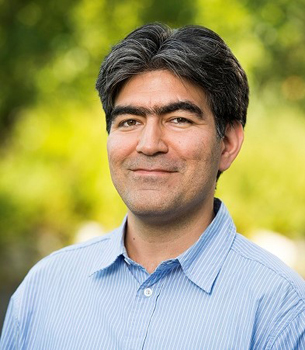
Julian Oertel, a Ph.D. candidate at the University of Rostock's Institute of Computer Science, specializes in software engineering, code summarization, and human factors in software development. His work explores AI techniques like large-language models for accelerating software development. His research spans: Software comprehension and code summarization Human-computer interaction in AI-assisted programming Model-driven engineering (MDE) and modeling experience (MX) Time-sensitive networking (TSN) and network calculus His recent publications focus on GitHub Copilot's impact on coding workflows and empirical studies of model-driven engineering. Oertel's work bridges theoretical analysis with practical tool evaluation in modern software development contexts.
Maël Guiraud is a Teacher-researcher at CESI Nanterre Campus, specializing in Algorithms and complexity, Telecom networks, and Industry 4.0. He holds a PhD in Computer Science from Paris Saclay University (2021) and a Master AMIS from the same institution (2016). His research focuses on optimizing network latency and scheduling in 5G and beyond contexts. Education: PhD in Computer Science (2021), DAVID Laboratory, Paris Saclay University (UVSQ) Master AMIS (2016), University Paris Saclay Computer Science Degree (2014), University of Versailles Saint-Quentin Guiraud's work spans deterministic scheduling in Cloud RAN environments, low-latency network optimization, and Time-Sensitive Networking (TSN). His publications highlight collaborations with Nokia Bell Labs France and contributions to 5G telecom infrastructure. Recent research trends include Periodic message scheduling for telecom networks Deterministic contention management in optical rings Experimental TSN platform development At CESI, he teaches algorithms, programming, and operational research in engineering school curricula, including embedded electrical systems.
Dr. Martin Reisslein is a Professor in the School of Electrical, Computer, and Energy Engineering at Arizona State University (ASU), where he also serves as Program Chair of Computer Engineering. He earned his Ph.D. in Systems Engineering from the University of Pennsylvania (1998) and holds degrees from the University of Pennsylvania and Fachhochschule Dieburg, Germany. His research focuses on communication networks (e.g., 5G, optical networks, software-defined networking) and engineering education, with over 200 journal articles and 60 conference papers. He has led NSF-funded projects on network architecture optimization and K-12 engineering education. Education : Ph.D. (Systems Engineering, UPenn, 1998), M.S.E. (Electrical Engineering, UPenn, 1996), Dipl.-Ing. (FH) (Electrical Engineering, Fachhochschule Dieburg, 1994) Awards : NSF Career Award (2002), IEEE Fellow (2014), Bessel Research Award (2015), DRESDEN Fellowship (2016) Editorial Roles : Co-Editor-in-Chief of Optical Switching and Networking , Associate Editor for multiple IEEE journals His research spans communication networks (e.g., multimedia networking, optical systems) and engineering education (e.g., K-12 outreach, instructional design). Recent articles address cloud computing, 5G architectures, and cybersecurity in satellite systems. He teaches courses such as Communication Networks and oversees graduate research.
Saad Mubeen is a Full Professor of Computer Science at Mälardalen University, Sweden, affiliated with the School of Innovation, Design and Engineering and the Division of Networked and Embedded Systems. He holds a Master's in Electrical Engineering (Embedded Systems) and a PhD in Computer Science and Engineering from Mälardalen University (2014), with a Docent title (2018) focused on vehicular embedded systems. His research emphasizes predictable embedded systems, timing analysis for real-time communication, and component-based software design. Key areas include model-driven development for automotive systems, integration of TSN/5G networks, and fault-tolerant industrial architectures. He has led projects on end-to-end timing analysis in distributed systems, ROS 2 verification, and cognitive edge-cloud scheduling. Publications span 2021–2025, focusing on real-time systems, network protocols (TSN, AVB, 5G), and industrial automation. Notable work includes frameworks for TSN configuration, fault diagnosis tools using NETCONF, and scheduling algorithms for heterogeneous edge-cloud environments. His contributions address critical challenges in timing predictability, security, and resource optimization for cyber-physical systems. Education contributions include problem-based learning modules for vehicular software engineering. He is actively involved in bridging academia and industry through collaborative research on next-generation automotive and industrial systems.
Paul Pop is a Professor at the Department of Applied Mathematics and Computer Science, Technical University of Denmark (DTU). He holds the position of Professor within the Embedded Systems Engineering group at DTU Compute. His academic journey includes a Ph.D. in Computer Systems from Linköping University, Sweden (2003), followed by roles as an Assistant Professor there before joining DTU in 2006. Dr. Pop's research focuses on systems engineering methodologies for embedded and cyber-physical systems, with emphasis on modeling, analysis, optimization, and real-time guarantees. His work addresses challenges in time-sensitive networking (TSN), automotive systems, industrial automation, and fog computing. Key application areas include safety-critical systems, mixed-criticality architectures, and sustainable industrial IoT solutions aligned with UN SDGs. He leads major research projects such as G3C (Green Computing & Communication Continuum), TRANSACT (Safety-Critical Cyber-Physical Systems), and AgroRobottiFleet (Agricultural Robotics). His contributions span 194 publications in journals/conferences and 31 active/completed projects, emphasizing interdisciplinary collaboration. Dr. Pop advises doctoral students in embedded systems and serves as Principal Investigator on EU-funded initiatives. His technical expertise includes TSN configuration tools (TSNConf), fog computing platforms (FORA), and microfluidic biochip design. He actively contributes to industry standards through IEEE 802.1 TSN working groups and collaborates internationally with institutions like Nordic Innovation and EU Horizon programs.
Jean-Yves Le Boudec is a Professor at École Polytechnique Fédérale de Lausanne (EPFL), affiliated with the School of Computer and Communication Sciences and the Institute of Electrical Engineering. He has been a key figure in advancing the theory and application of network calculus and deterministic networking, contributing significantly to standards such as IEEE Time-Sensitive Networking (TSN) and IETF DetNet. His research focuses on network calculus , time-sensitive and deterministic networking , traffic regulation , worst-case delay analysis , and cyber-physical systems , with cross-cutting applications in smart grids , real-time communication , and network security . He has co-authored foundational texts on network calculus and developed theoretical frameworks for traffic regulators, service curves, and delay bounds in complex networked systems. The recent publications highlight a strong trend in analyzing and improving performance guarantees in deterministic networks, including scheduling mechanisms like Deficit Round-Robin and Cyclic Queuing and Forwarding, traffic shaping via interleaved regulators, and security against time-synchronization attacks in power systems. The work spans theoretical modeling using stochastic and min-plus/max-plus algebra, practical algorithm design, and application to critical infrastructure. IEEE Fellow Le Boudec has advised numerous researchers and PhD students, including Ehsan Mohammadpour, Ludovic Thomas, and Seyed Mohammadhossein Tabatabaee. His collaborative projects often involve grants related to European and Swiss research initiatives in networking and smart grid technologies. He leads a research group focused on networked systems at EPFL, contributing to both theoretical advances and real-world implementations in industrial and energy-critical networks. His lab work centers on modeling and verification of time-sensitive network behaviors, integrating formal methods with practical experimentation. The team investigates regulators, shapers, and synchronization mechanisms, aiming to ensure robustness, predictability, and security in next-generation communication infrastructures. Future work continues to explore the interplay between communication, control, and energy systems in highly reliable environments.
Saravanan Ramanathan serves as a Research Fellow at TUMCREATE Singapore, a research initiative established by the Technical University of Munich (TUM) in Singapore. Based in the Electrification Suite & Test Lab, he contributes to critical research in security and networking for next-generation technologies. His expertise spans: IoT Security : Developing frameworks for industrial and autonomous IoT systems Autonomous Systems Security : Addressing vulnerabilities in self-driving vehicles Time-Sensitive Networking (TSN) : Researching deterministic Ethernet for real-time industrial applications Wireless-TSN : Extending TSN capabilities to wireless domains Industrial IoT Interoperability : Enabling seamless communication across heterogeneous systems 6G Networks : Contributing to next-gen wireless via the 6G-Life hub Cybersecurity for Internet of Vehicles : Creating adaptive frameworks like nIoVe Dr. Ramanathan actively participates in high-impact projects including nIoVe (adaptive cybersecurity for Internet-of-Vehicles), Drives 5G, and ReMiX, focusing on data sovereignty and decentralized system security. His work directly supports TUMCREATE's mission to advance sustainable urban mobility solutions in Singapore and globally.
James Gross is a Professor at the School of Electrical Engineering and Computer Science at KTH Royal Institute of Technology, Stockholm. He leads research in mobile systems and networks, with a focus on 5G/6G, edge computing, and performance evaluation. He is Associate Director of KTH's Digital Futures center and a board member of the Innovative Centre for Embedded Systems. Previously, he directed the ACCESS Linnaeus Centre (2016–2019) and was Assistant Professor at RWTH Aachen University. PhD, TU Berlin (2006) Studies: TU Berlin, UC San Diego His research lies at the intersection of wireless networking, edge computing, and mathematical performance modeling. Key areas include ultra-reliable low-latency communications (URLLC), age-of-information, network calculus, and resource allocation. He applies these to 5G/6G, cyber-physical systems, and industrial IoT. His work combines theoretical modeling with real-world implementation and standardization impact. The recent publications highlight a strong focus on deterministic and reliable communications for future networks. Topics include hierarchical inference at the edge, age-of-information optimization, finite blocklength coding, and integration of TSN with wireless systems. There is a clear trend towards AI/ML for resource management and semantic communications, reflecting the evolution of intelligent edge networks. Best Paper Award, ACM MSWiM 2015 Best Demo Paper Award, IEEE WoWMoM 2015 Best Paper Award, IEEE WoWMoM 2009 Best Paper Award, European Wireless 2009 ITG/KuVS Dissertation Award, 2007 James Gross has supervised PhD students such as Samie Mostafavi and advises numerous master's projects. His research has been funded by national science foundations in Germany and Sweden, the ICT TNG SRA, Linnaeus ACCESS Centre, DFG-funded UMIC Centre, German Ministry of Science, and various industry partners. His work has led to patents and influenced wireless standards. He is involved in initiatives like the TECoSA project on trustworthy edge computing and organizes summer schools on Edge AI and 6G. His lab conducts experimental research on edge computing testbeds (e.g., Ainur, ExPECA) and wireless performance evaluation.
Tatjana Wingarz is a Research Associate and PhD student in the IT-Security and Security Management (ISS) research group at the University of Hamburg's Department of Computer Science (MIN). She holds a Master's degree in IT-Security from Ruhr-University Bochum (2020) and a Bachelor's in Media Communication and Computer Science from Rhine-Waal University of Applied Sciences (2017). Her research focuses on Secure Machine Learning and Privacy-preserving Data Processing , addressing challenges in data integrity, cryptographic protocols, and network security. Recent publications highlight contributions to QUIC-aware load balancing, privacy-preserving data sharing, and edge computing middleware. Team & Collaborations: She collaborates closely with Prof. Mathias Fischer and colleagues like Dr. Heiko Bornholdt, Liliana Kistenmacher, and Kevin Röbert. Her work spans interdisciplinary projects in network security, functional encryption, and educational innovation in computer science pedagogy. Contact: tatjana.wingarz@uni-hamburg.de | Office F 624
Paolo Bellavista is a Full Professor of Distributed and Mobile Systems at the Department of Computer Science - Science and Engineering, Alma Mater Studiorum – University of Bologna. His research focuses on edge computing, federated learning, IoT, digital twins, and blockchain applications. With over 140 journal articles and 200+ conference papers, his work appears in top venues such as ACM Computing Surveys and IEEE Transactions. He serves as Editor-in-Chief of the MDPI Computers Journal and holds editorial roles in IEEE Communications Surveys&Tutorials and ACM Computing Surveys. His contributions span network optimization, cybersecurity, and smart cities, with notable achievements in citation metrics (h-index 46 on Google Scholar). Research interests include distributed systems, vehicular networks, AI-driven security, and QoS-aware edge infrastructures. He has organized major conferences like IEEE Mobile Cloud and ACM ICDCN. Current projects explore federated learning unlearning, digital twin entanglement, and blockchain-based data spaces. His work bridges theoretical foundations with real-world deployments in smart manufacturing and healthcare. Editorial Roles : MDPI Computers (Editor-in-Chief), IEEE Communications Surveys&Tutorials (Associate Editor), ACM Computing Surveys (Editor) Conference Leadership : Technical Program Chair for IEEE Mobile Cloud 2015, General Co-Chair for SCNS 2018 Key Contributions : Over 140 journal papers, 15 special issues as guest editor, and 200+ conference publications His lab develops middleware for edge-cloud continuum applications and collaborates internationally on projects like InAbled Cities. Office hours are held weekly at the University of Bologna’s DISI department.
Carla Fabiana Chiasserini is a Full Professor and Deputy Director at the Department of Electronics and Telecommunications (DET) at the Polytechnic University of Turin. She serves as a Component of the CARS@PoliTO Interdepartmental Center - Center for Automotive Research and Sustainable Mobility and acts as a Spoke leader for research and innovation activities. Her academic career spans multiple prestigious institutions and she maintains active collaborations worldwide. Professor Chiasserini's research interests span algorithm design and analysis, cellular networks, connected cars, edge computing, heterogeneous wireless networks, Internet of Things, machine learning, mobile networks, mobile services, and performance evaluation. Her work bridges theoretical algorithm development with practical applications in next-generation telecommunications systems. She leads the TNG research group at DET and focuses on Machine Learning for Networking, with specific research lines in Network Slicing in 5G, Connected autonomous cars, and Opinion dynamics in social networks. Her research aligns with Sustainable Development Goals including Industry, Innovation and Infrastructure; Sustainable Cities and Communities; and Climate Action. Her recent publications demonstrate a strong trend toward integrating machine learning with edge computing, 5G/6G systems, and automotive applications. The research spans from theoretical algorithm development to practical implementations for XR offloading, distributed service provisioning, reliability assessment of AI-based automotive systems, and satellite networking. Her work shows increasing focus on practical implementations with industry applications, particularly in the automotive sector and next-generation telecom infrastructure. Best Paper Award - Wireless Telecommunications Symposium (WTS) 2018 Best Paper Award - IEEE WoWMoM 2016 Best Paper Award Runner-up at ACM MSWiM 2016 Top Paper Award at the ACM CoNEXT 2016 Cloud-Assisted Networking (CAN) Workshop Best Paper Award at SPACOMM 2014 Best Paper Award at AD HOC NOW 2014 2010 Editor of the Year Award for the Ad Hoc Networks journal (Elsevier) IEEE Fellow (2018-) ACM Fellow (2024-) Professor Chiasserini actively advises numerous PhD students working on cutting-edge topics in network systems, with recent graduates focusing on edge services in 5G networks, resource-aware learning in mobile networks, and deployment of microservices at the network edge. She leads multiple significant research grants including O-RAN (2024-2027), CSI-Future (2023-2025), RESTART - Spoke 4 (2023-2025), PREDICT-6G (2023-2025), and several others funded by PNRR, EU Horizon programs, and industry partnerships. Her work has substantial practical impact through numerous patents including OffloaDNN and SEM-O-RAN. She leads the TNG research group within the Department of Electronics and Telecommunications and participates in the CARS@PoliTO Interdepartmental Center for Automotive Research and Sustainable Mobility. Her laboratory work focuses on practical implementations of theoretical concepts, particularly in the areas of connected vehicles, edge computing, and 5G/6G systems. She maintains strong industry connections through projects with Intel Corporation and other technology partners, ensuring her research has direct real-world applications.
Federico Tramarin is an Associate Professor at the Enzo Ferrari Engineering Department of the University of Modena and Reggio Emilia , Italy. He holds a Dr. Eng. in Electronic Engineering and a Ph.D. in Information Engineering from the University of Padova (2008 and 2012, respectively). Previously, he served as an Assistant Professor at the University of Padova's Department of Management and Engineering and held a post-doctoral position at the National Research Council of Italy (CNR) from 2013 to 2018. His research focuses on performance analysis and measurements of network systems , with emphasis on industrial real-time wired/wireless communications, cyber-physical systems, real-time embedded systems, Time Sensitive Networks (TSN), and IoT. He actively contributes to standards and protocols for industrial communication through memberships in IEEE committees (e.g., IEEE Industrial Electronics Society and Instrumentation and Measurement Society). Prof. Tramarin has authored/co-authored over 60 peer-reviewed publications in top conferences and journals, emphasizing real-time wireless LANs, industrial IoT, and networked control systems . His work spans topics like 5G-enabled PMU systems, TSN integration with SDN, and reliability in industrial wireless networks. He serves on editorial and program committees of major international journals and conferences, furthering the advancement of networked measurement systems. He is a member of the IEEE and the Italian Group of Electrical and Electronic Measurements (GMEE), reflecting his commitment to metrology and industrial automation. His interdisciplinary research bridges theoretical foundations with practical applications in smart manufacturing, automotive systems, and healthcare monitoring.
Dr. Nurefşan Sertbaş Bülbül is a Research Associate/Postdoc at the University of Hamburg's Department of Informatics, part of the Faculty of Mathematics, Informatics and Natural Sciences. She completed her PhD at the University of Hamburg in 2023 under Prof. Mathias Fischer, following two Bachelor's degrees (Electronics and Communication Engineering, Computer Engineering) from Istanbul Technical University and a Master's from Boğaziçi University. Her research focuses on programmable networks, TSN (Time Sensitive Networks), and network security. Key areas include SDN (Software Defined Networking), attack detection, and reinforcement learning applications in networking. Her work addresses critical challenges like DoS attack mitigation in TSN, dynamic path reconfiguration, and P4-based solutions for network security. She has contributed to publications at IEEE GLOBECOM, IFIP Networking, and other conferences. Her research emphasizes practical implementations and resilient network designs, particularly for mission-critical systems. She is part of the Computer Networks research group, previously known as the IT-Security and Security Management group. Dr. Bülbül's recent projects include developing TSN Gatekeeper mechanisms and Transparent TSN solutions for agnostic end-hosts, leveraging SDN and reinforcement learning. Her work bridges theoretical advancements and real-world network challenges, ensuring robust and adaptable network infrastructures.
Mateu Jover Mulet is a Researcher in the Mathematical Sciences and Computer Science school at the University of the Balearic Islands (UIB), specializing in Time-Sensitive Networking (TSN) and fault-tolerant control systems for electrical substations and microgrids. He is currently pursuing a doctoral degree under a FPU-CAIB scholarship after completing a SOIB Research and Innovation Program contract (2022–2023) funded by the EU’s Resilience and Recovery Plan. Education Bachelor’s in Industrial Electronics and Automation Engineering (UIB, 2020) Master’s in Intelligent Systems with IoT and AI specialization (UIB, 2022) His research focuses on enhancing reliability in TSN communication networks through fault tolerance mechanisms, particularly for power grid control systems. His publications address topics like redundancy tradeoffs, TSN migration strategies, and legacy Ethernet integration. Notable achievements include the Factory Automation Best Paper Award at ETFA'22 for collaborative work on distributed control systems. He contributes to the Systems, Robotics, and Vision (SRV) research group and participates in the FT4TSNgrid project (2022–2025). Mateu teaches courses like Industrial Communication Networks, Final Degree Projects in Computer Engineering, and Integrated Manufacturing Systems at UIB. His work bridges theoretical advancements in TSN with practical applications in industrial automation and electrical grid control.
Masoud Daneshtalab is a Professor at Mälardalen University, leading the Heterogeneous System research group (HERO). He previously held roles as a European Marie Curie Fellow at KTH Royal Institute of Technology (2014) and as a university lecturer and group leader at the University of Turku, Finland (2012-2014). His research focuses on interconnection networks, hardware/software co-design, deep learning acceleration, and evolutionary optimization. He specializes in fault-tolerant DNN accelerators, time-sensitive networking (TSN), and embedded systems. His work bridges theoretical advancements with practical implementations, emphasizing reliability and efficiency in edge computing and AI applications. Research interests include: Network-on-Chip (NoC) architectures and congestion prediction Fault resilience in deep neural networks (DNNs) Optimization of federated learning and homomorphic encryption for edge AI Integration of TSN with 5G and automotive systems Hardware acceleration techniques for computational efficiency Recent publications emphasize advancements in robust AI architectures, fault tolerance mechanisms, and TSN-based communication protocols. His work often addresses practical challenges in deploying machine learning models on resource-constrained devices. He actively contributes to interdisciplinary projects in autonomous systems, healthcare monitoring via FMCW radar, and neural architecture search for embedded applications. Labs/Teams: Leads the HERO group at Mälardalen University, focusing on heterogeneous computing systems and real-time embedded systems.