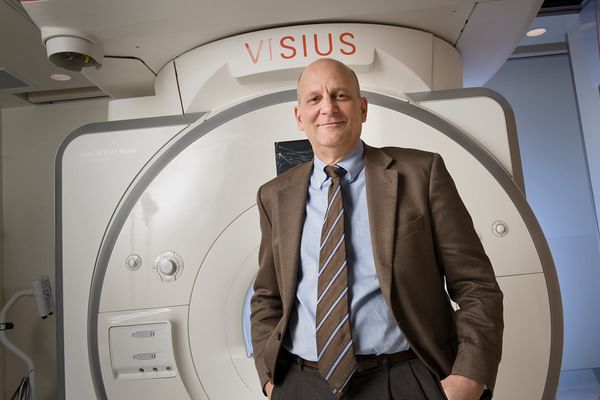
Herb Winful is a Professor of Optics at the University of Michigan's College of Engineering, Department of Electrical and Computer Engineering. He specializes in nonlinear optics, laser physics, quantum tunneling , and photonics , with a focus on phenomena like superluminal group velocities, frequency comb generation, and light storage via stimulated Brillouin scattering. Research areas span quantum tunneling times , nonlinear photonic materials , and coherent beam combining in fiber laser arrays. His work includes frequency comb spectroscopy using quantum-well diode lasers, ultrafast erbium fiber lasers , and negative group delay engineering in birefringent waveguides. The article list reveals expertise in supercontinuum generation , evanescent wave dynamics , photonic crystals , and nonlinear pulse manipulation . Key subfields include stimulated Brillouin/Raman scattering , parabolic similaritons , and time-domain modeling of optical systems. Award-winning scientific contributions include resolving the Hartman effect paradox and optimizing fiber laser arrays for high-power applications. His research bridges theoretical insights with practical innovations in optical engineering and quantum optics .
Qiang Li is a SUNY Empire Innovation Professor in the Department of Physics and Astronomy at Stony Brook University and holds a joint appointment at Brookhaven National Laboratory (BNL) as the leader of the Advanced Energy Materials Group. His roles span both research and academia, with a focus on quantum materials and their applications in energy and quantum information science. University: Stony Brook University Affiliations: Brookhaven National Laboratory, Department of Physics and Astronomy His research bridges fundamental and applied studies of topological quantum materials , superconductivity , thermoelectrics , and quantum information science . Key areas include synthesizing single crystals and thin films, exploring low-temperature transport properties, and developing scalable methods for superconducting and thermoelectric devices. Recent work highlights light-induced symmetry switching in Weyl semimetals and topological phase transitions. His publications emphasize quantum materials , particularly Dirac/Weyl semimetals , iron-based superconductors , and topological insulators , with techniques ranging from terahertz spectroscopy to phononic control of quantum states. Collaborations with institutions like Ames Laboratory and the University of Alabama at Birmingham are notable. Scientific Awards: Brookhaven Science and Technology Award (2019) R&D 100 Award for aFCL (2015) Fellow of American Physical Society (2013) New York State Leader in Superconductivity (2011) Qiang Li advises PhD students such as Pedro Lozano and leads the Quantum Materials Laboratory at Stony Brook, which integrates theory, AI-driven design, and experimental synthesis for quantum applications. His work is supported by the U.S. Department of Energy's Office of Basic Energy Science.
Eduard Feldbach is an Associate Professor at the Institute of Physics, Faculty of Science and Technology, University of Tartu since January 1, 2021. He has been affiliated with the Institute of Physics since February 13, 1978, progressing through various positions from engineer to senior researcher before becoming an associate professor. He has also held visiting positions at Universite Paris Nord as a visiting professor (October 2021) and as a visiting researcher at LSPM CNRS (May-October 2016). Dr. Feldbach graduated cum laude from the Department of Physics at the University of Tartu in 1975. He earned his Doctor's Degree in 1984 with a dissertation on 'VUV luminescence of free and bounded excitons in magnesium oxide' under the supervision of Tšeslav Luštšik and I.L. Kuusmann. His professional development includes research scholarships at Hamburg University through the German Research Foundation (1991) and the European Union's 'Go West' program (1993). His research focuses on condensed matter physics, particularly luminescence spectroscopy of solids, cathodoluminescence, and radiation effects in crystalline materials. His work examines optical properties of various materials including spinels, oxides, and nitrides, with emphasis on defect structures, radiation damage, and luminescent properties. Recent work has explored UV-emitting materials, particularly rare-earth-free phosphors for potential applications in lighting and radiation detection. Analysis of his recent publications (2021-2025) shows consistent focus on luminescence properties of materials under radiation, with particular attention to spinel structures, rare-earth-free phosphors, and radiation defect dynamics. His work bridges fundamental physics of electronic excitations with potential applications in radiation detection and UV-emitting materials. Soros Foundation grant (1993) Dr. Feldbach has held significant administrative roles including Management Committee Member of the COST Action CA17126 'Towards understanding and modelling intense electronic excitation' since 2018, Estonian representative in the EUROfusion Consortium's Materials Workpackage (2014-2018), and leadership of the 'Luminescence spectroscopy of multifunctional oxides' project at HASYLAB synchrotron radiation laboratory (2009-2011). He is a member of the Estonian Physical Society and has contributed to international research collaborations across Europe. His research activities involve working with synchrotron radiation facilities, electron beam excitation systems, and various spectroscopic techniques for studying radiation effects in solids. His work connects with international networks through COST actions and EUROfusion Consortium collaborations.
Professor Phil King leads a research group within the School of Physics and Astronomy at the University of St Andrews, where he is part of the Centre for Designer Quantum Materials. His research focuses on the electronic structure and many-body interactions of quantum materials using electron spectroscopy, particularly angle-resolved photoemission (ARPES), and creating new designer quantum materials through atomic layer-by-layer growth. King's research interests center on quantum materials, with particular emphasis on topological matter, transition-metal oxides, and 2D quantum materials. His group investigates strain and pressure tuning of quantum materials, photoemission spectroscopy of correlated systems, and engineering band structures in 2D conductors. They develop methods to exploit strong electronic interactions in 2D systems to create new functional materials with tunable properties. Their approach combines experimental screening of candidate materials, bottom-up atomic assembly of custom heterostructures, and advanced spectroscopic feedback. Analysis of King's recent publications reveals a strong focus on the electronic structure of quantum materials, particularly transition metal dichalcogenides, delafossite metals, and topological systems. His work frequently examines charge density waves, spin-orbit coupling effects, Van Hove singularities, and quantum phase transitions. A notable trend is the integration of materials synthesis with advanced spectroscopic characterization, enabling precise control over electronic properties through strain engineering, doping, and heterostructure formation. King actively supervises PhD students on projects related to quantum materials, including probing elastic coupling in exotic magnets, angle-resolved photoemission from tailored mesostructures, thermodynamics and spectroscopy, oxide metals, and gate tuning of 2D quantum materials. His research is supported by major funding sources that enable access to cutting-edge equipment and international facilities. The King Group operates advanced experimental facilities including a high-resolution lab-based ARPES system with multiple light sources, and two DCA R450 molecular-beam epitaxy systems optimized for transition-metal oxides and chalcogenides. They are developing the UK's first spin-resolved ARPES capability. The group regularly utilizes major international facilities including Diamond Light Source, Elettra, SOLEIL, and HiSOR synchrotrons, as well as the ARTEMIS facility for time-resolved studies.
Andrea Pickel is an Assistant Professor at the University of Rochester, holding joint appointments in the Department of Mechanical Engineering, Materials Science, and the Institute of Optics, while also serving as a Scientist at the Laboratory for Laser Energetics (LLE). She received her PhD in Mechanical Engineering from UC Berkeley (2019) and a BS from Carnegie Mellon University (2014). Her research focuses on nanoscale heat transfer, leveraging luminescent materials and super-resolution imaging to address challenges in thermal management, catalysis, and energy systems. Education: PhD, Mechanical Engineering, UC Berkeley, 2019 BS, Mechanical Engineering, Carnegie Mellon University, 2014 Research interests include luminescence nanothermometry, single-nanoparticle imaging, and high-temperature thermal metrology. Her work integrates experimental methods like stimulated emission depletion (STED) imaging and operando spectroscopy to advance understanding of energy transport at the nanoscale. Notable awards include the NSF CAREER Award (2022), ACS PRF Doctoral New Investigator Award (2020), and Furth Fund Award (2021). She was also named a Scialog Fellow in 2024. Advancing thermal measurement techniques, her group collaborates across disciplines to tackle applications in carbon capture, battery technology, and plasmonic photocatalysis. Current projects emphasize developing dual-mode sensing tools for real-time thermal and chemical monitoring. Labs/Teams: Active at the Laboratory for Laser Energetics (LLE) and leads the Pickel Research Group in the Department of Mechanical Engineering.
Prof. Jay A. Gupta is a Professor and Vice Chair for Graduate Studies and Postdoctoral Affairs in the Department of Physics at The Ohio State University. His research focuses on atomic-scale studies of novel materials using scanning tunneling microscopy (STM) to address challenges in energy conversion and advanced computing. Key areas include magnetic skyrmions in chiral systems, semiconductor defects, 2D materials, and spintronics. He leads a laboratory equipped with four advanced STM systems and collaborates on NSF NeXUS, an ultrafast science facility. Education: B.S. Chemistry/Physics (UIUC), Ph.D. Physics (UCSB) Lab Locations: Physics Research Building (labs 0101/0105/0178) Key Projects: Spin-polarized STM of MnGe, defect-mediated surface chemistry in semiconductors, ultrafast laser-material interactions His group has trained over 30 graduate/undergraduate students and postdocs, many now in academia and industry. Research is supported by NSF, Department of Energy, and industrial partnerships.
Prof. Dr. Cedrik Meier is a faculty member at the University of Paderborn , affiliated with the Faculty of Natural Sciences and serving as the head of the Department of Physics . He holds the academic rank of Professor and chairs the Audit Committee. Education: Diplom in Physik, Ruhr-Universität Bochum (1998) Dr. rer. nat. in Experimentalphysik, Ruhr-Universität Bochum (2001) Habilitation, Universität Duisburg-Essen (2007) His research focuses on Nanophotonics , Plasmonics , Metamaterials , and Nonlinear Optics . The work involves developing novel photonic devices using nanofabrication techniques and materials like zinc oxide (ZnO) and silicon metasurfaces . Recent publications highlight advancements in third harmonic generation , correlated photon sources , and nonlinear optical effects in nanostructured materials. Key projects include TRR 142 (Tailor-Made Nonlinear Photonics) and studies on quantum dot positioning and liquid crystal-tunable devices . Scientific Awards: Golden Chalk for teaching physics (2016) Junge Kolleg, NRW Academy of Sciences (2007) Gottschalk-Diederich Baedeker Prize (2007) NanoFutur Award (2006) DFG Postdoc Fellowship (2003) Evangelical Study Association Villigst Scholarship (1998) He has led research groups at multiple institutions and currently oversees the Nanophotonics & Nanomaterials working group. His teaching includes Experimental Physics D and Lab Projects .
Mingda Li is an Associate Professor in the Department of Nuclear Science and Engineering at the Massachusetts Institute of Technology (MIT), holding the Class of 1947 Career Development Professorship. His research spans quantum materials, nanoscale energy transport, and AI-driven materials discovery, utilizing neutron/X-ray scattering techniques and machine learning to address challenges in quantum computing, thermal management, and energy conversion. He leads the Quantum Measurement Group and teaches graduate courses including Quantum Theory of Materials Characterization. Education: Bachelor of Science in Engineering Physics, Tsinghua University, 2009 Doctor of Philosophy in Nuclear Science and Engineering, MIT, 2015 Postdoctoral Research, MIT Mechanical Engineering Department Research Interests: Dr. Li's quantum research develops theoretical frameworks for topological order and defect-engineered quantum materials, with applications in microelectronics and quantum computing. His energy transport studies investigate phonon/electron dynamics at interfaces under non-equilibrium conditions to design materials for thermal management in electronics. The AI program creates symmetry-aware generative models that integrate ab initio calculations with experimental data, enabling closed-loop materials discovery for quantum and energy technologies. Publication Trends: Analysis of 15 recent 2025 publications reveals dominant themes in quantum materials (topological semimetals, 2D magnets), AI-driven design (generative models, symmetry-equivariant networks), and advanced characterization (neutron/X-ray spectroscopy). Key innovations include defect engineering for thermal transport, machine learning for spectroscopic data interpretation, and quantum phenomenon discovery in complex materials, reflecting strong interdisciplinary integration. Scientific Awards: No scientific awards were mentioned in the provided text. Advising and Grants: Dr. Li mentors graduate students in the Quantum Measurement Group, guiding research in quantum materials characterization and AI applications. He has taught core courses including Applied Nuclear Physics and Machine Learning in Nuclear Science and Engineering. His research is supported by grants focused on quantum engineering and nuclear materials, with collaborations spanning national laboratories and industry partners for quantum computing and energy applications. Labs and Teams: The Quantum Measurement Group operates at the intersection of experimental physics and computational science, utilizing neutron scattering facilities (including Spallation Neutron Source) and ultrafast X-ray techniques. The team develops custom software for data analysis and collaborates with institutions like MIT.nano for materials synthesis, maintaining a pipeline from theoretical prediction to device-level validation for quantum and thermoelectric materials.
Stephen Bradforth is a Professor of Chemistry at the University of Southern California and Senior Advisor to the Dean for Research Strategy and Development in the Dornsife College of Letters, Arts and Sciences . He earned his PhD in Physical Chemistry from the University of California, Berkeley (1992) and conducted postdoctoral research at the University of Chicago . B.A., Natural Sciences, Cambridge University (1987) Ph.D., Physical Chemistry, UC Berkeley (1992) Postdoctoral Associate, University of Chicago (1993–1996) His research focuses on ultrafast laser spectroscopy to study chemical reactions in complex environments like aqueous systems and molecular materials . Key projects include: Solar Energy Conversion : Investigating photosensitizers based on earth-abundant elements (Cu, Zn, Zr) and organic photovoltaics with BODIPY cores. DNA Photodamage : Mechanisms of cyclobutane pyrimidine dimer (CPD) formation under UV exposure, emphasizing base-stacking effects. Electronic Structure in Ethereal Solvents : Studying solvated electrons in liquid ammonia and their role in carbanion stabilization. His 15 most recent articles (2004–2024) highlight advancements in photoelectron spectroscopy , singlet fission for solar cells, and DNA damage pathways . Collaborations span medicine, physics, and engineering . Scientific Awards include the ACS Physical Chemistry Division Senior Experimental Award (2023) , STAR Awardee (2019) , Cottrell Scholar , and Fellow of APS and AAAS . He has received both Junior (2001) and Senior Raubenheimer Awards (2022) at USC. Advising has been a cornerstone, with 23 PhD students graduated and 4 current candidates. His 15 most recent publications (2012–2024) emphasize ultrafast dynamics , charge transfer mechanisms , and environmental photochemistry . Labs & Teams : The Bradforth Group operates advanced time-resolved photoelectron spectrometers , liquid microjet systems , and high-repetition-rate laser facilities . Current projects include metallic water solutions (Nature 2021), DNA photophysics (FASEB J 2011), and carbanion electronic structure in ammonia.
Professor Michael De Volder is a Fellow and College Lecturer at St John's College, University of Cambridge, holding the position of Professor of Advanced Materials Engineering in the Department of Engineering. His research focuses on energy storage solutions, nanotechnology, and scalable manufacturing methods for sustainable battery technologies. Belgian Royal Academy Laureate Co-founder of Echion Technologies (niobium-based anode materials) Expert in Li-ion/Zn-ion battery innovation Research activities center on improving battery sustainability through novel synthesis techniques, extending battery lifetime via structural optimization, and developing high-energy-density materials. His work spans nanoscale engineering, electrode design, and fundamental electrochemical investigations. Scientific publications from 2022-2025 demonstrate expertise in: Li-ion/Zn-ion battery systems, nanotube integration, electrode manufacturing, and degradation analysis. Recent work explores mechanochromic displays, dual-gradient electrodes, and aqueous-organic electrolyte formulations. Belgian Royal Academy Laureate Co-founder of battery technology startup Echion Technologies
James Speck serves as Professor in the Materials Department at the University of California, Santa Barbara's College of Engineering. He holds the Seoul Optodevice Distinguished Professorship of Solid State Lighting and maintains an active research laboratory focused on wide bandgap semiconductors. His work spans over 25 years of leadership in GaN-based semiconductor materials science at UCSB. Speck's research interests center on the relationship between epitaxial growth, microstructure, morphology, heterostructures, transport properties, and device performance in wide bandgap semiconductors. His group has made fundamental contributions to understanding growth mechanisms, defect generation, and the impact of threading dislocations in GaN systems. Over the past decade, his research has expanded to include binary oxides and emerging wide bandgap semiconductors like β-Ga 2 O 3 . His early work focused on epitaxial oxide films on semiconductors, ferroelectric thin films, and strain relaxation in highly mismatched epitaxial systems. The publication record demonstrates consistent research activity in III-nitride materials, with recent focus on semipolar and nonpolar orientations for improved device performance. His work spans fundamental materials science to practical device applications, particularly in solid-state lighting and laser technologies. The research shows particular emphasis on addressing efficiency limitations in LEDs and developing novel approaches for vertical-cavity surface-emitting lasers. Member of National Academy of Inventors IEEE Photonics Society Aron Kressel Award Materials Research Society (Inaugural Class) Japanese Journal of Applied Physics Best Paper Award Professor Speck has co-founded Soraa, a company commercializing GaN-based lighting technology. His research group has produced over 725 refereed publications, demonstrating extensive collaboration with colleagues including S. Nakamura and S.P. DenBaars. His work has received significant funding supporting fundamental materials research with applications in energy-efficient lighting and optoelectronic devices. The Speck group maintains active research facilities at UCSB focused on advanced semiconductor characterization and device development.
Norm Murray is a Professor at the Canadian Institute for Theoretical Astrophysics (CITA) within the University of Toronto . With a Ph.D. from UC Berkeley (1986), his research spans nonlinear dynamics , planetary formation , solar system evolution , and active galactic nuclei . His work combines theoretical physics with observational data from radio telescopes, X-ray satellites, and cosmological simulations. Recent research focuses on galaxy formation (via FIRE simulations), dark matter interactions in dwarf galaxies, and AGN disk dynamics . He employs machine learning for planetary collision modeling and investigates the interplay of magnetohydrodynamics and radiative transfer in quasar environments. Publications highlight his expertise in computational astrophysics, spanning topics from cosmic molecular gas mapping to the stability of exoplanetary systems.
Keith D. Paulsen is the MacLean Professor of Engineering at Dartmouth College’s Thayer School of Engineering and holds the title of Professor of Radiology & Surgery at the Geisel School of Medicine. He serves as Scientific Director of the Center for Surgical Innovation at Dartmouth-Hitchcock Medical Center and Co-Director of the Translational Engineering in Cancer Research Program at the Norris Cotton Cancer Center. His roles emphasize interdisciplinary collaboration between engineering, medicine, and oncology. Paulsen earned a BSc in Biomedical Engineering from Duke University (1981), followed by MS (1984) and PhD (1986) degrees in Engineering Sciences from Dartmouth College. His research focuses on biomedical imaging, cancer therapeutics, and image-guided surgery, with particular expertise in optical and electromagnetic methodologies. He has pioneered technologies such as fluorescence-guided surgery, quantitative scatter imaging, and non-linear image reconstruction techniques, aiming to enhance surgical precision and cancer diagnosis. His awards include fellowships from OSA, SPIE, AIMBE, IEEE, and the National Academy of Inventors. Paulsen’s work has led to startups like CairnSurgical (where he serves as CTO) and InSight Surgical Technologies, translating research into clinical tools. Key projects include intraoperative imaging systems for brain and spine surgery, microwave imaging for breast cancer, and optical molecular imaging for real-time surgical guidance. Paulsen teaches advanced computational methods (ENGS 205, 105) and courses on medical device innovation (ENGM 189.1/2). His lab, part of Dartmouth’s Optics in Medicine cluster, collaborates with radiology, surgery, and oncology departments to develop clinical technologies funded by NIH, NCI, and DoD grants.
Ramses Martinez is an Assistant Professor in the Department of Industrial Engineering and Biomedical Engineering at Purdue University . He holds a B.A. in Applied Physics from Universidad Autonoma de Madrid (2004) and a Ph.D. in Physics and Materials Science from the Spanish National Research Council (CSIC) in 2009. Prior to joining Purdue, he conducted postdoctoral research in the lab of Prof. George M. Whitesides at Harvard University, focusing on nanofabrication, microfluidics, and soft robotics. Education B.A. in Applied Physics, Universidad Autonoma de Madrid (2004) Ph.D. in Physics and Materials Science, Spanish National Research Council (CSIC) (2009) His research bridges soft robotics , flexible electronics , and nanofabrication , with a focus on creating self-powered e-textiles , omniphobic paper-based devices , and programmable mechanical metamaterials . His work has led to over 25 publications and 9 patents, emphasizing practical applications in health monitoring and industrial automation . Notable projects include waterproof electronic decals for biofluid monitoring, smart bandages for chronic wound detection, and laser nanoforming methods for scalable metallic structures. His research has been recognized through the Fulbright Fellowship and the Marie Curie IOF Grant .
Géraud Delport is a CNRS permanent researcher at the IPVF Laboratory in Palaiseau, France, specializing in optical and optoelectronic properties of hybrid perovskite materials. His research focuses on cryogenic spectroscopy of quantum electronic effects (excitons, polarons), lead-free perovskites, and thin-film optoelectronic devices including photovoltaics and photodetectors. He maintains extensive collaborations with LUMIN Laboratory Saclay, GEMAC Laboratory, IRCP Lab Paris, FOTON and ISCR Rennes, and CEA LITEN. His academic background includes: Post-doctorate (2018-2020) at Cavendish Laboratory, Cambridge University in Samuel Stranks' team Post-doctorate (2017-2018) with CNRS contract at Université Paris Saclay PhD (2013-2016) at ENS Paris Saclay in Nanophotonics group of Aimé Cotton/LUMIN laboratory under Prof. Jean Sébastien Lauret Physics studies (2009-2013) at ENS Cachan Dr. Delport's research bridges fundamental physics with practical applications in optoelectronics. He specializes in time-resolved photoluminescence spectroscopy to investigate exciton dynamics and charge carrier behavior in 2D/3D perovskite structures. His work spans from carbon nanotube photophysics (earlier career) to current leadership in gold-based and lead-free perovskite development, with emphasis on correlating structural properties with optoelectronic performance. Recent work explores cryogenic spectroscopy techniques to understand quantum electronic phenomena in novel semiconductor materials. Analysis of his publication record shows increasing focus on environmentally sustainable perovskite alternatives, particularly gold-based systems, with significant contributions to understanding radiative efficiency limitations and structural-optical property relationships. His research demonstrates progression from fundamental nanoscale characterization to device-oriented applications, with recent papers addressing challenges in photovoltaic efficiency and material stability. Dr. Delport's research is supported by competitive funding including: French ANR young researcher grant "POETESSE" "Photothermal techniques to study thin films semiconductors" (MIRADOR project) "Photodetector based on lead-free perovskite materials" CABLESOLAR Project on "tethered altitude balloons with flexible solar panels" As a research supervisor, he actively recruits doctoral and postdoctoral candidates for projects in optical spectroscopy and solid-state chemistry, with current openings for thin-film deposition research and lead-free perovskite synthesis. His collaborative approach spans multiple French research institutions, creating an integrated ecosystem for advancing perovskite-based optoelectronic technologies from fundamental science to practical applications.