Erik Asbjörn Mikkelsen Jensen is a researcher at Chalmers University of Technology affiliated with the Department of Physics, specializing in Subatomic, high-energy and plasma physics. His recent work focuses on applying deep learning techniques to rare event detection in particle physics experiments. Research interests include Subatomic physics Machine learning Object detection The 2025 publication demonstrates a novel CNN-based framework for analyzing 3D track data from the GADGET II TPC, achieving perfect recall for rare two-particle events through simulation-based training with parameter perturbations. This work intersects computer science and high-energy physics.
Nate Mucha serves as an Associate Professor of Design within the School of Communication & Visual Arts at Grove City College, where he teaches foundational and advanced courses in visual communication, design thinking, and user experience. His educational background includes: M.F.A. in Visual Communication Design from Kent State University (2012, Summa Cum Laude) B.A. in Philosophy from Grove City College (2008, Magna Cum Laude) Mucha's research integrates historical design methodologies with contemporary practice, specializing in Visual Communication Design, Traditional Printing Processes, and Design Thinking. His expertise bridges analog techniques like letterpress printing with digital workflows using Adobe Creative Cloud, emphasizing user-centered design solutions in Web Design and Branding applications. Professionally, Mucha maintains dual roles as Partner and Creative Director at Rust Vally Design (2011–present) while teaching full-time. His industry engagement informs pedagogy through practical applications in Small Business Development and branding projects. Affiliations include AIGA: The Professional Association for Design, Redeemer Church (PCA), and the Kent Area Chamber of Commerce. A dedicated practitioner of historic printing methods, Mucha operates multiple 19th-century letterpresses in his personal workshop, directly supporting his research in Traditional Printing Processes and influencing both his publication The American Craftsman: A Contemporary Revival and studio-based teaching approach.
Adam Vidiksis is an Associate Professor of music technology at Temple University, President and founding member of SPLICE Music, Resident Artist at Renegade Theater company, and founding member of the Impermanent Society of Philadelphia. He recently served as composer-in-residence for the Chamber Orchestra of Philadelphia and directed a major arts technology project for the 2020 Tokyo Olympics under the NEA and Japan-US Friendship Commission. His research and creative practice investigate: Human-machine collaboration in music Generative electroacoustic improvisation Social systems as artistic frameworks Percussion extended through technology He has received significant recognition, including awards/grants from: ASCAP National Endowment for the Arts Chamber Music America New Music USA American Composers Forum He directs multiple ensembles including the Temple Composers Orchestra and BEEP (Boyer Electroacoustic Ensemble Project), and performs with experimental groups like SPLICE Ensemble and Transonic Orchestra. His real-time electronic music projects include 4EA and Circadia & Currency .
Andrea Navarro-Quezada serves as an Associate Professor in the Department of Solid State Physics at Johannes Kepler University Linz, Faculty of Engineering and Natural Sciences. She additionally holds the significant position of Chair Woman of Equal Opportunities in Physics for the Austrian Physical Society (ÖPG) since September 2023, where she actively promotes gender diversity in physics. Her academic journey began with a Master's in Physics from Universidad Autonoma de San Luis Potosi, focusing on the critical thickness of Ge/GaAs thin films. Dr. Navarro-Quezada's research centers on magnetic nanomaterials embedded in semiconductor structures , particularly iron-gallium nitride (Fe-GaN) nanocrystals. Her work investigates magnetic anisotropy, crystallographic structure, and strain engineering in GaN/AlGaN heterostructures. She develops specialized instrumentation including in situ electromagnets for magneto-optic Kerr effect spectroscopy, enabling real-time magnetic characterization of nanomaterials. Her research bridges fundamental physics with potential applications in spintronics and advanced electronic devices. Her publication record demonstrates consistent productivity with 43 research outputs including 38 articles, 2 patents, and conference proceedings. The research spans from fundamental crystal growth studies to advanced magnetic characterization techniques. Recent work (2021-2023) shows strong focus on magnetic nanocrystals in nitrides, while earlier projects explored thin film technology and semiconductor physics. Among her notable recognitions is the 2025 OÖ Landespreis in the 'Starke Frauen. Starkes Land' category, honoring her contributions to physics and gender equality. Her media presence includes 36 contributions covering topics from brain aneurysm physics applications to historical women physicists. Dr. Navarro-Quezada has secured multiple research grants including FWF-funded projects and international collaborations with Poland and France. She has organized significant events including the 73rd Annual ÖPG Meeting (2024) and regularly presents at international conferences on magnetic materials. Her supervision activities include doctoral thesis guidance as indicated by her 'Supervised Work' listing.
Mücahit HAYAT is a full-time Lecturer at Karabük University's TOBB Technical Sciences Vocational School, Department of Transportation Services. He has held this position since 2023 and maintains membership in the TMMOB Chamber of Civil Engineers since 2022. Education PhD in Civil Engineering, Karabük University (expected 2024) MSc in Civil Engineering, Karabük University (2020-2022) BSc in Civil Engineering, Karabük University (2015-2019) Research Focus His primary research domain is Building Materials , with no other specialized areas currently documented. Teaching Portfolio He instructs vocational courses including: Road Project & Highway Engineering Traffic Planning & Application Technical Drawing Computer Aided Design (CAD) Statics & Strength of Materials Quality Assurance Standards
Adriana Sofia Gageiro Correia is a Portuguese psychologist and researcher currently serving as an Investigator at the Research Centre on Space and Organizations at the University of Algarve. She is simultaneously completing her PhD in Psychology at the same institution while maintaining an active role as a Collaborating Psychologist, Researcher, and Project Coordinator at the Municipal Chamber of Boa Vista in Cape Verde. As a certified Psychotherapist specializing in children and adolescents through the Portuguese Association of Behavioral, Cognitive and Integrative Therapies, she bridges clinical practice with academic research. Her research interests span Clinical Psychology, Child and Adolescent Psychotherapy, Community Support, Psychoeducation, and Volunteering. Dr. Correia's work demonstrates a strong commitment to applying psychological knowledge in community contexts, particularly through her extensive work in Cape Verde developing family support and parenting programs. Her publication record includes 3 journal articles, 1 book chapter, and numerous conference presentations focusing on child psychology, family interventions, and cross-cultural applications of psychological principles. Dr. Correia has established herself as a bridge between academic research and practical community application, with particular expertise in: Behavioral, Cognitive and Integrative Psychotherapy with children and adolescents Development and implementation of family support programs in cross-cultural contexts Interventions for children with special educational needs Community psychology applications in Cape Verde Her professional activities reflect a commitment to both clinical excellence and community engagement, with memberships in the Ordem dos Psicólogos Portugueses and the Portuguese Association of Behavioral, Cognitive and Integrative Therapies. She co-founded and serves as President of 'CRER E APRENDER - Intervenção Psicoeducativa e Comunitária,' demonstrating her dedication to psychopedagogical and community intervention work.
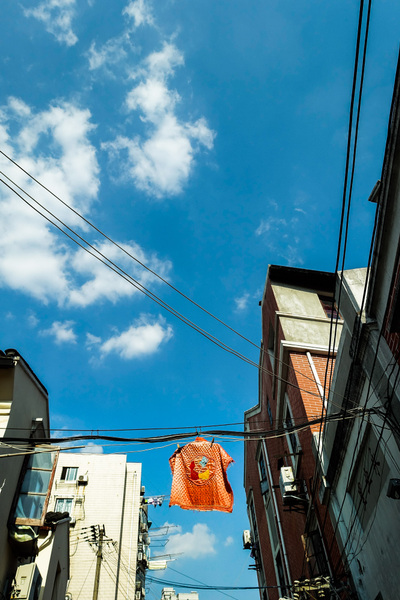
Shinichi Honda is a Professor in the Department of Photography at Osaka University of Arts' Faculty of Arts, where he has taught since April 2019. With an extensive international career spanning over four decades, Professor Honda maintains active professional work as CEO and Photographer at RAYZOO.co since 1995, alongside his academic responsibilities. His research interests focus on Advertising Photography , Digital Imaging , Advertising History (Japan-USA) , and his distinctive area of expertise: texture studies in urban environments. Professor Honda's recent work centers on documenting the layered textures of Shanghai's architecture, examining how historical buildings accumulate visual history through repairs, additions, and weathering over time. His artistic practice includes the 'Liquid work' series exploring fluid dynamics in photographic media and the 'Oil on Oil' project investigating material interactions. Professor Honda's work demonstrates consistent excellence, recognized through prestigious awards including the MOBIUS AWARD Grand Prix (2004), Judge recommendation at Japan Media Arts Festival (2002), and EPSON Imaging Grand Prix (1998). His international perspective is reflected in his extensive career across multiple continents and his documentation of Shanghai's urban landscape. MOBIUS AWARD, Grand Prix (Brochure), 2004 Japan Media Arts Festival Judge recommendation, Wired Woman, 2002 EPSON Imaging Grand Prix, London days, 1998 The Chamber of Commerce Award, Interior Magazine, 1992 Japan Newspaper Publishers & Editors Association Advertising Award SCA Creative award, Singapore Creative Association As an educator, Professor Honda bridges academic theory with professional practice, drawing from his decades of experience in advertising photography across Japan, Singapore, London, and New York. His recent exhibition '7 years in Shanghai' at Sony Imaging Gallery (2022) exemplifies his approach to using photography as both artistic expression and cultural documentation. His work continues to explore the intersections of Eastern and Western visual cultures through the lens of texture, history, and urban transformation.
Johannes Arend serves as an Assistant Professor in the Department of Information and Communications Engineering at Technische Universität Berlin, specializing in Technical Psychoacoustics within the Faculty of Electrical Engineering and Computer Science. His research bridges acoustic theory, audio technology development, and perceptual evaluation, with significant contributions to virtual reality audio applications and hearing science. His academic foundation includes a Doctoral degree in Engineering and Technology from Technische Universität Berlin, awarded on February 11, 2022. Arend's research portfolio centers on the intricate relationship between physical sound properties and human perception. Key investigation areas include: Virtual and spatial audio rendering techniques Psychoacoustic evaluation of complex sound fields Microphone array processing for sound source localization Voice radiation patterns and phoneme-dependent directivity Real-time room acoustic simulation systems Virtual reality applications for auditory testing Analysis of his 2024-2025 publications reveals a cohesive research trajectory focused on enhancing acoustic realism in virtual environments. His work consistently integrates experimental methodologies with computational modeling to address challenges in stage acoustics, speech intelligibility, and environmental sound reproduction. This research demonstrates strong interdisciplinary connections between audio engineering, cognitive science, and medical applications. No scientific awards were documented in the available profile information. Details regarding student supervision, grant funding, and collaborative projects were not explicitly provided in the current profile, though his publication record indicates active research collaboration. His experimental work is likely conducted within specialized audio laboratories at Technische Universität Berlin, featuring advanced virtual reality integration, anechoic chamber facilities, and high-fidelity recording systems for psychoacoustic experimentation.
Karin Ruggaber is a Professor and Co-Director of Studies for the Slade Graduate Programme at UCL's Slade School of Fine Art, where she also serves as Head of Graduate Sculpture and Admissions Tutor (MA/MFA). Her academic career spans over 15 years at UCL, progressing from Lecturer (2007-2015) to Senior Lecturer (2015-2019) and ultimately Professor (2023-present), with concurrent visiting lecturer roles at institutions including the Royal Academy Schools, Goldsmiths College, and Oxford's Ruskin School. Her research centers on sculpture as a dynamic practice exploring figuration, ornamentation, and sensory experience in architecture. The Rock Room Project, founded in 2013, exemplifies her interdisciplinary approach through collaborations with UCL Earth Sciences and Museums, examining materiality across geological timescales. Her work investigates architecture as territorial manifestation and the translation of sculpture into public spaces, with principles of ordering set against material imprecision. Her recent exhibitions reveal consistent engagement with material transformation and spatial narratives, particularly evident in her 2021 'Clips and Brooches' series and 2018 'Bottom of the lake' exhibition. The trend shows increasing integration of archival research (notably her 2022 British School at Rome archive work on the Bulwer sisters) with sculptural practice, alongside sustained exploration of sensory perception across multiple exhibitions including Anechoic Chamber workshops and ice physics laboratory experiments. Abbey Fellowship at the British School at Rome (2019) Library and Archive Award at the British School at Rome (2022) Residency awards at CCA Andratx, Spain (2016, 2022) UCL Arts and Humanities Small Impact Grant (2024) UCL Dean’s Strategic Fund Award (2018) Arts Council England, The Elephant Trust, and Henry Moore Foundation grants Ruggaber's mentorship extends through programs like OUTPOST Norwich's Resident Artists Members' Exchange (2014), while her research grants consistently support interdisciplinary projects bridging art with earth sciences and climate physics. The Rock Room Project has facilitated collaborations with geochemists, perfumers, and animal geographers, demonstrating her commitment to cross-disciplinary knowledge exchange. Her external examiner roles at Glasgow School of Art, Newcastle University, and others reflect her standing in art education. Based in the Slade School's Graduate Sculpture program, Ruggaber's Rock Room Project creates a unique laboratory for artistic experimentation within UCL's Earth Sciences context. This initiative has hosted specialized workshops in the Anechoic Chamber, Ice Physics Laboratory, and Marine Engineering facilities, fostering innovative approaches to materiality and sensory experience. The project's evolution from annual Rock Room exhibitions to the UCL Mullard Space Science Laboratory Sculpture Parks demonstrates its expanding scientific integration.
Hunt Allcott is a Professor of Environmental Social Sciences at Stanford University's Doerr School of Sustainability and a Senior Fellow at the Stanford Institute for Economic Policy Research (SIEPR). He co-directs the Stanford Environmental and Energy Policy Analysis Center, serves as a research associate at the National Bureau of Economic Research, and affiliates with ideas42 and the Poverty Action Lab while editing the American Economic Journal: Economic Policy. His education includes: PhD in Public Policy, Harvard University (2009) MS in Engineering Economic Systems and Operations Research, Stanford University (2002) BS in Energy Engineering (with Honors), Stanford University (2002) Allcott's research bridges environmental economics, behavioral science, and digital media. He examines how information, social norms, and behavioral interventions influence energy consumption, environmental outcomes, and social media usage through large-scale field experiments. His work on 'digital addiction' and social media's electoral impacts has reshaped policy debates, while his energy efficiency studies analyze consumer behavior and market failures in electricity markets. Recent publications reveal three dominant research streams: social media's societal impacts (including emotional effects and election interference), behavioral approaches to energy/environmental policy (carbon pricing and efficiency programs), and welfare analysis of 'sin taxes' (soda and gambling). His experimental methodology combines theoretical models with real-world data from platforms like Facebook and Instagram. Scientific recognition includes: Atkinson Award for Journal of Public Economics Cohn Dissertation Fellowship in Environmental Studies Joseph Fisher Dissertation Fellowship Joseph Crump Fellowship Ochoa Brillembourg research fellowship Allcott has secured major grants from the Sloan Foundation, National Institute on Aging, and Stanford for projects on digital advertising, congestion pricing, and equitable energy transitions. He has advised PhD students at Stanford, MIT, and NYU while teaching courses in environmental economics and data science. As co-director of the Stanford Environmental and Energy Policy Analysis Center, he leads interdisciplinary teams analyzing policy interventions through the lenses of behavioral economics and data science.
Lance R Hulme serves as Professor at North Carolina Central University's College of Arts, Social Sciences, and Humanities, where he directs the Music Theory and Composition program and teaches Music Industry and FabLab courses. His leadership extends to developing the educational software Basic Training in Music Skills and directing the acclaimed À la carte concert series. His educational background includes a DMA and MMA from Yale University, MM from Eastman School of Music, BM from University of Minnesota, and studies at Universität für Musik in Vienna. His career spans conducting premieres, jazz fusion performance with Dreamscape band, and 17 years in Europe co-founding Ensemble Surprise. Yale University: DMA (1998), MMA (1994) Eastman School of Music: MM (1989) Universität für Musik Wien: AA (1987) University of Minnesota: BM (1983) Hulme's research spans compositional eclecticism, music technology integration, and aural skills pedagogy. Critics describe him as a 'chameleon composer' weaving diverse musical traditions into rich expressive textures. His work bridges 'serious' and vernacular music while employing advanced structural techniques, with special focus on computer-assisted composition and interactive collaborations with choreographers. His publication trends reveal sustained exploration across genres: from sacred choral works (Psalm 62) to electronic compositions (Caritas Abundat), jazz arrangements (My Favorite Things), and chamber pieces (JethroZen). The corpus demonstrates consistent engagement with cross-cultural synthesis, technological innovation, and expressive narrative forms, with recent works emphasizing digital media integration. Notable awards include: Grand Prize, International Witold Lutoslawski Composition Competition First Prize, ASCAP/Rudolf Nissim Prize 2021 Malta International Composition Competition First Prize Fulbright Grant to Austria MacDowell Colony Fellowship Hulme's advising impact manifests through his educational software used across institutions and mentorship via the À la carte concert series, which has become 'one of North Carolina's most important concert series' (Classical Voice NC). His technological contributions include sound engineering for album productions and real-time dance installations at Modern Repertory Dance Theater. He leads NCCU's FabLab music technology initiatives and continues directing Ensemble Surprise's legacy through À la carte, presenting '700 years of new music' across genres and epochs. Current projects include interactive computer compositions and expanding his educational software platform.
Dr. Volodymyr Bon is a researcher and lecturer specializing in porous materials, particularly Metal-Organic Frameworks (MOFs) and Covalent Organic Frameworks (COFs). Affiliated with Prof. Stefan Kaskel's research group, he focuses on gas storage, separation, and in situ characterization of structural dynamics in flexible frameworks. His research encompasses synthesis and crystal engineering of MOFs/COFs, advanced X-ray diffraction methods (single crystal, powder, variable temperature), and development of time-resolved synchrotron techniques to monitor guest-induced switching and adsorption kinetics. This work targets energy-efficient applications in gas separation and storage, leveraging instrumentation for real-time analysis under chemical and electromagnetic stimuli. Dr. Bon co-supervises master's and PhD theses and teaches General and Inorganic Chemistry. He secures substantial funding through active BMBF projects 'TIMESWITCH' and 'TOMOPORE' (2022-2025), building on prior ERC grants (AMPLIPORE) and DFG collaborations. His scholarly output includes book chapters in flagship publications and patents for adsorption chamber design, reflecting translational impact. Collaborations span international consortia and synchrotron facilities, emphasizing methodological innovation in nanoporous materials science.
Dr. Michal Rigan is a Research Fellow in the Department of Physics and Astronomy at the University of Sussex, within the School of Mathematical and Physical Sciences. His research focuses on experimental particle physics, particularly with the DUNE (Deep Underground Neutrino Experiment) and previously with the SNO+ experiment. Dr. Rigan completed his PhD in Physics at the University of Sussex, where he worked on the SNO+ experiment, focusing on calibration systems and developing a burst trigger system for supernova detection. Before his PhD, he earned an MSci in Particle Physics and Physical Chemistry from University College London, where his master's thesis involved work on the SHiP experiment in collaboration with CERN. His research interests span neutrino physics , supernova detection , liquid argon detector technology , and trigger systems development . Dr. Rigan has made significant contributions to the field through his work on calibration systems, supernova sensitivity analysis, and physics trigger implementation for large-scale particle physics experiments. His recent publications (2023-2025) demonstrate a strong focus on the DUNE experiment, with particular emphasis on neutrino interaction vertex reconstruction using deep learning, supernova pointing capabilities, detector technology development, and data analysis techniques for liquid argon time projection chambers. His work shows a progression from detector calibration and supernova detection in SNO+ to more advanced physics trigger systems and analysis techniques in DUNE. Dr. Rigan has received recognition through citations for his work, with several publications accumulating significant citation counts (up to 25 citations for the DUNE far detector vertical drift technology paper). His research has been highlighted by various platforms including news outlets, social media, and academic readership services. As an educator, Dr. Rigan teaches C++ programming to students in the School of Mathematical and Physical Sciences. His background as a full-stack developer during a gap year before his PhD provides him with practical industry experience that informs his teaching approach. He is actively involved in mentoring and would be an excellent supervisor for students interested in experimental particle physics and computational methods. Dr. Rigan's laboratory work is primarily associated with the DUNE experiment ( https://www.dunescience.org/ ), where he contributes to the development of physics trigger systems and supernova detection capabilities. His work involves close collaboration with international research teams working on this major particle physics project.
Jörgen Häll is a University Lecturer in Musical Performance at Luleå University of Technology, based in Piteå. He is affiliated with the Department of Social Sciences, Technology and Arts, specifically within the Music, Media and Theatre division. His research and artistic work focuses on: Musical performance The interface between technology and music Interactivity in artistic expression Audiovisual art integration Häll has established an international reputation with his compositions being performed worldwide by prestigious ensembles including Alter Ego (Italy), Ensemble MISE-EN (US), Senzoku Gakuen Symphony Orchestra (Japan), and many others across Europe. His recent works demonstrate a consistent exploration of the relationship between sound, visual elements, and performance space. His notable recent publications include: "LIGHT - DARK: for horn and audiovisuals" (2024) "drifting light: for chamber ensemble and video projection" (2022) "Rifted: For chamber ensemble" (2022) "Dance in Time" (2021) "Dance in Time: Dance party Piteå 400 years" (2021) As an educator and researcher, Häll bridges traditional musical performance with contemporary digital technologies, creating innovative works that explore new possibilities for artistic expression at the intersection of sound, image, and interactive systems.
Jonathan Leshnoff is a Professor of Music at Towson University's Department of Music within the College of Fine Arts and Communication. Distinguished by The New York Times as 'a leader of contemporary American lyricism,' his works have been performed by over 70 orchestras globally including premieres by artists like Gil Shaham, Joyce Yang, and Ricardo Morales. Leshnoff's creative output centers on composition with emphasis on structural complexity and powerful thematic narratives. His style features striking harmonies and lyrical intensity, frequently exploring Jewish heritage and American historical events through symphonies, concertos, oratorios, and chamber works. He maintains active collaborations with major orchestras and soloists worldwide. Recent compositions (2016-2019) demonstrate a trend toward large-scale symphonic works commissioned by prestigious institutions, with recurring themes of commemoration (Oklahoma City bombing) and historical remembrance (Violins of Hope project). His music balances emotional depth with technical sophistication, increasingly incorporating narrative elements into contemporary orchestral frameworks. Awards: Naxos Top 40 CD for Violin Concerto No. 1 2020 GRAMMY nomination for Symphony No. 4, 'Heichalos' Leshnoff holds composer-in-residence positions with the Fairfax and Harrisburg symphonies and maintains active commissioning relationships with Carnegie Hall, the Philadelphia Orchestra, and multiple American symphony orchestras, reflecting his significant standing in contemporary classical music.