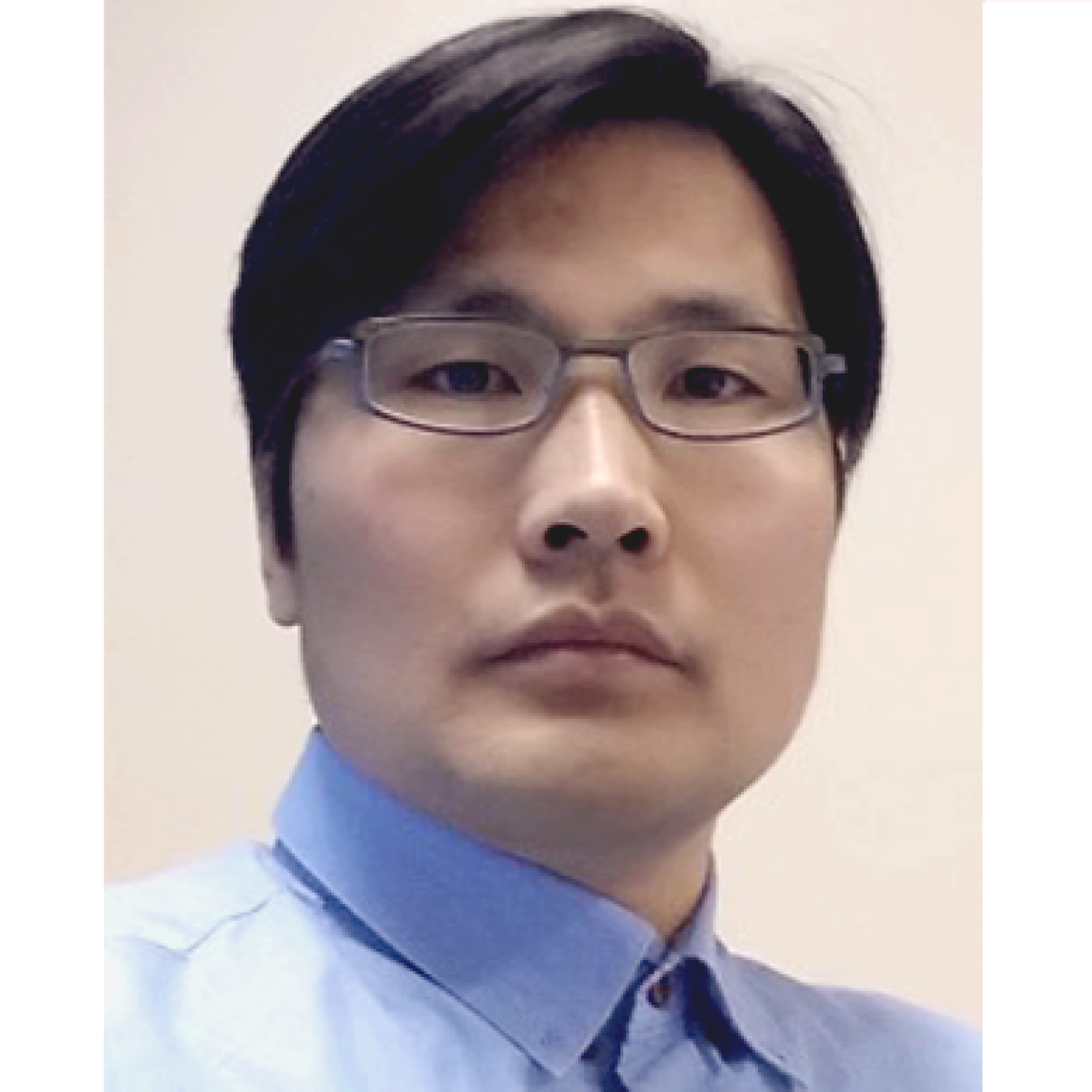
Lei Chen is a Chair Professor and Director of HKUST Big Data Institute at the Hong Kong University of Science and Technology , where he has served since 2005. His research spans data-driven machine learning , crowdsourcing systems , and uncertain database processing , with notable contributions in privacy-preserving spatial queries and graph neural networks . Ph.D. in Computer Science, University of Waterloo (2004) MS in Computer Science, Asian Institute of Technology (1997) BS in Computer Science, Tianjin University (1994) His work focuses on: Spatial Crowdsourcing - Efficient task assignment and privacy frameworks Graph Processing - Novel indexing for heterogeneous networks Explainable AI - Human-centric model interpretation techniques Uncertain Data - Probabilistic query processing with crowdsourcing Recent publications cluster around secure data federation , distributed graph training , and privacy-preserving mobility systems , reflecting his leadership in ACM and IEEE communities. Students include 15 active Ph.D. candidates and 20+ graduated researchers now at institutions like BeiHang University and Huawei Noah's Ark Lab . Awards: ACM Fellow (2024), VLDB Best Paper (2022), SIGMOD Test-of-Time Award (2015).
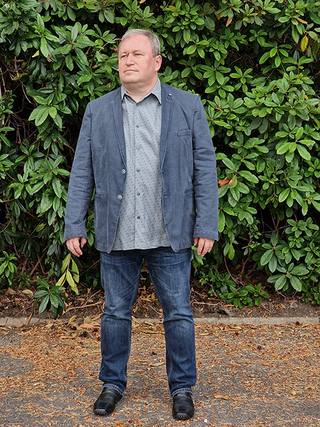
Artur Czumaj is a Professor of Computer Science and Director of the Center for Discrete Mathematics and its Applications (DIMAP) at the University of Warwick, United Kingdom. He is a member of the Global Faculty at the University of Cologne and serves as President of the European Association for Theoretical Computer Science (EATCS). PhD and Habilitation from University of Paderborn Recipient of the IBM Award and Fellow of EATCS His research focuses on theoretical computer science, particularly in the design of randomized algorithms, analysis of large data, and applications to parallel/distributed computing, property testing, sublinear algorithms, optimization algorithms, and algorithmic game theory. His work has been funded by major institutions including EPSRC, NSF, Royal Society, European Union, Simons Foundation, and IBM. The 15 most recent publications reflect expertise in graph algorithms, distributed systems, approximation techniques, and algorithmic complexity. His research spans foundational algorithm design to practical applications in large-scale data processing. Fellow of the European Association for Theoretical Computer Science (EATCS) IBM Award recipient Czumaj has held leadership roles in prominent conferences, including Program Committee Chair for STOC, ICALP, SODA, and HALG. His academic career is supported by grants from multiple international research councils and organizations.
Tsan-sheng Hsu is a Research Professor at the Institute of Information Science (IIS), Academia Sinica in Taiwan. He has been a tenured full research fellow since June 2003, after serving as an assistant research fellow starting in 1993 and associate research fellow from 1997-2003. He also served as Deputy Director of IIS from 2002-2004 and Director of Academia Sinica Computing Center from 2008-2010. Since 2019, he has been Editor in Chief for the Journal of Information Science and Engineering. Dr. Hsu's educational background includes: Bachelor of Science in Computer Sciences from National Taiwan University (1981-1985), graduating first in class Master of Science in Computer Sciences from University of Texas at Austin (1990) Ph.D. in Computer Sciences from University of Texas at Austin (1993) Dr. Hsu's primary research interests focus on graph theory and its applications , where he investigates fundamental properties of graphs and develops algorithms for connectivity augmentation problems. His work in algorithm design, analysis, implementation and performance evaluation spans sequential, parallel, and distributed algorithms. In data-intensive computing , he explores data privacy protection, large-scale social network analysis, and computer Chinese chess. His research often bridges theoretical breakthroughs with practical applications in network reliability, statistical data security, and efficient computation. Dr. Hsu's publication record demonstrates a consistent focus on graph theory problems, particularly connectivity augmentation, graph searching, and distance-hereditary graphs. His work shows progression from theoretical foundations to practical applications, with an emphasis on developing efficient algorithms with provable performance guarantees. The majority of his publications appear in top theoretical computer science venues, reflecting his strong contributions to fundamental algorithmic research. Dr. Hsu has received several prestigious awards and honors: Bert Kay Dissertation Award from University of Texas at Austin (1993) Academia Sinica Research Award for Junior Research Investigators (2003) Phi Tau Phi Scholastic Honor Society membership (1985) MCD fellowship and IBM graduate fellowship during doctoral studies Dr. Hsu leads the Massive Data Computation and Management Lab at Academia Sinica, where he directs research on graph theory applications, algorithm design, and data privacy. His research has been supported by various projects including theoretical foundation work on graph augmentation and searching problems, as well as applied research in inference control, computer Chinese chess, and parallel computation. He has collaborated extensively with researchers from institutions including Northwestern University, National Tsing Hua University, and National Taiwan University.
Sangtae Ha is an Associate Professor in the Computer Science Department at the University of Colorado Boulder. His research focuses on building practical computer systems spanning multiple disciplines, including machine learning/deep learning systems, networks and distributed systems, internet protocols, wireless networks, video streaming, storage systems, and security. He specializes in creating efficient and scalable solutions for real-world computing challenges. His work emphasizes interdisciplinary approaches, bridging theoretical computer science with practical system design. Key areas of exploration include optimizing neural network execution for edge computing, developing adaptive streaming protocols, and enhancing wireless network performance through novel signal processing and spectrum management techniques. Recent projects include frameworks for semantic offloading in neural networks and reinforcement learning-based cloud scheduling. No scientific awards or notable grants are explicitly mentioned in the provided materials. While no formal advisees are listed, his research team likely involves graduate students and collaborators. No dedicated labs or teams are named, though his work aligns with broader university initiatives in computer systems and networking.
Tsung-Wei Huang is an Assistant Professor in the Department of Electrical & Computer Engineering at the University of Wisconsin at Madison, where he focuses on developing software systems for performance-critical applications in design automation, machine learning, and quantum computing. Previously, he held the same position at the University of Utah from 2019 to 2023. He earned his PhD from the University of Illinois at Urbana-Champaign (2017) and dual MS/BS degrees from National Cheng Kung University in Taiwan (2011). Education : PhD in ECE, University of Illinois at Urbana-Champaign (2017) MS in CS, National Cheng Kung University (2011) MS in CS, National Cheng Kung University (2010) Research Interests : Huang’s work emphasizes high-performance computing frameworks, quantum computing systems, and computer-aided design. His systems are widely adopted in academia and industry. Key contributions include GPU-accelerated quantum circuit simulators and task-parallel frameworks for static timing analysis. Publications : His research spans GPU acceleration, graph partitioning, and parallel algorithms, with recent focus on optimizing task-based execution and resource management for heterogeneous systems. Awards : ACM SIGDA Outstanding PhD Dissertation Award NSF CAREER Award Humboldt Research Fellowship ICCAD 10-year Most Influential Paper Award Multiple awards in international programming and design contests Advising & Grants : Recipient of NSF Faculty Early Career Award and Humboldt Fellowship. His research is supported by grants focusing on parallel computing systems and EDA tools. He advises students in the areas of high-performance computing and quantum systems. Labs & Teams : Leads research in parallel computing frameworks and GPU acceleration, with collaborations on taskflow systems and quantum circuit design tools.
Thomas Breunung is a Researcher and Principal Investigator of the Dynamics, Structures, and Data (DSD) Lab at the University of Wisconsin-Madison's Department of Mechanical Engineering. His work integrates applied mathematics, physics, and data science to study nonlinear structural dynamics, vibrations, and stochastic systems, with applications in aerospace engineering, biological systems, and oceanography. He holds a PhD from ETH Zurich (2021), an MS and BS from Technische Universität Darmstadt (2016, 2013). His research focuses on analytical, computational, and experimental methods to understand complex dynamic systems, including vibration attenuation, rogue wave prediction, and nonlinear oscillator identification. Notable awards include the 2023 ASME Outstanding Reviewer Award and the 2020 USNC/TAM Fellowship. Current courses taught include E M A 545 (Mechanical Vibrations) and M E 440 (Intermediate Vibrations). The DSD Lab emphasizes interdisciplinary collaboration, combining theoretical rigor with practical engineering solutions. Breunung's recent work explores data-driven forecasting of extreme events, stochastic noise utilization in vibration control, and robust system identification techniques. Ongoing projects include improving predictions of freak waves using field measurements and developing computationally efficient models for nonlinear mechanical systems.
Irina Gribkovskaia is a Professor at the Faculty of Logistics, Molde University College (Norway). Her research focuses on offshore energy logistics, vehicle routing and scheduling, mathematical optimization for logistics planning, and decision support systems under uncertainty. She leads the Energy Logistics Research Group (EneLog) and has collaborated on projects such as the Norwegian-Russian Arctic Logistics initiative. Her work addresses challenges in offshore oil/gas and renewable energy sectors, including supply vessel planning, helicopter transportation safety, and emissions reduction. Notable contributions include robust scheduling methods, fleet sizing strategies, and simulation-based optimization tools. Key projects include analyzing transit shipping via the Northeast Passage and tactical helicopter planning for offshore personnel. She has authored over 50 peer-reviewed articles in journals like Transportation Research and Omega , focusing on logistics optimization under uncertainty. Irina is a core member of multidisciplinary programs, including a Norwegian-Belarusian MSc in Logistics Analytics. Her research integrates operations research with real-world maritime and energy logistics systems.
Christina C. Christara is a Professor in the Department of Computer Science at the University of Toronto, specializing in scientific computing and numerical methods. Her research focuses on numerical solutions of partial differential equations, high performance computing, parallel computation, and financial mathematics applications. She holds a Ph.D. in Computer Science from Purdue University (1988), an M.Sc. from Purdue (1986), and a B.Sc. in Mathematics from Aristotle University (1982). She has taught courses such as Numerical Methods for Optimization Problems (CSC466/2305), High-Performance Scientific Computing (CSC456-2306), and Numerical Algorithms (CSC436), emphasizing both theoretical and computational aspects. Her research interests span numerical weather prediction, computational finance, and advanced numerical techniques like spline collocation and penalty methods. She has supervised over 20 graduate students in topics ranging from GPU-accelerated PDE solvers to XVA pricing models. Her work often addresses challenges in computational efficiency and accuracy, with applications in engineering, finance, and environmental science. She is affiliated with the Numerical Analysis and Scientific Computing Group and actively contributes to high-performance computing methodologies.
Billy Moses is an Assistant Professor in the Department of Computer Science at the University of Illinois Urbana-Champaign (UIUC), with affiliate roles in Electrical and Computer Engineering (courtesy) and the Coordinated Science Library. He holds a PhD and dual S.B. degrees in Electrical Engineering and Computer Science from MIT (2023, 2017), as well as an S.B. in Physics from MIT (2017). His research focuses on compilers, parallel computing, and compiler-driven optimization techniques for high-performance systems. Moses has pioneered work on the Tapir framework for fork-join parallelism, the MLIR compiler infrastructure, and Enzyme for automatic differentiation. Moses' research spans compiler design, GPU acceleration, and AI-driven compiler optimization. Notable contributions include the Polygeist compiler for C-to-MLIR transformation, the Autophase reinforcement learning system for HLS phase ordering, and the Enzyme framework for GPU kernel differentiation. His work emphasizes practical compiler solutions for parallelism, performance portability, and end-to-end code generation in domains like deep learning and scientific computing. Awards: 2024 SIGHPC Doctoral Dissertation Award Courses Taught: CS 598 APE (Advanced Performance Engineering) His recent projects include compiler-based approaches to GPU-to-CPU transpilation, performance portability in heterogeneous systems, and AI-driven compiler decision-making. Moses collaborates with industry and academic partners on advancing compiler technologies for exascale computing and machine learning acceleration.
Dr. Priya Vashishta is a Professor with joint appointments in Computer Science, Materials Science, and Physics at the University of Southern California. His research integrates computational methods across multiple scales to address fundamental challenges in materials science and nanotechnology. Research focuses on multiscale simulation frameworks combining quantum molecular dynamics, machine learning interatomic potentials, and high-performance computing. Key areas include: energy storage materials, 2D materials characterization, catalytic processes, and AI-driven materials discovery. Publication trends reveal consistent development of computational methodologies: machine learning potentials for materials simulation, neural network quantum dynamics, GPU-accelerated computing, and multiscale modeling techniques. Recent work emphasizes practical applications in energy storage, nanoscale electronics, and advanced manufacturing. Research group activities include development of open-source simulation packages (PND, Allegro) and leadership in the MAGICS computational materials center. Contributions span fundamental theoretical frameworks to applied materials engineering.
Christoph Kessler is a Professor and Head of the Software and Systems (SAS) division at the Department of Computer and Information Science (IDA), Linköping University, Sweden. He leads the Programming Environment Laboratory’s research group focusing on compiler technology, parallel computing, and heterogeneous systems. His work includes the development of tools like OPTIMIST, PARAMAT, and SkePU, and he has contributed over 100 publications in journals and conferences. He holds a PhD from the University of Saarbrücken and a Habilitation from the University of Trier. Research interests span parallel programming, compiler optimization, and energy-efficient scheduling for heterogeneous systems. He has secured a 30M SEK grant from SSF for the ASTECC project, advancing adaptive software for edge-cloud computing. Notable contributions include frameworks for GPU-based systems and methodologies for optimizing resource allocation on many-core architectures. His team’s work emphasizes practical applications in high-performance computing, including tools for course management (StASy) and energy-aware scheduling algorithms. The SAS division, under his leadership, focuses on software engineering and computer systems research with strong industry collaboration.
Frans Kaashoek is the Charles Piper Professor in MIT's Department of Electrical Engineering and Computer Science (EECS) and a member of the Computer Science and Artificial Intelligence Laboratory (CSAIL). He leads the Parallel and Distributed Operating Systems (PDOS) group, focusing on secure systems, formal verification, and distributed computing. His work emphasizes crash-safe systems, concurrent programming, and cryptographic security. Education: PhD in Computer Science from Vrije Universiteit Amsterdam (1992), thesis on group communication in distributed systems under Andy Tanenbaum. Research interests include operating systems, networking, programming languages, and computer architecture. Notable projects: FSCQ (verified crash-safe file system), Perennial (framework for verifying concurrent systems), and Noria (high-performance web backend). Awards: ACM SIGOPS Mark Weiser Award (2001), ACM Prize in Computing (2010), National Academy of Engineering membership (2006), and American Academy of Arts and Sciences membership (2012). Publications: Over 150 papers on systems software, verification, and security. Authored textbooks like Principles of Computer System Design: An Introduction and xv6 commentary.
Dr. David Boland is a Senior Lecturer at the School of Electrical and Computer Engineering, University of Sydney. He holds an MEng and PhD from Imperial College London. His research focuses on energy-efficient hardware acceleration, particularly using FPGAs and application-specific integrated circuits (ASICs), to optimize computational efficiency in domains like machine learning and optical communications. He has contributed to projects involving custom hardware accelerators, federated learning for edge computing, and real-time signal processing. Education: MEng, Imperial College London, 2007 PhD, Imperial College London, 2012 Research Interests: Dr. Boland’s work emphasizes reducing computational overhead through customized hardware solutions. He explores techniques for minimizing unnecessary computations while maintaining accuracy, leveraging FPGA-based designs for parallelism and energy efficiency. Key areas include: Hardware acceleration for machine learning FPGA optimization for neural networks Energy-efficient algorithms for edge computing Online arithmetic and latency-accuracy trade-offs Grants & Collaborations: 2022: On-Board Federated Learning in Orbital Edge Computing (NSW Department of Industry) 2017: Fast Automated Anomaly Detection in Communication Networks (Defence Science & Technology Group) Affiliations: Member of the Net Zero Institute, collaborating on sustainable computing solutions.
Jim Buffenbarger is an Associate Professor in the Department of Computer Science at Boise State University. He has maintained a continuous teaching presence at the university since at least 1995, with course schedules documented through Spring 2025. His educational background includes: Ph.D. in Computer Science from the University of California, Davis (1990) M.S. in Computer Science from San Jose State University (1985) B.S. in Computer Science from California State University, Hayward (1982) Dr. Buffenbarger's research spans three decades with a clear progression from theoretical foundations to practical applications. His early work focused on formal methods for specifying and verifying concurrent systems, as evidenced by his 1990 dissertation 'Equational Specification and Verification of Concurrent Systems.' Over time, his research evolved toward practical software development tools, particularly in the area of build systems. His most significant contribution appears to be Amake, an enhanced build system that improves upon GNU Make with automatic dependency analysis and target caching capabilities. His recent publications continue this trajectory with work on LLVM and GCC translation systems. His publication record shows consistent productivity from 1990 through 2023, demonstrating a logical progression from theoretical computer science to practical software engineering tools. The recurring themes in his work include dependency management, build automation, and software configuration management. Dr. Buffenbarger regularly teaches CS 354 (Programming Languages), CS 452/552 (Operating Systems), and CS 472/572 (Object-Oriented Design Patterns). His teaching portfolio also includes Software Engineering, Programming Language Translation, and Ethical Issues in Computing, reflecting his broad expertise across computer science disciplines.
David Lopez Vilariño is a **Professor** at the **University of Santiago de Compostela**, affiliated with the **Department of Electronics and Computing** within the **Faculty of Physics**. He earned his PhD in 2001 with a thesis titled *"Active contours at the pixel level: design and implementation on cellular network architectures,"* advised by Dr. Diego Cabello Ferrer. His research focuses on **Computer Architecture**, **FPGA Acceleration**, **LiDAR Data Analysis**, and **Embedded Systems**, with notable contributions to LiDAR-based applications in urban planning, infrastructure monitoring, and medical imaging. He is part of the **ARQCOMP (Computer Architecture)** and **Artificial Vision** research groups. His work spans topics such as high-performance computing, parallel processing, and hardware optimization for vision-capable systems. Key projects include developing FPGA-based solutions for real-time video surveillance, retinal vessel analysis, and autonomous navigation systems. Publications emphasize **LiDAR data processing**, including algorithms for road detection, power line characterization, and 3D point cloud analysis. He also pioneered tools like the *Open Lidar Visualizer and Analyser* for 3D stereoscopic visualization. His expertise bridges hardware design and software development, particularly in leveraging FPGAs for embedded vision systems. No scientific awards or grants are explicitly listed, but his prolific publication record highlights sustained innovation in computer vision and geospatial technologies. His research team collaborates on projects involving manycore systems, GPU acceleration, and reconfigurable computing architectures.