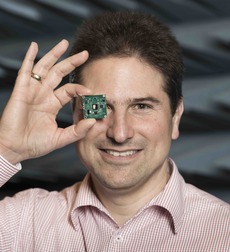
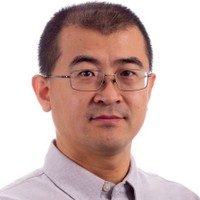
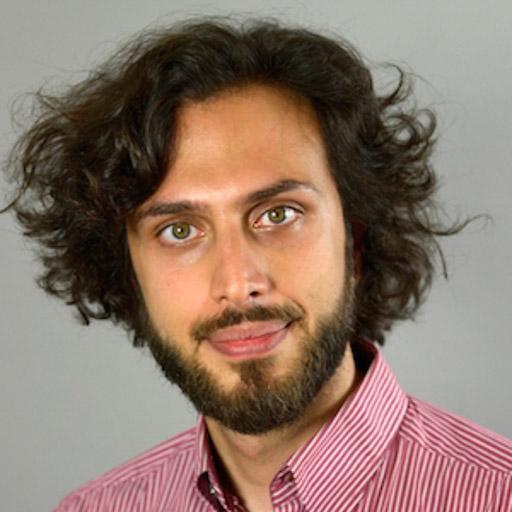
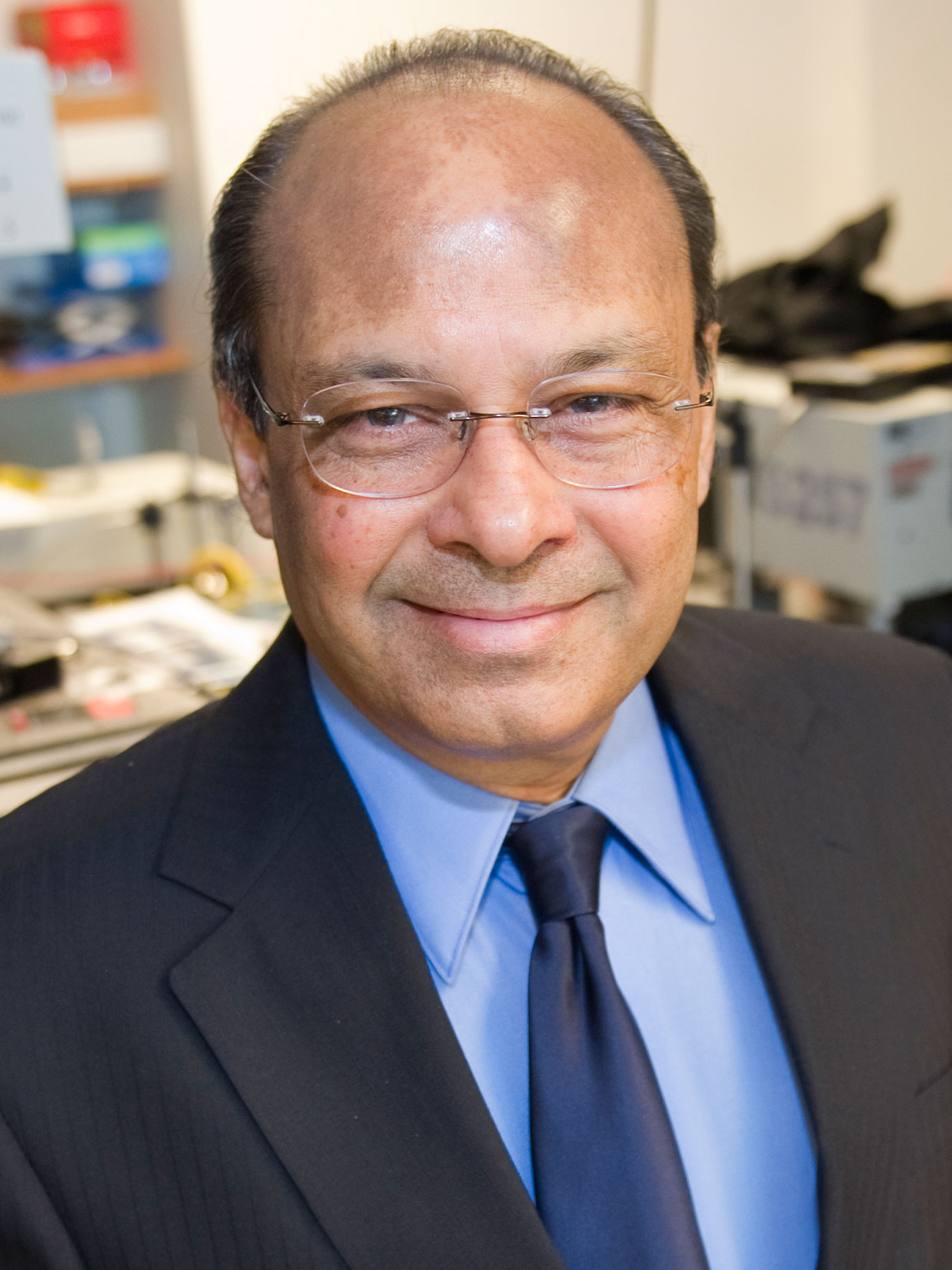
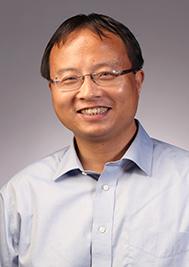
Junfei Li is an Assistant Professor in the School of Mechanical Engineering at Purdue University. His research focuses on advanced acoustic technologies, including acoustic tweezers, acoustofluidics, metamaterials, and underwater communication systems. He specializes in multiphysics wave propagation, noise control, and energy harvesting. Li's work bridges fundamental science and engineering applications in biomedical devices, sustainable energy, and advanced materials. Research Interests: Acoustic tweezers for microscale manipulation Design of metamaterials for acoustic control Ultrasound and underwater communication systems Energy-efficient noise mitigation strategies His recent publications emphasize innovations in acoustic metasurfaces, nonreciprocal sound propagation, and biomedical acoustic applications. Li’s research has implications for improving medical imaging, energy sustainability, and next-generation acoustic devices. Awards & Recognition: None explicitly listed in the provided materials. Advising & Grants: No student advisees or grant information specified in the text.
Prof. Dr.-Ing. Thomas Zwick is a full professor and director of the Institute of High Frequency Engineering and Electronics (IHE) at the Karlsruhe Institute of Technology (KIT). He holds a Dipl.-Ing. (M.S.E.E.) and Dr.-Ing. (Ph.D.E.E.) from the University of Karlsruhe. His career includes roles at IBM Research (2001–2004), Siemens AG (2004–2007 managing automotive radar teams), and KIT since 2007. He leads research in high-frequency technologies, antennas, radar systems, and wireless communications. Research interests include radio wave propagation, antenna design, automotive radar architectures, and millimeter-wave systems. He has authored/co-authored over 400 papers, 20 patents, and received IEEE Fellow status (2018), honorary doctorate from Budapest University (2022), and membership in the Heidelberg Academy and acatech. His work emphasizes integrating sensing and communication systems, 3D-printed RF components, and high-frequency measurement techniques. Teaching focuses on high-frequency engineering, electronic circuits, and radar systems. He oversees the IHE’s laboratories, including the Microwave Engineering Lab and Student Innovation Lab. Recent work explores sub-THz communication, RIS-aided ISAC systems, and beamforming for reduced EMF exposure in urban scenarios.
Romain Fleury is an Associate Professor at the Laboratory of Wave Engineering (LWE) , part of the École Polytechnique Fédérale de Lausanne (EPFL) School of Engineering and Institute of Electrical and Micro Engineering (IEL) . He earned a Ph.D. in Electrical and Computer Engineering from the University of Texas at Austin in 2015 under Andrea Alù, followed by a Marie-Curie Postdoctoral Fellowship at ESPCI Paris-Tech and CNRS Langevin Institute (2016). His research explores wave physics and engineering , focusing on topological insulators , nonreciprocal wave propagation , and time-modulated metamaterials . He has co-authored over 70 peer-reviewed articles in journals like Science , Nature , and Physical Review series, with recent work on topological acoustics , active metamaterials , and wave-based analog computing . Dr. Fleury received the Eccellenza Grant (2021) from the Swiss National Science Foundation and an ERC Starting Grant (2022) . He co-founded Minwave , a startup selling miniaturized microwave devices patented by his lab, which has garnered awards such as ESA-BIC CH , FIT , and Venture Kick . He has served as Technical Program Committee Chair for Eucap 2019 and on the Editorial Board of the New Journal of Physics . Recognized for teaching excellence with the STI Polysphere Award (2019) and IEL Best Teacher Award , he teaches courses including Electromagnetics , Antennas , and Advanced Photonics . His work bridges fundamental wave physics with applied technologies , emphasizing topological effects , nonlinear systems , and metamaterials . Collaborations span institutions such as ESPCI Paris , University of Texas at Austin , and University of Vienna , with applications in acoustic imaging , 5G antennas , and optical signal processing . His recent publications highlight ultrafast anti-lasing , reconfigurable metasurfaces , and disorder-assisted photonic crystals , reflecting a career dedicated to advancing wave engineering through topological and nonreciprocal designs .
Zhibo Pang is an Adjunct Professor at KTH Royal Institute of Technology's Department of Intelligent Systems (EECS) and Senior Principal Scientist at ABB Corporate Research Sweden. His work focuses on digital transformation in industry and healthcare, spanning robotics, AI, control systems, and wireless communication. He leads projects in embodied intelligence, Industry 4.0, and Healthcare 4.0, with 23 granted patents and over 120 journal papers. Education: PhD in Electronic and Computer Systems (KTH, 2013), MBA in Innovation & Growth (University of Turku, 2012). Key Roles: IEEE Technical Committee Chair, Editor of 6 IEEE journals, ABB Inventor of the Year (2016, 2018, 2021). Research Interests: Robotics safety, wireless automation, federated learning, digital twins, and IoT security. Recent Projects: Cloud-fog automation frameworks, robot skin systems for healthcare, and latency-aware industrial control. His work bridges academia and industry through cross-functional collaborations.
Maiken H. Mikkelsen is the James N. and Elizabeth H. Barton Associate Professor in the Department of Electrical and Computer Engineering at Duke University, with a joint appointment in the Department of Physics . Her research focuses on quantum nanophotonics , plasmonics , and light-matter interactions in nanoscale materials, aiming to advance optoelectronics, quantum science, and biomedical diagnostics. Education B.S. in Physics, University of Copenhagen (2004) Ph.D. in Physics, University of California, Santa Barbara (2009) Postdoctoral Fellowship, University of California, Berkeley Her work explores nanophotonic engineering for quantum optics , spintronics , and ultrafast optoelectronics , with recent studies on nonlinear metasurfaces and plasmonic enhancement of immunoassays for point-of-care diagnostics. Publications highlight 2D semiconductor emission control , ultrafast single-photon sources , and metasurface-based photodetectors . Scientific Awards Maria Goeppert Mayer Award (2017) NSF CAREER Award (2015) Moore Inventor Fellow (2021) ONR/Air Force/Army Young Investigator Awards (2015-2017) Cottrell Scholar (2016) Stansell Family Distinguished Research Award (2021) She advises graduate students in Duke’s Electrical & Computer Engineering and Physics programs and leads the Mikkelsen Lab , which emphasizes ultrafast spectroscopy and quantum material development . The lab has graduated PhD students like Eunso Shin and Hengming Li (2025).
Harry Atwater is the Howard Hughes Professor of Applied Physics and Materials Science at the California Institute of Technology (Caltech). He serves as Director of the Joint Center for Artificial Photosynthesis (JCAP) and previously led the Light-Materials Interactions in Energy Conversion (LMI-EFRC) from 2009–2014. His research bridges photovoltaics, solar energy systems, plasmonics, and nanophotonics. Atwater pioneered the field of plasmonics and co-founded Alta Devices, a leader in GaAs photovoltaic technology. He holds over 200 publications and has been recognized with prestigious awards, including induction into the National Academy of Engineering (2015) and the ENI Prize (2012). His work spans cutting-edge innovations such as silicon wire array solar cells, metasurface technologies for optical manipulation, and space solar power systems. Current projects include developing lightsail propulsion for interstellar exploration and photothermocatalytic reactors for sustainable fuels. Atwater’s lab focuses on the intersection of nanophotonics and energy, exploring quantum emitters, carbon capture, and optomechanical systems. Research Highlights: Plasmonic light absorbers, metasurface-based imaging, and solar energy harvesting systems. Key Projects: Lightsail experiments, space-based solar power missions, and CO₂ reduction via electrochemical methods. Awards: Julius Springer Prize (2014), ISI Highly Cited Researcher (2014), and MRS Kavli Lecturer (2010).
Jicheng Jin is a Postdoctoral Researcher in the Department of Physics and Astronomy at the University of Pennsylvania, affiliated with the College of Arts & Sciences. His research focuses on topological photonics, nonlinear optics, and advanced photonic materials like AlScN and lithium niobate. Key interests include Floquet engineering, topological insulators of light, and novel optical devices. Research Interests: Nonlinear optical phenomena in photonic crystals Floquet topological phases and their experimental realization CMOS-compatible materials for integrated photonics Surface-emitting THz/FIR sources Bound states in the continuum and high-Q resonances Recent studies emphasize topological edge states, nonlinear frequency conversion, and device applications of 2D van der Waals heterostructures. His work bridges theoretical predictions with experimental validations in advanced photonic systems. Notable trends in publications include exploration of AlScN-based electro-optic phase shifters, Floquet Chern insulators, and geometric phase effects in magnon polaritons. No scientific awards are explicitly mentioned in the provided materials. Advising and grants remain unspecified in the current dataset. Lab affiliations include collaborations related to the Department's photonics and condensed matter physics groups.
Dr. Anna Baldycheva is a Senior Lecturer in Electronic Engineering at the University of Exeter, within the College of Engineering, Mathematics and Physical Sciences. She leads the interdisciplinary STEMM Laboratory, focusing on applied R&D in smart materials, photonics, AI, and IoT. With prior research experience at MIT, Trinity College Dublin, and Tyndall National Institute, she has established herself as an internationally recognized innovator and entrepreneur in emerging technologies. PhD in Electronic and Electrical Engineering, Trinity College Dublin (2008–2012) BSc (Hons) in Physics, St. Petersburg State University (2003–2008) Postgraduate Certificate in Academic Practice, University of Exeter (2016–2017) Postgraduate Certificate in Technology Management, Smurfit Business School (2009–2010) Her research spans Nano-Engineering, Opto-Electronics, Photonics, AI, and IoT , with a strong emphasis on real-world applications. She pioneers work in fluid opto-electronics , graphene nanocoatings , and AI-driven emotion recognition and early cancer detection . Her lab develops smart composite materials for flexible electronics, e-textiles, and structural applications, integrating machine learning into healthcare, education, and communications systems. The recent publications highlight a strong trend toward applied interdisciplinary innovation , combining materials science with AI and photonics for healthcare diagnostics, energy-efficient computing, and educational technology. Her work frequently bridges fundamental physics with commercialization potential, as seen in spin-out technologies like GSurf and the Electronic-Nose for lung cancer detection. Fellow, Royal Microscopical Society (RMS) Fellow, Higher Education Academy (FHEA) Expert, Future and Emerging Technologies, European Commission Featured in Forbes and Forbes Tech Council Editor-in-Chief, InSTEMM Journal Associate Editor, Nature Scientific Reports and Discover Nano Trustee, Royal Microscopical Society Founder, STEMM Global Scientific Society Founder, It’s Her! Women in STEMM Initiative Dr. Baldycheva actively supervises PhD students and has secured industrial collaborations with organizations such as Qinetiq and Lumentum. She leads multiple outreach initiatives, including STEMM Junior for underprivileged children, and serves on the committee for the Jocelyn Bell Brunel PhD Scholarship. She has raised significant research funding through national and international grants, though specific grant names are not listed. She leads the STEMM Laboratory , a multidisciplinary research group with divisions in Smart Composite Materials, Machine Learning & AI, and Opto-Electronics & Photonics. The lab emphasizes industry collaboration and technology transfer, having produced a university spin-out (GSurf) and multiple media-highlighted innovations.
Behrooz Yousefzadeh is an Associate Professor in the Department of Mechanical, Industrial and Aerospace Engineering at Concordia University, Montreal. He leads the Wave and Vibration Engineering (WAVE) Lab, affiliated with the Applied Mathematics Lab of Quebec’s Centre de Recherches Mathématiques (CRM) and the Concordia Institute of Aerospace Design and Innovation (CIADI). His research focuses on nonlinear dynamics, mechanical metamaterials, architectural acoustics, and elastic wave propagation in periodic systems. His work bridges engineering, applied physics, and mathematics, with applications in vibration analysis of turbomachinery and novel wave-steering materials. Research Interests Mechanical vibrations and nonlinear dynamics Elastic wave propagation and metamaterials Stability analysis and architectural acoustics Nonreciprocal wave phenomena in spatiotemporally modulated systems Publications & Trends Recent work emphasizes nonreciprocal dynamics in modulated materials, phase-preserved wave steering, and defect engineering in periodic systems. Key contributions include experimental validation of nonreciprocal wave propagation and computational methods for nonlinear system analysis. Over 25 peer-reviewed articles highlight advancements in metamaterial design, parametric instability, and coiling fluid dynamics. Scientific Awards Best Paper Award at the International Symposium on Optomechatronic Systems (2014) Advising & Grants Supervised 6 students to completion (PhD/MASc). Active in securing research funding through collaborative projects with CRM, CIADI, and industry partners. Organized sessions at major conferences like SIAM, ICTAM, and Phononics. Labs & Collaborations WAVE Lab explores cutting-edge topics including: nonlinear wave steering, acoustic black holes in timber structures, and coiling patterns in fluid mechanics. Collaborations span applied mathematics, materials science, and aerospace engineering.
Prof. Ady Arie is a Professor of Electrical Engineering at Tel Aviv University, where he serves as the Head of the Tel Aviv University Center for Light-Matter Interaction and holds the Marko and Lucie Chaoul Chair in Nano-Photonics. He has been a faculty member at the Iby and Aladar Fleischman Faculty of Engineering since 1993, previously serving as Head of the School of Electrical Engineering (2013-2017) and Vice Dean of Research (2011-2013). His educational background includes: B.Sc. in Mathematics and Physics from Hebrew University of Jerusalem (1983) M.Sc. in Physics from Tel-Aviv University (1986) Ph.D. in Engineering from Tel-Aviv University (1992) Prof. Arie's research spans multiple frontiers of optics and photonics. His work in nonlinear optics focuses on advanced frequency conversion techniques and shaping of light parameters using nonlinear photonic crystals. In quantum optics , he develops quantum light sources based on spontaneous parametric down conversion and explores applications in quantum sensing and communication. His plasmonics research investigates manipulation of surface plasmon polaritons on metal surfaces. In electron optics , he studies electron-matter-light interactions and techniques for sculpting electron wave functions. His lab also explores hydrodynamics through quantum simulations with water waves, creating analogies to quantum mechanical phenomena. Analysis of Prof. Arie's recent publications (2023-2025) reveals a strong focus on quantum technologies, particularly in quantum light generation, quantum sensing, and quantum information processing. His work increasingly integrates concepts from nonlinear optics, electron microscopy, and quantum physics, with growing emphasis on practical applications in quantum communication and computation. The research shows sophisticated manipulation of light-matter interactions across multiple platforms including nonlinear photonic crystals, plasmonic structures, and electron beams. Prof. Arie has received significant recognition for his work: Kadar Foundation Award for Excellence in Research (2016) Fellow of the Optical Society of America Editorial roles including Topical Editor of Optics Letters (2008-2014) and Associate Editor of Optica (since 2018) Prof. Arie leads the Nonlinear Optics and Wave Propagation Laboratory at Tel Aviv University, where his team investigates diverse wave phenomena from light frequency conversion to electron beam manipulation. He has served as chair of the national steering committee of the Israeli Planning and Budgeting Committee on Quantum Science and Technology. His research has been supported by various grants enabling the development of novel optical technologies and quantum systems. While specific grant details aren't provided in the text, his extensive publication record and leadership positions suggest substantial research funding. Prof. Arie's laboratory focuses on the intersection of classical and quantum wave phenomena. The lab investigates light manipulation through nonlinear optical processes, plasmonic structures, and electron microscopy techniques. Current research directions include quantum light generation, electron-photon interactions, and hydrodynamic analogs to quantum systems. The lab appears well-equipped for advanced optical experimentation with capabilities spanning visible to infrared wavelengths, nonlinear crystal engineering, and electron beam characterization.
Srinivas Sridhar is a University Distinguished Professor of Physics, Biomedical Engineering, and Chemical Engineering at Northeastern University, with a secondary appointment as Lecturer on Radiation Oncology at Harvard Medical School. He previously served as Vice Provost for Research at Northeastern University (2004–2008), overseeing its research portfolio. As an elected Fellow of the American Physical Society and the American Institute of Medical and Biological Engineering, his research spans nanomedicine, neurotechnology, drug delivery, and quantitative MRI, with over 450 publications and patents. He founded the Nanomedicine Innovation Center and directs major NIH/NSF programs like CaNCURE and IGERT, focusing on undergraduate and graduate training in nanomedicine, particularly for underrepresented communities. His research interests include Nanomedicine Neurotechnology Quantitative MRI Drug Delivery Systems Metamaterials and Nanophotonics Quantum Chaos Superconductivity . Recent work involves machine learning-enhanced diagnostics for glaucoma, engineered nanoparticles for BRCA-deficient cancers, and portable neuro-ophthalmic devices. His publications from 2025–2017 reflect interdisciplinary applications in oncology, neurology, and materials science, with a focus on therapeutic and diagnostic innovation. Scientific accolades include the 2016 Biomedical Engineering Society Diversity Award University Distinguished Professorship . As an educator and entrepreneur, he has trained over 120 researchers, developed first-of-their-kind nanomedicine courses, and founded companies commercializing technologies like QUTE-CE MRI. His lab leads projects on cancer nanomedicine, quantitative imaging, and nanoscale magnetism, supported by grants from NIH, NSF, DoD, and private foundations.
Suresh Venkatesh is an Assistant Professor in the Department of Electrical and Computer Engineering at North Carolina State University. He previously served as a postdoctoral research associate at Princeton University (2018–2022) and earned his Ph.D. in Electrical Engineering from the University of Utah in 2017. His academic journey also includes a Master's degree in Electrical Engineering from NC State in 2010. Education: Ph.D. in Electrical Engineering, University of Utah, 2017 Master's in Electrical Engineering, North Carolina State University, 2010 Research Interests: His work focuses on metamaterials and surfaces at GHz-THz frequencies, millimeter-wave phased arrays, and innovative applications in 5G/6G communication systems. Key areas include antenna design, physical layer security, advanced electromagnetic simulations, and reconfigurable systems using CMOS integration. He explores origami-based platforms for adaptive RF imaging and employs spatio-temporal modulation techniques to enhance wireless security and efficiency. Publications Trends: Recent work emphasizes mmWave and THz communication, with a focus on reconfigurable intelligent surfaces, secure low-latency links, and CMOS-based designs for direct detection receivers and cytometers. His research bridges theoretical concepts with experimental validation, particularly in wavefront manipulation and sparse imaging techniques. Awards and Honors: Mistletoe Research Fellowship (2021) Advising and Grants: Venkatesh contributes to research teams like the NC State 6GNC initiative, which spans 6G technologies. He actively organizes conferences such as the World Microwave Congress 2024 as TPC Co-Chair and participates in IEEE technical committees. His grants and collaborations drive advancements in metamaterials, secure wireless systems, and CMOS-integrated solutions. Labs and Teams: He leads efforts in the NC State ECE Department, focusing on labs involving reconfigurable antennas, computational imaging, and integrated systems. His work intersects with the 6GNC team to develop future communication technologies and secure mmWave/THz systems.
Maxime Lanoy serves as an Associate Professor at Le Mans University, France, conducting research at the Institute of Acoustics (LAUM), a joint research unit of Le Mans University and the CNRS. He is a member of the Materials team, which focuses on the acoustics and mechanics of porous materials, contributing to the university's strategic research in physical sciences and engineering. His primary research interests encompass the acoustics of heterogeneous media and multiple scattering phenomena, the design and characterization of acoustic and elastic metamaterials, and the dynamics of flexible structures such as soft strips and elastomers. He investigates wave propagation in unstable structures and complex media, with applications in sound control, imaging, and particle manipulation. This work sits at the intersection of acoustics, materials science, and mechanical engineering, aiming to develop innovative solutions for wave-based technologies. Analysis of Lanoy's recent publications (2018-2025) reveals a consistent emphasis on metamaterials, particularly those utilizing bubble arrays and soft polymers. His research trajectory shows progression from fundamental studies of wave propagation in structured media to applied work on devices for filtering, lensing, and absorption. Key themes include the control of elastic waves in soft materials, the exploitation of space-time interfaces, and the development of broadband acoustic absorbers. These contributions advance the field of wave physics and have potential applications in medical ultrasound, underwater acoustics, and precision manufacturing. No scientific awards, fellowships, or medals were mentioned in the provided text sources. The available information does not specify any graduate students advised by Dr. Lanoy or details of research grants he has secured. His academic role as Associate Professor implies teaching and mentoring responsibilities, but specific advising activities are not documented in the given materials. Lanoy is embedded in the Materials team at LAUM, which operates within a well-equipped laboratory environment featuring advanced facilities for acoustic and ultrasonic measurements, optical methods, and material fabrication. The LAUM institute fosters collaboration across several transversal axes, including metamaterials and nonlinear acoustics, providing a rich interdisciplinary context for his research on wave phenomena in complex media.
Dr. Jonathan Hu is a Professor in the Department of Electrical and Computer Engineering at Baylor University's School of Engineering and Computer Science. He holds a PhD from the University of Maryland Baltimore County (2008) and completed a postdoctoral fellowship at Princeton University (2009–2011). He is an active researcher in optics and photonics, leading the Photonics Research Laboratory and advising both graduate and undergraduate research assistants. Research Interests: Nanophotonics and metamaterials for photovoltaic and biomedical applications Mid-IR supercontinuum generation using chalcogenide photonic crystal fibers 2D materials such as graphene and their alignment via magnetic fields Coherent optical communication and quantum optical Fredkin gates Numerical simulation of electromagnetic problems and leaky mode analysis His recent publications (2019–2024) demonstrate a strong focus on quantum plasmonics, specialty optical fibers, optofluidics, and nonlinear optical phenomena, with high-impact work in journals like Science Advances , ACS Photonics , and Advanced Materials . The research shows a clear trend toward integrating photonics with 2D materials and quantum systems, with applications in sensing, communication, and materials characterization. Scientific Awards and Recognition: 35 Baylor faculty named among top 2% most cited researchers (2023) Editor’s Pick, Journal of Applied Physics (2018) Top three downloads in OSA journals for three consecutive months (2009) NSF Graduate Research Fellowship (awarded to advisee) Chinese Government Award for Outstanding Self-Financed Students Abroad (awarded to advisee) Second Place in FiO + LS Student Competition (awarded to advisee) Advising and Grants: Dr. Hu actively mentors students at all levels, with current graduate research assistants including Wei Zhang, Zhihao Hu, and Sterling Walzel. His lab is supported by external funding, though specific grants are not detailed in the text. He has advised PhD students such as Joshua Young, Chao Niu, and Chengli Wei, many of whom have gone on to successful academic and industry careers. His teaching includes core courses like EGR 1302, ELC 2320, and ELC 4320, as well as advanced topics in computational photonics and integrated photonics. Labs and Teams: He leads the Photonics Research Laboratory at Baylor University, located at the BRIC facility. He is also involved with the Baylor University Optica Student Chapter, promoting optics outreach and networking among students and researchers.
Dimitrios Sounas is an Assistant Professor in the Department of Electrical and Computer Engineering at Wayne State University's College of Engineering. His research bridges electromagnetics, metamaterials, and acoustic systems, with a focus on nonreciprocal devices and time-modulated technologies. He has held academic roles at The University of Texas at Austin and Polytechnique Montreal. Ph.D. in Electrical and Computer Engineering, Aristotle University of Thessaloniki (2009) Diploma/M.Eng. in Electrical and Computer Engineering, Aristotle University of Thessaloniki (2004) His research explores advanced electromagnetic systems, including magnetless circulators, time-modulated metasurfaces, and topological phonon transport. Current projects investigate nonreciprocal acoustic filters and broadband delay lines. Recent publications highlight innovations in time-varying capacitors for energy trapping (2023), non-reciprocal Willis coupling (2023), and magnet-free circulators via photonic crystal modulation (2023). Earlier works established foundational concepts in microwave nonreciprocity and optical signal processing. Scientific accolades include: Brillouin Medal, International Phononics Society (2023) EurAAP Leopold B. Felsen Award (2020) IEEE Senior Membership (2020) He supervises research students in electromagnetic theory, metamaterial simulations (CST, COMSOL), and microwave measurements, with recent Ph.D. advisee Saeed Keshavarz completing work on topological microwave components for wireless systems.