
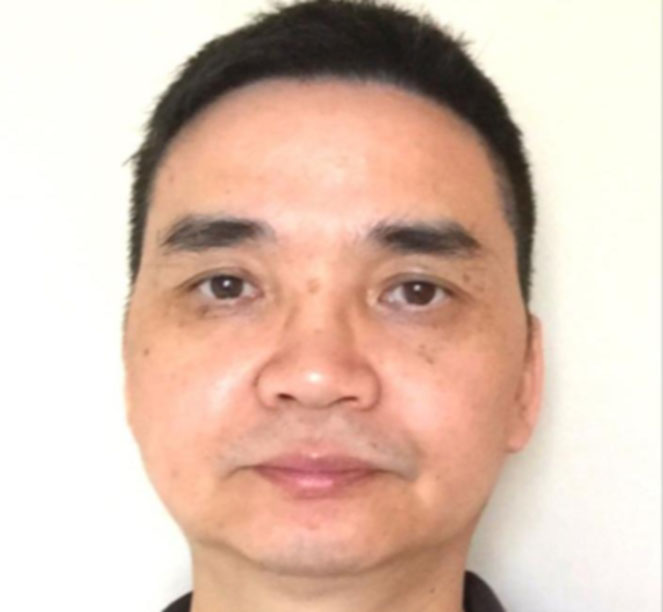
Shangzhen Luo is a Professor in the Department of Mathematics at the University of Northern Iowa, affiliated with the College of Humanities, Arts and Sciences. Their research focuses on stochastic analysis, financial mathematics, and filtering theory, with applications in insurance, reinsurance, and risk management. Research Interests include stochastic control, differential games, and probabilistic modeling in financial and insurance contexts. Key themes in their work involve optimizing reinsurance strategies, analyzing time-inconsistent preferences in retirement planning, and studying risk processes under stochastic volatility. Publication Trends reveal a strong emphasis on stochastic differential equations , reinsurance optimization , and Markov-driven dynamics . Their work bridges theoretical stochastic analysis with practical applications in insurance, investment, and decision-making under uncertainty. Key Contributions span topics like barrier strategies for insurance surplus, Pareto-optimal reinsurance policies, and robust control under ambiguity. They have developed models for jump-diffusion risk processes, Brownian risk minimization, and multi-dimensional filtering systems.
جستوجوی استاد و پژوهشگر
استاد راهنما، استاد دانشگاه یا پژوهشگر مناسب برای مسیر پژوهشیتان را پیدا کنید و با او ارتباط بگیرید.
نمایش ۳۳۱-۳۳۷ از ۳۳۷ استاد راهنما
اطلاعات این پروفایلها از صفحات عمومی دانشگاهها جمعآوری شده و ممکن است بهروز نباشد.
Xingtan Zhangمشاهده پروفایل
دانشیار
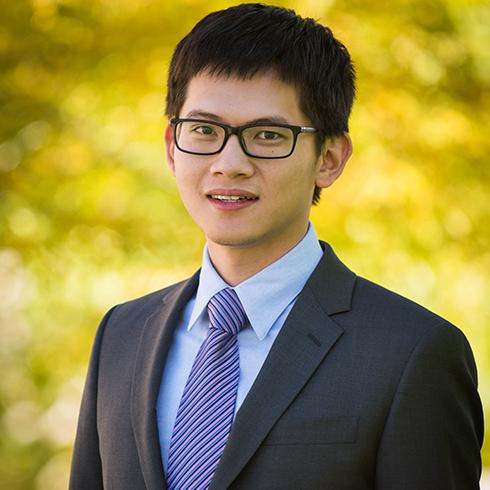
Xingtan Zhang serves as an Associate Professor of Finance at the Cheung Kong Graduate School of Business (CKGSB), where he is affiliated with the Finance Theory Group. His academic foundation includes dual doctoral degrees from the University of Pennsylvania: a Ph.D. in Business Economics and Public Policy from the Wharton School and a Ph.D. in Applied Mathematics and Computational Science, complemented by a B.S. in Mathematics from Peking University. Dr. Zhang's research program centers on theoretical and empirical investigations in asset pricing, information economics, behavioral economics, financial institutions, and mechanism design. His work bridges mathematical rigor with economic intuition, frequently employing game-theoretic frameworks to analyze market structures and agent behavior. Publications in premier journals like Econometrica and Review of Financial Studies demonstrate methodological sophistication and relevance to real-world financial phenomena. Recent publications reveal a cohesive research trajectory examining information asymmetry across diverse contexts—from noise trading effects in asset markets to disclosure dynamics in supply chains. His scholarship consistently explores how strategic interactions and behavioral biases shape market outcomes, with emerging work extending into environmental disclosures and speculative financial innovation. This intellectual thread underscores his expertise at the intersection of quantitative finance, microeconomic theory, and institutional design.
- Social Choice Theory
- Game Theory
- Voting Systems
- +۵ مورد دیگر
Mostapha Diss is a University Professor and Director of CRESE (Research Center on Economic Strategies) at the University of Franche-Comté since January 2022. His primary institutional affiliation is with the Research Center on Economic Strategies (UR 3190), and he also maintains significant connections with the Africa Institute for Research in Economics and Social Sciences (AIRESS), Group for Analysis and Economic Theory Lyon - Saint-Etienne, and the Research Center in Economics and Management. His research focuses on social choice theory, game theory, and political economy, with particular emphasis on voting systems, committee selection, and diversity constraints. His work bridges theoretical foundations with practical applications in electoral systems and decision-making processes, demonstrating how mathematical approaches can address complex social problems. Professor Diss has published extensively in top journals including Journal of Mathematical Economics, International Journal of Game Theory, Review of Political Economy, and Social Choice and Welfare. His recent work (2024-2025) shows a strong trend toward integrating diversity constraints into cooperative game theory and voting systems, with significant contributions to understanding the impact of election closeness on voting paradoxes and developing new axiomatizations for diversity-aware game-theoretic solutions. His notable scientific contributions include: New axiomatizations of the Diversity Owen and Shapley values Analysis of the effect of close elections on voting paradoxes Development of multiwinner election models with diversity constraints Studies on committee selection rules and their properties Applications of game theory to healthcare resource allocation As Director of CRESE, Professor Diss has secured research funding that supports his work on voting theory and game theory applications. His leadership has strengthened the center's focus on mathematical approaches to social sciences, providing a collaborative environment for doctoral students and postdoctoral researchers working on theoretical and applied problems in economics and political science. He leads the CRESE research center, which brings together researchers from various disciplines to address complex economic and social problems through quantitative methods and theoretical modeling. The center serves as a hub for innovative research at the intersection of mathematics, economics, and political science, with Professor Diss at the forefront of advancing theoretical foundations while maintaining relevance to real-world decision-making challenges.
Dmitry Alekseevich Ilvovsky is an Associate Professor at the Department of Data Analysis and Artificial Intelligence within the Faculty of Computer Science at the National Research University Higher School of Economics (HSE University) in Moscow. He also serves as a Research Fellow at the International Laboratory of Intelligent Systems and Structural Analysis. Having joined HSE in 2011, he has accumulated over 10 years of scientific and teaching experience in the field of computational linguistics and artificial intelligence. Dr. Ilvovsky holds a Candidate of Technical Sciences degree (2017) and a Specialist degree in Applied Mathematics and Computer Science from the Moscow Aviation Institute (2010). His professional interests focus on natural language processing, formal concept analysis, and discourse-based approaches to text analysis. He has made significant contributions to developing methods for detecting disinformation, propaganda, and unreliable information in text data. His recent research demonstrates a clear trend toward integrating discourse structure with deep learning approaches for various NLP tasks. His work spans fact-checking systems, dialogue management, propaganda detection, and text complexity assessment. He has pioneered approaches using discourse trees and structural linguistic information to enhance the performance of language models, particularly in identifying manipulative content and verifying claims against trusted sources like Wikipedia. Gratitude from HSE University (January 2024) Letter of gratitude from the Vice-Rector of HSE (August 2021) Letter of Gratitude from the Faculty of Computer Science at HSE (August 2017) Rector's personal allowance (2016-2017) Academic Work Allowance (2020-2021) Bonus for publication in journal from List A (2023-2026) Bonus for publication in international peer-reviewed journal (2017-2023) Dr. Ilvovsky actively supervises PhD research, notably guiding A. Chernyavskiy's work on models for automatic detection and verification of unreliable information. His teaching portfolio includes courses such as Automatic Text Processing for Bachelor's students and Mentor's Seminar for Master's students. He has also contributed to the development of the International Laboratory of Intelligent Systems and Structural Analysis, where he has worked since 2012, organizing international conferences including the Concept Lattices and Their Applications conference in 2016—the first time it was held in Russia.

Marco Piovesanمشاهده پروفایل
دانشیار
Marco Piovesan is an Associate Professor at the Department of Economics, Faculty of Social Sciences, University of Copenhagen. His research focuses on social preferences, self-control problems, unethical behavior, peer effects, and behavioral contract theory. He has published in top journals including American Economic Review, Journal of Experimental Psychology-General, and European Economic Review. Dr. Piovesan holds a PhD in Economics and Management from the University of Padova. Prior to his current position, he was a CLER Fellow at Harvard Business School (2010-2012) and an Assistant Research Professor at the Department of Economics of the University of Copenhagen. His research spans multiple areas of behavioral and experimental economics. He investigates how social contexts influence economic decisions, examining phenomena like cooperation in social networks, gender differences in competitiveness, risk preferences in children, and dishonest behavior. His work often employs experimental methods to test theoretical predictions in controlled settings. Many of his studies have been featured in major media outlets including The New Yorker, The Financial Times, and Businessweek. Dr. Piovesan teaches courses on Behavioral and Experimental Economics, specifically "Science of Behavior Change (SBC)" and "Behavioral Economics in Action (BEA)." His recent publications show a continued focus on understanding decision-making processes through experimental approaches, with particular attention to social influences and cognitive factors. His notable awards include: Harvard Business School Top 10 Working Papers (January 2012) Best Paper Award - The Social Dimension of Organizations: UniCredit (March 2012) Dr. Piovesan has received recognition for his research through various fellowships and scholarships, including a Post-doctoral research fellowship at Harvard Business School (2010-2012) and an Education Abroad Program (EAP) scholarship at University of California (2005-2006). His work has been widely disseminated, with articles written for the general public appearing in VoxEU, Mental Notes, and Ticonzero-Knowledge. His research has gained significant attention, being featured in numerous international magazines and discussed across various blogs and social media platforms. He maintains an active research agenda with several works currently under revision for publication.
- Macroeconomics
- Labor Economics
- Family Economics
- +۳ مورد دیگر
Matthias Kredler serves as an Associate Professor in the Department of Economics at Charles III University of Madrid, where he conducts research at the intersection of macroeconomics, labor economics, and family economics. His work critically examines policy implications for aging populations through advanced quantitative modeling. His educational background includes a Ph.D. in Economics from New York University and a Diploma in Economics from Ludwig-Maximilians-Universität Munich, supplemented by a Visiting Assistant Professorship at the University of Pennsylvania. Professor Kredler's research program centers on the economic dynamics of aging societies, with specializations in long-term care systems, intergenerational transfers, and human capital evolution. He employs heterogeneous-agent macroeconomic models to analyze how family structures influence economic decision-making across the lifecycle, particularly regarding housing wealth, retirement planning, and informal care provision. His methodological approach combines theoretical rigor with policy-relevant empirical analysis. A review of his recent publications reveals a consistent focus on the economic challenges of population aging. His work in top journals like the Review of Economic Studies demonstrates how family insurance mechanisms interact with formal care systems across different institutional settings, while his vintage-human-capital model provides novel insights into skill obsolescence in rapidly changing labor markets. These contributions highlight his expertise in translating complex macroeconomic theory into actionable policy frameworks. In academic service, Professor Kredler teaches Macroeconomics II for master's students, supervises Master's theses in Economics, and leads advanced doctoral seminars including Quantitative Macroeconomics with Heterogeneous Agents and the Macroeconomics Reading Group. His office is located at 15.2.10 with contact number +34 91 624 9312.

Loïc Adamمشاهده پروفایل
دانشیار
- Incremental Preference Elicitation
- Multicriteria Decision Making
- Decision Theory under Risk and Uncertainty
- +۸ مورد دیگر
Loïc Adam serves as an Associate Professor in Data Engineering at ISAE-ENSMA since 2024, concurrently holding a lecturer position in Digital Information. Previously, he was an ATER at Université de Technologie de Compiègne (2023-2024) where he taught operational research and data analysis courses. He completed his PhD in Computer Science at UTC in 2023 and currently serves on ENSMA's improvement council and scientific expertise commission (2025-2027). His research spans decision theory under risk and uncertainty, with core expertise in incremental preference elicitation, multicriteria decision-making, and uncertainty modeling through possibility theory and belief functions. He actively investigates information fusion, machine learning applications, and game-theoretic approaches to preference learning, focusing on resolving inconsistent preferences and developing robust decision support frameworks under severe uncertainty. Adam's publication record (2020-2024) reveals consistent contributions at the intersection of artificial intelligence and decision science, particularly in preference modeling and uncertainty quantification. His work demonstrates methodological innovation in applying possibility theory to inconsistency resolution and developing imprecise probabilistic models for label ranking, with publications spanning top venues in AI, fuzzy systems, and decision theory. Scientific Awards: No major awards or fellowships were documented in the source material. He currently supervises M2 intern Aicha AIT HAMMOUCH on auto-detection of erroneous models through personalized data elicitation in uncertain environments. As a member of LIAS Laboratory's Data Engineering team, he collaborates across ENSIP (University of Poitiers) and ISAE-ENSMA sites, contributing to interdisciplinary projects that bridge theoretical decision science with real-world engineering applications in control systems and real-time data processing.