Manuel Del Pino is Professor at the University of Bath's Department of Mathematical Sciences and Royal Society Professor specializing in nonlinear partial differential equations. His research focuses on singularity formation, geometric evolution equations, and asymptotic analysis in fluid dynamics and mathematical physics. His investigations encompass blow-up phenomena in heat equations, vortex dynamics in Euler flows, and minimal surface theory. Current projects examine infinite-time singularity formation in parabolic equations and asymptotic properties of vortex configurations. Del Pino has received the Royal Society Professorship and leads multiple grants including 'Asymptotic patterns in nonlinear evolution problems' (EPSRC). He maintains collaborations with researchers globally through projects on singularity formation in PDEs.
Margarita Boenig-Liptsin is a tenure-track Assistant Professor of Ethics, Technology and Society at ETH Zurich's Department of Humanities, Social and Political Sciences, a position she has held since September 2022. Trained in Science, Technology and Society with dual PhDs from Harvard University (History of Science) and Université Paris-Sorbonne (Philosophy), she brings interdisciplinary expertise to examining the relationship between technology, power, democracy, and ethics. Her research spans several interconnected areas focusing on transformations to human identity and citizenship in relation to information technologies across time and cultures. She investigates the social and political aspects of digital technologies, identity and selfhood in technological societies, ethics of technology, and comparative cultures of innovation. Her work uniquely bridges historical analysis with contemporary ethical concerns, examining how concepts like human dignity evolve alongside technological developments from punch cards to AI governance frameworks. Her recent publications (2023-2025) reveal a strong focus on AI ethics, data justice, and the philosophical implications of algorithmic systems. These works demonstrate her consistent interest in how technology shapes democratic processes, citizenship, and ethical frameworks. Her research shows progression from historical studies of computer literacy programs to contemporary analyses of generative AI's impact on knowledge production and everyday ethics. Her scientific recognition includes: NSF funding for her collaborative project on Silicon Valley's innovation imaginary Mozilla Foundation Responsible Computer Science Challenge grant (2018-2021) Academic Data Science Alliance support (2020-2022) Sorbonne Université's Paris IAS Chair on 'Major Changes' (2021-2022) At ETH Zurich, she leads research and teaching initiatives that build connections between engineering and social sciences. Previously at UC Berkeley, she directed the Human Contexts and Ethics Program, developing the Human Contexts and Ethics component for data science education. Her work consistently emphasizes translating social science theory for diverse audiences and connecting scholarly work to community needs in Zurich, Switzerland, and Europe. She teaches courses including 'Artificial Intelligence and Human Values' and 'Research in Ethics, Technology and Society' for the Fall 2025 semester.
Asaf Ferber is Associate Professor in Mathematics at University of California, Irvine, School of Physical Sciences. His research spans discrete mathematics including combinatorial games, random graphs, extremal hypergraph theory, and quantum computation. Research explores Hamiltonian cycles in random graphs, structural properties of pseudorandom graphs, and quantum algorithms for combinatorial problems. Recent work develops quantum approaches to graph learning and sparse recovery in random matrices. Awards: NSF CAREER Award Sloan Fellowship Distinguished Early Career Faculty Award for Research Air Force Research Grant NSF-BSF Grant Organizes conferences including SoCalDM Symposium and Desert Discrete Math Workshop, mentoring graduate students through UCI's Probability and Combinatorics Seminar.
Witold J. Henisz serves as Vice Dean and Faculty Director of the Impact, Value, and Sustainable Business Initiative at The Wharton School, University of Pennsylvania, holding the Deloitte & Touche Professorship in Management. His research centers on political and social risk identification, ESG impact materiality, and corporate diplomacy frameworks that transform stakeholder relationships into strategic assets. His educational background includes a Ph.D. in Business and Public Policy from UC Berkeley's Haas School and an M.A. in International Relations from Johns Hopkins SAIS. Henisz has served as Departmental Editor at Journal of International Business Studies and Associate Editor at Strategic Management Journal , reflecting his scholarly influence. Research interests converge on geopolitical risk quantification, stakeholder engagement optimization, and sustainable business model innovation. His work demonstrates how political hazards materially impact firm valuation and how corporate diplomacy can mitigate conflict through strategic stakeholder alignment. Recent publications leverage massive media datasets (4+ billion articles) to model populism dynamics, indigenous land conflicts, and ESG-credit risk linkages. Award highlights include the Aspen Institute Ideas Worth Teaching Award (2020), Iron Prof recognition (2019), and Academy of International Business Fellowship. His geostrategy framework Geostrategy by Design (2024) provides executives with actionable methods for navigating geopolitical volatility. Aspen Institute Ideas Worth Teaching Award (2020) Iron Prof recognition (2019) Academy of International Business Fellow (2014-present) Multiple Wharton Excellence in Teaching Awards (2006-2021) Industry Studies Association Best Paper Award (2019) Henisz consults through PRIMA LLC for multinational firms (Rio Tinto, Shell), financial institutions (Eaton Vance, World Bank), and NGOs. His executive education programs train leaders in ESG integration and geopolitical risk management, while his KEROVKA crisis simulation develops real-time strategic response capabilities. Media frequently cites his expertise on ESG controversies, with 50+ major publications featuring his analysis since 2022 including Financial Times , Bloomberg , and Wall Street Journal .
Jean-François Le Gall is a full Professor at Université Paris-Saclay and a member of the Orsay Mathematics Laboratory (LMO) since 2006. He has held prominent positions at Pierre and Marie Curie University (1988-2006) and École Normale Supérieure (1997-2007). A Senior Member of the University Institute of France (2007-2017) and an elected member of the Academy of Sciences since 2013, he served as Vice-President of Research for the Mathematics Department at Orsay (2020–present) and led the ERC Advanced Grant GeoBrown (2017–2023). Education: Ecole Normale Supérieure (1978–1982), PhD in stochastic differential equations (1982), State Doctorate on Brownian motion (1987) Research Interests focus on probability theory , particularly Brownian motion , superprocesses , random trees , planar maps , and their connections to PDEs and geometric models. His work bridges stochastic analysis , branching processes , and coalescence phenomena . Selected Publications include foundational studies on the Brownian map , random geometry , and spatial branching processes . His 2025 paper on The area of spheres in the Brownian plane explores fractal properties of random metric spaces, while the 2020 Growth-fragmentation processes work links Brownian trees to fragmentation models. Scientific Distinctions : 1986 Rollo Davidson Prize 1997 Loève Prize in Probability 2005 Sophie Germain and Fermat Prizes 2019 Wolf Prize in Mathematics 2022 BBVA Frontiers of Knowledge Award Academic Leadership includes directing the Probability and Statistics Team (2013–2019) and the Master 2 in Probability and Statistics (2007–2015). He chairs editorial roles in Grundlehren der mathematischen Wissenschaften (since 2020) and Probability Theory and Related Fields (2005–2010).
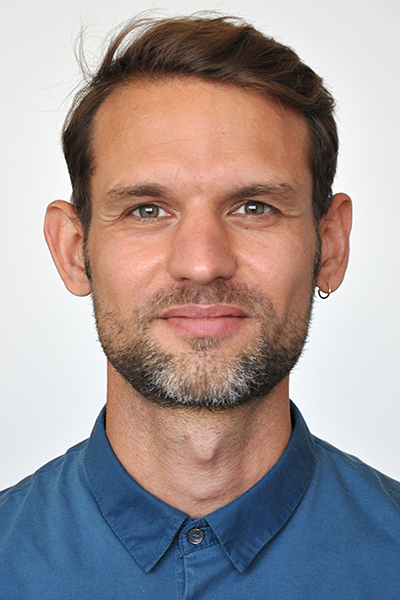
Assoc Prof Ng Teng Yong is an Associate Professor at the School of Mechanical & Aerospace Engineering (NTU), specializing in numerical modeling and simulation. With a background as Research Manager at A*STAR Institute of High Performance Computing, his work spans materials science, nanotechnology, and aerospace engineering. Current focus on graphene-based desalination membranes Expertise in molecular dynamics simulations Investigates nanoscale fluid mechanics and structural dynamics Recent publications highlight advancements in energy-efficient electrodialysis, smart robotics, and nonlinear vibration analysis. His interdisciplinary approach integrates computational methods with experimental validation in additive manufacturing and soft material mechanics.
Stefan Binder is a Senior Research Assistant at the Institute for Social Anthropology and Cultural Studies (ISEK) at the University of Zurich's Faculty of Arts and Social Sciences. His academic work focuses on the intersections of gender, sexuality, and religious studies with particular attention to secular and non-religious perspectives. His primary research interests include gender and sexuality studies, queer anthropology, secularity and non-religion, religious aesthetics, ethics, and temporal dimensions of religious practices. Binder's work employs anthropological approaches to explore contested notions of "newness" and "generational change" within queer and trans* communities in both South Asia (particularly India) and Europe. His research also investigates the sensory, material, and aesthetic dimensions of lived everyday religion and non-religion. Binder's publication record shows a strong focus on nonreligion studies, with particular emphasis on atheist activism in South India. His work frequently examines the relationship between secularism and religious pluralism, with attention to how these concepts manifest in everyday practices and experiences. His scholarship demonstrates interdisciplinary engagement across religious studies, anthropology, gender studies, and South Asian studies. His monograph Total Atheism: Secular Activism and the Politics of Difference in South India (2020) represents a significant contribution to the field of nonreligion studies. His recent articles (2021-2023) continue to develop theoretical frameworks for understanding secularism, nonreligion, and religious aesthetics through ethnographic approaches.
Professor Jiti Gao is a Donald Cochrane Chair in Econometrics & Business Statistics at Monash University's Faculty of Business and Economics. He leads the Department of Econometrics and Business Statistics, specializing in non- and semi-parametric econometrics, time-series analysis, and panel data methodologies. His research focuses on developing statistical models for climate change, energy demand, and financial forecasting. Affiliations: Monash University, Impact Labs Grants: Multiple ARC Discovery Projects (e.g., 2020–2025 on climate-energy time series, 2017–2020 on econometric model building) Collaborations: CSIRO, Yale University, and international partners from China, Norway, and Singapore Research interests include climate econometrics, financial time series, and policy evaluation. Over 136 publications span econometric theory and applications, with recent work on nonlinear trending models and quantile regression. His grants emphasize methodological advancements in time series and panel data analysis. Awards: Not explicitly mentioned, but recognition includes Australian Professorial Fellow status and international research leadership roles. Advising/Grants: Primary Investigator on multiple ARC-funded projects, focusing on climate modeling and financial econometrics Labs/Teams: Part of Monash's Impact Labs and collaborates with global institutions on climate and econometric initiatives
Roya Ensafi is the Morris Wellman Associate Professor in the Department of Computer Science & Engineering at the University of Michigan. She is the Founder and Director of the Censored Planet Lab, which focuses on Internet censorship measurement and digital equity. Her research lies at the intersection of networking, security, and privacy, with a strong emphasis on detecting censorship, surveillance, and digital inequity through scalable systems. Positions: Associate Professor (University of Michigan), Lab Director (Censored Planet) Recent Awards: Sloan Research Fellowship, NSF CAREER (2023), IRTF Applied Networking Research Prize (2016, 2022, 2023), USENIX Security Internet Defense Prize (2022) Her work develops systems like Censored Planet for global censorship monitoring, VPNalyzer for evaluating commercial VPN security, and Splintering Net for studying regionalized Internet access. By combining remote measurement techniques with user studies, her research addresses both technical and policy dimensions of digital freedom. Key methodologies include TLS handshake analysis, cross-layer latency metrics, and large-scale network probing. The Censored Planet project operates a global censorship detection network covering 221 countries, while VPNalyzer received the Consumer Reports Digital Lab fellowship. Collaborations include Google Jigsaw for data visualization systems used by over 100 organizations. Her 2024 work on digital discrimination in sanctioned states extends earlier groundbreaking research on Kazakhstan's HTTPS interception (2019) and Russia's Twitter throttling (2021). Scientific Awards: 2024: Distinguished Paper Awards at USENIX Security Symposium 2023: NSF CAREER Award 2022: IRTF Applied Networking Research Prize, USENIX Security Internet Defense Prize, First Prize in Internet Defense Prize, CSAW '22 Applied Research Competition First Place 2021: Recognized as Highest Scoring Short Paper at ACM IMC 2015: IRTF Applied Networking Research Prize 2022: Finalist for ACUM Outstanding Advisor Award Her lab trains both current and alumni PhD/Master's students including Ram Sundara Raman, Diwen Xue, Reethika Ramesh (now at Palo Alto Networks), and Victor Ongkowijaya (PhD at Princeton). She teaches EECS 388 Introduction to Security at the University of Michigan, covering software and network security principles. Her work has been featured in The Economist, New York Times, and BBC for analyzing global censorship trends.
Kenneth J. Falconer is the Regius Professor of Mathematics at the University of St Andrews, where he is a member of the School of Mathematics and Statistics and the Analysis Research Group. He has held prestigious positions at the University of Bristol and Corpus Christi College, Cambridge, and has been a visiting professor at institutions including Oregon State University and the Australian National University. Regius Professor of Mathematics, University of St Andrews (2017–present) Professor of Mathematics, University of St Andrews (1993–2017) Reader, University of Bristol Lecturer, University of Bristol Research Fellow, Corpus Christi College, Cambridge His research centers on fractal and multifractal geometry, geometric measure theory, and related fields. He has made seminal contributions to the understanding of fractal projections, dimensional analysis of self-affine sets, and fractal processes. His work includes the concept of the digital sundial and the introduction of the affinity dimension and Falconer’s distance problem. His research spans dimensional analysis, random fractals, PDEs on fractal domains, and combinatorial geometry. The most recent publications show a sustained focus on intermediate dimensions, projections of fractal sets and measures, and the dimensional properties of stochastic processes. His work frequently involves collaboration with leading mathematicians and appears in top journals such as Transactions of the American Mathematical Society , Ergodic Theory and Dynamical Systems , and Journal of Fractal Geometry . Fellow of the Royal Society of Edinburgh (1998) Shephard Prize, London Mathematical Society (2020) CBE, King’s New Year’s Honours (2024) Kenneth Falconer has supervised numerous students and collaborated with many researchers including Jonathan Fraser, Pertti Mattila, and Xiong Jin. He has served on editorial boards for Fractals , Journal of Fractal Geometry , and Mathematical Proceedings of the Cambridge Philosophical Society . He has been active in professional service, including as Chair of the British Mathematical Colloquium 2018 and Publications Secretary of the London Mathematical Society (2006–2009). He organized major programs at the Isaac Newton Institute and Mittag-Leffler Institute. He is also known for his involvement in the Long Distance Walkers Association, where he served as Chairman and Editor of Strider , and for his mathematical poetry featured in publications like the London Mathematical Society Newsletter .
Lucia Dolce serves as the Numata Professor of Japanese Buddhism within the Department of Religions and Philosophies at SOAS University of London, part of the School of History, Religions and Philosophies. Her academic base is room 342 in the Russell Square: College Buildings campus. Her educational background includes: Laurea MA (University of Venice) PhD (Leiden University) Professor Dolce's research centers on two interconnected projects: first, the discourse on the body in medieval Japanese Buddhist rituals and its connections to continental Tantric practices, emphasizing ritual fluidity and performative theory applications; second, contemporary Buddhism-Shinto syncretism with focus on revival of premodern practices in Kyoto shrines. She also examines Tokyo's urban pilgrimage routes like the Seven Gods of Fortune, analyzing institutional negotiations and religious marketing dynamics. Her journal articles (1992-2023) consistently explore ritual knowledge transfer in Japanese Buddhism, with recent works on scriptural repurposing and tantric exegesis highlighting material culture and practice-centered approaches. Earlier publications establish foundational studies on Nichiren Buddhism's esoteric dimensions, astrological cults, and celestial body worship, revealing enduring thematic threads across three decades of scholarship. Scientific awards: No awards listed in provided text Advising and grants: She currently supervises four PhD candidates: Rachel Williams (Japanese Secularity), Haruka Saito (Repentance Rituals), Sooyeun Yang (Korean Astrological Buddhism), and Yeonju Lee (Korean Nationalism). Previous supervisees include twelve PhD graduates such as Emanuela Sala (2022, Sannō Shintō), Ronit Wang (2022, Thai Hell Parks), and multiple 2011 completions. Dolce led the Newton Fellowship-associated project 'The Lucky Gods of Tokyo' (2014-2016), investigating spatial politics in Buddhist-Shinto pilgrimage networks.
Simon Langlois-Bertrand serves as a Part Time Lecturer in the Department of Political Science at Concordia University, teaching core courses including Introduction to International Relations (POLI205), Sustainability and Governance (POLI208), and Global Energy Politics and Policy (POLI486). His interdisciplinary academic foundation combines engineering and political science, reflected in his educational trajectory: PhD International Affairs, Carleton University M.Sc. Political Science, Université de Montréal M.Ing. Industrial Engineering, École Polytechnique de Montréal B.Ing. Computer Engineering, École Polytechnique de Montréal Langlois-Bertrand's research critically examines energy politics and policy , global environmental governance , and sustainability transitions , with particular emphasis on social-technical dimensions of development and U.S. political dynamics. His work bridges engineering perspectives with political analysis to explore how technological systems interact with institutional frameworks. Analysis of his 15 most recent publications reveals concentrated expertise in North American energy transitions, featuring empirical studies on electricity rate structures, Quebec's carbon policy, and theoretical investigations of uncertainty in energy governance. Key thematic threads include decarbonization pathways, circular economy implementation, and life-cycle policy approaches, predominantly focused on Canadian and Quebec contexts. Scientific awards: No awards documented in source material. Regarding academic mentorship, the provided text contains no information about graduate students supervised or research grants secured. His current research projects indicate ongoing work on the geopolitics of ecological transition and environmental state theory through life-cycle analysis frameworks. No laboratory affiliations or research team memberships are specified in the available documentation.
Dr. Baijian "Justin" Yang serves as the Associate Dean for Research at Purdue Polytechnic Institute and is a Professor in the Department of Computer and Information Technology at Purdue University. He earned his Ph.D. in Computer Science from Michigan State University, with Master's and Bachelor's degrees in Automation (EECS) from Tsinghua University. Dr. Yang has established himself as a leader in multiple interdisciplinary research domains. Dr. Yang's educational background includes: PhD in Computer Science, Michigan State University (2002) MS in Automation (EECS), Tsinghua University (1998) BS in Automation (EECS), Tsinghua University (1995) His research interests span multiple cutting-edge domains with practical applications: Cybersecurity : Developing novel approaches for threat intelligence, security education, and network defense Big Data : Creating innovative algorithms for dimension reduction, regression with categorical variables, and tensor decomposition Applied Machine Learning : Implementing AI solutions in healthcare, manufacturing, and forestry applications Digital Forestry : Using UAV imagery and remote sensing for forest management and tree species classification Dr. Yang's publication record demonstrates significant impact across multiple disciplines, with recent work focusing on spatial transcriptomics analysis (SiGra), delirium detection using limited-lead EEG, and visual localization technologies. His research bridges theoretical advances with practical applications in healthcare, manufacturing quality control, and environmental monitoring. The interdisciplinary nature of his work is evident in collaborations spanning computer science, healthcare, forestry, and manufacturing domains. His scientific achievements have been recognized with numerous awards: 2023 HRSA Building Bridges to Better Health Competition Winner (Phase 1) and 2nd place ($100,000 prize) in Phase 3 2023 Outstanding Faculty Award in Engagement, Department of Computer and Information Technology, Purdue University 2021 Leadership in Manufacturing Award, Manufacturing Times Digital (MxD) 2021 Good to Great Award, Purdue Polytechnic 2020 Outstanding Faculty Award in Discovery, Department of Computer and Information Technology 2019 University Faculty Scholars, Purdue University As an educator and mentor, Dr. Yang has advised numerous graduate students through their PhD and Master's research. His leadership extends to significant service roles including serving as Faculty Champion for the Holistic Safety and Security research impact area at Purdue Polytechnic from 2018 to 2021, board membership with ATMAE (2014-2016), and participation in the IEEE Cybersecurity Initiative Steering Committee (2015-2017). He holds valuable industry certifications including CISSP, MCSE, and Six Sigma Black Belt, demonstrating his commitment to bridging academic research with industry practice. Dr. Yang leads multiple research projects including "Digital Forestry" for developing tools to quantify forest function, "CHEESE" (Cyber Human Ecosystem of Engaged Security Education), and "CICI" (Supporting Controlled Unclassified Information with a Campus Awareness and Risk Management Framework). His work on "Applied Machine Learning" focuses on solving real-world problems, while his "Dimension Reduction and Memory Amnestic Big Data Regression" project innovates computational algorithms for large-scale data analysis.
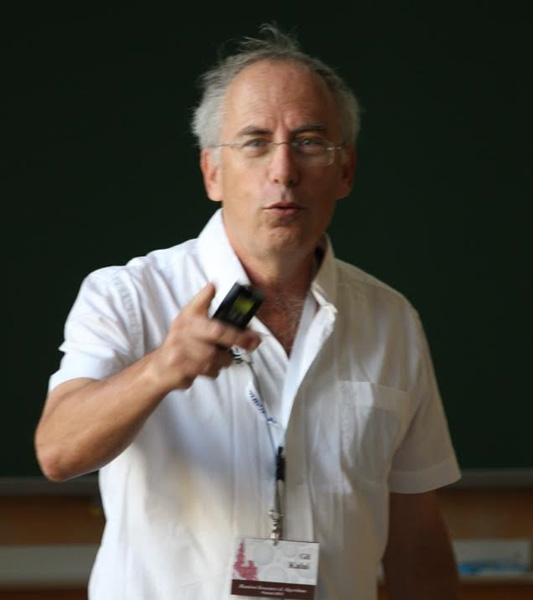
Gil Kalai is a Professor of Mathematics at the Hebrew University of Jerusalem since 1992, where he holds the Henry and Manya Noskwith Chair. He also serves as an Adjunct Professor of Mathematics and Computer Science at Yale University since 2004 in a long-term part-time visiting position. His academic career includes visiting positions at prestigious institutions including MIT, Cornell, IAS Princeton, Berkeley, Bell-labs, IBM, and Microsoft. Professor Kalai's research spans multiple areas within mathematics and theoretical computer science. His work in combinatorics encompasses geometric, probabilistic, and topological approaches. He has made significant contributions to the study of convex sets and polytopes, linear programming, and theoretical computer science. His influential 1988 paper with Kahn and Linial on Boolean functions pioneered applications of Fourier analysis in theoretical computer science. Kalai's research has evolved to include the application of Fourier analysis to thresholds, influences, symmetries, noise, percolation, and social choice. He has developed theories in algebraic shifting and studied face-numbers and other combinatorial invariants of polytopes. His work on the diameter of polytopes and randomized simplex algorithms has been influential in optimization theory. In 1993, his collaboration with Kahn produced a groundbreaking counterexample to Borsuk's Conjecture in 1325 dimensions. Professor Kalai's publications reveal a consistent focus on the intersection of combinatorics, geometry, and theoretical computer science. His work shows a progression from foundational combinatorial geometry to increasingly sophisticated applications of harmonic analysis in discrete mathematics. The recurring themes across his 30+ year career include Boolean functions, polytope theory, and probabilistic methods in combinatorics, demonstrating remarkable coherence in his research trajectory. 2016 European congress of Mathematics, plenary speaker 2013 ERC advanced grant 2012 Rothschild Prize 1994 International Congress of Mathematicians invited section talk, Zurich 1994 Fulkerson Prize 1993 Erdos Prize 1992 Polya Prize Though specific details of his advising are not provided in the source material, Kalai has written over 70 scientific papers and maintains an active research blog entitled "Combinatorics and More." His 2013 ERC advanced grant indicates significant research funding for his work. His extensive collaborations with researchers across multiple institutions suggest a robust research program with numerous PhD students and postdoctoral researchers, though specific names are not mentioned in the provided texts. Professor Kalai maintains active research connections across multiple institutions including Hebrew University, Yale, and various research centers worldwide. His work bridges pure mathematics and theoretical computer science, creating a unique interdisciplinary research environment that influences both fields.
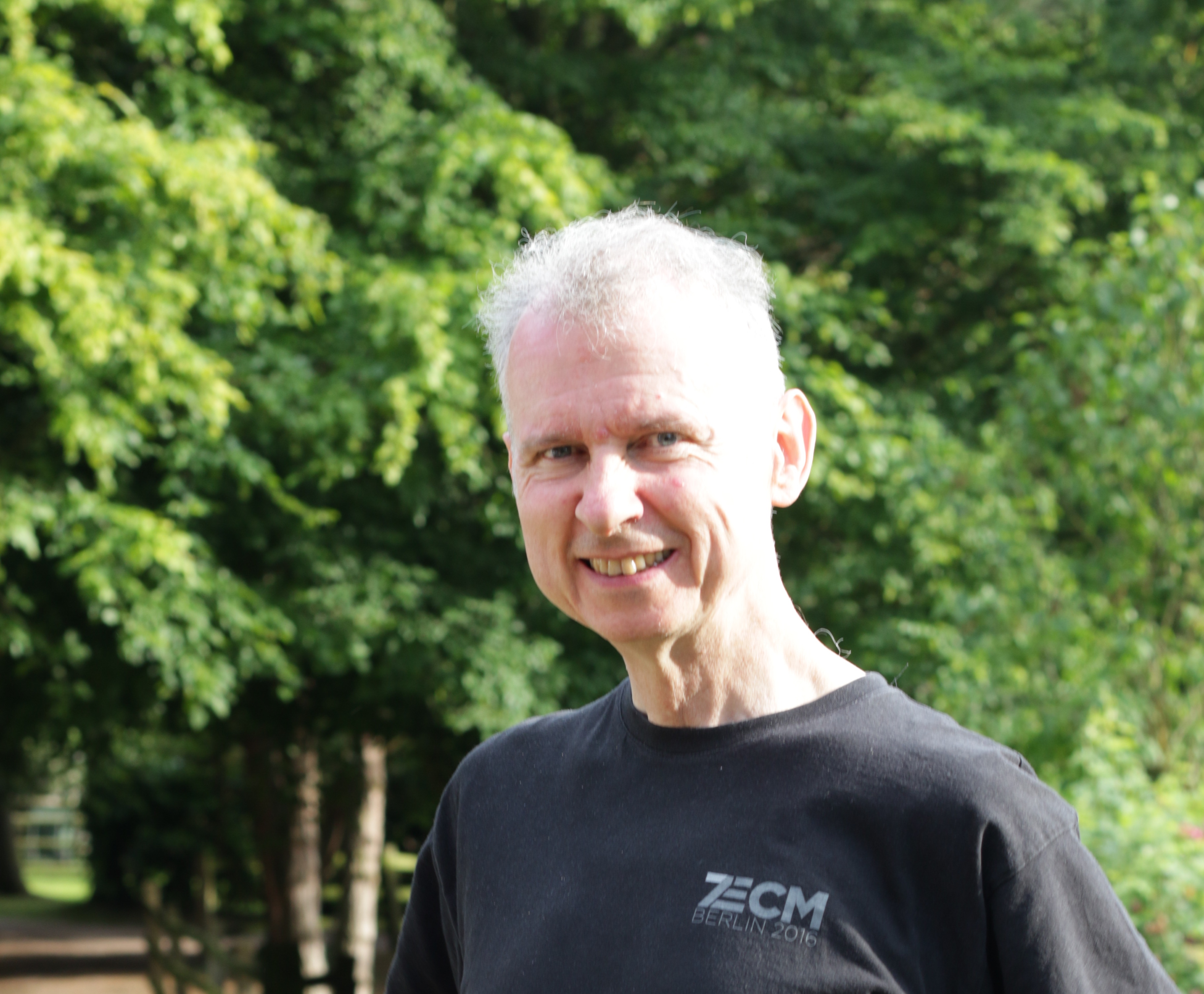
Vladimir Spokoiny is a Professor at the Departments of Mathematics and Economics of the Humboldt University of Berlin and Head of the Research Group "Stochastic Algorithms and Nonparametric Statistics" at the Weierstrass Institute for Applied Analysis and Stochastics (WIAS) in Berlin, Germany. His research spans multiple areas of statistics, machine learning, and financial mathematics, with significant contributions to nonparametric statistics, high-dimensional data analysis, and statistical methods in finance. Spokoiny received his M.Sc. in applied mathematics from the Moscow Institute of Railway Engineering in 1981 and his Ph.D. in mathematics from Lomonosov Moscow State University in 1988. He completed his Habilitation at Humboldt University in 1996. His academic career includes positions at the All-Union Institute of Railway Transport in Moscow, the Institute for Information Transmission Problems in Moscow, and the Institute for Applied Analysis and Statistics in Berlin before joining the Weierstrass Institute and Humboldt University where he has been a professor since 2002. Spokoiny's research focuses on adaptive nonparametric smoothing and hypothesis testing, high dimensional data analysis, statistical methods in finance, image analysis with applications to medicine, classification, and nonlinear time series. His work often addresses the challenges of nonstationarity in time series data and develops innovative methods for volatility estimation and risk management. He has made significant contributions to the development of adaptive weights smoothing procedures, which have applications in image processing, community detection, and manifold learning. His recent work has expanded into high-dimensional statistics, Bayesian inference, and optimization methods for machine learning, with publications demonstrating novel approaches to Gaussian approximation, Laplace methods, and statistical inference in non-Euclidean spaces. Spokoiny has supervised numerous PhD students including Oliver Reiss, Danilo Mercurio, Ying Chen, Elmar Diederichs, and Mstislav Elagin, whose research has focused on mathematical finance, time series analysis, and statistical methods. He serves as an Associate Editor for The Annals of Statistics (since 2004) and Statistics and Decisions (since 2002), and has previously served on the editorial board of the Journal of Statistical Planning and Inference. His professional activities include reviewing for major statistical journals including Annals of Statistics, Bernoulli, Econometrica, and Journal of American Statistical Association, as well as reviewing grant proposals for the National Science Foundation (USA), German Research Foundation, and Netherlands Organisation for Scientific Research. Spokoiny is a member of several professional societies including the International Statistical Institute, American Statistical Association, Institute of Mathematical Statistics, and Bernoulli Society. He is fluent in Russian (mother tongue), English, and German, and has good knowledge of French. His research group at WIAS focuses on developing novel statistical methodologies with applications across various scientific domains, particularly emphasizing adaptivity and robustness in complex data environments. The group's work has significant implications for financial risk management, medical imaging, and machine learning applications, with recent publications addressing fundamental questions in high-dimensional statistics and nonparametric inference.