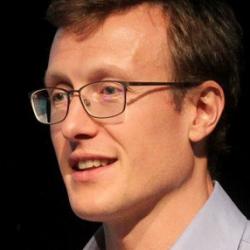
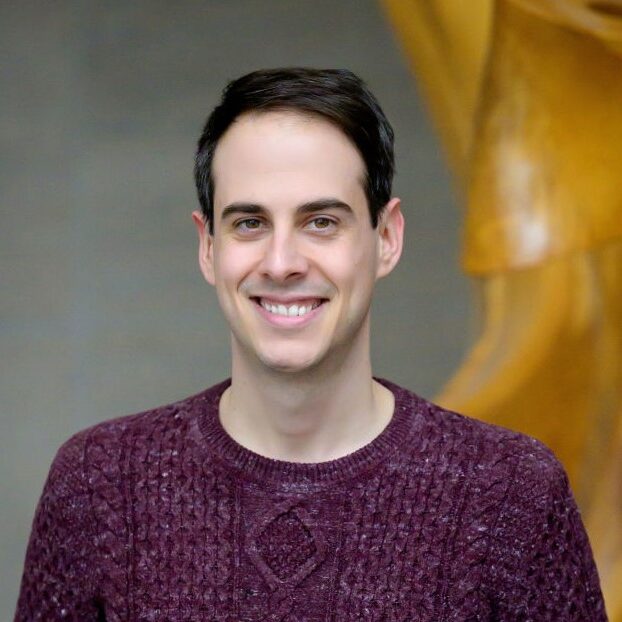
Dr. Rob Foster is an Associate Professor in Civil Engineering at the University of Cambridge, affiliated with the Structures Research Group within the Department of Engineering. His career spans structural engineering practice, academic research, and teaching roles in both the UK and Australia. Education: BA in Philosophy, University of Wales, Cardiff MEng in Civil & Architectural Engineering, University of Bath PhD in Structural Engineering, University of Cambridge Rob Foster's research focuses on advanced structural systems and sustainable materials, including timber-metal connections, cross-laminated timber (CLT), bamboo composites, and shear strengthening of concrete using carbon fiber reinforced polymer (CFRP). He has contributed to defining tall timber buildings and exploring their role in urban sustainability. His recent publications highlight trends in timber engineering, structural retrofits, and multi-material systems. Collaborations include Emeritus Professor Chris Morley and Professor Janet Lees. Rob is based at the University of Cambridge's Civil Engineering Building and is not available for consultancy.
Francesco Mirko Massaro serves as an Associate Professor in the Department of Structural Engineering at the Norwegian University of Science and Technology (NTNU), Faculty of Engineering. His academic role encompasses advanced research in timber structural systems and dedicated teaching in timber engineering disciplines. His research program centers on wood mechanics and structural performance, with specialized expertise in compression perpendicular to grain, long-term behavior of timber elements, and innovative timber bridge systems. Key investigation areas include glued-laminated timber (GLT), cross-laminated timber (CLT), stress-laminated decks, and connection mechanics, employing rigorous experimental testing combined with finite element modeling to advance structural understanding. Analysis of his 15 most recent publications reveals significant focus on structural serviceability (2022-2023), compression behavior characterization (2023-2024), and next-generation timber systems for multistorey construction (2025). Critical research trajectories include Eurocode 5 fatigue rule development, geometric effects on timber performance, and pre-stressing mechanics for bridge applications, demonstrating consistent progression toward practical implementation of timber engineering solutions.
Kalev Adamson is a Research Fellow at the Chair of Silviculture and Forest Ecology within the Institute of Forestry and Engineering at Estonian University of Life Sciences. He has been employed in this position since January 2018, following previous roles as a Head Specialist, Junior Research Fellow, and Specialist within the same institution since 2012. His current research focuses on forest pathogens, particularly fungal diseases affecting coniferous trees and the ecological relationships between trees and their microbial communities. Estonian University of Life Sciences (2004-present): Doctoral studies completed in 2017, followed by research positions Mendel University in Brno (2019-2020): Research experience in Czech Republic Forest Research Alice Holt Research Station (2015): UK research experience Norwegian Forest and Landscape Institute (2015): Research in Norway Adamson's research interests center on forest pathology, with particular emphasis on invasive fungal pathogens affecting coniferous trees. His work examines the population genetics, distribution patterns, and ecological impacts of pathogens like Lecanosticta acicola (causing brown spot needle blight) and Diplodia sapinea. He also investigates the biology and ecology of Inonotus obliquus (Chaga fungus), including its distribution, impact on wood quality, and medicinal properties. His research integrates molecular techniques with ecological field studies to understand pathogen spread, host-pathogen interactions, and the effects of environmental factors on fungal communities in forest ecosystems. This work is increasingly relevant in the context of climate change and global trade, which facilitate the spread of invasive forest pathogens across geographical boundaries. Analysis of Adamson's recent publications reveals a strong focus on fungal pathogens in forest ecosystems, with particular emphasis on Lecanosticta acicola and Inonotus obliquus. His research spans multiple approaches including population genetics, field epidemiology, laboratory cultivation studies, and ecological community analysis. The work demonstrates a progression from basic pathogen characterization to understanding broader ecological patterns and impacts on forest health. His publications frequently appear in high-impact forestry and plant pathology journals, indicating significant contributions to understanding invasive forest pathogens in European contexts. Adamson is actively involved in numerous research projects, both as principal investigator and team member. Current projects include investigations into improving the success of Chaga fungus cultivation in forests (2024-2027), developing new methods for quarantine rust fungi identification (2024-2027), and European projects on forest adaptation to changing climate conditions. He has participated in multiple COST actions including UB3Guard, PINESTRENGTH, and Global Warning. His work often involves international collaboration with researchers across Europe, reflecting the transnational nature of forest pathogen research. Adamson's laboratory work focuses on forest pathology, with particular expertise in fungal culturing, DNA analysis of pathogens, and field assessment of disease symptoms. His research group collaborates with international partners on projects monitoring invasive pathogens across Europe. The work often involves field sampling across multiple countries, laboratory analysis of pathogen genetics, and ecological modeling of pathogen spread. His research has practical applications for forest management and conservation, particularly in developing strategies to prevent the introduction and spread of invasive pathogens in European forests.
Joffrey Viguier is an Associate Professor at the Laboratory of Mechanical, Modelling and Production (LaBoMaP) within Arts et Métiers Institute of Technology. His work focuses on wood mechanics, structural grading, and advanced imaging techniques for timber quality assessment. Academic Rank: Associate Professor Primary Affiliation: LaBoMaP, Arts et Métiers Institute of Technology Research Interests : Wood fiber orientation and 3D reconstruction Timber strength grading and defect analysis Finite element modeling of wood structures Heat treatment and durability of plywood Traceability systems via image processing Open science initiatives like TreeTrace and WoodSun Scientific Contributions include 15+ publications from 2015–2025 on topics spanning fiber orientation measurement, knot impact on mechanical properties, and optimization of laminated veneer lumber. His work integrates laser scanning, X-ray imaging, and finite element analysis for structural applications. Key Collaborations involve projects such as TreeTrace (Douglas fir traceability database) and WoodSun (3D wood structure visualization).
Sven Olofsson is a Senior Lecturer at Mid Sweden University's Department of Humanities and Social Sciences in Sundsvall. Holding a Doctor of Philosophy degree, he specializes in economic and social history with particular focus on pre-industrial trade systems, Sami studies, and regional development. His research spans: 18th-19th century society and business dynamics Church music in peasant communities Urban history of Sundsvall Sami cultural and institutional history Recent publications analyze global commodity chains, early modern market practices, and Sami-forest relations. His 2025 work examines Swedish copper trade networks during the global arms race period. Awarded the MFS Pedagogical Award in 2019, he teaches history at all levels of teacher education including: F-3/4-6 teacher training History theory and methodology Subject teacher didactics Supervision of B/C-level students
Christian Viau is a Professor in the Department of Civil and Environmental Engineering at Carleton University. His research focuses on the development and analysis of wood-based composite structural elements such as mechanically-laminated timber (MLT), cross-laminated timber (CLT), and glued-laminated timber (glulam), with a strong emphasis on finite-element modeling using tools like ABAQUS and LS-DYNA. He investigates the behavior of mass-timber structures under extreme conditions, including impacts, blast loads, and earthquakes, while also working on multi-hazard design frameworks for infrastructure resilience. Recent Teaching Assignments: 2025-2026: CIVE 3203 Introduction to Structural Analysis, ECOR 1033 Statics Past Courses: Structural Analysis I & II, Design Project, Blast Load Effects on Structures, Statics, Mechanics Key Contributions: Supervised M.A.Sc. students including Peter Berghuis (CLT connections), Oludamilare Yinka-Adewale (nail-laminated timber panels), and Saba Seyedrazavi (glulam columns under fire) Active involvement in the VTEL (Visionary Timber Engineering Lab) at Carleton University, including participation in the World Conference on Timber Engineering (WCTE) 2025 Recognitions: Award for excellence in teaching by new faculty members at Carleton University
Alessandro Grazzini serves as an External Lecturer and Teaching Assistant at the Polytechnic University of Turin, affiliated with both the Department of Structural, Geotechnical and Building Engineering (DISEG) and the Interuniversity Department of Territorial Sciences, Planning and Policies (DIST). He has been actively involved in teaching PhD courses on Seismic Consolidation and Improvement Techniques for Historic-Architectural Heritage since the 2019/20 academic year through the present 2024/25 academic year. His teaching responsibilities also extend to Master's degree courses in Heritage Architecture and Bachelor's degree courses in Territorial Planning and Environmental Architecture. Dr. Grazzini's research focuses on the structural assessment and restoration of historical buildings, with particular expertise in non-destructive testing methods, experimental fatigue testing of consolidating materials, seismic vulnerability analysis of historic masonry buildings, and environmentally friendly intervention techniques for seismic retrofitting. His work addresses critical challenges in preserving cultural heritage while enhancing structural safety, with a special emphasis on buildings within Central Italy's seismic regions. He has developed expertise in acoustic emission monitoring, impact testing, and the study of dry stone masonry mechanics. His recent publications demonstrate a strong trend toward integrating advanced diagnostic techniques with structural analysis for heritage conservation. The research shows increasing use of digital technologies like BIM modeling, scan-to-BIM conversion, and finite element analysis for dynamic simulation of historical structures. There's also a clear focus on material science aspects of restoration, particularly the durability of lime-based mortars and composite materials used in conservation work. Dr. Grazzini serves on important professional committees that advance his field: Scientific Committee member of ARCo (Association for the Recovery of Built Environments), Italy (2015-present) Editorial Board member of the INTERNATIONAL JOURNAL OF ARCHITECTURAL ENGINEERING TECHNOLOGY (2018-present) Editorial Board member of COMPOSITE MATERIALS RESEARCH (2018-present) His research projects often involve collaboration with cultural heritage authorities, including strategic cooperation agreements with the Superintendency of Archaeology, Fine Arts and Landscape, and work on significant restoration sites like the sanctuary of Santa Maria del Grazie in Amatrice. As Scientific Director for various restoration projects, he has led commercial consulting work on consolidation techniques for foundations and masonry structures, evaluation of consolidation interventions on decorative plasters, and restoration of wooden roofing structures. Dr. Grazzini's research laboratory work focuses on non-destructive testing and structural monitoring of historic buildings, with specific expertise in impact testing, acoustic emissions for delamination detection, and cyclic load testing for durability assessment of restoration materials. His work bridges theoretical research with practical applications in the field, particularly in the seismic regions of Central Italy.
Dr. Antoni Sanchez-Ferrer serves as Head of the Wood Materials Science Group and holds positions as Lecturer & Senior Research Scientist at the Chair of Wood Science, Technical University of Munich (TUM). Based at the Department of Wood Technology in Munich, he conducts cutting-edge research while contributing to academic teaching in wood science and technology. His work bridges fundamental materials science with practical applications in sustainable wood utilization. Dr. Sanchez-Ferrer's academic journey includes: Ph.D. in Chemistry from University of Barcelona (2007) Master of Advanced Studies in Chemistry from University of Barcelona (2003) Extensive research experience at Swiss Federal Institute of Technology in Zurich (2009-2018) Previous positions at University of Fribourg, BASF SE, and University of Strasbourg His research spans multiple critical areas in wood science, with particular focus on wood adhesives and primers, wood coatings, modification techniques, smart materials, wood-based polymers, and filtration systems. Dr. Sanchez-Ferrer's work consistently integrates advanced characterization techniques with practical engineering applications, exploring how wood's natural properties can be enhanced for modern technological needs. His approach combines experimental methods with theoretical modeling to understand wood behavior at multiple scales. Analysis of his recent publications reveals a strong emphasis on sustainable wood applications, particularly in water treatment technologies and eco-friendly packaging solutions. His work increasingly utilizes advanced imaging and porosimetry techniques to characterize wood microstructure, while maintaining a consistent focus on wood-water interactions that are critical for performance in various environmental conditions. The research demonstrates a clear trajectory toward developing wood-based solutions for environmental challenges. Dr. Sanchez-Ferrer actively supervises PhD, MSc, and BSc students through research projects related to wood science and technology. His teaching responsibilities include courses on Wood Materials Science and Polymers in Wood Science and Technology, where he shares expertise spanning fundamental principles to cutting-edge developments in the field. Leading the Wood Materials Science Group at TUM, Dr. Sanchez-Ferrer oversees research on innovative wood-based materials and technologies. His team collaborates with industry partners and academic institutions on projects including sustainable wood utilization, advanced modification techniques, and novel applications of wood in environmental technologies. Current research initiatives include REGULUS-LabForest, ESCIB, REGULUS-WaHo_boost, CICLICA, and several other projects focused on wood cascading and bio-based resource systems.
James W. Roberts is a Professor of Economics and Chair of the Economics Department at Duke University's Trinity College of Arts & Sciences. He holds the Fred W. Shaffer Professorship (2016-2021) and is a Research Associate at the National Bureau of Economic Research (NBER). His research focuses on Industrial Organization and Applied Microeconomics, with emphasis on healthcare markets, auctions, competition policy, and fraud detection. Education: Ph.D. in Economics, Northwestern University (2009) M.A. in Economics, Northwestern University (2005) B.A. in Economics with a concentration in Applied Mathematics, Davidson College (2004) Research Interests: Roberts examines healthcare fraud, market competition dynamics, and the design of auctions in public and private sectors. His work analyzes how private equity acquisitions affect hospital outcomes, evaluates the impact of mergers in airlines and dialysis industries, and explores strategies for mitigating disparities in healthcare access. His studies often involve empirical analyses of large datasets, including Medicare claims and healthcare provider behaviors. Grants & Awards: He has secured funding from NSF, Arnold Ventures, and the National Institute for Health Care Management. Notable awards include the Association of Competition Economists Best Paper Award (2021) and the Lanzillotti Prize (2018). Roberts is also a Bass Society Fellow and recipient of Duke's Howard D. Johnson Teaching Award. Service & Leadership: He chairs the Duke Economics Department and has held roles in library councils, admissions committees, and research initiatives. Roberts advises over 25 PhD students and mentors Bass Connections projects on hospital cost variations and value-based healthcare decisions. Labs/Teams: Leads the Bass Connections Team on hospital cost analysis (2021-2022) and collaborates with interdisciplinary teams on healthcare policy and market design.
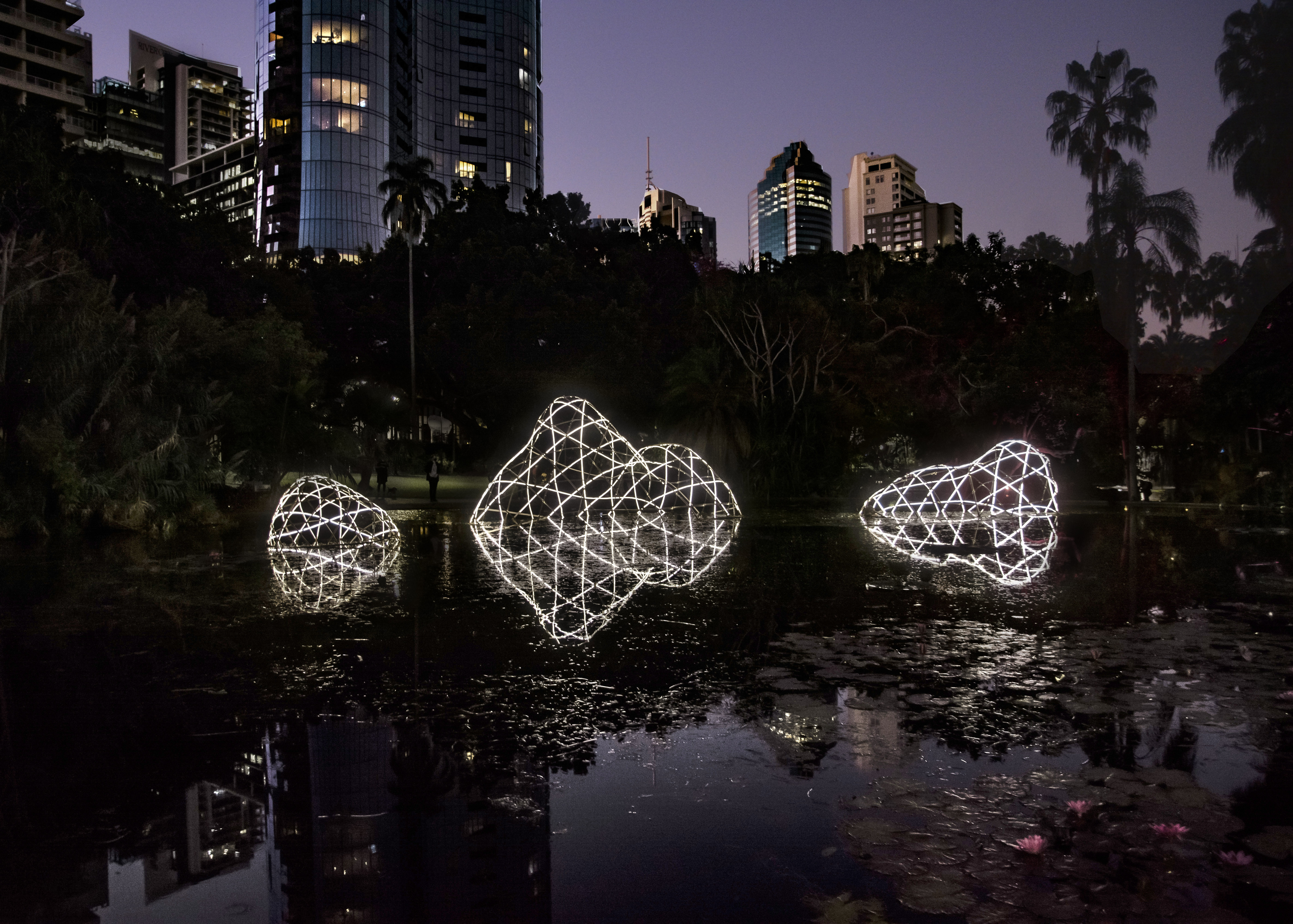
Dr. Dan Luo is a Senior Lecturer in Architectural Design at the University of Queensland's School of Architecture, Design and Planning. With a PhD from Tsinghua University (2019), a Master of Architecture from Columbia University (2014), and an MSc in Computer and Information Technology from the University of Pennsylvania (2023), Dr. Luo specializes in digital design and robotic construction, integrating advanced fabrication technologies with design workflows. His research focuses on automated construction systems, sustainable materials, and urban data analysis. Dr. Luo leads projects within the ARC Advance Timber Hub, Blue Economy CRC, and Sustainable Built Environment National Research Centre, collaborating with public agencies and international partners. His work has been exhibited globally, including at the Milan Triennial and Architecture Center New York. Previously, he served as Director of International Collaboration at the China Building Centre, curating design competitions and educational programs. Key research areas include AI-driven material computation, robotic fabrication for mass customization, and data analytics for urban planning. His publications span computational design, robotic systems, and urban sustainability. Current projects explore circular shell plates, carbon fiber weaving installations, and low-cost sustainable construction methods. Education: PhD in Architecture (Tsinghua), MArch (Columbia), MSc Computer Science (UPenn) Research Hubs: ARC Advance Timber Hub, Blue Economy CRC, Sustainable Built Environment CRC Exhibitions: Milan Triennial, NGV Melbourne Design Week, Brisbane Botanical Gardens Grants: Multiple collaborative projects with academic and industry partners
Dr. Fred Fialho Leandro Alves Teixeira is a Senior Lecturer and Deputy Director (Engagement) at the University of Queensland's School of Architecture, Design and Planning. His research focuses on computational architecture, immersive environments, and bio-augmented spaces. He co-founded the UQ Visualisation Lab, specializing in extended realities and spatial computing. With over 50 publications, his work bridges biology, art, and architecture. He holds a PhD from Istanbul Technical University and is accredited by RIBA and Portuguese architectural bodies. Awards include Dean’s Fellowship (UC) and Media Arts and Technology Fellowships. His projects, such as RoboBlox and digital twin frameworks, emphasize innovation in design and fabrication. Education: PhD in Architecture (Istanbul Technical University, 2014), Architectural Association (AA), and RIBA accreditation. Research: Bio-inspired design, mixed reality, robotic fabrication, and urban sustainability. Key Projects: UQ Visualisation Lab, Perception of Space studies, and SHErobots initiative. His teaching emphasizes transdisciplinary approaches, as seen in co-authored works on global design education. Collaborations include Zaha Hadid Architects and interdisciplinary teams in robotics and art.
Wyly Brown is an Assistant Professor at Washington University in St. Louis and founding partner of LBGO architects. He holds a BA in Anthropology and MArch from Harvard University (2006). His academic roles include chairing Architectural Informatics at Technical University Munich and teaching parametric design at Massachusetts College of Art and Design. Education: Bachelor of Art in Anthropology Master of Architecture, Harvard University (2006) Research Interests: Focuses on structural optimization, sustainable materials (e.g., bamboo), and parametric design tools. His work bridges historical reconstruction (e.g., medieval cranes, Egyptian obelisks) with modern disaster relief architecture. Combines academic research with professional practice through design-build community projects like St. Louis’s Peace Park. Awards: Sam Fox School Research Grant (2023) McDonnell Global Incubator Seed Grant (2022) Cited in Smithsonian Magazine (2023) Advising & Grants: Leads initiatives on carbon-positive materials and urban stormwater management. Collaborates with local communities on placemaking projects. Active in WashU’s Living Earth Collaborative. Labs/Teams: Directs research in architectural informatics and sustainable timber applications, integrating practice with academic innovation.
Dr. Paul Mayencourt is an Assistant Professor of Cooperative Extension in Engineered Wood Products and Design, split between the Department of Environmental Science, Policy, and Management and the Department of Architecture at the University of California, Berkeley. He is co-director of the Berkeley Wood Lab, focusing on low-carbon design solutions for the built environment. His research merges structural design, forestry, and materials science, emphasizing mass timber construction and computational optimization to utilize underutilized timber resources like small-diameter timbers and Californian hardwoods. Mayencourt holds a B.Sc. in Civil Engineering from EPFL (Switzerland), an M.Sc. in Structural Engineering from ETH Zurich, and a Ph.D. in Architecture from MIT. Before academia, he worked as a licensed structural engineer in Zurich and taught structural design at MIT, Stanford, UW, and UC Berkeley. His work explores sustainable building practices through advanced manufacturing and digital fabrication techniques, aiming to reduce material waste and carbon footprints in construction. Recent projects include structural optimization of cross-laminated timber panels and innovative timber beam designs. His research trends emphasize interdisciplinary collaboration between environmental science and architecture, with a focus on material efficiency and sustainable building solutions. The Berkeley Wood Lab serves as a hub for experimental timber construction and computational methods.
Professor Alex Remennikov is a structural engineering academic at the University of Wollongong (UOW), affiliated with the School of Civil, Mining and Environmental Engineering. He holds a PhD from the National University of Construction and Architecture, Kyiv (1994), followed by a postdoctoral fellowship at the University of Canterbury, NZ. Since joining UOW in 2001, he has focused on structural analysis under extreme loads, blast/impact mitigation, and infrastructure protection against terrorism. His research spans experimental and numerical methods, with notable contributions to coal mine safety, hydrogen explosion hazards, and timber-steel composites. Education: PhD, National University of Construction and Architecture, Kyiv, Ukraine (1994) Postdoctoral Fellowship, University of Canterbury, NZ (Civil Engineering, Seismic Analysis) Key Research Themes: Blast and impact-resistant structures Protective infrastructure design Coal mine explosion safety Hydrogen explosion dynamics Advanced composites and hybrid materials His recent work emphasizes hydrogen explosion modeling, timber-steel hybrid systems, and blast hazard mapping for underground coal mines. He leads projects funded by ARC and industry, including the ARC Training Centre for Innovative Composites. Prof. Remennikov is a member of the Centre for Infrastructure Protection and Mine Safety (CIPMS) at UOW.
Dr. Xihong Zhang is an Associate Professor at Curtin University's School of Civil and Mechanical Engineering, affiliated with the Centre for Infrastructural Monitoring & Protection. He holds a BEng (Civil Engineering) from the University of Western Australia (2010) and a PhD (Structural Engineering) from the same institution (2015). His research focuses on advanced materials, structural protection against hazards (blast, impact, earthquake), and dynamic material modeling. He leads multiple ARC projects, including DECRA grants, and has published over 150 peer-reviewed articles. Awards include the Curtin Early Career Researcher of the Year (2020) and the Young Researcher Award from the International Association of Protective Structures (2015). His work spans blast-resistant materials, interlocking brick systems, and hydrogen explosion mitigation. He supervises PhD/Master’s students and teaches courses like Reinforced Concrete Design. He holds editorial roles in journals such as Frontiers in Built Environment and is a member of Engineers Australia and the International Association of Protective Structures. Education : BEng (Civil Engineering, UWA, 2010); PhD (Structural Engineering, UWA, 2015) Research Grants : ARC DECRA (2021–2023), ARC Discovery Project (2019–2021), ARC Linkage Projects (2018–2021, 2024–2027). Teaching : STEN3005, STEN4005. His research emphasizes sustainable construction materials and structural resilience, with applications in mining, oil/gas sectors, and disaster prevention. Recent work includes hydrogen explosion prediction, geopolymer concrete performance under impact, and suction anchor behavior in complex soils.