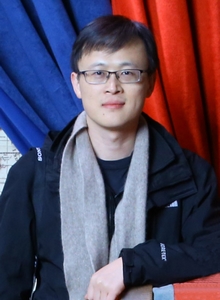
Petr Suchánek serves as Assistant Professor at the Department of Engineering, Faculty of Architecture, Brno University of Technology (VUT Brno). Holding a Ph.D., he maintains active teaching and research roles with contact details including email xssuchanekp@vutbr.cz and phone +420 54114 6763. His current leadership of the "Hlína pro lidi" project (2021-2024) focuses on ecological community buildings using unfired earth. Education: Ing. (Master of Engineering) Ph.D. Suchánek's research centers on sustainable architecture through daylighting innovations, energy efficiency, and natural materials. His work on tubular light guides for non-lightable spaces and thermal stability during seasonal transitions demonstrates expertise in building physics. Recent projects extend this to practical earth construction applications for residential and community buildings. Publication trends reveal consistent focus on sustainable design evolution: early works (2003-2007) established theoretical foundations in daylighting and thermal dynamics, while recent outputs (2018-2019) showcase applied residential architecture with ecological materials. This progression highlights growing emphasis on implementable sustainable solutions. No scientific awards were documented in available sources. Research engagement includes two projects: "Hlína pro lidi" (2021-2024) developing earth-based community structures, and "Modernizace a inovace výuky oboru architektura" (2006-2008) modernizing architecture education. No student advisement records appear in the provided materials.
Zdeněk Vejpustek serves as Assistant Professor in the Department of Engineering at Brno University of Technology's Faculty of Architecture (FA VUT). His academic profile combines teaching responsibilities in structural engineering with specialized research in sustainable construction methodologies. Active in both Czech and international academic circles, he maintains consistent scholarly output through 2025. His research interests focus on sustainable architectural systems , particularly earthen construction techniques and timber structural rehabilitation. He investigates historical building methods while developing contemporary applications for modern urban challenges, with recent work examining funeral architecture and future city models. His publications reveal strong collaboration patterns, especially with researcher R. Bolcek across multiple projects. Analysis of his 15 most recent publications (2023-2025) shows thematic concentration in three areas: (1) earthen construction science and conservation, (2) sustainable urban development models, and (3) structural analysis of historical timber systems. His work bridges practical engineering concerns with broader architectural theory, particularly in BIOM project research exploring bio-inspired urban futures. Vejpustek actively contributes to academic governance as Member of the Faculty of Architecture Academic Senate. His teaching portfolio includes core engineering courses such as Statics of Building Constructions and specialized topics in building reconstructions, delivered in both Czech and English to support international students. Current research projects include Hlína pro lidi (focusing on community earthen buildings) and studies of endangered historical earth construction techniques, demonstrating commitment to preserving traditional knowledge while advancing sustainable building practices. His laboratory work examines acoustic properties of historical timber systems and thermal behavior of structural joints.
Dr Vilius Gendvilas is a Research Fellow at the Forest Research Institute of the University of the Sunshine Coast in Queensland, Australia. With eight years of experience in forestry and wood science, he specializes in non-destructive wood testing techniques. His international experience spans across Lithuania, Finland, Ireland, and Australia, giving him a diverse perspective on forest management and wood science applications. Dr Gendvilas' educational background includes: PhD in Forestry from the University of Tasmania, Hobart, Tasmania, Australia MSc in Forestry from University College Dublin, Dublin, Ireland BSc in Forestry from Lithuanian University of Agriculture, Kaunas, Lithuania His primary research interests focus on softwood and hardwood plantation silviculture, non-destructive wood testing techniques, and wood science. Dr Gendvilas has particular expertise in resistance drilling methods for wood density assessment and has investigated how silvicultural practices like thinning and fertilization affect wood properties in plantation species, especially Eucalyptus nitens. His work bridges the gap between forest management practices and wood processing industry requirements, aiming to optimize timber quality for specific end-uses. Analysis of Dr Gendvilas' recent publications reveals a strong focus on non-destructive evaluation methods for wood quality assessment, particularly resistance drilling techniques. His research examines how factors like needle wear, feed speed, RPM settings, and operator variability affect the accuracy of these measurements. He has also extensively studied the effects of silvicultural practices on wood properties in plantation species, with a particular emphasis on Eucalyptus nitens across multiple sites in Tasmania. His work demonstrates a consistent theme of connecting forest management decisions with final wood product quality. Dr Gendvilas is an active member of professional organizations: Forestry Australia Society of Wood Science and Technology While specific details about his students and grants aren't provided in the available information, Dr Gendvilas has collaborated extensively with researchers across Australia, Europe, and New Zealand. His work with the ARC Centre for Forest Value and the University of Tasmania's School of Natural Sciences indicates involvement in significant research projects focused on optimizing forest value chains and improving wood quality assessment methods. As part of the Forest Research Institute at the University of the Sunshine Coast, Dr Gendvilas contributes to research on assessing and managing mid-rotation wood quality in Australian softwood plantations to produce fit-for-purpose logs. His laboratory work involves advanced wood testing techniques, including resistance drilling instruments and image analysis systems for quantifying wood defects. His research team appears to collaborate closely with industry partners to ensure practical applications of their findings in forest management and wood processing.
Professor John R Littlewood serves as Professor of Sustainable and Resilient Buildings at Cardiff School of Art & Design (CSAD), Cardiff Metropolitan University. He leads CSAD's Sustainable and Resilient Built Environment research group and contributes to the University's Human Centred Design Global Academy. His leadership extends to coordinating professional doctorate pathways and serving on multiple university research committees including CSAD's Research Degree Committee and the university's Research Degree Group. Professor Littlewood holds a PhD in Building Performance Assessment of Nearly-Zero Operational Energy Dwellings, earned through collaboration with Gwalia Housing Association and co-funded by the Ecology Building Society. His professional credentials include BSc (Hons), FHEA, C Build E, FCABE, FRSA, MIET, Affiliate CIAT & Affiliate IFE. His research focuses on sustainable building solutions with expertise spanning building performance assessment, carbon emissions reduction, indoor air quality, and sustainable materials. Professor Littlewood has pioneered methodologies for evaluating building performance across the entire lifecycle, bridging academic research with practical industry applications to address critical challenges in the built environment sector. His work consistently addresses the intersection of technical performance, user comfort, and environmental impact. His recent publications demonstrate a strong trend toward practical applications of sustainable building principles across diverse contexts, from Welsh social housing to Caribbean climate resilience and UAE building standards. His international research portfolio addresses both technical building performance metrics and human-centered design considerations across multiple geographical and cultural settings. Professor Littlewood has received significant recognition for his contributions to the field: Outstanding Contribution to KES Award (2020) for 'acting as KES Champion for Sustainable Building, providing support for Sustainability in Energy and Buildings Conference Series for a decade including chairing the conference several times, giving a keynote talk, chairing Tracks and Invited Sessions. Plus, acting Co-Editor of the KES Springer Book Series on, and one of the founding co-editors of the Springer book series 'Advances in Sustainability Science and Technology'' With over 50 successful external grant applications since the mid-1990s, Professor Littlewood has established himself as a leader in collaborative research between academia and industry. His change management expertise has delivered impact for government agencies, housing organizations, consultants, building contractors, and material manufacturers across North America, the Middle East, and the UK. At CSAD, he leads three Professional Doctorate pathways in Art & Design Practice, Engineering, and Sustainable Built Environment. Professor Littlewood founded and leads the Sustainable and Resilient Built Environment (SuRBe) Research Group, Cardiff Met's first research group dedicated to Architecture, the Built Environment and Engineering. This interdisciplinary group includes membership from four of the five schools at Cardiff Met and is part of the University's Human Centred Design Global Academy.
Florent Eyma is a Professor at the University Institute of Technology of Tarbes (IUT of Tarbes), where he is a member of the Composite Materials and Structures group (MSC). He holds leadership positions as President of the Wood Machining Group and as Responsible for the Professional License "Quality, Waste and Environmental Management." His research spans multiple international collaborations, particularly with the University of Antananarivo in Madagascar, focusing on tropical wood species and machining processes. Professor Eyma's research primarily centers on machining of heterogeneous anisotropic materials, particularly wood (as a natural composite) and synthetic composites used in aeronautics. His work includes developing reliable cutting force calculation methods, optimizing cutting conditions, and ensuring material, machine, and personnel integrity. He also investigates physical-mechanical characterization of machined materials and develops new multi-material wood-based structures, especially sandwich composites with wood cores. His research connects material characteristics with surface conditions and part integrity using non-destructive testing methods. His scientific output shows consistent productivity with 74 documented contributions. His recent publications (2022-2025) demonstrate strong activity in wood composite structural applications, particularly focusing on crashworthiness, moisture effects on glulam timber, and mechanical characterization of poplar-based composites. His work appears in high-impact journals across materials science, structural engineering, and wood science disciplines. Professor Eyma teaches Materials Science and Structural Dimensioning courses while supervising student projects and interns. His leadership role in the Professional License program indicates significant administrative responsibilities beyond research and teaching. As President of the Wood Machining Group, he maintains influence in his specialized field. His laboratory work centers on the Composite Materials and Structures group, where he investigates wood composite machining, structural properties, and non-destructive evaluation techniques. His research on embedded sensors for moisture monitoring in glulam structures demonstrates practical applications for civil engineering infrastructure.
Mark Kuhlberg is a Professor of History and Graduate Program Director at Laurentian University in Sudbury, Ontario. His primary field of expertise is forest history, with extensive publications covering forestry systems, lumber industries, pulp and paper production, forest harvesting techniques, and lumberjack labor history. He actively engages with contemporary forestry through committee and council memberships. Professor Kuhlberg's research centers on the socio-economic and environmental evolution of Canadian forestry, examining historical transitions in resource management, industrial development, and labor practices. His work bridges historical scholarship with practical forestry applications, emphasizing how past practices inform current sustainability challenges and policy decisions in forest resource utilization. His encyclopedia publications reveal consistent thematic focus on human-forest interactions, tracing technological advancements and institutional changes across the forestry value chain. The body of work demonstrates interdisciplinary engagement spanning historical analysis, environmental studies, and industrial economics within Canada's forest sector. No scientific awards were mentioned in the provided information. As Graduate Program Director, Kuhlberg oversees history graduate studies at Laurentian University. His committee involvements indicate active participation in forestry governance and policy discussions, though specific grant details remain unreported in the source material.
Prof. Dr. Elgin von Gaisberg-Helfenberg is an Honorary Professor for Archaeological Building Research at the Technical University of Berlin and a Research Associate in the 'Cults within the Cult' project of the North Rhine-Westphalian Academy of Sciences and Arts. His academic career spans over three decades with significant contributions to classical archaeology, architectural research, and monument preservation. His educational background includes Magistra artium from studies in art history, classical archaeology, German studies, and journalism at the universities of Würzburg, Hamburg, and Berlin (1992), followed by doctoral studies at Otto-Friedrich University of Bamberg where he earned his doctorate in 2001 with a dissertation on 'The North Portal of St. James in Regensburg.' Prof. von Gaisberg-Helfenberg's research focuses on the intersection of classical archaeology and architectural history, particularly in Greek extraurban sanctuaries and historical building techniques. His work combines field archaeology with meticulous building research methodology, examining construction phases, materials, and techniques across different historical periods. His investigations at sites like Didyma in Turkey have provided significant insights into ancient religious structures and their evolution. His extensive publication record demonstrates expertise in multiple domains including Schinkel architecture, Jewish cemetery documentation, and Renaissance urban planning. The articles show a consistent pattern of interdisciplinary research that bridges classical archaeology, architectural history, and conservation science, with particular attention to documentation methods and historical building techniques. Award of the Koldewey Society, Association for Architectural History Research (2007) Throughout his career, Prof. von Gaisberg-Helfenberg has secured significant third-party funding for projects including the 'Cults within the Cult' research, the Jewish Cemetery Weißensee documentation, and numerous building archaeological investigations at Berlin's historic palaces. He has supervised theses in the Master's program in Monument Preservation at TU Berlin and contributed to interdisciplinary research projects examining the Ernestine Wittenberg period. His primary research sites include the ancient sanctuary of Didyma in Turkey, where he has led building research since 2012, and Berlin's historic palaces including Charlottenburg, Schönhausen, and the Pfaueninsel Palace. His work with the German Archaeological Institute and the Prussian Palaces and Gardens Foundation has established him as a leading expert in both classical archaeological sites and European architectural heritage conservation.
Professor JI Jie serves as Professor and Vice Director of the State Key Laboratory of Fire Science at the University of Science and Technology of China (USTC), with additional leadership roles in the Engineering Research Center of Thermal Safety and National & Local Joint Engineering Research Center of Thermal Safety Technology. Education: Bachelor of Science, University of Science and Technology of China, 2002 Ph.D. in Engineering, University of Science and Technology of China, 2008 Postdoctoral Research, University of Science and Technology of China, 2008-2010 His research pioneers fire plume dynamics, combustion of complex materials, fire spread mechanisms in ancient/high-rise structures, and real-time fire forecasting using data assimilation techniques. Current work focuses on integrating experimental and numerical methods for fire risk assessment in tunnels, subways, and cultural heritage sites. Recent publications (2021-2023) demonstrate expertise across fire dynamics, smoke management, and safety engineering, with significant contributions to understanding wind-driven fires, multi-fire interactions, and real-time smoke prediction systems using Ensemble Kalman Filter approaches. Honors and Awards: Elected fellow of the Combustion Institute (2022) Highly Cited Chinese Researcher (Elsevier 2020, 2021) National Science and Technology Innovation Leadership Talent (2018) Excellent Young Scientists Fund recipient (2017) Multiple national teaching and research awards including China Fire Protection Association First Prize (2019) Professor Ji has secured major funding including the National Science Fund for Excellent Young Scholars and multiple National Natural Science Foundation projects, while supervising award-winning research teams. His lab implements fire safety standards in national construction projects and international protocols. He leads USTC's State Key Laboratory of Fire Science research team, focusing on experimental combustion studies, computational fire dynamics, and practical fire safety engineering applications for complex infrastructure.
Dr Huaizhong Li serves as a Senior Lecturer in the Mechanical Engineering and Industrial Design department within Griffith University's School of Engineering and Built Environment on the Gold Coast campus. He is also a member of the Queensland Quantum and Advanced Technologies Research Institute (QUATRI) and previously served in the Queensland Micro and Nanotechnology Centre from 2018 to 2024. His academic journey spans multiple prestigious institutions across different countries, reflecting his international expertise in mechanical engineering. Education: Bachelor of Engineering from Tsinghua University (1983-1988) Master of Engineering from Xi'an Jiaotong University (1988-1991) Doctor of Philosophy from National University of Singapore (1998-2001) Graduate Certificate in Higher Education from Griffith University (2015-2016) Dr Li's research program focuses on advanced manufacturing technologies, micromachining, machine dynamics, vibration monitoring and control, and mechatronics. His work is strongly application-oriented, with extensive industry collaboration to solve vibration-related problems in precision machines and improve manufacturing productivity. His research has resulted in over 100 refereed technical articles, scholarly book chapters, and two patent applications. He has established expertise in micro-milling processes, vibration analysis in timber structures, and precision engineering applications. Analysis of Dr Li's recent publications reveals a strong emphasis on vibration monitoring and control across various applications, particularly in timber floor structures and precision manufacturing. His work bridges theoretical modeling with practical applications, often incorporating novel signal processing techniques for condition monitoring. There's a clear progression toward more sophisticated vibration analysis methods, including entropy-based approaches and machine learning applications for chatter detection in micro-milling processes. Scientific Awards: Thatcher Bros Prize by the Institution of Mechanical Engineers, UK (2015) Thatcher Brothers Award (2019) Fellow of AET (2022) Fellow of the Higher Education Academy (2019) Fellow of the Griffith Learning and Teaching Academy Dr Li has successfully supervised numerous PhD students to completion across diverse mechanical engineering topics including micromachined sensors, chatter monitoring in bearings, titanium alloy machining, and natural fiber composites. His grant portfolio demonstrates strong industry engagement, with projects funded by ARC, industry partners like Multinail Australia and Ride Mechanic Pty Ltd, and internal university grants. Current projects include innovative long-span timber floors research and investigation of power transmission in bicycle drivetrains. As HDR convenor in his School, he plays a significant role in higher degree research administration and student development. Dr Li is actively involved in research centers including the Queensland Quantum and Advanced Technologies Research Institute (QUATRI) and previously the Queensland Micro and Nanotechnology Centre. His work often involves interdisciplinary collaboration across engineering disciplines, particularly with structural engineers on vibration-related projects. He serves as a guest editor for Micromachines and associate editor for Digital Manufacturing Technology, demonstrating his leadership in the scholarly community.
Sudarshan Krishnan is an Associate Professor and Chair of the Building Performance Program Area at the University of Illinois at Urbana-Champaign's School of Architecture. His research focuses on deployable structures, kinematic systems, and interdisciplinary design processes. He holds affiliations with the College of Liberal Arts & Sciences and has contributed to advancements in architectural engineering, structural mechanics, and space architecture. Key research areas include deployable scissor mechanisms, robotic assembly planning, and lightweight structures for space habitats. His work integrates computational design, mechanical engineering principles, and architectural innovation. Notable projects involve operable roof systems (e.g., Mercedes-Benz Stadium), tensegrity frameworks, and lunar habitat concepts. Publications highlight trends in deployable systems classification, mobility analysis, geometric optimization, and cross-disciplinary collaboration. He has explored structural evolution in traditional Chinese timber bridges and advanced cable dome designs. Krishnan’s methodologies emphasize geometric feasibility, kinematic stability, and real-world applications in both terrestrial and extraterrestrial contexts. No scientific awards or grants were explicitly mentioned in the provided texts. Advising records are not listed here, though his program leadership suggests mentorship roles in building performance research.
Tomislav Poršinsky is a Distinguished Professor at the University of Zagreb's Faculty of Forestry and Wood Technology, Department of Wood Technology. He has been affiliated with the institution since 1995, contributing to academic leadership, teaching, and research in forest engineering and sustainability. His roles include instructing courses like Timber Harvesting and advising on operational forestry strategies. His research focuses on enhancing wood harvesting systems, environmental impact mitigation, and optimizing forest accessibility. Key areas include mechanized thinning, soil conservation during operations, and sustainable machinery design. He has pioneered studies on forwarder efficiency, rut depth measurement, and UAV-based log volume estimation, integrating technology with ecological stewardship. Publications highlight innovations in forest infrastructure planning, machinery performance analysis, and international comparisons of harvesting practices. His work emphasizes practical solutions for ecological and economic challenges in forestry. Awards include the prestigious Distinguished Professor title (2017), recognizing his contributions to academic innovation and industry collaboration. Tomislav’s expertise spans over three decades, with a focus on bridging theoretical research and operational forestry challenges. His research and advisory roles have influenced policies and practices in Croatia and beyond, addressing global forestry sustainability goals.
Dr. Andrija Novosel is an Assistant Professor at the University of Zagreb's Faculty of Forestry and Wood Technology, Department of Wood Technology. His work focuses on advancing wood-based materials' mechanical, thermal, and structural properties, with special emphasis on adhesives, reinforcement techniques, and sustainable construction. He is based in the Laboratory of Wood in Construction (IV. pavilion) and teaches courses such as 'Quality of Wood Building Products.' Professional experience includes roles at Drvoproizvod d.d. (2015–2019) and academic roles since 2019. Education: Dr. sc. (PhD) in Wood Technology. Mag. ing. techn. lign. (Master of Engineering in Wood Technology). Research Interests: Dr. Novosel’s research spans wood reinforcement via carbon/glass fiber implants, adhesive applications in cross-material bonding, thermal properties of bark-insulated structures, and structural assessments of historical timber buildings (e.g., Zagreb Cathedral). He also explores environmental impacts of wood production processes and industrial sustainability. Key Contributions: His work bridges materials science and heritage conservation, with studies on lamination techniques, non-destructive testing, and bi-directional wood reinforcement. Recent advancements include optimizing oak wood bonding techniques and assessing thermal insulation efficiency in eco-friendly building envelopes. Awards: No scientific awards explicitly mentioned in the text. Advising & Grants: No formal advisee list or grant details provided. His professional focus appears research-oriented with industry-academic collaboration. Labs & Facilities: Active in the Laboratory of Wood in Construction, focusing on applied wood technology and structural analysis.
Kareem Abushama is a Researcher at the University of Bath affiliated with the Centre for Climate Adaptation & Environment Research (CAER) and Centre for Regenerative Design & Engineering for a Net Positive World (RENEW). His work contributes to UN Sustainable Development Goals through sustainable engineering research. His research focuses on embodied carbon optimization in geotechnical systems, particularly pile foundations. Key specialties include: Concrete, steel, and timber pile design with carbon footprint reduction Deep foundation systems for sustainable construction Hybrid genetic algorithms for structural optimization Construction cost analysis integrated with environmental impact His 12 research outputs since 2024 demonstrate strong trends in embodied carbon minimization across pile foundation systems, with particular emphasis on material comparisons (concrete vs. steel vs. timber) and geometric optimization. His work bridges computational methods with practical geotechnical applications. Award highlights: Best presentation award (2023) He actively contributes to major research initiatives including the EPSRC IAA - Pile Optimisation project (2025) as Researcher CoI, collaborating with Prof. Tim Ibell and Dr. William Hawkins. His conference participation includes the XVIII European Conference on Soil Mechanics and Geotechnical Engineering (2024).
Research Interests: Computational mechanics and finite element modeling Fracture mechanics of wood and timber composites Structural behavior of cross-laminated timber (CLT) Perpendicular-to-grain failure mechanisms Material failure prediction under in-plane and out-of-plane loading Key Projects: Byggnadselement från svenskt lövträ (Crafoord Foundation, 2024-2025) Strength and fracture analysis of laminated wood-based structural elements (FORMAS, 2024-2027) InnoTLT (Vinnova-funded innovation project on tailored laminated timber, 2023-2026) Peer Review Activities: Regular reviewer for journals including Structures , Construction and Building Materials , and Journal of Wood Science .
Antti Tuure is a Doctoral Researcher at the Department of Architecture within the Faculty of Built Environment at Tampere University, Finland. Based at the Hervanta Campus, he holds an ORCID identifier (0000-0003-1110-0579) and focuses on sustainable timber construction for mid-rise residential buildings in the Finnish context, bridging architectural design, structural engineering, and environmental performance. His research interests include: Timber structural systems optimization for mid-rise buildings Material efficiency and life cycle assessment methodologies Space planning and architectural design for timber apartments Global warming potential reduction in building construction Integration of structural and environmental considerations in residential design Finnish building practices and regulatory frameworks Analysis of his 2023-2025 publications reveals a cohesive research trajectory centered on Finnish mid-rise timber apartment buildings. His work systematically examines interrelationships between structural elements (intermediate floor beams, span configurations), architectural features, and environmental impacts. Key contributions include quantifying material efficiency trade-offs, developing space optimization frameworks, and establishing correlations between structural design choices and global warming potential, advancing practical applications for sustainable mass timber construction. No scientific awards or honors were documented in the available materials. As a Doctoral Researcher, Tuure is currently focused on his own dissertation work rather than supervising students or leading independent research grants. His publications indicate active collaboration with structural engineers and sustainability researchers at Tampere University. While specific laboratory facilities aren't detailed, his research aligns with Tampere University's sustainable construction initiatives at the Hervanta Campus, likely involving cross-disciplinary teams in architecture, structural engineering, and environmental science working on timber building innovation.