
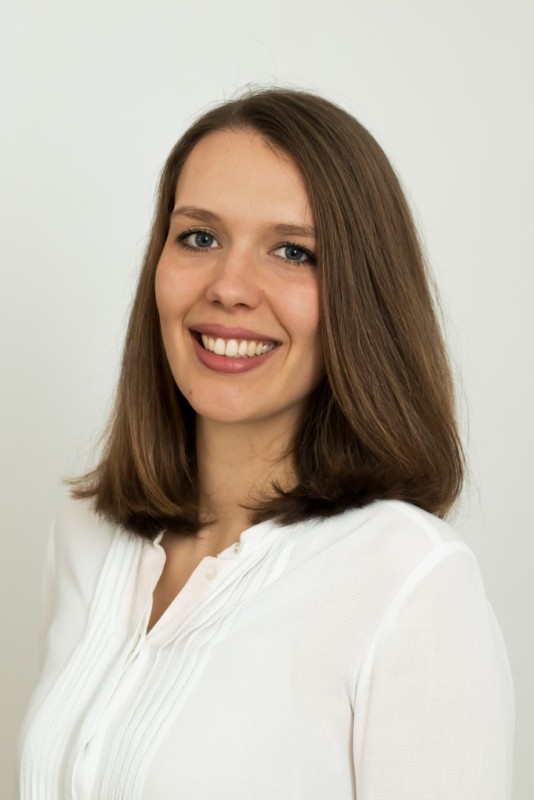
Dr. Sophie Koch is a Lecturer at ETH Zürich's Department of Civil, Environmental and Geomatic Engineering. Her research focuses on bio-based composites, circular wood use, and enhancing wood properties. She leads the research streams 'Enhanced wood properties' and 'Resource-efficient wood utilization.' Education: PhD Candidate (2020-2023): ETH Zurich, Wood Materials Science Group MSc in Biobased Materials (2018-2020): Maastricht University BSc in Wood Technology (2013-2017): UAS Rottenburg Key Research Themes: Her work emphasizes sustainable material innovation through bio-based composites, wood recycling, and functionalization of wood for advanced applications like soft actuators and energy-harvesting systems. Recent publications highlight advancements in transparent wood films, triboelectric nanogenerators, and durable delignified composites. Professional Experience: Postdoctoral Researcher & Lecturer (2024-2024) Master’s Thesis at Swiss Wood Solutions AG (2019-2020) Research Assistant at UAS Rottenburg (2017-2018) Journalist at Holz-Zentralblatt (2014-2017) Labs & Teams: Active in the Professur Holzbasierte Materialien research group at ETH Zürich's HIF E 20.1 laboratory.
جستجوی استاد راهنمای دانشگاهی
برای مسیر پژوهشیتان، استاد راهنما، استاد دانشگاه و پژوهشگر مناسب را پیدا کنید و با آنها ارتباط بگیرید.
نمایش ۱-۱۵ از ۴۲ استاد راهنما
اطلاعات پروفایلها از صفحات عمومی دانشگاهها گرفته شده و ممکن است بهروز نباشد.
Professor Andrea Frangi is affiliated with the Institute of Structural Engineering at ETH Zurich, where he leads research and teaching in Structural Timber Engineering , Hybrid Structures , and Fire Safety Engineering . Education: Dipl. in Civil Engineering (ETH Zurich, 1995), Ph.D. in Technical Science (ETH Zurich, 2001). His research interests focus on timber structures, hybrid systems, and fire safety. Recent work explores rate-dependent connections, adhesive bonding in timber-mortar composites, and fire resistance of cross-laminated timber. Notable publication trends include: Advancements in strip-reinforced timber beams and epoxy hybrid-adhesives . Fire safety studies on charring rates , compartment fires , and progressive collapse in timber structures. Material testing under cyclic loading , high-speed loads , and moisture exposure . He teaches courses such as Timber Structures I/III , Fire Science , and Structural Fire Design , and collaborates with organizations like Eurocode 5 committees and the International Association for Fire Safety Science.
Fabio Scotto is a Lecturer at the Institute of Architecture (IAR) at the Lucerne School of Engineering and Architecture (HSLU T&A), located in Horw, Switzerland. He holds a Master of Science from the University of Edinburgh and a Master of Advanced Studies in Architecture and Digital Fabrication from ETH Zurich. His work bridges robotics, digital fabrication, and extended reality (XR) technologies. Education: MSc from University of Edinburgh; MAS in Architecture and Digital Fabrication from ETH Zurich. Research interests focus on integrating robotics with XR, such as robot-supported timber bending, augmented sculpting, and VR applications in healthcare and architectural design. He co-leads the Immersive Design Lab under the Design++ Initiative, advancing immersive technologies for design and production processes. Previously, he worked in the NCCR Digital Fabrication research group, supporting Dr. Ena Lloret-Fritschi in Smart Dynamic Casting projects. His technical contributions include developing AR mobile applications and VR systems for surgical training. No specific grants or awards are explicitly listed.
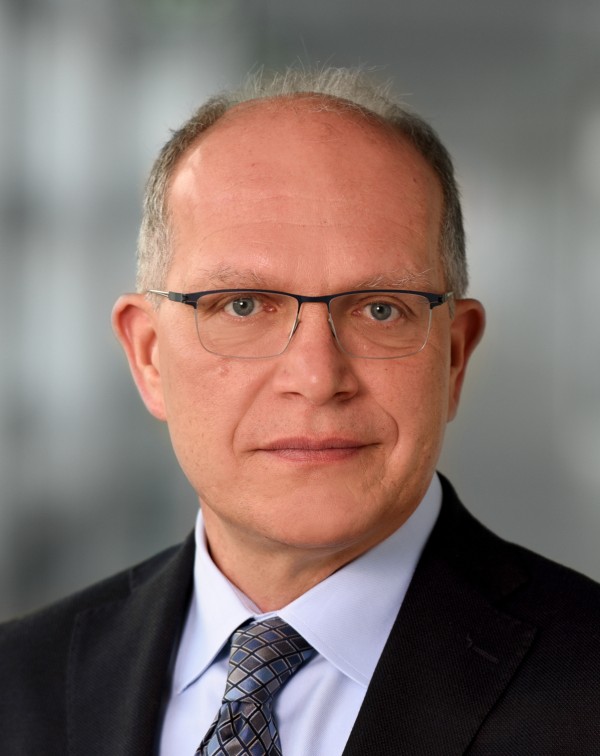
Bozidar Stojadinovic is a Full Professor and Chair of Structural Dynamics and Earthquake Engineering at ETH Zürich's Department of Civil, Environmental and Geomatic Engineering. He leads the Institute of Structural Engineering and previously held professorships at UC Berkeley and the University of Michigan. His research focuses on community disaster resilience, seismic design, and experimental methods like hybrid simulation. Education: PhD in Civil Engineering, UC Berkeley (1995) MS in Civil Engineering, Carnegie-Mellon University (1990) BS in Civil Engineering, University of Belgrade (1988) Research Interests: Performance-based probabilistic resilience evaluation of civil infrastructure. Earthquake engineering, including seismic isolation and response modification techniques. Development of experimental testing methods, such as hybrid simulations for dynamic structural analysis. Awards: ICE Journal John Henry Garrood King Medal (2023) ACI Chester Paul Siess Award (2017) NSF CAREER Award (1999) Teaching & Advising: Teaches courses on seismic design and structural dynamics at ETH. Advised 49 doctoral students to date. His work integrates advanced methodologies to enhance structural resilience against natural hazards. Labs/Teams: Leads ETH's Institute of Structural Engineering, advancing research in seismic protection and infrastructure resilience through experimental and computational innovations.
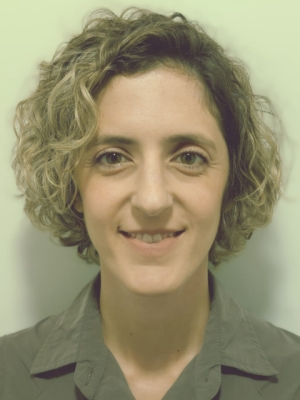
Dr. Fernanda Belizario Silva is a Lecturer at ETH Zürich's Department of Civil, Environmental and Geomatic Engineering, specializing in Sustainable Construction. She holds a PhD from the University of São Paulo, with research stays at the Fraunhofer Institute and ETH Zürich. Her work focuses on Life Cycle Assessment (LCA) methodologies for decision support, particularly in simplifying LCA tools for developing countries like Brazil. She developed the Sidac system, a streamlined LCA tool for construction products, and contributed to life cycle inventories for Brazilian cementitious products in the ecoinvent database. Education: Bachelor's in Civil Engineering (2008), Polytechnic School of the University of São Paulo Master's in Construction Process Planning (2012), University of São Paulo PhD in Sustainable Construction and LCA (2023), University of São Paulo Research Interests: Embodied environmental impacts of buildings Simplified LCA methods for developing nations Carbon footprint reduction in construction materials Hygrothermal behavior of construction systems Her recent articles explore carbon savings in concrete structures, recycled asphalt strategies, and CO2 footprints of building materials. She collaborates with industry partners to bridge research and practical sustainability solutions. Currently, she holds a postdoctoral position at ETH Zürich's Chair of Sustainable Construction. Professional Affiliations: Member of RILEM (International Union of Laboratories and Experts in Construction Materials).
Andreas Taras is a Full Professor at ETH Zurich's Department of Civil, Environmental and Geomatic Engineering, where he serves as Deputy Head of the Institute of Structural Engineering. His research focuses on steel and composite structures, structural stability, and fatigue behavior. Key research domains include: innovative steel-concrete-timber composite systems, stability and reliability of metallic structures, fatigue life prediction in bridges, and structural optimization using advanced analysis methods. His work integrates experimental testing with computational approaches to advance sustainable structural design. Recent investigations explore cutting-edge applications like iron-based shape memory alloys in structural glass systems, robotic additive joining for reclaimed steel, and novel hybrid systems combining folded sheet steel with cement-free concrete. Publications demonstrate consistent innovation in structural materials and connection technologies.
Peter Schwehr is a Professor and Head of the Competence Center for Typology and Planning in Architecture at the Hochschule Luzern - Technik & Architektur (HSLU T&A). He also serves as an Honorarprofessor at TU Berlin and leads the Institute of Architecture (IAR) ad interim. His roles include research leadership in urban transformation, sustainable building, and architectural typology. Educational Background: 2004: Dr.-Ing. (Technical University of Stuttgart) 1996: Dipl.-Ing. in Architecture (Technical University of Stuttgart) Additional qualifications in didactics and emergency services Research Focus: Transformations of buildings and neighborhoods in sustainable contexts, evolutionary architectural processes, interdisciplinary planning methods, and architectural theory emphasizing 'open architecture.' Key projects include Hybridize the Ordinary , Low Tech High Rise , and Smart Density . Publications & Articles: Over 50 peer-reviewed works, book chapters, and reports focusing on urban quality, retrofitting strategies, and modular building systems. Recent themes include density optimization, post-anthropocentric urbanism, and resilient architecture. Awards: 1st Prize for the TU Berlin competition project 'Mikrowohnen barrierefrei?' (2021). Grants & Collaborations: Led projects funded by Innosuisse, BFE, and BWO, including Wertvermehrende Sanierungsstrategien and SanStrat . Active in national networks like Brenet and SIA. Labs & Teams: Directs the Competence Center for Typology and Planning (CCTP), organizing interdisciplinary workshops and international conferences on urban challenges.

Stefana Paraschoمشاهده پروفایل
استادیار
Stefana Parascho serves as Tenure Track Assistant Professor at the Swiss Federal Institute of Technology in Lausanne (EPFL) within the School of Architecture, Civil and Environmental Engineering (ENAC), specifically in the Institute of Architecture (IA). She leads the Laboratory for Creative Computation (CRCL) and concurrently heads the Diversity Office at ENAC, demonstrating dual commitments to technological innovation and institutional equity. Her research pioneers intersections of digital fabrication, robotics, and sustainable architecture, with particular focus on transforming construction waste into valuable resources. Through computational design and robotic assembly, she develops novel methodologies for upcycling concrete rubble and timber into structurally sound building components, directly addressing circular economy challenges in construction. Her work bridges theoretical frameworks with physical prototyping, emphasizing human-robot collaboration and material reintegration. Analysis of her recent publications reveals a cohesive trajectory toward waste valorization through digital processes, with concrete rubble masonry and timber reuse forming the core technical pillars. These investigations consistently integrate robotic fabrication, structural validation, and circular design principles across 15+ publications since 2023, establishing new paradigms for resource-efficient construction. As an academic advisor, she supervises four PhD candidates (Grangeot Maxence, Skevaki Eleni Maria, Vallat Gabriel Rémi, Wang Jingwen) while contributing to architectural education through courses like "Digital design and making: A critical introduction" that merge technical skill development with theoretical critique. Her leadership extends to the ENAC Teaching Committee and institutional diversity initiatives, reflecting comprehensive engagement with academic community development. Her operational base at CRCL (https://crcl.epfl.ch) provides the technical infrastructure for robotic experimentation, while her Diversity Office role (https://www.epfl.ch/schools/enac/about/diversity-office/) demonstrates parallel commitment to inclusive academic environments. This dual focus positions her at the forefront of both technological innovation and cultural transformation within architectural academia.

Johannes Natterer is a Lecturer and Scientist at École polytechnique fédérale de Lausanne (EPFL) in the School of Architecture, Civil and Environmental Engineering, specializing in structural engineering with a focus on timber construction systems. His work bridges theoretical research and practical application in wood engineering, particularly in innovative structural forms like geodesic shells and multi-layer beam systems. Natterer's research interests center on the structural behavior of timber elements, with particular emphasis on stability analysis, connection systems, and the development of advanced wood construction techniques. His work explores both traditional timber engineering approaches and innovative solutions for modern architectural challenges, including high-rise timber buildings, pedestrian bridges, and large-span spatial structures. He has made significant contributions to understanding the behavior of multi-layer beams with interlayer slips and the stability characteristics of geodesic shell structures with semi-rigid joints. Natterer has supervised numerous student projects focusing on practical timber construction applications, including high-rise timber buildings, stadium tribunes, pedestrian bridges, and the implementation of BIM methodologies in timber construction. His research demonstrates a consistent progression from fundamental structural analysis to practical implementation in real-world construction projects. NATTERER, J.; BURGER, N.; MÜLLER, A.; NATTERER, JOH. Tragwerksplanung Dreidimensionale Rechenmodelle Schalengeometrie NATTERER, J.; BURGER, N.; MÜLLER, A. Bautechnik 77, Heft 11, 2000, 783-792 Roof of the main mall at EXPO 2000 in Hanover, Germany NATTERER, J.; BURGER, N.; MÜLLER, A. Bautechnik 78, Heft 10, 2001, 693-705 Das EXPO-Dach in Hannover als Pilotprojekt für den Holzbau - Entwicklung und Einsatz nicht geregelter Bauweisen NATTERER, J.; BURGER, N.; NATTERER, JOH. World Conference on Timber Engineering, Whistler, BC, Kanada, August 2000 The "EXPO-roof" in Hanover - A new dimension for ripped shells in timber Natterer has advised numerous students on timber construction projects, guiding research on high-rise timber buildings, pedestrian bridges, and innovative structural applications. His teaching focuses on the fundamental and practical aspects of timber structure design, covering beams, columns, assemblies, structural systems, and stability problems. He also helps students understand and design innovative, architecturally and structurally interesting wood constructions through the study of built examples. His professional experience includes significant engineering projects such as the Sauvabelin observation tower in Lausanne, the Hotel Palafitte in Monruz with mixed wood-glass beams, and the Expo 2000 spatial structure in Hanover. These practical experiences inform his academic work, creating a strong connection between theoretical research and real-world application in timber engineering.

- Timber Construction
- Historical Architecture Preservation
- Cross-Laminated Timber (CLT) Development
- +۵ مورد دیگر
Dr. Patrick Hugh Fleming is a Project Manager at the Chair of Timber Structures (IBK) at ETH Zurich, specializing in architectural engineering across construction, timber innovation, and heritage preservation. He holds a PhD in Architecture from the University of Cambridge and has worked extensively in both academic research and professional practice. Education: PhD in Architecture, University of Cambridge (2015) MPhil in Environmental Design in Architecture, University of Cambridge (2011) MSc in Engineering, University of Manitoba (2010) BSc in Mechanical Engineering, University of Manitoba (2008) Research Focus: Fleming's work bridges historical and modern construction techniques, emphasizing timber innovation (e.g., CLT), heritage preservation, and structural analysis. Notable projects include the Stockholm Public Library (SNSF-funded) and Cross-Laminated Timber studies with the Takenaka Carpentry Tools Museum. His methods integrate archival research, 3D scanning, and material testing. Projects & Awards: Recipient of the 2022 SNSF Scientific Image Competition ETH Zurich Leading House Asia-funded CLT exhibition in Kobe, Japan Renovation of the Zurich Kongresshaus and Tonhalle Laser scanning of Freibad Allenmoos heritage site Professional Experience: Prior to ETH, Fleming worked as a structural engineer at Conzett Bronzini Partner AG, focusing on historical steel/concrete structures in Switzerland. He combines academic rigor with hands-on engineering, contributing to both theoretical advancements and practical implementations.
Rodolphe Schlaepfer is an Honorary Professor at the École Polytechnique Fédérale de Lausanne (EPFL), affiliated with the School of Architecture, Civil and Environmental Engineering (ENAC). He holds the academic rank of Professor and has been associated with EPFL since 1997 as a Professor and Director of Ecosystem Management. His career includes leadership roles at the Swiss Federal Institute for Forest, Snow and Landscape Research (WSL) and the Swiss Federal Institute of Technology Zurich (ETHZ). Joined EPFL in 1997 as Professor and Director of Ecosystem Management Previously held roles as Director of WSL (1987-1996) and Professor of Forest Science at ETHZ (1982-1987) Formerly a Research Scientist at the Swiss Federal Institute for Forest Research (1967-1976) Professional Highlights : President of the Swiss Biometrical Society Board member of IUFRO (International Union of Forest Research Organizations) Editor for Europe of the Journal Urban and Landscape Planning President of the Lemanic Forest Forum Research Interests : Focus on sustainable forestry, ecosystem management, biodiversity conservation, and climate change impacts. Key areas include forest inventory, landscape ecology, and participatory environmental governance. His work integrates quantitative methods (e.g., GIS, remote sensing) and stakeholder engagement in environmental projects. Recent studies explore topics like snow-farming impacts on alpine ecosystems and climate-driven shifts in tree phenology. Publications & Advocacy : Over 100 peer-reviewed articles and theses supervised, with contributions to journals like Global Change Biology and Science of the Total Environment . Advocated for deadwood conservation, sustainable floodplain management, and participatory landscape planning frameworks. Awards & Recognition : While no explicit awards are listed, his leadership roles in international organizations (IUFRO) and sustained academic contributions reflect significant recognition in forest science and environmental policy. Advising & Grants : Supervised over 100 master’s and PhD students in forest management, ecology, and landscape studies. His research has addressed critical issues like forest fire prevention in Ticino (Switzerland) and biodiversity hotspots in Madagascar. Labs & Teams : Active within EPFL’s ENAC-DEC department and collaborates with institutions like WSL and international groups on projects spanning forest ecology, climate adaptation, and environmental systems analysis.
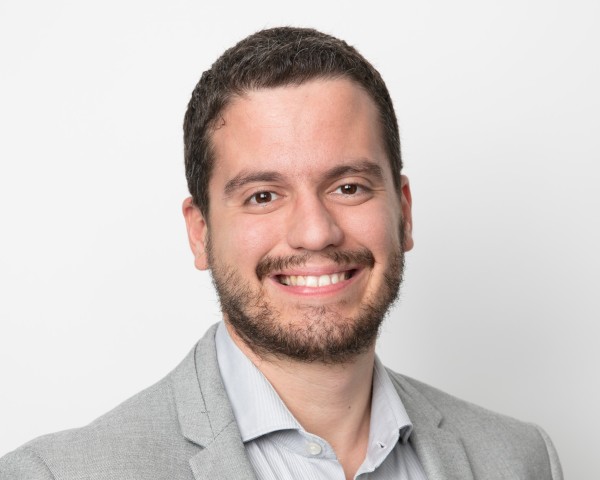
Anastasios Tsiavos is a Lecturer at ETH Zurich's Department of Civil, Environmental and Geomatic Engineering, specializing in structural dynamics and earthquake engineering. His research focuses on developing sustainable seismic retrofitting methods and performance-based design approaches for resilient infrastructure. Primary research interests include: seismic isolation systems for structures in developing countries, synergetic approaches combining seismic and energy retrofitting, timber-based energy dissipation systems, and geotechnical seismic isolation. His work emphasizes cost-effective solutions for earthquake-prone regions through experimental validation and computational modeling. Recent research explores large-scale experimental methods through shaking table tests, hybrid design strategies for masonry buildings, and optimization of retrofitting techniques. Publications demonstrate consistent focus on improving structural resilience while addressing sustainability challenges in seismic engineering.
Stefan Kunz is a Lecturer at the Institute of Architecture IAR CC Typology and Planning in Architecture, part of the Lucerne School of Engineering and Architecture at Hochschule Luzern (HSLU). He holds a PhD in Cultural Anthropology from the University of Basel (2024) and advanced degrees in Architecture from HSLU and FHNW Basel. His roles include Co-Leader of the Interdisciplinary Network Raum & Gesellschaft since 2024 and Co-Program Director of the CAS Baukultur program since 2019. Kunz's research focuses on integral urban development, sustainable neighborhood planning, and building culture preservation. Notable projects include the UNESCO Biosphäre Entlebuch advisory work and the 'Holy Spaces - Real Places' study. He has led over 20 municipal planning projects, including the 'Streusiedlung Grossteiler Ebene' and 'Dorfzentrum Roggwil' initiatives. His work bridges architectural practice and academic research, emphasizing participatory methods in rural spatial planning and heritage preservation. Over 25 publications demonstrate his expertise in traditional building typologies, community engagement strategies, and policy implementation frameworks.

Yves Weinand serves as Full Professor of Timber Construction at École Polytechnique Fédérale de Lausanne (EPFL), where he directs the transdisciplinary Wood Construction Laboratory (IBOIS) within the School of Architecture, Civil and Environmental Engineering. His appointment spans the Institute of Civil and Environmental Engineering (IIC) and teaching units in Architecture (SAR) and Civil Engineering (SGC), reflecting his interdisciplinary focus at the intersection of structural engineering and architectural design. His research expertise spans computational geometry processing, robotic timber construction, and experimental joinery techniques, with particular emphasis on digital fabrication workflows for complex wood structures. Weinand's work integrates augmented reality systems with traditional craftsmanship and develops novel computational methods for timber plate structures and through-tenon connections. Analysis of his recent publications reveals a strong trend toward hybrid digital-physical construction workflows, with increasing focus on AI-assisted fabrication, real-time quality control, and sustainable material utilization. His research bridges fundamental structural mechanics with practical building applications through technology transfer projects. Lignum Prize - Western Region Mention (2018) French Academy of Architecture silver medal (2017) Grand Prix d'architecture de Wallonie for Vidy theater (2019) Wood Distinction 2019 for Vaud Parliament building (2019) Medal for Research and Technique from French Academy of Architecture (2017) Weinand supervises numerous doctoral candidates while teaching ten courses across bachelor to postgraduate levels, including computational architecture and digital timber construction. His laboratory collaborates with industry partners through technology transfer contracts for projects like the Annen Vault, Rossinière Centre, and Brussels Sportstower, implementing EPFL-developed computational methods in real-world construction. The IBOIS laboratory operates as a transdisciplinary research hub connecting architectural design exploration with structural engineering innovation, maintaining active partnerships with timber industry stakeholders and architectural practices across Europe.
- Building Renovation and Retrofitting
- Sustainable Building Design
- Energy-Efficient Architecture
- +۵ مورد دیگر
Doris Ehrbar serves as a Lecturer at the Lucerne University of Applied Sciences and Arts within the School of Engineering & Architecture, specifically affiliated with the Institute of Interior Design (IIA). She has maintained dual professional roles since 2011 as Co-Lecturer for the core module "Building Renovation and Conversion" and since 2019 as Co-teacher for "Renewal of existing buildings," while simultaneously working as Client Representative for Regimo Basel AG and Architect at Burckhardt Immobilien AG. Her academic credentials include: Dipl. Arch. ETH from Swiss Federal Institute of Technology (ETH) Zurich (1985-1992) Higher Education Teacher Training at ETH Zurich (1996-1999) Master of Advanced Studies in Architecture (MASA) from University of British Columbia (2000-2005) CAS in Building Physics from University of Applied Sciences Northwestern Switzerland (2015-2016) Ehrbar's research focuses on sustainable building transformation, with particular expertise in holistic renovation strategies for post-war residential structures. Her work bridges energy efficiency requirements with monument preservation constraints, emphasizing practical implementation through prefabricated timber systems and solar integration. Current investigations explore climate-responsive densification methods and cooperative governance models for condominium retrofits, addressing Switzerland's urgent building stock renewal challenges. Her publication trajectory reveals evolving specialization from foundational solar architecture studies toward industrialized renovation systems, with recent work emphasizing cost optimization in prefabricated timber retrofits and climate adaptation for historic districts. Key thematic clusters include energy-monument preservation balance, strata property renewal frameworks, and collaborative delivery models for large-scale retrofits. Award recognition includes: Wolfgang Gerson Prize in Architecture (2001) Research leadership spans multiple national and international projects including SanStrat, E2Rebuild, CABEE, and IEA SHC Task 41, with funding from Swiss energy research programs and EU frameworks. Current initiatives focus on developing decision tools for condominium owners and optimizing prefabricated retrofit systems for cold climates. She maintains strong industry integration through her dual professional practice, ensuring research remains grounded in real-world construction challenges. As former Head of the "Advanced Retrofit" Focus Area (2010-2015) and long-term Scientific Assistant at the Competence Center Typology & Planning in Architecture (CCTP), she continues to shape HSLU's research direction through the Institute of Interior Design's renovation research group.