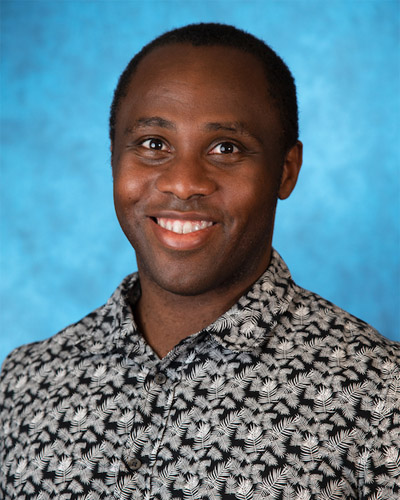
Britney Schmidt is Associate Professor in Earth and Atmospheric Sciences and Astronomy at Cornell University, where she leads the Planetary Habitability and Technology Lab. She develops robotic tools like the Icefin underwater vehicle to study Earth's ice shelves and glaciers, providing insights into climate change and analogs for ocean worlds like Europa. Her research bridges glaciology, planetary science, and astrobiology. Research focuses on ocean world habitability, ice-ocean interactions, and Antarctic climate systems. Fieldwork includes extensive campaigns in Antarctica and the Arctic using robotic explorers. Recent publications explore Europa's habitability, Thwaites Glacier dynamics, microbial communities in hypersaline environments, and planetary analog studies. Technical developments include novel instrumentation for under-ice exploration. Awarded the 2024 Blavatnik National Award for groundbreaking research. Leads multiple international collaborations including NASA's Europa Clipper mission and Thwaites Glacier projects.
Holly Michael is a Professor and Unidel Fraser Russell Career Development Chair for the Environment at the University of Delaware, serving as Director of the Delaware Environmental Institute. She holds a BS from the University of Notre Dame (BS, 1990s) and a PhD from MIT (2000s). Her research focuses on coastal hydrogeology, saltwater intrusion, groundwater sustainability, and climate change impacts on water resources. Current projects include investigating coastal critical zones, groundwater salinization dynamics, and arsenic-safe groundwater management in Bangladesh. Dr. Michael’s work integrates field studies, modeling, and experimental economics to address water resource challenges. She leads initiatives on subterranean estuaries, tidal wetland biogeochemistry, and the interplay between groundwater and surface water systems. Her research spans disciplines such as contaminant hydrology, geostatistics, and environmental policy, with emphasis on coastal regions. Notable projects include assessing the impacts of storm surges on coastal forests and modeling groundwater responses to sea-level rise. Dr. Michael collaborates internationally on issues like sustainable groundwater use and climate adaptation strategies. Her interdisciplinary approach bridges hydrology, ecology, and socio-economic frameworks to solve complex environmental problems.
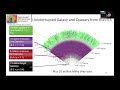
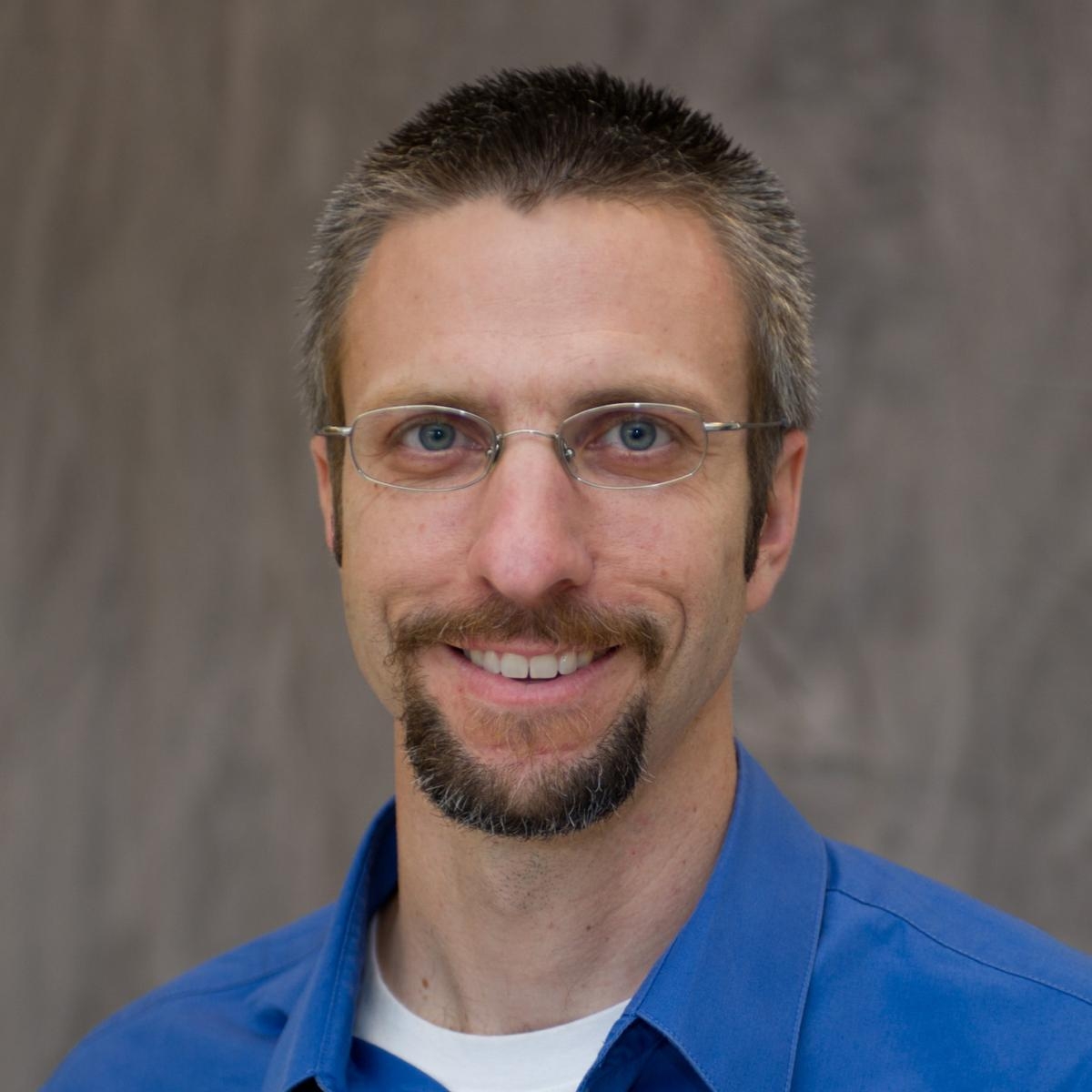
Kyle Dawson is a Professor of Physics and Astronomy at the University of Utah, where he has been employed since 2009. He currently serves as both a full Professor and Director of Graduate Studies in the Department of Physics and Astronomy, having progressed from Assistant Professor (2008-2015) to Associate Professor (2015-2019) before achieving his current position in 2019. His institutional affiliation places him within the College of Science at the University of Utah, a major research university in the western United States. Dawson earned his BA in Physics from Cornell University in 1998, followed by a PhD in Physics from the University of California, Berkeley in 2004. After completing his doctoral studies, he served as a postdoctoral researcher at the Lawrence Berkeley National Laboratory before joining the University of Utah faculty. His educational background in physics provided the foundation for his transition into observational cosmology, where he has made significant contributions through large-scale spectroscopic surveys. Professor Dawson's research focuses on observational cosmology through large spectroscopic surveys designed to measure the fundamental properties of the universe. He is currently the co-Spokesperson for the Dark Energy Spectroscopic Instrument (DESI), a major cosmological survey that has produced numerous high-impact publications in 2024-2025. Previously, he served as Principal Investigator for the Extended Baryon Oscillation Spectroscopic Survey (eBOSS), which concluded in 2020 with final cosmological measurements. His work centers on measuring baryon acoustic oscillations to constrain cosmic expansion history, dark energy properties, neutrino masses, and to test General Relativity. His research group employs techniques including galaxy clustering analysis, quasar astrophysics, and large-scale structure mapping to address fundamental questions in cosmology. The analysis of Dawson's recent publications reveals a strong focus on extracting cosmological constraints from the DESI survey data. His work spans multiple aspects of cosmological analysis, including baryon acoustic oscillation measurements, full-shape power spectrum analysis, imaging systematics mitigation, and cross-correlation studies with cosmic microwave background data. The publications demonstrate collaborative work with large international teams and contribute to increasingly precise measurements of cosmological parameters, with particular attention to dark energy equation of state, neutrino masses, and potential deviations from General Relativity. Professor Dawson has secured significant research funding throughout his career, including multiple grants from the Department of Energy (DOE), NASA, and the National Science Foundation. His grant portfolio includes leadership roles in major cosmological surveys like DESI and eBOSS, as well as support for postdoctoral researchers and graduate students. His research group has mentored numerous students who have gone on to successful careers in academia, industry, and data science fields. Dawson leads a vibrant research group at the University of Utah focused on cosmological data analysis from large spectroscopic surveys. His current team includes two postdoctoral researchers (Angela Berti and Sarah Eftekharzadeh) and a graduate student (Allyson Brodzeller). The group specializes in galaxy clustering analysis, quasar astrophysics, and machine learning applications to spectroscopic data. The research environment fosters collaboration with international teams working on DESI and related cosmological surveys, providing students with opportunities to engage with cutting-edge cosmological research and large-scale data analysis techniques.
Richard Anantua is an Assistant Professor in the Department of Physics and Astronomy within the College of Sciences at the University of Texas at San Antonio (UTSA), and also serves as an Adjunct Professor at Rice University since 2024. His research group is pioneering Event Horizon Telescope (EHT) science in Texas, focusing on computational and theoretical astrophysics related to black holes and relativistic phenomena. Assistant Professor, UTSA – 2022–Present Adjunct Professor, Rice University – 2024–Present Postdoctoral Fellow, Harvard-Smithsonian Center for Astrophysics – 2019–2021 Postdoctoral Fellow, UC Berkeley – 2016–2019 Education: Ph.D. in Physics – Stanford University M.S. in Physics – Stanford University B.S. in Physics and Philosophy – Yale University B.S. in Economics and Mathematics – Yale University Ed.M. in Education Policy and Management – Harvard University Richard Anantua’s research focuses on computational astrophysics , particularly the modeling of emission near supermassive black holes using general relativistic magnetohydrodynamic (GRMHD) simulations. His work bridges theoretical models with observational data from cutting-edge instruments like the Event Horizon Telescope (EHT) and its next-generation counterpart (ngEHT). Key areas include black hole accretion flows, relativistic jets, plasma physics, and neutrino emission. He has developed methodologies to connect simulation variables—such as electron temperature, magnetic field strength, and current density—to observable signatures across the electromagnetic spectrum. The recent publications from his group reflect a strong trend in high-resolution modeling of black hole environments , with emphasis on M87, Sgr A*, and theoretical constructs like primordial black holes and dark matter alternatives. These works integrate numerical simulations with observational predictions, particularly for EHT and ngEHT capabilities, covering emission morphology, jet stability, plasma composition, and neutrino physics. The interdisciplinary nature of his research spans astrophysics, plasma physics, and computational science. Scientific Engagement and Mentorship: Active mentor of postdoctoral researchers, PhD students, master’s students, and undergraduates at UTSA. Group members regularly present at national conferences such as the American Astronomical Society (AAS) and SCEECS. Supervised master’s thesis on GRMHD emission modeling. Anantua has been involved in major collaborations, including the Event Horizon Telescope Collaboration during his postdoc at Harvard, and continues to lead a vibrant research group at UTSA. His lab focuses on advancing computational tools for black hole imaging and theoretical modeling of extreme astrophysical environments.
Aprajita Hajela is a Postdoctoral Researcher at the Niels Bohr Institute, University of Copenhagen, working within the DARK Cosmology Centre. Her research focuses on high-energy astrophysical transients, particularly tidal disruption events and supernovae, using multi-wavelength observations spanning X-ray, optical, and radio regimes. Her research portfolio centers on time-domain astrophysics, with primary emphasis on tidal disruption events where stars are destroyed by supermassive black holes, relativistic jet formation, and gravitational wave counterparts. She investigates phenomena such as quasi-periodic X-ray eruptions in TDEs, late-time evolution of cosmic transients, and Hubble constant measurements through standard sirens. Her work integrates data from major observatories to unravel black hole physics and explosive stellar phenomena. Dr. Hajela is embedded within the DARK Cosmology Centre, a premier research environment at the Niels Bohr Institute dedicated to observational and theoretical studies of dark matter, dark energy, and cosmic evolution. This affiliation provides critical infrastructure for her investigations into transient cosmic events and their cosmological implications.
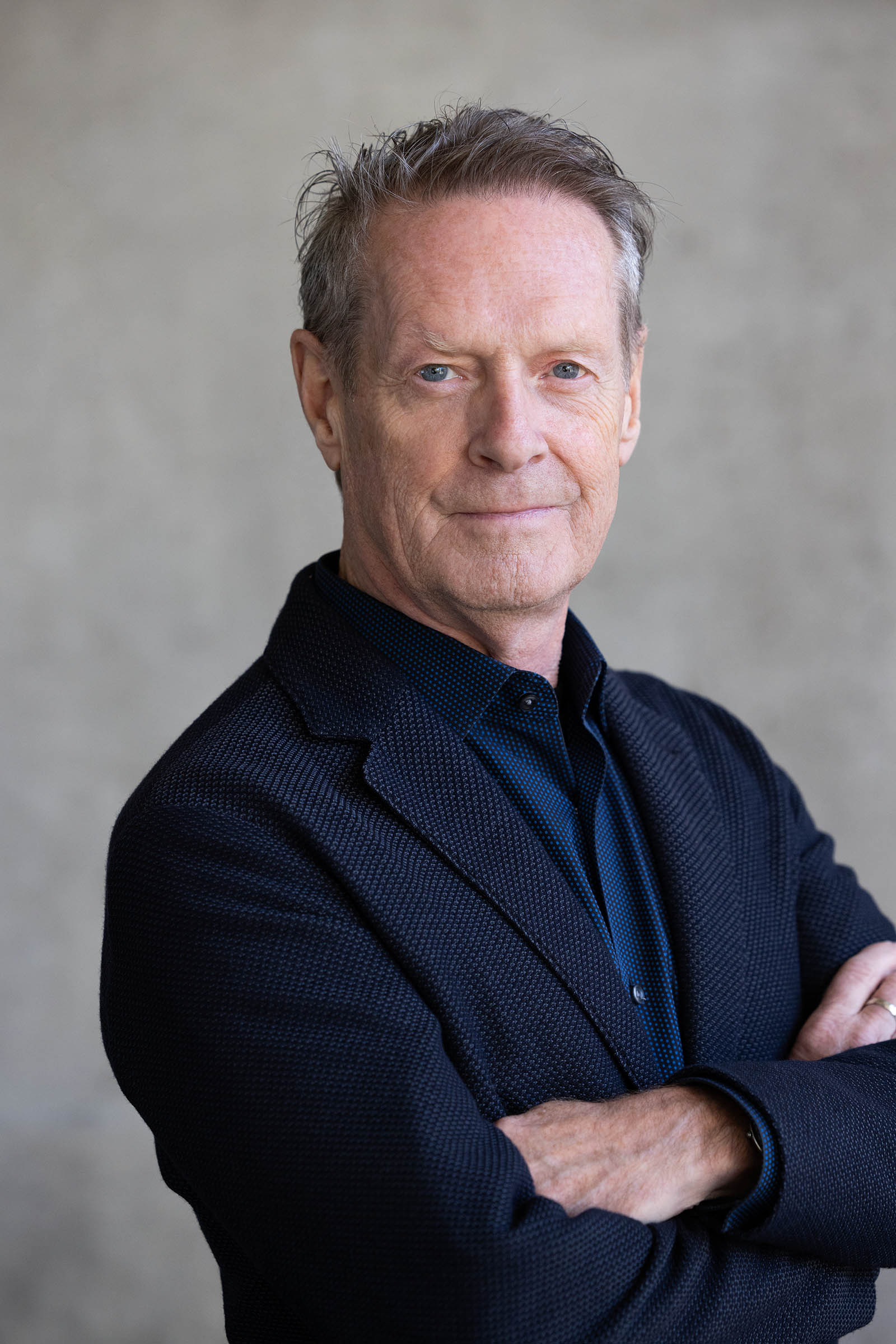
Gary R. Hilderbrand is the Peter Louis Hornbeck Professor in Practice of Landscape Architecture at Harvard University Graduate School of Design and Co-Founder of Reed Hilderbrand LLC, where he has led award-winning projects since 2000. His work bridges academic leadership with practice, focusing on urban forests, ecological restoration, and the interplay between landscape visibility and hidden systems. Academic Affiliation: Harvard University GSD (since 1990, Department Chair since 2022) Key Themes: Modernist design principles, soil science, cultural landscapes, and urban resilience Research Interests: Hilderbrand’s scholarship emphasizes urban soil health (e.g., Boston’s State of City Soils study), ecological urbanism through projects like San Antonio Botanical Garden’s Strategic Master Plan, and curatorial approaches to historic landscapes as seen in the Beck House renovation. His Harvard GSD profile highlights his focus on reconciling cultural traditions with contemporary environmental challenges. Notable Contributions: He pioneered the Cambridge Urban Forest Plan and contributed to the Tidal Basin Ideas Lab . His Visible|Invisible monograph (2013) redefined how landscape architects engage with hidden systems like root networks and municipal soil management practices. Scientific Recognition: ASLA Design Medal (2017) ASLA Firm of the Year (2013) Lifetime Achievement Award (SUNY ESF, 2021) Mellon Senior Fellowship at Dumbarton Oaks (2016) Two-time Design Intelligence Most Admired Educator (2016, 2019) Practice & Pedagogy: As Chair of Harvard GSD’s Landscape Architecture Department since 2022, he integrates modernist rigor with ecological innovation, influencing projects like Storm King Art Center’s expansion and Rosslyn Plaza’s pedestrian-focused redevelopment. His teaching studios address topics such as large-scale urban tree planting (e.g., South Boston’s 500,000-tree initiative). Exhibition Leadership: Hilderbrand curated influential exhibitions including Making a Landscape of Continuity (Innocenti & Webel) and Reciprocities (Barcelona Biennial), demonstrating landscape architecture’s role in cross-disciplinary discourse with environmental planners, artists, and urban ecologists.
Kevin A. Haas is a Professor of Civil Engineering and Associate Chair for Undergraduate Programs at the Georgia Institute of Technology's School of Civil and Environmental Engineering, part of the team developing Coastal Engineering programs in Savannah. He holds a B.S. (Ohio State University, 1994), M.S. (Ohio State University), and Ph.D. (University of Delaware, 2001) in Civil/Coastal Engineering, followed by a postdoctoral fellowship at the University of Delaware. Education: B.S. in Civil Engineering (Distinction), The Ohio State University, 1994 M.S. in Civil Engineering, The Ohio State University, 1997 Ph.D. in Coastal Engineering, University of Delaware, 2001 Research Interests: Focuses on coastal dynamics, numerical modeling of nearshore circulation, sediment transport, and hydrodynamics of rip currents. Explores wave energy extraction, tidal marsh sediment transport, and applications of video-based field observations. His work bridges environmental engineering and renewable energy, emphasizing sustainable coastal systems. Key Achievements: Recipient of the Delaware Sea Grant Award for outstanding Ph.D. research on rip currents Lead in securing a $1M educational grant for undergraduate programs at Georgia Tech Active in developing tidal and wave energy assessment methodologies Grants & Labs: Principal investigator on projects funded by federal agencies and industry partnerships Conducts fieldwork and modeling at Georgia Tech's Savannah campus and coastal sites Collaborates with USGS, NOAA, and international teams on marine energy initiatives
Dr Athanasios Angeloudis is a Reader (Associate Professor) and Director of Impact in the School of Engineering at the University of Edinburgh. He is affiliated with the Institute for Infrastructure and the Environment, leading research on hydro-environmental applications and offshore renewable energy systems. His academic roles include coordinating the Edinburgh Fluid Dynamics Group and serving as a member of NERC’s Peer Review College. Dr Angeloudis holds a PhD in Hydro-environmental Engineering (2014) and an MEng in Civil Engineering (2010) from Cardiff University. He is Chartered with the Technical Chamber of Greece (CEng) and a member of the Institution of Civil Engineers. His research focuses on environmental fluid mechanics, coastal processes, numerical methods, and data analytics. His teaching responsibilities include courses like Civil Engineering Hydraulics and Water Engineering Transport and Treatment . He has secured significant research funding, including the NERC Industrial Innovation Fellowship, and leads projects such as CoTide (tidal stream energy optimization) and ILIAD (maritime data services). Key research contributions span tidal energy systems, climate change impacts on river flows, and computational modeling frameworks like Thetis-SWAN . His work emphasizes collaboration with industry and international partners to advance sustainable energy solutions and environmental resilience.
Laurence C. Smith is the John Atwater and Diana Nelson University Professor of Environmental Studies at Brown University, affiliated with the Institute at Brown for Environment & Society (IBES) and the Department of Earth, Environmental and Planetary Sciences (DEEPS). Previously, he served as UCLA's Geography Department Chair and Professor. His research focuses on Arctic environments, water resources, and remote sensing, with over 150 peer-reviewed publications and $16M in NSF/NASA grants. He has contributed to IPCC reports and leads NASA's SWOT mission for global water monitoring. Key awards include the Guggenheim Fellowship (2006-07), AGU Fellow (2015), and Walter P. Kistler Book Award (2012) for *The World in 2050*. Education: PhD, Cornell University (1996) MS, Indiana University (1991) BS, University of Illinois at Urbana-Champaign (1989) Research Interests: Arctic systems, hydrology, satellite remote sensing, and climate change impacts. His work bridges natural and social sciences, addressing topics like Greenland meltwater dynamics and northern resource development. Recent projects include methane emissions from Arctic lakes and river avulsion monitoring via SWOT. Awards: Phi Beta Kappa Visiting Scholar (2020-21) AGU Fellow (2015) Walter P. Kistler Book Award (2012) Guggenheim Fellowship (2006-07) Teaching & Grants: Teaches courses on water systems and scientific writing at Brown. Secured major grants from NASA and NSF, totaling over $16M. Advises graduate students in environmental studies and geosciences. Labs/Teams: Collaborates with IBES, DEEPS, and global institutions like the World Economic Forum on Arctic development and NASA's SWOT mission. Active in interdisciplinary research networks.
Dr. Nikole Nielsen is an Adjunct Associate Professor at Swinburne University of Technology and an Assistant Professor at the University of Oklahoma. She holds dual appointments in the Centre for Astrophysics and Supercomputing (Swinburne) and the Homer L. Dodge Department of Physics and Astronomy (OU). Her research focuses on the circumgalactic medium (CGM) of galaxies, studying gas kinematics, ionization states, and metal content to understand galaxy evolution processes like accretion and outflows. She has held roles including ASTRO 3D Fellow and Postdoctoral Research Associate at Swinburne from 2015–2024. Education: PhD in Astronomy (New Mexico State University, 2015), M.S. in Astronomy (2013), B.S. in Astrophysics (Michigan State University, 2009). Awards include the Swinburne Director's Outstanding Achievement Award (2022) and multiple recognitions for research excellence. She supervises PhD students in areas like galactic outflows and CGM dynamics. Research highlights include mapping the transition between galactic disks and CGM using emission-line data (Nature Astronomy, 2024), resolving outflow properties in starburst galaxies (Monthly Notices of the Royal Astronomical Society, 2024), and studying gas kinematics in multiphase CGM (2024). Her work bridges observations with simulations, emphasizing resolved spatial data to understand galaxy evolution. Grants include an NSF East Asia-Pacific Summer Institute fellowship (2012) and ASTRO 3D funding. Teaching includes courses on extragalactic astronomy and cosmology at OU. Outreach efforts include coordinating public astronomy events and mentoring students. Current team includes postdocs and graduate students at OU.
Emily S. Bernhardt is the James B. Duke Distinguished Professor of Biology at Duke University's Trinity College of Arts & Sciences, where she also serves as Chair of the Department of Biology. She holds a joint appointment as Professor in Marine Science and Conservation at the Nicholas School of the Environment and is Associate of the Duke Initiative for Science & Society. Her research program bridges ecosystem ecology and biogeochemistry with a focus on aquatic systems. Dr. Bernhardt's research centers on tracking the movement of elements through ecological systems, specifically documenting how aquatic ecosystems are altered by land use change (urbanization, agriculture, mining), global change (rising CO 2 , sea levels), and chemical pollution. Her work spans from headwater streams to coastal wetlands, with particular emphasis on the impacts of human activities on ecosystem structure and function. Analysis of her recent publications reveals a strong focus on contemporary environmental challenges including urban watershed contamination, mercury pollution from artisanal gold mining, salinization of freshwater systems, and carbon cycling in river networks. Her research integrates field measurements, long-term data sets, and experimental approaches to understand ecosystem responses to multiple stressors. James B. Duke Distinguished Professor (2019-Present) Chair of the Department of Biology (2020-Present) Professor of Biology (2016-Present) Professor in Marine Science and Conservation (2021-Present) Dr. Bernhardt's collaborative approach extends to her mentoring philosophy, where she emphasizes co-writing with students through read-aloud sessions to improve manuscript clarity and reduce the perceived negativity of editorial feedback. Her work has significant implications for environmental management and policy, particularly regarding watershed protection and coastal resilience in the face of climate change.
Michael Piehler is the Cary C. Boshamer Distinguished Professor at the University of North Carolina at Chapel Hill, holding joint appointments in the Department of Environmental Sciences and Engineering within the Gillings School of Global Public Health and the Department of Earth, Marine, and Environmental Sciences within the College of Arts and Sciences. He serves as Director of the UNC Institute for the Environment and as Chief Sustainability Officer and Special Assistant to the Chancellor for Sustainability. His research focuses on the connection between human activity and natural systems, particularly at land-water interfaces. Piehler has extensive expertise in nutrient cycling, coastal ecology, and water quality, with particular emphasis on how coastal habitats like oyster reefs, seagrass beds, and salt marshes function in nutrient dynamics and contribute to coastal resilience. Analysis of his recent publications reveals a consistent research trajectory centered on coastal biogeochemistry, with particular attention to nitrogen cycling processes in various coastal habitats. His work spans fundamental microbial processes to applied coastal management solutions, demonstrating strong translational research that connects basic science with practical environmental management. Cary C. Boshamer Distinguished Professor (2025) Piehler has advised numerous graduate students who have gone on to successful careers in academia, government, and research institutions. His lab has received significant funding from federal, state, and regional sponsors, including the Strategic Environmental Research and Development Program (SERDP) for the decade-long DCERP project examining nutrient processing at Marine Corps Base Camp Lejeune. The lab has also developed innovative approaches to environmental monitoring using low-cost, open-source technology for real-time stream data collection. His research group has made foundational contributions to quantifying the positive impacts oyster reefs can have on water quality, which has helped shift the research community's focus toward this critical aspect of coastal resilience.
Dr. Ilya V. Buynevich is an Associate Professor and Undergraduate Advisor in Geology at Temple University's College of Science and Technology , Department of Earth and Environmental Science. He holds a PhD and BA from Boston University (2001 and 1994, respectively), and a Dipl. Program in Marine Geology from Odesa University, Ukraine (1989-1991). As a 2022-2023 Fulbright U.S. Scholar in Estonia, he focuses on coastal and marine geology, process geomorphology, and ichnology. His research integrates geophysical techniques like ground-penetrating radar (GPR) to study coastal barrier evolution, extreme events (storms, tsunamis), and paleoenvironmental reconstruction through animal traces (zoogeomorphology and ichnology). His teaching portfolio includes courses such as Physical Geology , Coastal Processes and Geomorphology , and Process Geomorphology . Awards include the Fulbright grant for research in Estonia. His work bridges geology, ecology, and archaeology, with applications in geoarchaeology and geoforensics. Education: PhD in Geology, Boston University, 2001 BA in Geology (Magna Cum Laude), Boston University, 1994 Diplom Program in Marine Geology, Odesa University, Ukraine, 1989–1991 Research Interests: Coastal geoarchaeology, zoogeomorphology (e.g., beaver, bison, and rodent impacts), aeolian sediment dynamics, and the geological signatures of extreme events. He employs multi-method approaches, including GPR imaging and sedimentological analysis, to explore coastal morphodynamics and paleoenvironments. Recent studies include storm impacts on Ukrainian and Bahamian coastlines, and the role of large animals in shaping landscapes. Awards: 2022–2023 Fulbright U.S. Scholar Award (Geology, Estonia) Advising & Grants: Oversees undergraduate advising in Geology. Research has been supported by grants focusing on coastal resilience, extreme event impacts, and interdisciplinary geoarchaeological studies. Collaborates internationally, including projects in Ukraine, Estonia, and the Bahamas. Labs/Teams: Directs research on coastal processes, ichnology, and zoogeomorphology. Engages in fieldwork and geophysical imaging projects globally, emphasizing applied solutions for coastal management and environmental conservation.
Dr. Luke Myers is an Associate Professor in the Energy and Climate Change Division at the University of Southampton, balancing his career between education, research, and enterprise. His primary research focuses on offshore renewable energy, particularly free-stream tidal turbines that function analogously to wind turbines but underwater. As an educator, he leads the first-year Thermofluids module across multiple international campuses and serves as an undergraduate lead and exchange coordinator for Civil Engineering. Education Background: PhD in Renewable Energy Systems Myers' research explores critical aspects of tidal energy technologies, including: Blade winglet design optimization Turbulence effects on turbine performance Array positioning strategies in marine environments Fluid-structure interaction in submerged turbines Micro-renewables applications like micro-wind turbines His publications demonstrate expertise in marine energy systems, with recent works analyzing turbulence manipulation in testing facilities and tidal turbine array optimization. His research has been supported by EPSRC, Royal Society, and Highways England. Scientific achievements include: 2008 keynote presentation on tidal turbine wake dynamics Contributions to international marine energy standards Development of turbulence control devices for hydrodynamic testing As an academic leader, he: Served as Director of Programmes for Civil Engineering (2014-2018) Led successful re-accreditation of Civil Engineering degree programmes Mentors PhD students like Vaishnavi Thavarajah Collaborates with institutions including Harbin University (China) Myers remains actively engaged in research groups like the Southampton Marine and Maritime Institute and Nature-Based Ocean Solutions, advancing maritime decarbonization through tidal energy innovations.
Ruoying He is the Goodnight Innovation Distinguished Professor in the Department of Marine, Earth, and Atmospheric Sciences at North Carolina State University (NC State), affiliated with the College of Sciences. He leads the Ocean Observing and Modeling Group, specializing in coastal ocean dynamics, air-sea interactions, and biophysical couplings. His work integrates observations, remote sensing, and numerical models to study ocean circulation, data assimilation, and prediction systems. Dr. He holds a Ph.D. in Physical Oceanography from the University of South Florida and a B.S. in Oceanography from Ocean University of China. His research focuses on coastal circulation, physical-biogeochemical interactions, satellite oceanography, and high-resolution modeling. He serves on editorial boards for journals like the AMS Journal of AI for the Earth Systems and chairs major conferences such as the Gordon Research Conference on Coastal Ocean Dynamics. He is also involved in NSF and international projects like the GODAE OceanView initiative. His recent publications emphasize AI-driven ocean modeling, hurricane impacts on marine environments, Gulf Stream dynamics, and coastal wave energy resources. His work bridges fundamental physics with applied challenges in climate science and environmental management.