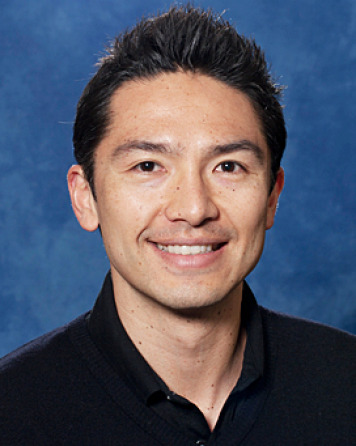
Qingzhi Zhu is an Associate Professor at the School of Marine and Atmospheric Sciences, Stony Brook University. His research integrates sensor development with marine biogeochemistry to study elemental cycling and reactive transport processes in aquatic systems. Education: Ph.D. (1997) from Xiamen University Laboratory: Trace Element Laboratory equipped with ICP-MS, AAS, and HPLC Zhu's research spans three primary areas: Chemical Sensor Development: Creation of planar optical sensors for in-situ multidimensional measurements of solutes and trace metals in marine sediments. Biogeochemical Cycling: Investigation of micronutrient vitamins (e.g., B12) and their role in marine primary production, funded by NSF. Environmental Contamination: Study of metal/metalloid transport in coastal systems, including synchrotron-based rhizosphere analysis. His publications (2012-2021) demonstrate expertise in: 2D sensor applications for redox chemistry Trace metal speciation in salt marshes Biogeochemical impacts of climate change Phytoremediation of contaminated sediments Current projects focus on ultra-sensitive biosensors for vitamin B12 and metal contamination dynamics in estuarine environments.
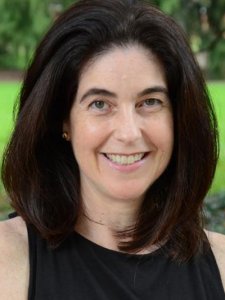
Rebecca Dorsey is a Professor in the Department of Earth Sciences within the College of Arts and Sciences at the University of Oregon. She has been a faculty member since 1997, progressing from Assistant to Associate and then full Professor. She also served as Head of the Department from 2013 to 2016, demonstrating leadership in academic administration. Her educational background includes a B.S. in Geology from the University of Vermont (1983), and M.A. and Ph.D. in Geology from Princeton University (1986, 1989). Prior to joining the University of Oregon, she held faculty positions at Northern Arizona University. Her primary research interests lie in sedimentology, basin analysis, tectonics, and stratigraphy . She investigates tectonically active sedimentary basins to understand the interplay between tectonic forces, sedimentary processes, and landscape evolution. Her work integrates field-based stratigraphy and sedimentology with paleomagnetism, geochronology, and geomorphology to reconstruct the complex evolution of active regions such as the Colorado River system, the Gulf of California, and arc-continent collision zones in Taiwan. The articles listed reflect a consistent focus on the tectonic and sedimentary evolution of active margins. Key themes include the birth and development of the Colorado River, transtensional faulting in the California shear zones, arc-continent collision dynamics, and the stratigraphic records of rifting in the Gulf of California. Her recent work increasingly incorporates interdisciplinary approaches, including geogenomics and machine learning for geomorphic classification. Fellow, Geological Society of America (2007) National Science Foundation Graduate Research Fellowship (1984-88) AAPG Distinguished Lecturer (2021-22) Benjamin Meaker Visiting Professorship, University of Bristol (2018) Fund for Faculty Excellence Award, University of Oregon (2017-18) Distinguished Lecturer, NSF MARGINS and GeoPRISMS programs (2010-12) Erskine Visiting Faculty Fellowship, University of Canterbury, New Zealand (2004) She has advised numerous graduate students, many of whom have become faculty members or work in prominent geological and environmental firms. Her research has been consistently supported by major external grants, primarily from the National Science Foundation, focusing on projects related to the San Andreas fault system, Colorado River evolution, and Gulf of California rifting. She has also led significant collaborative efforts, such as the Baja GeoGenomics consortium, integrating geology and biology. Her research is conducted through extensive fieldwork and collaboration with colleagues across institutions, including the U.S. Geological Survey and international universities. She maintains an active research laboratory and field program, contributing significantly to the understanding of Earth's dynamic surface processes.
Jason W Barnes is a Professor in the Department of Physics at the College of Science, University of Idaho. His research spans planetary science, astronomy, and geophysics, with a focus on Titan and exoplanets. He has contributed extensively to studies on planetary atmospheres, surface dynamics, and radiative transfer modeling. PhD in Planetary Science (2004), University of Arizona BS in Astronomy (1998), California Institute of Technology His research interests include Titan's geology and climate, extrasolar planet detection, and radiative transfer modeling. Recent work explores tidal currents in Titan's seas, exoplanet obliquity dynamics, and dust devil activity on Titan. He has published numerous articles on planetary exploration missions, including Dragonfly, and his work involves advanced modeling techniques like SRTC++ for planetary atmospheres. His projects integrate data from Cassini, Kepler, and ground telescopes to study planetary systems. His affiliations include the University of Idaho's College of Science, and he has collaborated on proposals for missions like E2T and AVIATR.
Sergio Mario Camporeale is a Full Professor at Politecnico di Bari and Director of the Master of Science in Mechanical Engineering. He is affiliated with the Department of Mechanics, Mathematics & Management, where his research focuses on advancing sustainable energy technologies. His work bridges experimental investigations and computational modeling to address challenges in renewable energy deployment. Research interests center on fluid machinery, hydrogen combustion, thermal energy storage, and renewable energy systems. Key areas include: Hydrogen integration in combustion engines and fuel cells Optimization of thermal storage systems (e.g., shell-and-tube LHTES) CFD-driven design of wave/tidal converters and wind turbines Decarbonization of industrial processes and marine propulsion Recent publications (2023–2025) demonstrate a strong emphasis on hydrogen as a clean energy vector, thermoacoustic stability, and economic feasibility of renewable communities. Trends include multi-objective optimization of energy systems, experimental validation of numerical models, and applications in transportation decarbonization. No awards or student advisories are mentioned in the source text. Collaborative projects include renewable integration for ferries, coastal vessels, and industrial processes, often involving cross-institutional CFD and experimental labs.
M. Reza Hashemi is a Professor of Ocean Engineering at the University of Rhode Island , actively engaged in research related to coastal resilience, ocean renewable energy, and hydrodynamic modeling. He directs the Wave-Current Interaction Laboratory at the Narragansett Bay Campus, focusing on advanced numerical techniques and experimental analysis. Education: Ph.D. in Oceanography, Bangor University of Wales (2014) Ph.D. in Civil/Hydraulic Engineering, Shiraz University (2006) M.S. in Civil Engineering, Shiraz University (1999) B.S. in Civil Engineering, Shiraz University (1997) Research Interests: Dr. Hashemi specializes in numerical modeling of wave-current interactions, storm surge, and sediment transport. His work integrates tools like ROMS, TELEMAC, and machine learning to address coastal hazards, renewable energy systems, and climate change impacts. He applies advanced methods such as Smoothed Particle Hydrodynamics (SPH) and Radial Basis Function-Based Meshless Techniques. Publication Trends: Recent studies emphasize hurricane-induced loads on offshore wind farms, sea-level rise implications for tidal energy, and machine learning applications in hydrological modeling. His collaborations span institutions like the University of Rhode Island, Bristol Channel researchers, and the Gulf of Maine community. Grants: Dr. Hashemi has secured funding from the Department of Energy and coastal management councils, focusing on floating offshore wind farms, groundwater contributions in coastal areas, and dredging impacts on circulation systems.
Dr. Yuanming Wang is a Postdoctoral Fellow in Fast Radio Bursts at the School of Science, Computing and Emerging Technologies , Swinburne University . Holding a PhD in Astronomy from the University of Sydney , he specializes in detecting rapidly changing radio transients using the ASKAP telescope in Western Australia, with notable contributions including the discovery of the most luminous pulsar in the Large Magellanic Cloud. His research spans Fast Radio Bursts , neutron star physics , and long-period radio transients , aiming to bridge gaps in pulsar spin periods and tidal disruption event models. Key projects include FRB localization , radio star cataloging with eROSITA cross-matching, and transient detection pipeline optimization for SKA-scale data processing. Recent publications (2023–2025) focus on multiwavelength observations of periodic nuclear transients, X-ray-radio correlations in long-period sources, and astrometric refinements for cosmological tools. His work also highlights highly scattered pulsars and redback binary candidates , expanding understanding of extreme astrophysical phenomena. Dr. Wang is available for supervising Doctorate (PhD) projects in Fast Radio Burst discovery and advanced signal processing . He contributes to the ADS publication library and collaborates with international teams on radio surveys for the Deeper, Wider, Faster program .
James Perlt is a Professor of Surveying at the Georg Agricola University of Applied Sciences, where he leads the Surveying Program (Bachelor) and the Surveying Technology Laboratory. His academic career spans multiple institutions, including TU Dresden, TU Braunschweig, and the Federal Office for Cartography and Geodesy in Frankfurt. Education: Dipl.-Ing. in Geodesy from TU Dresden (1995), Doctorate in Engineering from TU Braunschweig (2005) Perlt's research focuses on Surveying , Satellite Geodesy , and Engineering Surveying , particularly in tectonic systems of Iceland and ice dynamics in Antarctica. His work integrates GPS networks, SAR interferometry, and geokinematic modeling to study crustal deformation and polar environmental changes. His publications since 1997 reflect expertise in Geodesy , Geophysics , and Remote Sensing , addressing topics such as earthquake-induced crustal shifts , GPS-based tectonic modeling , and ice velocity estimation in polar regions . Perlt also presented lectures at international conferences, including the European Geophysical Society. Perlt oversees the Surveying Technology Laboratory, contributing to applied research in georesource engineering. No scientific awards or part-time roles are documented in the provided text.
Bram van Prooijen is a researcher at the Coastal Engineering department within the Civil Engineering & Geosciences school at Delft University of Technology . His work focuses on coastal and estuarine systems, specializing in sediment transport dynamics, wave-turbulence interactions, and climate adaptation strategies. Research output: 87 publications Datasets: 24 contributions Research interests include: Hydrodynamic processes in coastal environments Wave and turbulence decomposition techniques Sediment supply mechanisms to salt marshes Impact of storm surge barriers on estuarine morphology Sea level rise adaptation strategies Optical-acoustic sensor calibration for sediment analysis Scientific awards: #1 Best Teacher Team Hydraulic Engineering Track (2023) Most inspiring teacher team of Hydraulic Engineering MSc track (2024) Collaboration network spans institutions like Wageningen University & Research, with editorial contributions to Ocean Dynamics journal (2018-2019). His research has been featured in media outlets regarding coastal resilience projects (ARM4VEG in Guyana, SEAWAD in Wadden region).
Isamu Matsuyama is a Professor at the University of Arizona, affiliated with the Lunar and Planetary Laboratory (LPL) since 2011. His research focuses on planetary interiors and evolution, with specific emphasis on lunar and outer solar system bodies. He holds a Ph.D. from the University of Toronto (2005) and contributes to theoretical models interpreting planetary observations. Education: Ph.D., 2005, University of Toronto Dr. Matsuyama's research explores the thermal and orbital evolution of planetary bodies, including the Moon's fossil figure, tidal dynamics in ocean worlds like Europa and Ganymede, and the long-term survival of subsurface oceans in icy satellites. His work integrates theoretical modeling with spacecraft data from missions like GRAIL and proposed missions such as the Io Volcano Observer (IVO). Recent publications highlight advancements in tidal tomography, thin-shell dynamics, and rheological modeling, with a focus on 2025-2024 high-impact studies in Nature and Geophysical Research Letters . These works span lunar thermal asymmetry, Callisto's orbital dynamics, and spectral methods for heterogeneous bodies. No scientific awards were explicitly mentioned in the provided text. Advising: Former students include Hamish Hay (2020) and James Keane (2017). Grants: Currently leads NASA-funded projects on lunar gravity analysis, tidal evolution of bodies, and early Moon dynamics. Dr. Matsuyama contributes to planetary geophysics through his leadership in the LPL and collaborations on missions like IVO and MaQuIS. His work remains pivotal in understanding planetary formation and interior processes.
Maurice Van Putten is a Professor in the Department of Physics and Astronomy at Sejong University, where he has held a faculty position since September 2018. With a Ph.D. from Caltech (1992), he has established himself as a prominent researcher in gravitational wave physics, quantum cosmology, and exoplanet studies. His research interests span Gravitational Waves, Low-energy quantum cosmology, and Exoplanets, with significant contributions to understanding black hole physics, gamma-ray bursts, neutron stars, and gravitational wave detection. His work on the discovery of Extended Emission in gravitational radiation related to GW170817 provided calorimetric evidence for a Kerr black hole by spin-down during GRB170817A. Van Putten's recent publications (2021-2025) demonstrate a strong focus on gravitational wave detection techniques, quantum cosmology models addressing Hubble tension, galaxy dynamics, and white dwarf physics. His research output shows consistent productivity with 18 publications in 2021, 15 in 2022, 14 in 2023, 21 in 2024, and several in 2025, indicating active engagement in cutting-edge astrophysical research. His work contributes to UN Sustainable Development Goals through fundamental research in physics and astronomy. The fingerprint of his research shows strong activity in Gravitational Wave Physics (100%), Black Holes Physics (47%), Gamma Ray Burst Physics (28%), and Neutron Stars Physics (25%), indicating a focused research program in high-energy astrophysical phenomena. Van Putten maintains an active presence in major international collaborations, particularly in gravitational wave research, as evidenced by his co-authorship on papers from the LIGO-Virgo-KAGRA collaboration. His website at https://www.mvputten.org serves as a hub for his academic work and publications.
Douglas Tait is a Senior Lecturer at the Faculty of Science and Engineering, Southern Cross University , specializing in geohydrology and coastal environmental systems. His research focuses on groundwater-surface water interactions, greenhouse gas dynamics, and sustainable wastewater solutions. Education : BEnv(MarineBiol) (JCU), PhD (SCU) Research Interests : Submarine groundwater discharge mechanisms and coastal impacts Greenhouse gas cycling in aquatic and atmospheric systems Wastewater treatment innovations for developing regions Carbon and nutrient transport in mangrove and estuarine environments Recent Publication Trends show emphasis on tropical hydrology, methane dynamics in wetlands, and groundwater's role in marine nutrient loading. Key methodologies include radioisotope tracing, 3D modeling, and field-based flux measurements. Professional Activities include research leadership in Science at Southern Cross University, higher degree research supervision, and interdisciplinary collaborations in environmental engineering and marine science.
Dr. Robert Galinsky is an Adjunct Senior Research Fellow in the Department of Obstetrics & Gynaecology at Monash University and Monash Health. He is the Head of the Perinatal Inflammation and Neurophysiology Laboratory, where he leads a multidisciplinary research program spanning developmental neuroscience, medical imaging, bioengineering, and translational science. His research focuses on understanding how inflammation during pregnancy or after birth impairs brain development in preterm infants, leading to cognitive and motor disorders. He investigates anti-inflammatory interventions aimed at restoring normal brain development and reducing long-term disability. The recent publications highlight his work in preclinical models of neonatal brain injury, resuscitation, and neuroprotective strategies. His studies frequently utilize fetal and newborn lamb and sheep models to explore interventions such as umbilical cord blood therapy, magnesium sulfate, and novel resuscitation techniques. His research has strong translational implications for improving outcomes in preterm infants. Scientific Awards: Auckland Medical Research Foundation Travel Award (2013) Auckland Medical Research Foundation Travel Award (2014) Auckland Medical Research Foundation Travel Award (2016) Bethlehem Griffiths Research Foundation Young Researcher of the Year (2018) Eric Glasgow Anatomy Bequest Scholarship (2008) Dr. Galinsky actively supervises several PhD and honors students and is a primary chief investigator on multiple NHMRC-funded projects. His laboratory collaborates extensively with leading researchers in neonatal physiology and perinatal medicine. He is currently accepting graduate students for research supervision in areas related to perinatal brain injury and neuroprotection. Research Projects: Phase-Contrast Neuroimaging for Early Detection of Brain Injury at Birth (2022–2026) Preventing inflammation-induced brain injury in preterm infants: targeting systemic tumour necrosis factor (2019–2022) Targeting the IL-1β inflammatory pathway for preventing preterm brain injury (2018–2020) Identifying and preventing inflammation-induced brain injury in preterm infants (2016–2019)
Tony Dolphin is an Honorary Lecturer in the School of Environmental Sciences at the University of East Anglia (UEA) and a member of the Collaborative Centre for Sustainable Use of the Seas. His work centers on coastal and estuarine processes, with a focus on sediment transport, morphodynamics, and coastal protection. His research interests include: Coastal, beach, and estuarine geomorphology Sediment transport in the coastal zone Wave and tidal dynamics Coastal erosion and protection structures Environmental monitoring using remote sensing and field instrumentation Climate change impacts on coastal systems His recent publications show a strong trend toward integrating traditional field-based coastal science with modern remote sensing and drone-based monitoring techniques, particularly in seagrass habitat mapping and post-storm impact assessment. Earlier work emphasizes physical processes such as wave-orbital dynamics, sediment suspension, and the hydrodynamics of tidal channels and intertidal flats. Notable research projects include: LEACOAST and LEACOAST2: Investigating the effects of shore-parallel breakwaters on coastal morphodynamics Blinks: Studying sandbank dynamics and beach responses Children's Corner Beach Dynamics and Shoreline Monitoring Coastal monitoring using photogrammetry and GPS/X-Band radar He has collaborated with institutions such as the Centre for Environment, Fisheries & Aquaculture Science (Cefas), Waveney District Council, and various academic partners across Europe and New Zealand. Tony Dolphin has co-authored numerous peer-reviewed articles in journals such as Journal of Coastal Research , Marine Geology , and Remote Sensing . His work is cited in both academic and policy contexts, particularly regarding storm surge impacts and sustainable coastal management.
Diane Fribance is a Professor and Associate Chair of Undergraduate Programs in the Department of Marine Science at Coastal Carolina University. As a coastal observational physical oceanographer, her research spans tidal creeks, estuaries, and shelf-wide systems, focusing on physical transport, mixing dynamics, and their ecological impacts on temperate reefs and coastal environments. Ph.D., University of Connecticut, Oceanography, 2010 M.S., University of Connecticut, Oceanography, 2008 B.A., Williams College, Computer Science, 2003 Her work integrates observational field studies and technology to analyze coastal ocean physics. Key research areas include tidal and residual circulation patterns, river plume effects on nearshore productivity, and environmental health monitoring of estuarine systems. She teaches foundational marine science, physical oceanography, and an instrumentation course emphasizing software tools like MATLAB for data processing and scientific communication. Recent publications reflect her expertise in coastal dynamics. The 2022 study examines supercritical plume mixing under upwelling winds, the 2019 paper investigates dissolved oxygen variability in tidal creeks, and the 2017 article reviews long-term hypoxia in temperate embayments. These works underscore her focus on circulation, stratification, and ecological linkages in coastal zones. Professor Fribance’s methodological skills include hydrographic techniques, field instrumentation, and computational analysis. As Associate Chair, she contributes to undergraduate program development, blending hands-on fieldwork with advanced data analysis to enhance marine science education.
Lisa A. Emili is an Associate Professor in the Division of Mathematics & Natural Sciences at Pennsylvania State University (Altoona) and an IEE Research Themes Water Sustainability Affiliate Researcher . Her research focuses on microplastic contamination , environmental contaminants , and hydrological processes in freshwater ecosystems, particularly in Pennsylvania and coastal British Columbia. Email: lae18@psu.edu Office: 221 Hawthorn Building, Altoona, PA 16601 Emili's work spans biogeochemical processes in forest-peatland complexes, sustainable remediation of legacy mine drainage (notably at the Flight 93 National Memorial), and modeling agricultural nonpoint source pollution using GIS. Recent projects examine the transport and fate of microplastics in tidal marsh ecosystems and coastal carbon dynamics in riparian buffers. She received the Presidential Public Impact Research Award in 2024 and leads initiatives to combat microplastics and PFAS contamination in waterways.