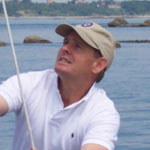
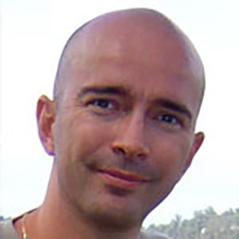
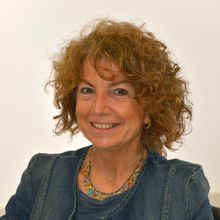
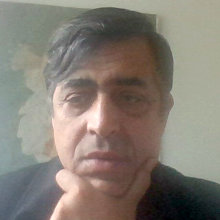
Duncan M. FitzGerald is a Professor in the Department of Earth and Environment at Boston University. His research focuses on shallow marine geology, coastal processes, and sediment dynamics. He holds a Ph.D. from the University of South Carolina (1977), an MS from Texas A&M University (1972), and a BS from the University of New Hampshire (1970). Education: Ph.D., University of South Carolina, 1977 MS, Texas A&M University, 1972 BS, University of New Hampshire, 1970 His research explores tidal inlet hydraulics, estuarine sediment transport, and the effects of sea-level rise on coastal systems. Current projects investigate marsh response to accelerated sea-level rise (Mississippi River delta, Maine), bedform evolution in Long Island Sound and Humboldt Bay, and wave-current interactions in Boston Harbor. Techniques include field measurements, seismic imaging, sediment coring, and numerical modeling. Research is supported by agencies such as USACE, NOAA, and the National Park Service. Teaching responsibilities include courses like EE 142: Introduction to Beach & Shoreline Processes and EE 544: Coastal Sedimentology .
Sergio Fagherazzi is a Professor of Earth & Environment at Boston University’s College of Arts & Sciences, with an affiliation to the Institute for Global Sustainability (IGS). His research focuses on geomorphology, hydrology, and coastal/marine geology, emphasizing salt marsh dynamics, riverine networks, and sediment transport processes. He holds a PhD in Hydrodynamics and an MS in Civil Engineering from the University of Padua, Italy. His work explores three core areas: 1) continental shelf morphology during sea-level fluctuations, 2) salt marsh hydrodynamics and tidal creek development, and 3) numerical modeling of coastal processes. Recent studies address storm impacts on coastal systems, mangrove resilience, and sediment budget dynamics. Publications highlight innovations in remote sensing applications (e.g., PlanetScope data for shoreline monitoring), analytical models for tidal networks, and interdisciplinary approaches linking hydrology, ecology, and geology. He collaborates with global initiatives like Delta-X to advance understanding of deltaic wetlands and sea-level rise impacts.
Emanuela Molinaroli is a Senior Researcher at Ca' Foscari University of Venice, affiliated with the Department of Environmental Sciences, Computer Science and Statistics. Her work focuses on sedimentology, coastal geomorphology, and environmental geology with emphasis on climate change impacts and coastal adaptation strategies. She holds a doctoral degree in Earth Sciences and has been a faculty member since 2015. Education: Ph.D. in Mineralogy (1997), advanced training at Indiana University (USA), and postdoctoral fellowships at institutions including the Rosenstiel School of Marine and Atmospheric Science (Miami). Research interests include Venice Lagoon dynamics, ship-induced erosion, sea level rise adaptations of coastal cities, and Mediterranean monk seal conservation. She has led projects on sediment budgets, morphosedimentary evolution, and anthropogenic impacts in coastal zones. Teaching includes graduate courses on coastal processes, geomorphology, and environmental sciences. Collaborations span international institutions like CNR (Italy), UNESCO, and the University of Miami. Her research has addressed Venice's vulnerability to SLR, comparisons of Venice and Miami adaptation strategies, and the ecological role of Posidonia oceanica meadows. Recent work focuses on Sardinian coastlines and barrier island resilience.
Angelo Rubino is a Full Professor at the Department of Environmental Sciences, Computer Science and Statistics at Ca' Foscari University of Venice. His research focuses on oceanography, meteorology, and climatology, with a strong emphasis on climate dynamics, sea-level variability, and large-scale ocean-atmosphere interactions. Rubino leads studies on Mediterranean and Atlantic climate systems, utilizing high-resolution models and observational datasets. Key research areas include Atlantic Multidecadal Variability, Arctic Ocean changes, and the impacts of climate change on coastal regions such as Venice. He collaborates on interdisciplinary projects addressing sea-level rise, extreme hydrological events, and climate predictability. Rubino has published extensively in journals like Communications Earth & Environment , Nature Communications , and Journal of Geophysical Research . His work integrates field observations, satellite data, and numerical simulations to understand mechanisms driving ocean circulation and climate patterns. Rubino is affiliated with the Research Institute for Complexity and contributes to initiatives like the VolMIP (Volcanic Forcing Model Intercomparison Project) for climate model development.
Rebecca Dorsey is a Professor in the Department of Earth Sciences within the College of Arts and Sciences at the University of Oregon. She has been a faculty member since 1997, progressing from Assistant to Associate and then full Professor. She also served as Head of the Department from 2013 to 2016, demonstrating leadership in academic administration. Her educational background includes a B.S. in Geology from the University of Vermont (1983), and M.A. and Ph.D. in Geology from Princeton University (1986, 1989). Prior to joining the University of Oregon, she held faculty positions at Northern Arizona University. Her primary research interests lie in sedimentology, basin analysis, tectonics, and stratigraphy . She investigates tectonically active sedimentary basins to understand the interplay between tectonic forces, sedimentary processes, and landscape evolution. Her work integrates field-based stratigraphy and sedimentology with paleomagnetism, geochronology, and geomorphology to reconstruct the complex evolution of active regions such as the Colorado River system, the Gulf of California, and arc-continent collision zones in Taiwan. The articles listed reflect a consistent focus on the tectonic and sedimentary evolution of active margins. Key themes include the birth and development of the Colorado River, transtensional faulting in the California shear zones, arc-continent collision dynamics, and the stratigraphic records of rifting in the Gulf of California. Her recent work increasingly incorporates interdisciplinary approaches, including geogenomics and machine learning for geomorphic classification. Fellow, Geological Society of America (2007) National Science Foundation Graduate Research Fellowship (1984-88) AAPG Distinguished Lecturer (2021-22) Benjamin Meaker Visiting Professorship, University of Bristol (2018) Fund for Faculty Excellence Award, University of Oregon (2017-18) Distinguished Lecturer, NSF MARGINS and GeoPRISMS programs (2010-12) Erskine Visiting Faculty Fellowship, University of Canterbury, New Zealand (2004) She has advised numerous graduate students, many of whom have become faculty members or work in prominent geological and environmental firms. Her research has been consistently supported by major external grants, primarily from the National Science Foundation, focusing on projects related to the San Andreas fault system, Colorado River evolution, and Gulf of California rifting. She has also led significant collaborative efforts, such as the Baja GeoGenomics consortium, integrating geology and biology. Her research is conducted through extensive fieldwork and collaboration with colleagues across institutions, including the U.S. Geological Survey and international universities. She maintains an active research laboratory and field program, contributing significantly to the understanding of Earth's dynamic surface processes.
Brian Yellen is a Research Assistant Professor in the Department of Earth, Geographic, and Climate Sciences (EGCS) at the University of Massachusetts Amherst. Since August 2024, he has also served as the Massachusetts State Geologist and director of the Massachusetts Geological Survey, based at UMass. His research focuses on sediment dynamics, watershed processes, and the impacts of climate change and human activities on coastal and fluvial systems. His research interests include: Sediment transport and storage in watersheds Impacts of dam removal on estuarine systems Resilience of tidal wetlands under sea level rise Blue carbon storage in coastal wetlands Extreme event sedimentology (e.g., hurricanes, floods) Hydropeaking effects on riparian forests His recent publications reveal a strong focus on coastal systems, particularly salt marshes in the Northeastern U.S., where he investigates physical and ecological indicators of vulnerability and restoration potential. He employs techniques such as sediment coring, remote sensing (Lidar, optical), and modeling to understand long-term geomorphic changes. Much of his work is applied, supporting river managers, dam owners, and coastal planners with data-driven tools. Scientific awards and recognition include: Recipient of the University of Massachusetts Amherst's most prestigious teaching award Brian Yellen actively mentors students and advises undergraduate research, including Wenxiu Teng, Bonnie Turek, and others. He has led or contributed to externally funded research projects involving collaborations with Woods Hole Oceanographic Institution, Hudson River National Estuarine Research Reserve, and NRCS. He is also involved in public outreach and education through organizations such as the Fort River Watershed Association and Connecticut River Conservancy. He leads or participates in several active research initiatives: Salt Marshes and Abrupt Sea Level Rise : A natural experiment using historical inlet changes to study marsh resilience. Dams and Sediment on the Hudson : Assessing sediment impacts of dam removal with stakeholder engagement. High Resolution Mapping of Blue Carbon : Quantifying carbon storage in Northeast U.S. tidal marshes in collaboration with NRCS. Extreme Event Sedimentology : Studying Hurricane Maria’s erosivity in Puerto Rico. Hydropeaking and Riparian Forests : Investigating how dam operations affect water availability and tree uptake.
Associate Professor David Callaghan of the School of Civil Engineering at the University of Queensland specializes in coastal engineering , hydraulic modeling , and climate change impact assessments . He serves as an active member of the Australian Hydraulic Modelling Association and observer of the Queensland Water Panel , with over 50 technical publications including a book section. His research spans physical-biological interactions in coastal ecosystems , extreme event analysis , and sediment dynamics . Recent work focuses on coral reef resilience under climate change, seagrass-based coastal protection , and machine learning applications for coral rubble instability prediction. Despite extensive publication records ( 88 journal articles , 15+ datasets ), no specific scientific awards are documented in available texts. His consultancy roles with private/government agencies emphasize practical extreme coastal weather response strategies. Key research trends include Probabilistic storm erosion and beach recession models Coral reef wave dynamics and sediment stability under sea level rise Integration of Bayesian belief networks for non-expert communication Lagoon dynamics and inlet morphodynamics analysis
Professor Grant Ingram is a faculty member in the Department of Engineering within the Faculty of Science at Durham University. His research focuses on turbomachinery, wind turbine aerodynamics, and computational fluid dynamics. With over 70 research outputs spanning more than two decades, his work demonstrates sustained contribution to engineering science. Dr. Ingram's research interests center on turbomachinery aerodynamics , wind turbine design (particularly H-Darrieus vertical axis turbines), computational fluid dynamics , and renewable energy systems . His work often addresses practical engineering challenges through both experimental and computational approaches. Recent publications show his expanding interest in applying machine learning techniques to traditional fluid dynamics problems and improving engineering education through advanced computational tools. Analysis of his 15 most recent publications reveals a consistent focus on turbomachinery optimization, with particular attention to endwall contouring, sealing technologies, and wind turbine aerodynamics. His research shows strong industrial relevance, particularly in power generation and renewable energy applications. The work frequently employs advanced computational methods alongside experimental validation, demonstrating a comprehensive approach to engineering problems. Professor Ingram maintains an active research program with consistent publication output, including multiple publications in 2024 that demonstrate his continued contribution to the field. His collaborative work with researchers such as R.J. Williams, S.I. Hogg, and T.P. Breckon indicates strong research networks within and beyond Durham University. While specific details about teaching responsibilities and supervision are limited in the available information, his 2024 publication on updating turbomachinery teaching methods using 3D design tools suggests active engagement in engineering education. His research has practical applications across multiple energy sectors, from conventional power generation to offshore wind and tidal stream technologies.
Rip Hale is an Associate Professor in the Department of Ocean, Earth, and Atmospheric Sciences at Old Dominion University (ODU). He holds a Ph.D. in Geological Oceanography from the University of Washington (2014) and has conducted postdoctoral research at Vanderbilt University. Hale joined ODU faculty in 2016, focusing on sediment dynamics across spatial and temporal scales. His research integrates acoustic/optical sensor data with sediment core analyses to understand coastal processes, particularly in tidal deltas like the Ganges-Brahmaputra Delta in Bangladesh and estuaries like the Lafayette River in Virginia. Education: Ph.D. in Geological Oceanography, University of Washington, 2014 Research Interests: Hale investigates sediment transport mechanisms, tidal delta evolution, and human impacts on coastal systems. His work emphasizes linking modern sediment dynamics to ancient geological records. Current projects include studying sediment resuspension's role in harmful algal blooms in the Chesapeake Bay, SAR-based bathymetry in tidal inlets, and delta sustainability in Bangladesh. He collaborates with international organizations like the World Bank and the National Science Foundation. Key Projects: Hydrodynamics of the lower James River, VA Bathymetry using Synthetic Aperture Radar (SAR) Sediment resuspension and HABs in the Lafayette River Sediment dynamics in the Ganges-Brahmaputra Delta Advising & Grants: Hale mentors graduate students (e.g., Jim Metz, Adriana Amrhein) and REU participants. His funding includes grants from the National Science Foundation (Coastal SEES), Office of Naval Research, and Virginia Space Grant Consortium. He leads interdisciplinary teams studying delta sustainability and coastal adaptation strategies. Labs/Teams: Director of the Coastal Sedimentology Lab at ODU, focusing on fieldwork, sensor deployment, and sediment core analysis. Collaborates with the Mulholland Lab on algal bloom research and the Goodbred Lab on deltaic processes in Bangladesh.
Roy J.A. van Weerdenburg is a PhD Candidate in the Coastal Engineering section of Delft University of Technology's Faculty of Civil Engineering and Geosciences and a Researcher in Sediment Dynamics at Deltares since March 2019. His work addresses sediment transport processes in tidal environments, particularly the Wadden Sea. Education: MSc Civil Engineering (Coastal Engineering), Delft University of Technology, 2019 His research centers on sand-mud interactions, morphodynamic modeling of channel-shoal systems, and field measurements in tidal inlets. He develops process-based numerical models to analyze sediment transport mechanisms and morphological evolution, with emphasis on practical coastal management applications. Recent publications (2021-2023) consistently focus on sediment dynamics in the Wadden Sea, integrating field data with modeling to study tidal basin evolution, sediment bed equilibria, and wind-driven flows. This demonstrates a cohesive research trajectory in coastal sediment processes. As a PhD candidate, he does not advise students. His research is funded through active projects, including the 2025 Wadden Sea field campaign for 'smart sediment management' aimed at balancing navigation needs with ecosystem conservation. He operates within TU Delft's Coastal Engineering research group and Deltares' Sediment Dynamics team, bridging academic inquiry with real-world coastal engineering challenges through collaborative projects.
Trang Duong serves as Assistant Professor in Civil Engineering and Management at University of Twente and Senior Lecturer in Coastal and Urban Risk & Resilience at IHE Delft Institute for Water Education. Her expertise centers on coastal engineering with emphasis on climate change impacts, flood hazards, and adaptation strategies. She is a 2025 L'Oréal-UNESCO For Women in Science Fellow conducting critical research on coastal resilience. Her research spans climate change impacts on coasts, coastal hazards (flooding/erosion), tidal inlet processes, and nature-based adaptation solutions. She employs multi-scale numerical modeling, reduced complexity approaches, and probabilistic methods to analyze hydrodynamics, morphodynamics, and sea level rise effects across spatio-temporal dimensions. Key projects examine historical flood events like storm Xynthia to inform future risk management. Recent publications (2021-2025) demonstrate consistent focus on coastal flood modeling, tidal inlet stability, and sea level rise impacts. Her work bridges engineering and climate science through studies on flood defense representation, coastal hardening effects on beaches, and probabilistic coastal change projections. This research provides actionable insights for policymakers developing climate-resilient coastal management frameworks. Scientific Awards: L’Oréal-UNESCO For Women in Science Fellowship (2025) Academic Leadership: Dr. Duong actively supervises BSc, MSc, and PhD students while leading research projects on coastal risk assessment. Her current fellowship-funded project evaluates how historical flood data can optimize future protection measures against events like storm Xynthia, focusing on reducing human and property impacts through evidence-based adaptation planning. Collaborative Networks: She maintains strong international research collaborations evident in multi-institutional publications, and is affiliated with the Water Systems research group at University of Twente's Faculty of Engineering Technology.
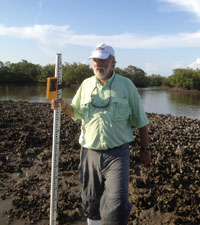
Loren D. Coen, Ph.D. serves as an Affiliate Research Professor at Florida Atlantic University's Harbor Branch Oceanographic Institute, specializing in marine ecosystem dynamics and restoration. His work bridges academic research with practical conservation applications across multiple coastal institutions. His research focuses on marine and benthic ecology , particularly oyster reef ecosystems and their restoration. Key areas include: Oyster reef ecology and associated ecosystem services Marine habitat restoration techniques Remote sensing of intertidal habitats Real-time water quality monitoring systems Plant-animal interactions in coastal landscapes Living shorelines development Coen's publication history reveals a strong emphasis on practical restoration frameworks and ecosystem service quantification , with significant contributions to oyster habitat conservation through collaborative projects like The Nature Conservancy initiatives. His work consistently addresses the intersection of ecological science and coastal management policy. Professional engagement includes active participation in national restoration monitoring committees and leadership in developing standardized assessment protocols for oyster reef projects. His research integrates field studies with technological innovations like real-time observing systems for habitat monitoring. Current work focuses on multi-habitat restoration strategies combining hydrologic rehabilitation, mangrove propagation, and oyster substrate enhancement in Florida estuaries, demonstrating his commitment to holistic coastal ecosystem recovery approaches.