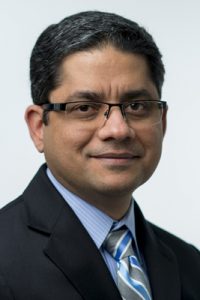
Jim Long is a federal Research Fisheries Biologist and Assistant Unit Leader of the Oklahoma Cooperative Fish and Wildlife Research Unit. Concurrently, he serves as an Adjunct Professor in the Department of Natural Resource Ecology and Management at Oklahoma State University, where he has held academic appointments since 2016, including a transition from Adjunct Associate Professor to Adjunct Professor in 2022. Doctor of Philosophy in Wildlife and Fisheries Ecology (Oklahoma State University, 2000) Master of Science in Biology (Fisheries and Aquatic Science, Missouri State University, 1995) Bachelor of Science in Biology (Missouri State University, 1992) His research focuses on fisheries management, invasive species impacts on aquatic communities, and habitat conservation across stream ecosystems, lakes, and reservoirs. Key areas include black bass diversity conservation , invasive species mitigation , and otolith-based conservation tools . Recent work explores environmental DNA applications, sonar habitat mapping, and socioeconomic aspects of stream fishing. Major grant funding includes multiple projects from the Oklahoma Department of Wildlife Conservation (2023-2025) and U.S. Geological Survey collaborations. His 15 most recent articles (2023-2025) demonstrate expertise in paddlefish restoration, mussel conservation, sturgeon diet analysis, and genomic divergence studies of black bass species. Jim Long actively engages in PhD/Master's research supervision and scientific mentoring , particularly in freshwater ecology and fisheries management contexts.
Senyou An is an Honorary Reader at CE - Academic & Research, specializing in multi-scale technologies for predicting CO₂ plume migration during carbon sequestration. His expertise spans computational and experimental fluid dynamics, including multiscale multiphase flow, reactive transport, and heat/mass transfer through porous materials. He actively contributes to UN Sustainable Development Goals addressing climate action and environmental protection. Education: PhD in 2021 from CE - Academic & Research, focusing on GPU-based pore-scale modeling of two-phase flow and transport in porous media, supervised by Prof. Theodoropoulos and Prof. Joekar-Niasar. Research interests emphasize carbon neutrality strategies, pore-scale analysis, and the integration of deep learning with physics-based models. His work frequently explores porous media heterogeneity, carbonate rock dynamics, and computational methods like the boundary integral approach. Recent publications highlight advancements in three-dimensional foam modeling and upscaling reaction rates in subsurface environments. He collaborates internationally to investigate multiphase flow and wettability effects in porous systems. Advising & Grants: While no current advisees are listed, he is accepting PhD students. His research has been disseminated through datasets such as Mendeley Data (DOI: 10.17632/k9s7ht88mp.1) , which examines pore geometry and wettability interactions in immiscible displacement dynamics. Labs/Teams: Engaged in interdisciplinary teams combining computational physics with environmental engineering, particularly in digital porous media analysis and subsurface flow modeling.
Alexis Saez Uribe is a Postdoctoral Scholar Research Associate in Geology at the California Institute of Technology's Division of Geological and Planetary Sciences, working with Prof. Jean-Philippe Avouac since April 2024. Previously, he earned his PhD in Mechanics from École Polytechnique Fédérale de Lausanne (EPFL) under the supervision of Prof. Brice Lecampion. His research focuses on understanding the mechanical behavior of the subsurface related to energy transition technologies and geo-hazard mitigation. He combines theoretical and computational continuum mechanics with applied mathematics to develop physics-based models informed by geological, geophysical, and laboratory observations. His work addresses critical challenges in deep geothermal energy, geological carbon storage, and earthquake hazard assessment. His recent publications demonstrate a strong focus on fluid-driven frictional ruptures, injection-induced seismicity, and slow earthquake mechanisms. The research shows progression from theoretical modeling of fault mechanics to practical applications for energy technologies and hazard mitigation. His work frequently appears in high-impact journals including Science Advances and the Journal of the Mechanics and Physics of Solids. Dr. Saez Uribe has conducted international research collaborations, including stays at the University of Tokyo's Earthquake Research Institute and Dalhousie University with Prof. Dmitry Garagash. His work has received attention in Swiss media for contributions to understanding post-injection-induced seismicity. Current position: Postdoctoral Scholar Research Associate at Caltech (since April 2024) PhD: Mechanics, École Polytechnique Fédérale de Lausanne (EPFL) Research locations: Caltech, University of Tokyo, Dalhousie University Primary research focus: Mechanics of subsurface processes for energy transition and hazard mitigation
Senthil S. Vel serves as the Arthur O. Willey Professor of Mechanical Engineering at the University of Maine's College of Engineering and Computing, with a Ph.D. in Engineering Mechanics from Virginia Tech (1998). His work bridges computational mechanics and geophysical applications through advanced material modeling. His research spans Mechanics of Composite Materials , Computational Solid Mechanics , and Multiscale Modeling , focusing on micromechanical behavior of heterogeneous materials , thermoelastic properties , seismic anisotropy , and creep in geological systems . This integrates engineering principles with earth sciences to address material responses across scales. Recent publications demonstrate consistent emphasis on computational homogenization techniques and microstructure-property relationships, particularly for polycrystalline and composite systems with applications in structural design and crustal deformation studies. Key recognitions include: Fellow of the American Society of Mechanical Engineers (2016) Arthur O. Willey Professorship Vel mentors graduate researchers including Cook, Goupee, and Pelletier, with funding from NSF and ONR supporting projects on functionally graded materials, ship structural integrity, and seismic anisotropy. He actively contributes to the academic community through NSF review panels and conference organization.
Sabri Bülent Tank is a Professor of Geophysics at the Department of Geophysics, Kandilli Observatory and Earthquake Research Institute, Boğaziçi University in Istanbul, Turkey. With expertise in geomagnetism and electromagnetic methods in geophysics, he has made significant contributions to understanding Earth's electrical structure, particularly related to fault zones, volcanic systems, and earthquake processes. His research utilizes magnetotelluric methods to investigate crustal and upper mantle properties, with applications to seismic hazard assessment and geothermal energy exploration in Turkey and internationally. Education: Ph.D. in Geophysics, Tokyo Institute of Technology, 2004 M.Sc. in Geophysics Engineering, Boğaziçi University, Kandilli Observatory and Earthquake Research Institute, 1998 B.Sc. in Geophysics Engineering, Istanbul University, Faculty of Engineering, 1995 Professor Tank specializes in three main areas of geomagnetism and electromagnetic studies. First, he investigates internal (main) geomagnetic field phenomena, particularly the westward drift of the non-dipole field. Second, he studies external geomagnetic field variations, including solar eclipse effects on the ionosphere and solar/lunar geomagnetic variations. Third, and most prominently, his work focuses on electromagnetic induction in the crust and upper mantle, applying magnetotelluric methods to study active and passive faults, volcanoes, geothermal systems, and ocean bottom electromagnetic phenomena. His research has significant implications for understanding earthquake generation processes and volcanic unrest mechanisms. Professor Tank's publication record demonstrates consistent expertise in applying electromagnetic methods to geophysical problems, particularly related to Turkey's tectonically active regions. His recent work shows increasing focus on three-dimensional magnetotelluric modeling of fault zones (particularly the North Anatolian Fault system), volcanic systems (including Mt. Fuji and Kusatsu-Shirane volcano in Japan), and earthquake rupture zones. His research often involves international collaborations with Japanese institutions. The publications reveal a progression from fundamental geomagnetic studies to applied electromagnetic imaging of specific geological structures with direct relevance to seismic and volcanic hazard assessment. While specific awards aren't listed in the provided text, Professor Tank has accumulated 734 citations (Google Scholar) and 517 citations (Web of Science) as of March 6, 2024, with an h-index of 12 (Google Scholar) and 11 (Web of Science). His work has been published in high-impact journals including Nature Communications, Earth and Planetary Science Letters, and Journal of Geophysical Research. He serves as a reviewer for numerous prestigious geophysics journals. Professor Tank currently supervises PhD candidate Ruken Yazıcı and has graduated eight Master's students since 2007. His research is supported by multiple competitive grants, including ongoing projects funded by JST/TÜBİTAK (2023-2024) studying the 2023 Kahramanmaraş earthquakes, and TÜBİTAK (2021-2024) investigating the Ganos Fault's electrical properties. Previous significant funding includes a U.S. National Science Foundation grant (2011-2019) for Continental Dynamics/Central Anatolian Tectonics and multiple Japan Society for the Promotion of Science (JSPS) postdoctoral projects (2007-2010). Professor Tank collaborates extensively with the Kandilli Observatory and Earthquake Research Institute's geophysical monitoring networks. His work involves international collaborations, particularly with Kyoto University, Tokyo Institute of Technology, and various Japanese research institutions. He participates in the MTNet (Magnetotelluric Network) webinars and has been involved in the 25th and 26th Electromagnetic Induction Workshops, demonstrating his active role in the global geophysics research community.