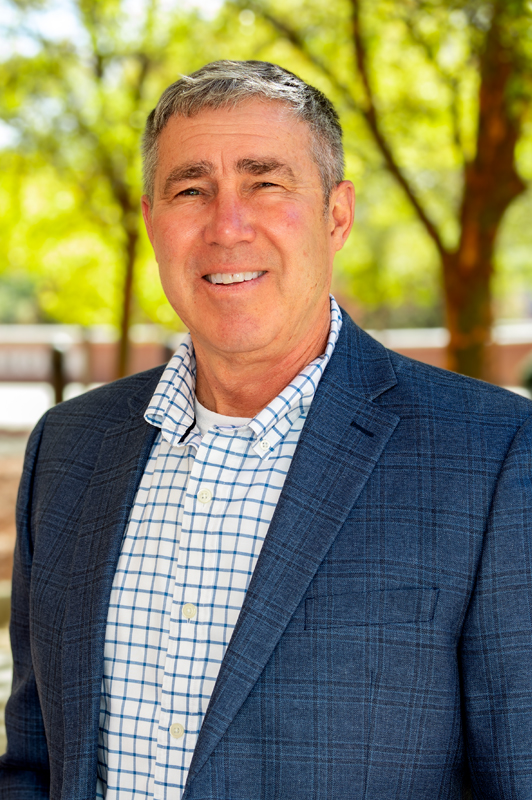
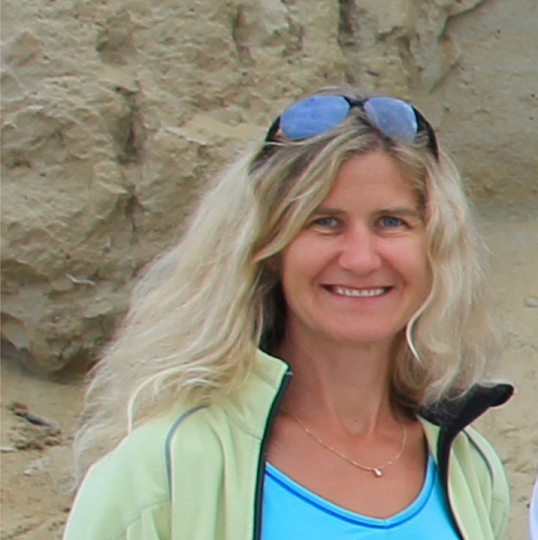
Andrea Artoni is an Associate Professor at the Department of Chemistry, Life Sciences and Environmental Sustainability, University of Parma, with over 30 years of experience in tectonic and sedimentological studies. His research focuses on collisional orogens in the Mediterranean region, particularly the Northern Apennines, Calabrian Arc, and Ionian Sea, addressing seismic hazards and fluid circulation in thrust belts. Researcher at University of Parma since 1999 National Scientific Qualification for Full Professor in Structural Geology Teaching courses in Earth Dynamics, Regional Geology, and Subsurface Geology His research interests include tectonics-sedimentation relationships in foredeep basins, paleogenetic evolution of Mediterranean orogens, and geological risks. He employs geological mapping, seismic interpretation, and bathymetric analysis across Italy, France, Spain, and Poland. Recent publications analyze the Sicily Channel's tectonic complexity, DNAPL migration in aquifers, and natural hydrogen exploration in the Apennines. He participates in international collaborations and field campaigns like the CALAQUAKES oceanographic mission.
Dr. Robert G. Loucks is a current Research Professor at the Bureau of Economic Geology , affiliated with the Jackson School of Geosciences at the University of Texas at Austin. His work focuses on sedimentology, stratigraphy, and reservoir characterization for carbonate, sandstone, and mudstone systems. Ph.D. in Geology from the University of Texas at Austin (1976) B.A. in Geology from SUNY Binghamton (1967) A.A. in Math/Science from Onondaga Community College (1964) His research spans diagenesis, pore networks, and unconventional resource recovery, with a particular emphasis on shale-gas and carbonate reservoirs. He has developed classification systems for mudrock pores and analyzed reservoir quality in deep-water systems. Key awards include the AAPG Robert R. Berg Outstanding Research Award (2014) , multiple GCAGS President's Awards , and the Wallace E. Pratt Memorial Award (2001) for the 2009 AAPG Bulletin article. He has presented extensively on pore systems and reservoir analysis. Dr. Loucks has authored seminal works on micropores in carbonate mud, natural microfractures in unconventional systems, and three-dimensional seismic geomorphology of paleokarst drainage systems, with recent papers extending into 2017. His collaborations span industry and academic institutions, including co-authors like Charles Kerans and Robert Reed.
Yuchen Liu serves as Assistant Professor at Waseda University's School of Creative Science and Engineering, Faculty of Science and Engineering, specializing in Earth Resource Engineering with emphasis on methane hydrate research and petroleum extraction technologies. Holding a Ph.D. from Waseda University and Master of Engineering from Tokyo Institute of Technology, Dr. Liu leads innovative research bridging geotechnical engineering with petroleum applications. Dr. Liu's academic foundation includes: Ph.D. (Waseda University) Master of Engineering (Tokyo Institute of Technology) Research focuses on developing stabilization methods for methane hydrate reservoirs using soil improvement agents, enhanced oil recovery techniques, and sand production countermeasures. Current investigations examine the heterogeneity and anisotropy of grout bodies in methane hydrate reservoirs, decomposition gas behavior during stabilization processes, and development of advanced experimental apparatus for reservoir characterization. The research program addresses critical challenges in methane hydrate resource development and conventional oil production. Publication trends reveal a strategic progression from fundamental soil mechanics research to applied petroleum engineering solutions, with recent emphasis on cement-based grout applications for enhanced oil recovery, three-dimensional reservoir visualization systems, and methane hydrate stabilization technologies. These works demonstrate strong industry relevance and methodological innovation in experimental design. Dr. Liu received the prestigious 66th Japan Association for Petroleum Technology Award (Encouragement Award) in 2022 for groundbreaking research on methane hydrate layer stabilization. Professional activities include lead and corresponding authorship on numerous publications, development of specialized experimental equipment for petroleum engineering education, and active supervision of research projects funded by organizations like the Arai Science and Technology Foundation. Current teaching responsibilities encompass multiple laboratory courses in basic science and engineering experiments. Dr. Liu directs a specialized research laboratory focused on methane hydrate stabilization, operating multiple custom-designed experimental systems including three-dimensional reservoir sweep micromodel visualization devices, core pressure injection units, and water tank experimental apparatus specifically engineered for studying grout material applications in hydrate-bearing formations.
Yu-Feng Lin is an Adjunct Professor at the University of Illinois at Urbana-Champaign, holding dual appointments in the Department of Civil and Environmental Engineering and the Department of Natural Resources and Environmental Sciences. He is the Director of the Illinois Water Resources Center and a Principal Research Hydrogeologist at the Illinois State Geological Survey. His expertise spans water resources engineering, hydrogeology, and geothermal energy systems. Lin earned his Ph.D. in Geological Engineering from the University of Wisconsin-Madison (2002), M.S. in Civil and Environmental Engineering from the University of Connecticut (1996), and B.S. in Water Resources and Environmental Engineering from Tamkang University (1993). His research focuses on groundwater-surface water interactions, geothermal energy applications, and environmental health connections. Notable projects include the development of geothermal energy systems for campus sustainability, fiber-optic sensing for hydrological monitoring, and modeling CO2 sequestration risks. He leads over 20 funded grants, including major initiatives with the U.S. Department of Energy and National Science Foundation. Lin is a Fellow of the Geological Society of America and has received awards like the Distinguished Alumni Award from Tamkang University. He serves on national boards such as the Great Lakes Commission and the National Institutes for Water Resources, reflecting his leadership in water policy and hydrological sciences. Key Roles: Director, Illinois Water Resources Center; Principal Research Hydrogeologist, Illinois State Geological Survey Professional Affiliations: Executive Editor of Groundwater , Delegate to Universities Council on Water Resources IP Contributions: Developed tools like uWATER-PA and SP2Learn for groundwater modeling and decision support His work integrates cutting-edge technologies with environmental stewardship, addressing critical challenges in water security, energy resilience, and climate adaptation.
Navid Hosseini is a Research Associate in the Computational Mechanics Department at the Faculty of Engineering, Imperial College London. He specializes in computational modeling of fluid-driven phenomena in fractured geological systems, with a focus on induced seismicity and subsurface fluid dynamics. His research integrates advanced numerical methods like the Extended Finite Element Method (XFEM) to study fluid flow, solute transport, and mechanical interactions in complex geological formations. Dr. Hosseini holds a PhD from Sharif University of Technology (Iran) and completed a postdoctoral fellowship at the University of Calgary, Canada, where he worked on micro-seismicity modeling in Alberta's formations. Currently, he contributes to the SeisGreen project at Imperial College, investigating hydro-mechanical processes in fluid-induced seismicity. His research interests span computational geomechanics, fractured porous media modeling, and the application of XFEM to environmental and energy-related challenges. Key areas include CO2 sequestration, hydraulic fracturing, and the mechanics of fault slip induced by fluid injection. His work bridges academic and industrial applications, addressing both fundamental and applied problems in rock mechanics and subsurface hydrology. Notable contributions include studies on fluid-driven fault slip, density-driven flow in heterogeneous reservoirs, and proppant transport in hydraulic fracturing.
Yajing Liu is an Associate Professor and Canada Research Chair in Earthquake Seismology at McGill University's Department of Earth and Planetary Sciences. Her research focuses on earthquake mechanics, fault behavior, and anthropogenic seismicity, particularly induced by hydraulic fracturing. She combines geophysical observations with advanced numerical modeling to improve earthquake hazard prediction. Education: PhD (2007, Harvard University) and BSc (2001, Peking University). Professional experience includes roles at Woods Hole Oceanographic Institution and Princeton University. She leads the SCEC SEAS benchmark project, advancing community code verification for earthquake and aseismic slip simulations. Notable work includes discovering a novel type of slow-slip hydraulic fracturing-induced earthquakes in British Columbia and studying induced seismicity links to methane emissions. Research emphasizes subduction zones, fault geometry effects, and crustal stress dynamics. She has advised PhD student John Onwuemeka (JGR 2021) and secured NSERC strategic grants. Current projects explore seismic hazard mitigation in unconventional energy extraction and fault system interactions. Key awards: Canada Research Chair in Earthquake Seismology Labs/teams: SEAS community code project, McGill seismic hazard research group
Dr. Zhentao Li is a Postdoctoral Research Fellow at the School of Chemical Engineering , University of Queensland , focusing on coal reservoir characterization and unconventional gas recovery . His work integrates geophysical logging , machine learning inversion , and multiscale pore structure analysis to understand methane diffusion dynamics and reservoir productivity in coal seams. Current research explores natural fracture development , adsorption mechanisms , and 3D pore-fracture network modeling using advanced imaging techniques like FIB-SEM tomography and low-field NMR . Notable methodologies include: Hybrid geophysical logging approaches for gas evaluation Machine learning applications in logging inversion Nanoindentation for micromechanical heterogeneity Fractal analysis of pore structures 3D tomographic reconstruction of coal fractures His recent publications address challenges in coalbed methane recovery , gas diffusion pathways , and reservoir parameter estimation . Despite no formal awards listed, his collaborative work appears in journals like Fuel , Energy and Fuels , and Marine and Petroleum Geology . Affiliations include the University of Queensland and collaborations with institutions in China and Australia.
Nihal Arıoğlu is a Professor at Beykent University within the Faculty of Engineering and Architecture, Department of Architecture. Appointed as Professor in 2016, she maintains an active academic profile with an ORCID identifier (0000-0001-7141-5391) and institutional email nihalarioglu@beykent.edu.tr. Her career spans over three decades of teaching and research in architectural engineering. Her educational qualifications include: Doctorate (1993) from Yıldız Technical University, Faculty of Architecture with thesis 'A Method for Selecting Building Products' Master's Degree (1979) from Istanbul Technical University, Faculty of Architecture with thesis 'Investigation of the application possibilities of a material selection method in construction' Bachelor's Degree (1975) from Istanbul Technical University, Faculty of Architecture Professor Arıoğlu specializes in building materials science with emphasis on concrete technology, wood products, and historical building conservation. Her research bridges architectural design and engineering through experimental studies on material properties, restoration methodologies for historical structures, and sustainable construction practices. She has developed innovative approaches for material selection systems and conservation of traditional building techniques including lime mortars and historical stone analysis. Her publication record from 1992-2018 reveals consistent contributions across concrete mechanics, earthquake resilience, and architectural heritage preservation. The research demonstrates evolving expertise from fundamental material studies in the 1990s to sophisticated multi-disciplinary investigations in the 2000s, particularly regarding Mimar Sinan's structural innovations and contemporary building material challenges. No scientific awards were documented in the source materials. She has taught core architecture courses including Building Materials (2000-2014), Implementation Projects (2006-2014), and specialized topics in finishing materials and material selection methods. Her instructional approach integrates theoretical knowledge with practical construction applications across undergraduate and graduate levels. No specific research laboratories, collaborative teams, or future research initiatives were detailed in the available documentation.
Peter Betts is a Professor at Monash University's School of Earth Atmosphere and Environment. His research focuses on Red Sea tectonics, structural geophysics, Precambrian evolution of Australia, and subduction zone geodynamics. He leads major projects like the Three-dimensional Bayesian Modelling of Geological and Geophysical data (ARC-funded) and investigates mineral resource exploration through geophysical studies. Research Interests: Red Sea Tectonics Structural Geophysics (magnetic/gravity field analysis) Australian Precambrian Evolution Subduction Zone Dynamics Rare Earth Element (REE) Exploration Mineral System Analysis Recent Work: His 2024 studies include machine learning applications in geophysical data analysis and Red Sea lithospheric structure. Articles span topics from Afar Triple Junction dynamics to Antarctic crustal mapping. He has contributed to over 180 publications and 29 research projects. Recognition: Recipient of the Bruce Hobbs Medal (2015) and multiple teaching excellence awards. Active in editorial roles for journals like Earth-Science Reviews and Tectonophysics . Service: Served as Geological Society of Australia President (2021-2023) and currently chairs the Tectonics and Structural Geology group. Engages in community initiatives like junior basketball coaching (2015-2021).
Allon Percus is the Joseph H. Pengilly Professor of Mathematics at the Institute of Mathematical Sciences at Claremont Graduate University, part of the Claremont Colleges. He holds a B.A. in Physics from Harvard University (1992) and a Ph.D. in Theoretical Physics from Université Paris-Sud (1997). His career includes roles as Associate Director of UCLA's Institute for Pure and Applied Mathematics (IPAM, 2003–2006) and technical staff member at Los Alamos National Laboratory (LANL). Percus specializes in discrete optimization, statistical physics, and network models, with applications to quantum algorithms, fracture networks, and computational complexity. He co-developed the Extremal Optimization method, widely applied in interdisciplinary fields like social networks and protein folding. His research has been funded by NSF, DOE, and others. Percus organizes conferences on combinatorics and computational complexity and teaches courses in scientific computing, discrete mathematical modeling, and statistical mechanics. Education: B.A. Physics, Harvard University, 1992 Ph.D. Theoretical Physics, Université Paris-Sud, Orsay, 1997 Research Interests: Discrete optimization and algorithm performance analysis Statistical physics models for combinatorial problems Random network structures and real-world data modeling Interdisciplinary applications in quantum computing and geology Recent work emphasizes machine learning for fracture network analysis and affective polarization dynamics in social networks. His publications span computational materials science, graph theory, and epidemic diffusion modeling. Awards and Grants include major funding from the Air Force Office of Scientific Research, National Science Foundation, and Department of Energy. He has led interdisciplinary teams at LANL and organized IPAM programs fostering cross-disciplinary collaboration between mathematicians and scientists. Labs/Teams: Part of Claremont’s Institute of Mathematical Sciences and collaborates with LANL teams on computational projects. Active in organizing conferences bridging combinatorics and computational complexity fields.
Fred Molz is a Research Professor & Distinguished Scientist Emeritus at Clemson University's Department of Environmental Engineering and Earth Sciences. Previously tenured, he transitioned to his current role in 2007. His expertise spans hydraulics, transport processes, and interdisciplinary fields including hydrology, soil physics, and environmental modeling. He holds a Ph.D. in Hydrology from Stanford University (1970), and degrees from Drexel University in Civil Engineering (1968) and Physics (1966). Research focuses on groundwater-soil-plant-atmosphere systems, with recent projects involving wetland modeling, plutonium transport, and sedimentation dynamics. He contributed to the DOE-funded Radionuclide Waste Disposal project (2014–present). Awards include the Horton Research Award (1992) and C.V. Theis Award (2006), along with Fellowships in the American Geophysical Union (AGU) and Geological Society of America (GSA). Molz advises graduate students and post-docs, writes research proposals, and conducts funded studies in his specialties. His work emphasizes environmental problem-solving for government and industry. Laboratory affiliations include the Rich Lab at 342 Computer Court, Anderson, SC.
Joel Hayworth is the Elton Z. and Lois G. Huff Associate Professor of Civil and Environmental Engineering at Auburn University. He is affiliated with the newly established Auburn University Gulf Coast Research Station and has been recognized for his research contributions through tenure and promotion in 2020. His research focuses on environmental engineering, contaminated site remediation, and the study of endocrine-disrupting chemicals, particularly in estuarine systems. Hayworth holds a Ph.D. in Civil Engineering from Auburn University, an M.S. in Geoscience from the University of Nevada-Las Vegas, and a B.S. in Geophysics from the University of California-Santa Barbara. His work bridges environmental science and engineering, with a strong emphasis on coastal and water quality issues. His research interests include PFAS regulation in aquatic systems, oil spill remediation, and the intersection of geology with groundwater contamination. He has contributed to community-based studies linking geological factors to public health concerns like cancer clusters in Alabama. His methodologies span advanced analytical techniques (e.g., UHPLC-MS/MS) and computational modeling for water quality and contaminant transport. Hayworth’s publications address topics ranging from hydrodynamic modeling to the ecological impacts of endocrine disruptors. While no awards are explicitly listed, his tenure and promotion reflect institutional recognition of his scholarly contributions. He currently advises no documented students but leads research initiatives through Auburn’s engineering programs and Gulf Coast Research Station.
Dr. Stuart Clarke is Lecturer in Basin Analysis and Sedimentology at Keele University's School of Life Sciences. His research develops 3D modeling techniques for sedimentary basin analysis and hydrocarbon prospect evaluation. Research focuses on: Structural and sedimentological 3D modeling Fault seal analysis and hydrocarbon migration Aeolian-lacustrine depositional systems Geological uncertainty quantification Recent publications examine sediment cyclicity in aeolian-marine margins and carbon storage potential in North Sea reservoirs. He teaches basin analysis, petroleum geology, and field mapping techniques across undergraduate programs.
Piret Plink-Bjorklund is an Associate Professor in the Department of Geology and Geological Engineering at Colorado School of Mines, part of the College of Applied Science and Engineering. She has been at Colorado School of Mines since 2006, after holding positions at Göteborg University in Sweden and conducting post-doctoral research at multiple institutions including the University of Wyoming. Education: Ph.D. in Geology, December 1998, Göteborg University, Sweden Fil.Lic. in Geology, May 1996, Göteborg University, Sweden M.Sc. in Geology, June 1993, Tartu University, Estonia B.Sc. in Geology, 1993, Tartu University, Estonia Piret Plink-Bjorklund's research focuses on sedimentology and stratigraphy with particular emphasis on understanding how river systems respond to climate variability, especially precipitation patterns. Her work integrates field studies of ancient sedimentary deposits with modern river discharge analyses and experimental flume studies to develop more accurate interpretations of Earth's geological history. She investigates how Froude supercritical flow processes create distinctive sedimentary structures across various environments from rivers to deepwater slopes, and how monsoon precipitation affects river morphodynamics and sedimentary architecture. Her publication record reveals a strong focus on fluvial systems, particularly examining how discharge variability influences sedimentary architecture. She has made significant contributions to understanding fluvial fans, deltaic systems, and the relationship between hydroclimate and sediment transport processes. Her work connects ancient sedimentary records with modern river behavior to improve flood prediction models and understand climate change impacts on river systems. Scientific Awards: Swedish Research Council CAREER award (received twice) Piret leads the RioMAR Consortium, a collaborative research program between Colorado School of Mines and UT Austin focused on source-to-sink sediment transport. Her research group includes numerous graduate students working on projects related to river hydrology, sediment transport, and paleoclimate. She has secured funding for studies examining global river discharge variability, modern and ancient fluvial fans, and Paleogene climate conditions. Her work has practical applications for flood prediction and mitigation strategies that account for different river hydrology types. Her laboratory work involves analysis of sedimentary structures and experimental studies of supercritical flow processes. She collaborates with researchers across multiple disciplines including hydrology, climatology, and engineering to address complex questions about Earth surface processes and their response to climate change.
Yan Han is an Instructor and Full Library Faculty member at the University of Arizona's College of Information Science. His research focuses on Optical Characterization Recognition (OCR), Data Science, and Metadata (XMP), with active participation in ISO standards development (e.g., XMP metadata, PDF standards). He leads projects such as the Afghanistan Digital Repository (afghandata.org) and the Pashto-English Dictionary (pashtoenglish.org), and contributed to the U.S. Electronic Theses and Dissertations white paper. His work emphasizes recycling mine tailings, biopolymer-stabilized materials, and sustainable construction solutions. Research interests include metadata standards, OCR applications, and data-driven library systems. He has advised over 12 students who secured roles in tech companies (Amazon, Microsoft) and academic institutions. His technical contributions span geopolymer composites, structural health monitoring, and rock mechanics. Awards and grants are not explicitly listed, but his extensive publications and ISO committee involvement highlight professional recognition. Key collaborations include the ANSI Technical Advisory Group and ISO/TC171. His lab and team efforts focus on digital preservation, metadata interoperability, and environmental applications of geopolymer materials. Current work continues exploring smart materials for construction and library informatics.