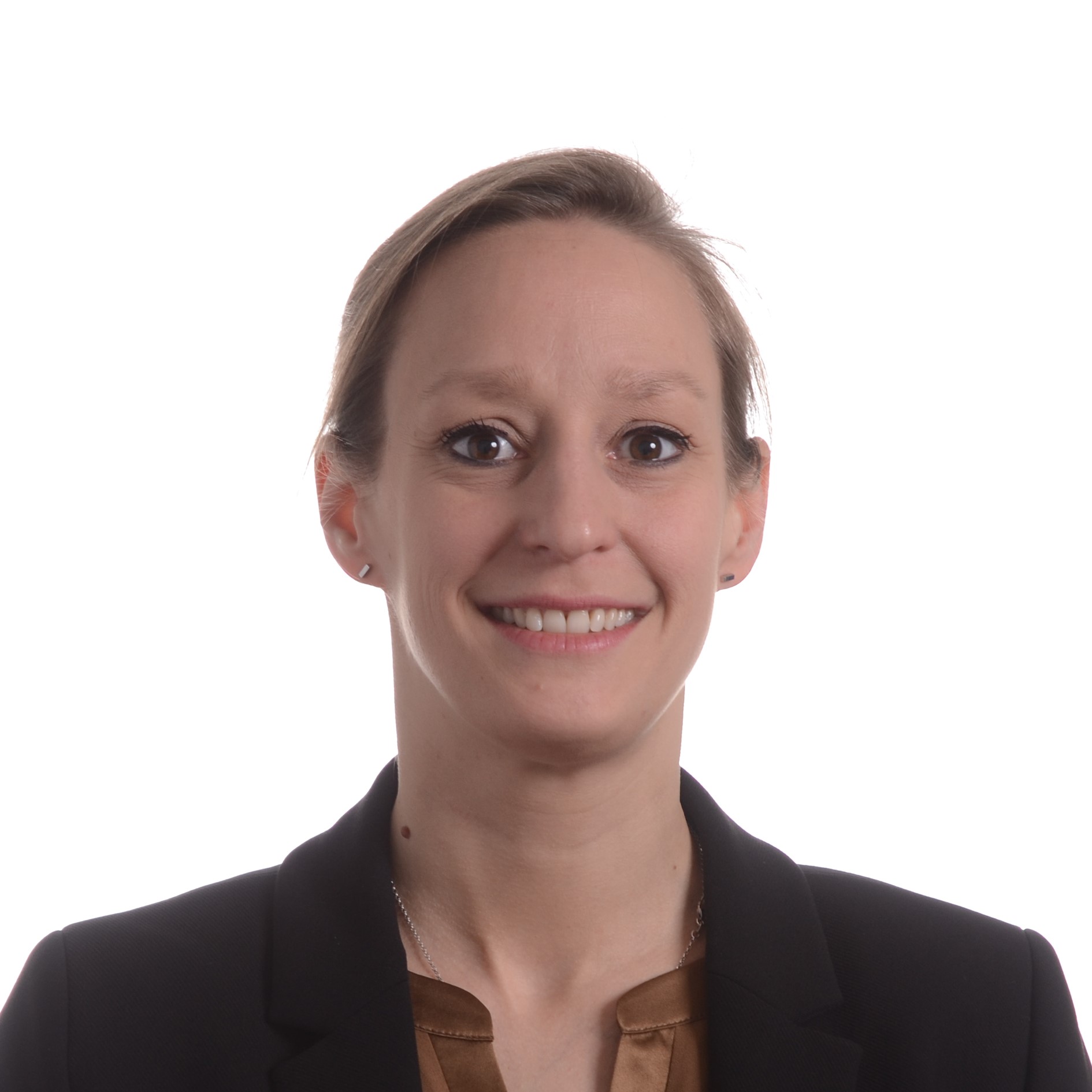
Prof. Dr.-Ing. Sabrina Zellmer holds the University Professorship for Battery and Fuel Cell Process Technology at the Faculty of Mechanical Engineering, Technische Universität Braunschweig since April 2023. She also serves as Head of the Department 'Process and production engineering for sustainable energy storage' at the Fraunhofer Institute for Surface Engineering and Thin Films IST since 2019. Her research focuses on sustainable energy storage solutions, battery technology, and mechanochemical synthesis of materials. Location: Volkmaroder Str. 5, 38104 Braunschweig Contact: s.zellmer@tu-braunschweig.de Research Focus Prof. Zellmer's work addresses critical challenges in: Direct recycling of battery production waste Mechanochemical synthesis of solid electrolytes Electrochemical modeling of novel battery systems Vacuum-based thin film technologies for cathode materials Circular economy approaches for lithium batteries Sustainability assessment of energy storage systems Scientific Contributions Her recent publications demonstrate expertise in: Advanced battery material processing Environmental impact optimization Innovative recycling methodologies Industrial sustainability strategies
Dr.-Ing Alexander Vahl is a Researcher at the Technical Faculty of Kiel University, leading the subgroup Nanoparticles for Nanocomposites . He specializes in advanced materials science, focusing on nanoparticle synthesis, functional thin films, and neuromorphic engineering. His research bridges nanotechnology with applications in memristive systems and plasmonics, emphasizing strain-invariant conductors and photocatalytic growth mechanisms. Key projects include developing self-assembled nano-object networks for brain-inspired computing and optimizing gas aggregation cluster sources for novel material fabrication. His work spans disciplines such as memristive switching, plasmonic metasurfaces, and bio-inspired electronics. Notable contributions include studies on silver/polymer nanofluids, ITO-TiO₂ heterojunctions, and multicomponent nanoparticle synthesis. Vahl collaborates with the Chair for Functional Nanotechnology, leveraging interdisciplinary expertise to advance materials innovation. His articles highlight advancements in neuromorphic systems, photocatalytic deposition, and thin-film technologies. The research emphasizes scalability and real-world applications, such as energy-efficient sensors and hybrid zinc batteries. Vahl’s subgroup webpage and extensive publications reflect a commitment to pushing boundaries in nanomaterials engineering.
Stephen Bradforth is a Professor of Chemistry at the University of Southern California and Senior Advisor to the Dean for Research Strategy and Development in the Dornsife College of Letters, Arts and Sciences . He earned his PhD in Physical Chemistry from the University of California, Berkeley (1992) and conducted postdoctoral research at the University of Chicago . B.A., Natural Sciences, Cambridge University (1987) Ph.D., Physical Chemistry, UC Berkeley (1992) Postdoctoral Associate, University of Chicago (1993–1996) His research focuses on ultrafast laser spectroscopy to study chemical reactions in complex environments like aqueous systems and molecular materials . Key projects include: Solar Energy Conversion : Investigating photosensitizers based on earth-abundant elements (Cu, Zn, Zr) and organic photovoltaics with BODIPY cores. DNA Photodamage : Mechanisms of cyclobutane pyrimidine dimer (CPD) formation under UV exposure, emphasizing base-stacking effects. Electronic Structure in Ethereal Solvents : Studying solvated electrons in liquid ammonia and their role in carbanion stabilization. His 15 most recent articles (2004–2024) highlight advancements in photoelectron spectroscopy , singlet fission for solar cells, and DNA damage pathways . Collaborations span medicine, physics, and engineering . Scientific Awards include the ACS Physical Chemistry Division Senior Experimental Award (2023) , STAR Awardee (2019) , Cottrell Scholar , and Fellow of APS and AAAS . He has received both Junior (2001) and Senior Raubenheimer Awards (2022) at USC. Advising has been a cornerstone, with 23 PhD students graduated and 4 current candidates. His 15 most recent publications (2012–2024) emphasize ultrafast dynamics , charge transfer mechanisms , and environmental photochemistry . Labs & Teams : The Bradforth Group operates advanced time-resolved photoelectron spectrometers , liquid microjet systems , and high-repetition-rate laser facilities . Current projects include metallic water solutions (Nature 2021), DNA photophysics (FASEB J 2011), and carbanion electronic structure in ammonia.
Ramses Martinez is an Assistant Professor in the Department of Industrial Engineering and Biomedical Engineering at Purdue University . He holds a B.A. in Applied Physics from Universidad Autonoma de Madrid (2004) and a Ph.D. in Physics and Materials Science from the Spanish National Research Council (CSIC) in 2009. Prior to joining Purdue, he conducted postdoctoral research in the lab of Prof. George M. Whitesides at Harvard University, focusing on nanofabrication, microfluidics, and soft robotics. Education B.A. in Applied Physics, Universidad Autonoma de Madrid (2004) Ph.D. in Physics and Materials Science, Spanish National Research Council (CSIC) (2009) His research bridges soft robotics , flexible electronics , and nanofabrication , with a focus on creating self-powered e-textiles , omniphobic paper-based devices , and programmable mechanical metamaterials . His work has led to over 25 publications and 9 patents, emphasizing practical applications in health monitoring and industrial automation . Notable projects include waterproof electronic decals for biofluid monitoring, smart bandages for chronic wound detection, and laser nanoforming methods for scalable metallic structures. His research has been recognized through the Fulbright Fellowship and the Marie Curie IOF Grant .
Antti H. Niemi is a Professor and Dean at the University of Oulu 's Faculty of Technology , specializing in computational solid and structural mechanics. His research focuses on advanced numerical methods for engineering analysis and design. Research areas include computational mechanics, structural engineering, and metamaterials Develops innovative finite element methods for thin-body problems Current projects address snow structures, timber building envelopes, and machine learning applications in mechanical systems His recent work emphasizes discontinuous Petrov-Galerkin (DPG) methods for plates and shells, with applications in civil and mechanical engineering. Publications cover: Snow and ice vaults (2024) Machine learning for steel beam capacity prediction (2024) Hygrothermal analysis of timber structures (2024) DPG formulation for Reissner-Mindlin plates (2023) Shell element benchmarking (2018-2022)
Dr. Axel Lubk is a Group Leader at the Institute for Solid State Research (IFW Dresden) , specializing in advanced electron microscopy techniques for materials science. His research spans four key areas: (1) TEM method development (high-resolution imaging, tomography, holography, and in-situ techniques), (2) charge particle optics and scattering theory , (3) magnetic nanotextures (domain walls, skyrmions), and (4) plasmonics (mode hybridization in heterogeneous structures and semiconductor heterostructures). Dr. Lubk’s work focuses on three-dimensional magnetic texture analysis using electron holography and tomography, particularly in systems like skyrmion tubes , FeGe , and Cr2O3 thin films . He has pioneered techniques for vector-field electron tomography and phase retrieval under varying boundary conditions, advancing nanoscale magnetic imaging. His recent studies include plasmonic properties in AgAu nanosphere chains , thermoelectric multilayer systems , and topological insulators like NiRh2Sb and TaTMTe4 . Dr. Lubk has published extensively in high-impact journals such as Nature Communications and Advanced Materials , with a focus on TEM instrumentation and quantitative analysis . He frequently presents at international conferences like the International Microscopy Congress and European School of Magnetism , emphasizing applications in spintronics , quantum materials , and nanostructured systems . His contributions to holographic vector-field electron tomography and machine learning for spectrum-image data have set new standards in electron microscopy.
Dr. Prashant Saxena is a Senior Lecturer in the Department of Infrastructure & Environment at the University of Glasgow (since 2018). He previously held positions as an Assistant Professor at the Indian Institute of Technology Hyderabad (2015-2018) and postdoctoral roles at the University of Lausanne (2014-2015) and the University of Erlangen-Nuremberg (2012-2014). He completed his PhD in Applied Mathematics at the University of Glasgow (2012) and a Bachelor/Master of Technology in Mechanical Engineering from the Indian Institute of Technology Kanpur (2009). His research focuses on the mechanics of soft solids and structures, particularly under extreme deformation. Key areas include smart composites with multi-physics coupling (electro-mechanical and magneto-mechanical) and soft biological tissues. He employs tools like nonlinear solid mechanics, continuum mechanics, and numerical analysis to study instabilities in these materials. His work emphasizes the exploitation of instabilities as design features in engineering applications. Research grants include EPSRC funding (2021-2024) and multiple awards from India's Science and Engineering Research Board (SERB). Notable awards: EPSRC New Investigator Award (2021), Ramanujan Fellowship (2015-2018), and multiple SERB Early Career Awards. Teaching roles include Finite Element Analysis, Dynamics, and Structural Mechanics courses at the University of Glasgow. Professional activities include editorial roles in Mathematics and Mechanics of Solids and organizing international conferences. His publications span over 40 papers in journals like Journal of the Mechanics and Physics of Solids and Proceedings of the Royal Society A , with a focus on magnetoelastic deformation, instabilities, and computational mechanics.
Thorsten W. Becker is a Professor of Earth and Planetary Sciences at the Jackson School of Geosciences, University of Texas at Austin, holding the Shell Companies Foundation Distinguished Chair in Geophysics. He is also a Senior Research Scientist at the Institute for Geophysics and a Faculty Associate at the Institute for Computational Engineering and Sciences. His research focuses on the co-evolution of planetary interiors and surface systems, integrating geodynamic modeling, seismology, and field data to study processes like plate tectonics, mantle convection, and seismic anisotropy. Becker earned a Diplom in Physics from Goethe University (Frankfurt) and a Ph.D. in Geophysics from Harvard University. He has held academic positions at the University of Southern California and Scripps Institution of Oceanography. His honors include the Augustus Love Medal (EGU), Evgueni Burov Medal (IUGG), and Fellow of the American Geophysical Union. His teaching interests span Tectonic Geodynamics, Natural Hazards, and Numerical Modeling. He chairs the US National Academies’ Standing Committee on Solid Earth Geophysics and has led major initiatives like the NSF-funded Megathrust Modeling Framework. His work bridges computational geoscience, tectonics, and geodynamic theory, with over 160 peer-reviewed publications. Recent research emphasizes mantle flow dynamics, slab interactions, and AI-driven seismic analysis. Key contributions include models of subduction termination, slab-induced cratonic thinning, and the role of mechanical anisotropy in tectonic processes.
John Castagna is a Professor of Geophysics at the University of Houston. His research centers on geophysics, with specialized expertise in seismic data analysis, amplitude variation with offset (AVO) techniques, rock physics, spectral decomposition, and seismic inversion. He has authored influential publications advancing methodologies for hydrocarbon detection, seismic attribute analysis, and subsurface characterization. His research interests include: Advanced seismic interpretation techniques (AVO crossplotting, spectral decomposition) Rock physics and fluid-property modeling Seismic inversion algorithms for reservoir characterization High-resolution stratigraphic analysis using spectral methods Castagna's publications demonstrate a consistent focus on developing practical geophysical solutions for energy exploration. His work on AVO analysis, spectral decomposition, and thin-bed reflectivity has been widely cited, forming foundational methodologies in exploration geophysics. Articles frequently integrate rock physics principles with seismic data to improve hydrocarbon identification and reservoir modeling. Awards & Honors: No awards explicitly mentioned in the provided text. Advising & Collaboration: Frequent collaborations include researchers from Shell International, University of Oklahoma, and University of Louisiana. No specific students or grants are detailed. Labs & Teams: No laboratory or research group information is provided.
Prof. Dr. Bettina V. Lotsch is Director of the Nanochemistry Department at the Max Planck Institute for Solid State Research (Stuttgart) and Honorary Professor at Ludwig-Maximilians-Universität München's Faculty for Chemistry and Pharmacy. She holds a prestigious Leibniz Prize (2025) and leads research in nanochemistry, materials science, and energy conversion technologies. Her multidisciplinary research focuses on developing multifunctional materials through solid-state and nanochemistry approaches, with emphasis on covalent organic frameworks, photonic nanostructures, and solid electrolytes for energy applications. Current projects explore solar batteries, electrocatalysis, and quantum materials. Prof. Lotsch has received numerous international honors including Baker Lectureship (Cornell), Materials Lectureship (Warwick), and EU-40 Materials Prize. She coordinates a large research team of >20 doctoral students and postdocs working on solid-state electrolytes, COF photocatalysis, and 2D material design. Education: PhD (summa cum laude) from LMU Munich, postdoctoral training at University of Toronto with G.A. Ozin, and visiting studies at University of Oxford. Research Leadership: Manages laboratories at both Max Planck Institute (Stuttgart) and LMU Munich (Chemistry Department) with specialized facilities for materials synthesis and characterization.
Peter K. Allen is a Professor of Computer Science at Columbia University's School of Engineering and Applied Science, with a career spanning over three decades in robotics research. His work focuses on robotic grasping , 3D vision and modeling , and medical robotics , where he has made significant contributions to autonomous manipulation and sensor integration. Current affiliation: Columbia University Robotics Lab Academic rank: Professor Key research areas: Robotics, Computer Vision, Artificial Intelligence Education A.B. in Mathematics-Economics from Brown University M.S. in Computer Science from University of Oregon Ph.D. in Computer Science from University of Pennsylvania (recipient of CBS Foundation Fellowship, Army Research Office Fellowship) Research Interests Allen's research bridges fundamental robotics challenges with applied domains. His work on robotic grasping explores low-dimensional subspaces and semantic task suitability, while 3D vision contributions include illumination coherence and texture registration methods. In medical robotics , he develops surgical imaging tools and BCI-enabled grasping systems. Recent publications show trends in: Deep learning for robotic manipulation (2017-2022) Human-robot interaction through BCI and augmented reality Deformable object manipulation (garments, thin shells) Multi-modal sensing (vision-tactile fusion) Scientific Recognition NSF Presidential Young Investigator Award Best Student Paper Award (2007) for collaborative work Over 30 years of continuous funding from NSF, Army Research Office, and medical grants Teaching and Mentorship He has taught graduate courses in robotics (COMS 4733/6731) since 2010, emphasizing hands-on projects with advanced platforms like Baxter, PR2, and Fetch robots. His lab provides immersive training in: 3D photography Humanoid robotics Autonomous navigation Grasp planning
Dr. Xiong Yi is an Assistant Professor at the School of System Design and Intelligent Manufacturing (SDIM) at Southern University of Science and Technology (SUSTech) in Shenzhen, China. He leads the Computational Design and Fabrication (CoDeFab) research group, focusing on the integration of computational design methods with advanced manufacturing technologies, particularly in the field of additive manufacturing. Dr. Xiong has established himself as a leading researcher in computational design for additive manufacturing, with a strong international research background spanning Europe and Asia. Dr. Xiong's educational journey includes: Doctor of Science (DSc) in Engineering Design and Production from Aalto University, Finland (2012-2016) Master of Science (MSc) in Machine Automation from Tampere University of Technology, Finland (2010-2012) Bachelor of Engineering (BEng) in Mechanical Engineering from Hubei University of Technology, China (2006-2010) Dr. Xiong's research primarily focuses on computational design and fabrication methodologies, with particular emphasis on design for additive manufacturing (DfAM), intelligent manufacturing systems, and smart materials. His work bridges the gap between theoretical design principles and practical manufacturing constraints, developing novel approaches for the production of complex engineered products. He has pioneered research in continuous fiber-reinforced composite additive manufacturing, developing innovative process planning and optimization techniques that enable the production of high-performance structural components. His research in electrothermally controlled origami and 4D printing of smart materials represents cutting-edge work at the intersection of materials science, mechanical engineering, and computational design. Dr. Xiong's recent publications reveal a strong focus on continuous fiber-reinforced composites, with significant contributions to 4D printing, metamaterials, and intelligent process planning. His work integrates computational design with manufacturing constraints, creating novel approaches for topology optimization, toolpath planning, and structural design that consider both performance requirements and manufacturability limitations. The research demonstrates increasing sophistication in materials science applications, particularly in programmable materials and multi-functional structures. Dr. Xiong has received multiple prestigious awards for his research contributions, including: Best Presentation Award at the 24th Chinese Conference on Mechanisms and Machine Science (IFToMM CCMMS2024) Best Presentation Award at the International Conference on Frontiers of Additive Manufacturing Research (RAAM 2024) Best Paper Award at the International Conference on Design for 3D Printing (ICD3DP 2023) PhD Scholarship from Aalto University (2016) Research Travel Grant from the International Association for Vehicle System Dynamics (IAVSD) (2013) National Scholarship from the Ministry of Education (2008) As a dedicated educator and mentor, Dr. Xiong serves as a PhD supervisor at SUSTech and has successfully guided students who have gone on to pursue advanced studies and careers at prestigious institutions including Hong Kong Polytechnic University, Beihang University, DJI Innovations, and Singapore's A*STAR research institute. His research is supported by multiple competitive grants, including key projects from the National Key R&D Program of China, the National Natural Science Foundation of China, and provincial and municipal funding agencies. Dr. Xiong also serves on the editorial board of the Journal of Engineering Design and as a guest editor for Composites Communications, contributing to the advancement of his field through scholarly service. Dr. Xiong leads the CoDeFab research group, which maintains a strong collaborative culture focused on 'design leading manufacturing, manufacturing driving design, and digital-intelligent integration.' The group has developed several advanced manufacturing platforms, including multi-axis continuous fiber-reinforced composite additive manufacturing systems, smart composite additive manufacturing platforms, and multifunctional soft matter open manufacturing platforms. With a focus on practical applications and innovation, the CoDeFab group actively collaborates with industry partners and has established a joint laboratory to bridge academic research with industrial implementation.
W Robert J Funnell serves as Associate Professor at McGill University with dual appointments in the Department of Biomedical Engineering and Department of Otolaryngology – Head and Neck Surgery. His research addresses critical clinical challenges in hearing loss through integrated experimental and computational methodologies, focusing on translational applications for infant diagnostics and surgical interventions. His expertise spans middle-ear mechanics, three-dimensional modeling of biological structures, and development of interactive medical education tools. Core methodologies include finite-element analysis, laser Doppler vibrometry, and haptic-enabled virtual reality systems. Current priorities involve improving newborn hearing screening accuracy, designing middle-ear repair techniques, and creating 3D anatomical models for surgical training – particularly in endoscopy simulation using force feedback technology. Analysis of his 2015-2024 publications reveals persistent innovation in finite-element modeling of auditory systems, with increasing emphasis on newborn ear mechanics and optical coherence tomography applications. His work bridges biomedical engineering, otolaryngology, and medical education, demonstrating consistent progression from fundamental biomechanics toward clinical implementation – notably in Quebec's newborn hearing screening programs and endoscopic sinus surgery training models.
Dr. Min Yu is an Imperial College Research Fellow (ICRF) in the Department of Mechanical Engineering at Imperial College London . He leads an independent research program focused on in-situ multimodal sensing of mechanical interfaces , integrating advanced materials, intelligent control, multiphysics modeling, and data-driven technologies. His work bridges tribology, robotics, and sensing with applications in lubrication systems and robotic haptic interfaces. Education: PhD in Mechanical Engineering, Imperial College London (2014–2018) MSc in Engineering, Zhejiang University (2011–2014) BEng in Engineering, Xi’an Jiaotong University (2007–2011) Research Interests: Dr. Yu’s core research areas include tribology , ultrasonic sensing , robotic haptics , lubrication systems , and data-driven control . He develops novel sensing technologies for real-time monitoring of mechanical interfaces, with applications in engines, bearings, transmissions, and robotic systems. His work emphasizes closed-loop intelligent lubrication and bio-inspired robotic sensing . Publications & Trends: Dr. Yu has authored over 60 peer-reviewed papers and holds 6 patents . His recent work (2024–2025) focuses on ultrasonic-based oil film measurement, triboelectric sensors for robotics, and advanced control systems for automotive suspensions. These publications reflect a strong interdisciplinary approach combining mechanical engineering , AI-driven control , and sensor innovation . Awards & Grants: Imperial College Research Fellowship (ICRF 2022–2026) Royal Society International Exchanges – Cost Share Scheme State Key Laboratory of Fluid Power and Mechatronic Systems Open Foundation Taiho Kogyo Tribology Research Foundation Grant Dame Julia Higgins Engineering Postdoc Collaborative Research Fund (2019) Peter Jost Travel Fund (2022) Collaborations & Labs: Dr. Yu collaborates with multiple groups at Imperial College London including the Tribology Group , Non-Destructive Evaluation (NDE) Group , Control and Power Group , Optical & Semiconductor Devices Group , and Geotechnics Group . He also partners with international institutions such as Georgia Tech , Xi’an Jiaotong University , Zhejiang University , HUST , and Tsinghua University , as well as industry leaders like Shell , ExxonMobil , Toyota , and Jaguar Land Rover .
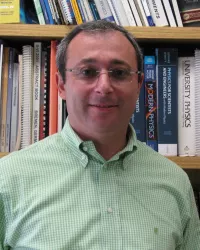
Igor L. Kuskovsky is a Professor & Chair in the Department of Physics at Queens College of the City University of New York (CUNY). He holds a Ph.D. in Applied Physics/Solid State (1998) and an M.S. in Materials Science and Engineering (1995), both from Columbia University. His research focuses on nanoscale materials, particularly type-II quantum dots and their applications in photonic devices, solar energy, and biomedicine. His work includes pioneering studies on the optical Aharonov-Bohm effect in ZnTe/ZnSe quantum dots and developing high-efficiency intermediate-band solar cells. He leads the Laboratory for Fundamental and Applied Nanoscale Physics (LAFANP), collaborating with institutions like Hunter College on bio-detection systems using quantum dots. Key research areas include excitonic phenomena, magnetooptical properties, and colloidal ZnO nanostructures. His team investigates quantum dot stacks, nanowire growth via CVD, and dielectric confinement effects. He teaches PHYS 225: Solid State Electronics and advises graduate students in experimental condensed matter physics. The group’s work bridges fundamental physics with applied nanotechnology, emphasizing interdisciplinary applications.