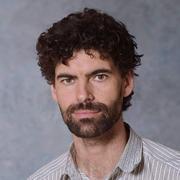
Luca Magri is a Full Professor at the Department of Mechanical and Aerospace Engineering (DIMEAS) of Politecnico di Torino . His research spans fluid dynamics, aerospace engineering, and computational methods, focusing on aerodynamic optimization, turbulence modeling, and wind energy systems. He leads the ERC-funded project PhyCo and contributes to PNRR Mission 4 via the TWIN project. Teaches Fundamentals of Data Assimilation and Dimensionality Reduction and Scientific Machine Learning in Aerospace Engineering Supervises Riccardo Consonni (PhD candidate, 40th cycle) His work integrates machine learning with multi-physics modeling and thermofluid mechanics, aligning with SDGs 9 (Industry Innovation), 11 (Sustainable Cities), and 13 (Climate Action). He is affiliated with research groups studying boundary layer flows and reduced-order modeling.
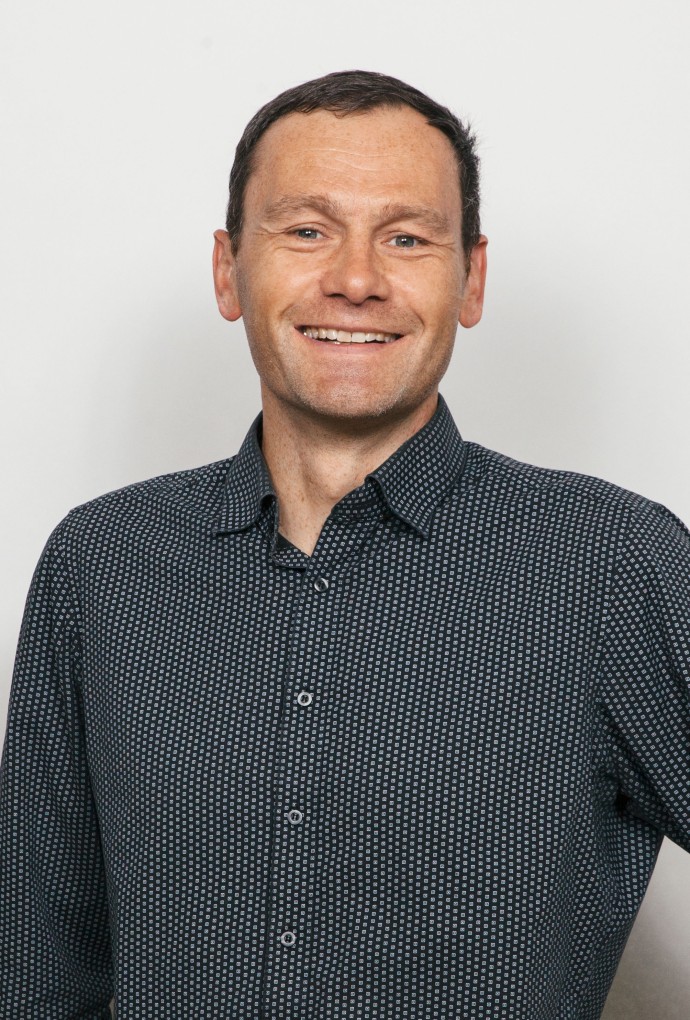
Stefania Scarsoglio is a Professor at the Department of Mechanical and Aerospace Engineering (DIMEAS) at the Polytechnic University of Turin, where she actively contributes to the College of Mechanical, Aerospace and Automotive Engineering. She serves as a member of the Interdepartmental Center PolitoBIOMed Lab - Biomedical Engineering Lab and has held significant roles in doctoral education, serving on Aerospace Engineering doctoral colleges since the 31st cycle (2015-2016). Her academic journey includes a notable Visiting Researcher position at the Massachusetts Institute of Technology (October 28 - December 21, 2011). Her research interests span Cardiovascular fluid dynamics , Complex network theory , Computational hemodynamics , Transition and turbulent flows , with significant contributions to biofluid dynamics and space medicine applications. Her work bridges engineering principles with biomedical applications, particularly focusing on cardiovascular dynamics in both terrestrial and space environments. Dr. Scarsoglio's publication record reveals a strong focus on cardiovascular modeling, particularly examining the effects of atrial fibrillation on cerebral hemodynamics, spaceflight-related physiological changes, and the application of complex network theory to fluid dynamics problems. Her recent work (2023-2025) shows increasing emphasis on space medicine applications, cardiovascular digital twins, and the neurological implications of cardiac arrhythmias. Fund for the Financing of Basic Research Activities (FFABR) from MIUR, Italy (2017) As a dedicated educator, she supervises multiple PhD students including Luca Congiu, Francesco Tripoli, Matteo Fois, and Davide Perrone, guiding research on cardiovascular modeling, space medicine applications, and turbulent flow dynamics. She leads significant research projects including CEDEAFIB (2023-2025), Risk map for SANS (2025-2028), and optimization of countermeasures for cardiovascular deconditioning in spaceflight (2023-2026). Her teaching portfolio includes advanced courses in Biofluid dynamics and space medicine, Fluid dynamics in space flight, and Thermofluid dynamics, reflecting her interdisciplinary expertise at the intersection of mechanical engineering, aerospace applications, and biomedical research. Dr. Scarsoglio's work primarily takes place within the Fluid Dynamics research group at DIMEAS, where she leads investigations into cardiovascular modeling, space medicine applications, and complex network analysis of fluid systems. Her research bridges theoretical fluid dynamics with practical biomedical applications, particularly in understanding cardiovascular responses to physiological stressors including spaceflight conditions and cardiac arrhythmias.
Andreas Mandelis is a Full Professor at the University of Toronto holding appointments in Mechanical & Industrial Engineering, Electrical & Computer Engineering, and the Institute of Biomaterials & Biomedical Engineering. He currently serves as the Tier 1 Canada Research Chair in Diffusion-Wave Sciences and Technologies and as Director of the Center for Advanced Diffusion-Wave and Photoacoustic Technologies (CADIPT). Research Focus His fundamental research explores thermophysics, photoacoustic and photothermal phenomena, and diffusion-wave science in condensed and biological matter. Applied efforts translate these foundations into high-precision, non-destructive diagnostics for solar cells, metal composites, and biomedical tissues, with an emphasis on real-time imaging systems for cancer, dental caries, bone health, and blood glucose monitoring. Awards & Distinctions Canada Research Chair (Tier 1) in Diffusion-Wave Sciences and Technologies Fellow: Royal Society of Canada, Canadian Academy of Engineering, AAAS, APS, ASME, SPIE Two-time Alexander von Humboldt Professor Ontario Premier’s Discovery Award (2007) ASME Yeram Touloukian Award (2009) CAP Medal for Outstanding Achievement in Industrial & Applied Physics Killam Research Fellowship (2010) APS Joseph F. Keithley Award (2012) CAP-INO Medal in Applied Photonics University of Toronto Inventors of the Year (2013) Highly Ranked Scholars™ recognition, ScholarsGPS (2024) Through CADIPT, Professor Mandelis leads a multidisciplinary team that advances instrumentation and measurement science, securing significant research funding and fostering the next generation of engineers and scientists in diffusion-wave technologies.
Paul Beard is an Associate Professor in the Department of Engineering Science at the University of Oxford, managing the Oxford Turbine Research Facility (OTRF)—a Ministry of Defence-funded test facility for advanced turbine research. His educational background includes: MEng from Exeter College, University of Oxford DPhil from Exeter College, University of Oxford Research focuses on turbomachinery with expertise in computational fluid dynamics, numerical analysis, heat transfer, and instrumentation for turbines. He pioneers high-speed infrared thermography to study transonic turbine rotor blade heat transfer and investigates temperature distortion impacts using combined experimental and computational approaches. Recent publications reveal consistent themes in turbine aerodynamics, emphasizing experimental techniques like infrared thermography and static pressure measurements to analyze tip designs, gap effects, and inlet profiles in high-pressure turbines, alongside combustor turbulence control research. No specific scientific awards are documented in the source material. As a college lecturer at Exeter College, Beard likely mentors students though no advisees are listed. His OTRF leadership indicates involvement in major defense-funded research projects requiring substantial grant support. He directs the Oxford Turbine Research Facility and contributes to the Oxford Thermofluids Institute group, leading a specialized team advancing gas turbine technology through experimental and computational thermofluids engineering.
Luis Sanchez de Leon Peque serves as an Associate Professor in the Department of Fluid Mechanics and Aerospace Propulsion at the Polytechnic University of Madrid (UPM), holding his current Permanent Labor Professor position since April 22, 2025. He has maintained continuous academic affiliation with UPM since 2015, progressing from Assistant roles through Profesor Ayudante Doctor to his present rank. His educational background includes: Aeronautical Engineering degree from the Polytechnic University of Madrid PhD from Cranfield University, completed at the Rolls-Royce UTC in Performance Engineering Dr. Sanchez de Leon Peque specializes in thermodynamic cycle modeling for aerospace propulsion and electrical power generation systems. His research encompasses the design of power plants using diverse working fluids—from air/water mixtures to supercritical CO2—across multiple configurations. He develops simulation libraries for aerojets and rocket engines using commercial platforms (PROOSIS | TURBO, EcosimPro | ESPSS) and proprietary codes, with strong emphasis on computational fluid dynamics applications. As an active member of the Thermofluiddynamic Systems and Microsystems research group since July 2016, he contributes to advancements in microsystem technologies and thermofluid dynamics. His work bridges theoretical modeling with practical engineering solutions for next-generation propulsion systems.
Kahraman Albayrak is a Professor at Middle East Technical University (METU) in Ankara, Turkey. With over four decades of academic engagement at METU, he has contributed to the field of fluid dynamics and related disciplines. His contact information includes office G-205 and phone number +90 312 210 5291. Education: Bachelor's Degree, METU, 1971 Master's Degree, METU, 1974 PhD, METU, 1984 His research focuses on fluid mechanics, particularly boundary layer dynamics, fluid machinery, and thermofluid systems. These areas align with mechanical and aerospace engineering disciplines, emphasizing theoretical and applied aspects of fluid behavior in technical applications.
Nur Hasalli Binti Ibrahim serves as a Lecturer in Mechanical Engineering at University of Wollongong Malaysia's School of Engineering since 2015, with over 13 years of academic experience. She holds concurrent appointments as co-opted member of Institute of Engineer Malaysia's Engineering Education Technical Division (2024) and maintains professional registrations with Board of Engineers Malaysia and Malaysia Board of Technologists as a certified Professional Technologist. Her research spans natural fiber bio-composites in additive manufacturing , finite element analysis , and thermofluid systems , with recent publications focusing on wind energy integration for EV charging and biomedical material failure analysis. Current projects include RM126,207 MOHE-FRGS grant for biodegradable food packaging and RM36,000 UOW Malaysia KDU grant for 3D printing filament development. Research output demonstrates interdisciplinary impact across: Biomedical Engineering : Hip arthroplasty failure prediction models Sustainable Manufacturing : Natural fiber composites and biodegradable packaging Renewable Energy : Wind-powered EV charging systems Aerospace : Subsonic airfoil performance optimization Notable recognitions include: Best Paper Award at Gen-CITy 2023 Diamond Award for Research & Innovation Poster Competition 2023 IBIEC 2022 Silver Award for 'Smart i-Cart' innovation Two consecutive Highly Commended Collaboration Awards (2022-2023) Her supervision approach integrates grant-funded projects with industry applications, evidenced by SOCSO Malaysia collaboration on award-winning assistive technology. External engagements include STEM outreach for Orang Asli communities and judging for national robotics competitions, providing students with community impact opportunities.
Professor Andreas Kronenburg serves as Institute Director and Dean of Studies at the Institute for Reactive Currents (WASTE) at the University of Stuttgart. With a background in mechanical engineering from RWTH Aachen and a PhD in Combustion Engineering from the University of Sydney, he has established himself as a leading researcher in combustion science. His career includes significant positions at Imperial College London where he served as Governor's Lecturer in Thermofluids (2000-2007) and Reader in Combustion (2007-2008) before joining the University of Stuttgart in 2009. Professor Kronenburg's educational background includes: RWTH Aachen, Mechanical Engineering (1989-1994) Universidad Politécnica de Madrid, Study Abroad (1992-1993) University of California at Davis, Study Abroad (1992-1993) University of Sydney, PhD in Combustion Engineering (1995-1998) His research focuses on advanced combustion modeling, particularly turbulent reactive flows, spray combustion, and nanoparticle dynamics. Kronenburg has made significant contributions to Large Eddy Simulation (LES) techniques, Conditional Moment Closure (CMC) methods, and particle-based modeling approaches. His work spans fundamental combustion science and practical applications in energy systems, with recent emphasis on sustainable fuels including hydrogen, ammonia, and biomass conversion. His research group develops sophisticated computational models that address challenges in predicting complex combustion phenomena with high accuracy. Analysis of his recent publications (2023-2026) reveals a strong focus on emerging energy technologies, particularly hydrogen and ammonia combustion for decarbonization, advanced particle dynamics in combustion systems, and computational methods for efficient simulation of complex reacting flows. His work demonstrates consistent innovation in modeling techniques while addressing practical engineering challenges in sustainable energy systems. Professor Kronenburg's scientific achievements have been recognized with numerous prestigious awards: Fellow of the Combustion Institute (2019) Distinguished Paper Award of the Combustion Institute (2013) Hinshelwood Prize for meritorious work of a young researcher (2006) Two Sudgen Awards for significant contributions to combustion science (2005, 2006) Best paper award at the Australian Symposium on Combustion (1997) Springorum Commemorative Medal for academic excellence (1994) With over 3,300 citations across 164 publications and an h-index of 33, Professor Kronenburg maintains an active research program with significant impact. His work has received support from organizations like the German Research Foundation (DFG), and he collaborates extensively with international institutions including Imperial College London and the University of Sydney. The computational resources available to his research group through bwGrid and HLRS enable large-scale simulations that advance the understanding of complex combustion phenomena. The Institute for Reactive Currents under Professor Kronenburg's leadership focuses on cutting-edge research in combustion science and engineering. The institute develops advanced computational models for predicting combustion behavior in various applications, from traditional energy systems to emerging sustainable technologies. With expertise in both fundamental combustion processes and practical engineering applications, the institute contributes significantly to addressing current challenges in energy conversion and environmental protection.
Dr. Emeel Kerikous is a Researcher and Ph.D. candidate at Otto von Guericke University Magdeburg's Institute of Fluid Mechanics and Thermodynamics (ISUT). He joined the institute in 2016 for doctoral studies and advanced to Research Associate in December 2022. His academic foundation includes Bachelor's (2008) and Master's (2013) degrees in Mechanical Engineering from Helwan University, Egypt, where his thesis pioneered hybrid valve design. His research explores critical areas in energy and fluid systems: Valve performance optimization and flow control mechanisms Hydraulic and hydrokinetic turbine technology Experimental fluid dynamics and thermodynamics Renewable energy conversion systems His publications center on experimental fluid mechanics, particularly valve technology with applications in energy systems. Key research demonstrates innovations in variable-performance hydraulic systems. Academic honors include: Joint Supervision PhD Scholarship (Egyptian Government, 2016) He conducts research at the Laboratory of Fluid Dynamics and Technical Flows, focusing on fundamental and applied thermofluid challenges.
Frédéric Dubas is an Associate Professor at the FEMTO-ST Institute, affiliated with CNRS and jointly with the University of Franche-Comté in France, where he serves as Head of the Electrical Actuators group within the SHARPAC (Hybrid & Fuel Cell Systems, Electrical Machines) Team in the Energy Department. His research focuses on the design, modeling, and optimization of electrical systems, particularly induction and permanent magnet synchronous machines for various applications including fuel cell systems and electrical propulsion. Dubas received his M.Sc. and Ph.D. degrees from the University of Franche-Comté in 2002 and 2006, with a focus on high-speed surface-mounted permanent-magnet synchronous motors for fuel cell air-compressors. His research interests span electrical machines design, electromagnetic modeling, thermal analysis, fuel cell diagnostics using magneto-tomography, and magnetic refrigeration. He has developed analytical models for various electrical machine topologies and diagnostic techniques for hydrogen energy systems. His publication record shows a strong focus on analytical modeling techniques for electrical machines, with recent work emphasizing fuel cell diagnostics through magneto-tomography, thermal modeling of electrical machines, and analytical solutions for axial flux permanent magnet machines. His research demonstrates consistent progression from fundamental electromagnetic modeling to practical applications in hydrogen energy systems and electric propulsion. Prize Paper Award, IEEE Conference Vehicle Power and Propulsion (VPPC), 2005 Prize Presentation Award, 19th International Conference on Electrical Machines and Systems (ICEMS), 2017 Dubas maintains strong industrial collaborations with ALSTOM Transports (Ornans, France) and RENAULT Technocenter (Guyancourt, France), focusing on electrical propulsion and traction systems. His work bridges theoretical electromagnetic modeling with practical engineering applications in sustainable energy systems.
Dr. Herman Haustein is a Senior Lecturer at Tel Aviv University's School of Mechanical Engineering, where he heads the Micro Phase & Heat Transfer Laboratory . His research focuses on thermal management challenges in microelectronics through advanced heat transfer mechanisms. Education: B.Sc. with highest honors and direct Ph.D. from Technion Postdoctoral research at RWTH Aachen University, Germany Research Focus: Dr. Haustein investigates multiphase flow dynamics and phase-change phenomena, specializing in: Boiling mechanisms (nucleate pool, droplet) Impinging jet heat transfer (free-surface/submerged) Microscale convective enhancement Wavy film dynamics for cooling applications His work bridges experimental thermofluid dynamics with predictive modeling for electronic thermal management. Publication Trends: Recent articles (2012-2018) demonstrate consistent focus on experimental and theoretical analysis of boiling dynamics, jet impingement cooling, and reactive flows. Dominant methodologies include high-speed flow visualization, kinetic modeling of phase transitions, and optimization of thermal transport in constrained geometries.
Dr. Anthony Bowman serves as a Research Assistant Professor in the Department of Mechanical Engineering at Marquette University, where he maintains active research and teaching responsibilities. His academic foundation includes advanced degrees entirely within mechanical engineering disciplines from Marquette University. His educational credentials: Ph.D. in Mechanical Engineering, Marquette University, 2007 M.S. in Mechanical Engineering, Marquette University, 2001 B.S. in Mechanical Engineering, University of Wisconsin-Platteville, 1992 Dr. Bowman's research program centers on thermofluid phenomena with emphasis on heat transfer , thermodynamics , and fluid mechanics . His work integrates numerical modeling and simulation techniques to analyze complex thermofluid equipment and processes, particularly focusing on system-level behavior in coiled geometries and thermal management applications. This interdisciplinary approach bridges theoretical fluid dynamics with practical engineering design challenges. His publication record demonstrates consistent expertise in computational thermofluids and engineering education. The 2009 textbook on CAD modeling reflects his commitment to pedagogical innovation, while the 2006 conference series on coiled tube systems and motorcycle exhaust thermal performance establishes his specialization in thermal system analysis. Collectively, these works reveal a research trajectory focused on developing analytical frameworks for thermofluid equipment with industrial relevance. Current information indicates no formal advising responsibilities or laboratory leadership roles. Dr. Bowman maintains professional engagement through scholarly publications and curriculum development within the mechanical engineering program.
Prof. Dr.-Ing. Björn Kniesner serves as a Professor at Munich University of Applied Sciences within Faculty 03, holding critical administrative roles including Head of the Aerospace Engineering Bachelor's Program and Chairman of the Examination Board for the Aerospace Engineering Master's program. He additionally manages the Joint Laboratory AAF, directing resources across specialized research facilities. His research spans advanced aerospace domains with emphasis on propulsion and fluid dynamics, structured around these core areas: Aerospace propulsion systems and thermofluid mechanics Heat transfer optimization in thermal turbomachinery Numerical flow simulation and computational fluid dynamics Aerodynamics/aeroacoustics for flight applications Satellite systems engineering and flight simulation technologies Current projects demonstrate applied research leadership: the RISE rocket initiative (2kN thrust vector control with aerospike nozzle), HM³ CubeSat development (optical imaging with magnetorquer attitude control), and flight simulator expansion integrating dual-cockpit VR motion platforms. Laboratory oversight includes AAF (aerodynamics/aeroacoustics), EVT (thermal turbomachinery), and AUD (flight simulation) facilities. Administrative responsibilities encompass curriculum development, examination board leadership, and cross-laboratory coordination, with no mention of external awards or student advisement in available materials.
Dr. Ityona Amber is a Lecturer in Mechanical Engineering at Robert Gordon University's School of Engineering, where he teaches thermofluids and renewable energy systems. He is an active researcher in the Sustainable Energy Research Group and a Fellow of the Higher Education Academy (FHEA). His professional background includes positions at Heriot-Watt University (UAE), Ahmadu Bello University (Nigeria), and industry experience as a CFD engineer in Canada. Dr. Amber's research specializes in renewable energy systems and thermal-fluid sciences, with focus areas including: Solar thermal technology and adsorption cooling systems Hydrogen production optimization and thermal management Computational fluid dynamics (CFD) for energy applications Geothermal heating/cooling and wind turbine dynamics Nanoparticle applications in environmental remediation His recent publications demonstrate strong emphasis on energy systems optimization, particularly thermal management of solid oxide electrolyzers (2025), wind turbine startup dynamics (2025), and subsurface hydrogen storage (2025). Earlier foundational work includes studies on molten salt thermal systems (2017) and solar-induced convection (2018). Notable recognition includes: Fellow of the Higher Education Academy (FHEA) Dr. Amber actively supervises PhD students in renewable energy topics and collaborates on projects addressing decarbonization strategies for the energy sector.
Dr. Taimoor Asim serves as an Associate Professor in Mechanical Engineering within the School of Engineering at Robert Gordon University (RGU) in Aberdeen, UK. He joined RGU in 2019 after serving as a Senior Research Fellow at the University of Huddersfield (2013-2019) and previously as a Lecturer at the University of Lahore, Pakistan (2008-2010). Robert Gordon University (2019-present): Associate Professor in Mechanical Engineering University of Huddersfield (2013-2019): Senior Research Fellow University of Lahore (2008-2010): Lecturer Guangdong University of Technology, China: International Collaborator University of Western Brittany, France: International Collaborator Dr. Asim's research focuses on wind turbine aerodynamics, CO2 geosequestration, multiphase flows, and hydrocarbon reservoir modeling. His expertise centers on applying Computational Fluid Dynamics to thermofluidic systems, turbomachines, and fluid-structure interactions. His recent work demonstrates strong emphasis on renewable energy systems, particularly vertical axis wind turbines for urban environments, and sustainable solutions for water management and waste treatment. His publication record shows consistent interdisciplinary output across mechanical engineering, environmental science, and petroleum engineering domains. Dr. Asim has published over 50 research articles in high-impact journals and more than 50 conference papers. His recent publications (2023-2025) demonstrate strong focus on vertical axis wind turbine dynamics, CO2 geosequestration, multiphase flow in fractured reservoirs, and sustainable waste/water management solutions. His work shows increasing emphasis on practical applications addressing climate change mitigation and sustainable development goals. Fellow of Higher Education Academy (FHEA) Member of IMechE (MIMechE) Chartered Engineer (CEng) Member of EPSRC's Peer Review College Guest Editor for Energies Journal (Special Issue: Advancement in Wind Turbine Technology) Associate Editor for COMADEM Journal Keynote Speaker at multiple international conferences Dr. Asim maintains active research funding through Innovate UK, Scottish Funding Council, and Energy Technology Partnership. He supervises multiple PhD students and has led numerous industry collaborations with engineering companies. His work with Loch Electronics on the ultraviolet mini-dishwasher has received significant media attention as an innovative climate change solution. He has strong international collaborations with institutions in China, France, Bulgaria, and India, demonstrating global research impact.