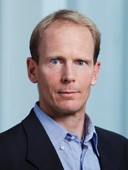
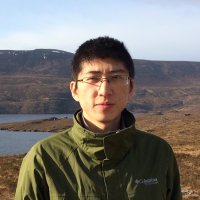
Prof. Patrick Jenny is a Full Professor at the Department of Mechanical and Process Engineering and Head of the Institute of Fluid Dynamics at ETH Zurich. His research focuses on computational fluid dynamics (CFD), numerical methods for turbulent and multiphase flows, and reservoir simulation. He has held positions at ChevronTexaco and Cornell University, and received the National Latsis Prize 2005. PhD in CFD from ETH Zurich (1997) Postdoctoral work at Cornell University (1997–1999) Senior Researcher at ChevronTexaco (1999–2003) Research interests include: turbulent reactive flows, PDF modeling, multi-scale reservoir simulation, and data assimilation in engineering systems. He teaches courses on fluid dynamics, turbulence, and computational methods. Over 100 peer-reviewed publications span topics like fracture modeling, LES/RANS coupling, and particle-laden flows. His work bridges academia and industry, addressing challenges in energy systems, environmental engineering, and numerical algorithms. Winner: National Latsis Prize 2005 Led over 20 PhD projects and collaborates with institutions globally. His lab develops open-source tools for CFD and energy systems analysis.
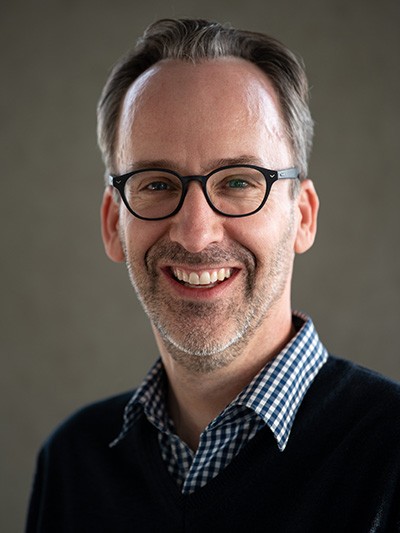
Prof. David J. Norris is a Full Professor at ETH Zurich's Department of Mechanical and Process Engineering and Director of the Optical Materials Engineering Laboratory. He holds a B.S. in Chemistry from the University of Chicago (1990) and a Ph.D. in Physical Chemistry from MIT (1995). His research focuses on engineering materials to achieve novel optical properties, particularly semiconductor nanocrystals (quantum dots) and plasmonic films. Notable awards include the Max Rössler Prize (2015) and ERC Advanced Grant (2014-2019). Research interests span nanoscale optical phenomena, including exciton dynamics in colloidal systems and plasmonic nanofocusing. He has pioneered studies on magic-sized semiconductor nanocrystals and developed methods for high-throughput characterization of atomically thin semiconductors. His work bridges nanotechnology and photonics, addressing applications in lasers, sensors, and energy systems. Awards also include the Credit Suisse Award for Best Teaching (2015) and fellowships from the American Physical Society and AAAS. He serves on editorial boards for ACS Photonics and Nano Letters , reflecting his leadership in nanophotonics and materials science. Grants include an ERC Advanced Grant supporting his exploration of optical materials. His lab’s innovations include template-stripping techniques for plasmonic devices and plasmon-enhanced catalysis. Past roles include Director of Graduate Studies at the University of Minnesota and an Alexander von Humboldt Fellowship at TU Munich (2006-2007).
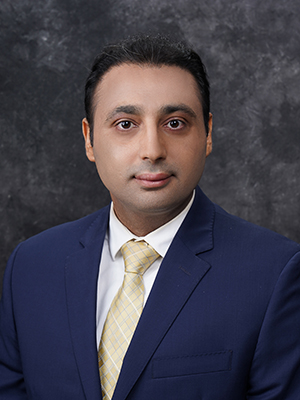
Dr. Hyungwoong Ahn is a Senior Lecturer in Chemical Engineering at the University of Edinburgh and an Adjunct Professor at Yonsei University. His expertise lies in adsorption process engineering, particularly for CO2 capture and gas separation. He leads the Carbon Capture Group and coordinates exchange programs for chemical engineering students. Dr. Ahn holds a BSc, MSc, and PhD in Chemical Engineering from Yonsei University. Roles: Senior Lecturer (Edinburgh) & Adjunct Professor (Yonsei) Research Focus: Pressure Swing Adsorption (PSA), CO2 capture technologies, hydrogen purification, and industrial decarbonisation Key Projects: PSA-SPUR technology development, ship-based carbon capture, and collaboration with HD Korea Shipbuilding Awards: KOFST Brain Pool Fellow, IChemE Global Awards finalist, and Honeywell UniSim Design Challenge winner His research integrates equilibrium theory analysis, numerical simulation, and experimental validation to advance carbon capture systems. He has authored over 50 publications (H-index 32) and secured funding from EPSRC, BEIS, KETEP, and others.
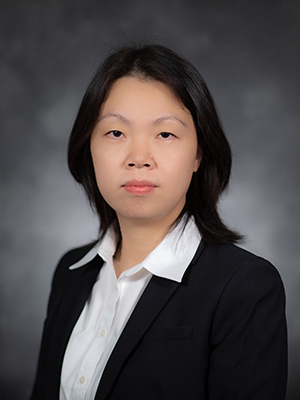
Powder Metallurgy (MH2100) and has expertise in computational materials science. His research emphasizes predictive modeling of material behavior, including precipitation kinetics, sintering processes, and coating interactions. Notable areas include phase field modeling of discontinuous precipitation, spinodal decomposition in Fe-Cr alloys, and high-entropy alloy design. His studies bridge experimental data with computational tools like the YAPFI phase-field framework. Key themes in his publications span cemented carbides, Co-based entropic alloys, and tool wear mechanisms. He combines CALPHAD thermodynamic modeling with first-principles calculations to address challenges in materials processing and corrosion resistance. His work often addresses industrial applications, such as optimizing machining tools and additive-manufactured superalloys.
Amir Asadi is an Associate Professor in the Department of Engineering Technology and Industrial Distribution at Texas A&M University, holding the Corrie & Jim Furber '64 Faculty Fellow position. His research focuses on scalable manufacturing of multifunctional composites, structural energy systems, and advanced materials design. He leads the Polymer Composites Advanced Manufacturing (PCAM) Lab, which explores bottom-up fabrication techniques and additive manufacturing processes. Asadi holds a Ph.D. in Mechanical and Manufacturing Engineering from the University of Manitoba (2013), an M.S. in Mechanical Engineering from Iran University of Science & Technology (2006), and a B.S. in Mechanical Engineering from the same institution (2004). His work bridges molecular-level interactions with macroscale material performance, targeting applications in aerospace, e-mobility, and energy storage. Key research interests include structural battery/supercapacitor composites, additive manufacturing of polymer composites, and fast-rate manufacturing of thermoplastics. He has pioneered methods like supercritical CO₂-assisted atomization and cellulose nanocrystal-enabled interface tailoring to enhance composite performance. Asadi has received the NSF CAREER Award (2022) and has been an invited speaker at major conferences such as the Brazilian Conference on Composite Materials (2021) and Chalmers University’s “Materials for Tomorrow” event (2020). His lab’s innovations aim to revolutionize lightweight, multifunctional materials for industrial sectors. His research outputs include over 50 peer-reviewed articles, covering topics from nanocomposite interfaces to 3D-printed structural batteries. He collaborates with industry partners like the Air Force Research Lab and focuses on translating lab-scale innovations into scalable manufacturing solutions.
Dr. Jingjing Qiu is an Associate Professor in the Department of Mechanical Engineering at Texas A&M University (TAMU), leading the Advanced Materials & Manufacturing (AM²) Lab. Her research focuses on advanced manufacturing, nanomaterials, multifunctional composites, sustainable materials, energy harvesting, and healthcare applications. She holds a Ph.D. in Industrial & Manufacturing Engineering from Florida State University (2008), and M.S./B.S. degrees in Materials Science from Beihang University (2004/2001). Prior to academia, she gained 1 year of industrial experience as a Quality Engineer at SAIC Motor. Research interests include AI-driven nanomaterials synthesis, low-carbon manufacturing processes, and biomedical innovations such as drug delivery systems for brain tumors. The AM² Lab emphasizes interdisciplinary collaboration in materials science, data science, and sensor integration for energy and medical devices. Recent work highlights include AI-assisted microplastics removal, thermoelectric energy harvesting via graphene aerogels, and neuromorphic computing systems. Her team actively pursues postdoctoral and PhD candidates for research in energy/healthcare materials, requiring expertise in nanomaterials characterization (e.g., SEM, XPS, electrochemical techniques) and interdisciplinary problem-solving. Lab facilities support cutting-edge fabrication and testing of functional materials. Publications span over 15 years, with recent trends in sustainable manufacturing, soft robotics, and bio-inspired materials. Ongoing projects include DOE-funded initiatives on rare earth recycling and low-carbon ceramic production. No scientific awards are explicitly listed in the provided texts.
Dr. Chad Paulk is an Associate Professor in the Department of Grain Science and Industry at Kansas State University. His research focuses on Feed Processing Technologies, Monogastric Nutrition, and Quality Assurance/Feed Safety. He holds a B.S. from the University of Georgia (2009) and M.S./Ph.D. degrees from Kansas State University (2011/2014). Previously, he served as an Assistant Professor of Swine Nutrition at Texas A&M University (2014–2017). His current role involves 60% research and 40% teaching, including courses like GRSC 100 (Foundations in Grain Science) and GRSC 650 (Nutritional Impacts of Processing). He advises Feed Science undergraduate students and co-leads the Feed Science Club. Key research themes include optimizing feed processing parameters, mitigating pathogen risks in feed systems, and evaluating novel feed ingredients like Kernza® grain. Recent work emphasizes viral pathogen detection in feed mills (e.g., African swine fever virus), enzyme supplementation effects, and the impact of feed particle size/pelleting on nutrient digestibility. He collaborates with industry partners to enhance feed safety protocols and sustainable practices. Laboratory affiliations include the BIVAP Feed Quality Assurance Lab and the O.H. Kruse Feed Technology Center. His research has addressed critical issues like mitigating porcine epidemic diarrhea virus contamination and optimizing feed formulations using thermal processing and organic additives.
Yasuhiko Arakawa is a Professor at the Research Center for Advanced Science and Technology and Director of the Institute for Nano Quantum Information Electronics at the University of Tokyo. He holds the Hans Fischer Senior Fellowship at the TUM Institute for Advanced Study (TUM-IAS) since 2008, hosted by Gerhard Abstreiter, with a focus on Nano Photonics. His academic journey includes B.S., M.S., and Ph.D. degrees in Electrical Engineering from the University of Tokyo (1975–1980). Dr. Arakawa’s research has revolutionized semiconductor quantum dot lasers, including their theoretical prediction and high-performance demonstration. His contributions also include advancements in single photon emitters at telecom wavelengths and high-temperature semiconductor devices. He has led national projects for METI and MEXT and organized major conferences like the 1998 IEEE Semiconductor Laser Conference and the 2005 International Quantum Electronics Conference. His work spans photonics, nanotechnology, and optoelectronics, with notable publications in Applied Physics Letters , Physical Review B , and IEEE Photonics Technology Letters . Awards include the Fujiwara Prize (2007), IEEE William Streifer Award (2004), and IBM Science Award. Arakawa’s affiliations include leadership roles in quantum information science and collaborations with institutions like TUM-IAS. His labs and research groups focus on nanophotonics, semiconductor nanostructures, and quantum device engineering, advancing fields from optical communications to quantum computing.
Professor Stephen Sweeney is a prominent academic in photonics and nanotechnology at the University of Glasgow. He holds a BSc from the University of Bath and a PhD from the University of Surrey. His research focuses on semiconductor materials for photonic devices, with applications in communications, energy, and biomedical fields. He leads the Semiconductor Photonic Materials and Devices group and serves as Convenor for Postgraduate studies in the James Watt School of Engineering. Education: BSc Applied Physics (University of Bath), PhD in Semiconductor Laser Physics (University of Surrey) Roles: Professor of Photonics and Nanotechnology, former Head of Physics Department at University of Surrey Industries: CTO of Zinir Ltd (UK photonics start-up) His research interests span laser technology, photonic integration, and energy-efficient systems. He has authored over 185 publications and holds prestigious fellowships from the Institute of Physics and SPIE. Recent work includes advancements in mode-locked lasers and photonic crystal devices. Awards: Fellow of the Institute of Physics Fellow of SPIE Grants & Collaborations: EPSRC Leadership Fellowship, EU advisory roles, and partnerships with global research agencies. His lab develops cutting-edge photonic systems for communications and sensing.
Dr. Alexander J G Lunt is a Senior Lecturer in Mechanical Engineering at the University of Bath, specializing in micromechanical testing and materials characterization. He leads the Integrated Materials Processing and Structures Research Centre and has a PhD in Mechanical Microscopy from the University of Oxford. His research focuses on advanced materials, composites, additive manufacturing, and synchrotron/neutron-based techniques. He has supervised 5 PhD students and collaborates with industries like Rolls-Royce and Airbus. Notable awards include the John Willis Award and Vice Chancellor's Engage Award. His work contributes to UN SDGs in sustainable materials and manufacturing.
Scott Armstrong is a Professor of Mathematics at the Courant Institute of Mathematical Sciences, New York University. His research focuses on partial differential equations, calculus of variations, and probability theory, with a specialization in stochastic homogenization of PDEs in random media and related statistical mechanical systems. He holds a Ph.D. from UC Berkeley (2009) and a B.S. from Texas A&M University (2002). Education: Ph.D. in Mathematics, University of California, Berkeley, USA (2009) B.S. in Mathematics, Texas A&M University, USA (2002) Research Interests: Scott's work addresses fundamental questions in homogenization theory, including quantitative estimates for elliptic and parabolic equations in random media, renormalization group methods, and applications to statistical mechanics. His contributions bridge analysis, probability, and mathematical physics, with a focus on rigorous mathematical frameworks for understanding macroscopic behavior from microscopic models. Publications: His recent work includes studies on anomalous diffusion, renormalization group techniques, and quantitative homogenization in high-contrast media. Over 50 peer-reviewed articles highlight his expertise in stochastic PDEs, elliptic regularity, and variational methods. Awards: No specific awards listed in the provided text. Advising & Grants: No student advisees or grant details explicitly mentioned in the text. Labs/Teams: No dedicated labs or collaborative teams explicitly noted, though his research likely involves interdisciplinary collaborations within the Courant Institute.
Lorenzo Cremaschi is an Associate Professor in the Department of Mechanical Engineering at Auburn University, where he leads the High Performance Scalable Building Energy Systems and Technologies (HPS-BEST) Laboratory. His research focuses on enhancing energy efficiency in buildings and transportation systems through advanced thermal-fluid technologies. Education Ph.D. Mechanical Engineering, University of Maryland M.S. Mechanical Engineering, University of Modena and Reggio Emilia B.S. Mechanical Engineering, University of Modena and Reggio Emilia Research Focus Dr. Cremaschi's research encompasses energy efficiency, scalable energy systems, and advanced heat/mass transfer processes. His laboratory investigates refrigeration systems, low-GWP refrigerants, frost/defrost phenomena, and novel dehumidification technologies. Current projects examine electrospray-enhanced heat exchangers, two-phase flow dynamics, and spray evaporation in HVAC systems. Research Output Recent publications demonstrate strong focus on thermal-fluid phenomena in energy systems, including experimental and numerical studies of two-phase flow, refrigerant performance, frost formation dynamics, and novel dehumidification technologies. Emerging themes include electrospray applications, low-GWP refrigerants, and system optimization for sustainable HVAC. Funding and Recognition Recipient of $150,000+ grant from ASHRAE for climate lab research Laboratory Leadership The HPS-BEST Laboratory under Dr. Cremaschi's direction collaborates with national laboratories and industry partners to develop scalable energy solutions. The lab specializes in experimental analysis of heat transfer fluids, phase-change processes, and system performance optimization for refrigeration and HVAC applications.
Federico Casanova is an Associate Professor at the National Food Institute of the Technical University of Denmark (DTU), specializing in sustainable food processing and biotechnological valorization of food waste. His work focuses on extracting high-value molecules (proteins, chitins, fatty acids) using green technologies like ultrasound, ohmic heating, and pulsed electric fields to enhance functional properties. Education : PhD (2015–2017, Federal University of Vicosa, Brazil), MSc (Agrocampus Ouest, France, 2009–2010; Universitat Jaume I, Spain, 2006–2007), BSc (Università Cattolica, Italy, 2003–2006). Research Trends : Recent publications highlight applications of green technologies to modify protein-polyphenol interactions, characterize gelatin from jellyfish by-products, and optimize plant protein emulsifying properties. Keywords include Food Science, Food Chemistry , and Biotechnology , with subfields spanning bioactive peptides, rheological properties, and sustainable processing . Projects : Casanova contributes to active initiatives like seaweed-derived bioactives (2025–2027) and SUSTAIN-A-BITE (2025–2028), alongside supervising PhD students investigating dairy proteins and insect-based ingredients. He also serves as an editor for International Journal of Biological Macromolecules (2025–2027). External Roles : Junior Project Leader at Nestlé Purina (2017–2018), Engineer at CNRS's Soft Matter Group (2010–2014). Teaching : Delivered guest lectures on food proteins and sustainable food systems at universities globally.
Dr Ting Sun is an Associate Professor in Climate & Meteorological Hazard Risks at University College London , Department of Risk and Disaster Reduction. He earned his BEng (2009) and PhD in Hydrology (2013) from Tsinghua University , followed by a visiting period at Princeton University (2011–2012). After postdoctoral appointments at Tsinghua and the University of Reading , he held a NERC Independent Research Fellowship at Reading (2017–2022) before joining UCL in May 2022. Education PhD in Hydrology, Tsinghua University, 2013 BEng in Hydraulic Engineering, Tsinghua University, 2009 Visiting PhD Student, Princeton University, 2011–2012 Research Interests Dr Sun’s work converges on urban climate modelling across scales —from neighbourhood blocks to global grids—focusing on the impacts of weather and climate extremes such as heat waves and extreme rainfall in cities. He is the lead developer of the Surface Urban Energy and Water balance Scheme (SUEWS) and its Python wrapper SuPy , developed in collaboration with Prof Sue Grimmond’s micromet group. He also contributes as a core member of the Urban Multi-scale Environmental Predictor (UMEP) development team. His multidisciplinary expertise integrates hydro-climate dynamics, computational modelling, machine learning, built-environment processes, and public-health linkages . Research Trends from Recent Publications Across the 15 most recent articles, a clear trajectory emerges from high-resolution urban-process modelling toward integrated socio-environmental assessments . Studies published in 2024–2025 couple atmospheric models (WRF-SUEWS) with global building-morphology datasets (GLAMOUR) to quantify how cities alter rainfall patterns, temperature sensitivity, and heat-related mortality. Earlier works progressively refined SUEWS’s physical parameterisations and Python accessibility, while recent outputs leverage deep-learning remote-sensing tools (SHAFTS) and hybrid hydrological-neural architectures to deliver actionable insights for urban planning and climate adaptation. Scientific Awards & Fellowships NERC Independent Research Fellowship , University of Reading, 2017–2022 HEA Fellowship , University College London, 2023 Professional Service & Editorial Roles Topic Editor , Geoscientific Model Development (from 2025) Editorial Board Member , Scientific Data (from 2024) Peer review and consultancy for journals, conferences, and policy bodies Supervision of taught-course projects and research degrees External examining and mentoring Labs, Teams & Collaborations Dr Sun leads and collaborates within the UCL Department of Risk and Disaster Reduction , working closely with the micromet group at the University of Reading (Prof Sue Grimmond) on SUEWS/SuPy development. He is an active member of the UMEP consortium and maintains extensive international collaborations spanning Tsinghua University, Princeton, and numerous European research centres, underpinning a vibrant, interdisciplinary research network focused on urban climate resilience.
Chaopeng Shen is a Professor in the Department of Civil and Environmental Engineering at Pennsylvania State University. His research bridges hydrology with state-of-the-art deep learning and differentiable modeling techniques, focusing on advancing our understanding of hydrologic cycles and their interactions with ecosystems, energy, and carbon cycles. He leads the Multi-scale Hydrology, Processes and Intelligence group (MHPI) and has developed the Process-based Adaptive Watershed Simulator (PAWS) for large-scale hydrologic modeling. Shen's work emphasizes physics-informed machine learning , where deep learning components are integrated with process-based equations through differentiable modeling. This approach enables training neural networks using big data while respecting physical laws, leading to improved generalizability and robustness. His group has demonstrated advantages of differentiable models in rainfall-runoff prediction, routing, ecosystem modeling, and water quality studies. Notably, his team's deepLDB project addresses landslide prediction using AI and big datasets. Recent publications highlight his contributions to global water modeling (grid-LSTM, differentiable Muskingum-Cunge routing), extreme flood forecasting (probabilistic diffusion models), and hydrologic uncertainty quantification . Shen actively engages in interdisciplinary collaborations through the PRISM Cooperative Institute, which aims to integrate multi-domain data for systemic risk assessment. His group has advised students including Dapeng Feng, Wen-Ping Tsai, Kuai Fang, Xinye Ji, and Tasnuva Mahjabin. Shen's research is supported by the National Science Foundation (NSF), Department of Energy (DoE), USGS, Google.org, and the Gates Foundation. He serves as Editor for the Journal of Geophysical Research - Machine Learning & Computation and Chief Editor for Frontiers in Water: Water & AI. His open-source software tools like PAWS and deepLDB are available through dedicated project websites.