Maheswaran Balasubramanian is a Research Fellow at the Department of Electrical and Electronic Engineering, College of Engineering, University of Melbourne. His research focuses on finite sample properties of system identification methods, with a specific emphasis on developing confidence regions for parameter estimates under non-asymptotic conditions. Research Areas: Statistics, Machine Learning, Control Theory, Signal Processing, Communication Systems, System Identification Education: MS (by research) from IIT Madras Supervisors: Prof Erik Weyer and Dr Jingge Zhu guide his research at the University of Melbourne.
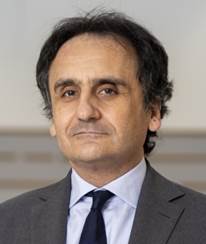
Paolo Rocco is a Full Professor in Systems and Control at the Department of Electronics, Information and Bioengineering (DEIB) of Politecnico di Milano, Italy. He has been with the institution since 1996 and currently serves as Head of the Systems and Control research area at DEIB. Additionally, he sits on the Board of Governors of Politecnico di Milano for the triennium 2022-24 and teaches Automatic Control, Fundamentals of Robotics, and Industrial Automation courses across multiple engineering programs. Education: Born in Busto Arsizio (Italy) in 1966 'Laurea' degree cum laude in Electronics Engineering (1991, Politecnico di Milano) Doctorate degree in Computer Science and Automation (1995, Politecnico di Milano) Visiting scholar at Georgia Tech, USA (1995) Research Focus: Dr. Rocco's work centers on industrial robotics, physical human-robot interaction, redundant manipulators, computer vision in robotics, and control systems. His research bridges theoretical control frameworks with practical industrial applications, particularly in manufacturing automation. His extensive publication record (approximately 200 papers) demonstrates consistent contributions to robotics and control theory. Publication Trends: Analysis of his recent publications (2022-2025) reveals a strategic shift toward collaborative robotics applications in real-world industrial settings. Key themes include robotic deburring, cable manipulation, human-robot collaborative assembly, and integration of AI with traditional control systems. His work increasingly addresses challenges in unstructured environments while maintaining strong connections to industrial implementation. Professional Recognition: Senior Member of IEEE Former Associate Editor for IEEE Transactions on Robotics (2004-2008) Founding Senior Editor for IEEE Robotics and Automation Letters Current Senior Editor of IEEE Transactions on Automation Science and Engineering Associate Editor for IFAC journal Mechatronics and International Journal of Robotics Research Leadership and Service: Dr. Rocco has served as Chair of BSc and MSc Programs in Automation and Control Engineering (2013-2018), sits on the Board of Governors of Politecnico di Milano (2022-24), and leads the Systems and Control research area at DEIB. He serves on the Board of Directors of euRobotics and I-RIM, and is scientific responsible for technology transfer projects at MADE, the Industry 4.0 Competence Center. His co-founding of Smart Robots, a Politecnico di Milano spin-off, demonstrates his commitment to translating research into commercial applications.
Hai Wang is a Professor of Mechanical Engineering at Stanford University with a distinguished career in combustion science, high-speed propulsion, and renewable energy conversion. His research spans combustion chemistry of conventional and renewable fuels, detonation dynamics, quantum-chemistry guided battery materials design, and transport theories in nanoparticle systems. Education : Ph.D. in Fuel Science from Pennsylvania State University (1992), M.S. in Chemical Engineering from Michigan Technological University (1986), B.Eng. in Polymer Materials from East China University of Science and Technology (1984). He has authored seminal works on soot formation in flames, catalytic oxidation of methane, and laminar flame speed modeling. His recent publications address interdisciplinary challenges such as eco-anxiety and advanced data plane verification. Notable administrative roles include co-founding Hestia Tec, LLC (2010-2014) and serving as President of the Combustion Institute (2024-present). Wang’s work has been recognized with the Humboldt Senior Research Award (2019), Mercator Fellow (2019), and multiple fellowships. He mentors doctoral and master’s students and leads research initiatives like the Combustion Energy Frontier Research Center (2010-2014).
Nicholas Haber is an Assistant Professor at Stanford University's Graduate School of Education, with a courtesy appointment in Computer Science. His academic journey began with a Sc.B. in Mathematics & Economics from Brown University (2008), followed by a Ph.D. in Mathematics from Stanford University (2013), where his research focused on Partial Differential Equation theory. Dr. Haber transitioned from pure mathematics to applied AI and education technology, first working on Sension, a company applying computer vision to online education, and later co-founding the Autism Glass Project at Stanford. This project employs wearable technology and computer vision as therapeutic tools for children with autism. He currently serves as Chief Scientific Officer at Sension, Inc. (2013-present). His research interests span a wide range of interdisciplinary fields: Assessment, Testing and Measurement Brain and Learning Sciences Child Development Collaborative Learning Data Sciences Early Childhood Motivation Psychology Social and Emotional Learning Special Education Technology and Education Dr. Haber's recent publications demonstrate a strong focus on the intersection of artificial intelligence, education, and human development. His work explores how AI can model early human learning through play and social interaction, while simultaneously using insights from human development to improve AI systems. Key themes in his research include person-specific modeling of digital behavior, AI applications in education, child emotion recognition for therapeutic purposes, and the development of embodied AI environments. Among his notable achievements are: Walter V. and Idun Berry Postdoctoral Fellow, Stanford University (2015) Magna Cum Laude, Brown University (2008) Member, Phi Beta Kappa (2006) Dr. Haber actively mentors students across multiple programs, serving as a doctoral dissertation advisor, reader, and co-advisor for numerous students working at the intersection of education, computer science, and cognitive development. He has also contributed to the development of innovative educational tools and therapeutic applications, most notably through the Autism Glass Project, which aims to help children with autism better recognize and interpret social cues.
Byron Reeves is the Paul C. Edwards Professor of Communication at Stanford University and Professor (by courtesy) in the Graduate School of Education. His research focuses on the psychological processing of media, affective computing, and digital behavior dynamics, with applications in social robots, autonomous systems, and educational technology. PhD in Communication from Michigan State University Co-founder of the Human Screenome Project (2020) Former Director of the Center for the Study of Language and Information Co-Director of H-STAR Institute Founding Director of mediaX at Stanford Reeves' work examines media effects on attention, memory, and emotional responses. His recent research includes computational analysis of digital affective dynamics, media production patterns on smartphones, and symbolic vs. natural interactions with social robots. He applies AI and deep learning to analyze super-intensive longitudinal data. His 2020-2024 publications reveal trends in digital behavior analysis , affective computing , human-robot interaction , and media psychology . Notable methodologies include time-series analysis of smartphone use and computational affective modeling. International Communication Association Fellow (1997) ICA Fellows Book Award for The Media Equation (with Clifford Nass) Novim Foundation Epiphany Science and Society Award Paul C. Edwards Professorship (1992) As a doctoral advisor at Stanford, Reeves guides research in communication theory, media psychology, and digital behavior. He leads the Human Screenome Project, a collaborative initiative involving the Wu Tsai Human Performance Alliance and Precourt Institute for Energy, focusing on real-time digital life analysis through screenshot tracking and AI-driven behavioral modeling.
Prof Austen Lamacraft is a Professor at the University of Cambridge's Cavendish Laboratory, affiliated with the Theory of Condensed Matter group in the Department of Physics. His research focuses on quantum phase transitions, magnetism in atomic gases, ultracold atoms, and nonequilibrium phenomena in quantum systems. He has contributed to understanding dynamics of impurities in one-dimensional quantum liquids, integrable systems, and the interplay between magnetism and superfluidity. His work bridges theoretical physics with cold atom experiments, exploring topics like quantum hydrodynamics, spin-orbit coupled Bose gases, and quantum noise correlations. He has also developed methods for analyzing many-body quantum systems using reinforcement learning and machine learning techniques. Research interests include: quantum phase transitions, ultracold atomic physics, integrable systems, and non-equilibrium dynamics. His studies often involve exact analytical solutions and numerical methods to model complex quantum phenomena. Key contributions include theoretical predictions of dynamical magnetism in atomic gases, analysis of impurity motion in quantum fluids, and exploration of operator spreading in noisy spin systems. His recent work addresses quantum measurement-induced phase transitions and stochastic processes in dual-unitary circuits. Lamacraft has published extensively on quantum dynamics, entropy production, and interdisciplinary applications of statistical mechanics. He collaborates with experimental groups to guide cold atom experiments and has developed tools for multimodal data integration in physics research.
Michiel van de Panne is a Professor in the Department of Computer Science at the University of British Columbia (UBC), within the Faculty of Science. His research focuses on computer graphics, robotics, and artificial intelligence, with emphasis on physics-based animation, reinforcement learning for motion control, and character animation. He teaches advanced courses such as Computer Animation (CPSC 426) and Topics in Computer Graphics (CPSC 533V), emphasizing topics like Learning to Move and Motion Optimization. Dr. van de Panne has been recognized with prestigious awards including the SIGGRAPH Academy Membership, SIGGRAPH Computer Graphics Achievement Award, and multiple Best Paper Awards across conferences like ACM SIGGRAPH and IEEE Vis. His work bridges theoretical advancements with practical applications in interactive animation and autonomous systems. His research group explores cutting-edge methods for simulating and controlling dynamic motions, including locomotion in complex environments, motion planning with diffusion models, and imitation learning for humanoid and quadrupedal robots. He collaborates on projects ranging from physically-based balance control to curriculum-driven learning for stepping stone skills. Research Themes: Physics-based animation, reinforcement learning, motion synthesis, character control, and sim-to-real robotics. Key Contributions: SIMBICON biped control, DeepMimic example-guided RL, and diffusion-based motion planning techniques. His educational contributions include developing novel curricula and receiving the UBC 2018 Faculty Teaching Award, reflecting his commitment to advancing both research and education in computer graphics and AI.
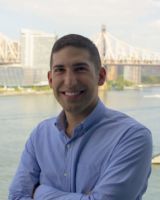
Nathan Kallus is an Associate Professor at Cornell Tech and Cornell University, affiliated with the Department of Operations Research and Information Engineering (ORIE), as well as Computer Science (CS), Economics, Statistics, and Computational Applied Mathematics (CAM). His research focuses on data-driven decision-making, causal inference, optimization, and machine learning. Kallus holds a PhD from MIT and undergraduate degrees from UC Berkeley. He leads the Netflix Machine Learning & Inference Research team and advises students in topics like reinforcement learning, causal ML, and policy evaluation. His work bridges theory and practical applications, with contributions to A/B testing, off-policy evaluation, and spatiotemporal causal inference. Education: PhD in Operations Research (MIT), BA in Pure Mathematics, BS in Computer Science (UC Berkeley). Current research emphasizes causal inference powered by ML, distributional RL for LLM post-training, and efficient sequential decision-making. Recent projects include GST-UNet for spatiotemporal data, Value-Guided Search for reasoning, and nonparametric IV inference. His work has been recognized for its methodological rigor and impact on fields like healthcare, digital platforms, and public policy. Students and Collaborators : Advises PhD students (e.g., Antonia Oprescu, Kaiwen Wang) and alumni in academia and industry roles. Collaborates on projects spanning causal ML, fair AI, and large-scale experimentation. Recruits motivated PhD candidates for interdisciplinary research. Labs and Teams : Research Director at Netflix’s Machine Learning & Inference group, leading work on decision rules, recommendation systems, and causal analysis. Active in Cornell’s ORIE department and affiliated with interdisciplinary initiatives in AI and statistics.
Fei Wang is a Professor of Health Informatics at the Department of Population Health Sciences, Weill Cornell Medicine (Cornell University). He holds secondary appointments in Emergency Medicine and serves as Associate Dean for Artificial Intelligence and Data Science, Chief of the Division of Health Informatics, and Founding Director of the WCM Institute of AI for Digital Health. His research focuses on machine learning and data mining applications in health data science, including predictive modeling, computational drug discovery, and federated learning. Dr. Wang leads the Wang Lab, which collaborates across disciplines including computational biology, electrical engineering, and information science. He has received prestigious awards such as the NSF CAREER Award and ACM Distinguished Member status. Notable achievements include championship in NIPS/Kaggle and Michael J. Fox Foundation challenges, and over 350 publications with an H-index of 85. Key research areas include health data science (clinical risk prediction, disease subtyping), machine learning (multi-modal learning, model interpretability), and translational AI (clinical AI fairness, knowledge graphs). His work bridges data-centric AI with clinical workflows, emphasizing actionable insights in healthcare. Recent studies include long-COVID analysis in pregnant patients, predictive modeling for sepsis treatment, and AI-driven drug repurposing for Parkinson’s disease. His lab actively develops tools like MoFlow for molecular graph generation and the iBKH biomedical knowledge hub. Awards: NSF CAREER (2018), ACM Distinguished Member, AMIA Fellowship Grants: NIH, NSF, MJFF, PCORI Lab Affiliations: WCM Institute of AI for Digital Health, Hospital for Special Surgery (Adjunct Scientist)
Hyun-Soo Ahn is a Professor of Technology and Operations and Ford Motor Co. Director of the Tauber Institute for Global Operations at the University of Michigan's Stephen M. Ross School of Business. His research focuses on supply chain management, service operations, pricing strategies, and value chain innovations, supported by NSF and Department of Energy grants. He teaches business analytics, machine learning, and consulting methodologies across EMBA, MBA, MSCM, and BBA programs, along with executive education for firms like ICBC and Bank of America. Education: PhD in Technology and Operations, University of Michigan (2001) MSE, University of Michigan (1997) BSE in Engineering, KAIST (1994) His research interests emphasize data-driven decision-making in supply chains, dynamic pricing models, and collaborative strategies. Notable contributions include work on subsidy policies for innovation, capacity investment collaboration, and pandemic control through multi-model integration. He leads the Supply Chain Consulting Studio, guiding over 70 projects with companies such as Amazon, Google, and General Motors. Teaching and Awards: Six teaching excellence awards (student-voted) and the 2019 Ross Researcher of the Year Award highlight his dual impact in education and research. His executive education focuses on digital transformation and business analytics. Key Projects: Consulting for 70+ companies across sectors Founder of Ross MSCM's Supply Chain Consulting Studio
Dr. Cristina Trujillo Del Valle is a Lecturer in Computational & Theoretical Chemistry at The University of Manchester. She holds a PhD from Universidad Autónoma de Madrid (2008) and has held postdoctoral positions at CSIC (Spain), the Academy of Sciences in Prague, and Trinity College Dublin (TCD). She was an independent researcher leading her group at TCD from 2019 to 2022 before joining Manchester. Her research focuses on computational strategies for catalyst design, asymmetric catalysis, and mechanistic studies using quantum chemistry and machine learning. Education : PhD in Theoretical and Computational Chemistry, Universidad Autónoma de Madrid (2008) Postdoctoral positions at CSIC (Spain), Academy of Sciences (Prague), and Trinity College Dublin (2008–2016) Research Fellow at TCD (2016–2018) Assistant Lecturer at TU-Dublin (2018–2019) Research Interests : Her work integrates computational methods (e.g., DFT, Møller-Plesset perturbation theory) with experimental validation to design efficient catalysts for asymmetric reactions. Key areas include organocatalysis, non-covalent interactions, and sustainable chemical processes. Recent projects address CO₂ capture via frustrated Lewis pairs and halogen-bond-mediated catalysis. Awards : SFI-Starting Investigator Research Grant (2018) L’Oreal-Unesco Women in Science Fellowship (2019) Grants & Advising : Led independent research at TCD with SFI funding. Current work at Manchester focuses on computationally guided catalyst design. No explicitly listed advisees are provided in the text. Labs/Teams : Leads the Computational Organic Chemistry Group, emphasizing sustainable catalyst development and mechanistic insights into organocatalytic processes.
Prof. Zdenka Kuncic is a Professor of Physics at the School of Physics , University of Sydney. She holds a BSc (Hons I) from the University of Sydney and a PhD in theoretical astrophysics from the University of Cambridge. Her research bridges physics, medicine, biology, neuroscience, and engineering, focusing on interdisciplinary applications of physics-based approaches to solve complex problems. Key affiliations include the University of Sydney Nano Institute and the Charles Perkins Centre. Her research interests include neuromorphic computing, nanoparticle-based medical imaging, and quantum technologies. Notable grants include the 2024 Reconfigurable Neuromorphic Compute System (ARC LIEF) and the AMTAR Hub (2023). Media highlights include features in The Conversation , Financial Times , and ABC Science . Recent innovations include nanowire networks mimicking brain-like learning and memory, and advancements in MRI-guided radiotherapy using nanoparticles. Her work emphasizes translational research with potential impacts on healthcare and technology.
Fei-Yang Huang is a Wellcome Trust Early Career Research Fellow at the University of Oxford's Department of Experimental Psychology and a Junior Research Fellow at Wolfson College. His research focuses on the neurophysiology of reward, learning, and decision-making mechanisms. His research interests span Learning and Decision-Making , Reward Processing , Neural Decision Mechanisms , and Computational Neuroscience . Huang uses decision theories from economics, psychology, and ecology to formalize choice behavior, applying advanced computational modeling and machine learning methods to uncover decision computation in single neurons and neural populations. His recent work has identified nutrients as biological sources of economic values that guide choices (PNAS, 2021) and reinforcement learning (JNeurosci, 2023). He combines nutrient-choice paradigms with multichannel recording and targeted neurostimulation to uncover neural decision mechanisms. Wellcome Trust Early Career Research Fellow Huang collaborates with researchers including Fabian Grabenhorst, Mark J. Buckley, Matthew Rushworth, and Nima Khalighinejad. He co-organizes the BEACON Seminar series and is active in the neuroscience community, particularly in the study of reward processing and decision-making. His work bridges neuroscience with applications for advancing artificial intelligence and treatments for mental conditions.
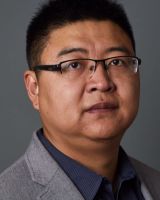
Mohammed Bennamoun is a Winthrop Professor at the University of Western Australia (UWA), affiliated with the School of Physics, Maths and Computing and the Department of Computer Science and Software Engineering. He holds editorial roles in prestigious journals like IEEE Transactions on Image Processing and IEEE Transactions on Artificial Intelligence. His research focuses on Computer Vision, 3D Biometrics, Machine Learning, and Robotics, with over 500 publications and 8 notable awards, including the UWA Vice-Chancellor’s Research Mentorship Award (2016). He earned an M.Sc. in Control Theory from Queen’s University (Canada) and a PhD in Computer Vision from Queen’s University/Kinetic Vision (Australia). He served as Head of the School of Computer Science and Software Engineering at UWA (2007–2012) and held visiting professorships at the University of Edinburgh, CNRS Telecom Lille1, and others. Bennamoun has led 58 research grants and contributed to projects like the National Australian Cardiac CT Platform and DelivAssure. His work spans 3D object recognition, deep learning applications, and AI-driven medical diagnostics. He has authored influential books, including 3D Shape Analysis and A Guide to Convolutional Neural Networks for Computer Vision .
Professor Nigel Gilbert CBE is a distinguished academic at the University of Surrey, leading roles as Director of the Centre for Research in Social Simulation (CRESS), the Centre for the Evaluation of Complexity Across the Nexus (CECAN), and the University’s Institute of Advanced Studies. He holds a ScD from the University of Cambridge and is a Fellow of the Royal Academy of Engineering, Academy of Social Sciences, and Royal Society of Arts. His research focuses on computational social science, agent-based modelling, policy evaluation, and the sociology of science. Education: PhD and ScD from the University of Cambridge (Emmanuel College), with early roles at the University of York before joining Surrey in 1974. Notable contributions include founding CRESS (1997), pioneering social simulation methodologies, and developing influential models for policy analysis (e.g., CECAN’s work on nexus issues like energy and environment). Research emphasizes processual theories of social phenomena, agent-based modeling for public policy, and interdisciplinary approaches bridging engineering and social sciences. Key projects include the Whole Systems Energy Modelling Consortium (WholeSEM) and the CECAN initiative, which address complex policy challenges through innovative evaluation frameworks. His work on the sociology of scientific knowledge, including Opening Pandora's Box (1984), remains foundational. Publications span computational sociology textbooks (e.g., Agent-Based Models ), policy evaluation guides, and over 200 peer-reviewed articles. Awards include a CBE for services to engineering and the social sciences (2016). He advises governments and international bodies on policy design, evaluation, and complexity science applications.