
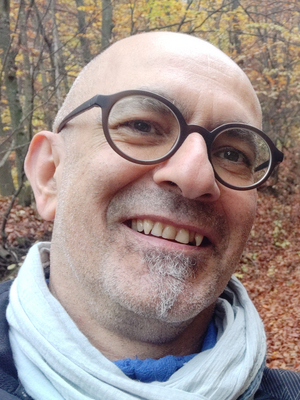
Professor Daniel Passweg is a faculty member at the University College of Teacher Education Lower Austria (PH NÖ) in the Diversity - Department 2, located in Baden near Vienna. He holds a professorship in Communication and Conflict Management and teaches across numerous programs including Primary Education Bachelor's and Master's programs, Secondary Level II - Vocational Education, and various specialized courses in mentoring, school management, inclusive education, and learning design. His educational background includes a high school diploma in Electrical Engineering (TGM Vienna), degrees in Technical Physics (TU Vienna), Educational Sciences (IUK Graz), and Systemic Counseling (Sigmund Freud Private University Vienna), plus a doctorate in Psychology (IUK Graz / KFU Graz). Beyond his university position, he maintains a private practice in the Wiener Neustadt district and serves as a bullying prevention consultant for the Federal Ministry of Education. Professor Passweg's research focuses on conflict management, cooperation between parents and teachers, positive psychology, salutogenesis, and systemic consulting. His 11 publications from 2003-2020 demonstrate consistent scholarly output examining communication processes in educational settings, psychological counseling techniques, and conflict resolution strategies. His work often combines qualitative research methods with practical applications for school environments. His professional qualifications include psychological counseling according to § 119 GewO 1994, practice advising in pedagogical practical studies, and leadership of self-awareness groups. He has extensive training in university didactics, group dynamics, NLP, mediation, supervision, and systemic constellation work, making him a versatile educator with both theoretical knowledge and practical counseling skills. Professor Passweg's teaching philosophy centers on 'the individual within their systemic professional and private environment and their healthy personal development.' He supervises scientific work in qualitative psychology and social research while maintaining an active research agenda that bridges academic scholarship with practical applications in educational settings.
جستجوی استاد راهنمای دانشگاهی
برای مسیر پژوهشیتان، استاد راهنما، استاد دانشگاه و پژوهشگر مناسب را پیدا کنید و با آنها ارتباط بگیرید.
نمایش ۷۳۶-۷۳۷ از ۷۳۷ استاد راهنما
اطلاعات پروفایلها از صفحات عمومی دانشگاهها گرفته شده و ممکن است بهروز نباشد.
Bernhard Prinzمشاهده پروفایل
پژوهشگر
Bernhard Prinz serves as a Research Assistant in both the Bachelor's and Master's Degree Programs in Training & Sport at the University of Applied Sciences Wiener Neustadt (FHWN), located at Campus 1 in Wiener Neustadt, Austria. His academic work focuses on exercise physiology with particular emphasis on oxygen dynamics and performance assessment in athletic populations. Prinz's research interests center around exercise physiology , specifically examining oxygen uptake kinetics, muscle deoxygenation patterns, and performance metrics across different populations. His work primarily investigates youth cycling development , tracking physiological changes over multi-year periods in competitive adolescent cyclists. He also explores specialized equipment effects (such as carbon running shoes), critical power determination across testing environments, and physiological adaptations in high-demand occupational groups like special forces personnel. His recent publications (2022-2024) demonstrate a strong focus on longitudinal studies of youth athletes, with particular attention to how aerobic fitness and muscle oxygenation evolve during development. These studies employ advanced measurement techniques including near-infrared spectroscopy for real-time muscle oxygenation assessment during exercise. Prinz has contributed to significant research projects including: Carbon shoes (2025-2026): Investigating physiological responses to advanced running footwear Muscle deoxygenation in youth athletes (2017-2025): Longitudinal study of oxygen extraction changes Critical power in laboratory and field conditions (2016-2025): Methodological comparisons Special forces Ministry of the Interior (2017-2023): Training intervention effects His research has practical applications for coaches, sports scientists, and occupational health professionals seeking to optimize training programs and understand physiological adaptation processes. Prinz's work bridges theoretical exercise physiology with real-world performance applications across diverse athletic and occupational settings.
- Sports Science
- Exercise Physiology
- Cycling Science
- +۵ مورد دیگر