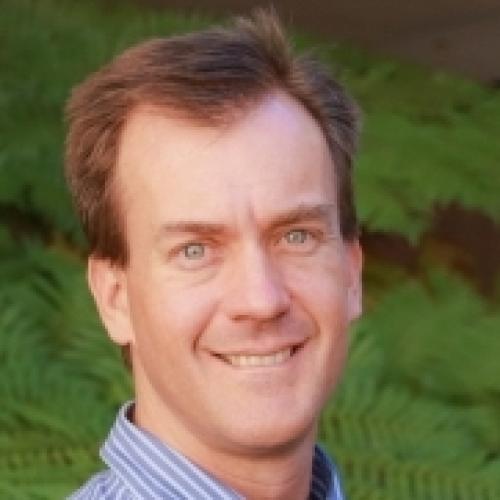
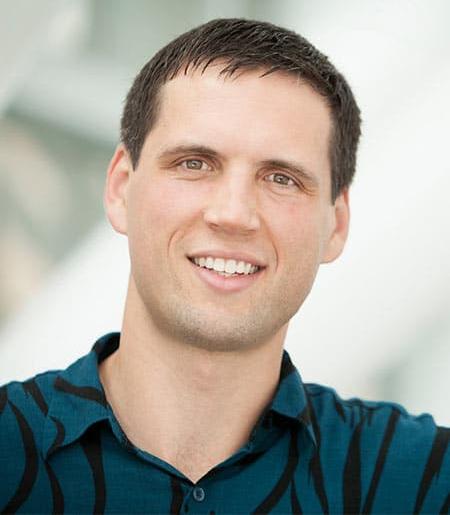
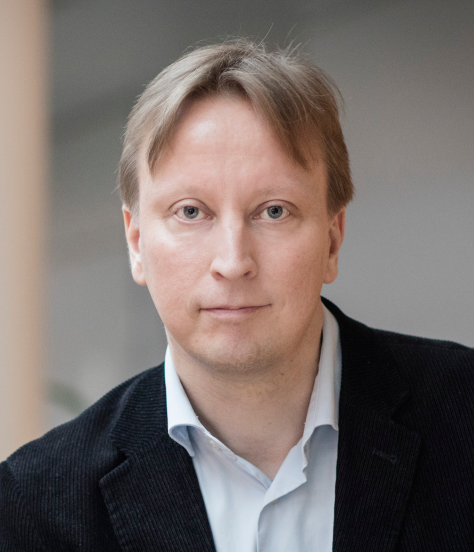
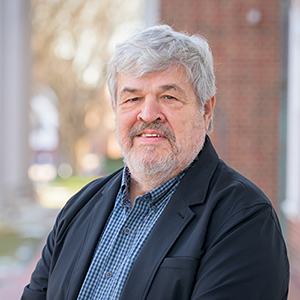
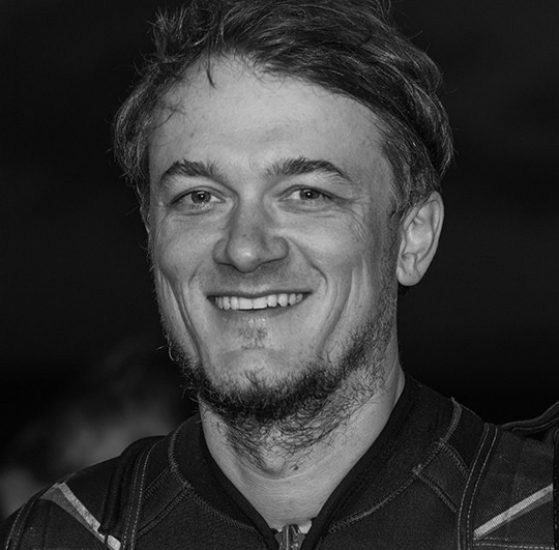
John F. Beacom is a Distinguished Professor of Physics and Astronomy at The Ohio State University and Director of the Center for Cosmology and AstroParticle Physics (CCAPP). His academic roles include leadership in astroparticle physics research and education. He holds joint appointments in both the Department of Physics and the Department of Astronomy within the College of Arts and Sciences. Beacom earned his Ph.D. in Physics from the University of Wisconsin (1997) and dual B.S. degrees in Physics and Mathematics from the University of Kansas (1991). He has held postdoctoral positions at Fermilab and Caltech before joining Ohio State in 2004. His research focuses on neutrinos, dark matter, and multi-messenger astrophysics, with emphasis on neutrino detection techniques, supernova physics, and cosmological implications. He leads major projects like the All-Sky Automated Survey for Supernovae (ASAS-SN) and contributes to the Deep Underground Neutrino Experiment (DUNE). Awards: APS Fellow (2014), NSF CAREER Award (2005–2010), multiple teaching awards for distinguished instruction. Grants: Extensive funding from NSF, DOE, and collaborative international initiatives. Labs/Teams: CCAPP, DUNE Collaboration, ASAS-SN project. His articles span neutrino physics, detector development, and observational astrophysics, reflecting interdisciplinary expertise in theoretical and experimental particle astrophysics.
Prof. Rob Timmermans is a Professor of Theoretical Physics and Vice-Dean for Education at the University of Groningen (UG). He is affiliated with the Faculty of Science and Engineering and the Precision Frontier — Van Swinderen Institute for Particle Physics and Gravity. His research focuses on theoretical particle physics, quantum mechanics, and precision measurements, particularly in electric dipole moment (EDM) searches using molecules like BaF. His work includes developing methods for molecular beam manipulation, phase-space analysis, and symmetry violation studies. He has contributed to collaborations such as NL-eEDM, advancing techniques for EDM detection and precision physics. Prof. Timmermans has received nominations for teaching awards, reflecting his commitment to education. Research highlights include studies on nucleon decay, antinucleon-nucleon interactions, and chiral effective field theory. His lab activities involve collaborations on laser-cooled molecules and trapping techniques. Prof. Timmermans’ articles often address fundamental physics questions, such as Lorentz violation in beta decay and parity violation in molecular systems. Awards: Nominated for Faculty Teaching Award 2014, Teacher of the Year 2014-15. Grants/Advising: Leads projects on EDM searches and particle physics, with active roles in international collaborations. Labs/Teams: Van Swinderen Institute, Precision Frontier group.
Howard A. Stone is the Donald R. Dixon '69 and Elizabeth W. Dixon Professor and Neil A. Omenn '68 University Professor in the Department of Mechanical and Aerospace Engineering at Princeton University's School of Engineering and Applied Science. He leads the Complex Fluids Group, conducting interdisciplinary research at the intersection of engineering, physics, chemistry, and biology. Dr. Stone received his B.S. in Chemical Engineering from UC Davis (1982) and Ph.D. from Caltech (1988). After a postdoctoral year at Cambridge University, he joined Harvard University's faculty in 1989, where he became the Vicky Joseph Professor of Engineering and Applied Mathematics before moving to Princeton in 2009. His research focuses on fluid dynamics phenomena across multiple scales, with particular emphasis on microfluidics, complex fluids, and biomechanics . His group investigates multiphase flows, colloidal systems, bio-inspired fluid phenomena, and physicochemical hydrodynamics. Recent work spans from fundamental studies of thin film drainage and droplet dynamics to applications in biological systems including blood flow, bacterial transport, and biomolecular condensates. The Complex Fluids Group employs experimental, theoretical, and computational approaches, often collaborating with industry partners on applications from medical devices to industrial processes. Analysis of his recent publications reveals a continued expansion into biological applications of fluid dynamics, with increasing focus on cellular mechanics, biomolecular condensates, and pathological hemodynamics, while maintaining strong contributions to fundamental fluid mechanics in complex systems. His work consistently bridges theoretical insights with practical applications across multiple disciplines. Major honors include: Election to the National Academy of Engineering (2009) Election to the National Academy of Sciences (2014) APS Fluid Dynamics Prize (2016) G.K. Batchelor Prize in Fluid Dynamics (2008) NSF Presidential Young Investigator Award Professor Stone has advised numerous PhD students through their Final Public Oral examinations, with recent graduates working on topics spanning microfluidics, bacterial transport, and complex fluid phenomena. His research has been supported by diverse funding sources including NSF, NIH, and industry partnerships. The Complex Fluids Group maintains state-of-the-art experimental facilities in the Engineering Quadrangle, featuring specialized equipment for microfluidics, rheology, and interfacial phenomena investigations. The group actively collaborates with researchers across Princeton and globally, maintaining strong connections to both academic and industrial partners working on fluid-related challenges.
Professor Asmita Mukherjee is a faculty member in the Department of Physics at the Indian Institute of Technology Bombay (IIT Bombay), where she holds the position of Professor. She is actively engaged in theoretical particle physics research with a focus on Quantum Chromodynamics (QCD) and related phenomena. Professor Mukherjee's research interests primarily include Theoretical Particle Physics, Quantum Chromodynamics, QCD spin physics, Light-cone wave functions, and collider phenomenology. She teaches several advanced courses including Elementary Particle Physics (PH540), Mathematical Physics-I (PH407), Mathematical Physics-II (PH408), Quantum Physics and Applications (PH107), and various Quantum Mechanics courses (PH422, PH423, PH105). Her publication record shows a strong focus on gravitational form factors, transverse momentum dependent distributions, angular momentum structure of hadrons, and electron-ion collider physics. Recent work has explored gluon contributions to proton structure, dressed quark states, and azimuthal asymmetries in various production processes. Her research demonstrates expertise in light-front quantization techniques and their application to fundamental questions in hadron physics. Professor Mukherjee has received recognition for her work in High Energy Theory, with numerous publications in prestigious journals addressing fundamental questions in hadron structure and QCD dynamics. Her work provides crucial theoretical foundations for upcoming experiments at the Electron Ion Collider. Current PhD students: Sudeep Saha, Amol Pawar Graduated PhD students: Ravi Manohar, Sreeraj Nair, Vikash K. Ojha, Sangem Rajesh, Raj Kishore Postdoctoral researchers: Shaik Khatiza Banu (CFNS), Jai More, Tanmay Maji, Mariyah Siddiqah Research projects: BRNS project with Ravi Singh as Junior Research Fellow Her research group at IIT Bombay continues to explore fundamental questions in hadron physics, with ongoing projects examining the mechanical properties of protons, the decomposition of angular momentum in QCD, and the development of theoretical tools for interpreting data from next-generation colliders.
Harvey B. Meyer is a Professor of Theoretical Physics at Johannes Gutenberg University Mainz since 2014. Previously, he held positions including Junior Professor at Mainz (2010), Fellow at CERN's Theoretical Physics Division (2009), Research Scientist at MIT (2008), and postdoctoral roles at MIT (2006-2008) and DESY (2004-2006). He earned his D.Phil. in Theoretical Physics from the University of Oxford (2001-2004) and a Diplome de Physique from the University of Lausanne (1996-2001). His research focuses on lattice field theory, QCD phase diagrams, thermal field theory, and hadron structure. He leads the NEPhEuQCD collaboration and has received the ERC Consolidator Grant (2018) for the SIMDAMA project. Meyer teaches courses in theoretical physics and mathematical methods at Mainz, including 'Theoretische Physik 4' and 'Mathematische Rechenmethoden'. His work integrates advanced computational techniques to address fundamental questions in particle and nuclear physics. Key achievements include pioneering studies on the muon's anomalous magnetic moment, hadronic light-by-light scattering, and quark-gluon plasma dynamics. Collaborations include MIT, CERN, and institutions globally through lattice QCD projects. His lab and team contributions are central to the PRISMA+ Cluster of Excellence at Mainz.
Simon Birrer is an Assistant Professor in Physics and Astronomy at Stony Brook University, specializing in cosmology and gravitational lensing. He holds a PhD from ETH Zurich (2016) and previously served as Kavli Fellow at Stanford University. Birrer leads research probing dark matter and dark energy using gravitational lensing phenomena. His group develops computational tools for analyzing strong gravitational lensing data to study cosmic expansion and dark matter distribution. Research areas include time-delay cosmography, Hubble constant measurements, and machine learning applications in astrophysics. Recent publications focus on multi-messenger gravitational lensing (2025), LSST survey applications (2025), and AI-powered lens modeling pipelines (2025). His work consistently addresses fundamental cosmological tensions like the Hubble constant discrepancy. Awards: Kavli Postdoctoral Fellowship (2019-2022) Kugelpyramide Lifetime Achievement Award Experimental Innovation Award (ETH Zurich) Research Group: Leads the SBU Strong Lensing group with 9+ graduate students and postdocs. The group participates in major collaborations including LSST Strong Lensing Science Collaboration (co-chair), LSST Dark Energy Science Collaboration, and TDCOSMO.
Takuya Ooura is an Assistant Professor at the Research Institute for Mathematical Sciences (RIMS) at Kyoto University, specializing in numerical analysis and mathematical software development. His work bridges theoretical mathematics with practical applications in scientific computing and software development. Dr. Ooura earned his educational credentials through a rigorous academic path: he graduated from Hokuriku High School in 1987; completed his undergraduate studies at Nagoya University's School of Science in 1992; earned his Master of Engineering from the Department of Applied Physics at the University of Tokyo in 1994; and completed his PhD (Engineering) from the same department in 1997. His academic journey continued with a Research Fellowship from the Japan Society for the Promotion of Science (1997) followed by a position as Research Associate at RIMS, Kyoto University (2000). Dr. Ooura's research focuses on numerical integration algorithms, particularly his groundbreaking double exponential formula for Fourier-type integrals, which has been incorporated into Mathematica's NIntegrate function. He has also developed a high-speed FFT library that's utilized in Google Chrome browser (visible in chrome://credits). His work on continuous Euler transformation for accelerating convergence of slowly decaying integrals represents significant innovation in numerical analysis. His research spans both theoretical development and practical implementation of mathematical algorithms with real-world applications. His publication record demonstrates consistent contributions to numerical analysis, with particular emphasis on quadrature methods, integral transforms, and high-precision computation. His work shows a clear progression from theoretical foundations to practical implementations, with several algorithms achieving widespread adoption in commercial and open-source software. Paper prize awarded by JSIAM (2000) for 'A continuous Euler transformation and its application to Fourier transforms of slowly decaying functions' Paper prize awarded by JSIAM (2001) for 'Improvement of the PI Calculation Algorithm and Implementation of Fast Multiple-Precision Computation' Paper prize awarded by JSIAM (2005) for 'An Improved Convergence Test for the Double Exponential Formula' Japan Society for Industrial and Applied Mathematics 4th Achievement Award (2014) for 'Pioneering and practical development of the double exponential numerical integration method' Dr. Ooura has developed several widely used mathematical software packages including the double exponential integral formula, Clenshaw-Curtis numerical integration rule, and a general-purpose FFT library. His FFT package is particularly notable for its speed and accuracy, with benchmark tests showing superior performance compared to other implementations. His software has been incorporated into major projects including Google Chrome and SETI@home, demonstrating the practical impact of his theoretical work. His future research directions include further development of numerical computation libraries and applying his methods to various computational problems.
Professor Todd Squires is a distinguished faculty member in the Department of Chemical Engineering at the University of California, Santa Barbara, within the Robert Mehrabian College of Engineering. His research focuses on the fundamental principles of transport phenomena as applied to interfaces, membranes, and complex fluids, employing theoretical, computational, and experimental approaches to address significant challenges in micro-scale fluid mechanics. Dr. Squires' educational background includes: BS in Physics, UCLA (1995) BA in Russian Language and Literature, UCLA (1995) PhD in Physics, Harvard University (2002) His research interests span microfluidics and electrokinetics, active and nonlinear microrheology of complex materials, polymer dynamics and sensors, with particular emphasis on non-linear electrokinetic flows, interfacial rheology, and the self-assembly of nanostructured materials. His work bridges fundamental fluid mechanics with practical applications in microfluidic devices, energy storage, and biomedical systems, demonstrating the versatility of this fascinating field. Analysis of Professor Squires' recent publications reveals a consistent focus on interfacial phenomena, with particular attention to the rheological properties of fluid interfaces, particle dynamics in complex fluids, and novel microfluidic techniques for measuring and manipulating these systems. His research demonstrates strong interdisciplinary connections between chemical engineering, physics, and materials science, with applications spanning energy storage, biomedical engineering, and environmental systems. Professor Squires has received numerous prestigious awards and honors: 2018 Robert W. Vaughan Lecture in Chemical Engineering, Caltech 2015 Elected Fellow of the American Physical Society 2013 Mid-Career Award, American Electrophoresis Society 2012 The Dudley Saville Memorial Lecture at Princeton 2010 Pierre Gilles de Gennes Prize 2010 Allan P. Colburn Memorial Lectureship, University of Delaware 2009 Francois Frenkiel Award for Fluid Mechanics 2009 Camille Dreyfus Teacher-Scholar Award 2008 Beckman Young Investigator 2007 NSF CAREER Award 2005 'Rising Star' - Chronicle of Higher Education As principal investigator of the Squires Group, Professor Squires leads a dynamic research team that combines experimental, theoretical, and computational approaches to investigate transport phenomena at interfaces. His work has been supported by major funding agencies including the National Science Foundation, with his CAREER award indicating early recognition of his potential as both researcher and educator. While specific grant details aren't provided in the source material, his extensive publication record and prestigious awards suggest robust and sustained research funding. The Squires Group maintains state-of-the-art laboratory facilities for studying micro-scale fluid mechanics, including specialized equipment for microrheology measurements, microfluidic device fabrication, and interfacial characterization. Their research environment fosters collaboration across disciplines, with connections to materials science, physics, and biomedical engineering researchers at UCSB and beyond.
Thomas Hartman is a Professor of Physics in the College of Arts and Sciences at Cornell University. He received his A.B. in Physics from Princeton University in 2004 and his Ph.D. in Physics from Harvard University in 2010. His professional journey includes being a Member of the School of Natural Sciences at the Institute for Advanced Study (2010-2013), Research Associate at the Kavli Institute for Theoretical Physics, UCSB (2013-2014), Assistant Professor at Cornell University (2014-2020), Associate Professor at Cornell University (2020-2022), and Professor at Cornell University (2022-present). Hartman's research focuses on theoretical aspects of quantum gravity and quantum field theory, with particular emphasis on black hole information and strongly interacting quantum fields. His work explores four major interconnected areas: gauge/gravity duality (examining how quantum field theory degrees of freedom organize into fluctuating spacetime), black hole information paradox (investigating the relationship between classical black hole solutions and quantum statistical systems), new approaches to quantum field theory using dualities and entanglement dynamics, and the physics of de Sitter space with implications for early universe cosmology. His research employs techniques from string theory, holographic duality, general relativity, and quantum information theory. Analysis of Hartman's publication record reveals a strong focus on resolving fundamental questions in quantum gravity, particularly through the development of replica wormhole techniques that address the black hole information paradox. His work spans both highly mathematical approaches to quantum gravity and connections to potentially observable phenomena, with increasing emphasis on connections between quantum information science and gravitational physics in recent years. Member, School of Natural Sciences, Institute for Advanced Study, 2010-2013 Hartman has advised graduate students including Jeevan Chandra Namburi and Wan Zhen Chua, contributing to the next generation of theoretical physicists. His research group actively investigates the emergence of spacetime from quantum information principles and develops new mathematical frameworks for understanding quantum gravity. The group maintains strong connections with other leading institutions through collaborative projects and participates in major theoretical physics initiatives including Snowmass planning for future research directions in high energy physics. Hartman's research program represents a vital bridge between abstract theoretical concepts in quantum gravity and potential experimental tests, working to develop frameworks that could ultimately connect quantum gravity to observable phenomena in both high-energy physics and cosmological observations.
Professor Simo Särkkä holds a position in Sensor Informatics and Medical Technology at the Department of Electrical Engineering and Automation (EEA), Aalto University. His research focuses on multi-sensor data processing, Bayesian filtering, machine learning, and their applications in medical technology, brain imaging, and inverse problems. He leads research groups including the Helsinki Institute for Information Technology (HIIT) and Sensor Informatics and Medical Technology. His work bridges theoretical advancements in probabilistic methods with practical implementations in healthcare and engineering. Key research interests include Gaussian processes, stochastic differential equations, quantum machine learning, and signal processing. He has contributed to advancements in algorithms for nonlinear state-space models, parallel computing techniques, and medical imaging technologies such as scatter correction in CT scans. His methodologies are applied across domains like autonomous systems, robotics, and bioengineering. Notable publications span topics like quantum-assisted Gaussian regression, physics-informed machine learning for industrial processes, and parallel-in-time numerical methods. His work emphasizes computational efficiency and robustness in high-dimensional and real-time systems.
University of California , Santa Barbara (UCSB)United States
Frank L. Brown is a Professor of Chemistry & Biochemistry at the University of California, Santa Barbara, with a joint appointment in Physics and the Biomolecular Sciences & Engineering (BMSE) program. His research focuses on theoretical and computational studies at the interface of physical chemistry and biophysics, particularly biomembrane dynamics and spectroscopy. Dr. Brown received his B.S. in Chemistry and B.A. in Applied Mathematics from UC Berkeley, followed by a Ph.D. in Physical Chemistry from MIT. He has held postdoctoral appointments at UC San Diego and the University of Chicago before joining UCSB in 2001. He is the recipient of prestigious awards including the Alfred P. Sloan Research Fellowship and the Presidential Early Career Award in Science and Engineering. His laboratory employs tools from statistical mechanics, hydrodynamics, and quantum mechanics to study biomembrane structure, dynamics, and interactions with embedded proteins. Key research areas include lipid bilayer fluctuations, membrane protein diffusion, and interpretation of spectroscopic techniques like single-molecule fluorescence and neutron spin echo. Dr. Brown has mentored numerous graduate students and postdoctoral researchers, with notable alumni including Brian Camley, Max Watson, and Golan Bel. His research is supported by grants from agencies such as the National Science Foundation and the Department of Energy. He directs the Brown Research Group, which collaborates with institutions like the CNSI Center for Scientific Computing. His work bridges computational modeling and experimental biophysics, advancing understanding of membrane systems in health and disease.
Jan von Delft is a Professor (chair) at Ludwig-Maximilians-University (LMU) Munich, working in the Faculty of Physics within the Chair of Theoretical Solid State Physics. His research group consists of postdocs, PhD students, and master's students working on various aspects of strongly correlated electron systems, with physical space located at Theresienstr. 37 (Room A420) in Munich. von Delft's research focuses on correlated electron and spin systems, with particular interest in dynamical and transport properties, quantum impurity models, Hund metals, unconventional superconductors, quantum magnets, and quantum criticality. His methodological expertise includes many-body field theory, parquet formalism (FRG), DMFT, and tensor networks (NRG, DMRG, PEPS, XTRG, etc.). His work bridges theoretical concepts with computational approaches to understand complex quantum phenomena in condensed matter systems. He has developed a distinctive emphasis on real-frequency calculations and numerical methods for studying quantum critical phenomena. Analysis of von Delft's recent publications reveals a strong focus on developing and applying advanced computational methods to study strongly correlated electron systems. His group has made significant contributions to numerical renormalization group techniques, tensor network methods, and the parquet formalism for calculating real-frequency correlation functions. His research shows increasing sophistication in handling quantum criticality, particularly in heavy-fermion systems, and exploring unconventional superconductivity mechanisms. Notably, his group has developed specialized computational libraries like KeldyshQFT to make these advanced methods more accessible to the broader physics community. von Delft actively mentors a substantial research group consisting of one postdoc (Markus Scheb), eleven PhD students (Anxiang Ge, Sasha Kovalska, Mathias Pelz, Marc Ritter, Nepomuk Ritz, Changkai Zhang, Markus Frankenbacher, Felipe Picoli, Simone Fodera, Ming Huang), and two master's students (Ester Pages, Gianluca Grosso). His detailed Style Guide for scientific communication demonstrates his commitment to high-quality research presentation. The group appears well-funded with ongoing research activities spanning theoretical development, computational implementation, and physical interpretation of complex quantum phenomena.
William H. Matthaeus is the Martin A. Pomerantz Chair of Physics & Astronomy at the University of Delaware, where he has been a faculty member since 1983. He is affiliated with the Bartol Research Institute, housed in the H. Rodney Sharp Laboratory on the University of Delaware campus. His work focuses on space physics, plasma physics, turbulence theory, and computational physics. Dr. Matthaeus received his B.A. degree in physics and philosophy from the University of Pennsylvania in 1973, followed by a Ph.D. from William and Mary in 1979. His academic journey included a National Academy of Sciences Research Associate position from 1980-1982 before joining the University of Delaware. Matthaeus's research spans solar wind physics, space plasmas, kinetic microinstabilities, and space mission development. His work involves theoretical, computational, and observational approaches to understanding plasma turbulence and magnetic reconnection in space environments. He has made significant contributions to understanding energy transfer in magnetohydrodynamic turbulence, solar wind dynamics, and particle acceleration mechanisms. His recent publications demonstrate a continued focus on multiscale plasma phenomena, with particular attention to turbulence in the solar wind, magnetosheath, and near-Sun environments. The research utilizes data from multiple spacecraft missions including Parker Solar Probe, MMS, and HelioSwarm, combined with sophisticated numerical simulations. James Clerk Maxwell Prize in Plasma Physics (2019) from the American Physical Society James B. Macelwane Award from the American Physical Society University of Delaware College of Arts & Sciences Scholarship Award Fellow of the American Physical Society Fellow of the American Geophysical Union Fellow of the American Association for the Advancement of Science Fellow of The Institute of Physics Dr. Matthaeus serves as director of the Delaware NASA Space Grant Consortium and the Delaware NASA EPSCoR program. He is a co-investigator on several major spacecraft missions including Cluster/PEACE, the Magnetospheric Multiscale mission, the Parker Solar Probe ISOIS instruments, the Interstellar Mapping and Acceleration Probe, PUNCH and Helioswarm. For over a decade, he has organized the Arcetri Workshop on Plasma Astrophysics in Florence, Italy, fostering international collaboration in the field. His research group at the Bartol Research Institute maintains active collaborations with scientists worldwide and contributes to advancing our understanding of fundamental plasma processes that govern space weather and astrophysical phenomena.
Dragan Huterer is a Professor of Physics and Associate Chair for the Graduate Program at the University of Michigan. His research focuses on cosmology, particularly dark energy and large-scale structure, utilizing data from the Dark Energy Survey (DES) and the Dark Energy Spectroscopic Instrument (DESI) collaborations. He earned his Ph.D. from the University of Chicago (2001) and B.S. from MIT (1996). His work explores the nature of dark energy through cosmological probes like Type Ia supernovae, galaxy clustering, and cosmic microwave background anisotropies. Key contributions include co-leading DESI's first-year cosmological analysis, revealing unprecedented constraints on dark energy and neutrino masses. He also investigates the statistical isotropy of the universe and authored the textbook A Course in Cosmology: From Theory to Practice . Awards include the Friedrich Wilhelm Bessel Research Award (2019) and the Chambliss Astronomical Writing Award (2025). He has advised numerous graduate and undergraduate students, and his funding includes DOE, NSF, and NASA grants. Current projects include the Michigan Cosmology Summer School and leadership in the DESI Collaboration.
Max Planck Institute for Human Cognitive and Brain SciencesGermany
Dr. Charlotte Grosse Wiesmann is a Researcher and Minerva Fast Track Junior Research Group Leader at the Max Planck Institute for Human Cognitive and Brain Sciences since 2019. She explores the cognitive and neural foundations of social cognition, theory of mind, self-awareness, agency, action understanding, executive function, and language development in early childhood. Education: Dipl. Phys. in Physics (specialization: theoretical particle physics and gravitation) from Humboldt University of Berlin (2002-2009) Dr. rer. nat. in Psychology from the University of Leipzig (2012-2017) Her research integrates interdisciplinary approaches to understanding early cognitive development, with a focus on neural mechanisms. She has been supported by prestigious fellowships, including the German National Academic Foundation (2002-2009, 2012-2015) and the Minerva Fast Track Fellowship (since 2019), and led a DFG-funded project on implicit theory of mind (2019-2021). Scientific Awards & Funding: Physics Study Prize, Wilhelm and Else Heraeus Foundation (2010) German National Academic Foundation funding for undergraduate and doctoral studies Marie Curie Fellowship (2018-2019) Minerva Fast Track Fellowship (since 2019) DFG project funding (2019-2021) Her career includes postdoctoral work in Social Neuroscience at the Max Planck Institute (2017-2018) and a research associate role in 3D Quantum Gravity at the University of Hamburg (2009). She leads the "Milestones of Early Cognitive Development" group, advancing understanding of cross-disciplinary cognitive science topics.