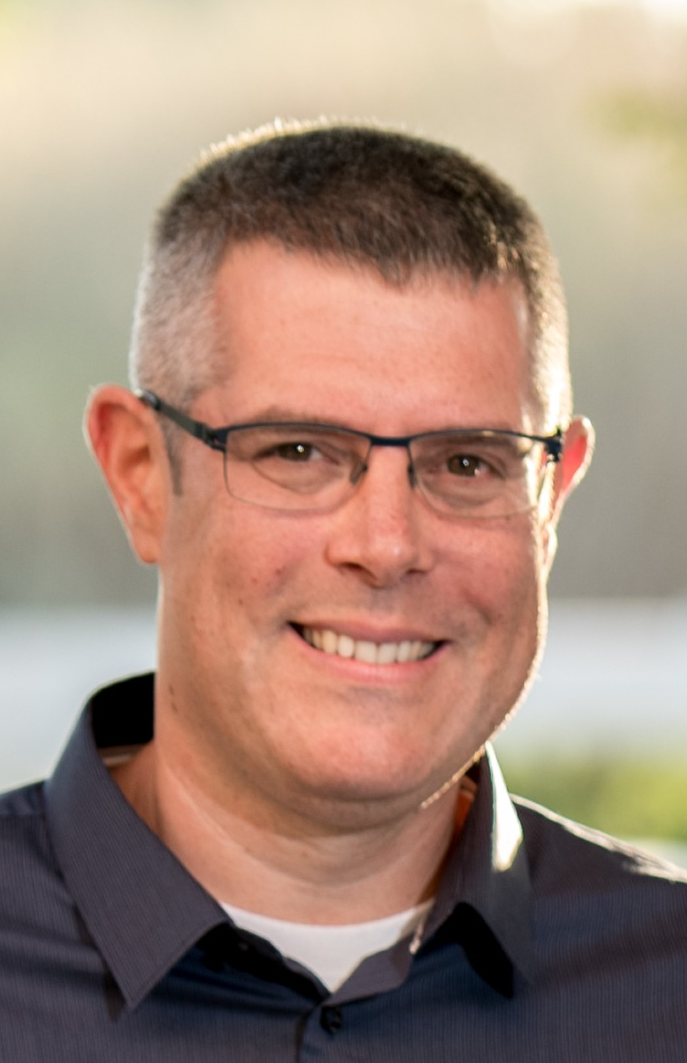
Prof. Izhaq-Yaron Toledo is a Professor at the School of Mechanical Engineering, Tel Aviv University, where he leads the Marine Engineering and Physics Laboratory (MEPlab). His research employs a holistic approach integrating theoretical modeling, field observations, remote sensing, and machine learning to study ocean surface dynamics in the Eastern Mediterranean Sea. Research Focus: Prof. Toledo's work spans geophysical and environmental fluid dynamics, with emphasis on wave-current-wind interactions, pollutant transport, radar-based remote sensing of ocean surfaces, and coupled modeling of temperature, salinity, and wave systems in the Mediterranean and Red Seas. Core methodologies include analytical solutions for differential equations and marine engineering applications. Laboratory Leadership: At MEPlab, he directs interdisciplinary research on wave physics and oceanographic processes, leveraging both numerical simulations and empirical data collection.
Ami Wiesel is a Professor at The Rachel and Selim Benin School of Computer Science and Engineering at The Hebrew University of Jerusalem. His research focuses on statistical signal processing, machine learning, and covariance estimation. Previously, he completed his postdoctoral studies at the University of Michigan with Professor Alfred Hero, earned his PhD in Electrical Engineering from Technion under Professors Yonina Eldar and Shlomo Shamai, and obtained his MSc and BSc in Electrical Engineering from Tel Aviv University. His research interests include robust covariance estimation , statistical learning , signal detection , and MIMO communications . Wiesel has made significant contributions to the field of structured covariance estimation, particularly in elliptical distributions and Tyler's estimator. His work bridges theoretical statistics with practical applications in radar systems, wireless communications, and hyperspectral imaging. Wiesel's publications show a clear trend toward integrating deep learning with traditional statistical signal processing methods. His recent work explores unbiased estimation using neural networks, fair principal component analysis, and deep learning applications for target detection with constant false alarm rate. His research spans theoretical foundations in covariance estimation to practical implementations in radar and communications systems. Among his notable scientific achievements are: Young Author Best Paper Award (2019) for 'Learning to Detect' Young Author Best Paper Award (2006) for 'Linear precoding via conic optimization for fixed MIMO receivers' Student Paper Award (2017) for 'Deep MIMO detection' Wiesel has advised numerous graduate students who have gone on to publish significant work in the field. His research has been supported by various grants focusing on statistical signal processing, machine learning applications, and radar systems. His monograph 'Structured Robust Covariance Estimation' (2015) has become a reference in the field. He maintains an active research group focusing on the intersection of statistical learning and signal processing, with applications in communications, radar, and medical imaging.
Prof. Ram Frost is a Professor in the Department of Psychology at the Faculty of Social Sciences, The Hebrew University of Jerusalem, with office location in the Social Sciences Building (fifth floor, room 26509). He maintains active research fellowships at Haskins Laboratories in New Haven and the Basque Center for Cognition, Brain and Language (BCBL), underscoring his international collaborative networks. His research centers on cognitive mechanisms of visual word recognition across languages and statistical learning as an individual capacity for detecting environmental regularities. He investigates universal versus language-specific aspects of reading processes and individual differences in second language acquisition, with current work focusing on the behavioral and neurobiological underpinnings of statistical learning through an ERC Advanced grant. Recent publications reveal a concentrated research trajectory examining brain signatures of reading proficiency (including beta-band neural activity), theoretical integration of statistical learning into cognitive frameworks, and clinical applications for understanding language impairments. His work bridges cognitive neuroscience, psycholinguistics, and information theory to address fundamental questions about learning mechanisms. Prof. Frost leads an ERC Advanced grant-funded research program examining statistical learning from multidisciplinary perspectives. His laboratory maintains strong collaborative ties with Haskins Laboratories and BCBL, facilitating cross-institutional research on learning mechanisms and their implications for language processing and acquisition.