

Haiyan Lee serves as the Walter A. Haas Professor of the Humanities and Professor of East Asian Languages and Cultures and of Comparative Literature at Stanford University. She has held these positions since joining Stanford in 2009, and currently serves as Chair of the East Asian Languages and Cultures department (2020-present). Her academic journey includes previous teaching appointments at the University of Colorado at Boulder and the University of Hong Kong, along with post-doctoral fellowships at Cornell University and Harvard University. Lee's research spans multiple interdisciplinary fields with particular focus on modern Chinese literature and cultural production. Her work bridges literary studies with law, philosophy, cognitive science, affect theory, gender studies, and environmental humanities. She has developed influential theoretical frameworks including the concept of "high justice" and "low justice" in Chinese legal imagination. Her current research explores animism, cognition, and the Chinese environmental imagination, extending her longstanding interest in human-animal relations. Lee's publications reveal a consistent trajectory examining Chinese cultural production through innovative theoretical lenses. Her recent work shows increasing engagement with legal theory, environmental humanities, and cognitive approaches to literature. She has produced significant scholarship on Chinese concepts of justice, love, and the stranger, moving across historical periods from early 20th century to contemporary China. Biennial Book Prize, Honorable Mention, International Society for Chinese Law and History (ISCLH) (2024) Humanities Seed Grant, Stanford School of Humanities and Sciences (2023-2025) Bass Fellowship in Undergraduate Education, Stanford University (2022-2027) Joseph Levenson Book Prize, The Association for Asian Studies (2009) Professor Lee actively mentors doctoral students across multiple disciplines, serving as dissertation advisor, co-advisor, and committee member for students working at the intersection of Chinese studies, law, literature, and cultural theory. Her teaching includes courses across East Asian humanities, comparative literature, and interdisciplinary environmental studies. She has received significant research support including the Frederick Burkhardt Residential Fellowship from the American Council of Learned Societies and a residency at the Center for Advanced Study in the Behavioral Sciences.
جستجوی استاد راهنمای دانشگاهی
برای مسیر پژوهشیتان، استاد راهنما، استاد دانشگاه و پژوهشگر مناسب را پیدا کنید و با آنها ارتباط بگیرید.
نمایش ۱-۱۵ از ۲٬۶۹۸ استاد راهنما
اطلاعات پروفایلها از صفحات عمومی دانشگاهها گرفته شده و ممکن است بهروز نباشد.

Corey T. Callaghanمشاهده پروفایل
استادیار
Dr. Corey T. Callaghan is an Assistant Professor in the Department of Wildlife Ecology and Conservation at the University of Florida . Based at the Fort Lauderdale Research and Education Center , his research focuses on global change ecology using big data from citizen science platforms like eBird and iNaturalist, combined with geospatial analyses and macroecological theory . Ph.D. (2019) from UNSW Sydney M.S. (2015) from Florida Atlantic University B.S. + B.S. (2013) from Canisius College His work examines urban ecology , including how species traits influence urban tolerance across birds, amphibians, and butterflies. He develops adaptive sampling frameworks to optimize citizen science data collection while addressing biases. Current projects analyze human-nature interactions through citizen science participation, secondary data in photographs, and machine learning for biodiversity monitoring. He actively contributes to conservation strategies for urban biodiversity and data-driven restoration efforts . Recent publications highlight his expertise in cross-taxa comparisons , continental-scale analyses , and ecosystem service quantification . He leads the Global Ecology Research Group at the University of Florida, emphasizing collaborative science and open-source methodologies .

Prof. Ahmet Atay holds the rank of Professor of Communication Studies at the College of Wooster, serving as Program Chair of Global Media & Digital Studies and liaison to the Digital Visual Storytelling Pathway. His academic journey includes degrees from Marmara University (B.A., 1998), Ohio University (M.A., 2001), University of Northern Iowa (M.A., 2003), and Southern Illinois University (Ph.D., 2009). His research focuses on transnational communication, digital media's societal impact, cultural identity formation in global contexts, and queer diasporic experiences. He actively explores media representation of gender/sexuality, critical pedagogy, and autoethnography as research methodologies. Notable projects include editing works on millennial media ecology, intercultural communication pedagogy, and transnational queer cinema. Teaching responsibilities include courses on intercultural communication, mediated gender studies, and digital storytelling for social justice. He has held leadership roles in professional organizations like the National Communication Association and Central States Communication Association. Prof. Atay's recent publications emphasize digital ethnography, decolonizing communication studies, and queer pedagogy innovations. His work bridges theoretical frameworks with practical educational applications, addressing contemporary issues like diversity in academia and media's role in shaping cultural narratives.

Steven Jackson is a Professor of Information Science and Science and Technology Studies at Cornell University's Bowers College of Computing and Information Science, with additional graduate field appointments in Communication and Public Affairs. Since July 2023, he has served as Vice-Provost for Academic Innovation at Cornell, and previously held leadership positions as Chair of Information Science and Dean of William Keeton House. His work bridges academic research with significant institutional leadership in higher education innovation. Dr. Jackson's research focuses on critical intersections of technology, society, and the environment, with three primary strands: technology ethics, law and policy; maintenance, repair and sustainability; and technology, inequality and global development. His work draws from American pragmatism, political economy, and science and technology studies, integrating methods from sociology, anthropology, philosophy, and media studies. He is particularly interested in how computing practices meet social and material worlds, with implications for infrastructure, collaboration, sustainability, and cultural practice. His recent publications reveal a strong emphasis on repair as both theoretical concept and practical methodology, exploring 'ordinary hope' as a framework for technological engagement and examining unmaking as a necessary counterpart to design. The research spans diverse geographical contexts from the global North to South, addressing caste dynamics in computing, digital authoritarianism, and infrastructure challenges in developing contexts. Dr. Jackson has received significant recognition including an NSF CAREER award and more than twenty paper awards at leading computing and information science venues. His research has been supported by major organizations including the U.S. National Science Foundation, Social Science Research Council, Ford Foundation, Sloan Foundation, World Bank, Intel Research, Atkinson Center for Sustainability, and the Canadian Social Science and Humanities Research Council. As an advisor, Dr. Jackson has mentored numerous graduate students who have gone on to prominent positions at institutions worldwide. He currently advises Jen Liu, Amy Cheatle, Daniel Mwesigwa, Johan Michalove, and Ritik Batra, while his former students include Palashi Vaghela (Assistant Professor at Simon Fraser University), Samir Passi (Responsible AI Researcher at Microsoft), Maggie Jack (Assistant Professor at NYU), and Ranjit Singh (Senior Researcher at Data and Society). Dr. Jackson convenes the Computing On Earth Lab, an experimental collaboration bringing together social scientists, humanists, artists, and engineers to rethink the material and planetary foundations of computing. The lab reflects his commitment to interdisciplinary approaches that address computing's environmental impacts and sustainability challenges.
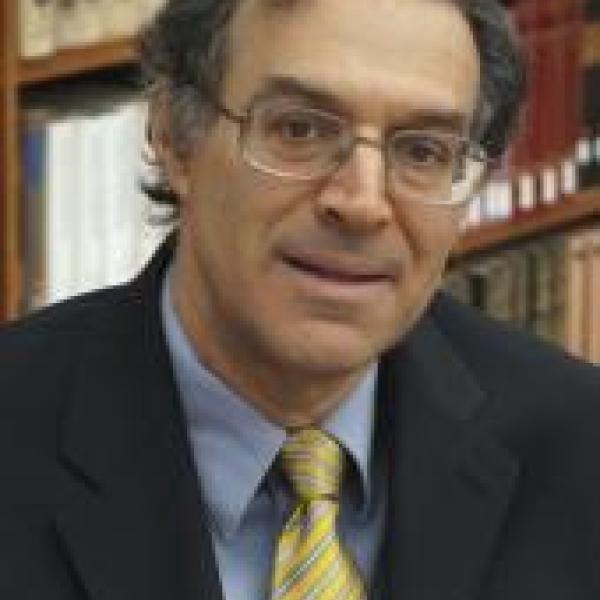
Kenneth Pomeranz is the University Professor of Modern Chinese History at the University of Chicago in the Department of East Asian Languages and Civilizations (EALC). Previously taught at the University of California, Irvine , his research spans late Imperial and twentieth-century China , comparative world history , and global economic systems . Research Focus: Reciprocal influences between state, society, and economy; origins of the world economy through mutual regional influences; comparative studies of labor, family organization, and economic history. Current Projects: A history of Chinese political economy from the seventeenth century to the present; a book titled Why Is China So Big? exploring China's political unity despite its vast size. Scientific Awards and Fellowships: John K. Fairbank Prize (twice) World History Association Book Prize (shared) Guggenheim Fellowship American Academy of Arts and Sciences Fellow Publications: Key works include The Great Divergence , The Making of a Hinterland , and The World that Trade Created . His articles address topics such as labor-intensive industrialization, global environmental history, and Qing state-building.
Zaid Harchaouiمشاهده پروفایل
استاد مدعو
Zaid Harchaoui is an Adjunct Professor in the Department of Statistics at the University of Washington. His research focuses on machine learning, generative AI, and algorithmic optimization, with applications spanning ecology, neuroscience, and artificial intelligence. He explores learning under distributional shifts and develops tools for scalable generative models in language and vision domains. University: University of Washington Department: Statistics Research Focus: Learning from data with computational, inferential, and mathematical rigor; distributional shift adaptation; generative model scaling Email: zaid@uw.edu His recent work emphasizes generative AI applications in ecology and neuroscience, stochastic optimization for robustness, and algorithmic efficiency in large-scale learning. Key contributions include techniques for distributionally robust optimization, interpretable authorship obfuscation, and uncertainty quantification in behavior classification. Scientific awards and honors are not explicitly mentioned in the provided text. Collaborative efforts often intersect with nonlinear control algorithms, spectral analysis, and privacy-preserving machine learning frameworks.
Daniel Cooneyمشاهده پروفایل
استادیار
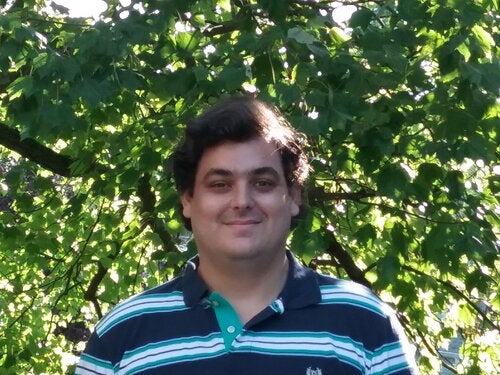
Daniel Cooney is an Assistant Professor in the Department of Mathematics at the University of Illinois Urbana-Champaign. He holds additional affiliations as an Affiliate at the Carl R. Woese Institute for Genomic Biology. His research focuses on applying partial differential equations (PDEs), dynamical systems, and stochastic processes to study evolutionary dynamics, particularly in biological and social systems. Key themes include multilevel selection, evolutionary game theory, and the emergence of cooperative behavior. Cooney earned his PhD in Applied and Computational Mathematics from Princeton University, advised by Simon Levin, and completed a postdoc as a Simons Fellow in Mathematical Biology at the University of Pennsylvania. His work bridges theoretical mathematics with applications in ecology, epidemiology, and social sciences. Recent publications explore topics like altruistic punishment in cultural systems, classroom-turnover dynamics, and protocell evolution. He actively participates in academic outreach, co-organizing conferences such as the AMS Special Session on Mathematics of Infectious Disease and the SIAM Minisymposium on Social-Ecological Systems. His research has been published in high-impact journals including *Proceedings of the National Academy of Sciences* and *Bulletin of Mathematical Biology*.
Tim Elmo Feitenمشاهده پروفایل
دانشگاهی
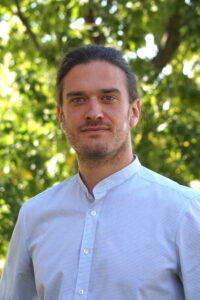
Tim Elmo Feiten is an Assistant Teaching Professor of Philosophy at the University of Cincinnati. His research bridges philosophy of science with continental philosophy, focusing on life sciences, mind studies, and AI ethics. He holds degrees from the University of Freiburg (B.A. 2009, M.A. 2012) and University of Cincinnati (M.S. 2024, M.A. 2024, Ph.D. 2024 in Philosophy and the Life Sciences). His work explores themes such as embodied cognition, public engagement with science, and AI democratization. Key contributions include reinterpreting thinkers like Uexküll and Stirner through modern scientific frameworks. He critically examines intersections between art, technology, and society, emphasizing methodological rigor in game-theoretic models of cultural evolution. Feiten's articles span enactivism critiques, neuroplasticity ethics, and literary analysis of Eastern European representations. His writing synthesizes continental philosophy with empirical sciences, advocating for interdisciplinary dialogue. Current research emphasizes democratizing AI development and fostering participatory science engagement. No scientific awards listed. Advising and grants are not detailed in available texts. Active in philosophical communities through publications and conferences.

Martin T. Wells is the Charles A. Alexander Professor of Statistical Sciences at Cornell University, with joint appointments in the Department of Statistical Science, Department of Biological Statistics and Computational Biology, Department of Social Statistics, and as Professor of Clinical Epidemiology and Health Services Research at Weill Medical School. He serves as Editor-in-Chief of the ASA-SIAM Book Series and Co-Editor of the Journal of Empirical Legal Studies. Cornell University, Ithaca, NY Weill Cornell Medical College Research Interests span applied and theoretical statistics, Bayesian methods, biostatistics, clinical epidemiology, and computational biology. His work bridges disciplines like finance, legal studies, and health services research. Article Trends highlight advancements in Bayesian modeling, quantum cognition machine learning, tensor analysis, and misclassification correction, with applications in genomics, finance, and public health. Fellow of the American Statistical Association Fellow of the Royal Statistical Society Contributions include developing statistical software (e.g., rTensor), methodological innovations in clinical trials, and empirical legal studies on civil rights and the death penalty.

Walter W. Powell is the Jacks Family Professor of Education at Stanford University, with courtesy appointments in Sociology, Organizational Behavior, Management Science and Engineering, and Communication. He serves as Faculty Co-Director of the Stanford Center on Philanthropy and Civil Society (PACS), which he co-founded in 2006, and leads the Civic Life of Cities Lab examining civil society organizations across global metropolitan areas. Powell is also an External Faculty member at the Santa Fe Institute and co-directs the CASBS summer institute on Organizations with MIT's Bob Gibbons. His educational background includes a PhD in Sociology from SUNY-Stony Brook (1978), an MA in Sociology from the same institution (1975), and a BA from Florida State University (1971). Powell's research fundamentally explores how ideas and practices transfer across organizational boundaries, with particular emphasis on network structures that enable or constrain knowledge diffusion. His work spans organizational theory, institutional analysis, university-industry relations, economic sociology, and comparative analysis of nonprofit, public, and private institutional forms. Powell's publications reveal consistent focus on network dynamics and institutional evolution, particularly examining how organizations navigate between market, hierarchy, and network governance structures. His research demonstrates how knowledge spillovers operate within biotechnology clusters, how institutional isomorphism shapes organizational fields, and how civil society organizations adapt to technological and economic pressures across different urban contexts. Dean's Award for Excellence in Graduate Teaching (2018-19) Max Weber Award for "Neither Market Nor Hierarchy" Viviana Zelizer Prize for "Network Dynamics and Field Evolution" Administrative Science Quarterly Recognition Member of Swedish Royal Academy of Science Member of The British Academy Member of American Academy of Arts and Sciences Honorary Degrees from Uppsala University, Copenhagen Business School, and Aalto University Powell has made substantial contributions to graduate education, receiving Stanford's highest teaching honor. His leadership of PACS and SCANCOR (1999-2010) demonstrates sustained commitment to advancing organizational research through collaborative initiatives. He supervises postdoctoral fellows and runs annual PhD workshops in Europe, fostering the next generation of organizational scholars. His research has been supported by grants enabling comparative studies of university-industry relations and civil society across multiple national contexts. Through the Civic Life of Cities Lab at PACS, Powell directs comparative research on civil society organizations across seven global cities, examining how these organizations navigate technological change, economic pressures, and political environments. His work bridges theoretical organizational sociology with practical applications in philanthropy, civil society development, and knowledge transfer between academic and commercial sectors.
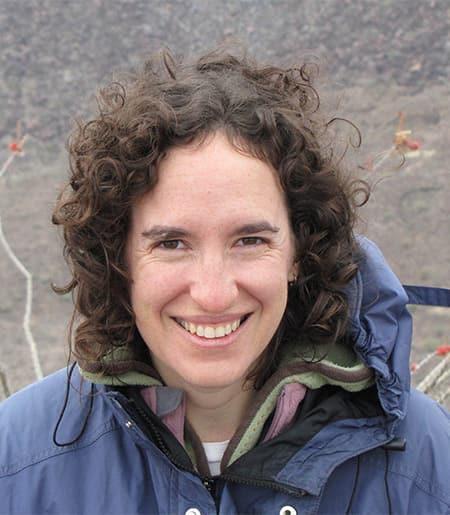
Jennifer S. Thaler is a Professor in the Department of Ecology and Evolutionary Biology at Cornell University, affiliated with the College of Arts and Sciences. She holds a Ph.D. from the University of California, Davis (1999) and a B.A. from Wellesley College (1993). Her research focuses on tri-trophic interactions between plants, herbivores, and predators, with an emphasis on chemical ecology, plant defense mechanisms, and pest control strategies. She teaches courses such as Chemical Ecology and Insect Ecology, and her work bridges fundamental ecological theory with applied agricultural challenges. Dr. Thaler’s research investigates how plant traits, predator presence, and nutritional states influence herbivore behavior and population dynamics. Notable projects include studying non-consumptive predator effects, plant genotypic diversity’s impact on herbivores, and the evolutionary potential of antipredator plasticity. Her publications span journals like Ecology , Oecologia , and Proceedings of the Royal Society B . Her scientific contributions include winning the 2nd place Elton Prize (2015) for research on predator effects on aphids. She actively engages in departmental initiatives, including the Graduate Program and the Plant-Insect Interactions Seminar. Affiliated with the Cornell Stable Isotope Laboratory, she contributes to interdisciplinary efforts in ecological research and education.

Brad D. Jokisch is a Professor and Undergraduate Chair in the Department of Geography at Ohio University’s College of Arts and Sciences. He is affiliated with International Studies and Latin American Studies, and his research focuses on population, environment, and development, particularly in Latin America. His work explores transnational migration, land-use change, and livelihoods in the Ecuadoran Andes. Education: Ph.D., Clark University, 1998 B.A., Augustana College, 1989 His research interests lie at the intersection of cultural/political ecology, population dynamics, agriculture, and development. He investigates how migration influences environmental change and how development shapes population movements, with a regional focus on Latin America. His fieldwork in the Ecuadoran Andes examines the impact of remittances and emigration on landscapes and rural communities. Recent publications highlight trends in transnational migration, land-use change, and development policy. His work spans interdisciplinary journals in geography, anthropology, and development studies, reflecting a strong emphasis on human-environment systems and migration. Key themes include remittances, land cover change, indigenous urbanization, and migration policy in South America. Scientific Awards: Fulbright Scholarship (2023–2024) for research on family emigration in southern Ecuador Dr. Jokisch advises undergraduate students as chair and teaches core courses such as Population Geography, Geography of Latin America, and Agricultural Ecosystems. While specific grant details and advisees are not listed, his sustained research output and leadership in the department suggest active mentorship and scholarly engagement. He is currently conducting research in Ecuador under a Fulbright award, indicating ongoing international collaboration and field-based inquiry. He is a key contributor to human-environment geography and migration studies, with a long-standing commitment to theoretical and empirical research in Latin America.
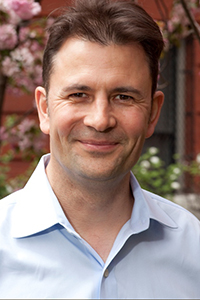
Paul R Moorcroft is a Professor of Organismic and Evolutionary Biology at Harvard University and an Affiliate in the School of Engineering and Applied Sciences (SEAS). His research focuses on ecological dynamics of terrestrial plant communities, biosphere-atmosphere interactions, and mechanistic models of animal movement. He collaborates with institutions like NASA JPL on projects such as the ECOSTRESS mission, which investigates environmental processes using satellite data. His lab, the Moorcroft Lab, emphasizes fieldwork and interdisciplinary approaches, as seen in recent collaborations in Italy and Southeast Asia. Key research areas include tropical forest ecology, carbon cycling in peatlands, and the application of remote sensing technologies to environmental monitoring. His work bridges theoretical models with empirical data, addressing global challenges like climate change and biodiversity loss. Recent publications highlight contributions to quantifying carbon emissions from peatland drainage and improving satellite-based mapping of forest functional traits. His advising activities include mentoring graduate students like Rhemi Toth. Collaborations with NASA and academic partners underscore his role in advancing Earth systems science through interdisciplinary research.

Marisol De La Cadena is a Professor in the Department of Anthropology at the University of California, Davis, with affiliations in Science and Technology Studies (STS). Her work bridges anthropology, political theory, and environmental thought, focusing on ontological divergence and multispecies relations in Latin America, particularly in Peru and Colombia. Department: Department of Anthropology School: College of Letters and Science University: University of California, Davis Email: mdelac@ucdavis.edu Office: Young Hall 315 Her research centers on the intersection of modern politics and non-modern or ahistorical ontologies, especially through what she calls "ontological openings." Drawing from deep ethnographic engagement with Quechua-speaking interlocutors in the Andes, she explores how earth-beings, humans, and nonhumans co-constitute worlds that exceed Western categories. Her theoretical contributions challenge conventional boundaries between nature and culture, history and timelessness, and politics and cosmology. Her recent fieldwork in Colombia examines human-cow relations on cattle ranches and in veterinary schools, situating these practices within broader ecological crises and post-conflict transitions. Her publications reveal a consistent interest in how ethnographic concepts function as both empirical observations and theoretical tools. The body of her work, including key articles like "Uncommoning Nature" and "Runa: Human but not only," reflects a deep commitment to rethinking anthropological method and theory. Her research trends emphasize ontological politics, multispecies ethnography, and the decolonization of knowledge, contributing significantly to contemporary debates in STS and anthropology. Her scientific honors include: John Simon Guggenheim Memorial Foundation Fellow (2008) Lewis H. Morgan Lecture Series Invited Speaker, University of Rochester (2011) Invited Researcher, Center for Advanced Studies, Norwegian Academy of Sciences (2015) Guest Speaker, Mellon-Sawyer Seminar, University of Cape Town (2010) She has been principal investigator on several major grants, including the John E. Sawyer Mellon-Sawyer Seminar on the Comparative Study of Cultures (2012–2016), a Wenner-Gren Conference Support Grant (2009–2010), and multiple research fellowships from the Guggenheim, Wenner-Gren, and American Philosophical Societies. These grants have enabled collaborative, transdisciplinary research on cosmopolitics, indigeneity, and the anthropology of worlds. She is affiliated with research initiatives such as the Sawyer Seminar on the Comparative Study of Cultures and contributes to global academic networks in anthropology and STS. Her work fosters dialogue between indigenous thought, continental philosophy, and ethnographic practice, creating spaces for alternative modes of knowing and being.
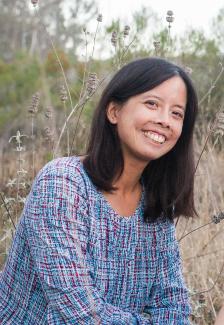
Alenda Y. Changمشاهده پروفایل
استادیار
Alenda Y. Chang serves as an Assistant Professor in Film and Media Studies at the University of California, Santa Barbara. With a multidisciplinary background spanning biology, literature, and film, she integrates ecocritical theory with contemporary media analysis. Her scholarly work appears in journals including Interdisciplinary Studies in Literature and Environment , Qui Parle , and electronic book review , focusing on sustainable media practices and ecological frameworks for digital engagement. Her educational background includes: M.A. and Ph.D. in Rhetoric from the University of California, Berkeley M.A. in English Language and Literature from the University of Maryland Chang specializes in environmental media and game studies, developing theoretical frameworks for ecological game design. Her research examines how digital games model environmental systems and foster player engagement with climate change through concepts like "slow violence" and "rambunctious play." She advocates for sustainable design patterns that address gaming's carbon footprint while creating immersive ecological narratives. Analysis of her 15 most recent publications reveals a consistent trajectory from foundational ecological game theory (2013-2018) to current work on thermal contexts of play and sustainable infrastructure (2022-2024). Her scholarship increasingly bridges data-driven activism with critical game design, emphasizing multispecies entanglements and infrastructural play as tools for environmental awareness. As co-founder of Wireframe—a collaborative media studio at UCSB—Chang cultivates critical game design practices through initiatives like growinggames.net . The studio supports data-driven global media art, environmental activism, and experimental pedagogy, serving as a hub for translating ecological theory into tangible digital interventions that challenge anthropocentric perspectives in gaming.
نمایش نتایج تا ۷۵۰ مورد اول. برای یافتن نتایج دقیقتر، جستجوی خود را با فیلترها محدود کنید.