
Anton Trushechkin is a Leading Researcher at the Steklov Mathematical Institute and Professor at Moscow Institute of Physics and Technology. His work bridges mathematical physics and quantum information science, with breakthrough contributions to quantum master equations and quantum cryptography security proofs. Research develops rigorous mathematical frameworks for open quantum systems, including derivations of quantum kinetic equations applicable to non-Markovian regimes. Created security proofs for practical quantum key distribution protocols that account for real-world device imperfections. Awards and Honors: Moscow Government Award for Young Scientists (2022) CIHR Postdoctoral Fellowship BrainsCAN Postdoctoral Fellowship Teaches quantum computation and quantum cryptography courses while supervising graduate students in mathematical physics. Currently leads research on quantum network correlations at Heinrich Heine University Düsseldorf.
جستجوی استاد راهنمای دانشگاهی
برای مسیر پژوهشیتان، استاد راهنما، استاد دانشگاه و پژوهشگر مناسب را پیدا کنید و با آنها ارتباط بگیرید.
نمایش ۱-۱۵ از ۸۱ استاد راهنما
اطلاعات پروفایلها از صفحات عمومی دانشگاهها گرفته شده و ممکن است بهروز نباشد.

Kvetoslava Matlovičová is an Associate Professor in the Department of Tourism at Bratislava University of Economics and Business. Her work bridges Tourism Geography , Territorial Marketing , and Sustainable Development with a focus on Roma communities , cultural heritage , and urban resilience . Her research explores the intersection of semiotic place branding , Anthropocene challenges , and postdisciplinary geographical frameworks . She pioneered studies on medical tourism in Hungary and pro-poor tourism in marginalized Roma settlements, emphasizing community-based solutions. Key projects include the 15-minute city sustainable urban model and metamodern shifts in geographical epistemology. Her 2025 article on AI adoption in EU tourism highlights data-driven spatial analysis. Scientific Awards: Rector's Award 2015 (Social Sciences and Humanities) Rector's Award 2016 She has led grants like Game-based learning innovation (KEGA 020EU-4/2024) and Sociological dialogue support (project 312031V749). Her advisory roles focus on territorial development and geographic education reform .
Slavomír Šimoňák is an Associate Professor at the Technical University of Košice , focusing on theoretical and applied aspects of computer science and discrete systems analysis. Research interests include formal methods for system design, protocol verification, and algorithm visualization. Teaches courses on Assembler programming and reverse engineering, requiring students to use personal notebooks. Contact details: slavomir.simonak@tuke.sk | Office: Letná 9, Room B513 (B529 old numbering).
- Graph Theory
- Combinatorics
- Discrete Mathematics
- +۱ مورد دیگر
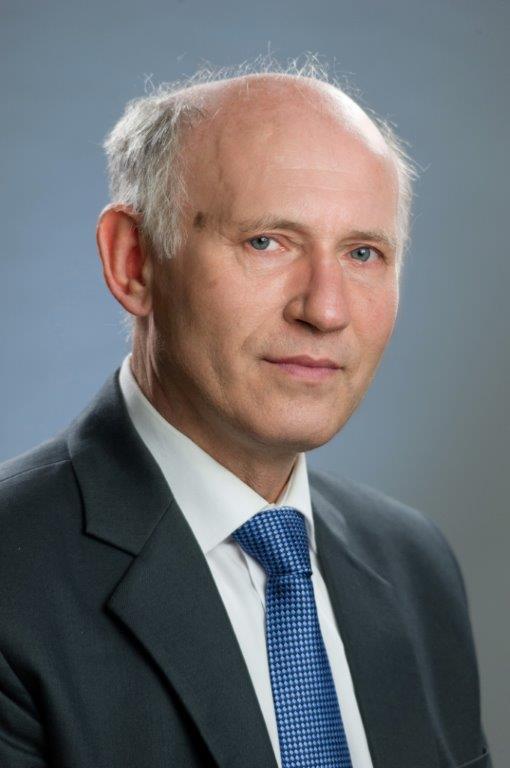
Professor Martin Bača is affiliated with the Department of Applied Mathematics and Informatics at the Faculty of Mechanical Engineering , Technical University in Košice , Slovakia. His academic role involves advanced research and teaching in graph theory and discrete mathematics. Research Interests: Specializing in graph labelings including vertex irregular total labelings, magic and antimagic labelings, edge-magic labelings, face-magic labelings of type (a,b,c), and harmonious labelings. Key areas: irregularity strengths , modular labelings , doubly resolving sets , and antimagic graphs . Focus on applications in network topology , chemical graph theory , and combinatorial optimization . Recent Article Trends: His 2024-2023 works explore modular irregularity strengths for dense graphs, corona products, and flower graphs, alongside antimagic labelings for digraphs, fullerenes, and generalized prisms. Notable themes include graph evaluation techniques , edge-antimagic total labelings , and vertex-antimagic labelings .
Dr. Vladimír Havlík is an Associate Professor at the Faculty of Philosophy, Masaryk University, and a researcher at the Institute of Philosophy of the Academy of Sciences of the Czech Republic since 1991. His academic career spans philosophy of science, emergence theory, and evolutionary epistemology. Education: PhDr. in Philosophy (1986, Charles University), CSc. (1990, Czechoslovak Academy of Sciences) Key roles: Secretary of the Czech Committee for Logic, Methodology and Philosophy of Science, computer network administrator at the Institute of Philosophy Dr. Havlík's research focuses on the philosophical foundations of science, particularly emergence, evolutionary theory, and the status of special sciences. His work critically examines reductionism, physicalism, and the methodology of cosmology, often bridging physics with metaphysical analysis. His publications analyze the interplay between logical positivism, scientific rationality, and interdisciplinary ontological principles. He has taught courses on philosophy of science, history of physics, and methodological seminars at the University of West Bohemia and Masaryk University. As a translator and editor, he has contributed to disseminating key texts in analytical philosophy, including works by Schlick, Waismann, Popper, and Feyerabend. His academic engagement extends to organizing symposia and serving on institutional IT commissions.

Jana Fortes is a Lecturer at the Faculty of Electrical Engineering and Informatics, Technical University of Košice, Slovakia. She teaches Applied Statistics, Cryptography, and Mathematics courses, including Numerical Mathematics and Probability and Statistics. Her research focuses on signal processing for localization and tracking systems using Ultra-Wideband (UWB) radar and sensor networks. Teaching: Applied Statistics, Cryptography, Mathematics I/II, Numerical Mathematics, Probability and Statistics, Mathematics Tutoring Research: UWB radar signal processing for person localization and tracking, software development (MATLAB, LabVIEW), cluster analysis for movement detection. Publications: Recent work includes studies on 2D/3D localization algorithms, UWB sensor system implementations, and mathematical analyses of graph crossing numbers. Contact: Email: jana.fortes@tuke.sk , Room N32 615, Phone: +421 55 602 3252.
Július Hlaváčمشاهده پروفایل
استادیار
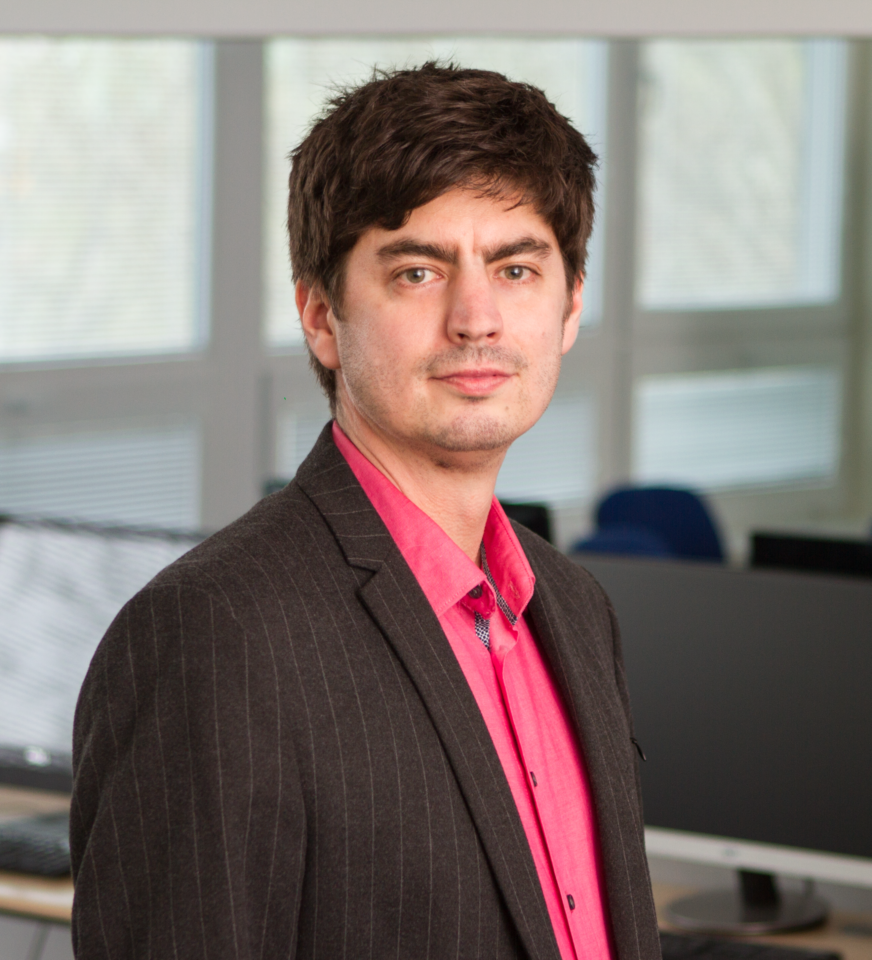
Július Hlaváč serves as an Assistant Professor at the Faculty of Informatics of the Pan-European University. His work integrates theoretical knowledge with practical applications in software engineering, business intelligence, and enterprise IT architecture. Position: Assistant Professor Workplace: Institute of Applied Informatics Phone: +421 2 6820 3685 Email: julius.hlavac@paneurouni.com Hlaváč emphasizes bridging academia and industry through teaching subjects like IT Project Management , Software Engineering , and Enterprise Architecture . He has supervised over 60 diploma theses at the university. His research spans Business Intelligence , Data Mining , and Information Security , focusing on extracting hidden patterns from datasets to support decision-making. Recent publications with Juraj Štefanovič (2020) and collaborators (e.g., Ružický et al., 2020) demonstrate expertise in machine learning, medical data visualization, and enterprise IT systems. Project: GAAA Challenge (Project number: GAAA 12/2018) Laboratory: Think Future Laboratory Miscellaneous achievements: PRINCE2 Foundation certification. Active in university governance as a member of the Academic Senate and representative on the Council of Universities.
- Counselling Psychology
- Psychotherapy
- Emotion
- +۳ مورد دیگر
Prof. Júlia Kanovská Halamová is a Professor of Psychology at the Institute of Applied Psychology, Faculty of Social and Economic Sciences, Comenius University in Bratislava. She holds a PhD in Psychology from Comenius University and has been a registered psychotherapist since 2007. Her academic career includes roles as Head of the Institute of Applied Psychology (2020–2024), and prior positions as Associate Professor (2014–2019) and Assistant Professor (2001–2013). She maintains a private psychotherapy practice and has extensive training in emotion-focused therapy (EFT), compassion-focused therapy, and systemic psychotherapy. Education: 2001 PhD in Psychology, Faculty of Arts, Comenius University 1998 Master’s in Psychology, Faculty of Arts, Comenius University Research Interests: Counseling psychology, emotion regulation, self-compassion interventions, and community psychology. Her work emphasizes translating theoretical frameworks (e.g., compassion-focused therapy) into clinical and community-based applications. She leads research on cross-cultural self-compassion measurement and therapeutic outcomes for diverse populations, including individuals with intellectual disabilities. Grants & Projects: Lead investigator of the Testing the effect of intercultural aspects of compassion (VEGA 1/0075/19) Organized international community psychology conferences (2015–2019) under APA Division 27 Recipient of Norway grants for emotion-focused family therapy training (2015) Labs/Teams: Active in the Institute of Applied Psychology and collaborates with global networks like the International Society for Emotion-Focused Therapy and the Slovak Psychotherapeutic Association. Her work integrates clinical practice with research on compassionate living and emotion-focused training methodologies.
Michaela Bačíkováمشاهده پروفایل
استادیار
Michaela Bačíková is an Assistant Professor at the Faculty of Electrical Engineering and Informatics (FEI) of the Technical University of Košice (TUKE). Her research focuses on Human-Computer Interaction (HCI), domain usability, and domain analysis, with an emphasis on graphical user interfaces (GUIs), domain-specific languages (DSLs), and gesture-driven interaction. She leads the development of the DEAL tool, a domain analysis framework for extracting domain models from software systems. Her teaching includes courses on component-based programming, web technologies, and user interface design. Research Projects: DEAL (Domain Extraction ALgorithm) : A tool for analyzing GUIs to generate DSLs, ontologies, and usability metrics. EU Project: 'Evolving Architectural Knowledge in the Edge-to-Cloud Continuum' (participant). Educational initiatives: Integrating gesture-driven IDEs and social networks for mentoring in programming courses. Research Interests : Automated domain usability evaluation using DEAL. DSL-driven GUI generation and feature modeling. Innovations in teaching software development and user experience design. Grants & Labs : Recipient of FEI TUKE Grant no. FEI-2015-16 for domain usability metrics research. Active in the FEI lab developing DEAL and related tools.
Ota Pavlíčekمشاهده پروفایل
پژوهشگر
Ota Pavlíček is a Senior Researcher at the Institute of Philosophy, Czech Academy of Sciences, where he has been affiliated since 2008. He currently serves as coordinator of the TRIPTIC-EU research group, Principal Investigator for the ERC ACADEMIA project, and deputy head of department. Previously, he held positions as Postdoctoral Researcher (2015–2019) and Researcher (2019–2020), and served as Scientific Secretary of the Collegium Europaeum until 2021. His academic credentials include: PhD in History of Philosophy, Université Paris-Sorbonne (2014), final mark: très honorable avec félicitations du jury ThD in Hussite Theology, Hussite Faculty of Theology, Charles University, Prague (2014), final mark: summa cum laude MA (Mgr.) in Teaching of Philosophy, Ethics, and Religion, Hussite Faculty of Theology, Charles University, Prague (2007), final mark: summa cum laude Pavlíček specializes in the history of knowledge production at Late Medieval and Early Modern European universities, with particular focus on Central European Faculties of Liberal Arts and their connections to Western Europe. His research spans philosophical discussions (metaphysics, logic, astrology), theological debates (especially philosophical theology of the Reformation), and intellectual practices including Arts quodlibets. He actively integrates Digital Humanities methodologies for analyzing medieval textual corpora, bridging historical scholarship with computational approaches. His work demonstrates exceptional expertise in Bohemian intellectual history, particularly the University of Prague's academic culture around 1409. Analysis of his recent publications reveals a consistent trajectory exploring quodlibetal debate structures, the philosophical theology of Jerome of Prague and Jan Hus, and the transmission of Wycliffite ideas in Central Europe. His scholarship uniquely combines critical edition work with theoretical analysis of medieval academic practices, while his Digital Humanities projects create innovative pathways for studying historical knowledge production. His scientific recognition includes: 2023 ERC Proof of Concept, Seal of Excellence (project WHEEL) 2020 ERC Starting Grant (project ACADEMIA) 2019 Humboldt Research Fellowship for Postdoctoral Researchers 2016 Otto Wichterle Award of the Czech Academy of Sciences Multiple early-career prizes including Josef Hlávka and Bernard Bolzano Awards Pavlíček directs major research initiatives including the ERC ACADEMIA project reconstructing Arts quodlibetal traditions (1370–1700) and Czech Science Foundation projects on Prague's Faculty of Arts. He has organized over forty international conferences including the annual Studying the Arts in Late Medieval Bohemia series and Prague Talks on Digital Humanities. His public engagement includes co-authoring major exhibitions (Sedm věží, Heretical University), media appearances, and educational materials for schools. He serves on editorial boards for Latinitatis medii aevi lexicon Bohemorum and Questions from History Journal, and maintains active membership in international scholarly societies including SIEPM and Societas Artistarum. He leads the TRIPTIC-EU research group at the Institute of Philosophy, which focuses on medieval knowledge production through interdisciplinary collaboration between historians, digital humanities specialists, and philologists, with particular emphasis on reconstructing academic practices through digital tools.
William Steingartner is an Associate Professor at the Faculty of Electrical Engineering and Informatics, Technical University of Košice (TUKE). He specializes in formal languages, programming language semantics, cybersecurity, and computer science education. His research focuses on advancing pedagogical tools for teaching formal semantics, compiler design, and secure software development. He actively contributes to academic governance, serving as Principal Investigator on projects like 'Application of new principles in the education of IT specialists' and participating in 'Evolving Architectural Knowledge in the Edge-to-Cloud Continuum.' Dr. Steingartner holds editorial roles, including guest editor for the Central European Journal of Computer Science (since 2011) and editor of proceedings for conferences like INFORMATICS 2019. He has organized major events such as the International Scientific Conference Informatics in 2013, 2015, 2017, and 2019, demonstrating leadership in academic event management. His teaching spans formal languages, logic for computer scientists, and domain-specific language design. Research highlights include developing tools like OnlineProver for formal logic education and RISCAL for semantics visualization. He explores cybersecurity challenges in hybrid threats, API security, and cyber resilience strategies, alongside innovations in VR applications for therapy and education. Key contributions include over 50 publications since 2015, with recent work addressing disinformation campaigns, smart orthosis design, and pedagogical software for programming semantics. He emphasizes interdisciplinary collaboration, bridging theoretical computer science with practical applications in medicine, robotics, and user experience design.
Prof. Gabriel Juhás is a leading academic at the Institute of Applied Informatics within the Faculty of Informatics at Paneuropean University PEVŠ. With a career spanning over three decades, his expertise bridges formal methods in computer science, particularly Petri net theory, with practical applications in low-code development platforms like Netgrif. Comenius University (BS, Mathematics and Physics, 1993) Slovak University of Technology (PhD, Electrical Engineering and Informatics, 1999) University of Eichstätt-Ingolstadt (Habilitation, Informatics, 2005) His research focuses on modeling event-driven systems using Petri nets, advancing algebraic descriptions of event concurrency, and developing polynomial algorithms for scenario feasibility. He co-created the Petriflow low-code language, enabling process-driven application development deployed in leasing, insurance, healthcare, and energy sectors. Key trends in his publications include formal verification of concurrent systems, token flow analysis in Petri nets, and the evolution of low-code platforms for business process management. His work emphasizes translating theoretical models into practical solutions through startups like NETGRIF. He has supervised over 100 theses, including three doctoral dissertations, and led 15+ research projects. His industry collaborations with AUDI AG and IBM demonstrate his commitment to bridging academia and practice.
Prof. RNDr. Katarína Sakálová, CSc. is a Professor at the Department of Mathematics and Actuarial Science, Faculty of Economic Informatics, University of Economics in Bratislava. Her career spans over four decades with continuous academic progression from Assistant (1978-1981) to Assistant Professor (1981-2010) and Professor since 2011. Education: Second Degree: General Education Teacher (Math-Physics), Faculty of Natural Sciences, Comenius University Bratislava (1978) Third Degree: Mathematical Analysis, Faculty of Mathematics, Physics and Informatics, Comenius University (1994) Associate Professor: Quantitative Methods in Economics, Faculty of Economic Informatics (2000) Professor: Quantitative Methods in Economics, Faculty of Economic Informatics (2011) Her research focuses on actuarial science and life insurance mathematics , with expertise in premium pricing, risk modeling, and interest rate impacts on insurance products. She employs advanced quantitative methods including stochastic modeling and constrained optimization, often applied to solvency assessment and portfolio variability analysis. Her work bridges theoretical mathematics with practical insurance economics, particularly in regulatory compliance contexts like Solvency II. Recent publications (2016-2022) demonstrate consistent specialization in life insurance risk management, with emphasis on profitability metrics, catastrophic risk capital requirements, and premium calculation methodologies. The research shows increasing focus on regulatory capital frameworks and computational approaches to complex insurance problems. Research Leadership: Head of VEGA Project 1/0618/17 (2017-2019): Modern Methods for Modeling and Risk Management in Life Insurance Team Member: VEGA 1/0410/22 (2022-2024) - Analysis of Insurance Risks Team Member: VEGA 1/0166/20 (2020-2022) - Capital Requirements for Catastrophic Risks She has supervised 20 bachelor's theses, 56 master's theses, and 6 doctoral dissertations. International collaborations include City University of London, Government Actuary's Department UK, and University of Padova. Professional engagement includes founding membership in the Slovak Society of Actuaries (1996-present), leadership in the SSA Education Commission (2012-2014), and presidency of the Subsection Commission for Quantitative Methods in Economics (since 2019).

Prof. RNDr. Katarína Cechlárová, DrSc, is a distinguished academic at Pavol Jozef Šafárik University's Faculty of Science, specializing in theoretical mathematics and algorithmic research. Her career focuses on combinatorial optimization and discrete mathematical structures. Research interests include Theoretical computer science foundations Combinatorial optimization problems Algorithm design and analysis Discrete mathematical modeling

RNDr. Juraj Valiska, PhD, is a Lecturer at the Technical University of Košice since 2019, specializing in graph theory and mathematical analysis. He teaches courses including Numerical Mathematics, Probability and Statistics, Operational Analysis, and Discrete Mathematics. Roles: Lecturer, Academic Senate Member, Department Computer Administrator Research Focus: Graph coloring, facial coloring of graphs, algorithmic connections in graph structures His competencies include departmental inventory management and software computing resource coordination. Contact: Room N32 615, +421 55 602 3252.