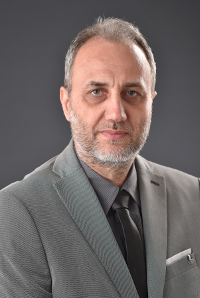
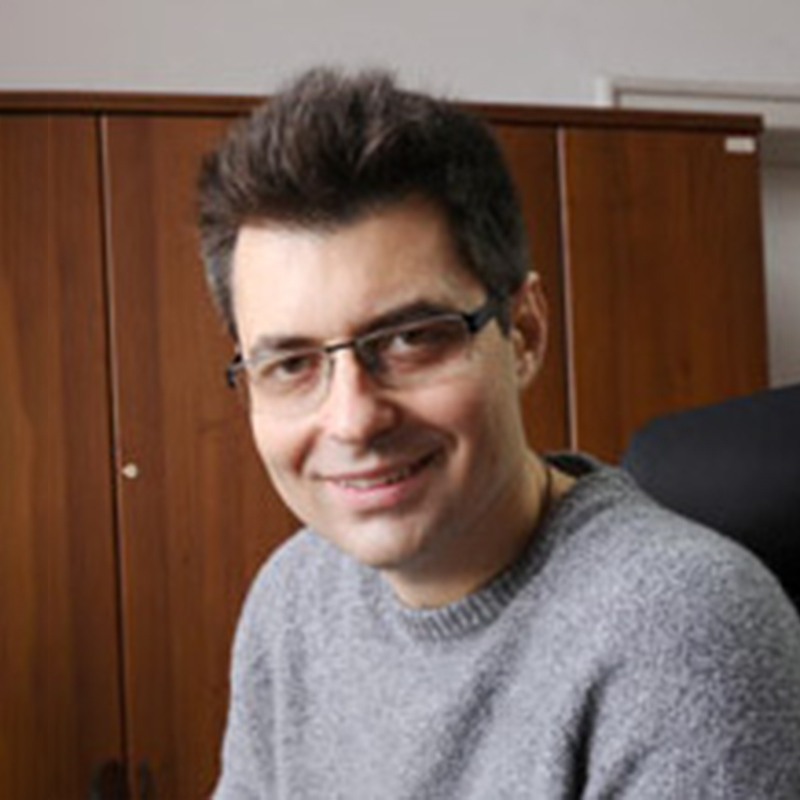
Dalibor Radovanović is a researcher at Singidunum University , affiliated with the Faculty of Business Informatics . His work spans cybersecurity, blockchain technologies, and their applications in business and IoT systems. Education: Doctoral Dissertation (2016, Singidunum University) Master's & Basic Studies (Faculty of Business Informatics) Secondary Education: ETŠ Nikola Tesla Research Interests include: Security frameworks for IoT and blockchain integration Smart card and wireless network vulnerabilities E-governance and corporate IT audit methodologies Machine learning applications in cybersecurity Environmental performance optimization in agribusiness Publication Trends reveal a focus on blockchain (2022), cybersecurity (2009-2022), and IT governance (2010-2017). His work bridges theoretical analysis with practical implementations in Serbia's digital economy. Collaborations with scholars like Marko Šarac and Saša Adamović highlight interdisciplinary approaches to securing financial systems, educational institutions, and industrial IoT applications.
Svetlana Stanišić is an Associate Professor at Singidunum University's Faculty of Informatics and Computer Science, Department of Applied Artificial Intelligence. She holds a dental degree from the University of Belgrade's Dental Faculty (1998-2004) and a PhD in Physical Chemistry from the University of Belgrade's Faculty of Physical Chemistry (2007-2011). Her interdisciplinary research bridges environmental science, artificial intelligence, and public health. Her research interests focus on environmental science, air pollution modeling, and artificial intelligence applications . She investigates the atmospheric fate of pollutants using advanced machine learning techniques, with particular emphasis on polycyclic aromatic hydrocarbons (PAHs), volatile organic compounds (VOCs), and particulate matter. Her work combines environmental chemistry, computational modeling, and public health impact assessment to address urban air quality challenges. Analysis of her recent publications reveals a clear trend toward explainable AI applications in environmental science . She has pioneered the use of SHAP (SHapley Additive exPlanations), XGBoost, and metaheuristic optimization for pollutant fate prediction and source apportionment. Her research spans indoor and outdoor environments, with particular attention to health implications of air pollution exposure in urban settings like Belgrade. Dr. Stanišić leads significant research projects including "crAIRsis" (2024-2026) , which characterizes crisis-caused air pollution alternations using AI frameworks, and "ATLAS" , focusing on artificial intelligence theoretical foundations for spatio-temporal modeling. She has also authored influential books including "Ako je hrana Vaš porok" (2024) and "Ishrana i zdravlje" (2018). Her research group focuses on environmental informatics , developing computational tools to understand pollutant behavior in complex urban environments. The team combines atmospheric chemistry measurements with advanced machine learning techniques to create predictive models with practical applications for urban air quality management and public health protection.
Sebastian Pokutta is a Professor at Technische Universität Berlin, Vice President at the Zuse Institute Berlin (ZIB), and Chair of the Cluster of Excellence MATH+ and MODAL. His research lies at the intersection of Artificial Intelligence, Optimization, and Machine Learning, with applications in sustainability, quantum computing, and mathematical discovery. Research Interests: Development of novel optimization algorithms, particularly Frank-Wolfe and Conditional Gradient methods. Integration of machine learning with decision-making and combinatorial optimization. AI for Science (AI4Science), including applications in quantum mechanics and ecology. AI and creativity, human-AI co-creativity, and social science modeling using multi-agent LLMs. His recent publications (2025) demonstrate a strong focus on scalable optimization, interpretability, and algorithmic foundations. The work spans theoretical advances in convergence analysis, practical implementations in Julia (FrankWolfe.jl), and real-world deployments in biomass estimation and quantum certification. Scientific Awards: Gödel Prize (2023) STOC Test of Time Award (2022) Science Prize of the Association for Pediatric Orthopedics (2025) Google Research Awards (2021, 2020) NSF CAREER Award (2015) He advises a vibrant research group, with former students and postdocs securing faculty positions at institutions like Inria, Carlos III University, and James Madison University. His group has received funding from Google, DFG, and Math+, and he leads major collaborative efforts such as the Thematic Einstein Semester on Mathematical Optimization for Machine Learning. Labs and Teams: Interactive Optimization and Learning Lab at TU Berlin and ZIB. Leadership in MODAL and MATH+ research clusters, fostering interdisciplinary collaboration in mathematical optimization and AI.
Prof. Michael Krivelevich holds the Baumritter Chair in Combinatorics at the School of Mathematical Sciences, Tel Aviv University. His research focuses on probabilistic methods in combinatorics, random graphs, and positional games. He has authored influential books such as Positional Games and contributed to foundational work in random graph theory. Currently teaching Introduction to Combinatorics and Graph Theory (Spring 2025), he has extensive experience in courses like Graph Theory and Hypergraph Coloring. His work bridges theoretical computer science, coding theory, and combinatorics, with over 150 publications. Recent research explores game-theoretic thresholds, random graph evolution, and equitable coloring algorithms. Education: Ph.D. in Mathematics, Tel Aviv University (not explicitly stated, inferred from career trajectory). Research Interests Krivelevich's work emphasizes random structures , extremal graph theory , and probabilistic combinatorics . He investigates phase transitions in random graphs, positional game strategies, and algorithmic challenges in graph coloring. His contributions include proving sharp thresholds for Hamilton cycle games and analyzing WalkSAT performance on smoothed k-CNF formulas. Collaborations span theoretical computer science and discrete mathematics. Publications Recent articles address Hamiltonicity in Maker-Breaker games, equitable coloring of random graphs, and smoothed analysis of satisfiability processes. His work often combines rigorous proofs with algorithmic insights. Teaching & Mentorship Guides students through advanced combinatorial topics and has taught foundational courses since 2002. No explicit student listings available in provided texts.
Akanksha Agrawal is an Assistant Professor and Veena and Induprakas Keri Faculty Fellow at the Department of Computer Science and Engineering, Indian Institute of Technology Madras. Her research focuses on Parameterized Complexity & Algorithms, Graph Algorithms, Computational Geometry, Exact Algorithms, and Fine Grained Algorithms & Complexity. She has held postdoctoral positions at Ben-Gurion University of the Negev (Israel) and the Hungarian Academy of Sciences, funded by a PBC Fellowship. She earned her Ph.D. from the University of Bergen under Professors Saket Saurabh and Daniel Lokshtanov. Education: Ph.D., University of Bergen, Norway (2017-2021) Postdoctoral Researcher, Ben-Gurion University of the Negev, Israel (2021-2022) Postdoctoral Researcher, Hungarian Academy of Sciences, Hungary (2022-2023) Research Interests: Her work emphasizes parameterized complexity, graph algorithms, and computational geometry. She explores exact algorithms, fine-grained complexity, and algorithmic approaches to NP-hard problems. Her research bridges theoretical insights with practical algorithmic solutions. Recent Activities & Awards: ACM-India Eminent Speaker (2024-2026) Invited Talks: COMSNETS 2025, IISc Bengaluru (2024), Bali Parameterized Graph Algorithms (2024) Program Committee Roles: IPEC 2025 (Co-Chair), WG 2025, CALDAM 2025 Grants & Academic Services: Organizing Dagstuhl Seminar (Jan. 2025) with Maria Chudnovsky, Daniel Paulusma, and Oliver Schaudt Contributions to international conferences and workshops Teaching: Courses include Combinatorial Objects, Parameterized Algorithms, Design & Analysis of Algorithms, Approximation Algorithms, and Advanced Data Structures.
Yannic Maus is a University Professor at the Faculty of Computer Science and Biomedical Engineering at Graz University of Technology (TU Graz), Austria, where he heads the newly founded Institute of Algorithms and Theory (established in 2025). He also serves as co-leader of one of the five fields of expertise at TU Graz (FoE Information, Communication & Computation). His academic journey includes: PhD in Computer Science from University of Freiburg, Germany (2014-2018) MSc in Mathematics from RWTH Aachen, Germany BSc in Mathematics and Computer Science from RWTH Aachen, Germany (with a year at National University of Singapore) Professor Maus specializes in theoretical computer science and algorithm design, with a particular focus on distributed computing. His research spans distributed graph algorithms, efficient algorithms, data structures, complexity theory, and geometric algorithms. He approaches problems with both theoretical rigor and practical applications in mind, seeking clean mathematical solutions to questions motivated by real-world systems. His recent publications show a strong focus on distributed and parallel algorithms, particularly in graph theory. The research trends include distributed graph coloring, symmetry breaking, vertex cover problems, and massively parallel computing models. His work often bridges theoretical computer science with practical distributed systems considerations, with applications to large-scale networks and highly parallel systems. Professor Maus has received numerous accolades for his research: 2020 Principles of Distributed Computing Doctoral Dissertation Award Wolfgang-Gentner-Nachwuchsförderpreis 2019 GI Dissertationspreis 2018 Best Paper Awards at SIROCCO 2016, DISC 2016, and DISC 2017 Professor Maus actively mentors PhD students and has secured significant research funding, including FWF grants P36280-N (2023-2027), DOC 183 (2024-2028), I6915 (2024-2028), and FFG grant No. 59263962. His research group maintains strong international collaborations with institutions across Germany, Finland, Iceland, Israel, and beyond, providing students with opportunities for international research visits. He leads the Algorithms & Complexity research group at TU Graz, which includes PhD students Manuel Jakob, Florian Schager, Malte Baumecker, and Kritika Kashyap, as well as postdoc Tijn de Vos. The group is actively involved in theoretical computer science research with a focus on distributed and parallel algorithms, particularly for large-scale networks and highly parallel systems.
Marina Milovanović is a Professor at the University of Singidunum, Faculty of Informatics and Computing, Department of Mathematics. She holds dual doctoral degrees from the Faculty of Science, University of Kragujevac (Department of Mathematics, 2014) and Faculty of Entrepreneurial Business, Union University (2008), along with Master's and Bachelor's degrees from the Faculty of Mathematics, University of Belgrade (2000-2005 and 1995-2000 respectively). Faculty of Science, University of Kragujevac, Department of Mathematics (PhD, 2014) Faculty of Entrepreneurial Business, Union University (PhD, 2008) Faculty of Mathematics, University of Belgrade (Master's, 2000-2005) Faculty of Mathematics, University of Belgrade (Bachelor's, 1995-2000) Svetozar Marković High School, science and mathematics major (1991-1995) Professor Milovanović specializes in Mathematics Education and Educational Technology, with particular expertise in interactive multimedia applications for teaching mathematics. Her research consistently bridges theoretical mathematics with practical educational technology solutions, evolving from traditional multimedia approaches to incorporating cutting-edge AI and machine learning techniques. She has authored multiple books including 'Interactive multimedia in mathematics teaching' (2015) and collections of solved mathematics problems for entrance exams. Her recent publication record through 2025 demonstrates active engagement in interdisciplinary research, particularly at the intersection of educational technology, artificial intelligence, and practical applications in fields ranging from software engineering to medical diagnostics. Her work shows a clear trajectory from foundational educational technology research toward more sophisticated AI-enhanced learning systems. Professor Milovanović has made significant contributions to semantic web applications in education, particularly through Moodle LMS enhancements, and has explored SCADA applications in industrial contexts. Her collaborative research spans multiple countries and institutions, reflecting an international scholarly network. She has extensive experience developing computer tools for engineering education and has published on diverse topics including petroleum industry processes, environmental management, and financial mathematics. Her work demonstrates consistent application of computational approaches to solve domain-specific problems across multiple disciplines.
Miloš Racković serves as a full Professor in the Department of Mathematics and Informatics at the University of Novi Sad, Serbia. He maintains active academic engagement through the Laboratory for the development of information systems, with his office located in the Information technologies and systems office (DMI&DF) on the second floor, room 49. Contact is available via telephone (485)-2868 or email rackovic@dmi.uns.ac.rs, and his personal website (http://www.is.pmf.uns.ac.rs/rackovicm/) provides additional resources. His research spans foundational and applied computer science, with seminal contributions in fuzzy database systems including PFSQL query language development and prioritized fuzzy logic for relational databases and XML. He has pioneered deep learning methodologies through innovative classification techniques using negative and missing features in convolutional neural networks. Additional expertise includes high-performance computing implementations of Lattice Boltzmann methods using OpenCL, robotics (symbolic modeling and trajectory planning), and blockchain applications for Industry 4.0 production processes. His sports analytics work applies neural networks to basketball player and referee movement analysis. Analysis of his 2012-2025 publications reveals a strategic evolution toward interdisciplinary applications, particularly in industrial transformation (blockchain-enabled traceability) and sports analytics. His work consistently bridges theoretical computer science with practical implementations, demonstrating increasing focus on real-world problem solving while maintaining strong foundations in database theory and computational methods. Professor Racković leads the Laboratory for the development of information systems, which focuses on advancing information system methodologies through formal modeling extensions (including Petri net innovations) and practical implementations for uncertainty management. The laboratory's work spans from foundational research in fuzzy logic systems to applied projects in high-performance computing and blockchain integration, fostering innovation in information technology development.
Robert D. Gray is a Professor of Mathematics at the School of Mathematics, University of East Anglia. His research focuses on combinatorial and geometric group and semigroup theory, algorithmic problems in algebra, decidability, homological finiteness properties, and group actions on graphs and topological spaces. EPSRC Research Fellow Editorial Board: International Journal of Algebra and Computation Available for PhD supervision in semigroup and inverse monoid theory His recent work explores: Topological finiteness properties of monoids Undecidability in one-relator inverse monoids Algorithmic properties of inverse monoids Maximal subgroups in special inverse monoids Key article trends include: Geometric and algorithmic aspects of inverse monoids Homological properties of semigroups Connections between group theory and semigroup theory Applications to graph theory and automata Scientific Awards: EPSRC Fellowship EP/V032003/1 EPSRC grant EP/N033353/1 EPSRC Postdoctoral Fellowship EP/E043194/1 Contact: Room S1.29, School of Mathematics, University of East Anglia, Norwich NR4 7TJ. Email: Robert.D.Gray@uea.ac.uk . Phone: +44 1603 591443.
Jelena Gajic is a Professor at the University of Singidunum in Belgrade, Serbia, where she serves in the Faculty of Business within the Department of Marketing. With a comprehensive academic background and extensive publication record, she has established herself as a leading scholar in marketing, advertising, and consumer behavior fields. Doctoral studies at Singidunum University, Belgrade (2008-2011) Master's studies in International Marketing at Faculty of Economics, University of Belgrade (2001-2004) Basic studies in Marketing at Faculty of Economics, University of Belgrade (1992-1997) Cultural and Linguistic studies at XIII Belgrade High School (1988-1992) Professor Gajic's research spans multiple marketing domains with particular emphasis on digital transformation in marketing practices. Her work bridges traditional marketing theories with contemporary digital applications, examining how technologies like AI and neuromarketing are reshaping marketing strategies. She has made significant contributions to understanding social media marketing effectiveness, advertising in digital environments, consumer behavior in tourism contexts, and marketing challenges in higher education institutions. Her research methodology often combines theoretical frameworks with empirical testing, including A/B testing and advanced analytical approaches. Her recent publications demonstrate a clear trajectory toward technology-integrated marketing research. There's a strong emphasis on digital marketing channels, particularly social media platforms like Instagram, and their effectiveness across various contexts including higher education, tourism, and creative industries. Her work increasingly incorporates advanced analytical methods, including AI applications and neuromarketing research, to understand consumer responses. The pandemic's impact on travel behavior and digital communication strategies has also been a significant focus of her recent research, reflecting her ability to address contemporary challenges in marketing. While specific awards aren't documented in the available information, her substantial publication record in reputable journals such as The European Journal of Applied Economics, TEME - Journal of Social Sciences, and others indicates professional recognition within her academic community. Though specific advisees aren't listed in the available information, Professor Gajic's extensive publication record, particularly her work on student perspectives in higher education, suggests active involvement in mentoring and supervising student research. Her leadership in organizing conferences like Sinteza and FINIZ indicates significant contributions to academic community building. Her research on digital marketing, tourism, and consumer behavior has likely been supported by various institutional grants, though specific funding sources aren't detailed in the available information.
Miloš K. Milčić is an Associate Professor at the Department of General and Inorganic Chemistry, Faculty of Chemistry, University of Belgrade. He holds a Ph.D. in Chemistry from the same institution and has been affiliated with the Faculty since 1999. His research focuses on computational chemistry, transition metal complexes, and molecular interactions, with a particular emphasis on crystal engineering and quantum chemical modeling. He has contributed to projects funded by the European Commission, Science Fund of Serbia, and international bodies. Education: Bachelor’s in Chemistry (1992–1998), Faculty of Chemistry, University of Belgrade Master’s in Chemistry (1998–2002), Faculty of Chemistry, University of Belgrade PhD in Chemistry (2002–2006), Faculty of Chemistry, University of Belgrade Research interests include computational studies of transition metal complexes, cation-π interactions, hydrogen bonding in porphyrin systems, and molecular modeling of catalytic materials. His work bridges theoretical chemistry and experimental crystallography, addressing fundamental questions in inorganic and organometallic chemistry. Key projects: IMPTOX (2021–2025): Investigating microplastic toxicity funded by Horizon 2020 TMMagCat (2022–2025): Designing molecular magnets funded by Serbia’s Science Fund ALG2MEAT (2023–2025): Algal extracts for cell-based meat funded by the Good Food Institute He has served as Vice Dean for Academic Affairs (2010–2013) and on committees for admissions and publishing. His work has been recognized through ORCID (0000-0002-0082-5278) and Scopus (ID 6507079694).
Marko Djordjevic is an Associate Professor at the Faculty of Biology, University of Belgrade. His research spans computational biology of infectious diseases, bacterial immune systems (CRISPR/Cas and restriction-modification systems), and quantitative understanding of infection progression with applications to SARS-CoV-2 and computational physics of quark-gluon plasma. Diploma in Physics, Faculty of Physics, University of Belgrade, Serbia. PhD in Biophysics and Bioinformatics, Department of Physics, Columbia University, USA. Postdoctoral training at the Mathematical Biosciences Institute, Ohio State University, USA. Djordjevic's research focuses on nonlinear regulatory dynamics of bacterial immune systems, their role in horizontal gene transfer, and modeling infection progression under social mitigation measures. His secondary interest in computational physics examines quark-gluon plasma dynamics via high-p⊥ observables and tomography. His recent publications address CRISPR/Cas regulation, restriction-modification systems, and SARS-CoV-2 transmissibility drivers. Grants from the Serbian Ministry of Science, Science Fund of Serbia, EU Marie Curie IRG, and Swiss National Science Foundation support his work.
Marina Marjanovic is a faculty member at Singidunum University in Belgrade, Serbia, affiliated with the Faculty of Informatics and Computing. She maintains an active research profile with numerous publications spanning machine learning, computer vision, and signal processing applications. Her work demonstrates strong interdisciplinary connections between theoretical AI development and practical implementations in healthcare, security, and digital government services. Dr. Marjanovic earned her Doctoral degree in Signals and Systems from Universidad Politecnica de Madrid in 2007, following a Master's degree in the same field from the same institution in 2005. Her foundational education includes basic studies in Telecommunications at the Faculty of Electrical Engineering in Belgrade, and secondary education at the third Belgrade high school with a focus on natural sciences. This strong technical background has enabled her transition from traditional signal processing to contemporary AI research. Her research interests center around machine learning and computer vision, with significant contributions to emotion recognition, sign language processing, and explainable AI. She has demonstrated particular expertise in developing robust AI models that address real-world challenges such as demographic bias in age estimation systems, vulnerability to adversarial attacks in deep learning models, and accurate medical diagnostics through imaging analysis. Her recent work shows increasing focus on healthcare applications, security implications of AI systems, and making AI more transparent and interpretable. Analysis of her publication trajectory reveals a clear evolution from signal processing foundations toward contemporary AI applications. Her recent work (2022-2024) shows strong emphasis on healthcare AI, security applications, and explainability, often combining traditional machine learning approaches with novel optimization techniques. She frequently collaborates with international researchers across multiple institutions, demonstrating the global reach of her work. Dr. Marjanovic has established herself as a productive researcher with consistent publication output across reputable journals and conferences including IEEE transactions, Springer publications, and specialized AI conferences. Her collaborative approach is evident through her extensive co-authorship network spanning multiple Serbian and international institutions. She actively contributes to the academic community through conference organization (including Sinteza conferences) and participation in research projects at Singidunum University's research institutes. Her work bridges theoretical advancements with practical implementations across multiple domains, demonstrating versatility and impact across the AI research landscape.
Biljana Radičić is a faculty member at Singidunum University with a focus on mathematics and quantitative methods. She earned her doctorate in 2016 from the Faculty of Mathematics, University of Belgrade, and has authored two books: Mathematics Practice (2021) and Practicum in Quantitative Methods (2023). Education Faculty of Mathematics, University of Belgrade (Doctoral Dissertation, 2016) Faculty of Mathematics, University of Belgrade (Master's Studies, 2010) Faculty of Mathematics, University of Belgrade (Basic Studies, 1998–2004) IX Gymnasium 'Mihailo Petrović Alas' (Secondary School, 1994–1998) Research Interests center on matrix theory, circulant matrices, and number sequences like Fibonacci, Lucas, Pell, and Jacobsthal numbers. Her work bridges theoretical mathematics with applications in linear algebra and coding theory. Publications include studies on geometric circulant matrices, matrix inverses, and quasi-cyclic codes. Her recent research (2025–2018) explores patterns in k-circulant matrices with special sequences, contributing to linear algebra and coding theory. Collaborations with mathematicians like Branko Malešević highlight her interest in matrix equations and reproducibility. No scientific awards or grants are mentioned in the provided texts.
P. N. Karthik is an Assistant Professor in the Department of Artificial Intelligence at the Indian Institute of Technology (IIT) Hyderabad. He holds a Ph.D. and Master of Science in Engineering from the Indian Institute of Science (IISc), Bengaluru, advised by Prof. Rajesh Sundaresan, and was previously a Research Fellow at the National University of Singapore (NUS) working with Prof. Vincent Y. F. Tan. Research Interests: His primary research areas include multi-armed bandits, federated learning, differential privacy, reinforcement learning, information theory, and statistics. He focuses on sequential decision-making under uncertainty, privacy-aware learning systems, and optimization in distributed environments. Publication Trends: His recent work centers on best arm identification in various bandit settings, including restless, federated, and differentially private frameworks. These studies, published in top venues like IEEE Transactions on Information Theory, AISTATS, ISIT, ICLR, and AAAI, reflect a strong theoretical foundation with practical implications in AI and data science. Scientific Awards: Faculty Teaching Excellence Award 2025, IIT Hyderabad First place, Electronics and Communication Engineering category, 100 seconds competition, INAE Kanpur Chapter Teaching and Mentoring: He teaches courses such as Stochastic Processes and Programming for AI, receiving consistently high instructor ratings (up to 4.95/5.0). He mentors TAs and emphasizes conceptual clarity, active learning, and student engagement. He has collaborated with industry and government bodies like BMTC and Netradyne on transportation research. Academic Service: He serves on technical program committees for ISIT and APWDSIT and has organized events like the 2024 JTG/IEEE ITSoc Summer School. His collaborators include prominent researchers such as Vincent Y. F. Tan, Rajesh Sundaresan, Krishna Jagannathan, and Yeow Meng Chee.